Let‟s start by defining terms, then quizzing
              your health media knowledge.
Health   Fitness   Exercise


  Medicine     Diet
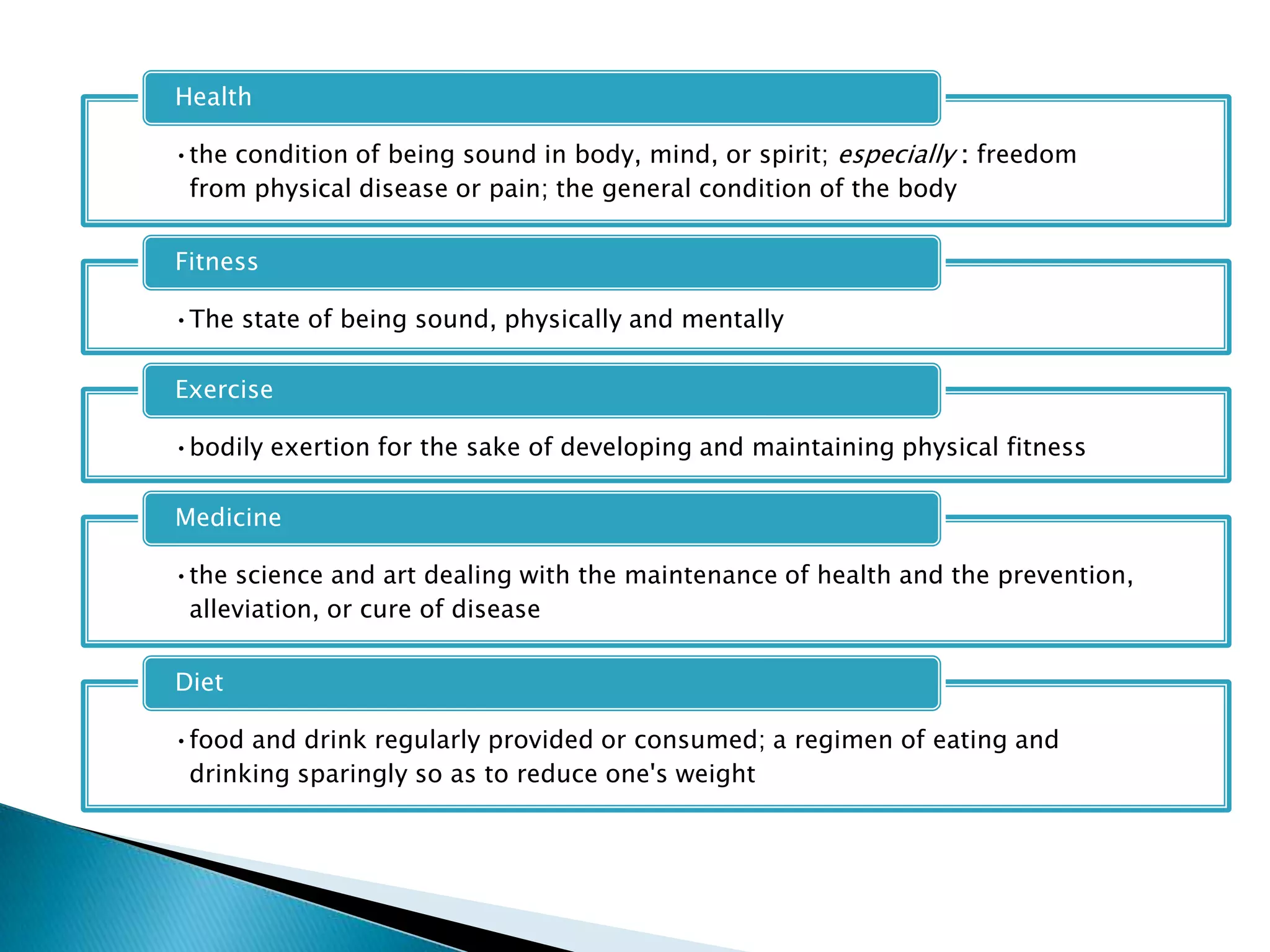
Health

•the condition of being sound in body, mind, or spirit; especially : freedom
 from physical disease or pain; the general condition of the body

Fitness

•The state of being sound, physically and mentally

Exercise

•bodily exertion for the sake of developing and maintaining physical fitness

Medicine

•the science and art dealing with the maintenance of health and the prevention,
 alleviation, or cure of disease

Diet

•food and drink regularly provided or consumed; a regimen of eating and
 drinking sparingly so as to reduce one's weight
Now that we know what the definitions are for
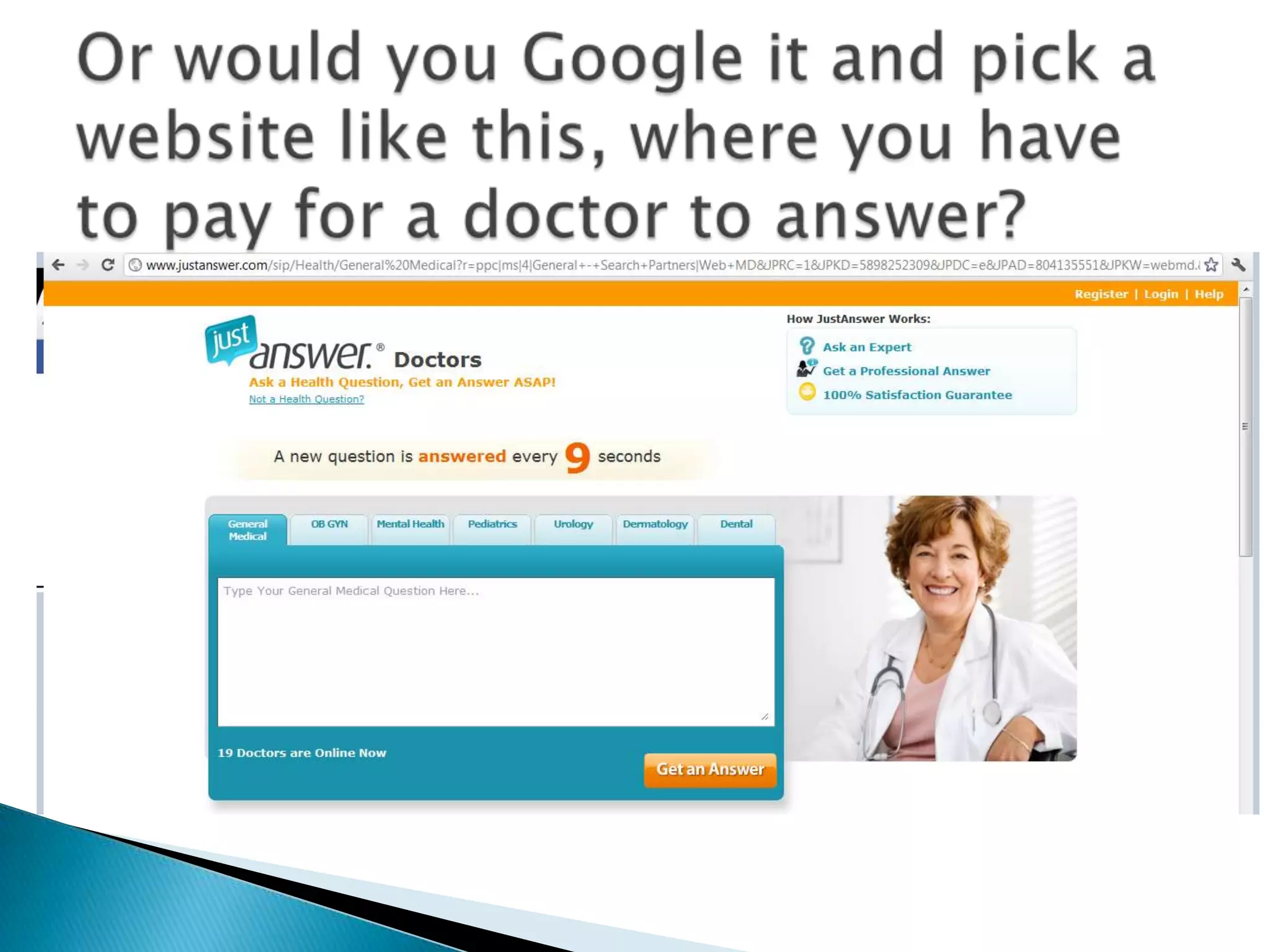
health-related media, where do you go to get
 it? With so many places to get health media
          where do you turn to first?

   Look at the next three slides, each with a
different approach to learning about allergies.
  Which do you believe is the most reliable?
Read this article from Yahoo! News: Air
fresheners and scented candles linked to allergies
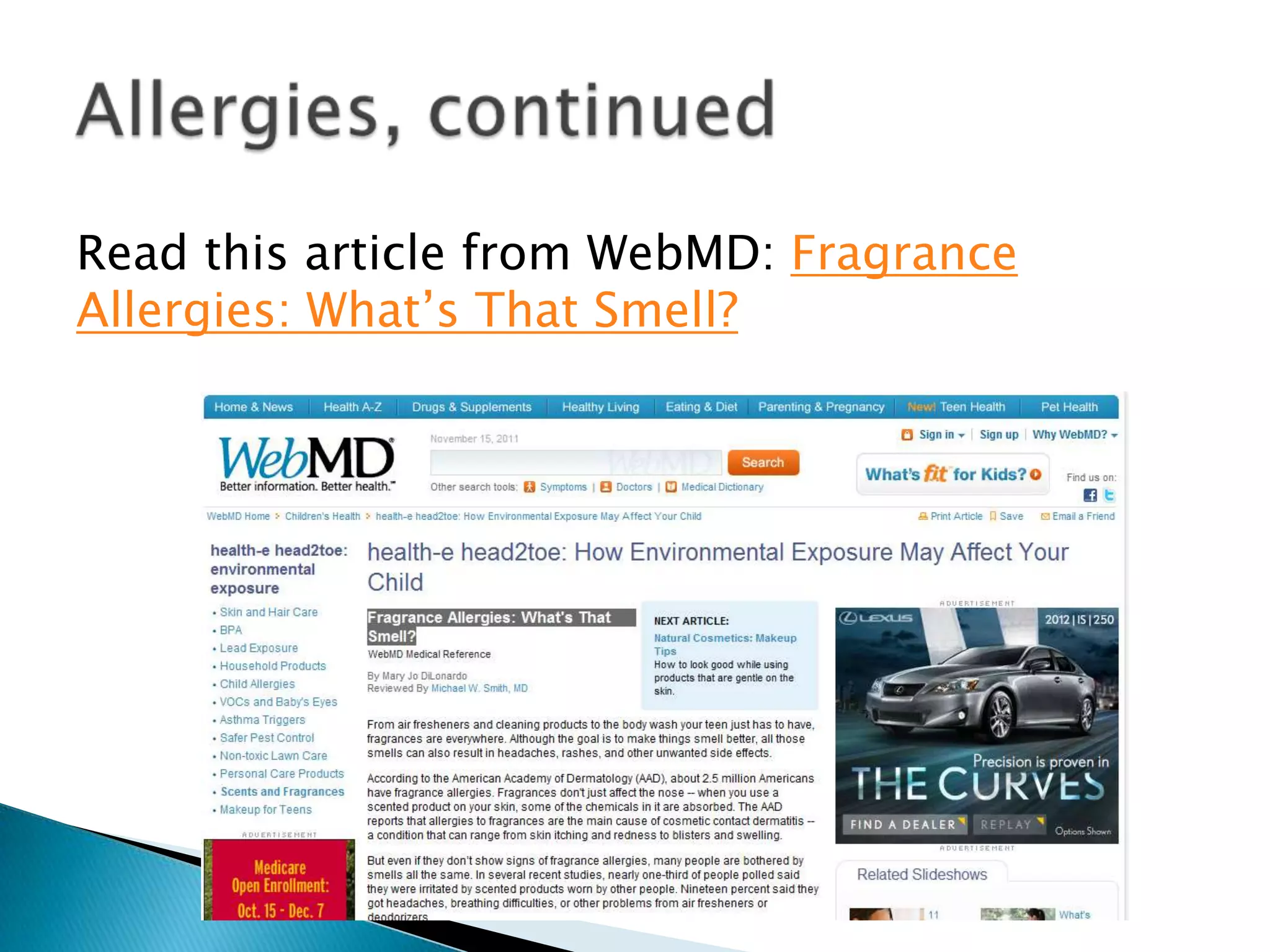
Read this article from WebMD: Fragrance
Allergies: What‟s That Smell?
   Click the next slide to see how to verify
    information you find on the Web.


   How does this relate to information found in
    other outlets? (newspapers, books, word of
    mouth)
 Keepthese factors in mind
 when checking out a Web
 source:
 ◦ Domain name
 ◦ Author
 ◦ Publisher
 ◦ Currency (when the page was
   last updated)
   Consider the four qualifications listed in the
    previous slide. If a source only has two of the
    four qualifications for verification, it‟s
    probably not credible.

   Are there any other factors you can think of
    that make a source credible?
   You just found out diabetes runs in your
    family, so you‟re researching. Where do you
    head to first?

   Do you like personal stories or advice from
    professionals? Go through the slides and rate
    each from 1-4, 4 being the source you felt
    was the best.
“I was diagnosed with diabetes type II several years
ago. I have had periods of time when I managed this
 very well with eating properly and walking. I would
get to a place where my a1c was steadily 6.9 and felt
so improved, lost a lot of muscle pain and weakness,
 eyes were more stable and my attitude and general
health was improved. I don't know what happens to
 me but one day I just stop taking my blood sugar's
   and I stop walking and my eating habits start to
 dwindle.. and then I get sick with other things that
   makes my diabetes come to my attention again.”
                                 --50-60 –year old woman


               Read the whole story here.
Here‟s what you need to do:
  ◦ Have a healthy diet including lots of fruits and
    vegetables
  ◦ Exercise three times a week for at least 20 minutes
  ◦ Maintain normal body weight (a BMI between 18.5
    and 24.9
  ◦ Abstain from smoking
  ◦ Consume alcohol in moderate amounts


       Click here to read the whole article.
Tony Flores is a 50-year-old native of El
Salvador who works as a construction foreman.
He was diagnosed with type 2 diabetes about
12 years ago, after an eye doctor told him it
would be a good idea to get his blood sugar
checked. He recalls, "I did the test, and they got
all freaked out and told me, „Oh my god, your
A1C is at 12%. You have diabetes type 2. You've
got to cut the sugar, you've got to stop drinking
orange juice and soda."

       http://www.diabeteshealth.com/archive/columns/perso
       nal-stories/
States have recognized the major effects diabetes plays,
both in its impact on patients and on society. As of
mid-2009, 46 states and the District of Columbia have
some law that requires health insurance policy coverage
for diabetes treatment. Laws in Mississippi, Missouri
and Washington require only that insurers offer
coverage, but not necessarily include the coverage in all
active policies. Most states require coverage for both
direct treatment and for diabetes equipment and
supplies that are often used by the patient at home.
The four states that do not have a mandate or
insurance requirement are Alabama, Idaho, North
Dakota and Ohio. State tables include the enacted state
laws passed since the first California mandates in 1981
and New York's in 1993, through early 2009. For more
information about diabetes legislation, visit NCSL's
Diabetes - State Legislation Overview.

                     Check out more here.
1.   Personal anecdote
2.   Doctor‟s advice
3.   Quotation
4.   Policy/law
   Summarize what you‟ve learned from this
    lesson.

   Will you look at or search from health media
    differently now?

What is health?

  • 1.
    Let‟s start bydefining terms, then quizzing your health media knowledge.
  • 2.
    Health Fitness Exercise Medicine Diet
  • 4.
    Health •the condition ofbeing sound in body, mind, or spirit; especially : freedom from physical disease or pain; the general condition of the body Fitness •The state of being sound, physically and mentally Exercise •bodily exertion for the sake of developing and maintaining physical fitness Medicine •the science and art dealing with the maintenance of health and the prevention, alleviation, or cure of disease Diet •food and drink regularly provided or consumed; a regimen of eating and drinking sparingly so as to reduce one's weight
  • 5.
    Now that weknow what the definitions are for health-related media, where do you go to get it? With so many places to get health media where do you turn to first? Look at the next three slides, each with a different approach to learning about allergies. Which do you believe is the most reliable?
  • 6.
    Read this articlefrom Yahoo! News: Air fresheners and scented candles linked to allergies
  • 7.
    Read this articlefrom WebMD: Fragrance Allergies: What‟s That Smell?
  • 10.
    Click the next slide to see how to verify information you find on the Web.  How does this relate to information found in other outlets? (newspapers, books, word of mouth)
  • 11.
     Keepthese factorsin mind when checking out a Web source: ◦ Domain name ◦ Author ◦ Publisher ◦ Currency (when the page was last updated)
  • 12.
    Consider the four qualifications listed in the previous slide. If a source only has two of the four qualifications for verification, it‟s probably not credible.  Are there any other factors you can think of that make a source credible?
  • 14.
    You just found out diabetes runs in your family, so you‟re researching. Where do you head to first?  Do you like personal stories or advice from professionals? Go through the slides and rate each from 1-4, 4 being the source you felt was the best.
  • 15.
    “I was diagnosedwith diabetes type II several years ago. I have had periods of time when I managed this very well with eating properly and walking. I would get to a place where my a1c was steadily 6.9 and felt so improved, lost a lot of muscle pain and weakness, eyes were more stable and my attitude and general health was improved. I don't know what happens to me but one day I just stop taking my blood sugar's and I stop walking and my eating habits start to dwindle.. and then I get sick with other things that makes my diabetes come to my attention again.” --50-60 –year old woman Read the whole story here.
  • 16.
    Here‟s what youneed to do: ◦ Have a healthy diet including lots of fruits and vegetables ◦ Exercise three times a week for at least 20 minutes ◦ Maintain normal body weight (a BMI between 18.5 and 24.9 ◦ Abstain from smoking ◦ Consume alcohol in moderate amounts Click here to read the whole article.
  • 17.
    Tony Flores isa 50-year-old native of El Salvador who works as a construction foreman. He was diagnosed with type 2 diabetes about 12 years ago, after an eye doctor told him it would be a good idea to get his blood sugar checked. He recalls, "I did the test, and they got all freaked out and told me, „Oh my god, your A1C is at 12%. You have diabetes type 2. You've got to cut the sugar, you've got to stop drinking orange juice and soda." http://www.diabeteshealth.com/archive/columns/perso nal-stories/
  • 18.
    States have recognizedthe major effects diabetes plays, both in its impact on patients and on society. As of mid-2009, 46 states and the District of Columbia have some law that requires health insurance policy coverage for diabetes treatment. Laws in Mississippi, Missouri and Washington require only that insurers offer coverage, but not necessarily include the coverage in all active policies. Most states require coverage for both direct treatment and for diabetes equipment and supplies that are often used by the patient at home. The four states that do not have a mandate or insurance requirement are Alabama, Idaho, North Dakota and Ohio. State tables include the enacted state laws passed since the first California mandates in 1981 and New York's in 1993, through early 2009. For more information about diabetes legislation, visit NCSL's Diabetes - State Legislation Overview. Check out more here.
  • 19.
    1. Personal anecdote 2. Doctor‟s advice 3. Quotation 4. Policy/law
  • 20.
    Summarize what you‟ve learned from this lesson.  Will you look at or search from health media differently now?