Downloaded 30 times
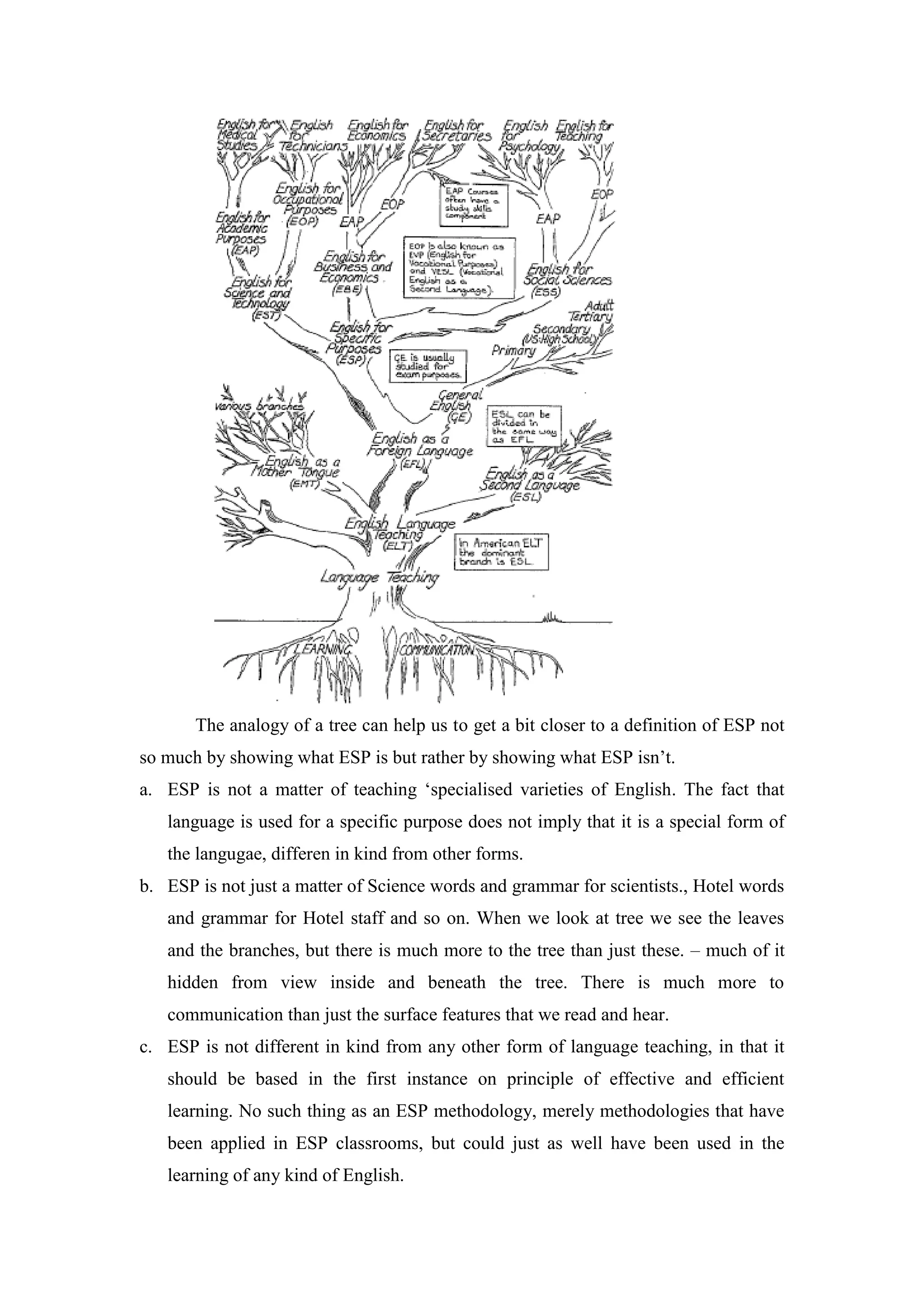
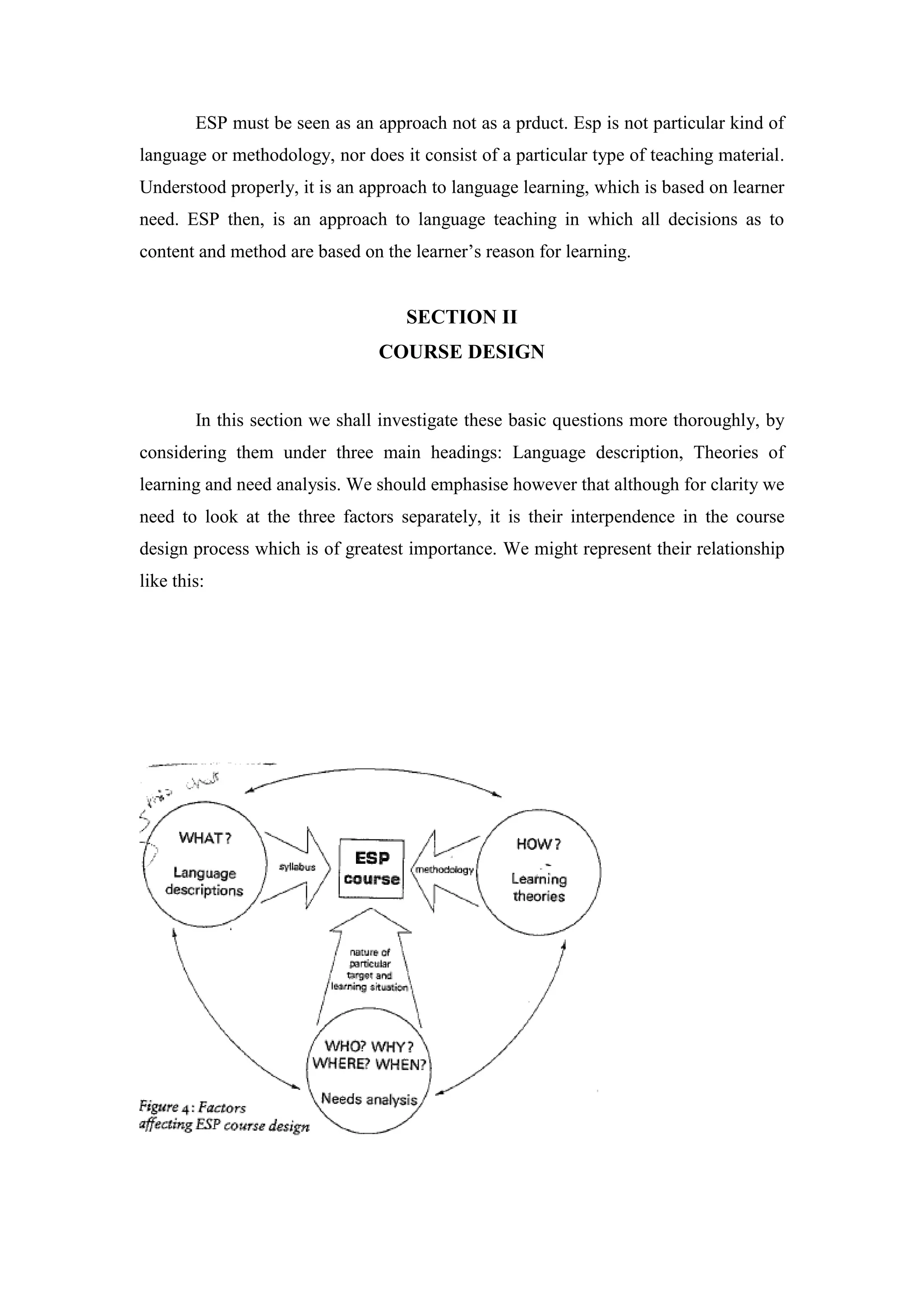

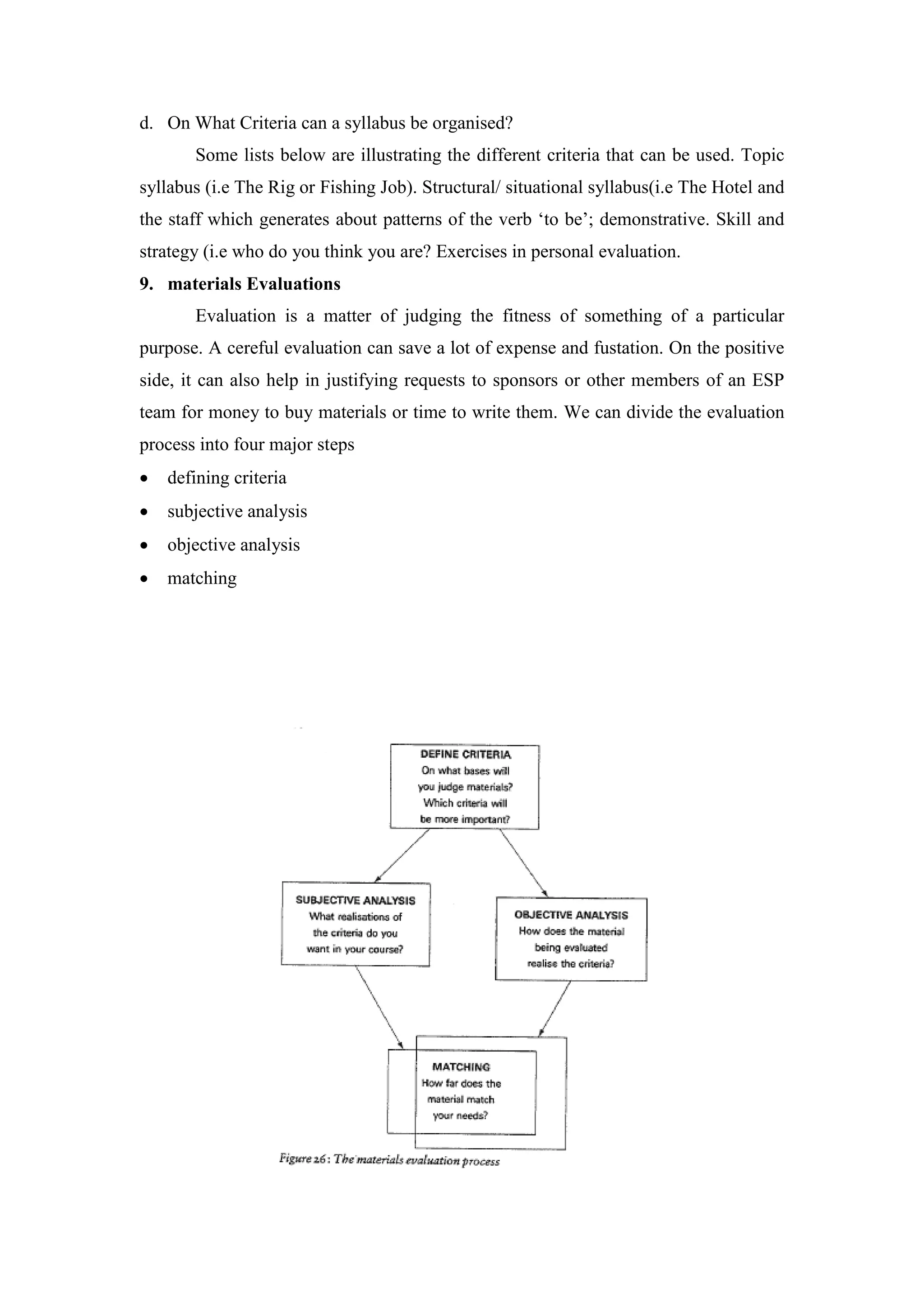


1. ESP emerged for three main reasons - the demands of technology and commerce after WWII which created a need for an international language, developments in linguistics which showed language varies by context, and an emphasis on learner-centered approaches. 2. ESP has undergone five phases of development - from register analysis to discourse analysis to target situation analysis to emphasizing skills/strategies to a learning-centered approach. It is an approach, not a product, based on analyzing learner needs rather than predefined language varieties. 3. Designing an effective ESP course involves considering descriptions of language, theories of learning, and needs analysis to understand how learners will use and learn the language. The interdependence of these three factors is key to


