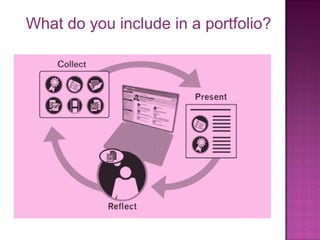
 WHAT IS A PORTFOLIO?


WHAT GOES IN A PORTFOLIO?



WHAT DOES IT REFLECT?



WHAT IS ITS’ PURPOSE?



HOW TO CREATE ONE?



WHAT ARE IT’S USES?

Prepared By:
ASMA SULTANA MUQTADIR
Employment Consultant
A

support package for your resume and
cover letter.
A collection

of samples that demonstrate
your skills to an employer or an educator.
A

collection of documents showcasing your
accomplishments and /or personal
development.
A
Is

self marketing tool.

a lifelong process and challenging to
create.
To highlight skills and
qualifications.


To

identify marketable
skills.

To prepare for
forthcoming interviews

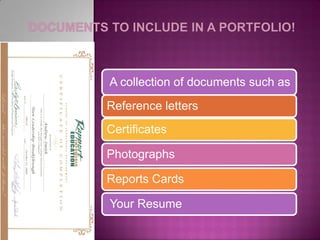
What do you include in a portfolio?
A collection of documents such as
Reference letters
Certificates
Photographs

Reports Cards
Your Resume


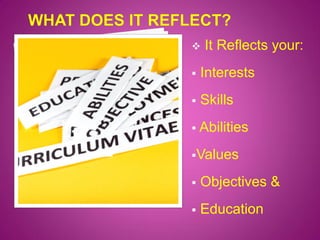
It Reflects your:



Interests



Skills



Abilities

Values



Objectives &



Education


It offers evidence of your accomplishments.



It illustrates your potential benefit to the
organization.



It lets you focus on the skills and knowledge
you want to highlight.



It helps you honour your individuality and life
experiences.


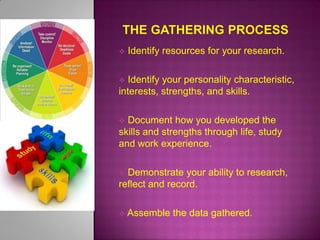
Identify resources for your research.

Identify your personality characteristic,
interests, strengths, and skills.


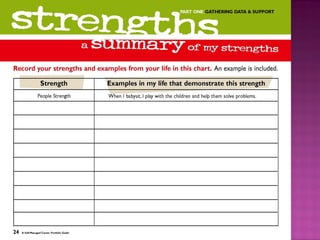
Document how you developed the
skills and strengths through life, study
and work experience.


Demonstrate your ability to research,
reflect and record.


 Assemble

the data gathered.
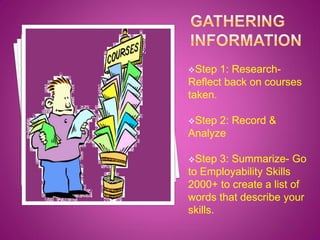
Step

1: ResearchReflect back on courses
taken.
Step

2: Record &
Analyze
Step

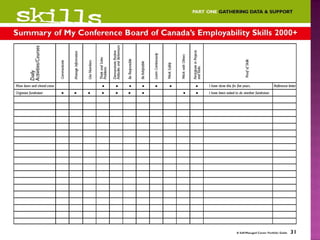
3: Summarize- Go
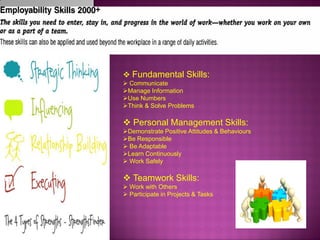
to Employability Skills
2000+ to create a list of
words that describe your
skills.
 Fundamental Skills:
 Communicate
Manage Information
Use Numbers
Think & Solve Problems

 Personal Management Skills:
Demonstrate Positive Attitudes & Behaviours
Be Responsible
 Be Adaptable
Learn Continuously
 Work Safely

 Teamwork Skills:
 Work with Others
 Participate in Projects & Tasks
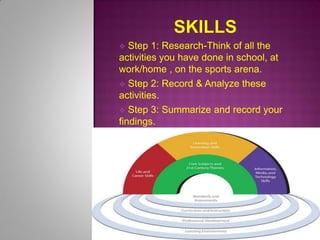
Step 1: Research-Think of all the
activities you have done in school, at
work/home , on the sports arena.
 Step 2: Record & Analyze these
activities.
 Step 3: Summarize and record your
findings.

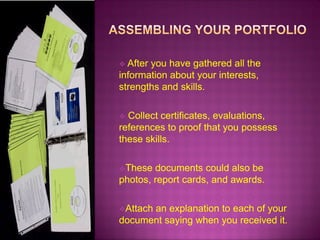
 After

you have gathered all the
information about your interests,
strengths and skills.
Collect certificates, evaluations,
references to proof that you possess
these skills.


These

documents could also be
photos, report cards, and awards.
Attach

an explanation to each of your
document saying when you received it.


Make copies of all original documents.

Place these in page protectors. Make a
table of contents.


 Arrange

in a binder or folder in the order
that best presents your skills, interests,
abilities and strengths as separate sections.
Be sure any evidence of your skills and
abilities, such as a certificate has a caption
or statement explaining why you have
included it in your portfolio.


You have completed
Prepared By:
ASMA SULTANA MUQTADIR
Employment Consultant

your portfolio.
 At the Interview:
 Helps you to review your skills and information before the
interview.
 Your portfolio is a visual proof of your skills and
experience.
Tailor your portfolio and select pieces that best present the
information required for that position.
At the Interview:
 Be very familiar with the contents of your portfolio.

 Explain you brought your portfolio for the employer to view.
Allow the employer to conduct the interview.
At the end of the interview draw the employers’ attention to
the visual proof of any skills that are specific to this job.
 Or any qualifications the employer may not have asked
about in the interview but you have a visual to show from your
portfolio.
Prepared By:
Asma Sultana Muqtadir
Employment Consultant

What Is A Portfolio?

  • 1.
     WHAT ISA PORTFOLIO?  WHAT GOES IN A PORTFOLIO?  WHAT DOES IT REFLECT?  WHAT IS ITS’ PURPOSE?  HOW TO CREATE ONE?  WHAT ARE IT’S USES? Prepared By: ASMA SULTANA MUQTADIR Employment Consultant
  • 2.
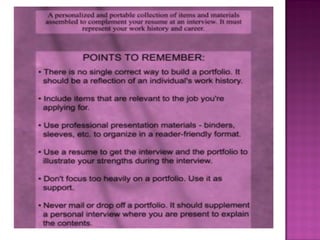
    A support package foryour resume and cover letter. A collection of samples that demonstrate your skills to an employer or an educator. A collection of documents showcasing your accomplishments and /or personal development. A Is self marketing tool. a lifelong process and challenging to create.
  • 3.
    To highlight skillsand qualifications.  To identify marketable skills. To prepare for forthcoming interviews 
  • 4.
    What do youinclude in a portfolio?
  • 5.
    A collection ofdocuments such as Reference letters Certificates Photographs Reports Cards Your Resume
  • 6.
  • 7.
     It offers evidenceof your accomplishments.  It illustrates your potential benefit to the organization.  It lets you focus on the skills and knowledge you want to highlight.  It helps you honour your individuality and life experiences.
  • 10.
     Identify resources foryour research. Identify your personality characteristic, interests, strengths, and skills.  Document how you developed the skills and strengths through life, study and work experience.  Demonstrate your ability to research, reflect and record.   Assemble the data gathered.
  • 11.
    Step 1: ResearchReflect backon courses taken. Step 2: Record & Analyze Step 3: Summarize- Go to Employability Skills 2000+ to create a list of words that describe your skills.
  • 12.
     Fundamental Skills: Communicate Manage Information Use Numbers Think & Solve Problems  Personal Management Skills: Demonstrate Positive Attitudes & Behaviours Be Responsible  Be Adaptable Learn Continuously  Work Safely  Teamwork Skills:  Work with Others  Participate in Projects & Tasks
  • 14.
    Step 1: Research-Thinkof all the activities you have done in school, at work/home , on the sports arena.  Step 2: Record & Analyze these activities.  Step 3: Summarize and record your findings. 
  • 17.
     After you havegathered all the information about your interests, strengths and skills. Collect certificates, evaluations, references to proof that you possess these skills.  These documents could also be photos, report cards, and awards. Attach an explanation to each of your document saying when you received it.
  • 18.
     Make copies ofall original documents. Place these in page protectors. Make a table of contents.   Arrange in a binder or folder in the order that best presents your skills, interests, abilities and strengths as separate sections. Be sure any evidence of your skills and abilities, such as a certificate has a caption or statement explaining why you have included it in your portfolio.  You have completed Prepared By: ASMA SULTANA MUQTADIR Employment Consultant your portfolio.
  • 19.
     At theInterview:  Helps you to review your skills and information before the interview.  Your portfolio is a visual proof of your skills and experience. Tailor your portfolio and select pieces that best present the information required for that position.
  • 20.
    At the Interview: Be very familiar with the contents of your portfolio.  Explain you brought your portfolio for the employer to view. Allow the employer to conduct the interview. At the end of the interview draw the employers’ attention to the visual proof of any skills that are specific to this job.  Or any qualifications the employer may not have asked about in the interview but you have a visual to show from your portfolio.
  • 21.
    Prepared By: Asma SultanaMuqtadir Employment Consultant

Editor's Notes

  • #5 ASK GROUP TO BRAINSTROM ABOUT WHAT THEY THINK GOES IN A PORTFOLIO?
  • #6 NOW CHECK TO SEE IF THEY WERE RIGHT.
  • #12 Step 1:Research is very important in developing a portfolio.Step 2: List the adjectives that best describe you.Gathering a variety of information about your knowledge, skills, attitudes and conduct will help you develop a more accurate and useful portfolio.Step 3: Summarize by writing a proof statement about the top ten characteristics that demonstrates you totally.GIVE CLIENTS THE EMPLOYABILITY SKILLS 2000+ HANDOUT.
  • #13 Give a copy of the Employability Skills 2000+ to clients to generate their own list.
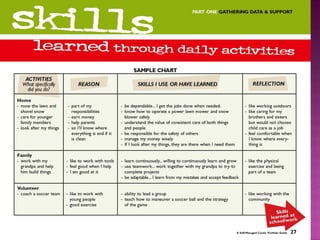
  • #16 We learn skills through day to day activities outside of school or work as well such as clubs, lessons, sports, with family or friends. At school through various courses, at work through our responsibilities.The trick is to figure out our best skills and the skills we want to learn and practice.By working through these activities and analyzing your results, you will be able to create your personal inventory of skills.
  • #17 List all activities done in the past and courses taken and tick off all the Employability skills that you possess and any references letters you received for doing it.