WHAT ARE THE TYPES OF
CONSTRUCTION
DRAWINGS
EXPLORING
https://www.teslacad.co.uk/
https://www.teslacad.co.uk/ services@teslacad.co.uk
services@teslacad.co.uk
6 TYPES OF CONSTRUCTION DRAWINGS
1
Architectural
Drawings
2
Structural
Drawings
3
Electrical
Drawings
5
Mechanical
Drawings
6
Finishing
Drawings
4
Plumbing
Drawings
Architectural drawings are detailed plans and designs made by
architects to show how a building or structure will look and
function. They are like blueprints that guide construction workers,
engineers, and builders. These drawings include important details
like the building’s size, shape, materials, and layout.
Architectural drawings often include different views, such as floor
plans, elevations, and sections, to provide a complete picture of
the project. Floor plans show the arrangement of rooms from
above, elevations show the building’s appearance from the front
or side, and sections reveal the inside structure.
These drawings are essential for ensuring that the building is
safe, functional, and meets the needs of the people using it. They
also help communicate ideas between architects, clients, and
construction teams. By following these drawings, everyone
involved in the project can work together to bring the design to
life.
ARCHITECTURAL
DRAWINGS
ARCHITECTURAL
DRAWINGS
Structural drawings are plans created by engineers to show how
a building’s framework will be built to ensure safety and stability.
These drawings focus on the main structural elements like beams,
columns, foundations, and walls. They guide how the building will
support its weight and handle forces like wind and earthquakes.
Key types include foundation plans, which show the base of the
structure, and framing plans, which outline the skeleton of the
building. Reinforcement details explain how steel bars are used in
concrete for extra strength.
Structural drawings also specify materials like concrete, steel, or
wood, as well as measurements and connections. They help
construction teams follow the correct process and ensure the
building is strong and durable. These drawings are essential for
creating structures that are safe and meet building standards.
STRUCTURAL
DRAWINGS
STRUCTURAL
DRAWINGS
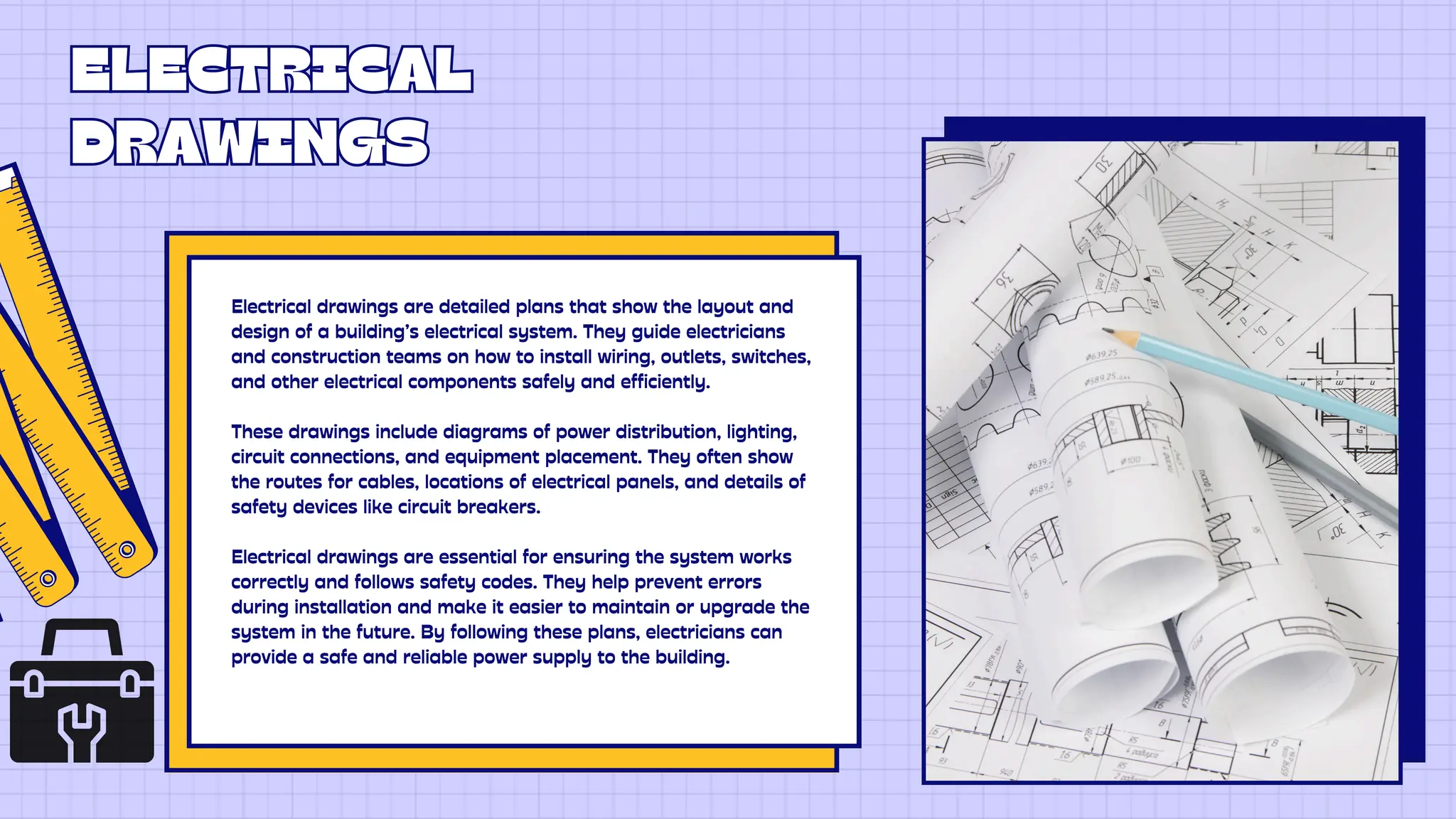
Electrical drawings are detailed plans that show the layout and
design of a building’s electrical system. They guide electricians
and construction teams on how to install wiring, outlets, switches,
and other electrical components safely and efficiently.
These drawings include diagrams of power distribution, lighting,
circuit connections, and equipment placement. They often show
the routes for cables, locations of electrical panels, and details of
safety devices like circuit breakers.
Electrical drawings are essential for ensuring the system works
correctly and follows safety codes. They help prevent errors
during installation and make it easier to maintain or upgrade the
system in the future. By following these plans, electricians can
provide a safe and reliable power supply to the building.
ELECTRICAL
DRAWINGS
ELECTRICAL
DRAWINGS
Plumbing drawings are detailed plans that show the design and
layout of a building’s plumbing system. They guide plumbers and
construction teams on how to install pipes, fixtures, and other
components for water supply, drainage, and waste management.
These drawings include information about the placement of pipes,
faucets, sinks, toilets, and water heaters. They also show the
routes for water supply lines, drainage systems, and ventilation
pipes. Common types of plumbing drawings include water supply
layouts, drainage plans, and isometric diagrams.
Plumbing drawings ensure the system is efficient, functional, and
meets building codes. They help prevent issues like leaks,
blockages, or water pressure problems during installation or use.
By following these plans, plumbers can create a safe and reliable
water and waste management system for the building.
PLUMBING
DRAWINGS
PLUMBING
DRAWINGS
Mechanical drawings are detailed plans that show the design and
layout of a building’s mechanical systems. These systems include
heating, ventilation, air conditioning (HVAC), and other equipment
like elevators or exhaust systems.
The drawings illustrate the placement of ducts, pipes, vents, and
mechanical equipment. They also include details about how these
systems operate, such as airflow, temperature control, and
energy efficiency. Common types of mechanical drawings are
HVAC layouts, ductwork plans, and equipment placement
diagrams.
These plans help ensure the mechanical systems work efficiently,
are easy to maintain, and meet safety standards. They guide
construction teams and engineers during installation and help
prevent errors. By following mechanical drawings, builders can
create comfortable, functional, and well-ventilated spaces for
occupants.
MECHANICAL
DRAWINGS
MECHANICAL
DRAWINGS
Finishing drawings are detailed plans that show the final
appearance and surface treatments of a building’s interiors and
exteriors. They guide builders and designers in applying materials
like paint, tiles, flooring, and wall finishes to achieve the desired
look.
These drawings include information about colors, textures,
materials, and patterns for walls, ceilings, and floors. They also
specify the placement of decorative elements, lighting fixtures,
and other finishing details.
Finishing drawings ensure that the building’s aesthetics align with
the design vision and client preferences. They help construction
teams complete the project accurately and efficiently while
maintaining quality. By following these drawings, the building
achieves a polished and professional appearance.
FINISHING
DRAWINGS
FINISHING
DRAWINGS
💡 Want to Dive Deeper?
Check out our blog for more helpful information and tips! Visit Our Blog to
explore more.
REFERENCES
REFERENCES
https://www.teslacad.co.uk/blog/infographics/what-are-the-types-of-construction-drawings/

What are the types of Construction Drawings

  • 1.
    WHAT ARE THETYPES OF CONSTRUCTION DRAWINGS EXPLORING https://www.teslacad.co.uk/ https://www.teslacad.co.uk/ services@teslacad.co.uk services@teslacad.co.uk
  • 2.
    6 TYPES OFCONSTRUCTION DRAWINGS 6 TYPES OF CONSTRUCTION DRAWINGS 1 Architectural Drawings 2 Structural Drawings 3 Electrical Drawings 5 Mechanical Drawings 6 Finishing Drawings 4 Plumbing Drawings
  • 3.
    Architectural drawings aredetailed plans and designs made by architects to show how a building or structure will look and function. They are like blueprints that guide construction workers, engineers, and builders. These drawings include important details like the building’s size, shape, materials, and layout. Architectural drawings often include different views, such as floor plans, elevations, and sections, to provide a complete picture of the project. Floor plans show the arrangement of rooms from above, elevations show the building’s appearance from the front or side, and sections reveal the inside structure. These drawings are essential for ensuring that the building is safe, functional, and meets the needs of the people using it. They also help communicate ideas between architects, clients, and construction teams. By following these drawings, everyone involved in the project can work together to bring the design to life. ARCHITECTURAL DRAWINGS ARCHITECTURAL DRAWINGS
  • 4.
    Structural drawings areplans created by engineers to show how a building’s framework will be built to ensure safety and stability. These drawings focus on the main structural elements like beams, columns, foundations, and walls. They guide how the building will support its weight and handle forces like wind and earthquakes. Key types include foundation plans, which show the base of the structure, and framing plans, which outline the skeleton of the building. Reinforcement details explain how steel bars are used in concrete for extra strength. Structural drawings also specify materials like concrete, steel, or wood, as well as measurements and connections. They help construction teams follow the correct process and ensure the building is strong and durable. These drawings are essential for creating structures that are safe and meet building standards. STRUCTURAL DRAWINGS STRUCTURAL DRAWINGS
  • 5.
    Electrical drawings aredetailed plans that show the layout and design of a building’s electrical system. They guide electricians and construction teams on how to install wiring, outlets, switches, and other electrical components safely and efficiently. These drawings include diagrams of power distribution, lighting, circuit connections, and equipment placement. They often show the routes for cables, locations of electrical panels, and details of safety devices like circuit breakers. Electrical drawings are essential for ensuring the system works correctly and follows safety codes. They help prevent errors during installation and make it easier to maintain or upgrade the system in the future. By following these plans, electricians can provide a safe and reliable power supply to the building. ELECTRICAL DRAWINGS ELECTRICAL DRAWINGS
  • 6.
    Plumbing drawings aredetailed plans that show the design and layout of a building’s plumbing system. They guide plumbers and construction teams on how to install pipes, fixtures, and other components for water supply, drainage, and waste management. These drawings include information about the placement of pipes, faucets, sinks, toilets, and water heaters. They also show the routes for water supply lines, drainage systems, and ventilation pipes. Common types of plumbing drawings include water supply layouts, drainage plans, and isometric diagrams. Plumbing drawings ensure the system is efficient, functional, and meets building codes. They help prevent issues like leaks, blockages, or water pressure problems during installation or use. By following these plans, plumbers can create a safe and reliable water and waste management system for the building. PLUMBING DRAWINGS PLUMBING DRAWINGS
  • 7.
    Mechanical drawings aredetailed plans that show the design and layout of a building’s mechanical systems. These systems include heating, ventilation, air conditioning (HVAC), and other equipment like elevators or exhaust systems. The drawings illustrate the placement of ducts, pipes, vents, and mechanical equipment. They also include details about how these systems operate, such as airflow, temperature control, and energy efficiency. Common types of mechanical drawings are HVAC layouts, ductwork plans, and equipment placement diagrams. These plans help ensure the mechanical systems work efficiently, are easy to maintain, and meet safety standards. They guide construction teams and engineers during installation and help prevent errors. By following mechanical drawings, builders can create comfortable, functional, and well-ventilated spaces for occupants. MECHANICAL DRAWINGS MECHANICAL DRAWINGS
  • 8.
    Finishing drawings aredetailed plans that show the final appearance and surface treatments of a building’s interiors and exteriors. They guide builders and designers in applying materials like paint, tiles, flooring, and wall finishes to achieve the desired look. These drawings include information about colors, textures, materials, and patterns for walls, ceilings, and floors. They also specify the placement of decorative elements, lighting fixtures, and other finishing details. Finishing drawings ensure that the building’s aesthetics align with the design vision and client preferences. They help construction teams complete the project accurately and efficiently while maintaining quality. By following these drawings, the building achieves a polished and professional appearance. FINISHING DRAWINGS FINISHING DRAWINGS
  • 9.
    💡 Want toDive Deeper? Check out our blog for more helpful information and tips! Visit Our Blog to explore more. REFERENCES REFERENCES https://www.teslacad.co.uk/blog/infographics/what-are-the-types-of-construction-drawings/ https://www.teslacad.co.uk/blog/infographics/what-are-the-types-of-construction-drawings/