GIZEM REYHANOGULLARI
Wellness Travel & Medical Tourism
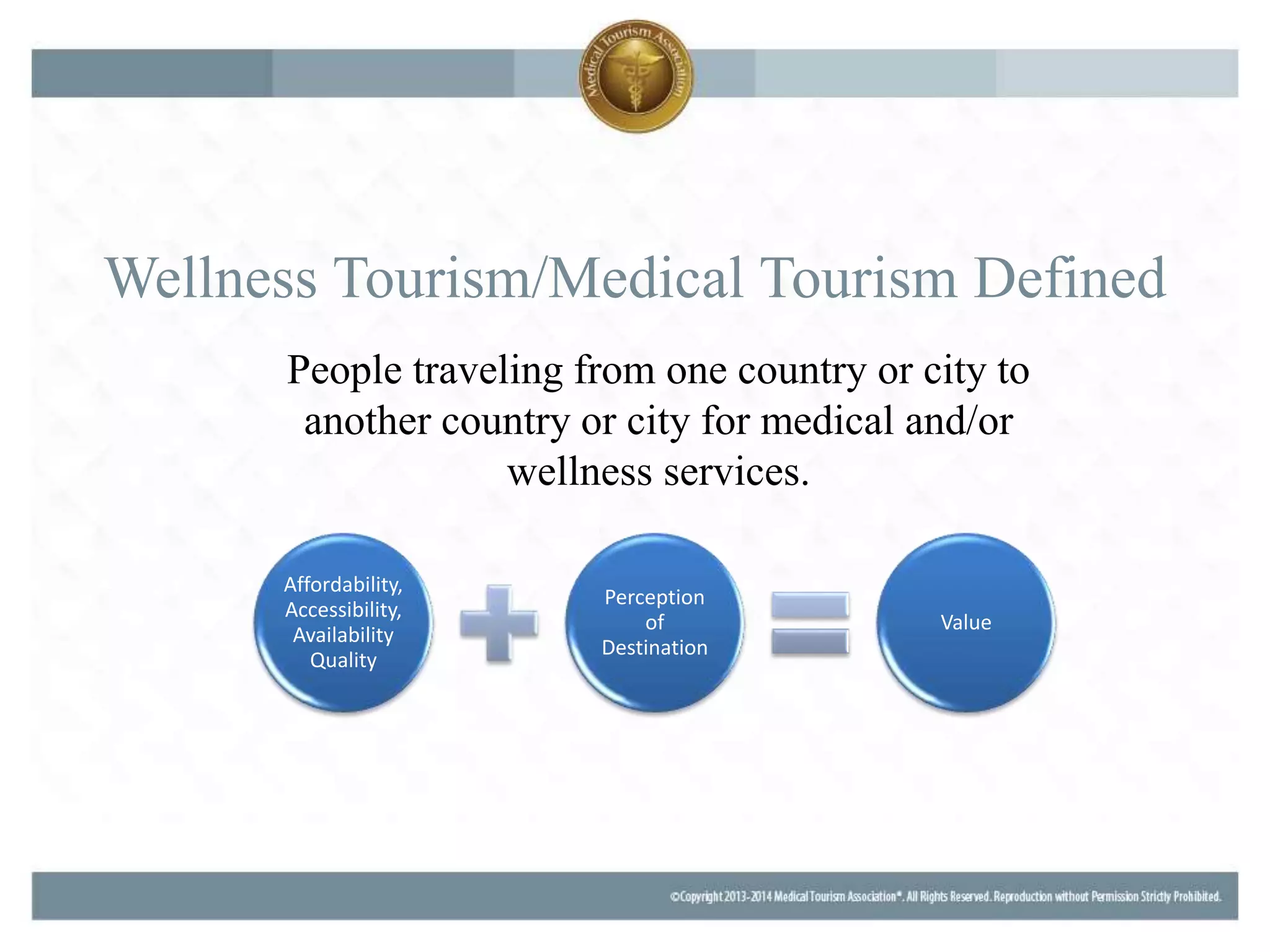
Affordability,
Accessibility,
Availability
Quality
Perception
of
Destination
Value
People traveling from one country or city to
another country or city for medical and/or
wellness services.
Wellness Tourism/Medical Tourism Defined
• Traveling for medical care is NOT a new phenomenon.
Individuals have travelled abroad for health benefits since
ancient times.
History of Medical Tourism
& Wellness Travel
Roman and Greek Baths
“Take the Waters” Spa, Town
of Cheltenham, England
Source: Spas and the Global Wellness
Market
How Far Reaching is
Wellness?
• According to SRI:
• There Are 289 Million Wellness Consumers
• The Majority of Consumers Come from the 30 Most-
Wealthy or Most-Industrialized nations.
What Services do they Seek?
•Hips, Knees, Back and SpineOrthopedics
•Diagnostics, Cyberknife, Stem CellCancer Treatment
•Angioplasty, Bypasses, Valve Replacements, Stem CellHeart Procedures
•Liver, Kidney, LungTransplants
•Implants, Veneers, CrownsDental Treatment
•Lap Band, Gastric Bypass, Gastric SleeveBariatric Surgery
•Acupuncture, Preventative, Homeopathy, IndigenousAlternative
•Alzheimer's, ALS, Parkinson's, Paralysis, HeartStem Cell Treatments
•Face Lifts, Breast Implants, CorrectiveCosmetic Surgery
•IVF, Fertility, Hormonal DisordersInfertility Treatments
•Acute and Chronic Conditions, Geriatric CareRehabilitation & Geriatric
How Big Is Medical
Tourism?
• 50,000-60 million medical tourists? OECD (Organisation for
Economic Co-operation and Development)
• Top Priority of Most Governments – Ministry Tourism, Health
and Economic Development
• Positive Impact on Local Economy
• Medical Tourism is Global – Both Developed and Developing
Countries Have Medical Tourism as national priorities
Medical Tourism as
Revenue Source
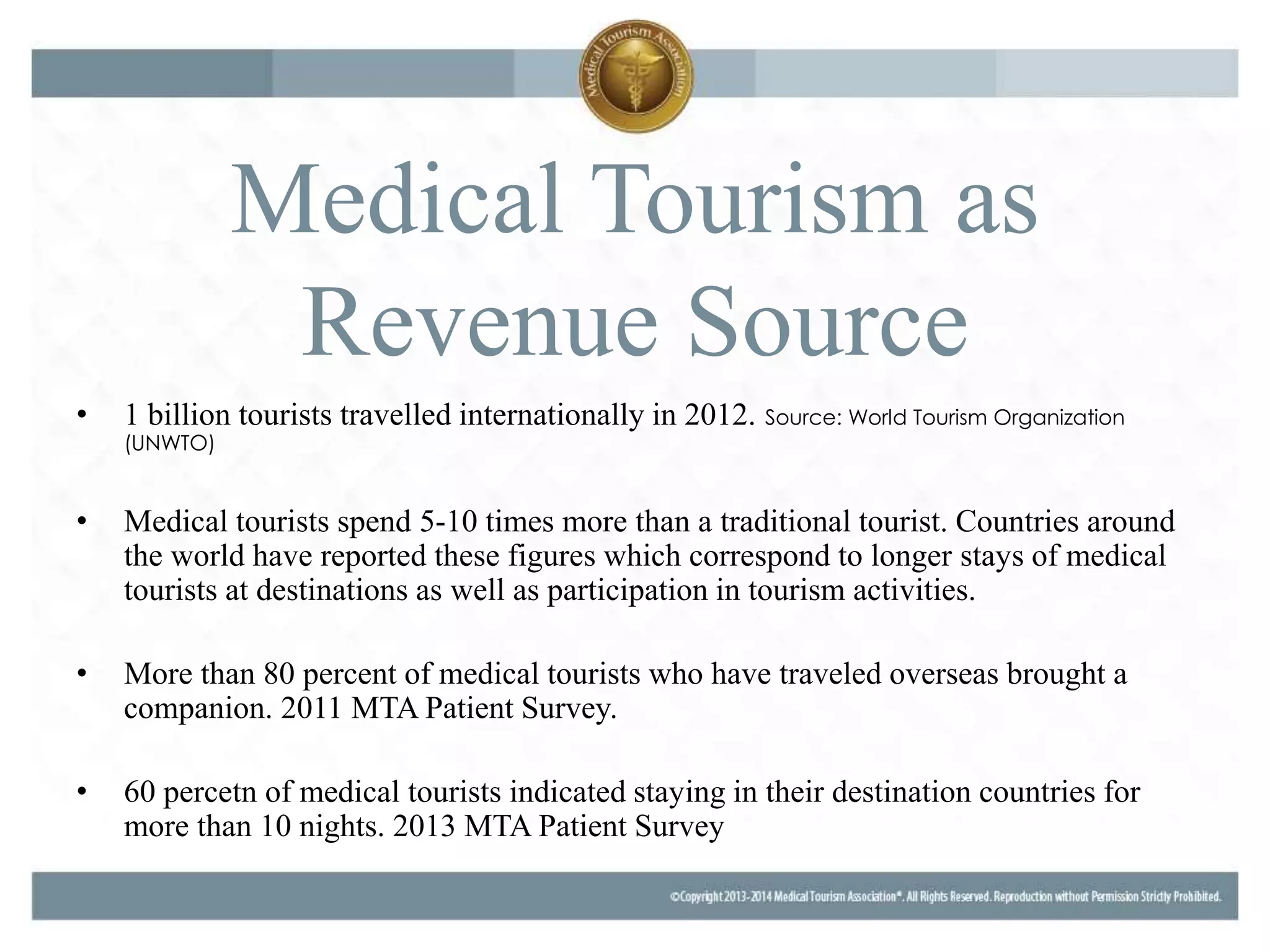
• 1 billion tourists travelled internationally in 2012. Source: World Tourism Organization
(UNWTO)
• Medical tourists spend 5-10 times more than a traditional tourist. Countries around
the world have reported these figures which correspond to longer stays of medical
tourists at destinations as well as participation in tourism activities.
• More than 80 percent of medical tourists who have traveled overseas brought a
companion. 2011 MTA Patient Survey.
• 60 percetn of medical tourists indicated staying in their destination countries for
more than 10 nights. 2013 MTA Patient Survey
Medical Tourism in Turkey
• Turkey uses its strategic geographical position and the expertise in medical
tourism to attract patients from European countries and Middle East.
• Highly skilled doctors from across the Europe are working in Turkey
because of enormous number of patients travelling to Turkey for medical
tourism.
• Turkey is known for high quality cardiac procedures orthopedic surgeries
and cancer treatments. Ü
• Moreover laser surgery can easily be availed at number of hospitals in
Turkey.
• The Dunyagoz Hospitals Group owns laser centers all over the Turkey.
• More than 40000 medical tourists fly to turkey every year for medical
tourism.
• Laser treatments cost around 1000 dollars that includes the medical stay
and the medical services in the hospital.
• Individual patients
• Corporate market which includes patients sent by
insurance companies and self-funded employers
Markets
• Individual patients segmented by:
• Medical procedure type
• Geographic location
• Demographics such as age, race, religion, education, income level
• Psychographics, such as values, interests, attitudes, and lifestyle (holistic
medicine, wellness tourism)
Markets
Corporate market Individuals
Relationship driven Service driven
Small target market Larger target market
Longer sales process Shorter sales process
Buying decision based on reducing
costs and increasing profitability
Buying decision often “price” or
“desire” driven
Multiple decision makers One or two decision makers
Meeting face to face with decision
makers
Communication by email and phone is
enough
Differences
SOURCES
• http://www.slideshare.net/pgoel420/challenges-and-medical-tourism-trends-in-
2013-16508102?related=4
• http://www.slideshare.net/reneemariestephano/wellness-medical-tourism-business-
opportunities-for-travel-agents?qid=5b940213-81be-4674-9874-
25f2bf019e5e&v=default&b=&from_search=10
• http://www.slideshare.net/MustafaSaidYILDIZ/1-medical-tourism-ppt-last-
share?qid=09247032-e15e-4a21-bab8-
a84d6d59d166&v=default&b=&from_search=1

Wellnes & medical tourism

  • 1.
  • 2.
    Wellness Travel &Medical Tourism
  • 3.
    Affordability, Accessibility, Availability Quality Perception of Destination Value People traveling fromone country or city to another country or city for medical and/or wellness services. Wellness Tourism/Medical Tourism Defined
  • 4.
    • Traveling formedical care is NOT a new phenomenon. Individuals have travelled abroad for health benefits since ancient times. History of Medical Tourism & Wellness Travel
  • 5.
  • 6.
    “Take the Waters”Spa, Town of Cheltenham, England
  • 7.
    Source: Spas andthe Global Wellness Market
  • 8.
    How Far Reachingis Wellness? • According to SRI: • There Are 289 Million Wellness Consumers • The Majority of Consumers Come from the 30 Most- Wealthy or Most-Industrialized nations.
  • 11.
    What Services dothey Seek? •Hips, Knees, Back and SpineOrthopedics •Diagnostics, Cyberknife, Stem CellCancer Treatment •Angioplasty, Bypasses, Valve Replacements, Stem CellHeart Procedures •Liver, Kidney, LungTransplants •Implants, Veneers, CrownsDental Treatment •Lap Band, Gastric Bypass, Gastric SleeveBariatric Surgery •Acupuncture, Preventative, Homeopathy, IndigenousAlternative •Alzheimer's, ALS, Parkinson's, Paralysis, HeartStem Cell Treatments •Face Lifts, Breast Implants, CorrectiveCosmetic Surgery •IVF, Fertility, Hormonal DisordersInfertility Treatments •Acute and Chronic Conditions, Geriatric CareRehabilitation & Geriatric
  • 12.
    How Big IsMedical Tourism? • 50,000-60 million medical tourists? OECD (Organisation for Economic Co-operation and Development) • Top Priority of Most Governments – Ministry Tourism, Health and Economic Development • Positive Impact on Local Economy • Medical Tourism is Global – Both Developed and Developing Countries Have Medical Tourism as national priorities
  • 13.
    Medical Tourism as RevenueSource • 1 billion tourists travelled internationally in 2012. Source: World Tourism Organization (UNWTO) • Medical tourists spend 5-10 times more than a traditional tourist. Countries around the world have reported these figures which correspond to longer stays of medical tourists at destinations as well as participation in tourism activities. • More than 80 percent of medical tourists who have traveled overseas brought a companion. 2011 MTA Patient Survey. • 60 percetn of medical tourists indicated staying in their destination countries for more than 10 nights. 2013 MTA Patient Survey
  • 16.
    Medical Tourism inTurkey • Turkey uses its strategic geographical position and the expertise in medical tourism to attract patients from European countries and Middle East. • Highly skilled doctors from across the Europe are working in Turkey because of enormous number of patients travelling to Turkey for medical tourism. • Turkey is known for high quality cardiac procedures orthopedic surgeries and cancer treatments. Ü • Moreover laser surgery can easily be availed at number of hospitals in Turkey. • The Dunyagoz Hospitals Group owns laser centers all over the Turkey. • More than 40000 medical tourists fly to turkey every year for medical tourism. • Laser treatments cost around 1000 dollars that includes the medical stay and the medical services in the hospital.
  • 20.
    • Individual patients •Corporate market which includes patients sent by insurance companies and self-funded employers Markets
  • 21.
    • Individual patientssegmented by: • Medical procedure type • Geographic location • Demographics such as age, race, religion, education, income level • Psychographics, such as values, interests, attitudes, and lifestyle (holistic medicine, wellness tourism) Markets
  • 22.
    Corporate market Individuals Relationshipdriven Service driven Small target market Larger target market Longer sales process Shorter sales process Buying decision based on reducing costs and increasing profitability Buying decision often “price” or “desire” driven Multiple decision makers One or two decision makers Meeting face to face with decision makers Communication by email and phone is enough Differences
  • 35.

Editor's Notes

  • #6 During the 19th Century in Europe for example there was a fashion for the growing middle-classes to travel to spa towns to “Take the waters”, which were believed to have health-enhancing qualities.
  • #7 During the 19th Century in Europe for example there was a fashion for the growing middle-classes to travel to spa towns to “Take the waters”, which were believed to have health-enhancing qualities.