Managerial decision making in the MBA classroom György Bőgel [email_address]
Who am I? Professor of Management at CEU Business School Economist by profession Strategic advisor at KFKI Computer Systems Corp. Teaching experience of 20+ years Author  and  co-author of 8 books and many articles Present field of interest: IT’s influence on management and company organization
Action Learning in a nutshell It is an  integral part  of our FT MBA program (3credits) It is  learning by doing : solving real management  problems It is  teamwork The learning process is  organized, supported and monitored  by professors (tutors) It can be run together with  academic partners It is  not only for MBAs It has a special  methodology…
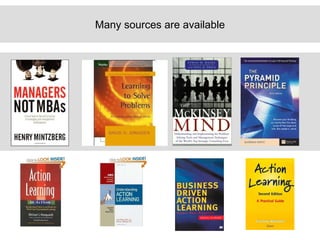
Many sources are available
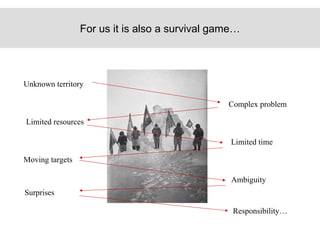
For us it is also  a survival game… Unknown territory Complex problem Limited time Limited resources Ambiguity Moving targets Su r prise s Responsibility…
We need „problem owners”
Our recent partners 2009 2010 2011 Cisco Nextent Gravity SAP Labs Budapest Bank Comforce KÉSZ Nextent Gravity SAP Labs Selenium Joobili TESA FHB-Psion ThalesNano GE Healthcare MyPartyGenie ThalesNano Customer Impact
Professional problem solving needs professional structuring and planning Core problem Topics Sub- topics Analyses Outputs A problem tree or a mindmap may help a lot…   Report and presentation Calendar planning
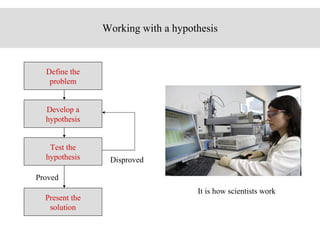
Working with a hypothesis Define the problem Develop a hypothesis Test the hypothesis Present the solution Proved Disproved It is how scientists work
Example: testing a hypothesis Expensive administrative functions can be outsourced Is it enough? Data on suppliers’ costs Systematic cost comparison Are outside services cheaper? List of potential suppliers Selection criteria Supply side analysis Are there outside service providers? Strategic plan Criteria for „core” Core business and core compatency analysis Is administration a core function? Data needed for the analysis Analyses needed for the answer Question to be answered
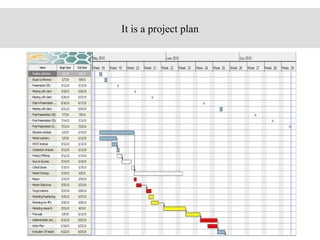
Week 1 Week 2 Week 3 Week 4 Week 5 Week 6 Week 7 Week 8 Week 9 Week 10 Week 11 Week 12 Week 13 Cl.S. 1 Apr 18 Cl.S. 2 May 2 Cl.S. 4 May 23 Cl.S. 7 July 4 Cl.S. 8 July 11 Intro Project work with the clients Final reports for the clients Problem definition Problem frame Project plan Progress reports Test reports April 18 July 20 The process Cl.S. 3 May 9 Cl.S. 5 May 30 Cl.S. 6 June 27
Mindmap: here is an example
It is a project plan
A  well designed and understandable  slideshow is recommemnded as the format of the final report Discuss the expected format with the client!
Presentation organized by the pyramid principle TITLE OBJECTIVES SCOPE CONTENT RECOMMENDATIONS 1/ 2/ CONCLUSIONS 1/ 2/ CONCL. 1 findings CONCL. 2 findings REC. 1 actions REC. 2 actions Data Data Action plan Action plan Evaluated by the client
Managers know precisely what they want Managers tell you precisely what they want The goal will not change Everybody at the company will help Managers have time for  the project Company evaluation will be fair The bigger the better Teamwork is easy The professor must be satisfied Many times they don’t There might be hidden agendas One trimester is very long People resist change They don’t Not always SMEs may be more interesting Teamwork is hard The customer must be satisfied Dreams and reality
Summary What we need Challenging projects Managerial attention Straightforward feedback Great learning opportunity What we offer Help for innovation Fresh ideas Analytical insight Real  business  value
Thank you for your attention!

Webinar 111110 al

  • 1.
    Managerial decision makingin the MBA classroom György Bőgel [email_address]
  • 2.
    Who am I?Professor of Management at CEU Business School Economist by profession Strategic advisor at KFKI Computer Systems Corp. Teaching experience of 20+ years Author and co-author of 8 books and many articles Present field of interest: IT’s influence on management and company organization
  • 3.
    Action Learning ina nutshell It is an integral part of our FT MBA program (3credits) It is learning by doing : solving real management problems It is teamwork The learning process is organized, supported and monitored by professors (tutors) It can be run together with academic partners It is not only for MBAs It has a special methodology…
  • 4.
  • 5.
    For us itis also a survival game… Unknown territory Complex problem Limited time Limited resources Ambiguity Moving targets Su r prise s Responsibility…
  • 6.
  • 7.
    Our recent partners2009 2010 2011 Cisco Nextent Gravity SAP Labs Budapest Bank Comforce KÉSZ Nextent Gravity SAP Labs Selenium Joobili TESA FHB-Psion ThalesNano GE Healthcare MyPartyGenie ThalesNano Customer Impact
  • 8.
    Professional problem solvingneeds professional structuring and planning Core problem Topics Sub- topics Analyses Outputs A problem tree or a mindmap may help a lot… Report and presentation Calendar planning
  • 9.
    Working with ahypothesis Define the problem Develop a hypothesis Test the hypothesis Present the solution Proved Disproved It is how scientists work
  • 10.
    Example: testing ahypothesis Expensive administrative functions can be outsourced Is it enough? Data on suppliers’ costs Systematic cost comparison Are outside services cheaper? List of potential suppliers Selection criteria Supply side analysis Are there outside service providers? Strategic plan Criteria for „core” Core business and core compatency analysis Is administration a core function? Data needed for the analysis Analyses needed for the answer Question to be answered
  • 11.
    Week 1 Week2 Week 3 Week 4 Week 5 Week 6 Week 7 Week 8 Week 9 Week 10 Week 11 Week 12 Week 13 Cl.S. 1 Apr 18 Cl.S. 2 May 2 Cl.S. 4 May 23 Cl.S. 7 July 4 Cl.S. 8 July 11 Intro Project work with the clients Final reports for the clients Problem definition Problem frame Project plan Progress reports Test reports April 18 July 20 The process Cl.S. 3 May 9 Cl.S. 5 May 30 Cl.S. 6 June 27
  • 12.
    Mindmap: here isan example
  • 13.
    It is aproject plan
  • 14.
    A welldesigned and understandable slideshow is recommemnded as the format of the final report Discuss the expected format with the client!
  • 15.
    Presentation organized bythe pyramid principle TITLE OBJECTIVES SCOPE CONTENT RECOMMENDATIONS 1/ 2/ CONCLUSIONS 1/ 2/ CONCL. 1 findings CONCL. 2 findings REC. 1 actions REC. 2 actions Data Data Action plan Action plan Evaluated by the client
  • 16.
    Managers know preciselywhat they want Managers tell you precisely what they want The goal will not change Everybody at the company will help Managers have time for the project Company evaluation will be fair The bigger the better Teamwork is easy The professor must be satisfied Many times they don’t There might be hidden agendas One trimester is very long People resist change They don’t Not always SMEs may be more interesting Teamwork is hard The customer must be satisfied Dreams and reality
  • 17.
    Summary What weneed Challenging projects Managerial attention Straightforward feedback Great learning opportunity What we offer Help for innovation Fresh ideas Analytical insight Real business value
  • 18.
    Thank you foryour attention!