the 
Flex 
Logic Model
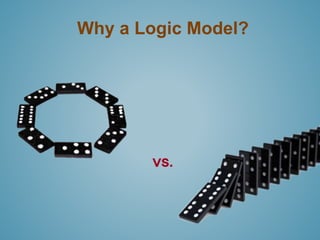
Why a Logic Model? 
vs.
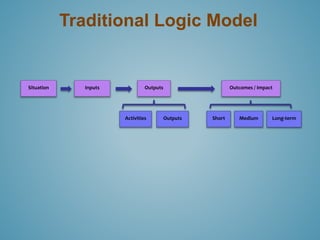
Traditional Logic Model 
Situation Inputs Outputs Outcomes / Impact 
Activities Outputs Short Medium Long-term
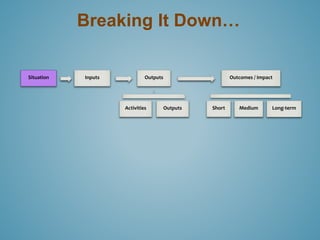
Breaking It Down… 
Situation Inputs Outputs Outcomes / Impact 
Activities Outputs Short Medium Long-term
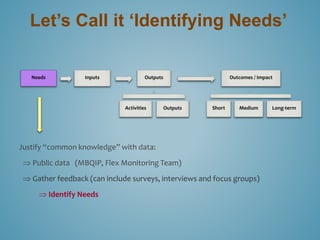
Let’s Call it ‘Identifying Needs’ 
Needs Inputs Outputs Outcomes / Impact 
Activities Outputs Short Medium Long-term 
Justify “common knowledge” with data: 
 Public data (MBQIP, Flex Monitoring Team) 
 Gather feedback (can include surveys, interviews and focus groups) 
 Identify Needs
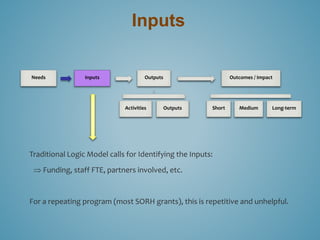
Inputs 
Needs Inputs Outputs Outcomes / Impact 
Activities Outputs Short Medium Long-term 
Traditional Logic Model calls for Identifying the Inputs: 
 Funding, staff FTE, partners involved, etc. 
For a repeating program (most SORH grants), this is repetitive and unhelpful.
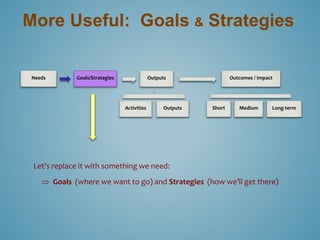
More Useful: Goals & Strategies 
Needs Goals/Strategies Outputs Outcomes / Impact 
Activities Outputs Short Medium Long-term 
Let’s replace it with something we need: 
 Goals (where we want to go) and Strategies (how we’ll get there)
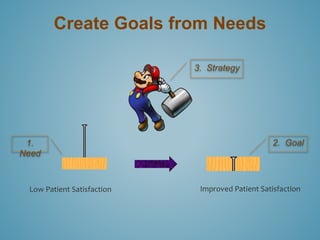
Create Goals from Needs 
2. Goal 
3. Strategy 
Improved Patient Satisfaction 
1. 
Need 
Low Patient Satisfaction
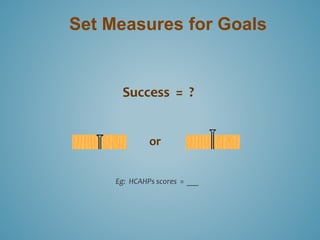
Set Measures for Goals 
Success = ? 
or 
Eg: HCAHPs scores = ___
Pick Strategies that Target Goal Metrics 
(If it doesn’t move the number, it doesn’t belong) 
Common Flex Strategies 
– Education / Training 
– Creating Tools 
– Technical Assistance 
– Consulting 
– Group Projects
Finally – Choose Activities 
“ H a l l el u j a h !!”
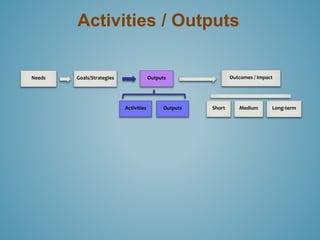
Activities / Outputs 
Outcomes / Impact 
Needs Goals/Strategies Outputs 
Activities Outputs Short Medium Long-term
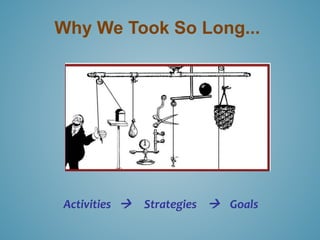
Why We Took So Long... 
Activities  Strategies  Goals
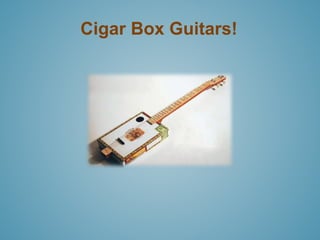
Cigar Box Guitars!
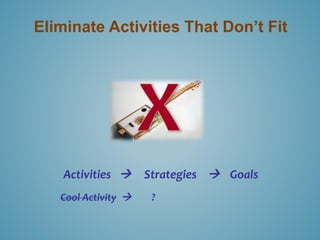
Eliminate Activities That Don’t Fit 
Activities  Strategies  Goals 
Cool Activity  ?
Outcomes / Impact 
Needs Goals/Strategies Outputs 
Activities Outputs Short Medium Long-term 
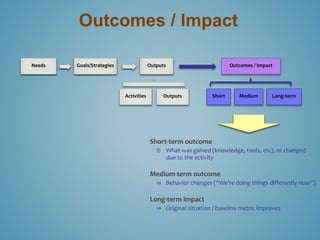
Short-term outcome 
Outcomes / Impact 
 What was gained (knowledge, tools, etc), or changed 
due to the activity 
Medium-term outcome 
⇒ Behavior changes (“We’re doing things differently now”) 
Long-term impact 
⇒ Original situation / baseline metric improves
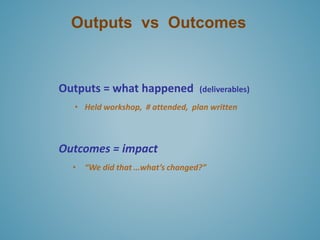
Outputs vs Outcomes 
Outputs = what happened (deliverables) 
• Held workshop, # attended, plan written 
Outcomes = impact 
• “We did that …what’s changed?”
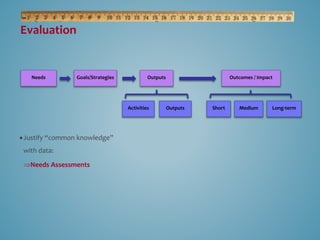
Evaluation 
Needs Outputs Outcomes / Impact 
 Justify “common knowledge” 
with data: 
Needs Assessments 
Activities Outputs Short Medium Long-term 
Goals/Strategies
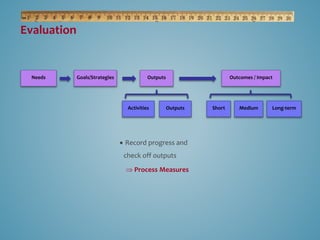
Needs Outputs Outcomes / Impact 
Activities Outputs Short Medium Long-term 
 Record progress and 
check off outputs 
 Process Measures 
Goals/Strategies 
Evaluation
Needs Outputs Outcomes / Impact 
Activities Outputs Short Medium Long-term 
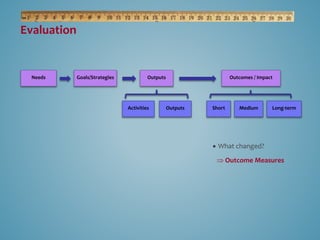
 What changed? 
 Outcome Measures 
Goals/Strategies 
Evaluation
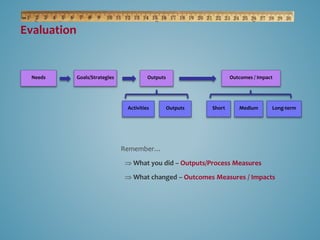
Remember… 
 What you did – Outputs/Process Measures 
 What changed – Outcomes Measures / Impacts 
Evaluation 
Needs Outputs Outcomes / Impact 
Activities Outputs Short Medium Long-term 
Goals/Strategies
Logic Model 
Needs Outputs Outcomes / Impact 
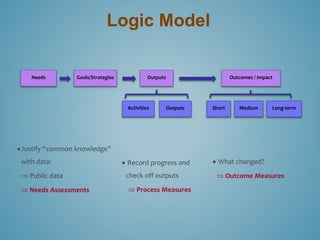
 Justify “common knowledge” 
with data: 
 Public data 
 Needs Assessments 
Activities Outputs Short Medium Long-term 
 Record progress and 
check off outputs 
 Process Measures 
 What changed? 
 Outcome Measures 
Goals/Strategies
The Logic Model

The Logic Model

  • 1.
  • 2.
    Why a LogicModel? vs.
  • 3.
    Traditional Logic Model Situation Inputs Outputs Outcomes / Impact Activities Outputs Short Medium Long-term
  • 4.
    Breaking It Down… Situation Inputs Outputs Outcomes / Impact Activities Outputs Short Medium Long-term
  • 5.
    Let’s Call it‘Identifying Needs’ Needs Inputs Outputs Outcomes / Impact Activities Outputs Short Medium Long-term Justify “common knowledge” with data:  Public data (MBQIP, Flex Monitoring Team)  Gather feedback (can include surveys, interviews and focus groups)  Identify Needs
  • 6.
    Inputs Needs InputsOutputs Outcomes / Impact Activities Outputs Short Medium Long-term Traditional Logic Model calls for Identifying the Inputs:  Funding, staff FTE, partners involved, etc. For a repeating program (most SORH grants), this is repetitive and unhelpful.
  • 7.
    More Useful: Goals& Strategies Needs Goals/Strategies Outputs Outcomes / Impact Activities Outputs Short Medium Long-term Let’s replace it with something we need:  Goals (where we want to go) and Strategies (how we’ll get there)
  • 8.
    Create Goals fromNeeds 2. Goal 3. Strategy Improved Patient Satisfaction 1. Need Low Patient Satisfaction
  • 9.
    Set Measures forGoals Success = ? or Eg: HCAHPs scores = ___
  • 10.
    Pick Strategies thatTarget Goal Metrics (If it doesn’t move the number, it doesn’t belong) Common Flex Strategies – Education / Training – Creating Tools – Technical Assistance – Consulting – Group Projects
  • 11.
    Finally – ChooseActivities “ H a l l el u j a h !!”
  • 12.
    Activities / Outputs Outcomes / Impact Needs Goals/Strategies Outputs Activities Outputs Short Medium Long-term
  • 13.
    Why We TookSo Long... Activities  Strategies  Goals
  • 14.
  • 15.
    Eliminate Activities ThatDon’t Fit Activities  Strategies  Goals Cool Activity  ?
  • 16.
    Outcomes / Impact Needs Goals/Strategies Outputs Activities Outputs Short Medium Long-term Short-term outcome Outcomes / Impact  What was gained (knowledge, tools, etc), or changed due to the activity Medium-term outcome ⇒ Behavior changes (“We’re doing things differently now”) Long-term impact ⇒ Original situation / baseline metric improves
  • 17.
    Outputs vs Outcomes Outputs = what happened (deliverables) • Held workshop, # attended, plan written Outcomes = impact • “We did that …what’s changed?”
  • 18.
    Evaluation Needs OutputsOutcomes / Impact  Justify “common knowledge” with data: Needs Assessments Activities Outputs Short Medium Long-term Goals/Strategies
  • 19.
    Needs Outputs Outcomes/ Impact Activities Outputs Short Medium Long-term  Record progress and check off outputs  Process Measures Goals/Strategies Evaluation
  • 20.
    Needs Outputs Outcomes/ Impact Activities Outputs Short Medium Long-term  What changed?  Outcome Measures Goals/Strategies Evaluation
  • 21.
    Remember…  Whatyou did – Outputs/Process Measures  What changed – Outcomes Measures / Impacts Evaluation Needs Outputs Outcomes / Impact Activities Outputs Short Medium Long-term Goals/Strategies
  • 22.
    Logic Model NeedsOutputs Outcomes / Impact  Justify “common knowledge” with data:  Public data  Needs Assessments Activities Outputs Short Medium Long-term  Record progress and check off outputs  Process Measures  What changed?  Outcome Measures Goals/Strategies

Editor's Notes

  • #9 Once you have your finalized set of needs of rural health(care) in your state, it’s time to move into solutions. Take each need and propose a goal for its resolution.
  • #10 Each goal should have a measurement attached. Consider, “how will we know we’ve succeeded?” – when “X” measure is attained. SMART: specific, measurable, attainable, realistic and timely
  • #11 Education (workshops, trainings, webinars, online modules, data reports and research studies), Tools (how-to manuals, FAQ’s, toolkits, useful websites, spreadsheets with formulas, maps), TA (one-on-one answers to questions via email/phone/site visit), Consulting (customized assistance for a facility, performed by staff or contractors), and Group Projects (working with 15 hospitals on a STEMI initiative, etc).
  • #12 Only now do we arrive at what we’ll actually be doing – where most people start.
  • #14 For each Strategy  select suitable activities. Make sure that they will move the numbers attached to Goals. This is the logic model – any activity must impact the steps upstream from them.
  • #16 For each Strategy  select suitable activities. Make sure that they will move the numbers attached to Goals. This is the logic model – any activity must impact the steps upstream from them.
  • #18 For each activity, identify the outputs you expect (deliverables, or ‘process measures’) Then identify the outcomes or impact you hope to see. Ask yourself the “so what?” question for each – “So we trained people in Lean – so what? What will have changed?” That answer is your outcome.
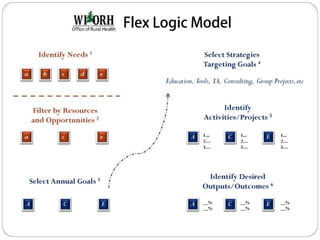
  • #24 The whole picture. On white for their use / records.