BY:GATECHA MILAP
Types of web
technologies1 • Markup/Programming Languages
2 • Web Servers and Server Products
3 • Databases
4 • E-commerce
5 • Types of websites
6 • Internet organisations
“Web technology is the development of the mechanism,that allows
two of more computer devices to communicate over a network.For instance, in a
typical office setting, a number of computers plus additional devices such as printers
may be interconnected via a network, allowing for quick and convenient transmission
of information.The processes involved in web technology are complex and diverse,
which is why major businesses employ whole departments to deal with the issue.
Web technology has revolutionized communication methods and has made operations
far more efficient.”
In simple words we can say that,
Markup is used to in text and word processing documents to describe how a
document should look when displayed or printed. The Internet uses markup to define
how Web pages should look when displayed in a browser or to define the data
contained within a Web document. There are many different types of markup
languages. For example, Rich Text Formatting (RTF) is a markup language that word
processors use. This section describes the most common markup languages that are
used on the Internet.
Programming languages enable you to create custom applications
and add functionality that is not already part of an application. On the Internet,
programming languages enable you to create visual animation, respond to user
actions, validate forms, interact with databases, and provide e-commerce solutions.
Programming languages come in two flavors: interpreted and compiled. Most
scripting languages are interpreted, which means that you write the code and the
browser or server understands what to do with it. Compiled languages require an
added step that translates the code into machine language code, which is then stored
in a separate file with either a .dll or .exe file name extension.
Compiled languages are generally used for server-side processing for Web
applications, such as form processing, that require interaction with databases or
other server processes. With some exceptions, interpreted languages are generally
used for client-side processing, such as image mouse overs and client-side form
validation.
Programming Languages and Technologies
HTML stands for Hypertext Markup Language. HTML is
the primary markup language that is used for Web pages.
HTML tells the browser what to display on a page. For
example, it specifies text, images, and other objects and
can also specify the appearance of text, such as bold or
italic text.The World Wide Web Consortium (W3C)
defines the specification for HTML. The current versions
of HTML are HTML 4.01 and XHTML 1.1.
Note DHTML stands for Dynamic HTML. DHTML
combines cascading style sheets (CSS) and scripting to
create animated Web pages and page elements that
respond to user interaction.
Format of HTML coding
ASP is an abbreviation for Active Server Pages.
ASP is a server-side scripting technology that you
can use to create dynamic Web pages. ASP code is
generally embedded in the HTML within a page, and
HTML pages that contain ASP have an .asp file name
extension; however, because processing is done on
the server, the ASP code is not sent to the browser,
and visitors to your site never see your ASP code.
Client computers receive only the resulting HTML.
ASP
XML stands for Extensible Markup
Language. Similar to HTML, XML is a
markup language designed for the
Internet. However, unlike HTML, which
was designed to define formatting of Web
pages, XML was designed to describe
data. You can use XML to develop custom
markup languages.
As with HTML, the W3C defines the
specifications for XML.
XML
JavaScript is an interpreted scripting language commonly
used on the Internet for creating Web pages that respond to
user actions, such as when a user moves a mouse pointer
over an image or clicks a form button. Combined with HTML
and CSS, JavaScript allows you to create Dynamic HTML
pages.
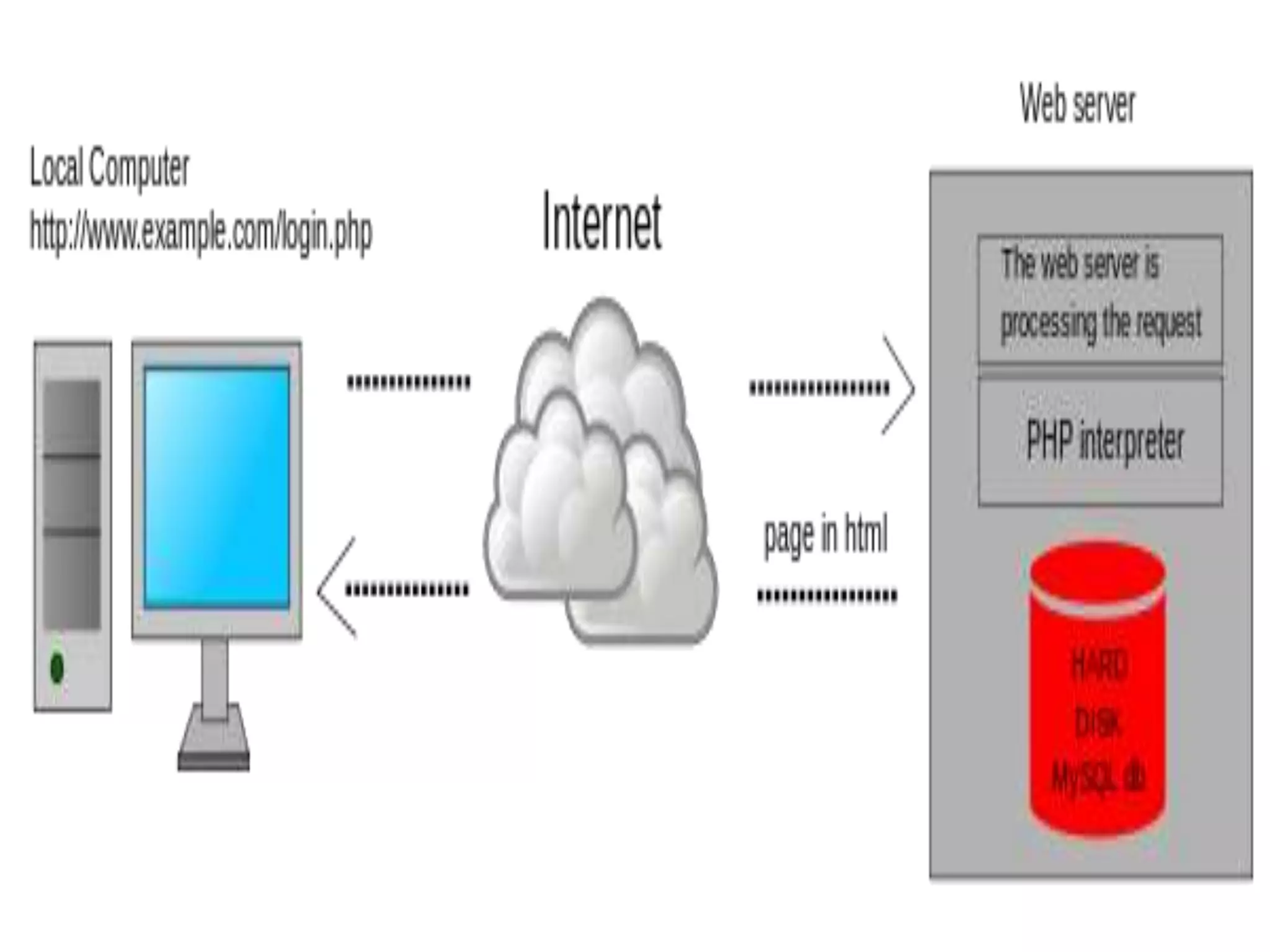
PHP is an interpreted scripting language that is used as an
alternative to ASP on UNIX-based servers. PHP is commonly used
to access databases and provide server-side form and e-commerce
processing. As with ASP code, PHP code is contained within the
body of an HTML page.
PHP code typically runs on Linux-based and UNIX-based Web
servers, and can run on Windows-based servers with an installed
interpreter.
Apache is an open-source Web server that runs on UNIX
operating systems, such as Solaris and Linux, but can also be
installed on Windows-based servers. Apache Web servers
provide simple HTTP processing.
The FrontPage Server Extensions from Microsoft are a set of programs
that support administering, authoring, and browsing a FrontPage-
extended Web site. Users running the FrontPage client can create and
manage professional-looking Web sites, whether they are creating
personal Web pages or corporate Internet or intranet sites. FrontPage
Server Extensions give you, as the administrator, tools for managing site
security, organizing your content into sub sites, and checking site usage.
FrontPage Server Extensions are not required when hosting Web sites
created in They also provide access to special FrontPage features that
provide database functionality, forms processing, hit counters, and other
built-in FrontPage components that require server-side processing.
Databases allow you to store
information for easy retrieval. On the
Internet, databases are used to store
users' logon information, product
information, and customers' orders,
among other things. There are almost as
many database products as there are
reasons and ways to use databases.
Databases
Microsoft Access is an easy database application with which to
work and provides powerful database capabilities. Because Access
databases are file-based rather than server-based, all you need to
work with Access databases is the database file itself, which has a file
name extension of .mdb. You can easily transfer this file to the hosting
Web server, and access the data inside the file by using ASP, PHP, or
the Database Interface Wizard in FrontPage.
Although Access is commonly used for Web applications, it does have
some limitations, including a maximum of 10 to 15 concurrent
connections and 2 gigabytes of data. You may be able to establish
more concurrent connections, but a greater number of concurrent
connections degrades performance. If you anticipate the need for
more concurrent user connections or more than 2 gigabytes of data
storage, which may be the case for large e-commerce or financial
applications, you should consider using Microsoft SQL Server.
Microsoft SQL Server is a secure, robust, and scalable database
application that can grow with the needs of e-commerce and financial
Web applications. If you choose to use the SQL Server database
platform, you need SQL Server installed on the host Web server. If you
do not control your host Web server, you need to verify that your ISP
provides SQL Server database services.
MySQL is an open-source relational database management system
that provides powerful and reliable database management for Web
applications. MySQL can run on UNIX, Linux, and Windows-based
Web servers.
PHP and MySQL are often used together to develop Web
applications and perform server-side database processing. Because
MySQL is an open-source software application, anyone can
download and install it.
E-COMMERCE
PROCESS
A static website is one that has web pages stored on
the server in the format that is sent to a client web browser.
It is primarily coded in Hypertext Markup Language (HTML).
Simple forms or marketing examples of websites, such
as classic website, a five-page website or a brochure
website are often static websites, because they present
pre-defined, static information to the user.Similar to
handing out a printed brochure to customers or clients, a
static website will generally provide consistent, standard
information for an extended period of time. Although the
website owner may make updates periodically, it is a
manual process to edit the text, photos and other content
and may require basic website design skills and software.
Web technology
Web technology
Web technology
Web technology
Web technology
Web technology
Web technology

Web technology

  • 1.
  • 2.
    Types of web technologies1• Markup/Programming Languages 2 • Web Servers and Server Products 3 • Databases 4 • E-commerce 5 • Types of websites 6 • Internet organisations
  • 3.
    “Web technology isthe development of the mechanism,that allows two of more computer devices to communicate over a network.For instance, in a typical office setting, a number of computers plus additional devices such as printers may be interconnected via a network, allowing for quick and convenient transmission of information.The processes involved in web technology are complex and diverse, which is why major businesses employ whole departments to deal with the issue. Web technology has revolutionized communication methods and has made operations far more efficient.” In simple words we can say that,
  • 5.
    Markup is usedto in text and word processing documents to describe how a document should look when displayed or printed. The Internet uses markup to define how Web pages should look when displayed in a browser or to define the data contained within a Web document. There are many different types of markup languages. For example, Rich Text Formatting (RTF) is a markup language that word processors use. This section describes the most common markup languages that are used on the Internet.
  • 6.
    Programming languages enableyou to create custom applications and add functionality that is not already part of an application. On the Internet, programming languages enable you to create visual animation, respond to user actions, validate forms, interact with databases, and provide e-commerce solutions. Programming languages come in two flavors: interpreted and compiled. Most scripting languages are interpreted, which means that you write the code and the browser or server understands what to do with it. Compiled languages require an added step that translates the code into machine language code, which is then stored in a separate file with either a .dll or .exe file name extension. Compiled languages are generally used for server-side processing for Web applications, such as form processing, that require interaction with databases or other server processes. With some exceptions, interpreted languages are generally used for client-side processing, such as image mouse overs and client-side form validation. Programming Languages and Technologies
  • 8.
    HTML stands forHypertext Markup Language. HTML is the primary markup language that is used for Web pages. HTML tells the browser what to display on a page. For example, it specifies text, images, and other objects and can also specify the appearance of text, such as bold or italic text.The World Wide Web Consortium (W3C) defines the specification for HTML. The current versions of HTML are HTML 4.01 and XHTML 1.1. Note DHTML stands for Dynamic HTML. DHTML combines cascading style sheets (CSS) and scripting to create animated Web pages and page elements that respond to user interaction.
  • 9.
  • 10.
    ASP is anabbreviation for Active Server Pages. ASP is a server-side scripting technology that you can use to create dynamic Web pages. ASP code is generally embedded in the HTML within a page, and HTML pages that contain ASP have an .asp file name extension; however, because processing is done on the server, the ASP code is not sent to the browser, and visitors to your site never see your ASP code. Client computers receive only the resulting HTML. ASP
  • 12.
    XML stands forExtensible Markup Language. Similar to HTML, XML is a markup language designed for the Internet. However, unlike HTML, which was designed to define formatting of Web pages, XML was designed to describe data. You can use XML to develop custom markup languages. As with HTML, the W3C defines the specifications for XML. XML
  • 13.
    JavaScript is aninterpreted scripting language commonly used on the Internet for creating Web pages that respond to user actions, such as when a user moves a mouse pointer over an image or clicks a form button. Combined with HTML and CSS, JavaScript allows you to create Dynamic HTML pages. PHP is an interpreted scripting language that is used as an alternative to ASP on UNIX-based servers. PHP is commonly used to access databases and provide server-side form and e-commerce processing. As with ASP code, PHP code is contained within the body of an HTML page. PHP code typically runs on Linux-based and UNIX-based Web servers, and can run on Windows-based servers with an installed interpreter.
  • 16.
    Apache is anopen-source Web server that runs on UNIX operating systems, such as Solaris and Linux, but can also be installed on Windows-based servers. Apache Web servers provide simple HTTP processing. The FrontPage Server Extensions from Microsoft are a set of programs that support administering, authoring, and browsing a FrontPage- extended Web site. Users running the FrontPage client can create and manage professional-looking Web sites, whether they are creating personal Web pages or corporate Internet or intranet sites. FrontPage Server Extensions give you, as the administrator, tools for managing site security, organizing your content into sub sites, and checking site usage. FrontPage Server Extensions are not required when hosting Web sites created in They also provide access to special FrontPage features that provide database functionality, forms processing, hit counters, and other built-in FrontPage components that require server-side processing.
  • 17.
    Databases allow youto store information for easy retrieval. On the Internet, databases are used to store users' logon information, product information, and customers' orders, among other things. There are almost as many database products as there are reasons and ways to use databases. Databases
  • 19.
    Microsoft Access isan easy database application with which to work and provides powerful database capabilities. Because Access databases are file-based rather than server-based, all you need to work with Access databases is the database file itself, which has a file name extension of .mdb. You can easily transfer this file to the hosting Web server, and access the data inside the file by using ASP, PHP, or the Database Interface Wizard in FrontPage. Although Access is commonly used for Web applications, it does have some limitations, including a maximum of 10 to 15 concurrent connections and 2 gigabytes of data. You may be able to establish more concurrent connections, but a greater number of concurrent connections degrades performance. If you anticipate the need for more concurrent user connections or more than 2 gigabytes of data storage, which may be the case for large e-commerce or financial applications, you should consider using Microsoft SQL Server.
  • 20.
    Microsoft SQL Serveris a secure, robust, and scalable database application that can grow with the needs of e-commerce and financial Web applications. If you choose to use the SQL Server database platform, you need SQL Server installed on the host Web server. If you do not control your host Web server, you need to verify that your ISP provides SQL Server database services. MySQL is an open-source relational database management system that provides powerful and reliable database management for Web applications. MySQL can run on UNIX, Linux, and Windows-based Web servers. PHP and MySQL are often used together to develop Web applications and perform server-side database processing. Because MySQL is an open-source software application, anyone can download and install it.
  • 23.
  • 26.
    A static websiteis one that has web pages stored on the server in the format that is sent to a client web browser. It is primarily coded in Hypertext Markup Language (HTML). Simple forms or marketing examples of websites, such as classic website, a five-page website or a brochure website are often static websites, because they present pre-defined, static information to the user.Similar to handing out a printed brochure to customers or clients, a static website will generally provide consistent, standard information for an extended period of time. Although the website owner may make updates periodically, it is a manual process to edit the text, photos and other content and may require basic website design skills and software.