




Children Impacted by
Drug Abuse and Violence
Presenters:
• Deborah Augustine, Victim Witness Program Manager, Drug
Enforcement Administration
• Chad Napier, Prevention Coordinator for West Virginia and Virginia,
Appalachia High Intensity Drug Trafficking Area
• Andrea Darr, Director, West Virginia Center for Children's Justice,
West Virginia State Police
Law Enforcement Track
Moderator: Mary Colvin, CPA, MBA, Vice President and Chief
Operating Officer, Kentucky Employers’ Mutual Insurance, and
Treasurer, Operation UNITE Board of Directors
Disclosures
Deborah Augustine, Andrea Darr, Chad Napier
and Mary Colvin have disclosed no relevant,
real, or apparent personal or professional
financial relationships with proprietary entities
that produce healthcare goods and services.
Disclosures
• All planners/managers hereby state that they or their
spouse/life partner do not have any financial
relationships or relationships to products or devices
with any commercial interest related to the content of
this activity of any amount during the past 12 months.
• The following planners/managers have the following to
disclose:
– John J. Dreyzehner, MD, MPH, FACOEM – Ownership
interest: Starfish Health (spouse)
– Robert DuPont – Employment: Bensinger, DuPont &
Associates-Prescription Drug Research Center
Learning Objectives
1. Explain the national concern created by children
exposed to abuse of illicit and Rx drugs.
2. Prepare law enforcement officers to respond to
drug endangered children.
3. Identify best practice for mitigating the negative
effects of children’s exposure to trauma.
4. Describe how the “Handle with Care” program
can be used by law enforcement, schools and
treatment providers to identify children who
have been exposed to a traumatic event.
DEBORAH AUGUSTINE’S SLIDES WILL
NOT BE POSTED ONLINE, PER HER
REQUEST
Children Impacted by Drug
Abuse & Violence
Deborah Augustine
Phone: 202-307-4777
E-mail: Deborah.S.Augustine@usdoj.gov
For use only on-site Rx Summit Workshop. Do not post to website.
March 30, 2016
Rx Abuse and Heroin Summit
Before we get started . . .
Handlewithcarewv.org
Andrea Darr
(304) 766-5898
Andrea.L.Darr@wvsp.gov
WV Center for Children’s Justice
Chad Napier
(304) 741-7400
napierc@ahidta.org
Appalachian HIDTA
It happens everyday . . .
The Problem
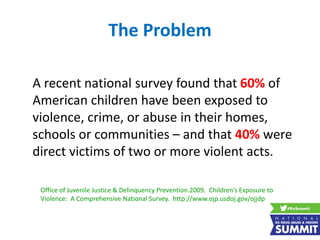
A recent national survey found that 60% of
American children have been exposed to
violence, crime, or abuse in their homes,
schools or communities – and that 40% were
direct victims of two or more violent acts.
Office of Juvenile Justice & Delinquency Prevention.2009. Children’s Exposure to
Violence: A Comprehensive National Survey. http://www.ojp.usdoj.gov/ojjdp
Handle With Care
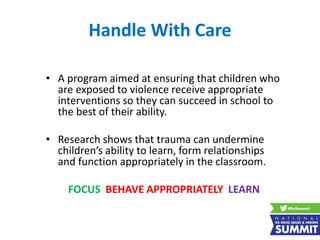
• A program aimed at ensuring that children who
are exposed to violence receive appropriate
interventions so they can succeed in school to
the best of their ability.
• Research shows that trauma can undermine
children’s ability to learn, form relationships
and function appropriately in the classroom.
FOCUS BEHAVE APPROPRIATELY LEARN
Handle With Care
*Kids being successful in school*
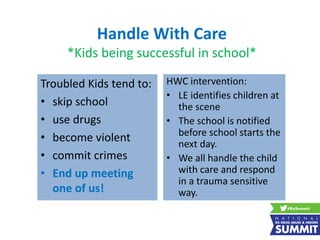
Troubled Kids tend to:
• skip school
• use drugs
• become violent
• commit crimes
• End up meeting
one of us!
HWC intervention:
• LE identifies children at
the scene
• The school is notified
before school starts the
next day.
• We all handle the child
with care and respond
in a trauma sensitive
way.
Handle With Care
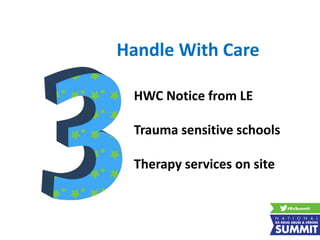
HWC Notice from LE
Trauma sensitive schools
Therapy services on site
Handle With Care
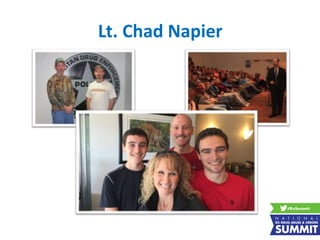
Lt. Chad Napier
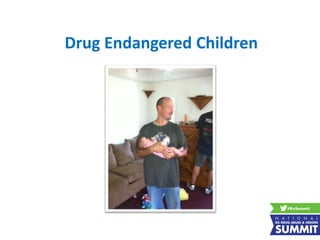
Drug Endangered Children
Retired Lt. Chad Napier
• Prevention Coordinator AHIDTA for WV & VA
• Lieutenant Charleston Police Department
• Bureau Chief of Investigative Services
• Hired by CPD in 1995 (20+ years)
• Patrol, Street Crimes Unit, MDENT as a
Detective, DEA as a Task Force Officer, MDENT
as a SGT., Shift Commander, Housing
Commander, MDENT Commander
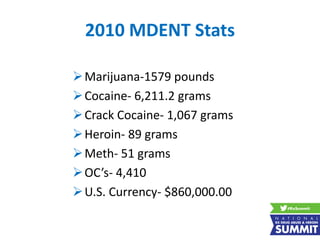
2010 MDENT Stats
Marijuana-1579 pounds
Cocaine- 6,211.2 grams
Crack Cocaine- 1,067 grams
Heroin- 89 grams
Meth- 51 grams
OC’s- 4,410
U.S. Currency- $860,000.00
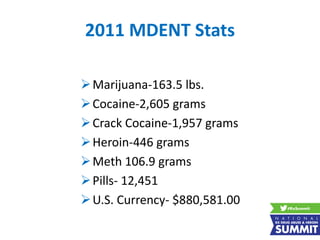
2011 MDENT Stats
Marijuana-163.5 lbs.
Cocaine-2,605 grams
Crack Cocaine-1,957 grams
Heroin-446 grams
Meth 106.9 grams
Pills- 12,451
U.S. Currency- $880,581.00
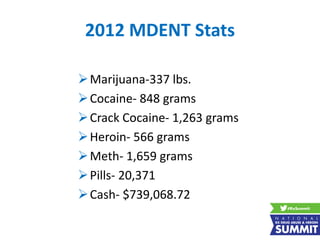
2012 MDENT Stats
Marijuana-337 lbs.
Cocaine- 848 grams
Crack Cocaine- 1,263 grams
Heroin- 566 grams
Meth- 1,659 grams
Pills- 20,371
Cash- $739,068.72
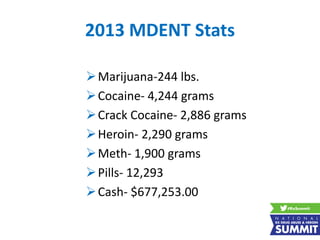
2013 MDENT Stats
Marijuana-244 lbs.
Cocaine- 4,244 grams
Crack Cocaine- 2,886 grams
Heroin- 2,290 grams
Meth- 1,900 grams
Pills- 12,293
Cash- $677,253.00
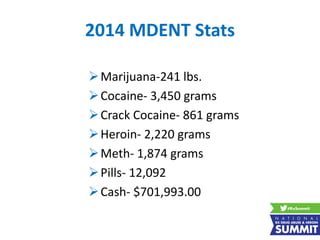
2014 MDENT Stats
Marijuana-241 lbs.
Cocaine- 3,450 grams
Crack Cocaine- 861 grams
Heroin- 2,220 grams
Meth- 1,874 grams
Pills- 12,092
Cash- $701,993.00
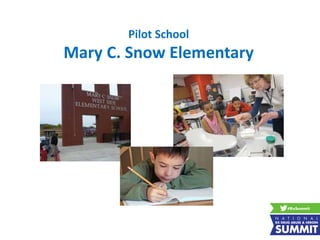
Pilot School
Mary C. Snow Elementary
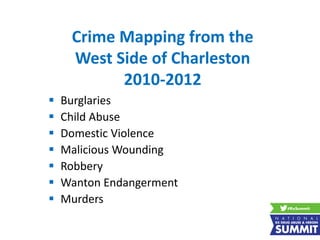
 Burglaries
 Child Abuse
 Domestic Violence
 Malicious Wounding
 Robbery
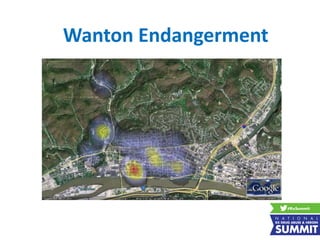
 Wanton Endangerment
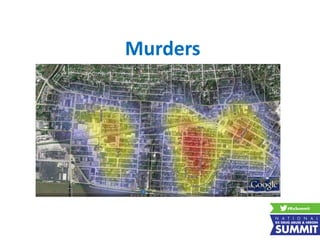
 Murders
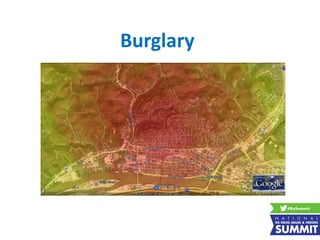
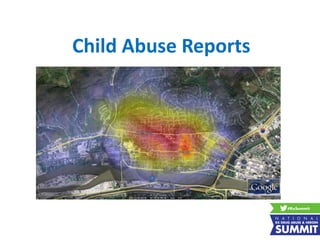
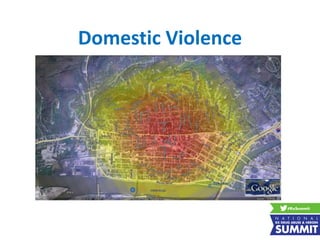
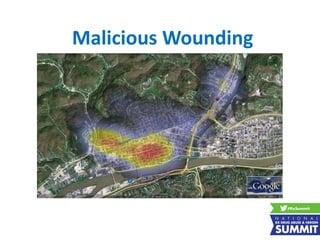
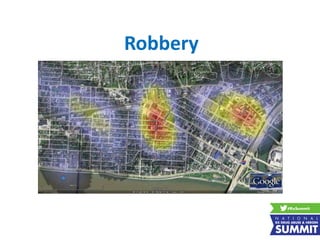
Crime Mapping from the
West Side of Charleston
2010-2012
Burglary
Child Abuse Reports
Domestic Violence
Malicious Wounding
Robbery
Wanton Endangerment
Murders
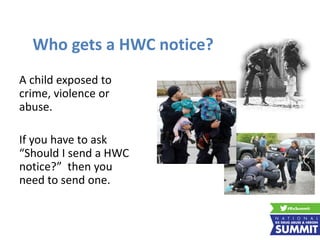
Who gets a HWC notice?
A child exposed to
crime, violence or
abuse.
If you have to ask
“Should I send a HWC
notice?” then you
need to send one.
Law Enforcement sending the
HWC Notice to the School
It needs to be at the school
at the start of the school day!
0
20
40
60
80
100
120
Non Pilot Schools Pilot Schools
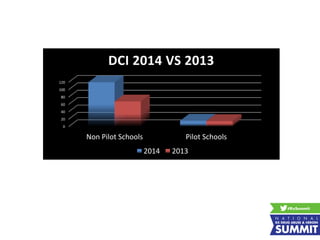
DCI 2014 VS 2013
2014 2013
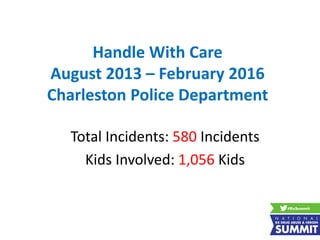
Handle With Care
August 2013 – February 2016
Charleston Police Department
Total Incidents: 580 Incidents
Kids Involved: 1,056 Kids
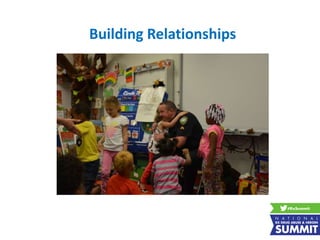
Building Relationships
This Simple HWC Notice
Provides Law Enforcement with the ability to
alert the school that this child was involved
in a police incident last night and may have
academic or behavioral problems today
No details are given
Just 3 simple words
Handle with Care
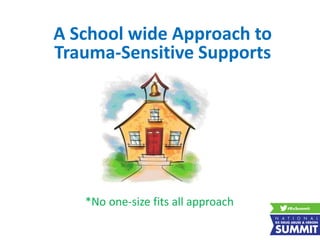
*No one-size fits all approach
A School wide Approach to
Trauma-Sensitive Supports
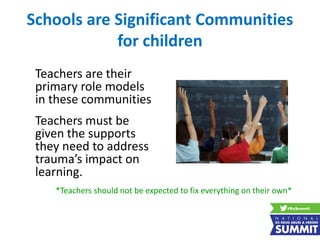
Schools are Significant Communities
for children
Teachers are their
primary role models
in these communities
Teachers must be
given the supports
they need to address
trauma’s impact on
learning.
*Teachers should not be expected to fix everything on their own*
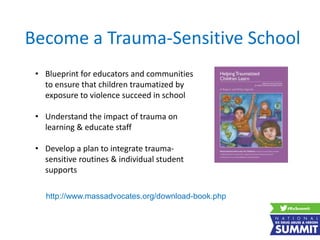
Become a Trauma-Sensitive School
• Blueprint for educators and communities
to ensure that children traumatized by
exposure to violence succeed in school
• Understand the impact of trauma on
learning & educate staff
• Develop a plan to integrate trauma-
sensitive routines & individual student
supports
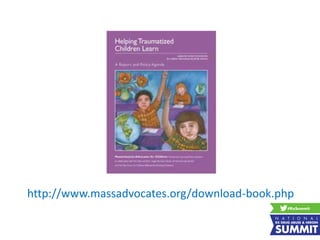
http://www.massadvocates.org/download-book.php
What is Childhood Trauma?
• A response to a stressful event
• Dramatically undermines your ability to cope
• Can lead to a cascade of social, emotional and
academic difficulties
• Can lead to adoption of self medicating
behaviors such as substance abuse, smoking and
overeating
• Interferes with a child’s ability to learn
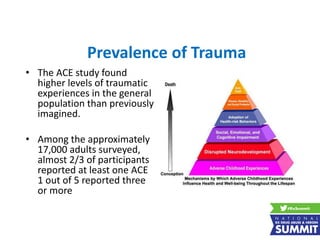
Prevalence of Trauma
• The ACE study found
higher levels of traumatic
experiences in the general
population than previously
imagined.
• Among the approximately
17,000 adults surveyed,
almost 2/3 of participants
reported at least one ACE
1 out of 5 reported three
or more
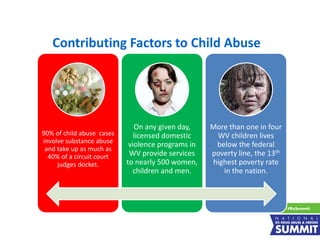
Contributing Factors to Child Abuse
90% of child abuse cases
involve substance abuse
and take up as much as
40% of a circuit court
judges docket.
On any given day,
licensed domestic
violence programs in
WV provide services
to nearly 500 women,
children and men.
More than one in four
WV children lives
below the federal
poverty line, the 13th
highest poverty rate
in the nation.
Sources of Trauma
Physical abuse, emotional abuse, sexual abuse,
witnessing their mother treated violently, having a
parent with substance or mental health issues,
living with an adult who had spent time in prison,
chronic bullying, homelessness, community
violence, undergoing multiple invasive medical
procedures, living with a parent traumatized by
recent combat, systems-induced trauma such as
removal from home, multiple placements,
separation from siblings, natural disasters
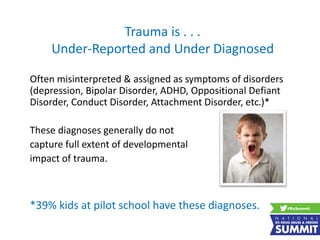
Trauma is . . .
Under-Reported and Under Diagnosed
Often misinterpreted & assigned as symptoms of disorders
(depression, Bipolar Disorder, ADHD, Oppositional Defiant
Disorder, Conduct Disorder, Attachment Disorder, etc.)*
These diagnoses generally do not
capture full extent of developmental
impact of trauma.
*39% kids at pilot school have these diagnoses.
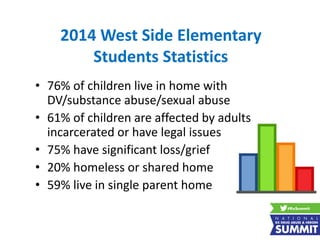
2014 West Side Elementary
Students Statistics
• 76% of children live in home with
DV/substance abuse/sexual abuse
• 61% of children are affected by adults
incarcerated or have legal issues
• 75% have significant loss/grief
• 20% homeless or shared home
• 59% live in single parent home
47
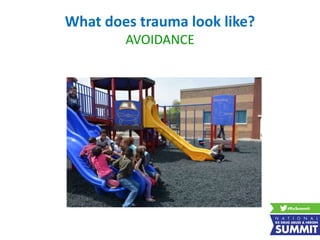
What does trauma look like?
AVOIDANCE
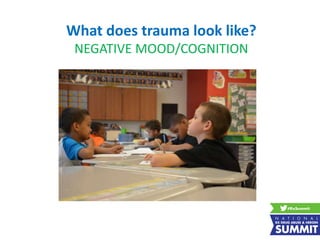
What does trauma look like?
NEGATIVE MOOD/COGNITION
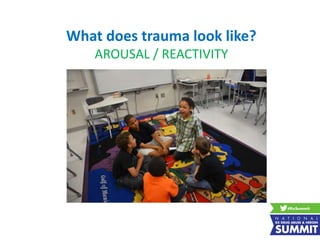
What does trauma look like?
AROUSAL / REACTIVITY
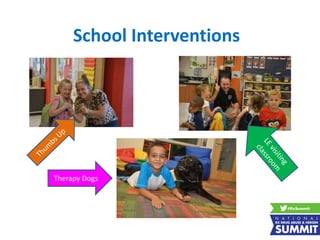
School Interventions
Therapy Dogs
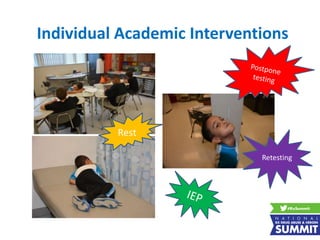
Individual Academic Interventions
Rest
Retesting
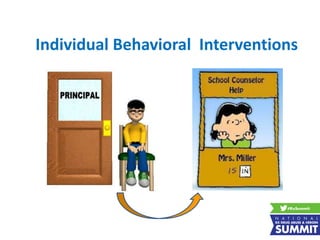
Individual Behavioral Interventions
Handle with Care
• Does not excuse bad behavior
• Children are still accountable for their actions
• HWC seeks to provide students with tools and
skills to appropriately respond in an
acceptable manner
What if school interventions are not
enough?
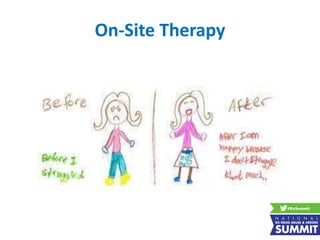
On-Site Therapy
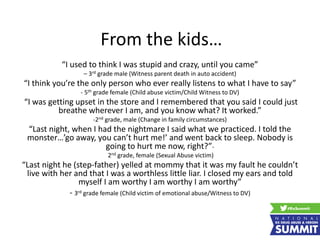
From the kids…
“I used to think I was stupid and crazy, until you came”
– 3rd grade male (Witness parent death in auto accident)
“I think you’re the only person who ever really listens to what I have to say”
- 5th grade female (Child abuse victim/Child Witness to DV)
“I was getting upset in the store and I remembered that you said I could just
breathe wherever I am, and you know what? It worked.”
-2nd grade, male (Change in family circumstances)
“Last night, when I had the nightmare I said what we practiced. I told the
monster…’go away, you can’t hurt me!’ and went back to sleep. Nobody is
going to hurt me now, right?”-
2nd grade, female (Sexual Abuse victim)
“Last night he (step-father) yelled at mommy that it was my fault he couldn’t
live with her and that I was a worthless little liar. I closed my ears and told
myself I am worthy I am worthy I am worthy”
- 3rd grade female (Child victim of emotional abuse/Witness to DV)
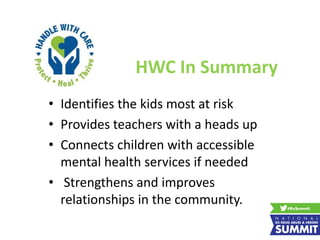
HWC In Summary
• Identifies the kids most at risk
• Provides teachers with a heads up
• Connects children with accessible
mental health services if needed
• Strengthens and improves
relationships in the community.
Things to start thinking about:
• Who are your community stakeholders
• Date & Location for stakeholder presentation
• How the HWC notice information will be captured,
transmitted by the time school starts the next day,
and who and how will they receive notice
• 60 minute training for school personnel
Call the WV Center for Children’s Justice
and we will help you get started.
304-766-5898
In closing
Success in school is success in life.
Let’s help children succeed in school everyday to
the best of their ability!
Let’s Make Handle With Care
Successful in Your Community!
QUESTIONS?
Andrea Darr
(304) 766-5898
Andrea.L.Darr@wvsp.gov
WV Center for Children’s Justice
Chad Napier
(304) 741-7400
napierc@ahidta.org
Appalachian HIDTA
http://www.massadvocates.org/download-book.php
Children Impacted by
Drug Abuse and Violence
Presenters:
• Deborah Augustine, Victim Witness Program Manager, Drug
Enforcement Administration
• Chad Napier, Prevention Coordinator for West Virginia and Virginia,
Appalachia High Intensity Drug Trafficking Area
• Andrea Darr, Director, West Virginia Center for Children's Justice,
West Virginia State Police
Law Enforcement Track
Moderator: Mary Colvin, CPA, MBA, Vice President and Chief
Operating Officer, Kentucky Employers’ Mutual Insurance, and
Treasurer, Operation UNITE Board of Directors

Web only rx16 len wed_200_1_augustine_2napier_3darr - copy

  • 1.
    Children Impacted by DrugAbuse and Violence Presenters: • Deborah Augustine, Victim Witness Program Manager, Drug Enforcement Administration • Chad Napier, Prevention Coordinator for West Virginia and Virginia, Appalachia High Intensity Drug Trafficking Area • Andrea Darr, Director, West Virginia Center for Children's Justice, West Virginia State Police Law Enforcement Track Moderator: Mary Colvin, CPA, MBA, Vice President and Chief Operating Officer, Kentucky Employers’ Mutual Insurance, and Treasurer, Operation UNITE Board of Directors
  • 2.
    Disclosures Deborah Augustine, AndreaDarr, Chad Napier and Mary Colvin have disclosed no relevant, real, or apparent personal or professional financial relationships with proprietary entities that produce healthcare goods and services.
  • 3.
    Disclosures • All planners/managershereby state that they or their spouse/life partner do not have any financial relationships or relationships to products or devices with any commercial interest related to the content of this activity of any amount during the past 12 months. • The following planners/managers have the following to disclose: – John J. Dreyzehner, MD, MPH, FACOEM – Ownership interest: Starfish Health (spouse) – Robert DuPont – Employment: Bensinger, DuPont & Associates-Prescription Drug Research Center
  • 4.
    Learning Objectives 1. Explainthe national concern created by children exposed to abuse of illicit and Rx drugs. 2. Prepare law enforcement officers to respond to drug endangered children. 3. Identify best practice for mitigating the negative effects of children’s exposure to trauma. 4. Describe how the “Handle with Care” program can be used by law enforcement, schools and treatment providers to identify children who have been exposed to a traumatic event.
  • 5.
    DEBORAH AUGUSTINE’S SLIDESWILL NOT BE POSTED ONLINE, PER HER REQUEST Children Impacted by Drug Abuse & Violence Deborah Augustine Phone: 202-307-4777 E-mail: Deborah.S.Augustine@usdoj.gov For use only on-site Rx Summit Workshop. Do not post to website.
  • 6.
    March 30, 2016 RxAbuse and Heroin Summit
  • 7.
    Before we getstarted . . . Handlewithcarewv.org Andrea Darr (304) 766-5898 Andrea.L.Darr@wvsp.gov WV Center for Children’s Justice Chad Napier (304) 741-7400 napierc@ahidta.org Appalachian HIDTA
  • 8.
  • 9.
    The Problem A recentnational survey found that 60% of American children have been exposed to violence, crime, or abuse in their homes, schools or communities – and that 40% were direct victims of two or more violent acts. Office of Juvenile Justice & Delinquency Prevention.2009. Children’s Exposure to Violence: A Comprehensive National Survey. http://www.ojp.usdoj.gov/ojjdp
  • 10.
    Handle With Care •A program aimed at ensuring that children who are exposed to violence receive appropriate interventions so they can succeed in school to the best of their ability. • Research shows that trauma can undermine children’s ability to learn, form relationships and function appropriately in the classroom. FOCUS BEHAVE APPROPRIATELY LEARN
  • 11.
    Handle With Care *Kidsbeing successful in school* Troubled Kids tend to: • skip school • use drugs • become violent • commit crimes • End up meeting one of us! HWC intervention: • LE identifies children at the scene • The school is notified before school starts the next day. • We all handle the child with care and respond in a trauma sensitive way.
  • 12.
    Handle With Care HWCNotice from LE Trauma sensitive schools Therapy services on site
  • 13.
  • 14.
  • 15.
  • 16.
    Retired Lt. ChadNapier • Prevention Coordinator AHIDTA for WV & VA • Lieutenant Charleston Police Department • Bureau Chief of Investigative Services • Hired by CPD in 1995 (20+ years) • Patrol, Street Crimes Unit, MDENT as a Detective, DEA as a Task Force Officer, MDENT as a SGT., Shift Commander, Housing Commander, MDENT Commander
  • 17.
    2010 MDENT Stats Marijuana-1579pounds Cocaine- 6,211.2 grams Crack Cocaine- 1,067 grams Heroin- 89 grams Meth- 51 grams OC’s- 4,410 U.S. Currency- $860,000.00
  • 18.
    2011 MDENT Stats Marijuana-163.5lbs. Cocaine-2,605 grams Crack Cocaine-1,957 grams Heroin-446 grams Meth 106.9 grams Pills- 12,451 U.S. Currency- $880,581.00
  • 19.
    2012 MDENT Stats Marijuana-337lbs. Cocaine- 848 grams Crack Cocaine- 1,263 grams Heroin- 566 grams Meth- 1,659 grams Pills- 20,371 Cash- $739,068.72
  • 20.
    2013 MDENT Stats Marijuana-244lbs. Cocaine- 4,244 grams Crack Cocaine- 2,886 grams Heroin- 2,290 grams Meth- 1,900 grams Pills- 12,293 Cash- $677,253.00
  • 21.
    2014 MDENT Stats Marijuana-241lbs. Cocaine- 3,450 grams Crack Cocaine- 861 grams Heroin- 2,220 grams Meth- 1,874 grams Pills- 12,092 Cash- $701,993.00
  • 22.
    Pilot School Mary C.Snow Elementary
  • 23.
     Burglaries  ChildAbuse  Domestic Violence  Malicious Wounding  Robbery  Wanton Endangerment  Murders Crime Mapping from the West Side of Charleston 2010-2012
  • 24.
  • 25.
  • 26.
  • 27.
  • 28.
  • 29.
  • 30.
  • 31.
    Who gets aHWC notice? A child exposed to crime, violence or abuse. If you have to ask “Should I send a HWC notice?” then you need to send one.
  • 32.
    Law Enforcement sendingthe HWC Notice to the School It needs to be at the school at the start of the school day!
  • 35.
    0 20 40 60 80 100 120 Non Pilot SchoolsPilot Schools DCI 2014 VS 2013 2014 2013
  • 36.
    Handle With Care August2013 – February 2016 Charleston Police Department Total Incidents: 580 Incidents Kids Involved: 1,056 Kids
  • 37.
  • 38.
    This Simple HWCNotice Provides Law Enforcement with the ability to alert the school that this child was involved in a police incident last night and may have academic or behavioral problems today No details are given Just 3 simple words Handle with Care
  • 39.
    *No one-size fitsall approach A School wide Approach to Trauma-Sensitive Supports
  • 40.
    Schools are SignificantCommunities for children Teachers are their primary role models in these communities Teachers must be given the supports they need to address trauma’s impact on learning. *Teachers should not be expected to fix everything on their own*
  • 41.
    Become a Trauma-SensitiveSchool • Blueprint for educators and communities to ensure that children traumatized by exposure to violence succeed in school • Understand the impact of trauma on learning & educate staff • Develop a plan to integrate trauma- sensitive routines & individual student supports http://www.massadvocates.org/download-book.php
  • 42.
    What is ChildhoodTrauma? • A response to a stressful event • Dramatically undermines your ability to cope • Can lead to a cascade of social, emotional and academic difficulties • Can lead to adoption of self medicating behaviors such as substance abuse, smoking and overeating • Interferes with a child’s ability to learn
  • 43.
    Prevalence of Trauma •The ACE study found higher levels of traumatic experiences in the general population than previously imagined. • Among the approximately 17,000 adults surveyed, almost 2/3 of participants reported at least one ACE 1 out of 5 reported three or more
  • 44.
    Contributing Factors toChild Abuse 90% of child abuse cases involve substance abuse and take up as much as 40% of a circuit court judges docket. On any given day, licensed domestic violence programs in WV provide services to nearly 500 women, children and men. More than one in four WV children lives below the federal poverty line, the 13th highest poverty rate in the nation.
  • 45.
    Sources of Trauma Physicalabuse, emotional abuse, sexual abuse, witnessing their mother treated violently, having a parent with substance or mental health issues, living with an adult who had spent time in prison, chronic bullying, homelessness, community violence, undergoing multiple invasive medical procedures, living with a parent traumatized by recent combat, systems-induced trauma such as removal from home, multiple placements, separation from siblings, natural disasters
  • 46.
    Trauma is .. . Under-Reported and Under Diagnosed Often misinterpreted & assigned as symptoms of disorders (depression, Bipolar Disorder, ADHD, Oppositional Defiant Disorder, Conduct Disorder, Attachment Disorder, etc.)* These diagnoses generally do not capture full extent of developmental impact of trauma. *39% kids at pilot school have these diagnoses.
  • 47.
    2014 West SideElementary Students Statistics • 76% of children live in home with DV/substance abuse/sexual abuse • 61% of children are affected by adults incarcerated or have legal issues • 75% have significant loss/grief • 20% homeless or shared home • 59% live in single parent home 47
  • 48.
    What does traumalook like? AVOIDANCE
  • 49.
    What does traumalook like? NEGATIVE MOOD/COGNITION
  • 50.
    What does traumalook like? AROUSAL / REACTIVITY
  • 51.
  • 52.
  • 53.
  • 54.
    Handle with Care •Does not excuse bad behavior • Children are still accountable for their actions • HWC seeks to provide students with tools and skills to appropriately respond in an acceptable manner
  • 55.
    What if schoolinterventions are not enough?
  • 57.
  • 58.
    From the kids… “Iused to think I was stupid and crazy, until you came” – 3rd grade male (Witness parent death in auto accident) “I think you’re the only person who ever really listens to what I have to say” - 5th grade female (Child abuse victim/Child Witness to DV) “I was getting upset in the store and I remembered that you said I could just breathe wherever I am, and you know what? It worked.” -2nd grade, male (Change in family circumstances) “Last night, when I had the nightmare I said what we practiced. I told the monster…’go away, you can’t hurt me!’ and went back to sleep. Nobody is going to hurt me now, right?”- 2nd grade, female (Sexual Abuse victim) “Last night he (step-father) yelled at mommy that it was my fault he couldn’t live with her and that I was a worthless little liar. I closed my ears and told myself I am worthy I am worthy I am worthy” - 3rd grade female (Child victim of emotional abuse/Witness to DV)
  • 59.
    HWC In Summary •Identifies the kids most at risk • Provides teachers with a heads up • Connects children with accessible mental health services if needed • Strengthens and improves relationships in the community.
  • 60.
    Things to startthinking about: • Who are your community stakeholders • Date & Location for stakeholder presentation • How the HWC notice information will be captured, transmitted by the time school starts the next day, and who and how will they receive notice • 60 minute training for school personnel Call the WV Center for Children’s Justice and we will help you get started. 304-766-5898
  • 61.
    In closing Success inschool is success in life. Let’s help children succeed in school everyday to the best of their ability!
  • 62.
    Let’s Make HandleWith Care Successful in Your Community! QUESTIONS? Andrea Darr (304) 766-5898 Andrea.L.Darr@wvsp.gov WV Center for Children’s Justice Chad Napier (304) 741-7400 napierc@ahidta.org Appalachian HIDTA
  • 63.
  • 64.
    Children Impacted by DrugAbuse and Violence Presenters: • Deborah Augustine, Victim Witness Program Manager, Drug Enforcement Administration • Chad Napier, Prevention Coordinator for West Virginia and Virginia, Appalachia High Intensity Drug Trafficking Area • Andrea Darr, Director, West Virginia Center for Children's Justice, West Virginia State Police Law Enforcement Track Moderator: Mary Colvin, CPA, MBA, Vice President and Chief Operating Officer, Kentucky Employers’ Mutual Insurance, and Treasurer, Operation UNITE Board of Directors

Editor's Notes

  • #9 Describe a scene where police are called and children are present
  • #29 CHAD
  • #30 CHAD
  • #31 CHAD
  • #33 Every county is different and you need to decide what works best with the resources you have. Here are some suggestions. Primary communications center
  • #38 Pick one day a week and have a school lunch. Pick a school who doesn’t have a resource officer.
  • #40 Trauma-Sensitive Schools Environments Benefit all Children Those whose trauma history is known Those whose trauma will never be clearly identified Those who may be impacted by their traumatized classmates. Jalil’s story
  • #43 Experts explain that trauma is not an event itself, but rather a response to one or more overwhelmingly stressful events where one’s ability to cope is dramatically undermined. These experiences in childhood can lead to a cascade of social, emotional and academic difficulties. As students get older, exposure to traumatic experiences can also lead to the adoption of self-medicating behaviors such as substance abuse, smoking, and overeating. All of these responses to traumatic events can interfere with a child’s ability to learn at school.
  • #44 THE PROBLEM: PREVALENCE OF TRAUMA 1. Many students have had traumatic experiences. Studies now show that nearly every school has children who have been exposed to overwhelming experiences, such as witnessing violence between their caretakers, being the direct targets of abuse, and other kinds of adversity. The Adverse Childhood Experiences (ACE) study found higher levels of traumatic experiences in the general population than previously imagined. Among the approximately 17,000 adults surveyed, just over 50% reported having experienced at least one form of childhood adversity. These included physical, emotional or sexual abuse; witnessing their mother treated violently; having a parent with substance abuse or mental health issues; or, living in a household with an adult who had spent time in prison. If we add those who are chronically bullied, experience periods of homelessness, live in the proximity of pervasive community violence, flee war-torn countries, undergo multiple invasive medical procedures, or live with a parent traumatized by recent combat, the number of children affected by significant adversity grows even larger. Experts explain that trauma is not an event itself, but rather a response to one or more overwhelmingly stressful events where one’s ability to cope is dramatically undermined. These experiences in childhood can lead to a cascade of social, emotional and academic difficulties. As students get older, exposure to traumatic experiences can also lead to the adoption of self-medicating behaviors such as substance abuse, smoking, and overeating. All of these responses to traumatic events can interfere with a child’s ability to learn at school. Childhood abuse, neglect, and exposure to other traumatic stressors which we term adverse childhood experiences(http://www.cdc.gov/violenceprevention/acestudy/prevalence.html) (ACE) are common. Almost two-thirds of our study participants reported at least one ACE, and more than one of five reported three or more ACE. The short- and long-term outcomes of these childhood exposures include a multitude of health and social problems. The ACE Study uses the ACE Score, which is a total count of the number of ACEs reported by respondents. The ACE Score is used to assess the total amount of stress during childhood and has demonstrated that as the number of ACE increase, the risk for the following health problems increases in a strong and graded fashion: Alcoholism and alcohol abuse Chronic obstructive pulmonary disease (COPD) Depression Fetal death Health-related quality of life Illicit drug use Ischemic heart disease (IHD) Liver disease Risk for intimate partner violence Multiple sexual partners Sexually transmitted diseases (STDs) Smoking Suicide attempts Unintended pregnancies Early initiation of smoking Early initiation of sexual activity Adolescent pregnancy
  • #45 How Many Children Live in Poverty? More than one in four West Virginia children lives below the federal poverty line, the 13th highest poverty rate in the nation. According to the 2011 American Community Survey, 25.8 percent of related West Virginia children (94,852) under the age of 18 lived in poverty compared with 22.2 percent of U.S. children. Children fare worse than adults on poverty measures, and children under age six suffer the highest poverty rates of all (Figure 4). Child poverty in WV, a growing and persistent problem, February 2013. WV Coalition Against Domestic Violence, 2012 AP news story, December 2012, child abuse and substance abuse.
  • #46 These included physical, emotional or sexual abuse; witnessing their mother treated violently; having a parent with substance abuse or mental health issues; or, living in a household with an adult who had spent time in prison.
  • #48 You don’t have to live in an area like West Side to be affected by trauma and need to be HWC
  • #49 AVOIDANCE Avoiding activities, people, place Dissociation Feelings of detachment/social withdrawal Decreased interest in activities Limited range of affect
  • #50 The teachers tell me I’m smart. They say I’m just not trying. I find myself staring out the window during class. Next thing I know two weeks have passed and I have failed yet another algebra or biology test. I really try to listen to what the teacher is saying. Sometimes I can see her mouth moving but can’t hear a thing. They say I have potential but that I am slipping out of reach. I wish I could focus and soak in the material, but I just can’t. I wish they understood how hard it is. NEGATIVE MOOD/COGNITION Depression Traumatic grief Regression (behavior, skills) Negative expectations/emotional state Inability to experience positive emotions Difficulties with attention/concentration
  • #51 The teacher told me my six year old, Tyrone, is the terror of his first grade class. She said he pinches, hits, and refuses to obey her. I recently had to attend a suspension hearing where he was put out of school for 3 days. At the shelter and at church, Tyrone is a different child. He clings to his sister and me. He often wakes up with nightmares and a bed that is wet. Tyrone fled with me and his sister from a father who abused us. Our shelter advocate is coming with me to the next school meeting. She says the school can help him learn if they focus on helping him feel safe. I hope the school will listen to us. AROUSAL / REACTIVITY Anxiety, irritability Self-harm Oppositional behaviors Hypervigilance Somatic / physical complaints Conduct problems exaggerated startle, difficulty concentrating Difficulties with emotional behavioral regulations (anger, tantrums, impulsivity aggression) Difficulties with physiological regulation ( sleeping eating bowl/bladder function)
  • #52 Thumbs up Mentors Therapy Dogs LE Officers visiting school Fostering closer relationships Classroom interventions
  • #53 Rest Retest Postpone testing IEP
  • #54 Get Ready Rooms Send to counselor instead of principal Acknowledge behaviors and teaching appropriate forms of expressions Relaxation therapy (deep breathing)
  • #55 Using the F bomb because. Not acceptable. Change your language
  • #58 Guarantees child receives counseling Collaboration with therapist, parents and teachers Addresses behaviors that impact and impede learning
  • #61 Grant