

Brave new world of HTML5
THE “NO I'M NOT BRUCE LAWSON” EDITION (BETA)


Patrick H. Lauke / Webdirections @media / London / 11 June 2010
Web Evangelist at Opera
new technologies you can start using today
HTML5
<!DOCTYPE html>
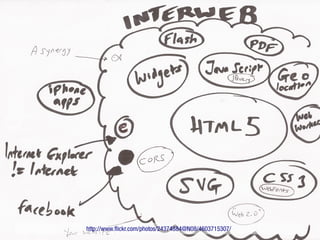
http://www.flickr.com/photos/24374884@N08/4603715307/
HTML5 definition without the bullsh*t
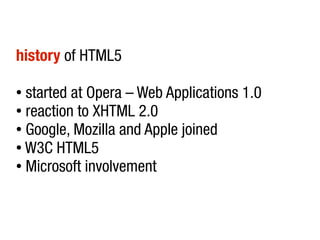
history of HTML5

● started at Opera – Web Applications 1.0
● reaction to XHTML 2.0

● Google, Mozilla and Apple joined

● W3C HTML5

● Microsoft involvement
“...extending the language to better
support Web applications [...] This puts
HTML in direct competition with other
technologies[...] , in particular Flash and
Silverlight.”
Ian Hickson, Editor of HTML5
http://lists.w3.org/Archives/Public/public-html/2009Jan/0215.html
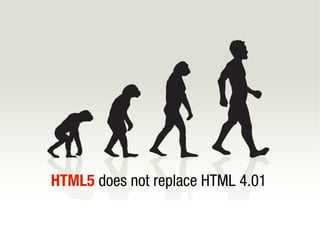
HTML5 does not replace HTML 4.01
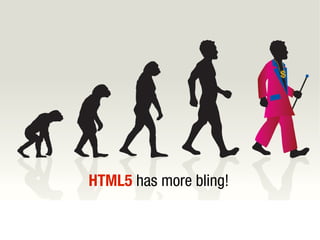
HTML5 has more bling!
HTML5 standardises current browser and
         authoring behaviour
            (e.g. relaxed coding rules)
HTML5 is stricter?
(defines exactly how browsers handle markup/code)
HTML5 brings new
markup elements and JavaScript APIs
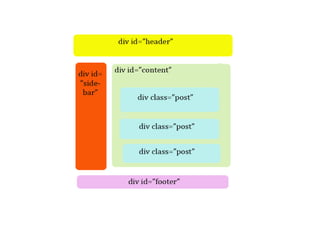
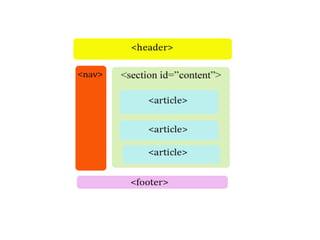
new elements for more accurate semantics
HTML5 elements for a typical blog
unambiguous and machine readable
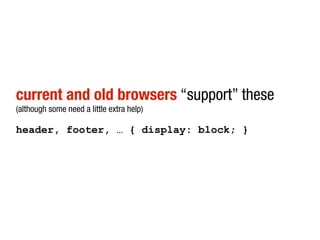
current and old browsers “support” these
(although some need a little extra help)

header, footer, … { display: block; }
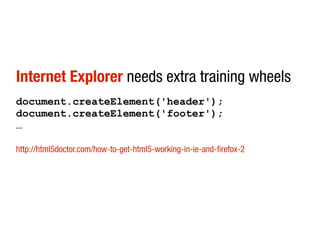
Internet Explorer needs extra training wheels
document.createElement('header');
document.createElement('footer');
…

http://html5doctor.com/how-to-get-html5-working-in-ie-and-firefox-2
webforms – more powerful form elements
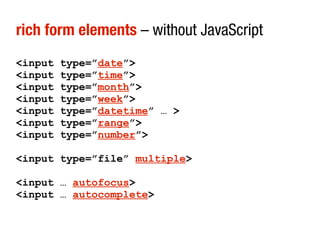
rich form elements – without JavaScript
<input   type=”date”>
<input   type=”time”>
<input   type=”month”>
<input   type=”week”>
<input   type=”datetime” … >
<input   type=”range”>
<input   type=”number”>

<input type=”file” multiple>

<input … autofocus>
<input … autocomplete>
type and attributes for built-in validation
(of course you should still validate on the server)

<input        type=”tel”>
<input        type=”email”>
<input        type=”url”>
<input        … pattern="[a-z]{3}[0-9]{3}">
<input        … required>

Demonstration of webforms
<video>
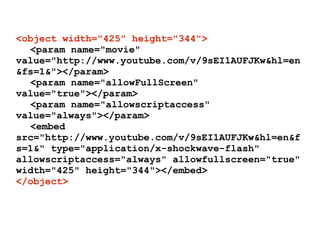
<object width="425" height="344">
  <param name="movie"
value="http://www.youtube.com/v/9sEI1AUFJKw&hl=en
&fs=1&"></param>
  <param name="allowFullScreen"
value="true"></param>
  <param name="allowscriptaccess"
value="always"></param>
  <embed
src="http://www.youtube.com/v/9sEI1AUFJKw&hl=en&f
s=1&" type="application/x-shockwave-flash"
allowscriptaccess="always" allowfullscreen="true"
width="425" height="344"></embed>
</object>
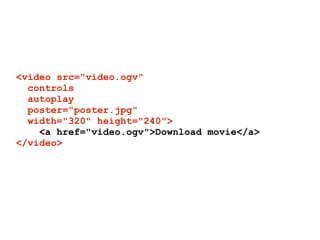
<video src="video.ogv"
  controls
  autoplay
  poster="poster.jpg"
  width="320" height="240">
    <a href="video.ogv">Download movie</a>
</video>
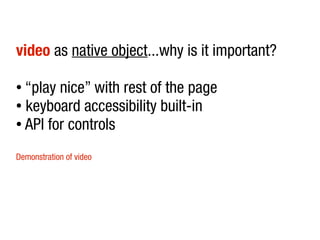
video as native object...why is it important?

● “play nice” with rest of the page
● keyboard accessibility built-in

● API for controls


Demonstration of video
video format debate
H.264 vs Ogg Theora
video format debate
H.264 vs Ogg Theora vs WebM
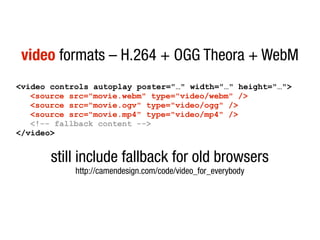
video formats – H.264 + OGG Theora + WebM
<video controls autoplay poster="…" width="…" height="…">
   <source src="movie.webm" type="video/webm" />
   <source src="movie.ogv" type="video/ogg" />
   <source src="movie.mp4" type="video/mp4" />
   <!-- fallback content -->
</video>


       still include fallback for old browsers
            http://camendesign.com/code/video_for_everybody
<audio>
audio exactly the same
<audio src=”music.mp3” controls autoplay></audio>

[...]

<audio controls autoplay>
   <source src="music.mp3" type="audio/mpeg" />
   <source src="music.oga" type="audio/ogg" />
   <!-- fallback content -->
</audio>


                       MP3, Ogg Vorbis, WAV
Demonstration: audio
<canvas>
canvas = “scriptable images”

<canvas width="…" height="…"></canvas>
canvas has standard API methods for drawing
ctx = canvas.getContext("2d");
ctx.fillRect(x, y, width, height);
ctx.beginPath();
ctx.moveTo(x, y);
ctx.lineTo(x, y);
ctx.bezierCurveTo(x1, y1, x2, y2, c1, c2);
ctx = canvas.drawImage(…);
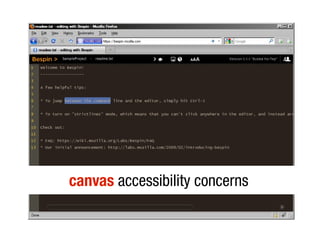
canvas accessibility concerns
canvas appropriate use for enhanced visuals,
     special effects – not pure content
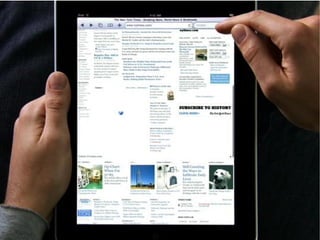
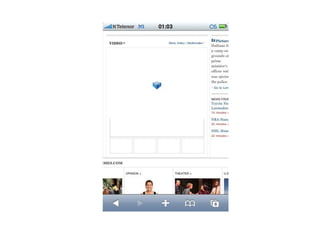
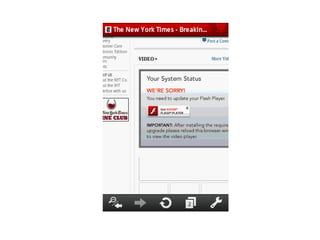
video, audio and canvas on any device
            without plugins
         (Java / Flash / Silverlight not ubiquitous)
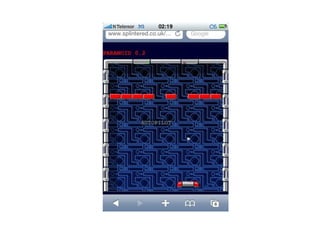
But is it safe to use, right now?
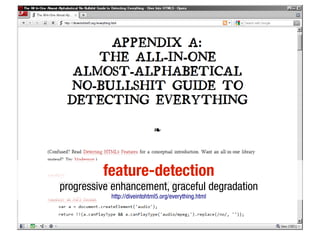
feature-detection
progressive enhancement, graceful degradation
           http://diveintohtml5.org/everything.html
HTML5 as Flashkiller?
not a question of HTML5 replacing Flash...
Giving developers a choice!
www.opera.com/developer
people.opera.com/patrickl/presentations/atmedia_11.06.2010/atmedia_11.06.2010.pdf
                       patrick.lauke@opera.com

Web Directions @media 2010