PRESENTED BY :
SHARATH.R.P
EXPLAINEDBY:
NANDAN.P.H
CLASS:
8TH
ARYABHATA
 Clean Water Act
 Water Quality Act
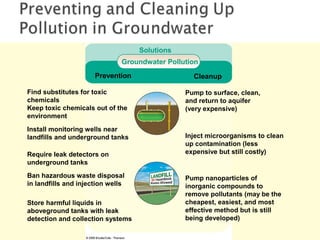
Pump nanoparticles of
inorganic compounds to
remove pollutants (may be the
cheapest, easiest, and most
effective method but is still
being developed)
Find substitutes for toxic
chemicals
Keep toxic chemicals out of the
environment
Install monitoring wells near
landfills and underground tanks
Require leak detectors on
underground tanks
Ban hazardous waste disposal
in landfills and injection wells
Inject microorganisms to clean
up contamination (less
expensive but still costly)
Store harmful liquids in
aboveground tanks with leak
detection and collection systems
Prevention Cleanup
Pump to surface, clean,
and return to aquifer
(very expensive)
Solutions
Groundwater Pollution
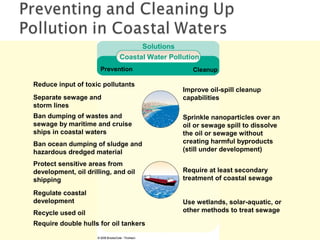
Prevention Cleanup
Ban dumping of wastes and
sewage by maritime and cruise
ships in coastal waters
Reduce input of toxic pollutants
Separate sewage and
storm lines
Regulate coastal
development
Recycle used oil
Require double hulls for oil tankers
Require at least secondary
treatment of coastal sewage
Use wetlands, solar-aquatic, or
other methods to treat sewage
Sprinkle nanoparticles over an
oil or sewage spill to dissolve
the oil or sewage without
creating harmful byproducts
(still under development)
Protect sensitive areas from
development, oil drilling, and oil
shipping
Ban ocean dumping of sludge and
hazardous dredged material
Improve oil-spill cleanup
capabilities
Solutions
Coastal Water Pollution
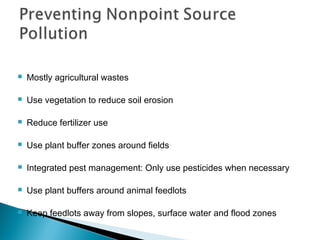
 Mostly agricultural wastes
 Use vegetation to reduce soil erosion
 Reduce fertilizer use
 Use plant buffer zones around fields
 Integrated pest management: Only use pesticides when necessary
 Use plant buffers around animal feedlots
 Keep feedlots away from slopes, surface water and flood zones
 Sewage treatment in rural and suburban areas
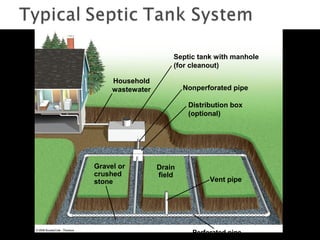
 Septic tanks
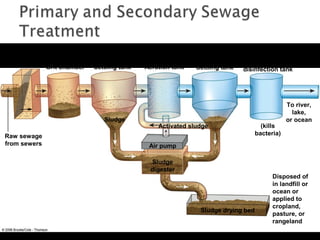
 Primary (physical) sewage treatment
 Secondary (biological) sewage treatment
 Urban sewage treatment (Clean Water Act)
 Sewage treatment facilities in many cities fail to meet federal standards
 Bleaching and disinfection
 Disinfectants: chlorine, ozone, and ultraviolet radiation
Household
wastewater
Perforated pipe
Distribution box
(optional)
Septic tank with manhole
(for cleanout)
Drain
field
Vent pipe
Nonperforated pipe
Gravel or
crushed
stone
Raw sewage
from sewers
Bar screen Grit chamber Settling tank Aeration tank Settling tank
Chlorine
disinfection tank
Sludge
Sludge
digester
Activated sludge
Air pump
(kills
bacteria)
To river,
lake,
or ocean
Sludge drying bed
Disposed of
in landfill or
ocean or
applied to
cropland,
pasture, or
rangeland
Primary Secondary
 Systems that exclude hazardous wastes
 Non-hazardous substitutes
 Composting toilet systems
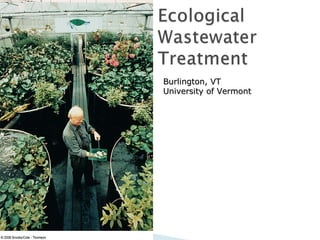
 Working with nature to treat sewage
 Using wetlands to treat sewage
Burlington, VTBurlington, VT
University of VermontUniversity of Vermont
State and local officials want more discretionState and local officials want more discretion
 Purification of urban drinking water
 Purification of drinking water in developing
countries
 Bottled water
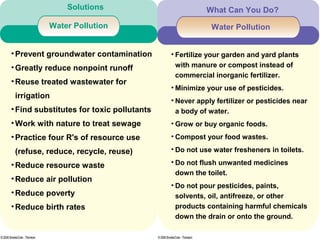
Solutions
Water Pollution
•Prevent groundwater contamination
•Greatly reduce nonpoint runoff
•Reuse treated wastewater for
irrigation
•Find substitutes for toxic pollutants
•Work with nature to treat sewage
•Practice four R's of resource use
(refuse, reduce, recycle, reuse)
•Reduce resource waste
•Reduce air pollution
•Reduce poverty
•Reduce birth rates
What Can You Do?
Water Pollution
• Fertilize your garden and yard plants
with manure or compost instead of
commercial inorganic fertilizer.
• Minimize your use of pesticides.
• Never apply fertilizer or pesticides near
a body of water.
• Grow or buy organic foods.
• Compost your food wastes.
• Do not use water fresheners in toilets.
• Do not flush unwanted medicines
down the toilet.
• Do not pour pesticides, paints,
solvents, oil, antifreeze, or other
products containing harmful chemicals
down the drain or onto the ground.

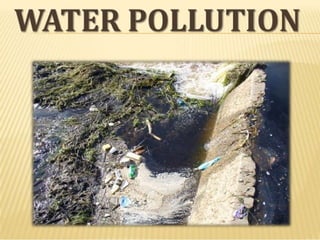
water pollution

  • 1.
  • 18.
     Clean WaterAct  Water Quality Act
  • 19.
    Pump nanoparticles of inorganiccompounds to remove pollutants (may be the cheapest, easiest, and most effective method but is still being developed) Find substitutes for toxic chemicals Keep toxic chemicals out of the environment Install monitoring wells near landfills and underground tanks Require leak detectors on underground tanks Ban hazardous waste disposal in landfills and injection wells Inject microorganisms to clean up contamination (less expensive but still costly) Store harmful liquids in aboveground tanks with leak detection and collection systems Prevention Cleanup Pump to surface, clean, and return to aquifer (very expensive) Solutions Groundwater Pollution
  • 20.
    Prevention Cleanup Ban dumpingof wastes and sewage by maritime and cruise ships in coastal waters Reduce input of toxic pollutants Separate sewage and storm lines Regulate coastal development Recycle used oil Require double hulls for oil tankers Require at least secondary treatment of coastal sewage Use wetlands, solar-aquatic, or other methods to treat sewage Sprinkle nanoparticles over an oil or sewage spill to dissolve the oil or sewage without creating harmful byproducts (still under development) Protect sensitive areas from development, oil drilling, and oil shipping Ban ocean dumping of sludge and hazardous dredged material Improve oil-spill cleanup capabilities Solutions Coastal Water Pollution
  • 21.
     Mostly agriculturalwastes  Use vegetation to reduce soil erosion  Reduce fertilizer use  Use plant buffer zones around fields  Integrated pest management: Only use pesticides when necessary  Use plant buffers around animal feedlots  Keep feedlots away from slopes, surface water and flood zones
  • 22.
     Sewage treatmentin rural and suburban areas  Septic tanks  Primary (physical) sewage treatment  Secondary (biological) sewage treatment  Urban sewage treatment (Clean Water Act)  Sewage treatment facilities in many cities fail to meet federal standards  Bleaching and disinfection  Disinfectants: chlorine, ozone, and ultraviolet radiation
  • 23.
    Household wastewater Perforated pipe Distribution box (optional) Septictank with manhole (for cleanout) Drain field Vent pipe Nonperforated pipe Gravel or crushed stone
  • 24.
    Raw sewage from sewers Barscreen Grit chamber Settling tank Aeration tank Settling tank Chlorine disinfection tank Sludge Sludge digester Activated sludge Air pump (kills bacteria) To river, lake, or ocean Sludge drying bed Disposed of in landfill or ocean or applied to cropland, pasture, or rangeland Primary Secondary
  • 25.
     Systems thatexclude hazardous wastes  Non-hazardous substitutes  Composting toilet systems  Working with nature to treat sewage  Using wetlands to treat sewage
  • 26.
    Burlington, VTBurlington, VT Universityof VermontUniversity of Vermont
  • 27.
    State and localofficials want more discretionState and local officials want more discretion
  • 28.
     Purification ofurban drinking water  Purification of drinking water in developing countries  Bottled water
  • 29.
    Solutions Water Pollution •Prevent groundwatercontamination •Greatly reduce nonpoint runoff •Reuse treated wastewater for irrigation •Find substitutes for toxic pollutants •Work with nature to treat sewage •Practice four R's of resource use (refuse, reduce, recycle, reuse) •Reduce resource waste •Reduce air pollution •Reduce poverty •Reduce birth rates What Can You Do? Water Pollution • Fertilize your garden and yard plants with manure or compost instead of commercial inorganic fertilizer. • Minimize your use of pesticides. • Never apply fertilizer or pesticides near a body of water. • Grow or buy organic foods. • Compost your food wastes. • Do not use water fresheners in toilets. • Do not flush unwanted medicines down the toilet. • Do not pour pesticides, paints, solvents, oil, antifreeze, or other products containing harmful chemicals down the drain or onto the ground.