-Ensuring Access ,Sustainability and Quality
Water Facilities and
Drinking Water Availability
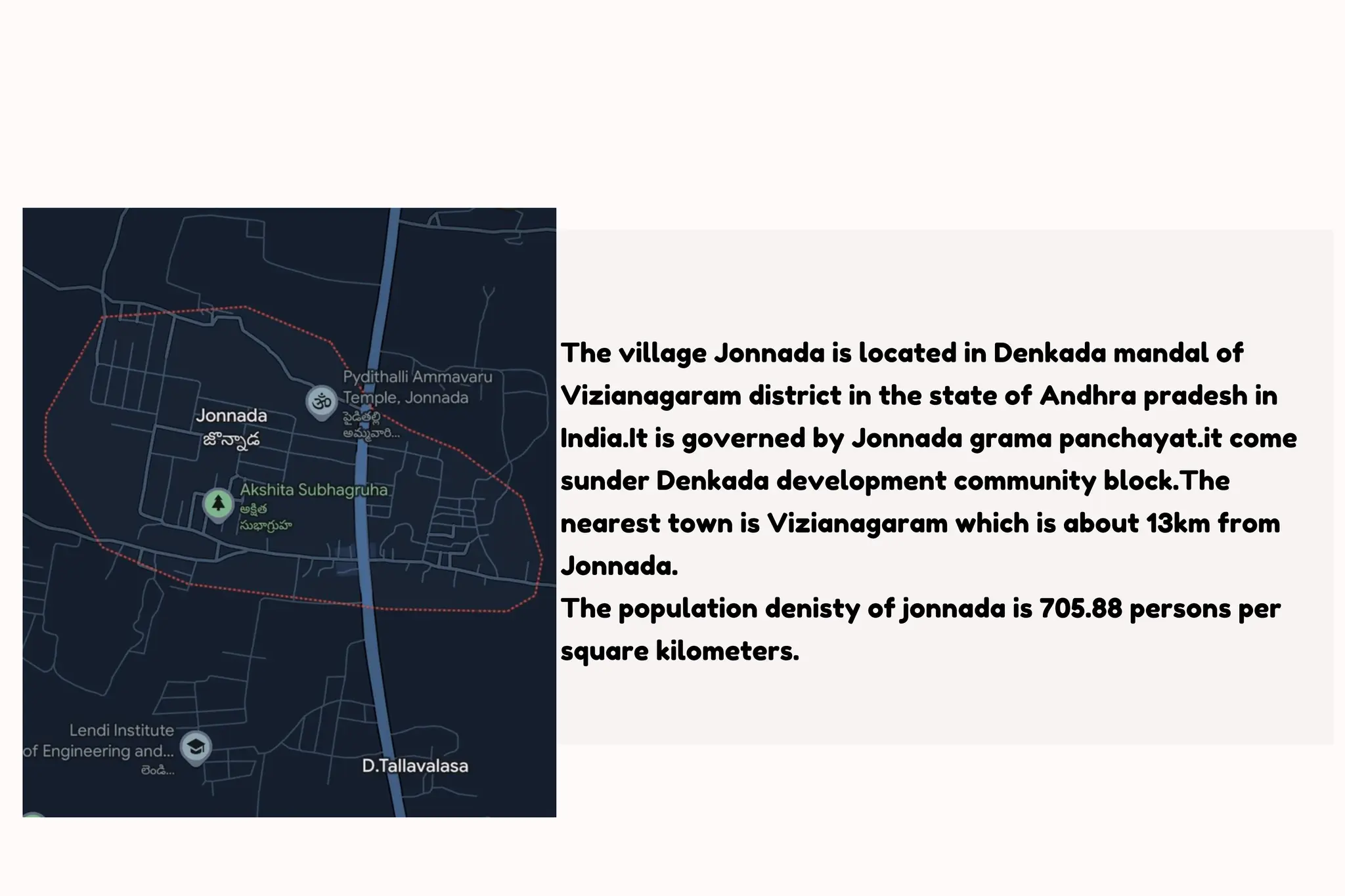
The village Jonnada is located in Denkada mandal of
Vizianagaram district in the state of Andhra pradesh in
India.It is governed by Jonnada grama panchayat.it come
sunder Denkada development community block.The
nearest town is Vizianagaram which is about 13km from
Jonnada.
The population denisty of jonnada is 705.88 persons per
square kilometers.
WATER FACILITIES AND DRINKING WATER AVAILABILITY
RAGHU INSTITUTE OF TECHNOLOGY(AUTONOMOUS)
BACHELOR OF TECHNOLOGY IN COMPUTER SCIENCE AND ENGINEERING
PRESENTED BY
THOOTA SREEJA(223J1A05H3)
VADADA LAKSHMICHANDANA(223J1A05H6)
THORATHI LIKHITA(223J1A05H4)
VIJJAPU HARSHITHA(223J1A05I6)
VADAVALASA VIJAYADURYA(223J1A05H7)
UNDER THE ESTEEMED GUIDANCE OF
MRS.K.HARINI
Introduction
1
3
2
Global Context
Millions of people worldwide lack access to safe drinking water.
Water scarcity and pollution threaten public health, especially in
developing countries.
Importance of Water
Facilities
Water facilities ensure
access to clean drinking
water, which is vital for
sanitation, hygiene, and
human health. These
facilities are essential for
communities, homes,
schools, and businesses.
Safe Drinking Water
as a Right
Access to clean drinking
water is a fundamental
human right, recognized by
the United Nations. Everyone
deserves the right to safe
and affordable water.
Water Supply and Distribution Systems
Water Supply Components
Water supply systems involve several
interconnected parts, including water
sources, treatment plants, and
distribution networks.
1.Water Sources
2.Treatment Plants
3.Distribution Networks
Types of Water Sources
Water sources can be categorized into
surface water and groundwater.
Surface water includes lakes, rivers,
and reservoirs, while groundwater is
found in underground aquifers.
Infrastructure
The infrastructure includes pipes,
storage tanks, and treatment facilities
that transport and store water.
Maintaining and upgrading
infrastructure is essential for reliable
water supply.
Water Treatment Processes
1
4
3
2
Filtration
Water passes through filters to remove remaining particles
and impurities.
Collection
Water is collected from sources and transported to
treatment plants.
Disinfection
Disinfectants like chlorine or UV light are used to kill
harmful bacteria and viruses.
Coagulation and Sedimentation
Chemicals are added to clump together particles and allow
them to settle out.
Challenges in Drinking
Water Availability
Water Scarcity
Droughts, climate change, and
overuse can lead to water
scarcity, affecting access to
clean water.
Infrastructure Issues
Aging pipes and outdated water treatment facilities can lead to leaks,
contamination, and unreliable water supply.
Pollution
Pollution from industrial runoff,
agricultural activities, and
sewage can contaminate water
sources.
Impact of Inadequate Water
Facilities
Health Risks
Contaminated water can cause waterborne illnesses such as cholera,
typhoid, and dysentery.
Economic Impact
Waterborne illnesses and lack of water access can lead to healthcare
costs, productivity loss, and economic stagnation.
Environmental Impact
Overuse and pollution of freshwater resources threaten aquatic
ecosystems and biodiversity.
Global Initiatives and Programs
UN Sustainable Development Goal 6
The UN has set a goal for clean water and sanitation for all by 2030.
1
3
2
Success Stories
Regions that have implemented improved water facilities and sanitation programs have seen significant
improvements in health and well-being.
Organizations Involved
International organizations like WHO, UNICEF, and Water.org work to improve access to clean water and
sanitation.
Innovative Solutions in
Water Facilities
Technology
Community Solutions
Smart water meters,
desalination plants, water
recycling
Rainwater harvesting, water
purification tablets, localized
filtration
Role of Governments and Policies
1 2 3
Government Initiatives
Governments play a vital role in
setting water safety standards
and regulations.
Funding & Investment
Investing in infrastructure and
research is crucial for improving
water facilities and access.
Public-Private
Partnerships
Collaboration between
governments and private
organizations can facilitate
sustainable water management.
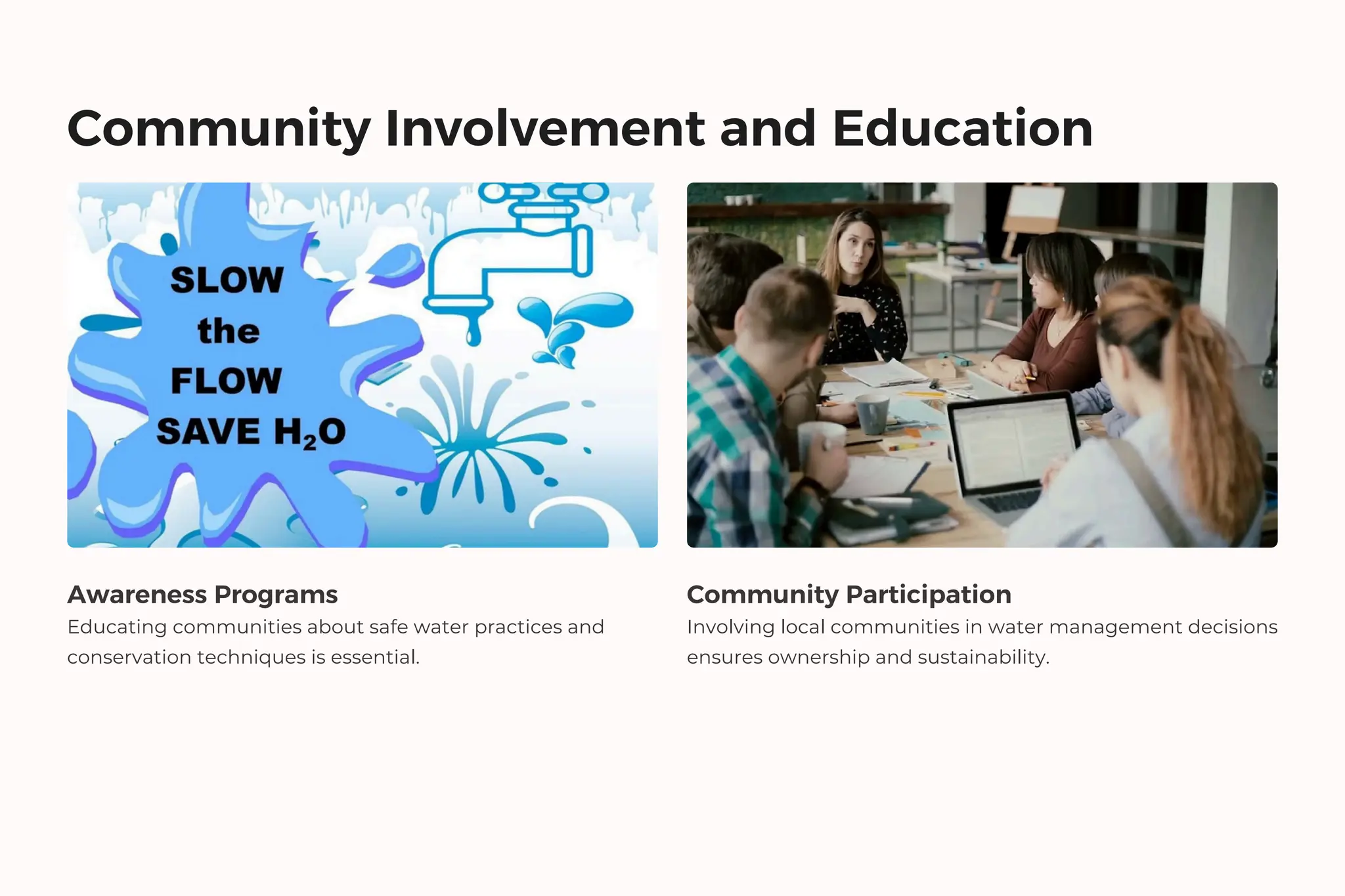
Community Involvement and Education
Awareness Programs
Educating communities about safe water practices and
conservation techniques is essential.
Community Participation
Involving local communities in water management decisions
ensures ownership and sustainability.
Water Distribution and Infrastructure
The purpose of water distribution systems is to ensure the reliable and safe delivery of treated water to
households, businesses, and public spaces. Key components include pipes (PVC, copper, steel) for
transporting water, pumps (booster and lift pumps) for pressure and flow regulation, storage tanks
(ground, elevated, and reservoirs) for balancing supply and demand, and a distribution network that
connects treatment plants to end-users. Regular maintenance is crucial for preventing leaks,
contamination, and ensuring the system’s longevity and efficiency.
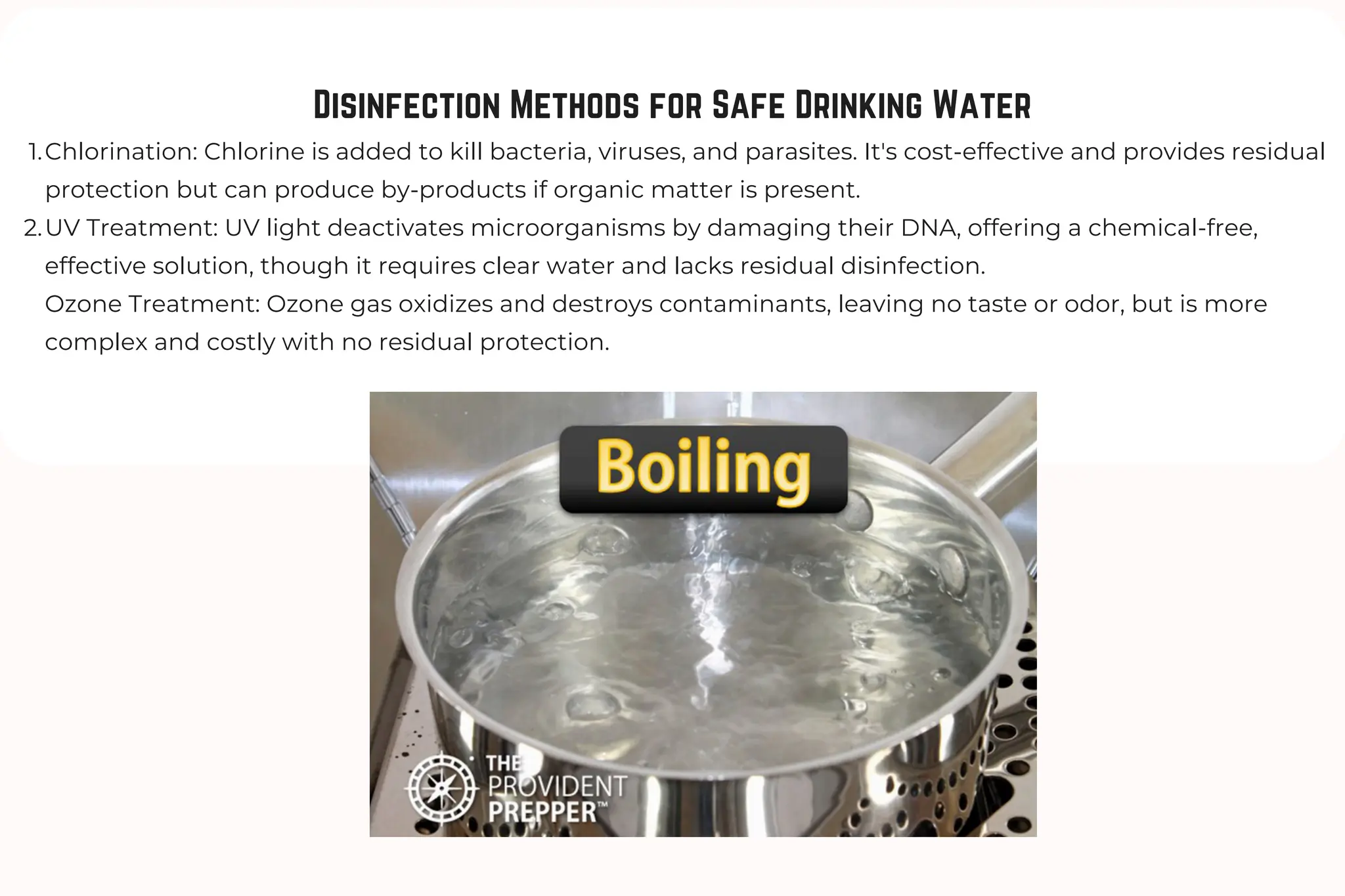
Disinfection Methods for Safe Drinking Water
Chlorination: Chlorine is added to kill bacteria, viruses, and parasites. It's cost-effective and provides residual
protection but can produce by-products if organic matter is present.
1.
UV Treatment: UV light deactivates microorganisms by damaging their DNA, offering a chemical-free,
effective solution, though it requires clear water and lacks residual disinfection.
2.
Ozone Treatment: Ozone gas oxidizes and destroys contaminants, leaving no taste or odor, but is more
complex and costly with no residual protection.
3.
Distribution Systems Overview
Water distribution systems ensure the reliable delivery of treated water to households,
businesses, and public spaces. Key components include pipes (PVC, copper, steel) for
transport, pumps (booster and lift) for pressure regulation, storage tanks (ground, elevated,
reservoirs) to balance supply and demand, and a distribution network to connect treatment
plants to users. Regular maintenance is crucial to prevent leaks, contamination, and ensure
long-term system reliability.
Storage Facilities for Stable Water Supply
Storage facilities ensure a reliable water supply by balancing demand, providing emergency
reserves, and maintaining consistent pressure. Water tanks (ground or above-ground) are
used for short-term storage in residential areas. Reservoirs store large volumes for long-term
use, especially during droughts. Water towers use gravity to distribute water pressure,
particularly in urban or high-elevation areas. These facilities are essential for meeting peak
demands, supporting emergencies, and ensuring water availability during maintenance or
shortages.
Pipeline Network for Effective Water Delivery
The pipeline network is vital for delivering treated water to homes, businesses, and public
areas. Main pipelines carry water over long distances, while distribution pipelines and service
lines deliver it locally. Urban areas often use a grid layout for flexibility, while rural areas may
use a branch layout. Regular maintenance is essential for leak prevention, pressure
management, and modernization to ensure efficient and reliable water delivery. A well-
maintained pipeline network ensures consistent access to clean water for all.
Maintenance of Water Facilities
Regular maintenance is crucial for ensuring a safe and reliable water supply by preventing leaks,
contamination, and infrastructure failures. Key activities include leak detection, pipe cleaning,
tank inspections, and pump/valve maintenance. Routine water quality monitoring ensures safety
standards. Regular maintenance saves costs, extends system life, and protects public health by
minimizing risks. Proactive care ensures efficient, sustainable water facilities with continuous
access to clean water.
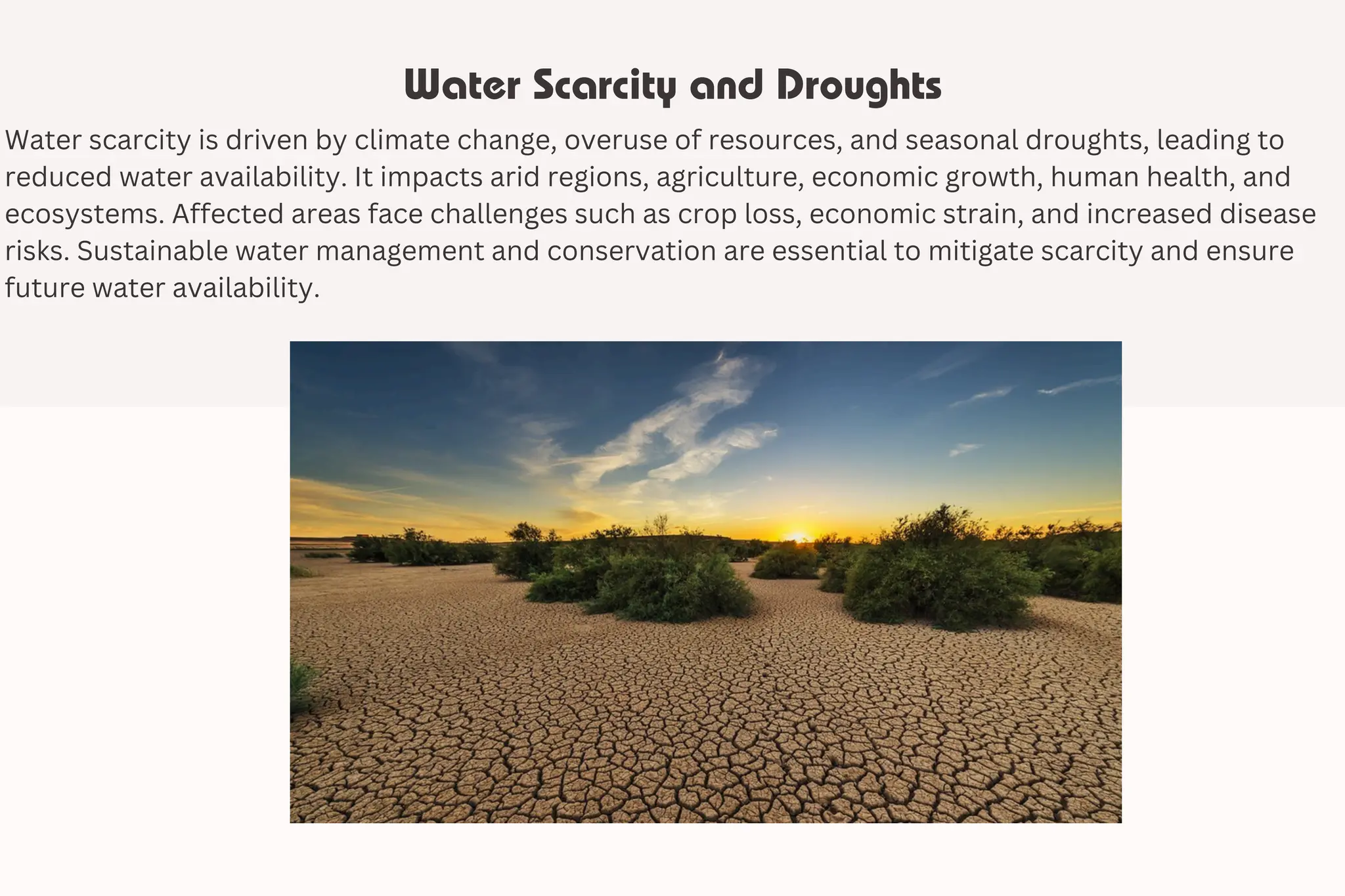
Water Scarcity and Droughts
Water scarcity is driven by climate change, overuse of resources, and seasonal droughts, leading to
reduced water availability. It impacts arid regions, agriculture, economic growth, human health, and
ecosystems. Affected areas face challenges such as crop loss, economic strain, and increased disease
risks. Sustainable water management and conservation are essential to mitigate scarcity and ensure
future water availability.
Pollution and Contamination of Water Sources
Water pollution arises from agricultural runoff (fertilizers and pesticides), industrial waste (chemicals and heavy
metals), and urban wastewater (untreated sewage). These pollutants harm human health, cause environmental
damage, and lead to economic costs due to increased treatment needs and health issues. Addressing water
pollution requires stronger regulations, better waste management, and sustainable agricultural practices to protect
water quality and public health.
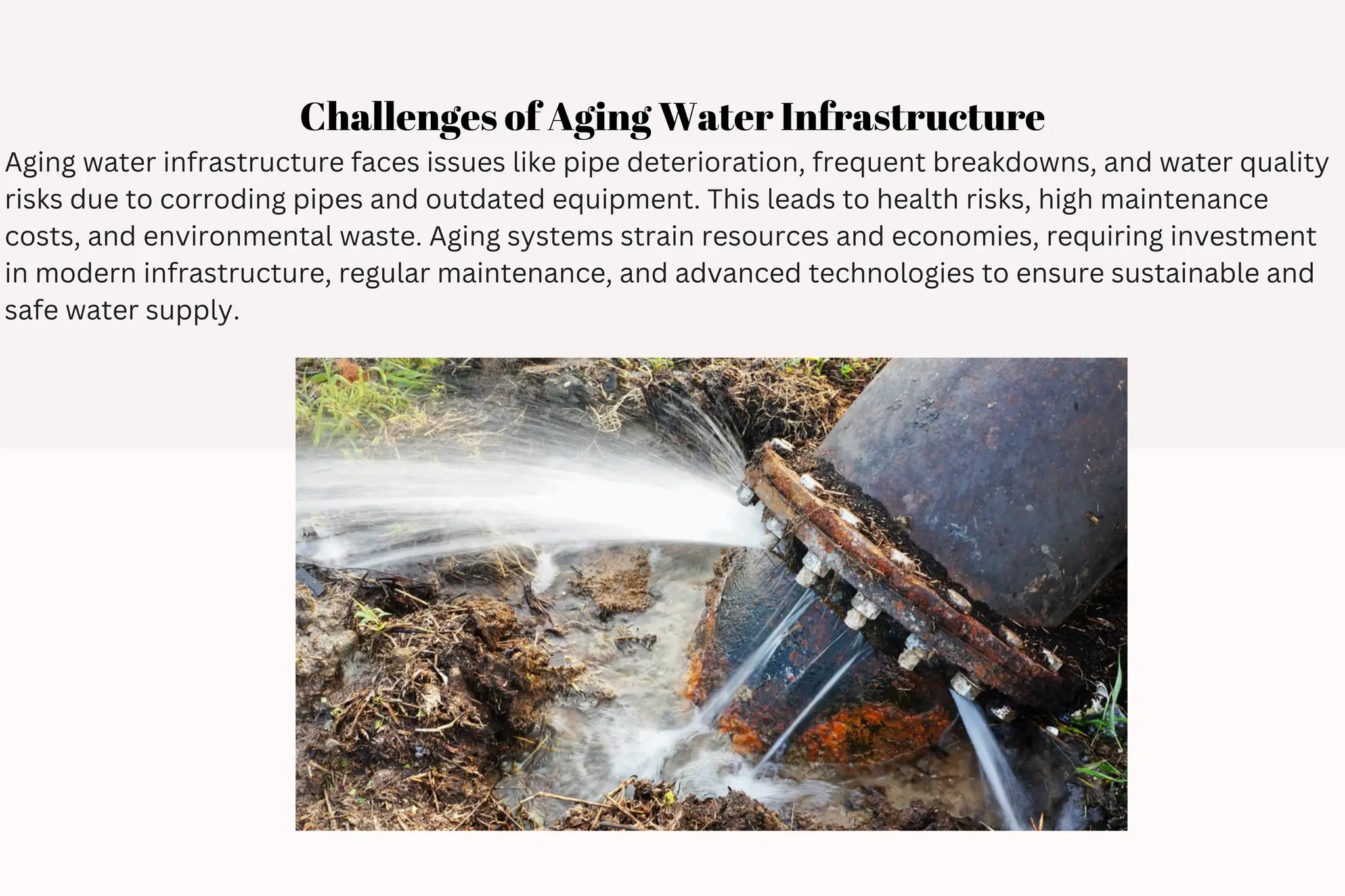
Challenges of Aging Water Infrastructure
Aging water infrastructure faces issues like pipe deterioration, frequent breakdowns, and water quality
risks due to corroding pipes and outdated equipment. This leads to health risks, high maintenance
costs, and environmental waste. Aging systems strain resources and economies, requiring investment
in modern infrastructure, regular maintenance, and advanced technologies to ensure sustainable and
safe water supply.
Impact of Population Growth and Urbanization on Water Demand
Rapid population growth and urbanization increase demand for drinking water, especially in expanding cities
with overburdened infrastructure. Key drivers include population growth, urban expansion, and changing
lifestyles. Challenges include water scarcity, overburdened systems, and environmental impacts like
groundwater depletion. This leads to higher costs, health risks, and resource conflicts. Solutions require
sustainable water management, infrastructure investment, and conservation policies to balance growth with
available resources.
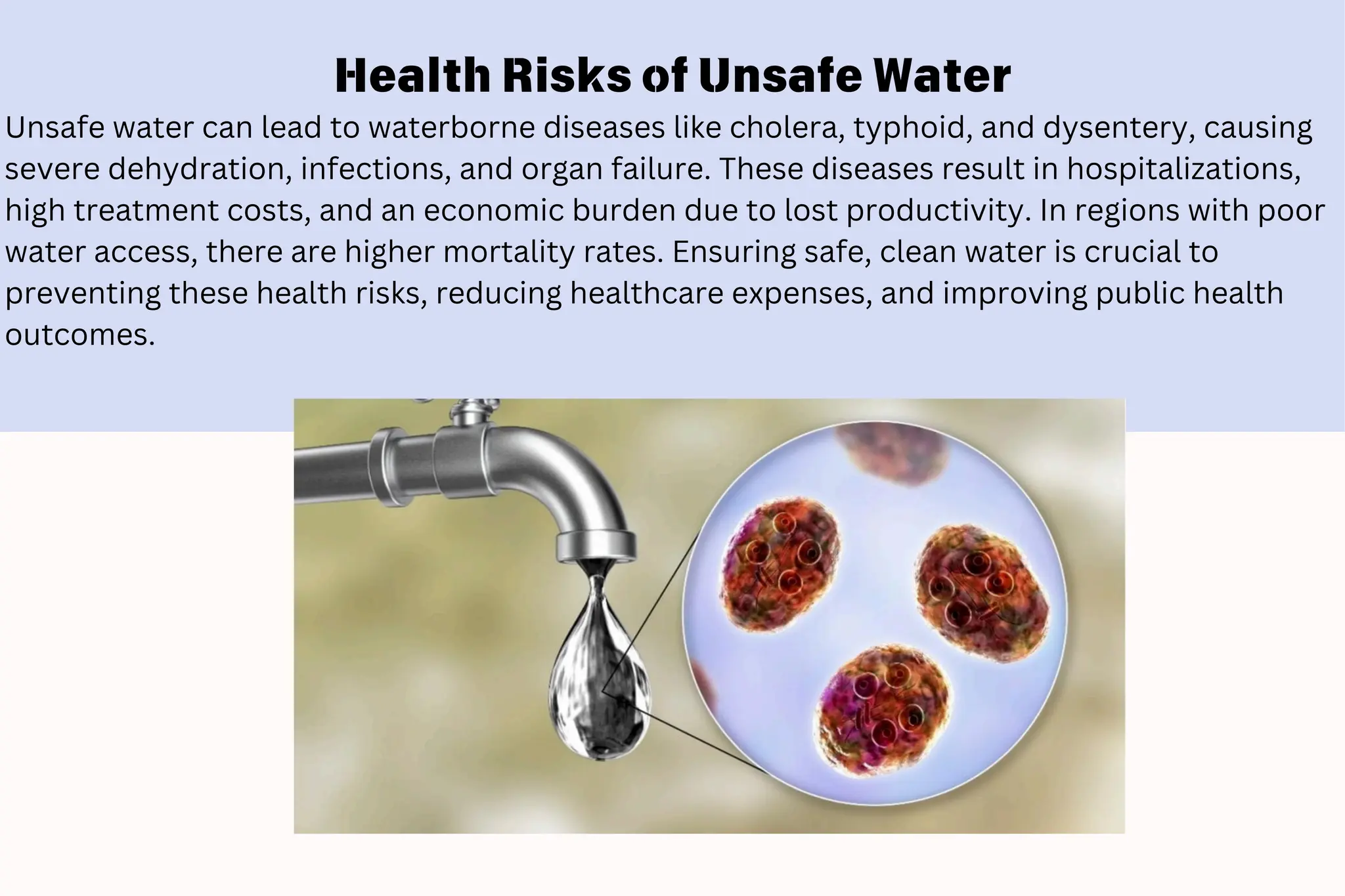
Health Risks of Unsafe Water
Unsafe water can lead to waterborne diseases like cholera, typhoid, and dysentery, causing
severe dehydration, infections, and organ failure. These diseases result in hospitalizations,
high treatment costs, and an economic burden due to lost productivity. In regions with poor
water access, there are higher mortality rates. Ensuring safe, clean water is crucial to
preventing these health risks, reducing healthcare expenses, and improving public health
outcomes.
CASE STUDY
Successful Water Facilities Improvement – Singapore
Singapore is a global leader in water management, with key improvements like NEWater (recycled
wastewater), desalination plants, and advanced stormwater management systems. Smart water
management technologies enhance efficiency and prevent wastage. These efforts have secured a
sustainable water supply, reduced reliance on imports, and earned global recognition for
innovative water solutions. Singapore's approach highlights how strategic investment and
innovation can ensure long-term water security and resilience.
Struggling with Water Availability – Cape Town, South Africa
Cape Town faced a severe water crisis in 2018, marked by the "Day Zero" threat, due to drought,
over-extraction, population growth, and climate change. The region experienced critical water
shortages, leading to water rationing, economic losses, and health risks. In response, the city
implemented strict water restrictions, alternative water sources (desalination, groundwater), and
launched public awareness campaigns. Cape Town’s crisis highlights the need for sustainable
water management and proactive solutions to ensure long-term water security.
CONCLUSION
Water scarcity, pollution, and aging infrastructure are significant challenges to global
water access. Innovative solutions like filtration, disinfection, and community-driven
initiatives are essential for improving water availability. Successful examples, such as
Singapore's water management and Cape Town’s crisis response, highlight the
importance of proactive planning. Sustainable infrastructure and technology
investment are key to securing future water supplies. Collaboration across regions and
communities is crucial to ensuring clean, safe water for all.
Water-Facilities-and-Drinking-Water-Availability.pdf

Water-Facilities-and-Drinking-Water-Availability.pdf

  • 1.
    -Ensuring Access ,Sustainabilityand Quality Water Facilities and Drinking Water Availability
  • 2.
    The village Jonnadais located in Denkada mandal of Vizianagaram district in the state of Andhra pradesh in India.It is governed by Jonnada grama panchayat.it come sunder Denkada development community block.The nearest town is Vizianagaram which is about 13km from Jonnada. The population denisty of jonnada is 705.88 persons per square kilometers.
  • 5.
    WATER FACILITIES ANDDRINKING WATER AVAILABILITY RAGHU INSTITUTE OF TECHNOLOGY(AUTONOMOUS) BACHELOR OF TECHNOLOGY IN COMPUTER SCIENCE AND ENGINEERING PRESENTED BY THOOTA SREEJA(223J1A05H3) VADADA LAKSHMICHANDANA(223J1A05H6) THORATHI LIKHITA(223J1A05H4) VIJJAPU HARSHITHA(223J1A05I6) VADAVALASA VIJAYADURYA(223J1A05H7) UNDER THE ESTEEMED GUIDANCE OF MRS.K.HARINI
  • 6.
    Introduction 1 3 2 Global Context Millions ofpeople worldwide lack access to safe drinking water. Water scarcity and pollution threaten public health, especially in developing countries. Importance of Water Facilities Water facilities ensure access to clean drinking water, which is vital for sanitation, hygiene, and human health. These facilities are essential for communities, homes, schools, and businesses. Safe Drinking Water as a Right Access to clean drinking water is a fundamental human right, recognized by the United Nations. Everyone deserves the right to safe and affordable water.
  • 7.
    Water Supply andDistribution Systems Water Supply Components Water supply systems involve several interconnected parts, including water sources, treatment plants, and distribution networks. 1.Water Sources 2.Treatment Plants 3.Distribution Networks Types of Water Sources Water sources can be categorized into surface water and groundwater. Surface water includes lakes, rivers, and reservoirs, while groundwater is found in underground aquifers. Infrastructure The infrastructure includes pipes, storage tanks, and treatment facilities that transport and store water. Maintaining and upgrading infrastructure is essential for reliable water supply.
  • 8.
    Water Treatment Processes 1 4 3 2 Filtration Waterpasses through filters to remove remaining particles and impurities. Collection Water is collected from sources and transported to treatment plants. Disinfection Disinfectants like chlorine or UV light are used to kill harmful bacteria and viruses. Coagulation and Sedimentation Chemicals are added to clump together particles and allow them to settle out.
  • 9.
    Challenges in Drinking WaterAvailability Water Scarcity Droughts, climate change, and overuse can lead to water scarcity, affecting access to clean water. Infrastructure Issues Aging pipes and outdated water treatment facilities can lead to leaks, contamination, and unreliable water supply. Pollution Pollution from industrial runoff, agricultural activities, and sewage can contaminate water sources.
  • 10.
    Impact of InadequateWater Facilities Health Risks Contaminated water can cause waterborne illnesses such as cholera, typhoid, and dysentery. Economic Impact Waterborne illnesses and lack of water access can lead to healthcare costs, productivity loss, and economic stagnation. Environmental Impact Overuse and pollution of freshwater resources threaten aquatic ecosystems and biodiversity.
  • 11.
    Global Initiatives andPrograms UN Sustainable Development Goal 6 The UN has set a goal for clean water and sanitation for all by 2030. 1 3 2 Success Stories Regions that have implemented improved water facilities and sanitation programs have seen significant improvements in health and well-being. Organizations Involved International organizations like WHO, UNICEF, and Water.org work to improve access to clean water and sanitation.
  • 12.
    Innovative Solutions in WaterFacilities Technology Community Solutions Smart water meters, desalination plants, water recycling Rainwater harvesting, water purification tablets, localized filtration
  • 13.
    Role of Governmentsand Policies 1 2 3 Government Initiatives Governments play a vital role in setting water safety standards and regulations. Funding & Investment Investing in infrastructure and research is crucial for improving water facilities and access. Public-Private Partnerships Collaboration between governments and private organizations can facilitate sustainable water management.
  • 14.
    Community Involvement andEducation Awareness Programs Educating communities about safe water practices and conservation techniques is essential. Community Participation Involving local communities in water management decisions ensures ownership and sustainability.
  • 15.
    Water Distribution andInfrastructure The purpose of water distribution systems is to ensure the reliable and safe delivery of treated water to households, businesses, and public spaces. Key components include pipes (PVC, copper, steel) for transporting water, pumps (booster and lift pumps) for pressure and flow regulation, storage tanks (ground, elevated, and reservoirs) for balancing supply and demand, and a distribution network that connects treatment plants to end-users. Regular maintenance is crucial for preventing leaks, contamination, and ensuring the system’s longevity and efficiency.
  • 16.
    Disinfection Methods forSafe Drinking Water Chlorination: Chlorine is added to kill bacteria, viruses, and parasites. It's cost-effective and provides residual protection but can produce by-products if organic matter is present. 1. UV Treatment: UV light deactivates microorganisms by damaging their DNA, offering a chemical-free, effective solution, though it requires clear water and lacks residual disinfection. 2. Ozone Treatment: Ozone gas oxidizes and destroys contaminants, leaving no taste or odor, but is more complex and costly with no residual protection. 3.
  • 17.
    Distribution Systems Overview Waterdistribution systems ensure the reliable delivery of treated water to households, businesses, and public spaces. Key components include pipes (PVC, copper, steel) for transport, pumps (booster and lift) for pressure regulation, storage tanks (ground, elevated, reservoirs) to balance supply and demand, and a distribution network to connect treatment plants to users. Regular maintenance is crucial to prevent leaks, contamination, and ensure long-term system reliability.
  • 18.
    Storage Facilities forStable Water Supply Storage facilities ensure a reliable water supply by balancing demand, providing emergency reserves, and maintaining consistent pressure. Water tanks (ground or above-ground) are used for short-term storage in residential areas. Reservoirs store large volumes for long-term use, especially during droughts. Water towers use gravity to distribute water pressure, particularly in urban or high-elevation areas. These facilities are essential for meeting peak demands, supporting emergencies, and ensuring water availability during maintenance or shortages.
  • 19.
    Pipeline Network forEffective Water Delivery The pipeline network is vital for delivering treated water to homes, businesses, and public areas. Main pipelines carry water over long distances, while distribution pipelines and service lines deliver it locally. Urban areas often use a grid layout for flexibility, while rural areas may use a branch layout. Regular maintenance is essential for leak prevention, pressure management, and modernization to ensure efficient and reliable water delivery. A well- maintained pipeline network ensures consistent access to clean water for all.
  • 20.
    Maintenance of WaterFacilities Regular maintenance is crucial for ensuring a safe and reliable water supply by preventing leaks, contamination, and infrastructure failures. Key activities include leak detection, pipe cleaning, tank inspections, and pump/valve maintenance. Routine water quality monitoring ensures safety standards. Regular maintenance saves costs, extends system life, and protects public health by minimizing risks. Proactive care ensures efficient, sustainable water facilities with continuous access to clean water.
  • 21.
    Water Scarcity andDroughts Water scarcity is driven by climate change, overuse of resources, and seasonal droughts, leading to reduced water availability. It impacts arid regions, agriculture, economic growth, human health, and ecosystems. Affected areas face challenges such as crop loss, economic strain, and increased disease risks. Sustainable water management and conservation are essential to mitigate scarcity and ensure future water availability.
  • 22.
    Pollution and Contaminationof Water Sources Water pollution arises from agricultural runoff (fertilizers and pesticides), industrial waste (chemicals and heavy metals), and urban wastewater (untreated sewage). These pollutants harm human health, cause environmental damage, and lead to economic costs due to increased treatment needs and health issues. Addressing water pollution requires stronger regulations, better waste management, and sustainable agricultural practices to protect water quality and public health.
  • 23.
    Challenges of AgingWater Infrastructure Aging water infrastructure faces issues like pipe deterioration, frequent breakdowns, and water quality risks due to corroding pipes and outdated equipment. This leads to health risks, high maintenance costs, and environmental waste. Aging systems strain resources and economies, requiring investment in modern infrastructure, regular maintenance, and advanced technologies to ensure sustainable and safe water supply.
  • 24.
    Impact of PopulationGrowth and Urbanization on Water Demand Rapid population growth and urbanization increase demand for drinking water, especially in expanding cities with overburdened infrastructure. Key drivers include population growth, urban expansion, and changing lifestyles. Challenges include water scarcity, overburdened systems, and environmental impacts like groundwater depletion. This leads to higher costs, health risks, and resource conflicts. Solutions require sustainable water management, infrastructure investment, and conservation policies to balance growth with available resources.
  • 25.
    Health Risks ofUnsafe Water Unsafe water can lead to waterborne diseases like cholera, typhoid, and dysentery, causing severe dehydration, infections, and organ failure. These diseases result in hospitalizations, high treatment costs, and an economic burden due to lost productivity. In regions with poor water access, there are higher mortality rates. Ensuring safe, clean water is crucial to preventing these health risks, reducing healthcare expenses, and improving public health outcomes.
  • 26.
  • 27.
    Successful Water FacilitiesImprovement – Singapore Singapore is a global leader in water management, with key improvements like NEWater (recycled wastewater), desalination plants, and advanced stormwater management systems. Smart water management technologies enhance efficiency and prevent wastage. These efforts have secured a sustainable water supply, reduced reliance on imports, and earned global recognition for innovative water solutions. Singapore's approach highlights how strategic investment and innovation can ensure long-term water security and resilience.
  • 28.
    Struggling with WaterAvailability – Cape Town, South Africa Cape Town faced a severe water crisis in 2018, marked by the "Day Zero" threat, due to drought, over-extraction, population growth, and climate change. The region experienced critical water shortages, leading to water rationing, economic losses, and health risks. In response, the city implemented strict water restrictions, alternative water sources (desalination, groundwater), and launched public awareness campaigns. Cape Town’s crisis highlights the need for sustainable water management and proactive solutions to ensure long-term water security.
  • 29.
    CONCLUSION Water scarcity, pollution,and aging infrastructure are significant challenges to global water access. Innovative solutions like filtration, disinfection, and community-driven initiatives are essential for improving water availability. Successful examples, such as Singapore's water management and Cape Town’s crisis response, highlight the importance of proactive planning. Sustainable infrastructure and technology investment are key to securing future water supplies. Collaboration across regions and communities is crucial to ensuring clean, safe water for all.