The Water CycleBy: Angeline Fu
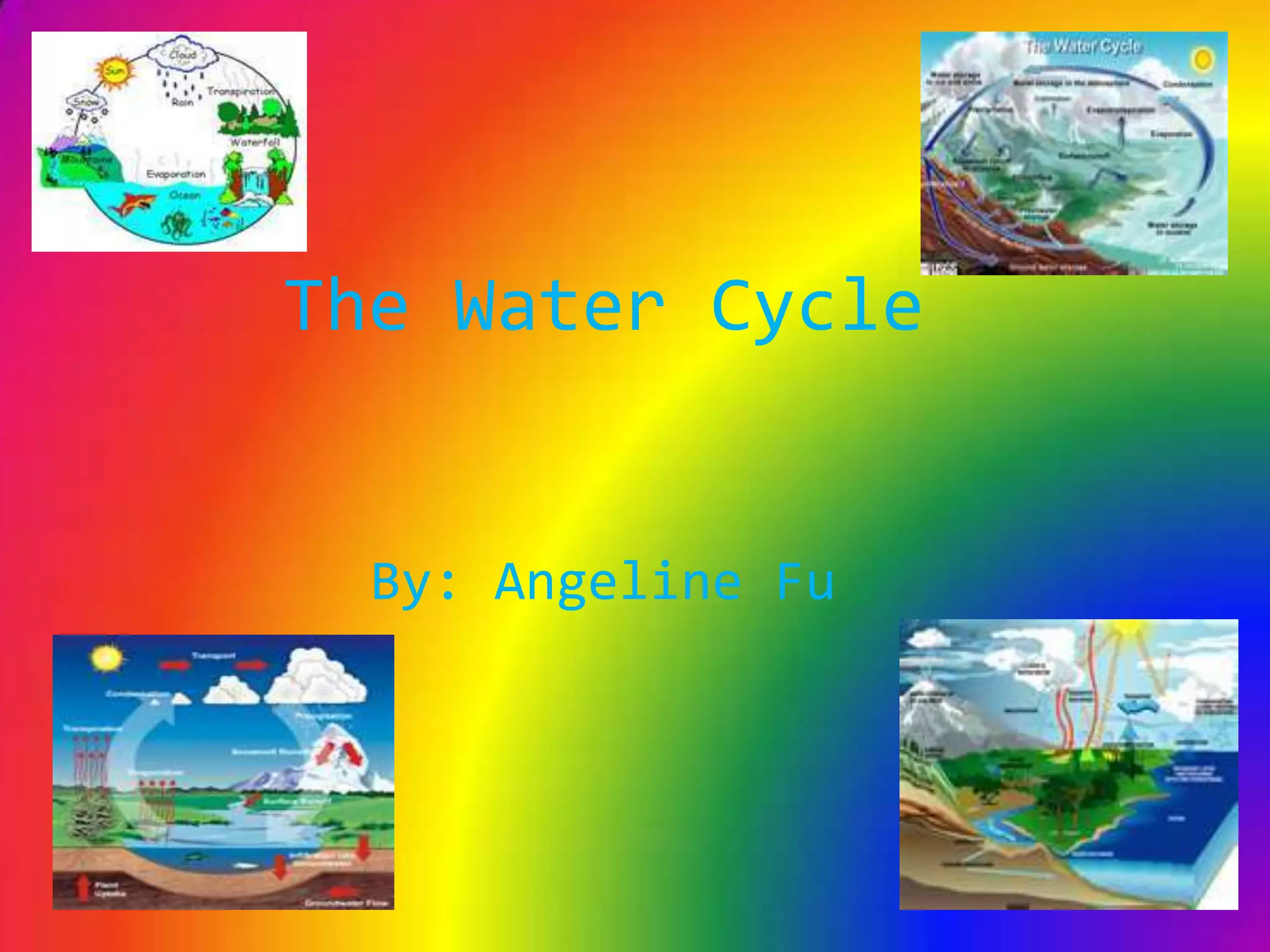
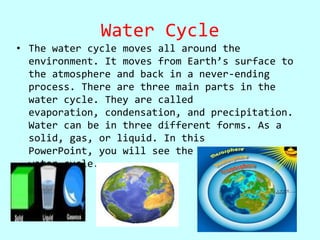
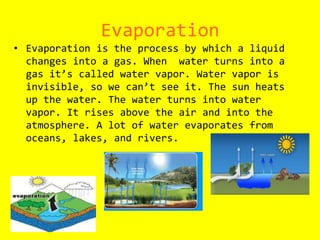
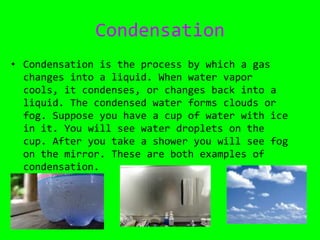
Water CycleThe water cycle moves all around the environment. It moves from Earth’s surface to the atmosphere and back in a never-ending process. There are three main parts in the water cycle. They are called evaporation, condensation, and precipitation. Water can be in three different forms. As a solid, gas, or liquid. In this PowerPoint, you will see the steps of the water cycle.
EvaporationEvaporation is the process by which a liquid changes into a gas. When  water turns into a gas it’s called water vapor. Water vapor is invisible, so we can’t see it. The sun heats up the water. The water turns into water vapor. It rises above the air and into the atmosphere. A lot of water evaporates from oceans, lakes, and rivers.
CondensationCondensation is the process by which a gas changes into a liquid. When water vapor cools, it condenses, or changes back into a liquid. The condensed water forms clouds or fog. Suppose you have a cup of water with ice in it. You will see water droplets on the cup. After you take a shower you will see fog on the mirror. These are both examples of condensation.
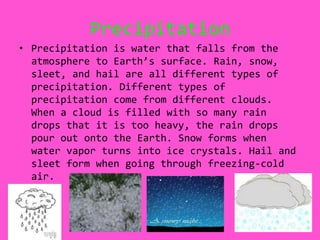
PrecipitationPrecipitation is water that falls from the atmosphere to Earth’s surface. Rain, snow, sleet, and hail are all different types of precipitation. Different types of precipitation come from different clouds. When a cloud is filled with so many rain drops that it is too heavy, the rain drops pour out onto the Earth. Snow forms when water vapor turns into ice crystals. Hail and sleet form when going through freezing-cold air.

Angeline the water cycle

  • 1.
  • 2.
    Water CycleThe watercycle moves all around the environment. It moves from Earth’s surface to the atmosphere and back in a never-ending process. There are three main parts in the water cycle. They are called evaporation, condensation, and precipitation. Water can be in three different forms. As a solid, gas, or liquid. In this PowerPoint, you will see the steps of the water cycle.
  • 3.
    EvaporationEvaporation is theprocess by which a liquid changes into a gas. When water turns into a gas it’s called water vapor. Water vapor is invisible, so we can’t see it. The sun heats up the water. The water turns into water vapor. It rises above the air and into the atmosphere. A lot of water evaporates from oceans, lakes, and rivers.
  • 4.
    CondensationCondensation is theprocess by which a gas changes into a liquid. When water vapor cools, it condenses, or changes back into a liquid. The condensed water forms clouds or fog. Suppose you have a cup of water with ice in it. You will see water droplets on the cup. After you take a shower you will see fog on the mirror. These are both examples of condensation.
  • 5.
    PrecipitationPrecipitation is waterthat falls from the atmosphere to Earth’s surface. Rain, snow, sleet, and hail are all different types of precipitation. Different types of precipitation come from different clouds. When a cloud is filled with so many rain drops that it is too heavy, the rain drops pour out onto the Earth. Snow forms when water vapor turns into ice crystals. Hail and sleet form when going through freezing-cold air.