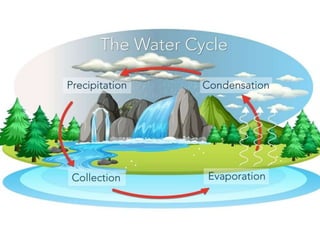
The water cycle shows the continuous movement of water
within the Earth and atmosphere. The water cycle, also
known as the hydrologic cycle or the hydrological cycle,
is biogeochemical cycle that describes the continuous
movement of water on, above and below the surface of the
Earth.
 Evaporation
 Condensation
 Precipitation
 Collection
THE STEPS OF WATER CYCLE ARE :-
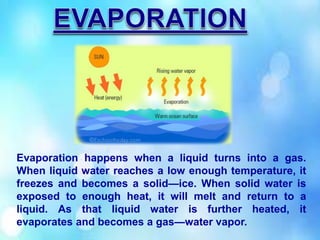
Evaporation happens when a liquid turns into a gas.
When liquid water reaches a low enough temperature, it
freezes and becomes a solid—ice. When solid water is
exposed to enough heat, it will melt and return to a
liquid. As that liquid water is further heated, it
evaporates and becomes a gas—water vapor.
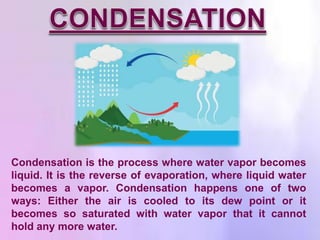
Condensation is the process where water vapor becomes
liquid. It is the reverse of evaporation, where liquid water
becomes a vapor. Condensation happens one of two
ways: Either the air is cooled to its dew point or it
becomes so saturated with water vapor that it cannot
hold any more water.
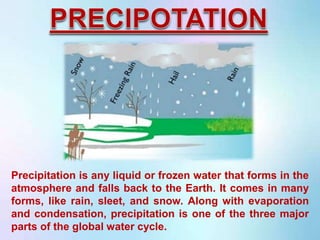
Precipitation is any liquid or frozen water that forms in the
atmosphere and falls back to the Earth. It comes in many
forms, like rain, sleet, and snow. Along with evaporation
and condensation, precipitation is one of the three major
parts of the global water cycle.
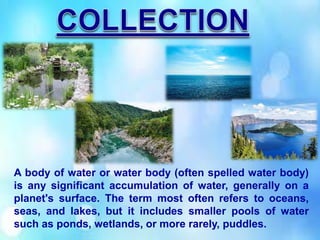
A body of water or water body (often spelled water body)
is any significant accumulation of water, generally on a
planet's surface. The term most often refers to oceans,
seas, and lakes, but it includes smaller pools of water
such as ponds, wetlands, or more rarely, puddles.
Water cycle

Water cycle

  • 2.
    The water cycleshows the continuous movement of water within the Earth and atmosphere. The water cycle, also known as the hydrologic cycle or the hydrological cycle, is biogeochemical cycle that describes the continuous movement of water on, above and below the surface of the Earth.  Evaporation  Condensation  Precipitation  Collection THE STEPS OF WATER CYCLE ARE :-
  • 3.
    Evaporation happens whena liquid turns into a gas. When liquid water reaches a low enough temperature, it freezes and becomes a solid—ice. When solid water is exposed to enough heat, it will melt and return to a liquid. As that liquid water is further heated, it evaporates and becomes a gas—water vapor.
  • 4.
    Condensation is theprocess where water vapor becomes liquid. It is the reverse of evaporation, where liquid water becomes a vapor. Condensation happens one of two ways: Either the air is cooled to its dew point or it becomes so saturated with water vapor that it cannot hold any more water.
  • 5.
    Precipitation is anyliquid or frozen water that forms in the atmosphere and falls back to the Earth. It comes in many forms, like rain, sleet, and snow. Along with evaporation and condensation, precipitation is one of the three major parts of the global water cycle.
  • 6.
    A body ofwater or water body (often spelled water body) is any significant accumulation of water, generally on a planet's surface. The term most often refers to oceans, seas, and lakes, but it includes smaller pools of water such as ponds, wetlands, or more rarely, puddles.