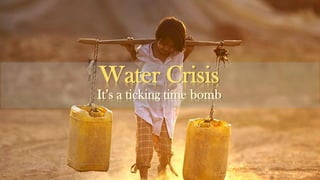
Water Crisis
It’s a ticking time bomb
• Overview
• Sao Paulo
• Cape Town
• India
• Future Plans
Contents
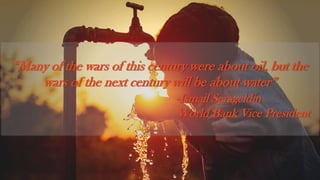
“Many of the wars of this century were about oil, but the
wars of the next century will be about water”
-Ismail Serageldin
World Bank Vice President
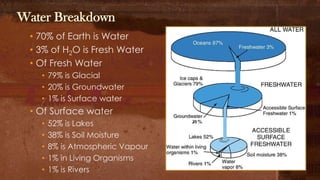
Water Breakdown
• 70% of Earth is Water
• 3% of H2O is Fresh Water
• Of Fresh Water
• 79% is Glacial
• 20% is Groundwater
• 1% is Surface water
• Of Surface water
• 52% is Lakes
• 38% is Soil Moisture
• 8% is Atmospheric Vapour
• 1% in Living Organisms
• 1% is Rivers
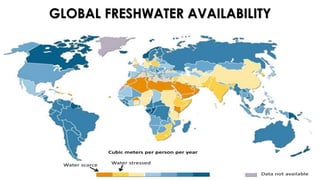
Data not available
Cubic meters per person per year
Water scarce Water stressed
GLOBAL FRESHWATER AVAILABILITY
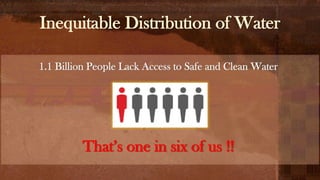
Inequitable Distribution of Water
1.1 Billion People Lack Access to Safe and Clean Water
That’s one in six of us !!
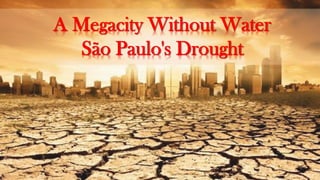
A Megacity Without Water
São Paulo's Drought
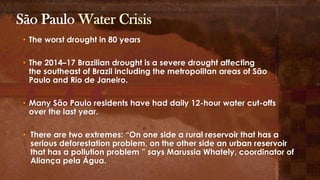
• The worst drought in 80 years
• The 2014–17 Brazilian drought is a severe drought affecting
the southeast of Brazil including the metropolitan areas of São
Paulo and Rio de Janeiro.
• Many São Paulo residents have had daily 12-hour water cut-offs
over the last year.
• There are two extremes: “On one side a rural reservoir that has a
serious deforestation problem, on the other side an urban reservoir
that has a pollution problem ” says Marussia Whately, coordinator of
Aliança pela Água.
São Paulo Water Crisis
Potential Causes
• The expansion of deforestation activities into the Amazon
basin has been linked to the reduction of rainfall.
• Water management is poor, pipes leak, and the
infrastructure is old.
• Past reports by scientists, environmentalists and technical
experts were overridden by real estate developers and
industrial and agricultural interests.
• Lack of protection of watersheds and reservoirs has
polluted water sources.
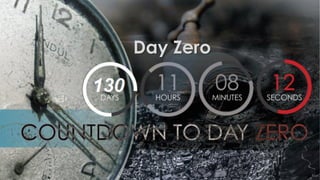
Day Zero
Cape Town Water Crisis
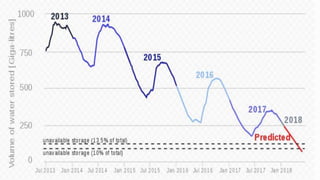
• Day Zero would be declared when the water level of the city's
major dams reaches 13.5%.
• Municipal water supplies would be largely switched off except
emergency facilities.
• Only 200 accessible locations for water collection around the city.
• Daily ration up to 25 litres of water per person.
• The Day Zero date is projected based on the fortnightly change in
dam storage levels.
Potential Causes
• Improper Planning and lack of technology
• Limited Funds
• Political rivalry and Corruption
• Poor Infrastructure and Maintenance
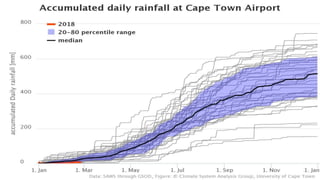
• Drastic climatic changes
• Rural - Urban migration
Impact
• The reduction in water consumption by 50 percent causing heavy
impact on agricultural sector.
• Loss of 37,000 jobs in the sector nationally
• Estimated 50,000 being pushed below the poverty line
• Increases in the price of food and day to day supplies.
• Large scale spread of epidemics and decrease in health facilities.
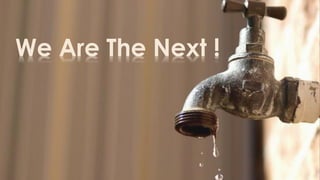
We Are The Next !
Crisis in India - Bengaluru
• Not a single lake have suitable water for drinking
• Antiquated plumbing system results in the loss of half its
drinking water.
• Depletion of catchment areas in the wake of uncontrolled
infrastructure expansion.
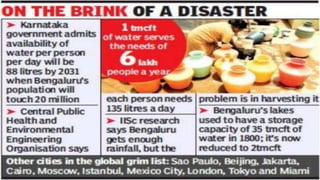
• 207,000 million litres of groundwater is extracted per annum,
against an annual recharge of 81,100 million litres.
• Garbage and sewage have poisoned lakes
Changing the Course of Future
• Proper Planning, Infrastructure and Maintenance
• Effective use of current supplies
• Tapping into rainwater sources
• Recycling wastewater / Sewage treatment
• Developing awareness among public
• Desalination Techniques

Water Crisis

  • 1.
    Water Crisis It’s aticking time bomb
  • 2.
    • Overview • SaoPaulo • Cape Town • India • Future Plans Contents
  • 3.
    “Many of thewars of this century were about oil, but the wars of the next century will be about water” -Ismail Serageldin World Bank Vice President
  • 4.
    Water Breakdown • 70%of Earth is Water • 3% of H2O is Fresh Water • Of Fresh Water • 79% is Glacial • 20% is Groundwater • 1% is Surface water • Of Surface water • 52% is Lakes • 38% is Soil Moisture • 8% is Atmospheric Vapour • 1% in Living Organisms • 1% is Rivers
  • 5.
    Data not available Cubicmeters per person per year Water scarce Water stressed GLOBAL FRESHWATER AVAILABILITY
  • 6.
    Inequitable Distribution ofWater 1.1 Billion People Lack Access to Safe and Clean Water That’s one in six of us !!
  • 7.
    A Megacity WithoutWater São Paulo's Drought
  • 8.
    • The worstdrought in 80 years • The 2014–17 Brazilian drought is a severe drought affecting the southeast of Brazil including the metropolitan areas of São Paulo and Rio de Janeiro. • Many São Paulo residents have had daily 12-hour water cut-offs over the last year. • There are two extremes: “On one side a rural reservoir that has a serious deforestation problem, on the other side an urban reservoir that has a pollution problem ” says Marussia Whately, coordinator of Aliança pela Água. São Paulo Water Crisis
  • 9.
    Potential Causes • Theexpansion of deforestation activities into the Amazon basin has been linked to the reduction of rainfall. • Water management is poor, pipes leak, and the infrastructure is old. • Past reports by scientists, environmentalists and technical experts were overridden by real estate developers and industrial and agricultural interests. • Lack of protection of watersheds and reservoirs has polluted water sources.
  • 10.
  • 12.
    Cape Town WaterCrisis • Day Zero would be declared when the water level of the city's major dams reaches 13.5%. • Municipal water supplies would be largely switched off except emergency facilities. • Only 200 accessible locations for water collection around the city. • Daily ration up to 25 litres of water per person. • The Day Zero date is projected based on the fortnightly change in dam storage levels.
  • 15.
    Potential Causes • ImproperPlanning and lack of technology • Limited Funds • Political rivalry and Corruption • Poor Infrastructure and Maintenance • Drastic climatic changes • Rural - Urban migration
  • 16.
    Impact • The reductionin water consumption by 50 percent causing heavy impact on agricultural sector. • Loss of 37,000 jobs in the sector nationally • Estimated 50,000 being pushed below the poverty line • Increases in the price of food and day to day supplies. • Large scale spread of epidemics and decrease in health facilities.
  • 17.
    We Are TheNext !
  • 18.
    Crisis in India- Bengaluru • Not a single lake have suitable water for drinking • Antiquated plumbing system results in the loss of half its drinking water. • Depletion of catchment areas in the wake of uncontrolled infrastructure expansion. • 207,000 million litres of groundwater is extracted per annum, against an annual recharge of 81,100 million litres. • Garbage and sewage have poisoned lakes
  • 20.
    Changing the Courseof Future • Proper Planning, Infrastructure and Maintenance • Effective use of current supplies • Tapping into rainwater sources • Recycling wastewater / Sewage treatment • Developing awareness among public • Desalination Techniques