Wastewater Management using
Photo-Fenton Oxidation
Wastewater Management
• What is wastewater?
– domestic effluent
– water from commercial establishments
– industrial effluent
– agricultural, horticultural and aquaculture effluent
• What is wastewater management?
Advanced Oxidation Processes(AOPs)
• What are AOPs?
– Removal of Organic materials from wastewater by
oxidation through reactions with hydroxyl radical.
• Types
– UV/H2O2
– Ozone based AOP
– Photo catalytic oxidation with TiO2
• Advantages
– Effectively eliminate all organic pollutants
– Due to excellent reactivity of OH radical, it reacts
with all aqueous pollutants
– Some heavy metals can also be removed in the
form of Metal hydroxide.
– Complete reduction product is water; no other
hazardous substance is formed.
• Shortcomings
– Expensive
– Pre-treatment might be required.
Photo-Fenton Oxidation
• What is photo-fenton oxidation?
– Hydroxyl radicals produced due to UV/H2O2/Fe2+
or Fe3+
– H2O2 acts as oxidant ; Iron ions act as catalyst; UV
light enhances the production of hydroxyl radicals
and also recycles Fe ions.
• Parameters
– pH, H2O2 dose, FeSO4.7H2O dose, Irradiation time
REACTION
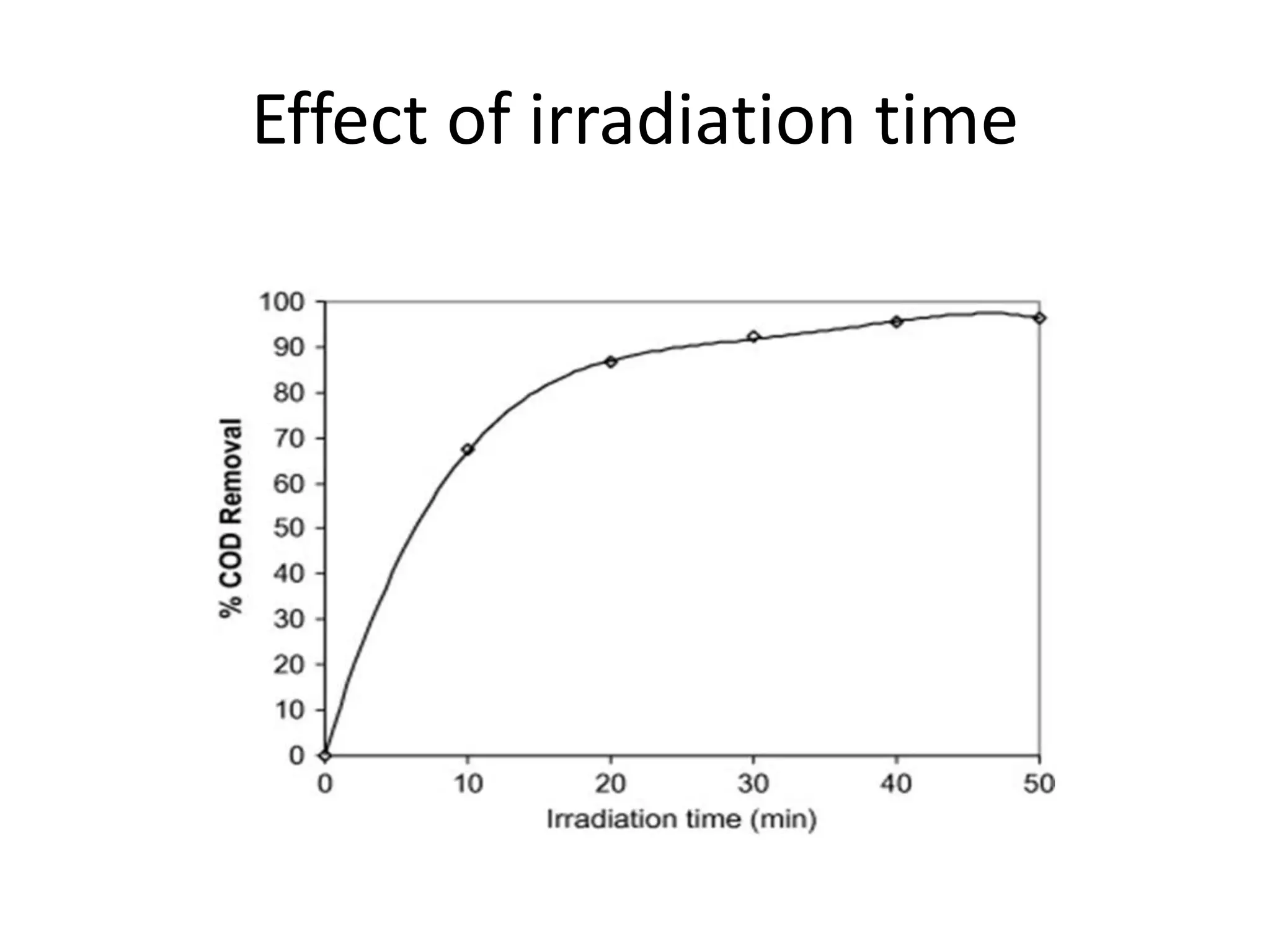
Effect of irradiation time
Effect of the pH value
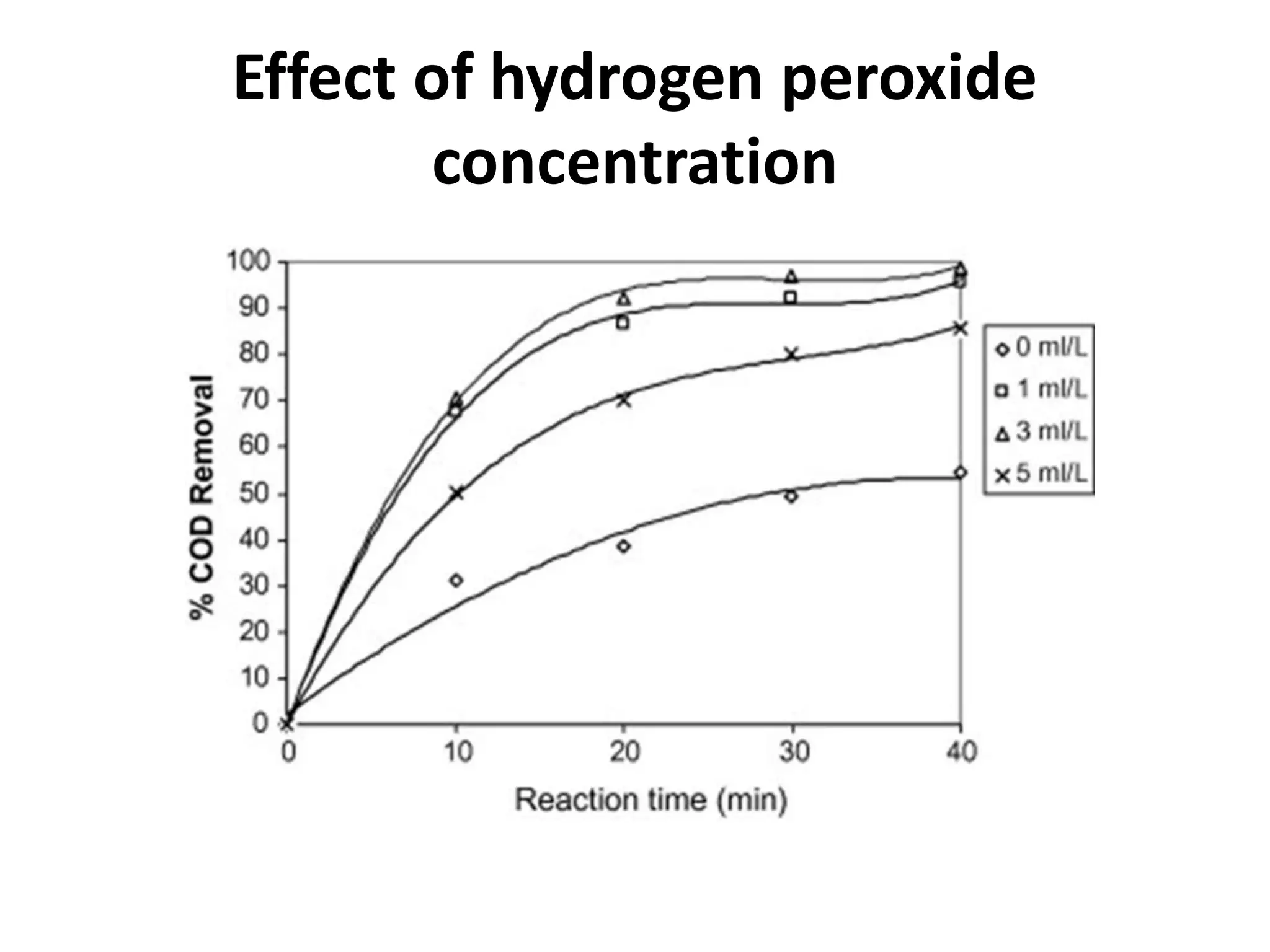
Effect of hydrogen peroxide
concentration
Effect of initial amount of Fe ion
Application
• Dyes containing nitrogen and sulphur atoms;
after treatment can be used as a fertilizer after
addition of Potassium and Phosphorous salts.
Wastewater Management using Photo-Fenton Oxidation

Wastewater Management using Photo-Fenton Oxidation

  • 1.
  • 2.
    Wastewater Management • Whatis wastewater? – domestic effluent – water from commercial establishments – industrial effluent – agricultural, horticultural and aquaculture effluent • What is wastewater management?
  • 3.
    Advanced Oxidation Processes(AOPs) •What are AOPs? – Removal of Organic materials from wastewater by oxidation through reactions with hydroxyl radical. • Types – UV/H2O2 – Ozone based AOP – Photo catalytic oxidation with TiO2
  • 4.
    • Advantages – Effectivelyeliminate all organic pollutants – Due to excellent reactivity of OH radical, it reacts with all aqueous pollutants – Some heavy metals can also be removed in the form of Metal hydroxide. – Complete reduction product is water; no other hazardous substance is formed. • Shortcomings – Expensive – Pre-treatment might be required.
  • 5.
    Photo-Fenton Oxidation • Whatis photo-fenton oxidation? – Hydroxyl radicals produced due to UV/H2O2/Fe2+ or Fe3+ – H2O2 acts as oxidant ; Iron ions act as catalyst; UV light enhances the production of hydroxyl radicals and also recycles Fe ions. • Parameters – pH, H2O2 dose, FeSO4.7H2O dose, Irradiation time
  • 6.
  • 7.
  • 8.
    Effect of thepH value
  • 9.
    Effect of hydrogenperoxide concentration
  • 10.
    Effect of initialamount of Fe ion
  • 11.
    Application • Dyes containingnitrogen and sulphur atoms; after treatment can be used as a fertilizer after addition of Potassium and Phosphorous salts.