Warren Escadale, CEO of VSNW
and secretariat lead for VS6
Health Summit: 12th October 2016
• Over 8,600 voluntary, community, faith and social enterprise (VCFSE)
groups.
• 5,500 of these are community organisations (64%).
• The sector employs 24,000 FTE people and generates £918m GVA.
• This includes over £305m in inward investment from external trusts,
funders and other sources (from outside the City Region).
• There are 180,000 volunteers contributing over 500,000 hours of
voluntary action per week
• This equates to £300m-equivalent in volunteering.
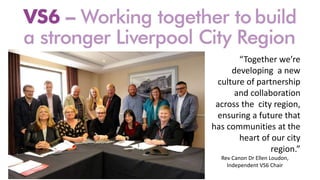
“Together we’re
developing a new
culture of partnership
and collaboration
across the city region,
ensuring a future that
has communities at the
heart of our city
region.”
Rev Canon Dr Ellen Loudon,
Independent VS6 Chair
• Champion the role of the sector in the future of the City Region
• Link in 8,600 groups and help them to collectively influence decision-
making
• Offer community-driven answers to economic challenges
• Provide a single point of contact for the city region’s VCFSE sector
• Drive community-centred approaches to transforming health &
wellbeing
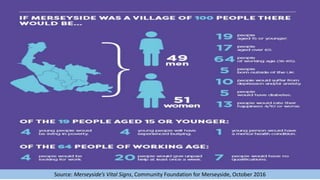
Source: Merseyside’s Vital Signs, Community Foundation for Merseyside, October 2016
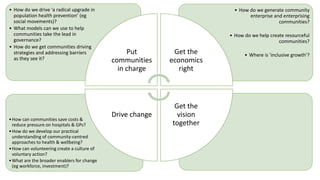
How can we understand what needs to
happen in our communities to create
genuine change?
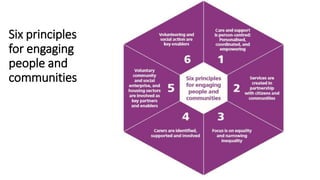
Six principles
for engaging
people and
communities
•How can communities save costs &
reduce pressure on hospitals & GPs?
•How do we develop our practical
understanding of community-centred
approaches to health & wellbeing?
•How can volunteering create a culture of
voluntary action?
•What are the broader enablers for change
(eg workforce, investment)?
• How do we generate community
enterprise and enterprising
communities?
• How do we help create resourceful
communities?
• Where is 'inclusive growth'?
• How do we drive ‘a radical upgrade in
population health prevention’ (eg
social movements)?
• What models can we use to help
communities take the lead in
governance?
• How do we get communities driving
strategies and addressing barriers
as they see it?
Put
communities
in charge
Get the
economics
right
Get the
vision
together
Drive change
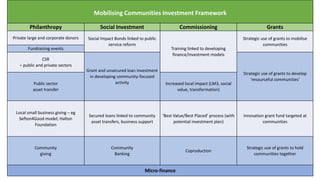
Mobilising Communities Investment Framework
Philanthropy Social Investment Commissioning Grants
Private large and corporate donors Social Impact Bonds linked to public
service reform
Training linked to developing
finance/investment models
Strategic use of grants to mobilise
communities
Fundraising events
CSR
– public and private sectors
Grant and unsecured loan investment
in developing community-focused
activity
Strategic use of grants to develop
‘resourceful communities’
Public sector
asset transfer
Increased local impact (LM3, social
value, transformation)
Local small business giving – eg
Sefton4Good model; Halton
Foundation
Secured loans linked to community
asset transfers, business support
‘Best Value/Best Placed’ process (with
potential investment plan)
Innovation grant fund targeted at
communities
Community
giving
Community
Banking
Coproduction
Strategic use of grants to hold
communities together
Micro-finance
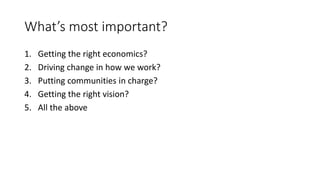
What’s most important?
1. Getting the right economics?
2. Driving change in how we work?
3. Putting communities in charge?
4. Getting the right vision?
5. All the above

Warren Escadale: Community Wellbeing

  • 1.
    Warren Escadale, CEOof VSNW and secretariat lead for VS6 Health Summit: 12th October 2016
  • 2.
    • Over 8,600voluntary, community, faith and social enterprise (VCFSE) groups. • 5,500 of these are community organisations (64%). • The sector employs 24,000 FTE people and generates £918m GVA. • This includes over £305m in inward investment from external trusts, funders and other sources (from outside the City Region). • There are 180,000 volunteers contributing over 500,000 hours of voluntary action per week • This equates to £300m-equivalent in volunteering.
  • 3.
    “Together we’re developing anew culture of partnership and collaboration across the city region, ensuring a future that has communities at the heart of our city region.” Rev Canon Dr Ellen Loudon, Independent VS6 Chair
  • 4.
    • Champion therole of the sector in the future of the City Region • Link in 8,600 groups and help them to collectively influence decision- making • Offer community-driven answers to economic challenges • Provide a single point of contact for the city region’s VCFSE sector • Drive community-centred approaches to transforming health & wellbeing
  • 5.
    Source: Merseyside’s VitalSigns, Community Foundation for Merseyside, October 2016
  • 6.
    How can weunderstand what needs to happen in our communities to create genuine change?
  • 7.
  • 8.
    •How can communitiessave costs & reduce pressure on hospitals & GPs? •How do we develop our practical understanding of community-centred approaches to health & wellbeing? •How can volunteering create a culture of voluntary action? •What are the broader enablers for change (eg workforce, investment)? • How do we generate community enterprise and enterprising communities? • How do we help create resourceful communities? • Where is 'inclusive growth'? • How do we drive ‘a radical upgrade in population health prevention’ (eg social movements)? • What models can we use to help communities take the lead in governance? • How do we get communities driving strategies and addressing barriers as they see it? Put communities in charge Get the economics right Get the vision together Drive change
  • 9.
    Mobilising Communities InvestmentFramework Philanthropy Social Investment Commissioning Grants Private large and corporate donors Social Impact Bonds linked to public service reform Training linked to developing finance/investment models Strategic use of grants to mobilise communities Fundraising events CSR – public and private sectors Grant and unsecured loan investment in developing community-focused activity Strategic use of grants to develop ‘resourceful communities’ Public sector asset transfer Increased local impact (LM3, social value, transformation) Local small business giving – eg Sefton4Good model; Halton Foundation Secured loans linked to community asset transfers, business support ‘Best Value/Best Placed’ process (with potential investment plan) Innovation grant fund targeted at communities Community giving Community Banking Coproduction Strategic use of grants to hold communities together Micro-finance
  • 10.
    What’s most important? 1.Getting the right economics? 2. Driving change in how we work? 3. Putting communities in charge? 4. Getting the right vision? 5. All the above