VOCABULARY
UNIT2
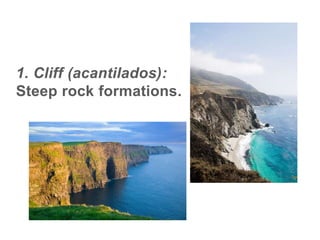
1. Cliff (acantilados):
Steep rock formations.
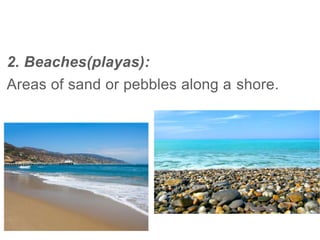
2. Beaches(playas):
Areas of sand or pebbles along a shore.
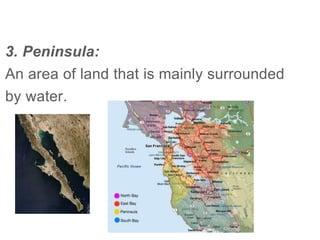
3. Peninsula:
An area of land that is mainly surrounded
by water.
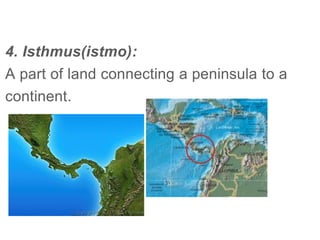
4. Isthmus(istmo):
A part of land connecting a peninsula to a
continent.
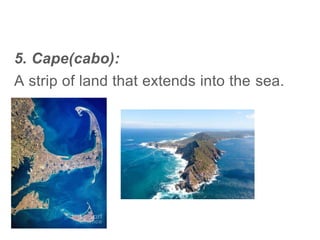
5. Cape(cabo):
A strip of land that extends into the sea.
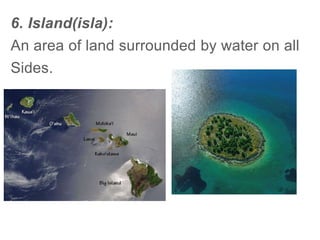
6. Island(isla):
An area of land surrounded by water on all
Sides.
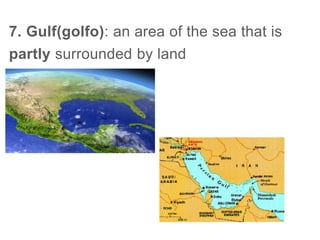
7. Gulf(golfo): an area of the sea that is
partly surrounded by land
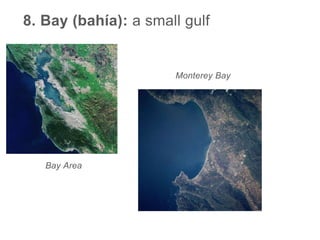
8. Bay (bahía): a small gulf
Bay Area
Monterey Bay
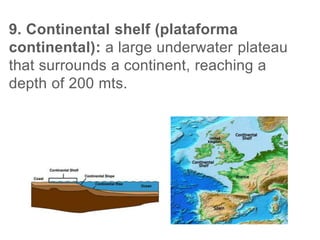
9. Continental shelf (plataforma
continental): a large underwater plateau
that surrounds a continent, reaching a
depth of 200 mts.
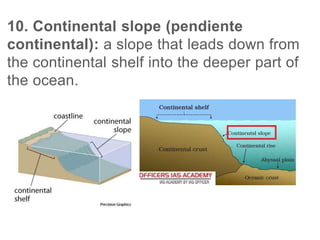
10. Continental slope (pendiente
continental): a slope that leads down from
the continental shelf into the deeper part of
the ocean.
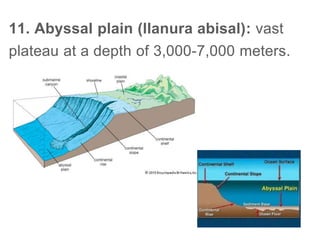
11. Abyssal plain (llanura abisal): vast
plateau at a depth of 3,000-7,000 meters.
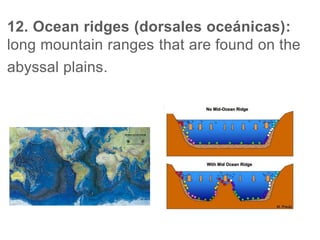
12. Ocean ridges (dorsales oceánicas):
long mountain ranges that are found on the
abyssal plains.
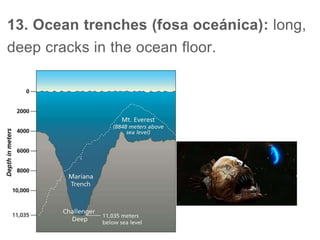
13. Ocean trenches (fosa oceánica): long,
deep cracks in the ocean floor.
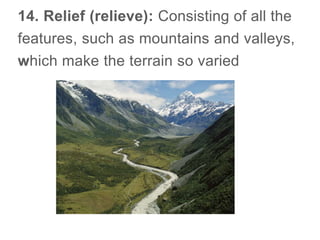
14. Relief (relieve): Consisting of all the
features, such as mountains and valleys,
which make the terrain so varied
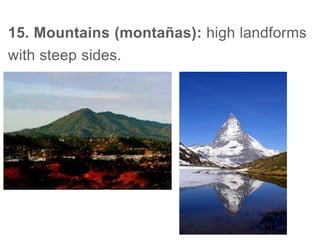
15. Mountains (montañas): high landforms
with steep sides.
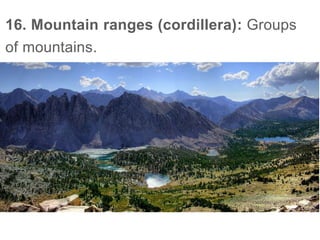
16. Mountain ranges (cordillera): Groups
of mountains.
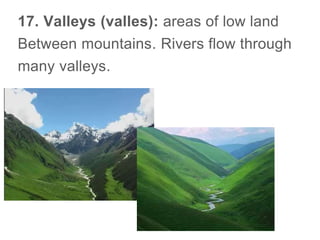
17. Valleys (valles): areas of low land
Between mountains. Rivers flow through
many valleys.
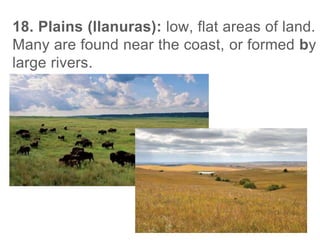
18. Plains (llanuras): low, flat areas of land.
Many are found near the coast, or formed by
large rivers.
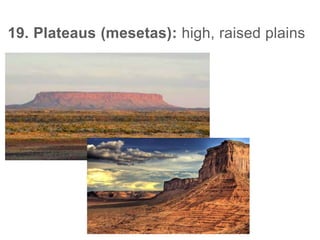
19. Plateaus (mesetas): high, raised plains
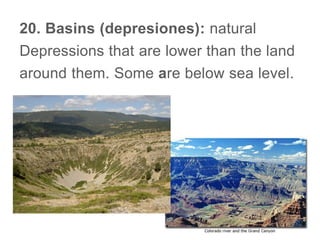
20. Basins (depresiones): natural
Depressions that are lower than the land
around them. Some are below sea level.
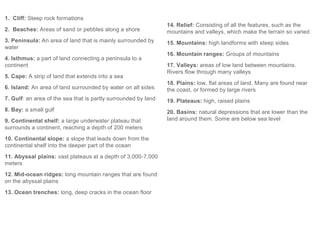
1. Cliff: Steep rock formations
2. Beaches: Areas of sand or pebbles along a shore
3. Peninsula: An area of land that is mainly surrounded by
water
4. Isthmus: a part of land connecting a peninsula to a
continent
5. Cape: A strip of land that extends into a sea
6. Island: An area of land surrounded by water on all sides
7. Gulf: an area of the sea that is partly surrounded by land
8. Bay: a small gulf
9. Continental shelf: a large underwater plateau that
surrounds a continent, reaching a depth of 200 meters
10. Continental slope: a slope that leads down from the
continental shelf into the deeper part of the ocean
11. Abyssal plains: vast plateaus at a depth of 3,000-7,000
meters
12. Mid-ocean ridges: long mountain ranges that are found
on the abyssal plains
13. Ocean trenches: long, deep cracks in the ocean floor
14. Relief: Consisting of all the features, such as the
mountains and valleys, which make the terrain so varied
15. Mountains: high landforms with steep sides
16. Mountain ranges: Groups of mountains
17. Valleys: areas of low land between mountains.
Rivers flow through many valleys
18. Plains: low, flat areas of land. Many are found near
the coast, or formed by large rivers
19. Plateaus: high, raised plains
20. Basins: natural depressions that are lower than the
land around them. Some are below sea level

Vocabulary unit2

  • 1.
  • 2.
  • 3.
    2. Beaches(playas): Areas ofsand or pebbles along a shore.
  • 4.
    3. Peninsula: An areaof land that is mainly surrounded by water.
  • 5.
    4. Isthmus(istmo): A partof land connecting a peninsula to a continent.
  • 6.
    5. Cape(cabo): A stripof land that extends into the sea.
  • 7.
    6. Island(isla): An areaof land surrounded by water on all Sides.
  • 8.
    7. Gulf(golfo): anarea of the sea that is partly surrounded by land
  • 9.
    8. Bay (bahía):a small gulf Bay Area Monterey Bay
  • 10.
    9. Continental shelf(plataforma continental): a large underwater plateau that surrounds a continent, reaching a depth of 200 mts.
  • 11.
    10. Continental slope(pendiente continental): a slope that leads down from the continental shelf into the deeper part of the ocean.
  • 12.
    11. Abyssal plain(llanura abisal): vast plateau at a depth of 3,000-7,000 meters.
  • 13.
    12. Ocean ridges(dorsales oceánicas): long mountain ranges that are found on the abyssal plains.
  • 14.
    13. Ocean trenches(fosa oceánica): long, deep cracks in the ocean floor.
  • 15.
    14. Relief (relieve):Consisting of all the features, such as mountains and valleys, which make the terrain so varied
  • 16.
    15. Mountains (montañas):high landforms with steep sides.
  • 17.
    16. Mountain ranges(cordillera): Groups of mountains.
  • 18.
    17. Valleys (valles):areas of low land Between mountains. Rivers flow through many valleys.
  • 19.
    18. Plains (llanuras):low, flat areas of land. Many are found near the coast, or formed by large rivers.
  • 20.
    19. Plateaus (mesetas):high, raised plains
  • 21.
    20. Basins (depresiones):natural Depressions that are lower than the land around them. Some are below sea level.
  • 22.
    1. Cliff: Steeprock formations 2. Beaches: Areas of sand or pebbles along a shore 3. Peninsula: An area of land that is mainly surrounded by water 4. Isthmus: a part of land connecting a peninsula to a continent 5. Cape: A strip of land that extends into a sea 6. Island: An area of land surrounded by water on all sides 7. Gulf: an area of the sea that is partly surrounded by land 8. Bay: a small gulf 9. Continental shelf: a large underwater plateau that surrounds a continent, reaching a depth of 200 meters 10. Continental slope: a slope that leads down from the continental shelf into the deeper part of the ocean 11. Abyssal plains: vast plateaus at a depth of 3,000-7,000 meters 12. Mid-ocean ridges: long mountain ranges that are found on the abyssal plains 13. Ocean trenches: long, deep cracks in the ocean floor 14. Relief: Consisting of all the features, such as the mountains and valleys, which make the terrain so varied 15. Mountains: high landforms with steep sides 16. Mountain ranges: Groups of mountains 17. Valleys: areas of low land between mountains. Rivers flow through many valleys 18. Plains: low, flat areas of land. Many are found near the coast, or formed by large rivers 19. Plateaus: high, raised plains 20. Basins: natural depressions that are lower than the land around them. Some are below sea level