The “Physics” of Notations: Toward a
Scientific
Basis for Constructing Visual Notations
in Software Engineering
Daniel L. Moody, Member, IEEE
Presented By: Raj Kumar Ranabhat
M.E. In Computer Engineering, I/I
Kathmandu University
February 14, 2017 2
Table of Content:
1. INTRODUCTION
2. RELATED RESEARCH
3. DESCRIPTIVE THEORY : HOW VISUAL NOTATIONS
COMMUNICATE
4. PRESCRIPTIVE THEORY : PRINCIPLES FOR DESIGNING
EFFECTIVE VISUAL NOTATIONS
5. CONCLUSION
February 14, 2017 3
1. INTRODUCTION
1.1 The Nature of Visual Languages
1.2 The Dependent Variable: What Makes a “Good”
Visual Notation?
1.3 Visual Syntax: An Important but Neglected Issue
1.4 Why Visual Representation Is Important
February 14, 2017 4
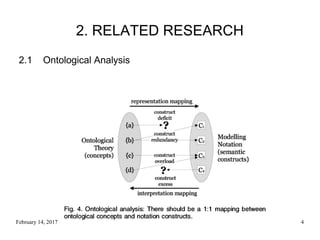
2. RELATED RESEARCH
2.1 Ontological Analysis
February 14, 2017 5
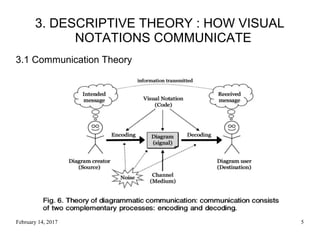
3. DESCRIPTIVE THEORY : HOW VISUAL
NOTATIONS COMMUNICATE
3.1 Communication Theory
February 14, 2017 6
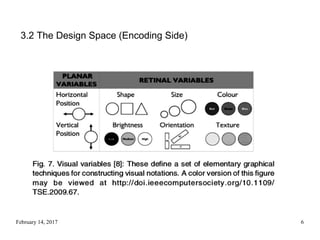
3.2 The Design Space (Encoding Side)
February 14, 2017 7
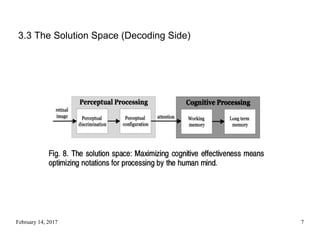
3.3 The Solution Space (Decoding Side)
February 14, 2017 8
4. PRESCRIPTIVE THEORY : PRINCIPLES FOR
DESIGNING EFFECTIVE VISUAL NOTATIONS
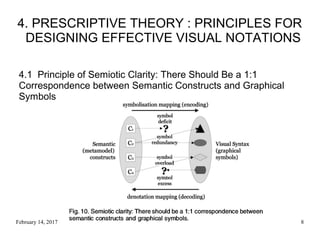
4.1 Principle of Semiotic Clarity: There Should Be a 1:1
Correspondence between Semantic Constructs and Graphical
Symbols
February 14, 2017 9
4.2 Principle of Perceptual Discriminability: Different
Symbols Should Be Clearly Distinguishable from Each
Other
4.2.1 Visual Distance
4.2.2 The Primacy of Shape
4.2.3 Redudant Coding
4.2.4 Textual Differentiation
February 14, 2017 10
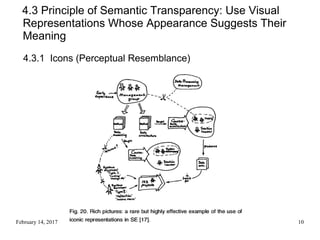
4.3 Principle of Semantic Transparency: Use Visual
Representations Whose Appearance Suggests Their
Meaning
4.3.1 Icons (Perceptual Resemblance)
February 14, 2017 11
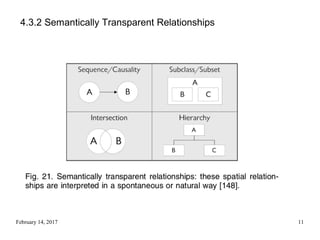
4.3.2 Semantically Transparent Relationships
February 14, 2017 12
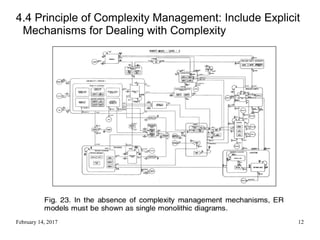
4.4 Principle of Complexity Management: Include Explicit
Mechanisms for Dealing with Complexity
February 14, 2017 13
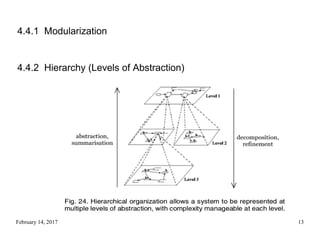
4.4.1 Modularization
4.4.2 Hierarchy (Levels of Abstraction)
February 14, 2017 14
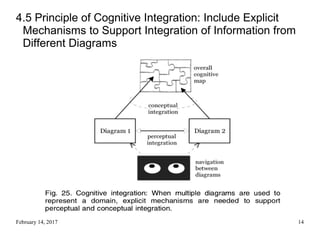
4.5 Principle of Cognitive Integration: Include Explicit
Mechanisms to Support Integration of Information from
Different Diagrams
February 14, 2017 15
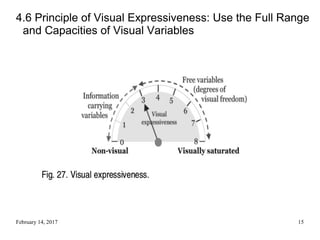
4.6 Principle of Visual Expressiveness: Use the Full Range
and Capacities of Visual Variables
February 14, 2017 16
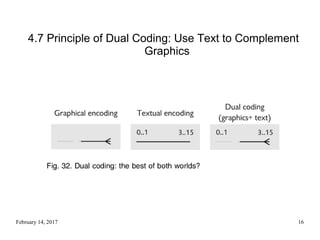
4.7 Principle of Dual Coding: Use Text to Complement
Graphics
February 14, 2017 17
5. CONCLUSION
5.1 Practical Significance
5.2 Theoretical Significance
5.3 Limitations and Further Research
5.4 Wider Significance

Visual Notation

  • 1.
    The “Physics” ofNotations: Toward a Scientific Basis for Constructing Visual Notations in Software Engineering Daniel L. Moody, Member, IEEE Presented By: Raj Kumar Ranabhat M.E. In Computer Engineering, I/I Kathmandu University
  • 2.
    February 14, 20172 Table of Content: 1. INTRODUCTION 2. RELATED RESEARCH 3. DESCRIPTIVE THEORY : HOW VISUAL NOTATIONS COMMUNICATE 4. PRESCRIPTIVE THEORY : PRINCIPLES FOR DESIGNING EFFECTIVE VISUAL NOTATIONS 5. CONCLUSION
  • 3.
    February 14, 20173 1. INTRODUCTION 1.1 The Nature of Visual Languages 1.2 The Dependent Variable: What Makes a “Good” Visual Notation? 1.3 Visual Syntax: An Important but Neglected Issue 1.4 Why Visual Representation Is Important
  • 4.
    February 14, 20174 2. RELATED RESEARCH 2.1 Ontological Analysis
  • 5.
    February 14, 20175 3. DESCRIPTIVE THEORY : HOW VISUAL NOTATIONS COMMUNICATE 3.1 Communication Theory
  • 6.
    February 14, 20176 3.2 The Design Space (Encoding Side)
  • 7.
    February 14, 20177 3.3 The Solution Space (Decoding Side)
  • 8.
    February 14, 20178 4. PRESCRIPTIVE THEORY : PRINCIPLES FOR DESIGNING EFFECTIVE VISUAL NOTATIONS 4.1 Principle of Semiotic Clarity: There Should Be a 1:1 Correspondence between Semantic Constructs and Graphical Symbols
  • 9.
    February 14, 20179 4.2 Principle of Perceptual Discriminability: Different Symbols Should Be Clearly Distinguishable from Each Other 4.2.1 Visual Distance 4.2.2 The Primacy of Shape 4.2.3 Redudant Coding 4.2.4 Textual Differentiation
  • 10.
    February 14, 201710 4.3 Principle of Semantic Transparency: Use Visual Representations Whose Appearance Suggests Their Meaning 4.3.1 Icons (Perceptual Resemblance)
  • 11.
    February 14, 201711 4.3.2 Semantically Transparent Relationships
  • 12.
    February 14, 201712 4.4 Principle of Complexity Management: Include Explicit Mechanisms for Dealing with Complexity
  • 13.
    February 14, 201713 4.4.1 Modularization 4.4.2 Hierarchy (Levels of Abstraction)
  • 14.
    February 14, 201714 4.5 Principle of Cognitive Integration: Include Explicit Mechanisms to Support Integration of Information from Different Diagrams
  • 15.
    February 14, 201715 4.6 Principle of Visual Expressiveness: Use the Full Range and Capacities of Visual Variables
  • 16.
    February 14, 201716 4.7 Principle of Dual Coding: Use Text to Complement Graphics
  • 17.
    February 14, 201717 5. CONCLUSION 5.1 Practical Significance 5.2 Theoretical Significance 5.3 Limitations and Further Research 5.4 Wider Significance