
Visual learning
     style


   Shin, Hyunchae/Kim, Eunkyung
• Visual learning style
  has a preference for
  seen or observed things.
  People who have this style
  tend to be a watcher. They
  focus on body language
  and facial expressions to
  understand the content of a
  lesson.
  They learn best from
  watching visual displays
  like pictures, illustrated
  textbooks, videos, etc.
1.Those people who
have a visual learning
     often say like
   "Do you see?" or
    “Show me!" and
     "Look at this!"
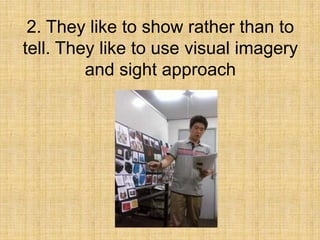
2. They like to show rather than to
tell. They like to use visual imagery
         and sight approach
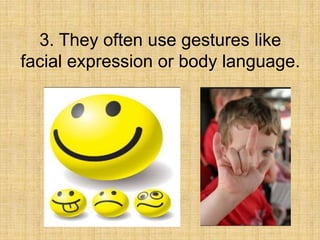
3. They often use gestures like
facial expression or body language.
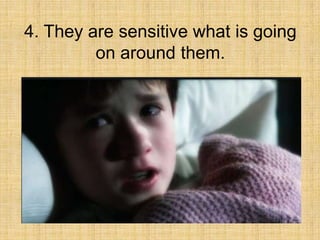
4. They are sensitive what is going
         on around them.
5. They prefer artwork and they are
 good at drawing pictures to show
         what they mean.
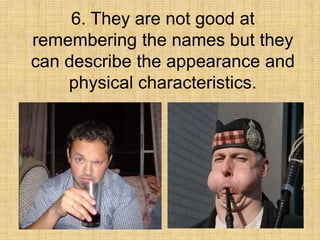
6. They are not good at
remembering the names but they
can describe the appearance and
    physical characteristics.
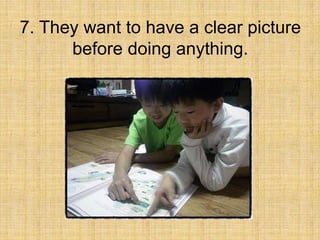
7. They want to have a clear picture
      before doing anything.
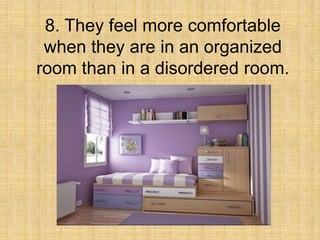
8. They feel more comfortable
 when they are in an organized
room than in a disordered room.
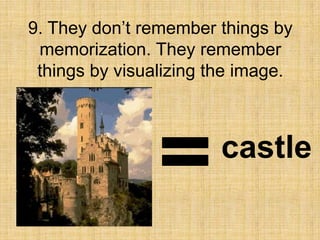
9. They don’t remember things by
 memorization. They remember
 things by visualizing the image.


                        castle
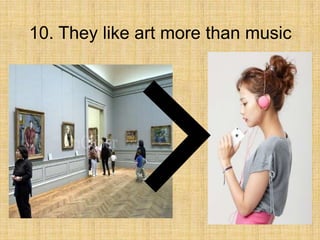
10. They like art more than music
1. teachers had
 better distribute
 students power
  point, video or
 some materials
about the subject.
2. It is recommended that
  teachers write what they
  try to teach in the
  chalkboard. Because
  visual learning students
  prefer to take notes.
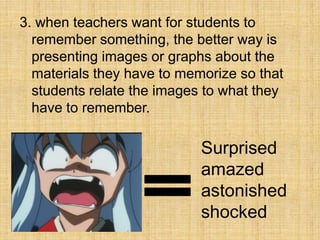
3. when teachers want for students to
  remember something, the better way is
  presenting images or graphs about the
  materials they have to memorize so that
  students relate the images to what they
  have to remember.

                            Surprised
                            amazed
                            astonished
                            shocked
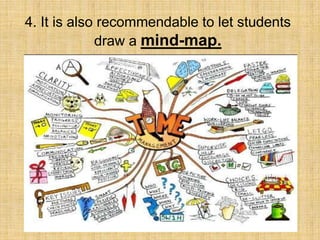
4. It is also recommendable to let students
             draw a mind-map.
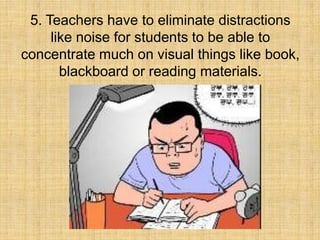
5. Teachers have to eliminate distractions
     like noise for students to be able to
concentrate much on visual things like book,
       blackboard or reading materials.
Written by
Hyunchae, Shin
Eunkyung, Kim

Visual learning style

  • 1.
    Visual learning style Shin, Hyunchae/Kim, Eunkyung
  • 2.
    • Visual learningstyle has a preference for seen or observed things. People who have this style tend to be a watcher. They focus on body language and facial expressions to understand the content of a lesson. They learn best from watching visual displays like pictures, illustrated textbooks, videos, etc.
  • 3.
    1.Those people who havea visual learning often say like "Do you see?" or “Show me!" and "Look at this!"
  • 4.
    2. They liketo show rather than to tell. They like to use visual imagery and sight approach
  • 5.
    3. They oftenuse gestures like facial expression or body language.
  • 6.
    4. They aresensitive what is going on around them.
  • 7.
    5. They preferartwork and they are good at drawing pictures to show what they mean.
  • 8.
    6. They arenot good at remembering the names but they can describe the appearance and physical characteristics.
  • 9.
    7. They wantto have a clear picture before doing anything.
  • 10.
    8. They feelmore comfortable when they are in an organized room than in a disordered room.
  • 11.
    9. They don’tremember things by memorization. They remember things by visualizing the image. castle
  • 12.
    10. They likeart more than music
  • 13.
    1. teachers had better distribute students power point, video or some materials about the subject.
  • 14.
    2. It isrecommended that teachers write what they try to teach in the chalkboard. Because visual learning students prefer to take notes.
  • 15.
    3. when teacherswant for students to remember something, the better way is presenting images or graphs about the materials they have to memorize so that students relate the images to what they have to remember. Surprised amazed astonished shocked
  • 16.
    4. It isalso recommendable to let students draw a mind-map.
  • 17.
    5. Teachers haveto eliminate distractions like noise for students to be able to concentrate much on visual things like book, blackboard or reading materials.
  • 18.