
DR. SAVITA KUMARI SHEORAN
A S S O C I A T E P R O F E S S O R
D E P T . O F C O M P U T E R S C I E N C E & E N G I N E E R I N G
I N D I R A G A N D H I U N I V E R S I T Y M E E R P U R , R E W A R I
( H A R Y A N A )
Virtual Laboratory
(Practical Approach)
Capacity Building Workshop on On-line Teaching-Learning for Regular / Guest Faculty
on 08/05/2020
Kinesthetic Learning
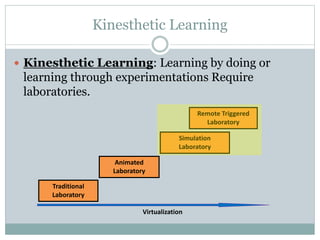
 Kinesthetic Learning: Learning by doing or
learning through experimentations Require
laboratories.
Traditional
Laboratory
Animated
Laboratory
Simulation
Laboratory
Virtualization
Remote Triggered
Laboratory
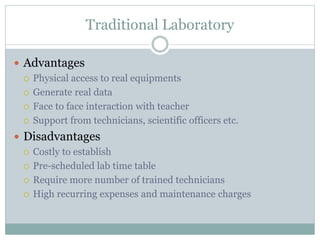
Traditional Laboratory
 Advantages
 Physical access to real equipments
 Generate real data
 Face to face interaction with teacher
 Support from technicians, scientific officers etc.
 Disadvantages
 Costly to establish
 Pre-scheduled lab time table
 Require more number of trained technicians
 High recurring expenses and maintenance charges
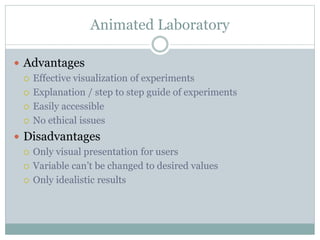
Animated Laboratory
 Advantages
 Effective visualization of experiments
 Explanation / step to step guide of experiments
 Easily accessible
 No ethical issues
 Disadvantages
 Only visual presentation for users
 Variable can’t be changed to desired values
 Only idealistic results
Simulation Laboratory
 Advantages
 More interactive
 User can change the variable to desired values
 Realistic results
 Scope to analyze the critical mistakes generally happened in
real laboratory
 Repeatability
 Disadvantages
 One-to-one instruction from teachers / support from
technician is missing
 Least scope for out of box experimentation
 No access to real time equipments
Remote Triggered Laboratory
 Advantages
 Real time access to costly equipments
 Repeatability
 Low instrumental damage
 Cost sharing
 Generate real time data and realistic results
 Disadvantages
 Network related issue
 Experiments could be performed in slots / on-demand only
 Almost no scalability
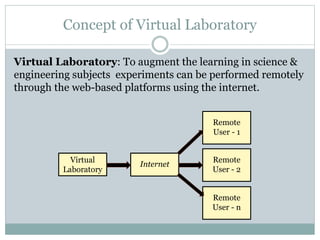
Concept of Virtual Laboratory
Virtual
Laboratory
Internet
Remote
User - 2
Remote
User - 1
Remote
User - n
Virtual Laboratory: To augment the learning in science &
engineering subjects experiments can be performed remotely
through the web-based platforms using the internet.
Virtual Labs: A Project of MHRD
 Any time, any where (24x7) free access across the globe
through Web-based platform
 Web link : http://www.vlab.co.in/
 Presently 150 labs and 1500 experiments
 Coverage of major subjects of science & engineering
including communication skills
 Contribution by best institutes of the country
 Invitation for more contribution by educational institutes is
open
 Support / popularization through workshop and web-based
solutions
Subject Areas
 Electronics & Communications
 Computer Science & Engineering
 Electrical Engineering
 Mechanical Engineering
 Chemical Engineering
 Biotechnology and Biomedical Engineering
 Civil Engineering
 Physical Sciences
 Chemical Sciences
Participating Institute
 IIT KHARAGPUR
 IIT ROORKEE
 IIT GUWAHATI
 IIT DELHI
 IIT BOMBAY
 IIT KANPUR
 IIIT HYDERABAD
 AMRITA VISHWA VIDYAPEETHAM
 IIT MADRAS
 DAYALBAGH EDUCATIONAL INSTITUTE
 NIT KARNATAKA
 COE PUNE
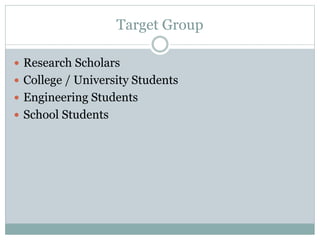
Target Group
 Research Scholars
 College / University Students
 Engineering Students
 School Students
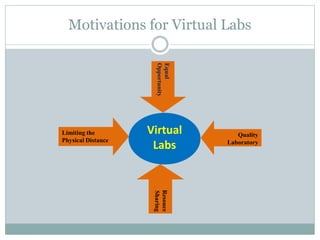
Motivations for Virtual Labs
Virtual
Labs
Equal
Opportunity
Limiting the
Physical Distance
Resouce
Sharing
Quality
Laboratory
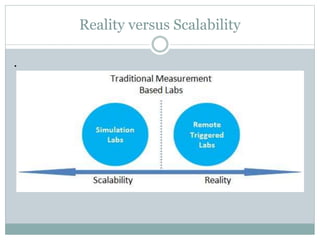
Reality versus Scalability
.
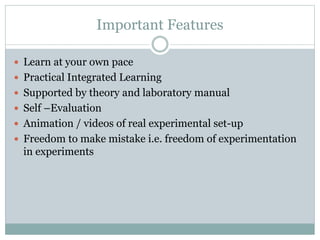
Important Features
 Learn at your own pace
 Practical Integrated Learning
 Supported by theory and laboratory manual
 Self –Evaluation
 Animation / videos of real experimental set-up
 Freedom to make mistake i.e. freedom of experimentation
in experiments
Requirements to Run Virtual Labs
 System configuration required for running Virtual
Labs:
 Browser: Chrome, Firefox, Internet explorer
 Plugins: Flash Player, Java 1.6 version, and Iced Tea
 JavaScript should be enabled on the browser
 No pop-up blockers
 Internet connection (2-4 MBPS)
 If firewall, the communication ports to facilitate VLab
network traffic should be open. Specifically ports 3306, 5900,
5902, and 8700 need to be opened.
Working with Virtual Labs
 Simulation Labs:
 Registration may or may not required
 Can be used by any number of students at any time
 Remote Triggered Labs:
 Registration is required
 After registration receive the user ID and password for slot
booking through e-mail
 After Registration book the slot from available slots
?
Thank You for Listening

Virtual Laboratory (Practical Approach)

  • 1.
    DR. SAVITA KUMARISHEORAN A S S O C I A T E P R O F E S S O R D E P T . O F C O M P U T E R S C I E N C E & E N G I N E E R I N G I N D I R A G A N D H I U N I V E R S I T Y M E E R P U R , R E W A R I ( H A R Y A N A ) Virtual Laboratory (Practical Approach) Capacity Building Workshop on On-line Teaching-Learning for Regular / Guest Faculty on 08/05/2020
  • 2.
    Kinesthetic Learning  KinestheticLearning: Learning by doing or learning through experimentations Require laboratories. Traditional Laboratory Animated Laboratory Simulation Laboratory Virtualization Remote Triggered Laboratory
  • 3.
    Traditional Laboratory  Advantages Physical access to real equipments  Generate real data  Face to face interaction with teacher  Support from technicians, scientific officers etc.  Disadvantages  Costly to establish  Pre-scheduled lab time table  Require more number of trained technicians  High recurring expenses and maintenance charges
  • 4.
    Animated Laboratory  Advantages Effective visualization of experiments  Explanation / step to step guide of experiments  Easily accessible  No ethical issues  Disadvantages  Only visual presentation for users  Variable can’t be changed to desired values  Only idealistic results
  • 5.
    Simulation Laboratory  Advantages More interactive  User can change the variable to desired values  Realistic results  Scope to analyze the critical mistakes generally happened in real laboratory  Repeatability  Disadvantages  One-to-one instruction from teachers / support from technician is missing  Least scope for out of box experimentation  No access to real time equipments
  • 6.
    Remote Triggered Laboratory Advantages  Real time access to costly equipments  Repeatability  Low instrumental damage  Cost sharing  Generate real time data and realistic results  Disadvantages  Network related issue  Experiments could be performed in slots / on-demand only  Almost no scalability
  • 7.
    Concept of VirtualLaboratory Virtual Laboratory Internet Remote User - 2 Remote User - 1 Remote User - n Virtual Laboratory: To augment the learning in science & engineering subjects experiments can be performed remotely through the web-based platforms using the internet.
  • 8.
    Virtual Labs: AProject of MHRD  Any time, any where (24x7) free access across the globe through Web-based platform  Web link : http://www.vlab.co.in/  Presently 150 labs and 1500 experiments  Coverage of major subjects of science & engineering including communication skills  Contribution by best institutes of the country  Invitation for more contribution by educational institutes is open  Support / popularization through workshop and web-based solutions
  • 9.
    Subject Areas  Electronics& Communications  Computer Science & Engineering  Electrical Engineering  Mechanical Engineering  Chemical Engineering  Biotechnology and Biomedical Engineering  Civil Engineering  Physical Sciences  Chemical Sciences
  • 10.
    Participating Institute  IITKHARAGPUR  IIT ROORKEE  IIT GUWAHATI  IIT DELHI  IIT BOMBAY  IIT KANPUR  IIIT HYDERABAD  AMRITA VISHWA VIDYAPEETHAM  IIT MADRAS  DAYALBAGH EDUCATIONAL INSTITUTE  NIT KARNATAKA  COE PUNE
  • 11.
    Target Group  ResearchScholars  College / University Students  Engineering Students  School Students
  • 12.
    Motivations for VirtualLabs Virtual Labs Equal Opportunity Limiting the Physical Distance Resouce Sharing Quality Laboratory
  • 13.
  • 14.
    Important Features  Learnat your own pace  Practical Integrated Learning  Supported by theory and laboratory manual  Self –Evaluation  Animation / videos of real experimental set-up  Freedom to make mistake i.e. freedom of experimentation in experiments
  • 15.
    Requirements to RunVirtual Labs  System configuration required for running Virtual Labs:  Browser: Chrome, Firefox, Internet explorer  Plugins: Flash Player, Java 1.6 version, and Iced Tea  JavaScript should be enabled on the browser  No pop-up blockers  Internet connection (2-4 MBPS)  If firewall, the communication ports to facilitate VLab network traffic should be open. Specifically ports 3306, 5900, 5902, and 8700 need to be opened.
  • 16.
    Working with VirtualLabs  Simulation Labs:  Registration may or may not required  Can be used by any number of students at any time  Remote Triggered Labs:  Registration is required  After registration receive the user ID and password for slot booking through e-mail  After Registration book the slot from available slots
  • 17.
    ? Thank You forListening