Downloaded 81 times
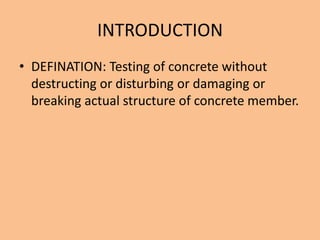
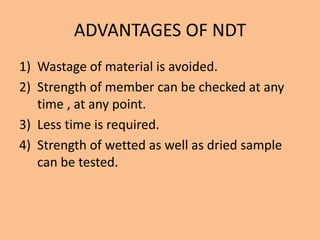
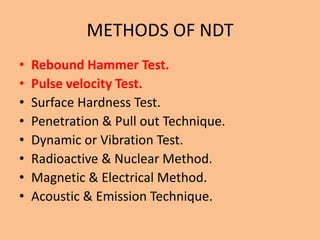
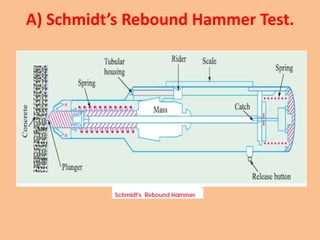
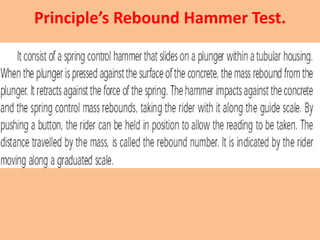
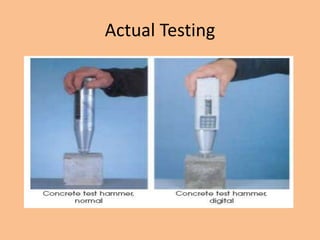
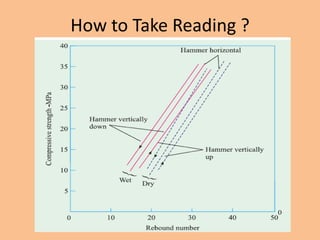
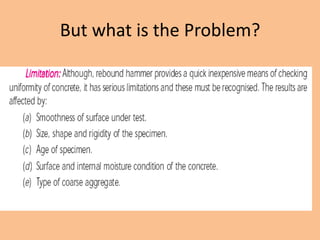
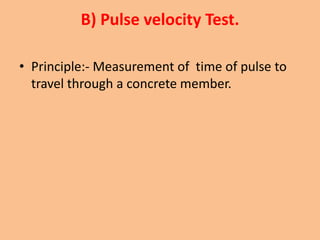
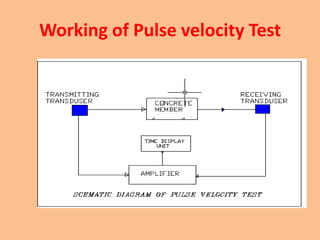
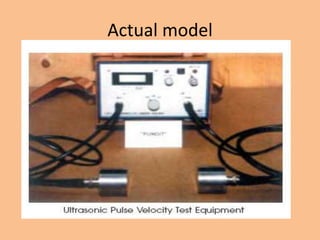
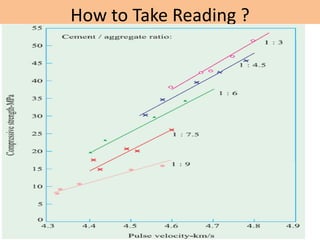
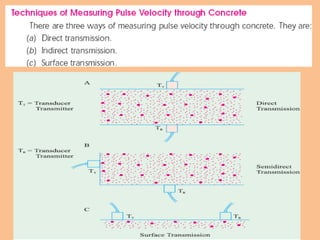

This PowerPoint presentation summarizes non-destructive testing methods for concrete. It defines non-destructive testing as testing concrete without damaging the actual structure. The advantages are avoiding waste, checking strength anywhere at any time, and testing both wet and dry samples quickly. Methods described include rebound hammer testing, pulse velocity testing, surface hardness testing, penetration techniques, vibration testing, radioactive/nuclear, magnetic/electrical, and acoustic/emission testing. Rebound hammer and pulse velocity testing are explained in more detail. In conclusion, non-destructive testing saves time and money while allowing flexible testing of concrete in various states.


