Downloaded 55 times

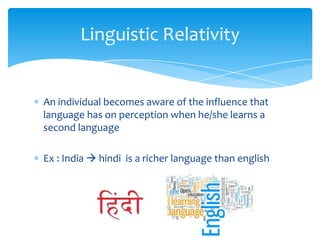
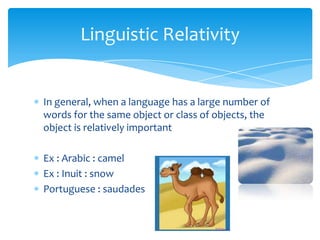
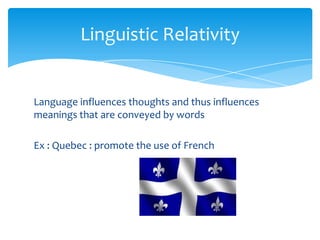






1) The document discusses the concept of linguistic relativity, which refers to the degree to which language influences human thoughts and perceptions. It provides examples of how different languages categorize objects like snow or camels differently. 2) Cultural factors that influence interpersonal communication are also examined, including differences in talk versus silence, turn-taking, self-disclosure, focus on content versus relationships, and concepts of "face." 3) Perception is identified as being more important than objective reality in determining behavior. The challenges of code-switching between languages during conversation are also addressed.


