Variable Speed
Generator
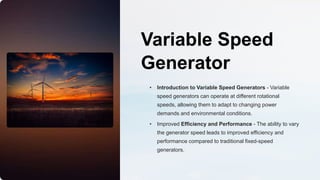
• Introduction to Variable Speed Generators - Variable
speed generators can operate at different rotational
speeds, allowing them to adapt to changing power
demands and environmental conditions.
• Improved Efficiency and Performance - The ability to vary
the generator speed leads to improved efficiency and
performance compared to traditional fixed-speed
generators.
Principles of Variable Speed
Generation
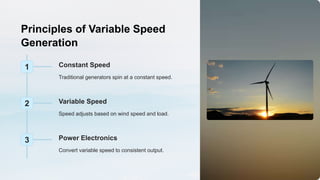
1 Constant Speed
Traditional generators spin at a constant speed.
2 Variable Speed
Speed adjusts based on wind speed and load.
3 Power Electronics
Convert variable speed to consistent output.
Benefits of Variable Speed
Generators
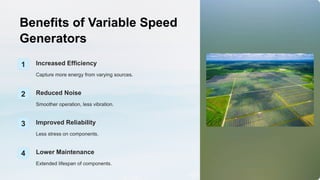
1 Increased Efficiency
Capture more energy from varying sources.
2 Reduced Noise
Smoother operation, less vibration.
3 Improved Reliability
Less stress on components.
4 Lower Maintenance
Extended lifespan of components.
Applications of Variable Speed Generators
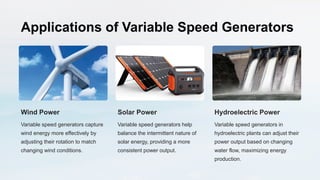
Wind Power
Variable speed generators capture
wind energy more effectively by
adjusting their rotation to match
changing wind conditions.
Solar Power
Variable speed generators help
balance the intermittent nature of
solar energy, providing a more
consistent power output.
Hydroelectric Power
Variable speed generators in
hydroelectric plants can adjust their
power output based on changing
water flow, maximizing energy
production.
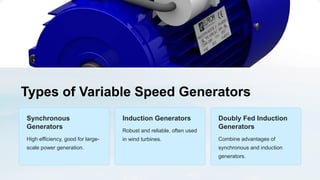
Types of Variable Speed Generators
Synchronous
Generators
High efficiency, good for large-
scale power generation.
Induction Generators
Robust and reliable, often used
in wind turbines.
Doubly Fed Induction
Generators
Combine advantages of
synchronous and induction
generators.
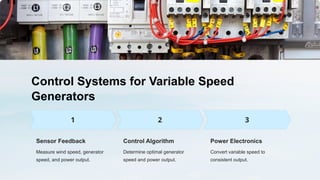
Control Systems for Variable Speed
Generators
Sensor Feedback
Measure wind speed, generator
speed, and power output.
Control Algorithm
Determine optimal generator
speed and power output.
Power Electronics
Convert variable speed to
consistent output.
Maintenance and Troubleshooting
Regular Inspections Monitor for wear and tear.
Lubrication Ensure smooth operation of bearings.
Fault Diagnosis Identify and address issues promptly.
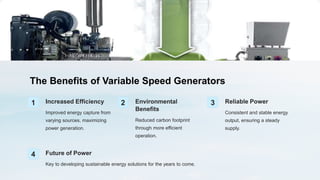
The Benefits of Variable Speed Generators
1 Increased Efficiency
Improved energy capture from
varying sources, maximizing
power generation.
2 Environmental
Benefits
Reduced carbon footprint
through more efficient
operation.
3 Reliable Power
Consistent and stable energy
output, ensuring a steady
supply.
4 Future of Power
Key to developing sustainable energy solutions for the years to come.
Reference
Variable Speed Wind Turbine Systems: Technologies, Control,
and Applications by G. S. Murthy and S. P. Singh.
Thank You
We appreciate your time and feedback.

Variable-Speed-Generator under the wind electric generator

  • 1.
    Variable Speed Generator • Introductionto Variable Speed Generators - Variable speed generators can operate at different rotational speeds, allowing them to adapt to changing power demands and environmental conditions. • Improved Efficiency and Performance - The ability to vary the generator speed leads to improved efficiency and performance compared to traditional fixed-speed generators.
  • 2.
    Principles of VariableSpeed Generation 1 Constant Speed Traditional generators spin at a constant speed. 2 Variable Speed Speed adjusts based on wind speed and load. 3 Power Electronics Convert variable speed to consistent output.
  • 3.
    Benefits of VariableSpeed Generators 1 Increased Efficiency Capture more energy from varying sources. 2 Reduced Noise Smoother operation, less vibration. 3 Improved Reliability Less stress on components. 4 Lower Maintenance Extended lifespan of components.
  • 4.
    Applications of VariableSpeed Generators Wind Power Variable speed generators capture wind energy more effectively by adjusting their rotation to match changing wind conditions. Solar Power Variable speed generators help balance the intermittent nature of solar energy, providing a more consistent power output. Hydroelectric Power Variable speed generators in hydroelectric plants can adjust their power output based on changing water flow, maximizing energy production.
  • 5.
    Types of VariableSpeed Generators Synchronous Generators High efficiency, good for large- scale power generation. Induction Generators Robust and reliable, often used in wind turbines. Doubly Fed Induction Generators Combine advantages of synchronous and induction generators.
  • 6.
    Control Systems forVariable Speed Generators Sensor Feedback Measure wind speed, generator speed, and power output. Control Algorithm Determine optimal generator speed and power output. Power Electronics Convert variable speed to consistent output.
  • 7.
    Maintenance and Troubleshooting RegularInspections Monitor for wear and tear. Lubrication Ensure smooth operation of bearings. Fault Diagnosis Identify and address issues promptly.
  • 8.
    The Benefits ofVariable Speed Generators 1 Increased Efficiency Improved energy capture from varying sources, maximizing power generation. 2 Environmental Benefits Reduced carbon footprint through more efficient operation. 3 Reliable Power Consistent and stable energy output, ensuring a steady supply. 4 Future of Power Key to developing sustainable energy solutions for the years to come.
  • 9.
    Reference Variable Speed WindTurbine Systems: Technologies, Control, and Applications by G. S. Murthy and S. P. Singh.
  • 10.
    Thank You We appreciateyour time and feedback.