Seminar on ventilator associated
pneumonia
Addisu. N (R1)
Moderator; Dr. Amsalu ( senior consultant and PCCM)
25/6/2021
08/14/2024 2
outline
• Definition
• Epidemiology
• Etiology
• Clinical presentation
• Diagnosis
• Treatment
• prevention
08/14/2024 3
• Endotracheal intubation and MV have direct and indirect effects on
the lung and upper airways, the cardiovascular and the
gastrointestinal system.
• Pulmonary complications include
- barotrauma,
- nosocomial pneumonia,
-oxygen toxicity,
- tracheal stenosis, and
-deconditioning of respiratory muscles.
08/14/2024 4
VENTILATOR-ASSOCIATED
PNEUMONIA
Ventilator-associated pneumonia (VAP) is a type of hospital-
acquired pneumonia that develops after more than 48 hours of
mechanical ventilation.
 Clinical definition of VAP
• diagnosed when a patient who has been mechanically ventilated for
48 hours develops
≥ a new or progressive infiltrate with associated
signs and symptoms of infection (eg, new onset of fever, purulent
sputum, leukocytosis, decline in oxygenation, altered respiratory
mechanics) and the respiratory specimens are positive (ie, increased
neutrophils are seen in the microscopic analysis and growth of a
pathogen in culture exceeds a predefined threshold).
08/14/2024 5
VAP is a common and serious problem in the intensive care unit that is
associated with an increased risk of death(50-70%.)
• Accurate diagnosis is important so that appropriate treatment can be
instituted early while simultaneously avoiding antibiotic overuse and
consequently, antibiotic resistance
08/14/2024 6
EPIDEMIOLOGY
• common complication among patients requiring mechanical
ventilation.
• Prevalence estimates vary between 6 and 52 cases per 100 patients,
depending on the population studied.
• US epidemiological studies report an incidence of VAP of 2–16
episodes per 1000 ventilator-days.
• estimated the risk of VAP to be 3% per day during the first 5 days on
mechanical ventilation, 2% per day from day 5 to 10 and 1% per day
for the remaining days
• Cumulative risk as long as 30 day is 70%
08/14/2024 7
ETIOLOGY
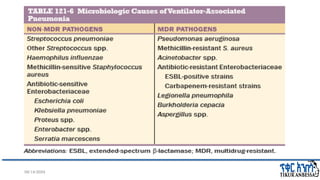
• include both MDR and non-MDR bacterial pathogens.
• non-MDR group
nearly identical to the pathogens found in severe CAP
develops in the first 5–7 days of the hospital stay(early onset VAP)
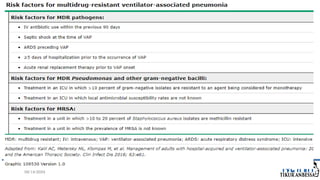
MDR pathogens
 common after 5 days of hospital stay(late onset VAP)
 consider early of there is risk factor.
vary significantly
Most hospitals have problems with P. aeruginosa and MRSA, but
other MDR pathogens are often institution-specific.
fungal and viral pathogens
08/14/2024 8
• Of 8474 cases of VAP reported to the United States Centers for
Disease Control and Prevention from 2009 to 2010, the distribution of
pathogens associated was
• S. aureus (24.1 percent),
• P. aeruginosa (16.6 percent),
• Klebsiella species (10.1 percent),
• Enterobacter species (8.6 percent),
• Acinetobacter baumannii (6.6 percent), and
• E. coli (5.9 percent).
08/14/2024 9
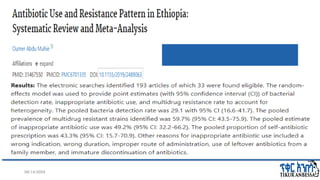
08/14/2024 10
08/14/2024 11
08/14/2024 12
pathogenesis
• Three factors are critical in the pathogenesis of VAP:
1. colonization of the oropharynx with pathogenic
microorganisms,
2. aspiration of these organisms from the oropharynx into
the lower respiratory tract, and
3. compromise of the normal host defense mechanisms
08/14/2024 13
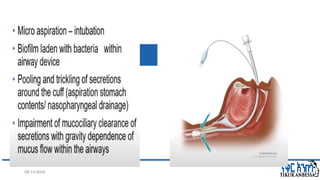
• The most obvious risk factor is the endotracheal tube,
- bypasses the normal mechanical factors
- exacerbated microaspiration
- facilitating tracheal colonization.
- surface for glycocalyx biofilm formation
- suctioning dislodged bacteria and can reinoculate the trachea, or tiny
fragments of glycocalyx can embolize to distal airways, carrying
bacteria with them.
08/14/2024 14
08/14/2024 15
colonization
• In a high percentage of critically ill patients, the normal
oropharyngeal flora is replaced by pathogenic
microorganisms. The most important risk factors are
 antibiotic selection pressure,
cross-infection from other infected/colonized patients or
contaminated equipment, and
 malnutrition.
• only around one-third of colonized patients develop VAP.
08/14/2024 16
host defenses
• final step in VAP development, independent of aspiration
and oropharyngeal colonization, is the overwhelming of
host defenses.
 immunosuppression
Hyperglycemia
 more frequent transfusions
underling disease
08/14/2024 17
CLINICAL MANIFESTATIONS
generally the same in VAP as in all other forms of pneumonia:
Signs – fever, tachypnea, increased or purulent secretions,
hemoptysis, rhonchi, crackles, reduced breath sounds, bronchospasm
Ventilator mechanics – reduced tidal volume, increased inspiratory
pressures
Laboratory findings – worsening hypoxemia, leukocytosis
Features may also be accompanied by systemic abnormalities, such as
encephalopathy or sepsis.
08/14/2024 18
• Importantly, as isolated findings, none of these features are
sensitive or specific for the diagnosis of VAP.
• In particular, fever and respiratory distress are common among
intubated patients with a wide variety of etiologies that must also be
considered.
08/14/2024 19
Imagining
• The chest radiograph can help to diagnose, to determine the severity
of the disease (multilobar versus unilobar) and identify complications,
such as pleural effusions or cavitation.
• The frequency of abnormal chest radiographs before the onset of
pneumonia in intubated patients and the limitations of portable
radiographic technique make interpretation of radiographs more
difficult than in patients who are not intubated.
• new or progressive infiltrate on chest radiograph or computed
tomography (CT)
08/14/2024 20
DIAGNOSIS
• No single set of criteria
• Application of the clinical criteria typical for CAP consistently results in
overdiagnosis of VAP
1) frequent tracheal colonization with pathogenic bacteria in patients
with endotracheal tubes,
2) multiple alternative causes of radiographic infiltrates in
mechanically ventilated patients, and
3) the high frequency of other sources of fever in critically ill patients.
08/14/2024 21
• diagnostic dilemma
invasive sampling methods with quantitative cultures VS
noninvasive sampling with semiquantitative cultures
08/14/2024 22
• the 2017 guidelines issued by The European Respiratory
Society (ERS)/European Society of Intensive Care
Medicine (ESCIM)/European Society of
Clinical Microbiology/Infectious Diseases (ESCMID)/Asociación Latino
americana del Tórax (ALAT), state a preference for invasive sampling
methods with quantitative cultures.
high diagnostic accuracy
 the potential to reduce antibiotic exposure,
thereby promoting good antibiotic stewardship.
• recommend obtaining a lower respiratory tract sample (distal
quantitative or proximal quantitative or qualitative culture) to focus
and narrow the initial empiric antibiotic therapy. (Strong
recommendation, low quality of evidence.)
08/14/2024 23
• The Infectious Diseases Society of America/The American Thoracic
Society, have preference for noninvasive sampling with
semiquantitative cultures for the diagnosis of VAP; this preference
is based upon evidence that demonstrates
no difference in mortality or
length of stay with either approach
Overall mortality, ICU length of stay and duration of mechanical
ventilation did not show differences between the two interventions
in a pooled analysis.
08/14/2024 24
Quantitative-Culture Approach
• The essence is discrimination between colonization and true
infection through determination of the bacterial burden.
• The more distal in the respiratory tree the diagnostic sampling, the
more specific the results and therefore the lower the threshold of
growth necessary to diagnose pneumonia and exclude colonization.
• VAP is supported when an established threshold of bacterial growth is
exceeded.
•Endotracheal aspirates – 1,000,000 cfu/mL
≥
•Bronchoscopic- or mini-BAL – 10,000 cfu/mL
•PSB – 1000 cfu/mL
08/14/2024 25
• Additional tests that may increase the diagnostic yield include Gram’s
staining, differential cell counts, staining for intracellular organisms,
and detection of local protein levels elevated in response to
infection.
• The key piece of a quantitative-culture approach is to base
subsequent antibiotic therapy on the results of the quantitative
cultures.
• antibiotic treatment was initiated only in patients whose gram
stained respiratory sample was positive or who displayed signs of
hemodynamic instability.
08/14/2024 26
Microscopic analysis –
• This involves semi-quantitative analysis of PMN leukocytes and other
cell types, as well as the Gram stain.
• the microscopy results return before cultures and can be helpful in
determining a possible pathogen and alter antibiotic selection.
• The presence of abundant neutrophils (>25/LPF) is consistent with
VAP and the bacterial morphology may suggest a likely pathogen (eg,
Gram-negative rods).
08/14/2024 27
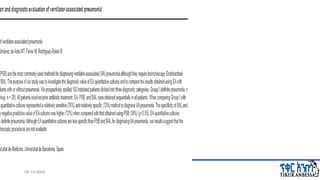
In a study comparing the quantitative with the clinical approach, the
use of bronchoscopic quantitative cultures
resulted in significantly less antibiotic use at 14 days after study
a lower 14-day mortality rate,
a lower 28-day severity-adjusted mortality rate.
more alternative sites of infection were found.
• expertise in quantitative-culture techniques is critical, with a
specimen obtained as soon as pneumonia is suspected and before
antibiotic therapy is initiated or changed.
08/14/2024 28
08/14/2024 29
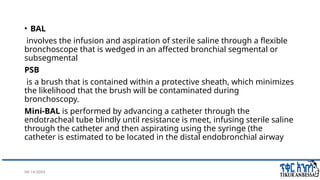
• BAL
involves the infusion and aspiration of sterile saline through a flexible
bronchoscope that is wedged in an affected bronchial segmental or
subsegmental
PSB
is a brush that is contained within a protective sheath, which minimizes
the likelihood that the brush will be contaminated during
bronchoscopy.
Mini-BAL is performed by advancing a catheter through the
endotracheal tube blindly until resistance is meet, infusing sterile saline
through the catheter and then aspirating using the syringe (the
catheter is estimated to be located in the distal endobronchial airway
08/14/2024 30
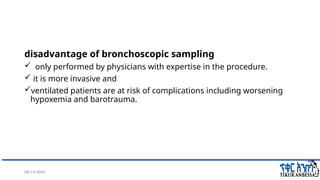
disadvantage of bronchoscopic sampling
 only performed by physicians with expertise in the procedure.
 it is more invasive and
ventilated patients are at risk of complications including worsening
hypoxemia and barotrauma.
08/14/2024 31
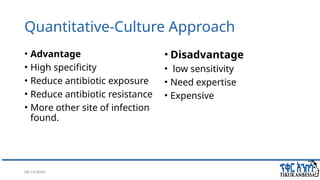
Quantitative-Culture Approach
• Advantage
• High specificity
• Reduce antibiotic exposure
• Reduce antibiotic resistance
• More other site of infection
found.
• Disadvantage
• low sensitivity
• Need expertise
• Expensive
08/14/2024 32
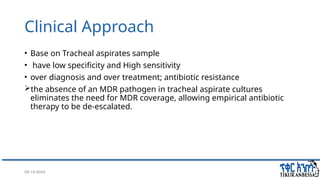
Clinical Approach
• Base on Tracheal aspirates sample
• have low specificity and High sensitivity
• over diagnosis and over treatment; antibiotic resistance
the absence of an MDR pathogen in tracheal aspirate cultures
eliminates the need for MDR coverage, allowing empirical antibiotic
therapy to be de-escalated.
08/14/2024 33
• Noninvasive respiratory sampling —
• Tracheobronchial aspiration is performed by advancing a catheter
through the endotracheal tube until resistance is met and suction is
applied (likely located in trachea or main stem bronchus). The
sample is directly aspirated into a sterile specimen trap that can be
sent for microbiologic analysis.
08/14/2024 34
• Generally speaking, compared with quantitative cultures derived
from bronchoscopic specimens, quantitative cultures derived
from nonbronchoscopic specimens have similar or higher
diagnostic sensitivity (ie, low false negative rate) but a lower
specificity (ie, higher false-positive rate).
 the approach at each institution, or potentially for each
patient, should balance the frequency of complex illnesses
that are associated with
(1) greater frequency of alternative causes of the clinical
manifestations,
(2) higher colonization rates, and
(3) more frequent prior antibiotic therapy versus availability and
expertise of invasive techniques with quantitative cultures.
08/14/2024 35
Treatment
• Treatment should be started once diagnostic specimens
have been obtained.
• higher mortality rates with initially inappropriate empirical
antibiotic therapy
• an appreciation of the resistance patterns of the most
likely pathogens in a given patient
08/14/2024 36
ANTIBIOTIC RESISTANCE
• Global threat
• Frequent use of β-lactam drugs, especially cephalosporins,
appears to be the major risk factor for infection with MRSA
and extended-spectrum β-lactamase–positive strains.
08/14/2024 37
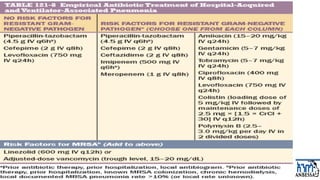
EMPIRICAL THERAP
the presence of risk factors for MDR pathogens
 local patterns of resistance
the patient’s prior antibiotic exposure.
The agents PD properties
• The majority of patients without risk factors for MDR
infection can be treated with a single agent and with the
same antibiotics used for severe CAP.
• <10% in some ICUs and is unknown for HAP patients
• lower incidence of atypical pathogens
08/14/2024 38
• The standard recommendation for patients with risk factors
for MDR infection is for three antibiotics:
two directed at P. aeruginosa and one at MRSA
A β-lactam agent provides the greatest coverage, yet even the
broadest-spectrum agent—a carbapenem—still provides
inappropriate initial therapy in up to 10–15% of cases at some
centers.
08/14/2024 39
08/14/2024 40
SPECIFIC TREATMENT
• Once an etiologic diagnosis is made, broad-spectrum empirical therapy
can be modified to specifically address the known pathogen.
• antibiotics should be discontinued or that a search for an alternative
diagnosis should be pursued
A negative tracheal-aspirate culture or growth below the threshold for
quantitative cultures of samples obtained before any antibiotic change.
 A 7- or 8-day course of therapy is just as effective as a 2-week course
and is associated with less frequent emergence of antibiotic-resistant
strains.
Current guidelines recommend against continued combination therapy
for most cases of Pseudomonas pneumonia.
08/14/2024 41
FAILURE TO IMPROVE
• MRSA is associated with a 40% clinical failure rate when treated with
standard-dose vancomycin(time dependent killing)
• Linezolid appears to be 15% more efficacious than even adjusted-
dose vancomycin and is clearly preferred in patients with renal
insufficiency and those infected with high-MIC isolates of MRSA.
• Pseudomonas has a 40–50% failure rate, no matter what the regimen.
• the emergence of β-lactam resistance during therapy is an important
problem, especially in infection with Pseudomonas and Enterobacter
08/14/2024 42
• Treatment failure is very difficult to diagnose early in the
therapeutic course, and discrimination among the various
potential causes is a challenge.
new superinfection,
the presence of extrapulmonary infection,
 drug toxicity and
 complication
08/14/2024 43
COMPLICATIONS
• prolongation of mechanical ventilation, with corresponding
increases in the duration of ICU stay and hospitalization
• necrotizing pneumonia (e.g., that due to P. aeruginosa) can
cause significant pulmonary hemorrhage or long-term
complications of bronchiectasis and parenchymal scarring.
• muscle loss and general debilitation
08/14/2024 44
FOLLOW-UP
• Clinical
usually evident within 48–72 h of the initiation of
antimicrobial treatmen
• Laboratory
Serial measurements of procalcitonin levels and
inflammatory marker.
• Microbiologic
repeat quantitative cultures
08/14/2024 45
PROGNOSIS
• crude mortality rates as high as 50–70%, but the real issue is
attributable mortality.
• Attributable mortality varies(up to 25%)
• Attributable VAP mortality is defined as the percentage of deaths that
would not have occurred in the absence of the infection
 The causative pathogen also plays a major role
• MDR pathogens are associated with significantly greater attributable
mortality than non-MDR pathogens.
08/14/2024 46
PREVENTION
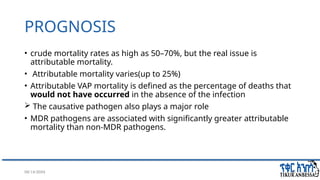
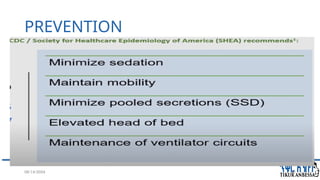
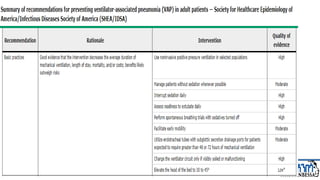
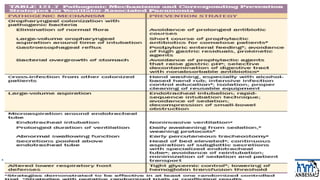
08/14/2024 47
08/14/2024 48
08/14/2024 49
08/14/2024 50
Reference
• Harrison’s 20 edition
• Up to date 2018
• marino's the ICU book 4th edition
08/14/2024 51
•Thank you

Ventilator Associated Pneumonia VAP Addisu.pptx

  • 1.
    Seminar on ventilatorassociated pneumonia Addisu. N (R1) Moderator; Dr. Amsalu ( senior consultant and PCCM) 25/6/2021
  • 2.
    08/14/2024 2 outline • Definition •Epidemiology • Etiology • Clinical presentation • Diagnosis • Treatment • prevention
  • 3.
    08/14/2024 3 • Endotrachealintubation and MV have direct and indirect effects on the lung and upper airways, the cardiovascular and the gastrointestinal system. • Pulmonary complications include - barotrauma, - nosocomial pneumonia, -oxygen toxicity, - tracheal stenosis, and -deconditioning of respiratory muscles.
  • 4.
    08/14/2024 4 VENTILATOR-ASSOCIATED PNEUMONIA Ventilator-associated pneumonia(VAP) is a type of hospital- acquired pneumonia that develops after more than 48 hours of mechanical ventilation.  Clinical definition of VAP • diagnosed when a patient who has been mechanically ventilated for 48 hours develops ≥ a new or progressive infiltrate with associated signs and symptoms of infection (eg, new onset of fever, purulent sputum, leukocytosis, decline in oxygenation, altered respiratory mechanics) and the respiratory specimens are positive (ie, increased neutrophils are seen in the microscopic analysis and growth of a pathogen in culture exceeds a predefined threshold).
  • 5.
    08/14/2024 5 VAP isa common and serious problem in the intensive care unit that is associated with an increased risk of death(50-70%.) • Accurate diagnosis is important so that appropriate treatment can be instituted early while simultaneously avoiding antibiotic overuse and consequently, antibiotic resistance
  • 6.
    08/14/2024 6 EPIDEMIOLOGY • commoncomplication among patients requiring mechanical ventilation. • Prevalence estimates vary between 6 and 52 cases per 100 patients, depending on the population studied. • US epidemiological studies report an incidence of VAP of 2–16 episodes per 1000 ventilator-days. • estimated the risk of VAP to be 3% per day during the first 5 days on mechanical ventilation, 2% per day from day 5 to 10 and 1% per day for the remaining days • Cumulative risk as long as 30 day is 70%
  • 7.
    08/14/2024 7 ETIOLOGY • includeboth MDR and non-MDR bacterial pathogens. • non-MDR group nearly identical to the pathogens found in severe CAP develops in the first 5–7 days of the hospital stay(early onset VAP) MDR pathogens  common after 5 days of hospital stay(late onset VAP)  consider early of there is risk factor. vary significantly Most hospitals have problems with P. aeruginosa and MRSA, but other MDR pathogens are often institution-specific. fungal and viral pathogens
  • 8.
    08/14/2024 8 • Of8474 cases of VAP reported to the United States Centers for Disease Control and Prevention from 2009 to 2010, the distribution of pathogens associated was • S. aureus (24.1 percent), • P. aeruginosa (16.6 percent), • Klebsiella species (10.1 percent), • Enterobacter species (8.6 percent), • Acinetobacter baumannii (6.6 percent), and • E. coli (5.9 percent).
  • 9.
  • 10.
  • 11.
  • 12.
    08/14/2024 12 pathogenesis • Threefactors are critical in the pathogenesis of VAP: 1. colonization of the oropharynx with pathogenic microorganisms, 2. aspiration of these organisms from the oropharynx into the lower respiratory tract, and 3. compromise of the normal host defense mechanisms
  • 13.
    08/14/2024 13 • Themost obvious risk factor is the endotracheal tube, - bypasses the normal mechanical factors - exacerbated microaspiration - facilitating tracheal colonization. - surface for glycocalyx biofilm formation - suctioning dislodged bacteria and can reinoculate the trachea, or tiny fragments of glycocalyx can embolize to distal airways, carrying bacteria with them.
  • 14.
  • 15.
    08/14/2024 15 colonization • Ina high percentage of critically ill patients, the normal oropharyngeal flora is replaced by pathogenic microorganisms. The most important risk factors are  antibiotic selection pressure, cross-infection from other infected/colonized patients or contaminated equipment, and  malnutrition. • only around one-third of colonized patients develop VAP.
  • 16.
    08/14/2024 16 host defenses •final step in VAP development, independent of aspiration and oropharyngeal colonization, is the overwhelming of host defenses.  immunosuppression Hyperglycemia  more frequent transfusions underling disease
  • 17.
    08/14/2024 17 CLINICAL MANIFESTATIONS generallythe same in VAP as in all other forms of pneumonia: Signs – fever, tachypnea, increased or purulent secretions, hemoptysis, rhonchi, crackles, reduced breath sounds, bronchospasm Ventilator mechanics – reduced tidal volume, increased inspiratory pressures Laboratory findings – worsening hypoxemia, leukocytosis Features may also be accompanied by systemic abnormalities, such as encephalopathy or sepsis.
  • 18.
    08/14/2024 18 • Importantly,as isolated findings, none of these features are sensitive or specific for the diagnosis of VAP. • In particular, fever and respiratory distress are common among intubated patients with a wide variety of etiologies that must also be considered.
  • 19.
    08/14/2024 19 Imagining • Thechest radiograph can help to diagnose, to determine the severity of the disease (multilobar versus unilobar) and identify complications, such as pleural effusions or cavitation. • The frequency of abnormal chest radiographs before the onset of pneumonia in intubated patients and the limitations of portable radiographic technique make interpretation of radiographs more difficult than in patients who are not intubated. • new or progressive infiltrate on chest radiograph or computed tomography (CT)
  • 20.
    08/14/2024 20 DIAGNOSIS • Nosingle set of criteria • Application of the clinical criteria typical for CAP consistently results in overdiagnosis of VAP 1) frequent tracheal colonization with pathogenic bacteria in patients with endotracheal tubes, 2) multiple alternative causes of radiographic infiltrates in mechanically ventilated patients, and 3) the high frequency of other sources of fever in critically ill patients.
  • 21.
    08/14/2024 21 • diagnosticdilemma invasive sampling methods with quantitative cultures VS noninvasive sampling with semiquantitative cultures
  • 22.
    08/14/2024 22 • the2017 guidelines issued by The European Respiratory Society (ERS)/European Society of Intensive Care Medicine (ESCIM)/European Society of Clinical Microbiology/Infectious Diseases (ESCMID)/Asociación Latino americana del Tórax (ALAT), state a preference for invasive sampling methods with quantitative cultures. high diagnostic accuracy  the potential to reduce antibiotic exposure, thereby promoting good antibiotic stewardship. • recommend obtaining a lower respiratory tract sample (distal quantitative or proximal quantitative or qualitative culture) to focus and narrow the initial empiric antibiotic therapy. (Strong recommendation, low quality of evidence.)
  • 23.
    08/14/2024 23 • TheInfectious Diseases Society of America/The American Thoracic Society, have preference for noninvasive sampling with semiquantitative cultures for the diagnosis of VAP; this preference is based upon evidence that demonstrates no difference in mortality or length of stay with either approach Overall mortality, ICU length of stay and duration of mechanical ventilation did not show differences between the two interventions in a pooled analysis.
  • 24.
    08/14/2024 24 Quantitative-Culture Approach •The essence is discrimination between colonization and true infection through determination of the bacterial burden. • The more distal in the respiratory tree the diagnostic sampling, the more specific the results and therefore the lower the threshold of growth necessary to diagnose pneumonia and exclude colonization. • VAP is supported when an established threshold of bacterial growth is exceeded. •Endotracheal aspirates – 1,000,000 cfu/mL ≥ •Bronchoscopic- or mini-BAL – 10,000 cfu/mL •PSB – 1000 cfu/mL
  • 25.
    08/14/2024 25 • Additionaltests that may increase the diagnostic yield include Gram’s staining, differential cell counts, staining for intracellular organisms, and detection of local protein levels elevated in response to infection. • The key piece of a quantitative-culture approach is to base subsequent antibiotic therapy on the results of the quantitative cultures. • antibiotic treatment was initiated only in patients whose gram stained respiratory sample was positive or who displayed signs of hemodynamic instability.
  • 26.
    08/14/2024 26 Microscopic analysis– • This involves semi-quantitative analysis of PMN leukocytes and other cell types, as well as the Gram stain. • the microscopy results return before cultures and can be helpful in determining a possible pathogen and alter antibiotic selection. • The presence of abundant neutrophils (>25/LPF) is consistent with VAP and the bacterial morphology may suggest a likely pathogen (eg, Gram-negative rods).
  • 27.
    08/14/2024 27 In astudy comparing the quantitative with the clinical approach, the use of bronchoscopic quantitative cultures resulted in significantly less antibiotic use at 14 days after study a lower 14-day mortality rate, a lower 28-day severity-adjusted mortality rate. more alternative sites of infection were found. • expertise in quantitative-culture techniques is critical, with a specimen obtained as soon as pneumonia is suspected and before antibiotic therapy is initiated or changed.
  • 28.
  • 29.
    08/14/2024 29 • BAL involvesthe infusion and aspiration of sterile saline through a flexible bronchoscope that is wedged in an affected bronchial segmental or subsegmental PSB is a brush that is contained within a protective sheath, which minimizes the likelihood that the brush will be contaminated during bronchoscopy. Mini-BAL is performed by advancing a catheter through the endotracheal tube blindly until resistance is meet, infusing sterile saline through the catheter and then aspirating using the syringe (the catheter is estimated to be located in the distal endobronchial airway
  • 30.
    08/14/2024 30 disadvantage ofbronchoscopic sampling  only performed by physicians with expertise in the procedure.  it is more invasive and ventilated patients are at risk of complications including worsening hypoxemia and barotrauma.
  • 31.
    08/14/2024 31 Quantitative-Culture Approach •Advantage • High specificity • Reduce antibiotic exposure • Reduce antibiotic resistance • More other site of infection found. • Disadvantage • low sensitivity • Need expertise • Expensive
  • 32.
    08/14/2024 32 Clinical Approach •Base on Tracheal aspirates sample • have low specificity and High sensitivity • over diagnosis and over treatment; antibiotic resistance the absence of an MDR pathogen in tracheal aspirate cultures eliminates the need for MDR coverage, allowing empirical antibiotic therapy to be de-escalated.
  • 33.
    08/14/2024 33 • Noninvasiverespiratory sampling — • Tracheobronchial aspiration is performed by advancing a catheter through the endotracheal tube until resistance is met and suction is applied (likely located in trachea or main stem bronchus). The sample is directly aspirated into a sterile specimen trap that can be sent for microbiologic analysis.
  • 34.
    08/14/2024 34 • Generallyspeaking, compared with quantitative cultures derived from bronchoscopic specimens, quantitative cultures derived from nonbronchoscopic specimens have similar or higher diagnostic sensitivity (ie, low false negative rate) but a lower specificity (ie, higher false-positive rate).  the approach at each institution, or potentially for each patient, should balance the frequency of complex illnesses that are associated with (1) greater frequency of alternative causes of the clinical manifestations, (2) higher colonization rates, and (3) more frequent prior antibiotic therapy versus availability and expertise of invasive techniques with quantitative cultures.
  • 35.
    08/14/2024 35 Treatment • Treatmentshould be started once diagnostic specimens have been obtained. • higher mortality rates with initially inappropriate empirical antibiotic therapy • an appreciation of the resistance patterns of the most likely pathogens in a given patient
  • 36.
    08/14/2024 36 ANTIBIOTIC RESISTANCE •Global threat • Frequent use of β-lactam drugs, especially cephalosporins, appears to be the major risk factor for infection with MRSA and extended-spectrum β-lactamase–positive strains.
  • 37.
    08/14/2024 37 EMPIRICAL THERAP thepresence of risk factors for MDR pathogens  local patterns of resistance the patient’s prior antibiotic exposure. The agents PD properties • The majority of patients without risk factors for MDR infection can be treated with a single agent and with the same antibiotics used for severe CAP. • <10% in some ICUs and is unknown for HAP patients • lower incidence of atypical pathogens
  • 38.
    08/14/2024 38 • Thestandard recommendation for patients with risk factors for MDR infection is for three antibiotics: two directed at P. aeruginosa and one at MRSA A β-lactam agent provides the greatest coverage, yet even the broadest-spectrum agent—a carbapenem—still provides inappropriate initial therapy in up to 10–15% of cases at some centers.
  • 39.
  • 40.
    08/14/2024 40 SPECIFIC TREATMENT •Once an etiologic diagnosis is made, broad-spectrum empirical therapy can be modified to specifically address the known pathogen. • antibiotics should be discontinued or that a search for an alternative diagnosis should be pursued A negative tracheal-aspirate culture or growth below the threshold for quantitative cultures of samples obtained before any antibiotic change.  A 7- or 8-day course of therapy is just as effective as a 2-week course and is associated with less frequent emergence of antibiotic-resistant strains. Current guidelines recommend against continued combination therapy for most cases of Pseudomonas pneumonia.
  • 41.
    08/14/2024 41 FAILURE TOIMPROVE • MRSA is associated with a 40% clinical failure rate when treated with standard-dose vancomycin(time dependent killing) • Linezolid appears to be 15% more efficacious than even adjusted- dose vancomycin and is clearly preferred in patients with renal insufficiency and those infected with high-MIC isolates of MRSA. • Pseudomonas has a 40–50% failure rate, no matter what the regimen. • the emergence of β-lactam resistance during therapy is an important problem, especially in infection with Pseudomonas and Enterobacter
  • 42.
    08/14/2024 42 • Treatmentfailure is very difficult to diagnose early in the therapeutic course, and discrimination among the various potential causes is a challenge. new superinfection, the presence of extrapulmonary infection,  drug toxicity and  complication
  • 43.
    08/14/2024 43 COMPLICATIONS • prolongationof mechanical ventilation, with corresponding increases in the duration of ICU stay and hospitalization • necrotizing pneumonia (e.g., that due to P. aeruginosa) can cause significant pulmonary hemorrhage or long-term complications of bronchiectasis and parenchymal scarring. • muscle loss and general debilitation
  • 44.
    08/14/2024 44 FOLLOW-UP • Clinical usuallyevident within 48–72 h of the initiation of antimicrobial treatmen • Laboratory Serial measurements of procalcitonin levels and inflammatory marker. • Microbiologic repeat quantitative cultures
  • 45.
    08/14/2024 45 PROGNOSIS • crudemortality rates as high as 50–70%, but the real issue is attributable mortality. • Attributable mortality varies(up to 25%) • Attributable VAP mortality is defined as the percentage of deaths that would not have occurred in the absence of the infection  The causative pathogen also plays a major role • MDR pathogens are associated with significantly greater attributable mortality than non-MDR pathogens.
  • 46.
  • 47.
  • 48.
  • 49.
  • 50.
    08/14/2024 50 Reference • Harrison’s20 edition • Up to date 2018 • marino's the ICU book 4th edition
  • 51.