Visual cortex: one for all and all for one Simo Vanni, MD PhD Vision systems physiology group Brain Research Unit, Low Temperature Laboratory Aalto University School of Science and Technology
What is common to subjective experience, visual perception, and neural activation? Statistics of individual visual environment
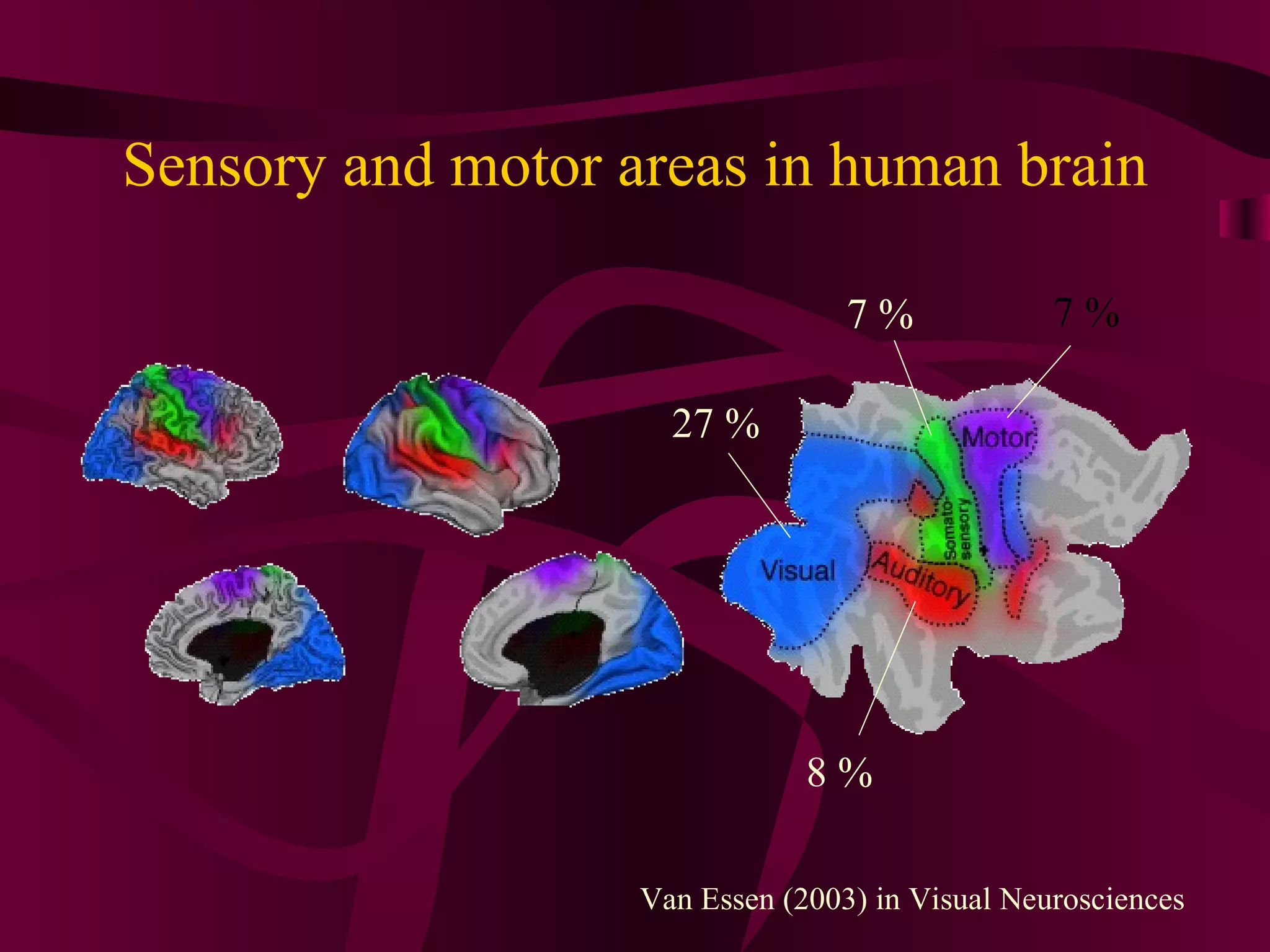
Sensory and motor areas in human brain Van Essen (2003) in Visual Neurosciences 27 % 7 % 7 % 8 %
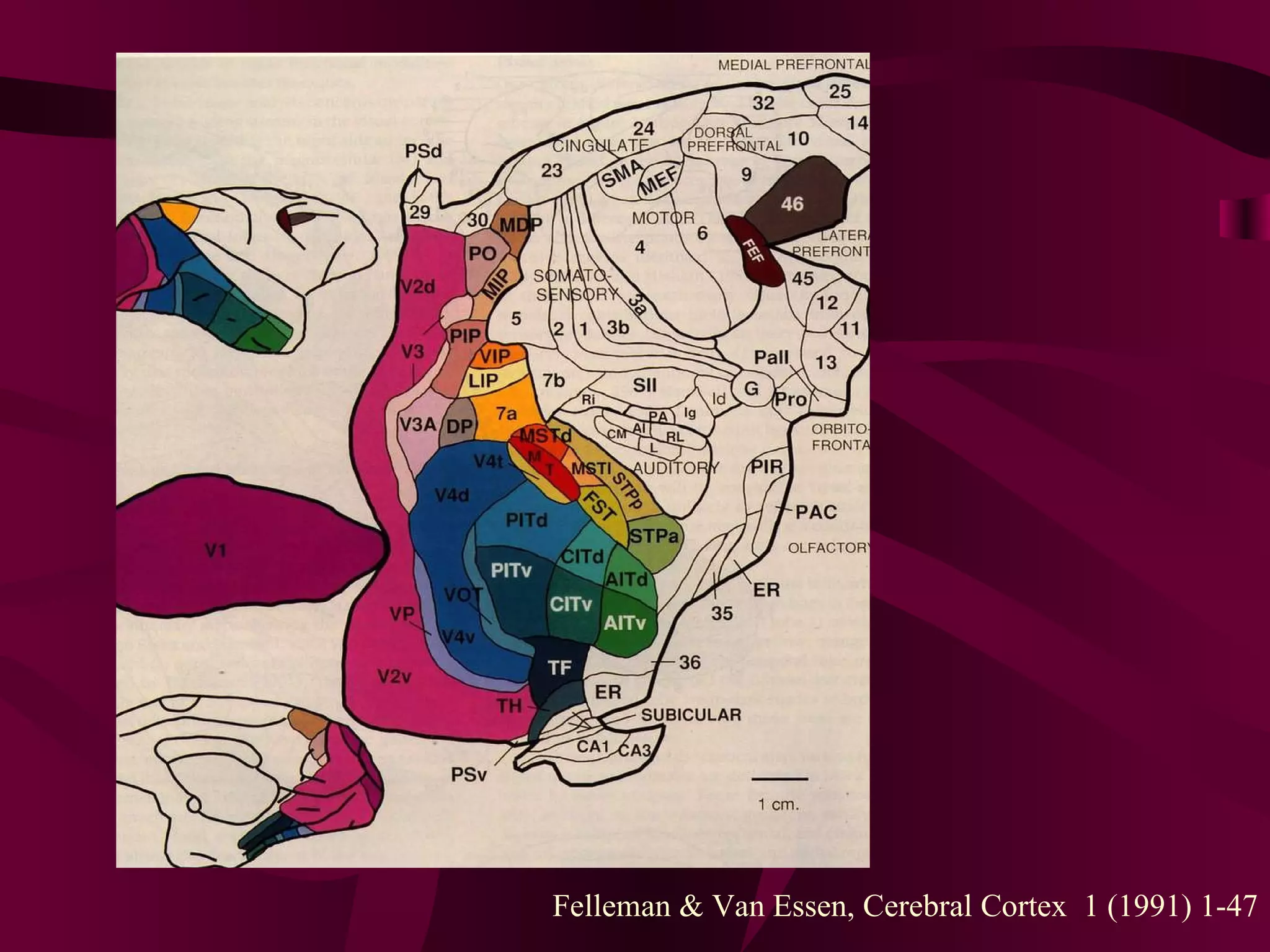
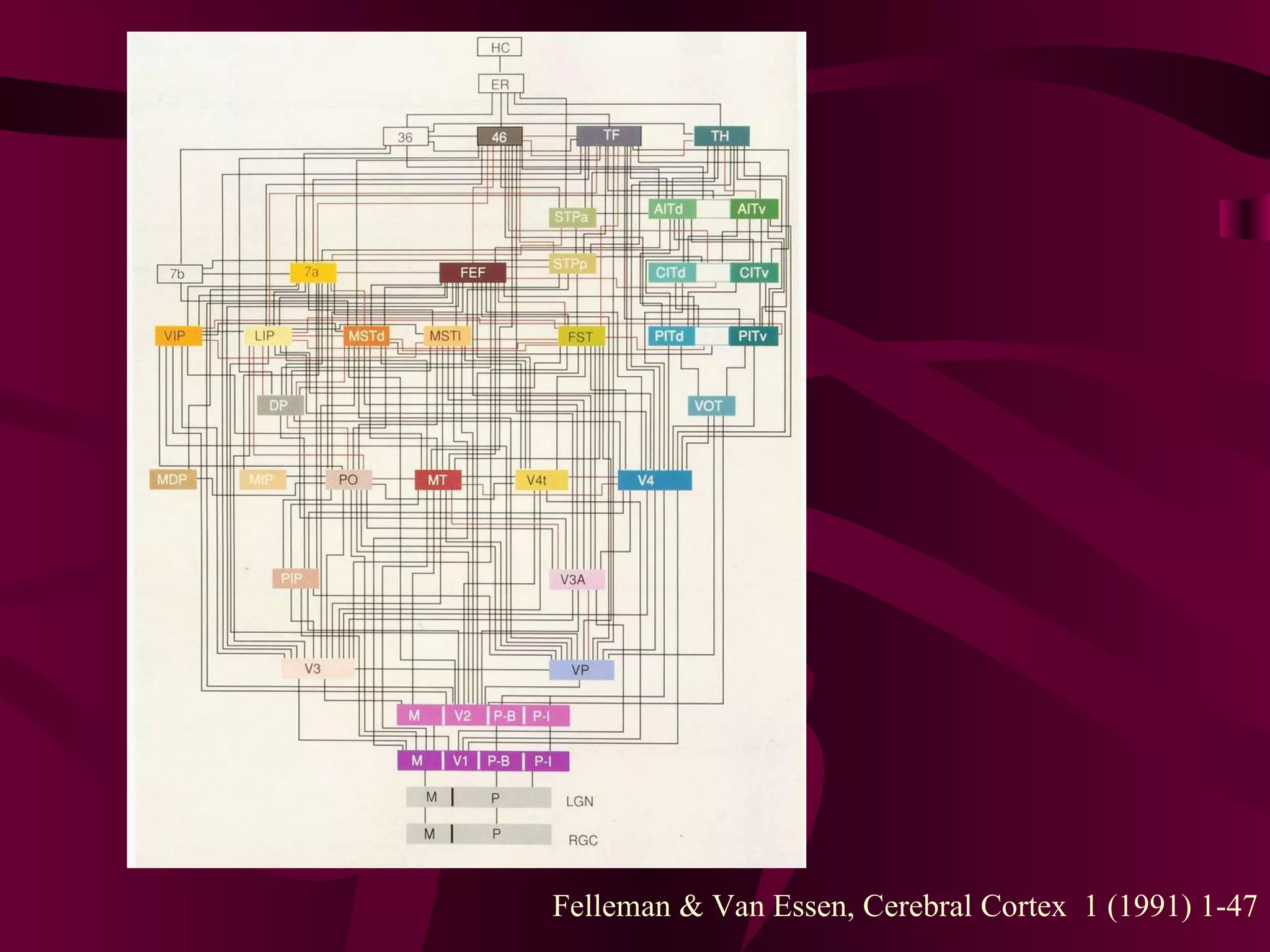
Felleman & Van Essen, Cerebral Cortex  1 (1991) 1-47
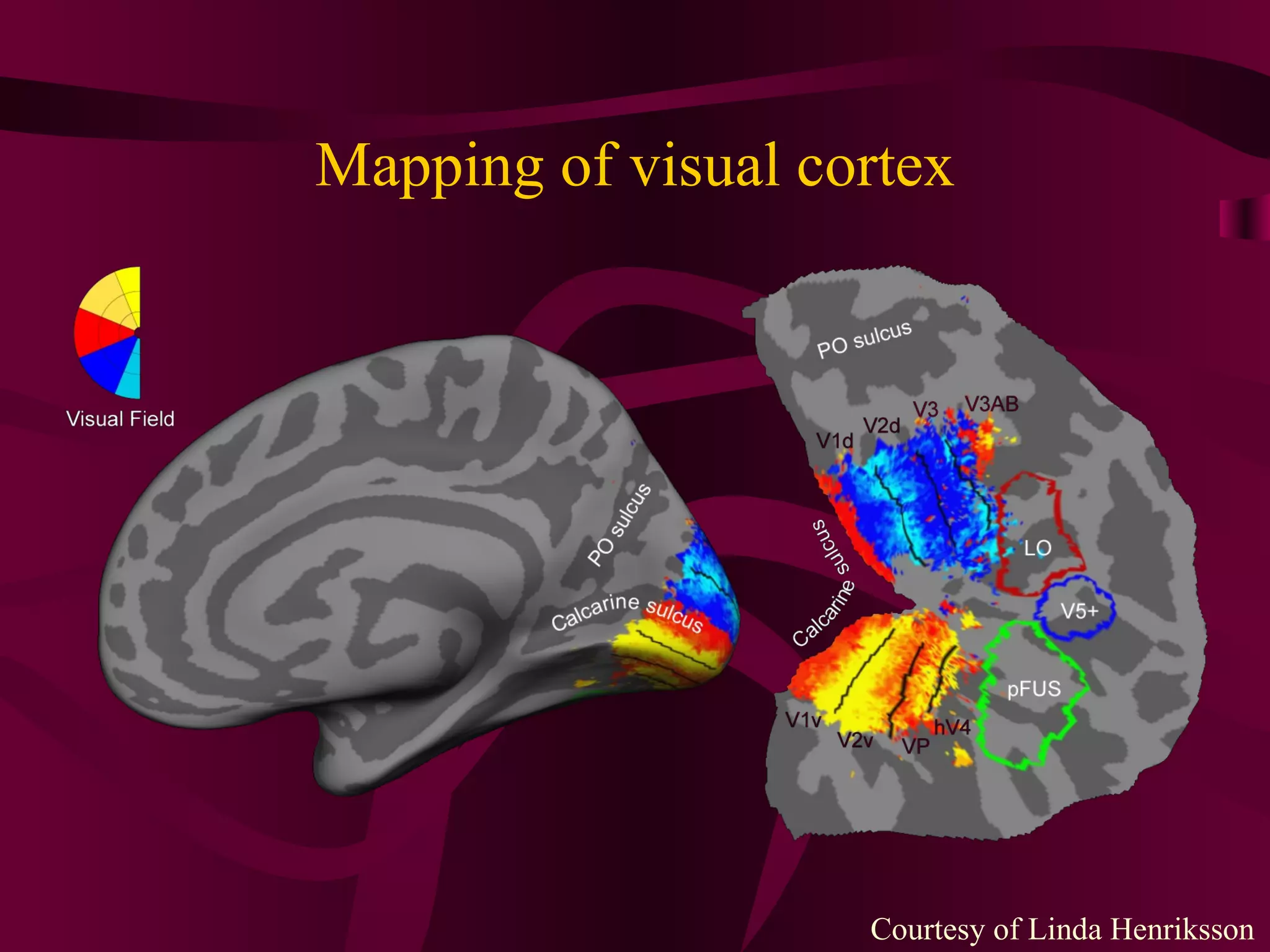
Mapping of visual cortex Courtesy of Linda Henriksson
Visual information Correlated features Sparse coding Independent representations
 
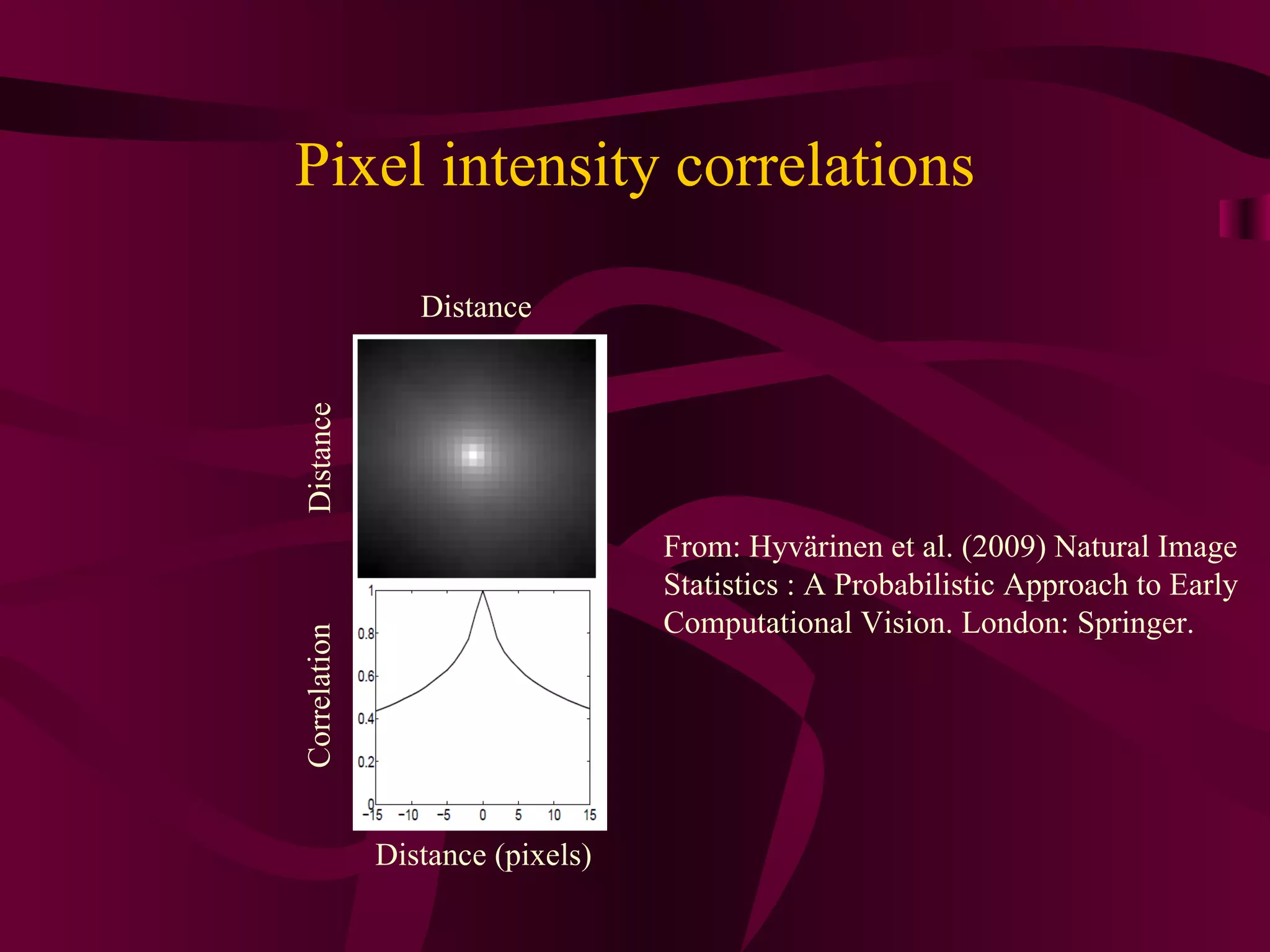
Pixel intensity correlations Distance Distance Distance (pixels) Correlation From: Hyvärinen et al. (2009) Natural Image Statistics : A Probabilistic  Approach to Early Computational Vision. London: Springer.
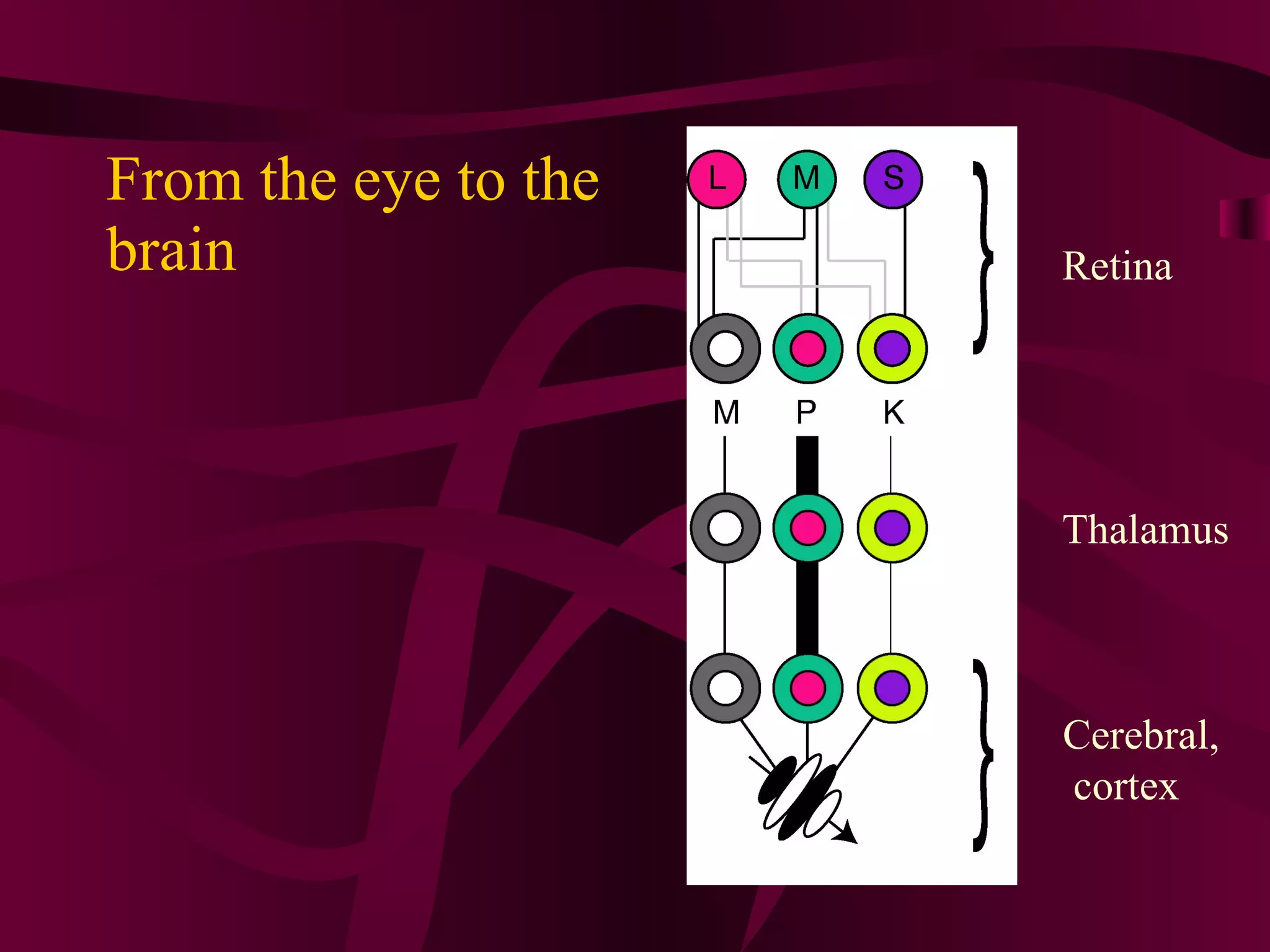
From the eye to the brain  Retina Thalamus Cerebral, cortex
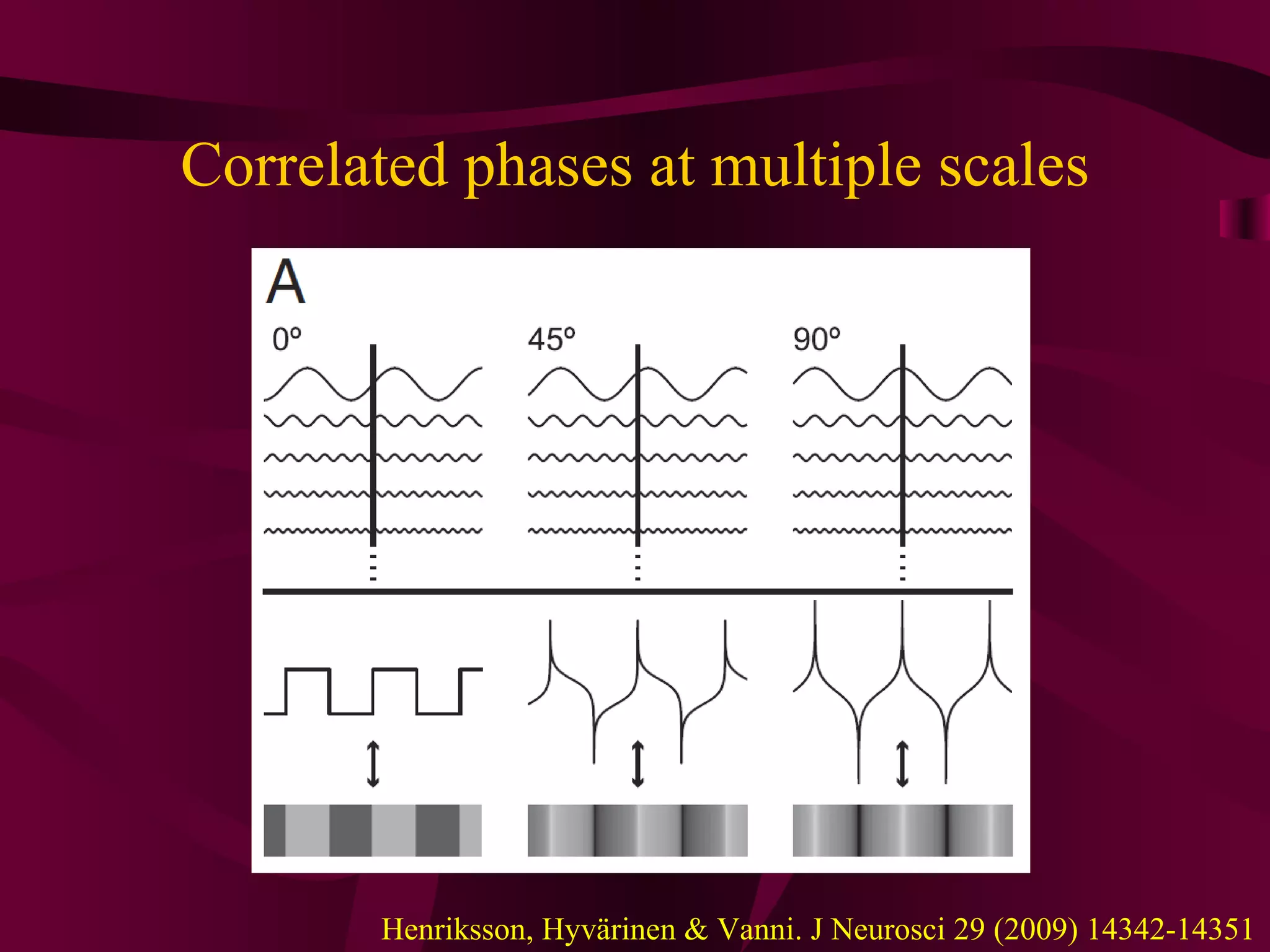
Correlated phases at multiple scales Henriksson, Hyvärinen & Vanni. J Neurosci 29 (2009) 14342-14351
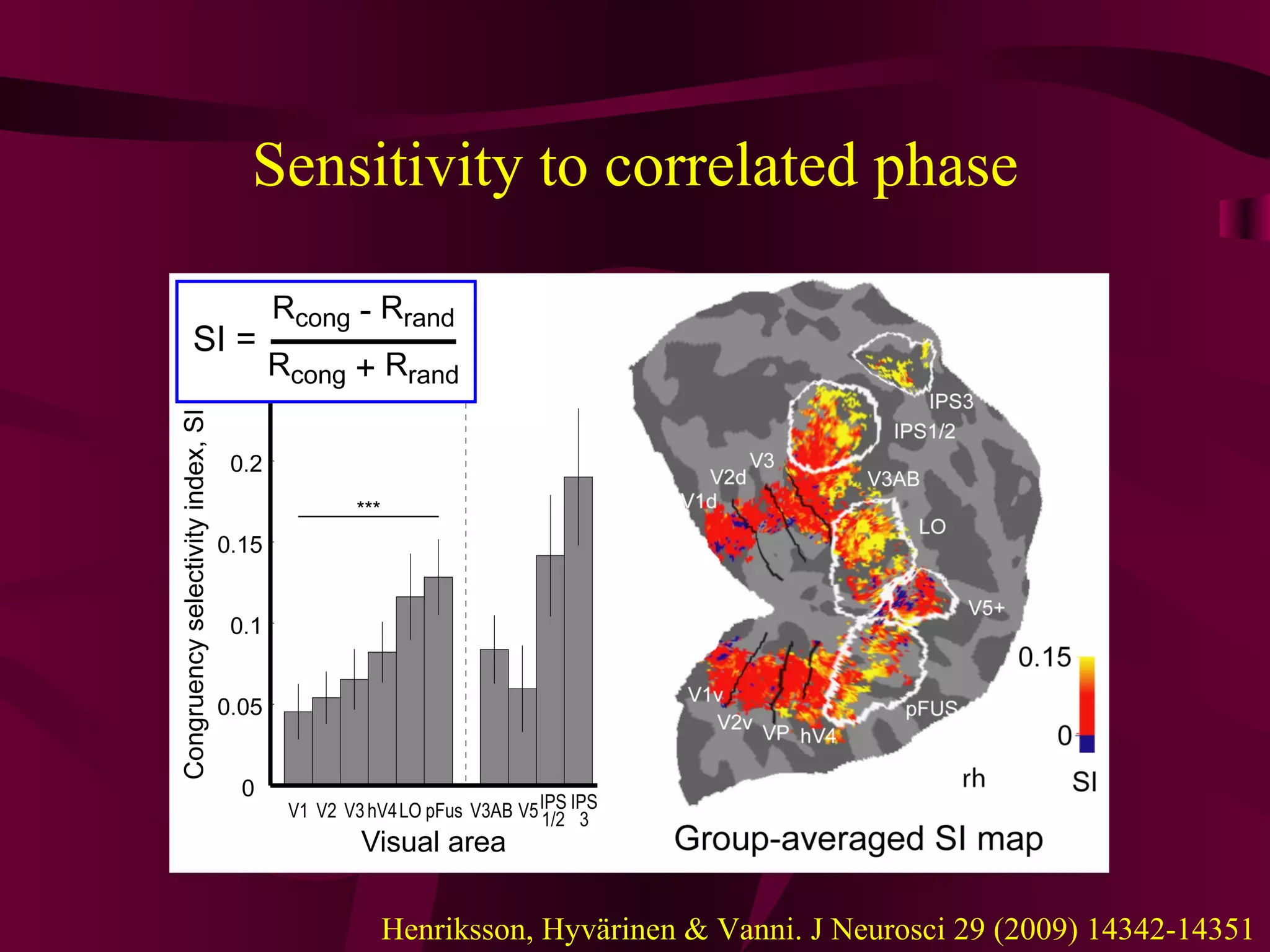
Sensitivity to correlated phase Henriksson, Hyvärinen & Vanni. J Neurosci 29 (2009) 14342-14351
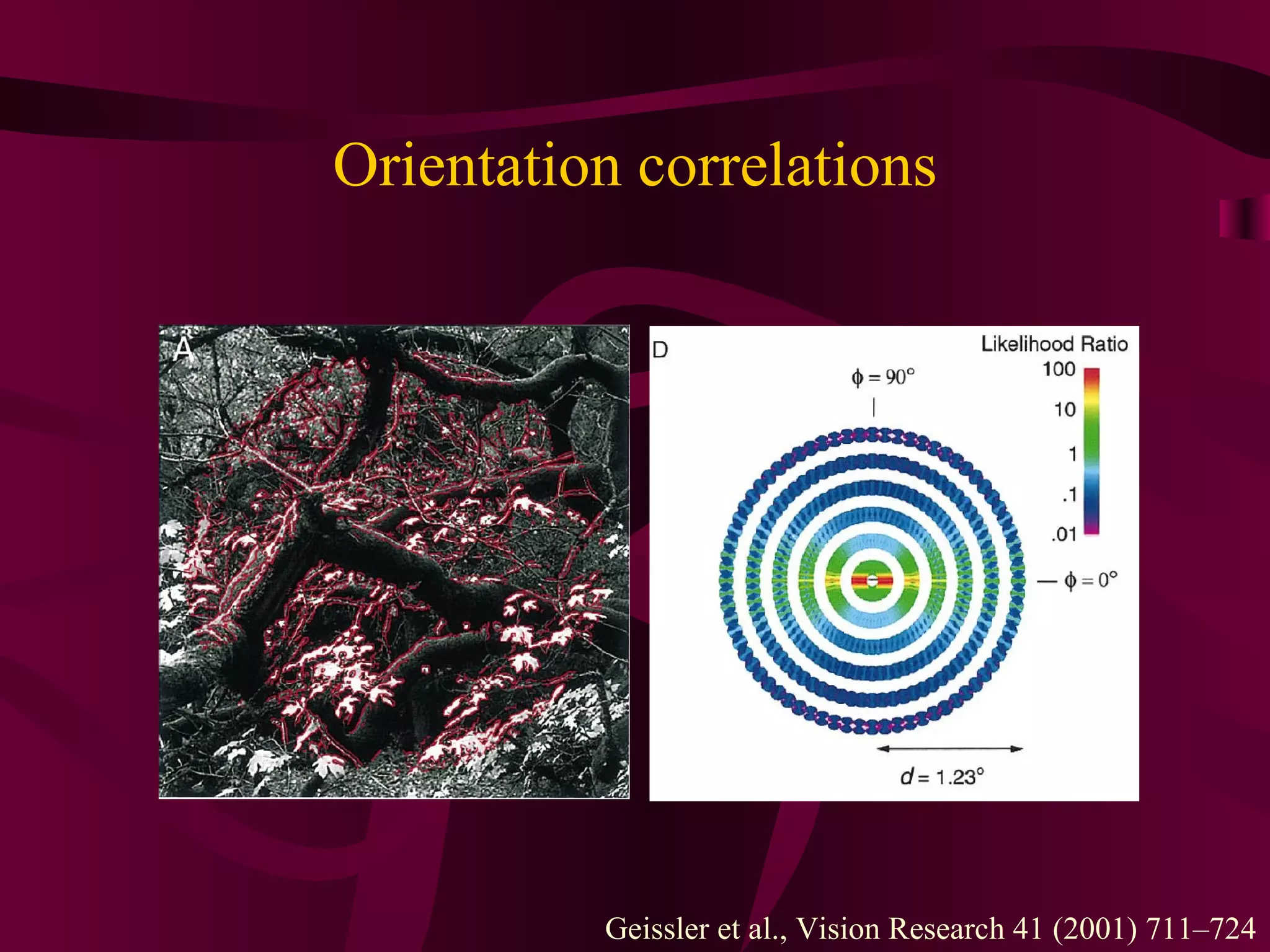
Orientation correlations Geissler et al., Vision Research 41 (2001) 711–724
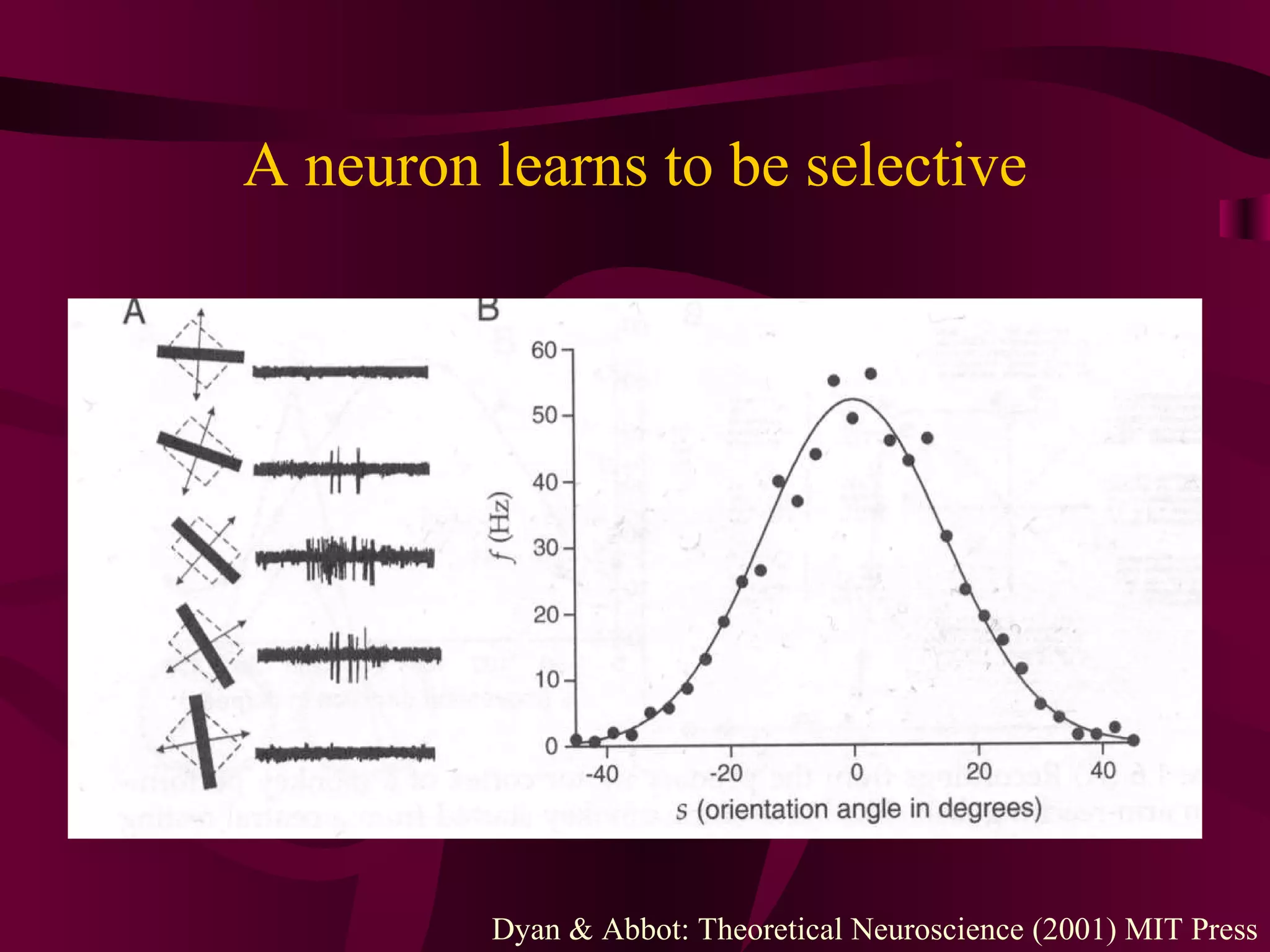
A neuron learns to be selective Dyan & Abbot: Theoretical Neuroscience (2001) MIT Press
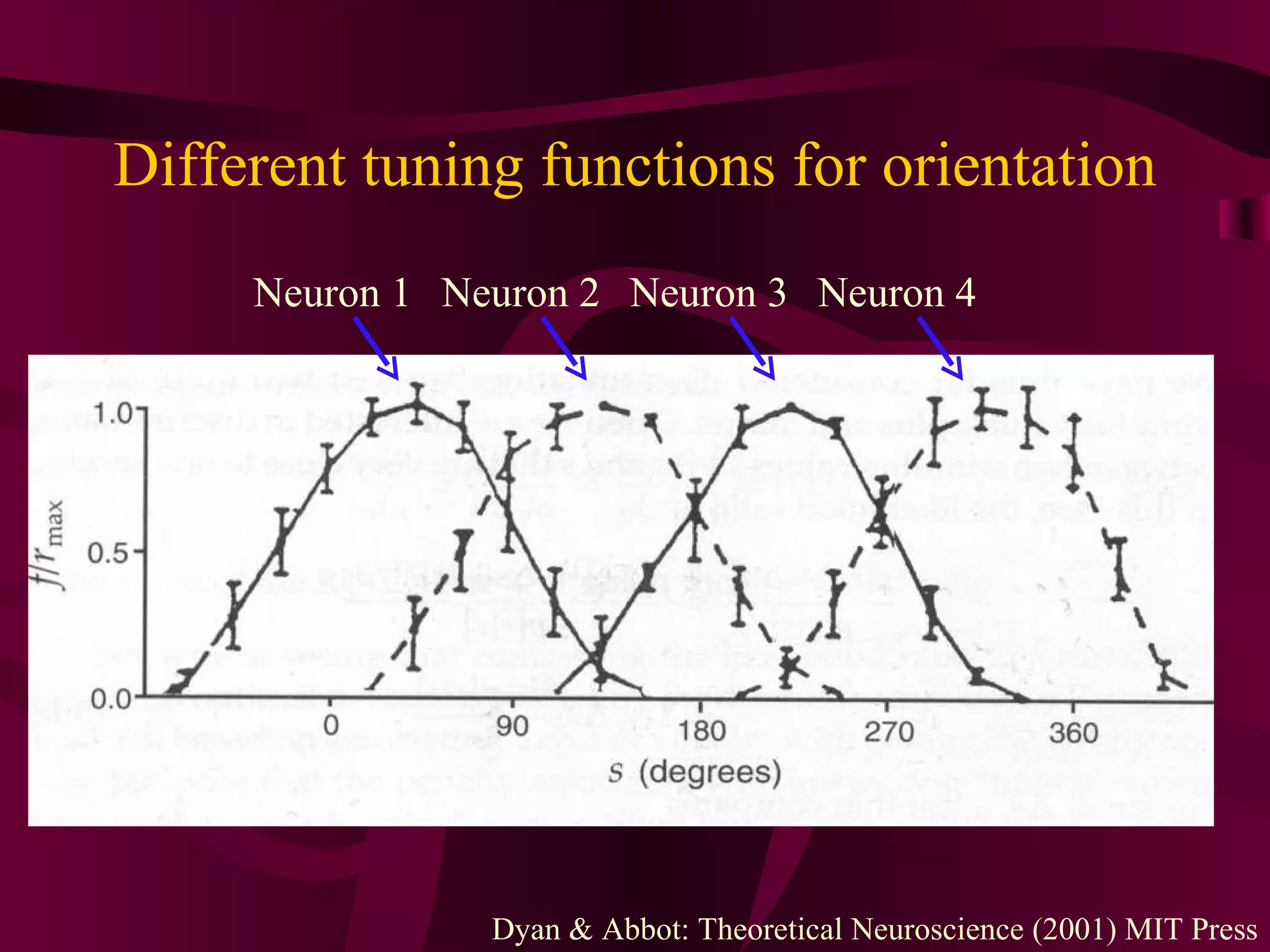
Different tuning functions for orientation Dyan & Abbot: Theoretical Neuroscience (2001) MIT Press Neuron 1 Neuron 2 Neuron 3 Neuron 4
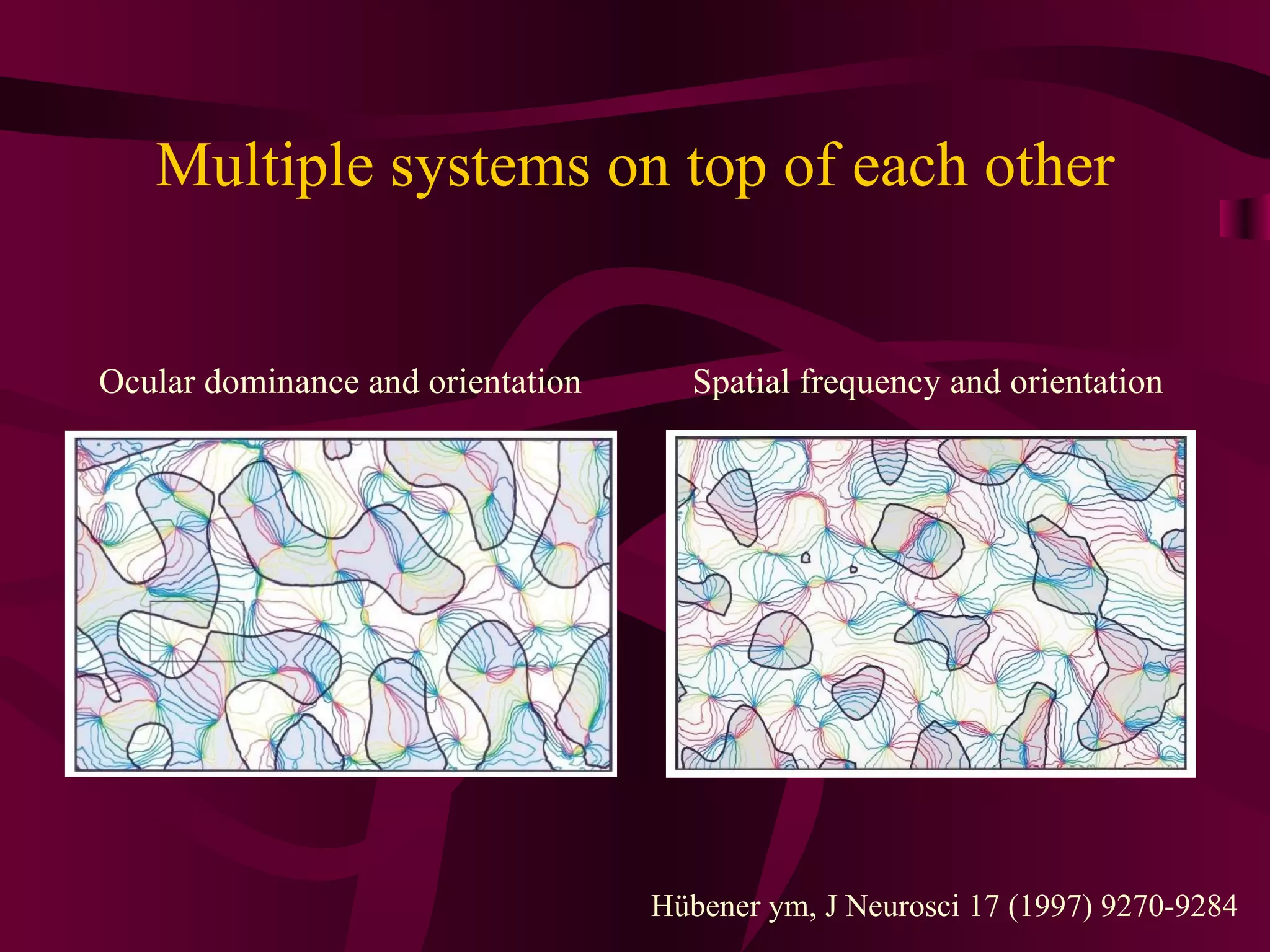
Multiple systems on top of each other Hübener ym, J Neurosci 17 (1997) 9270-9284 Ocular dominance and orientation Spatial frequency and orientation
What is a visual object…
http://members.lycos.nl/amazingart/E/20.html
Visual information  is  the regularities of co-occurence, ”statistics”, of our environment
Visual information Correlated features Sparse coding Independent representations
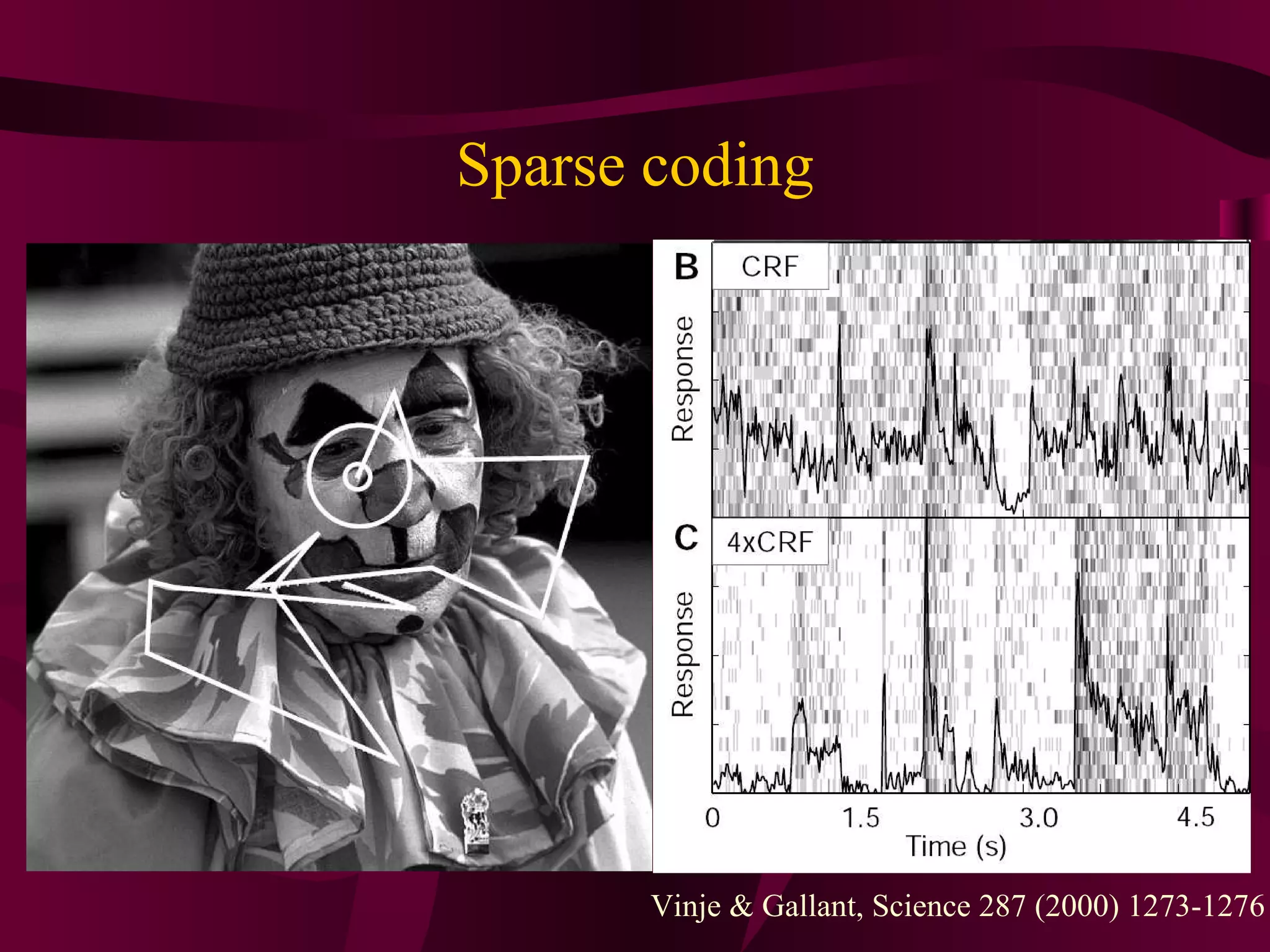
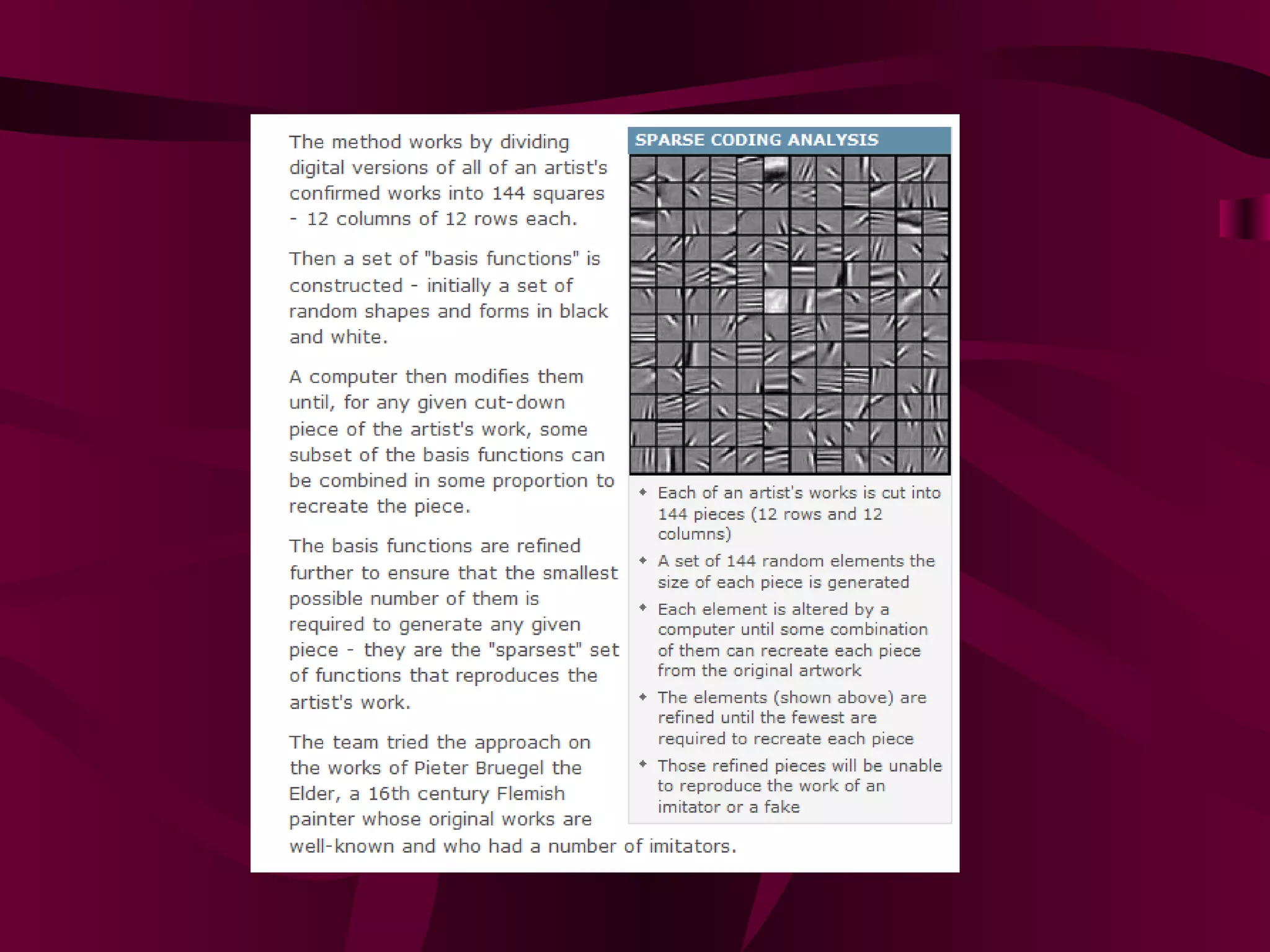
What is sparse coding Many units are inactive, while few units are strongly active (population sparseness) A single unit has on average low activity, with occasional bursts at high frequency (lifetime sparseness) Mean energy consumption down Computational benefits
Sparse coding Vinje & Gallant, Science 287 (2000) 1273-1276
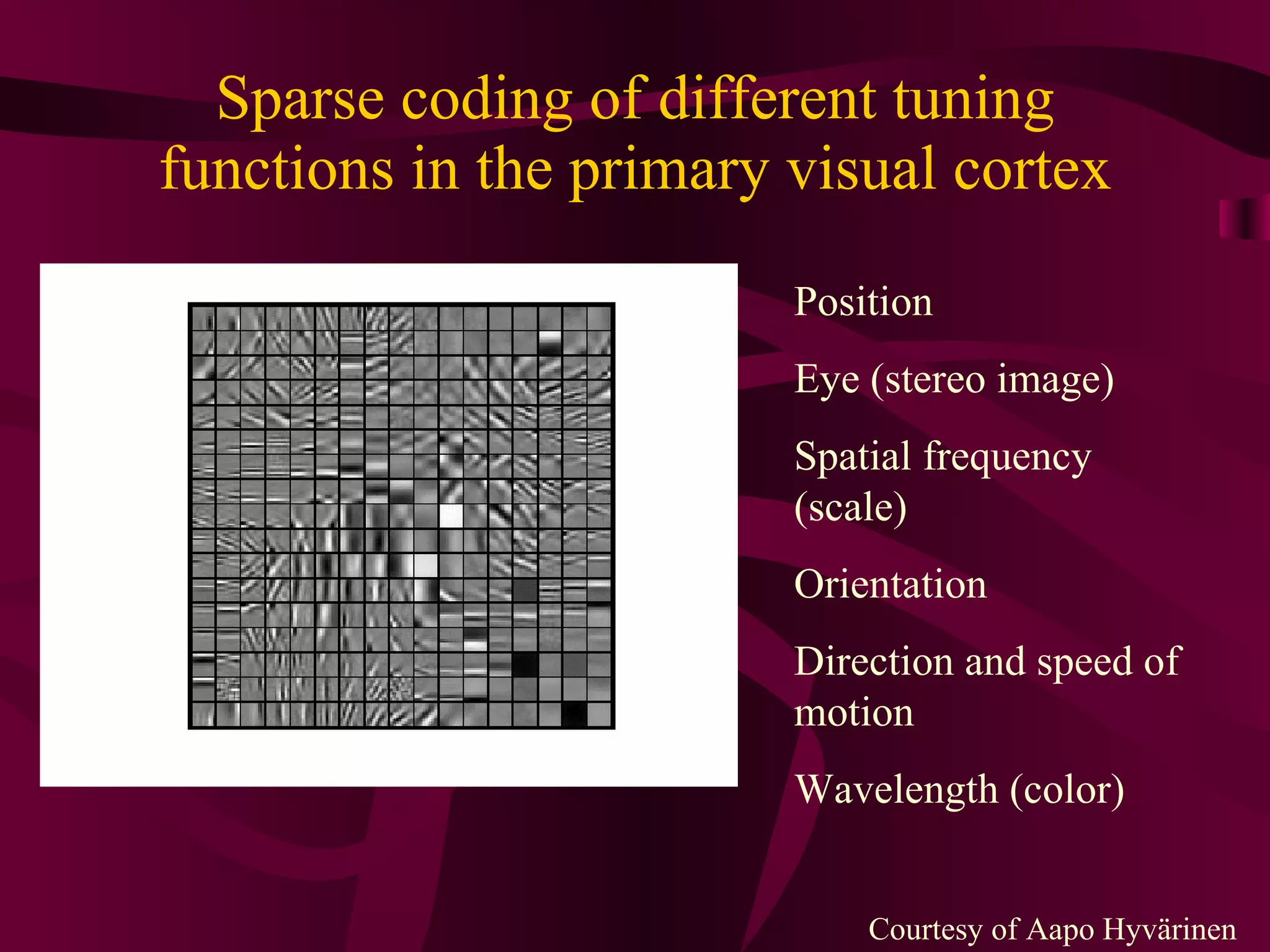
Sparse coding of different tuning functions in the primary visual cortex Position Eye (stereo image) Spatial frequency (scale) Orientation Direction and speed of motion Wavelength (color) Courtesy of Aapo Hyvärinen
 
 
Visual information Correlated features Sparse coding Independent representations
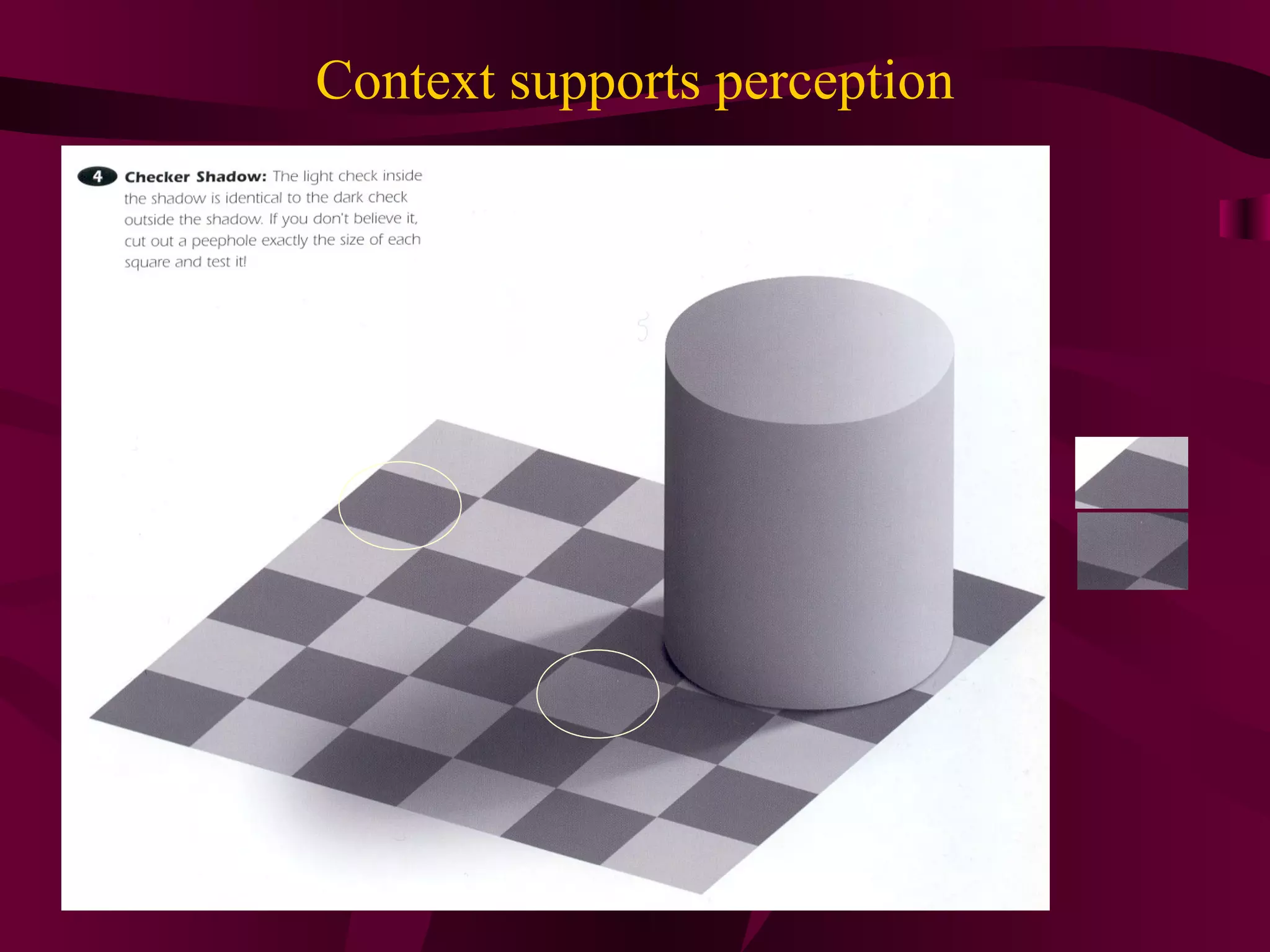
Context supports perception
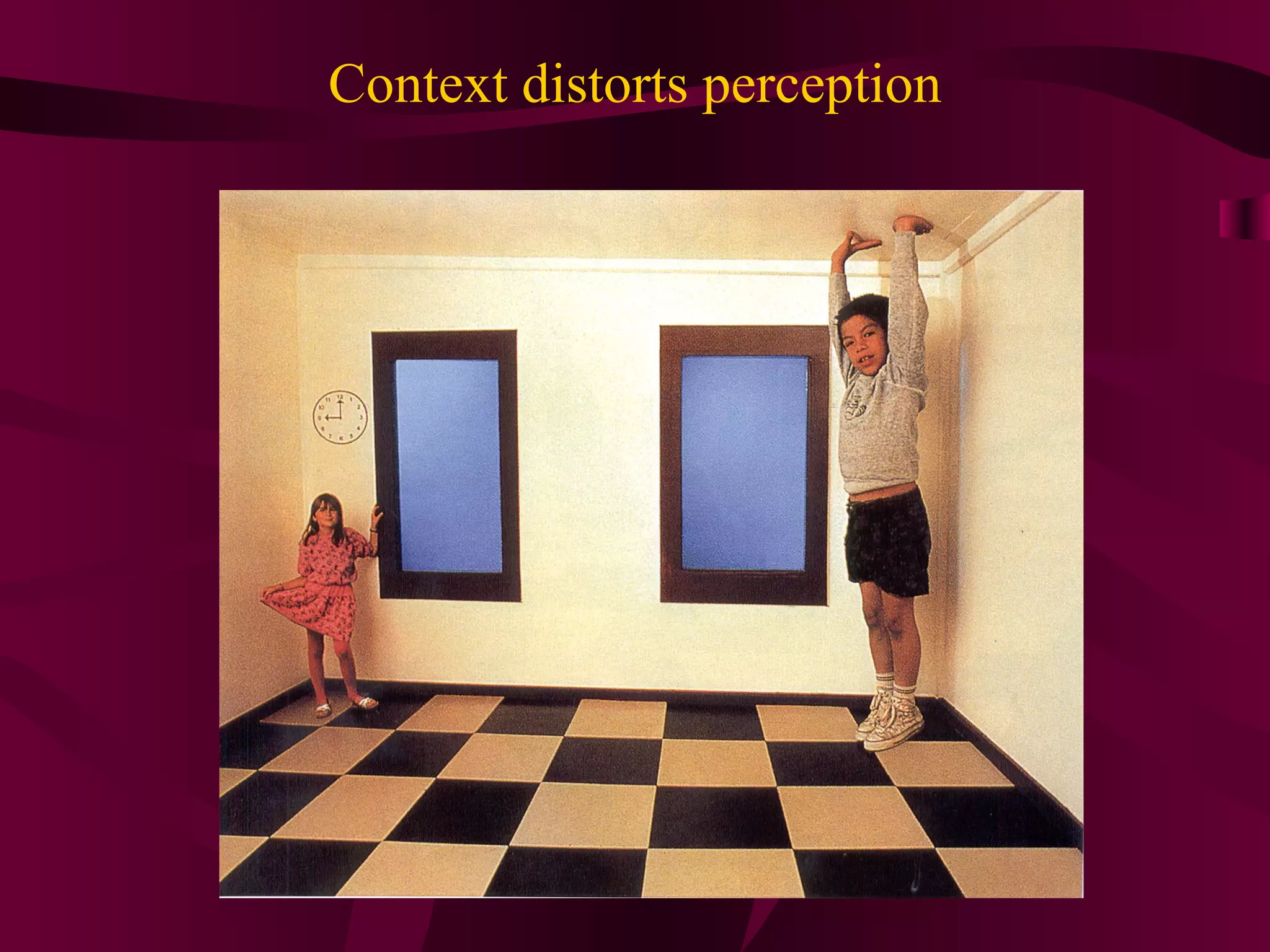
Context distorts perception
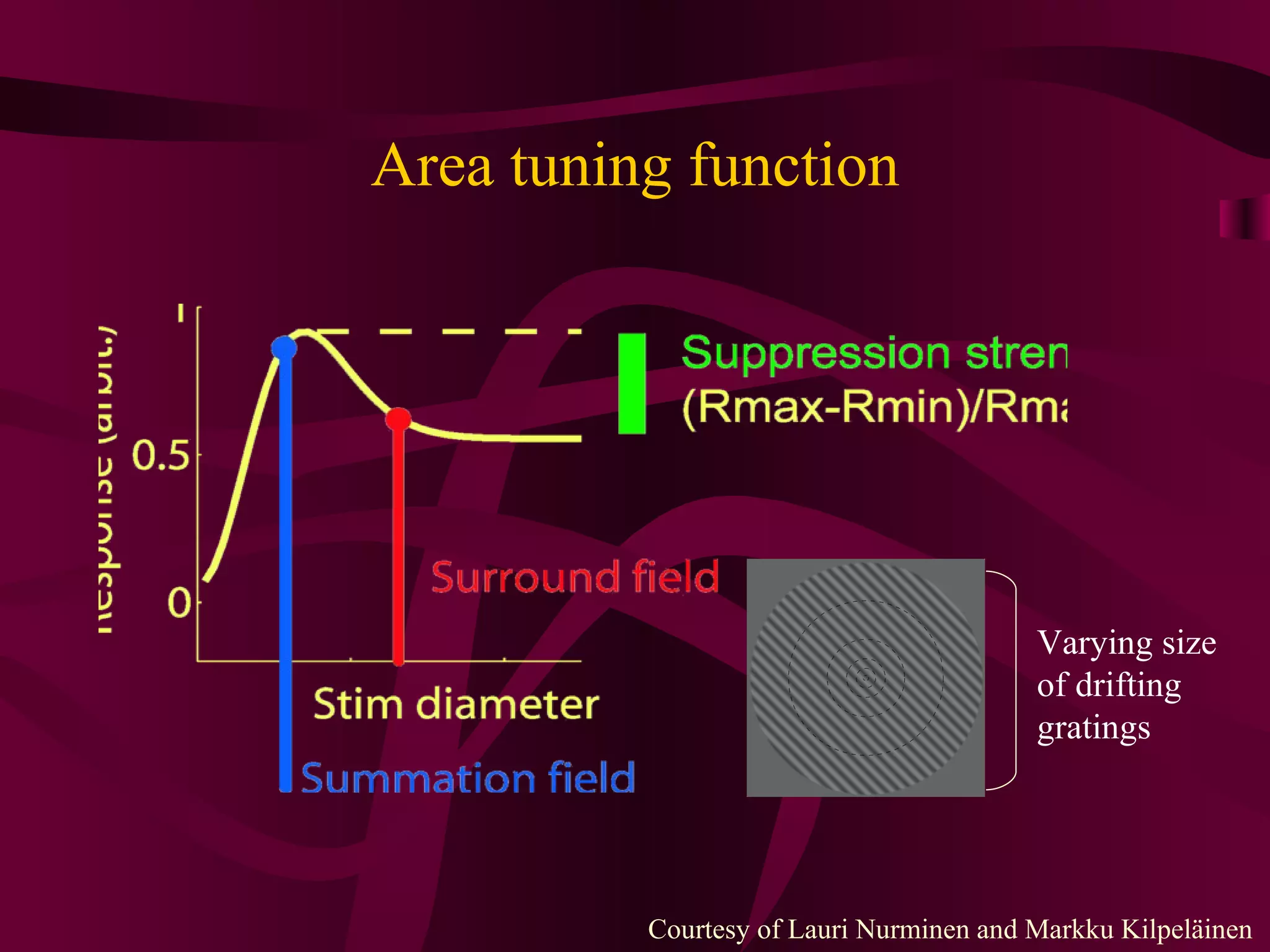
Area tuning function Varying size of drifting gratings Courtesy of Lauri Nurminen and Markku Kilpeläinen
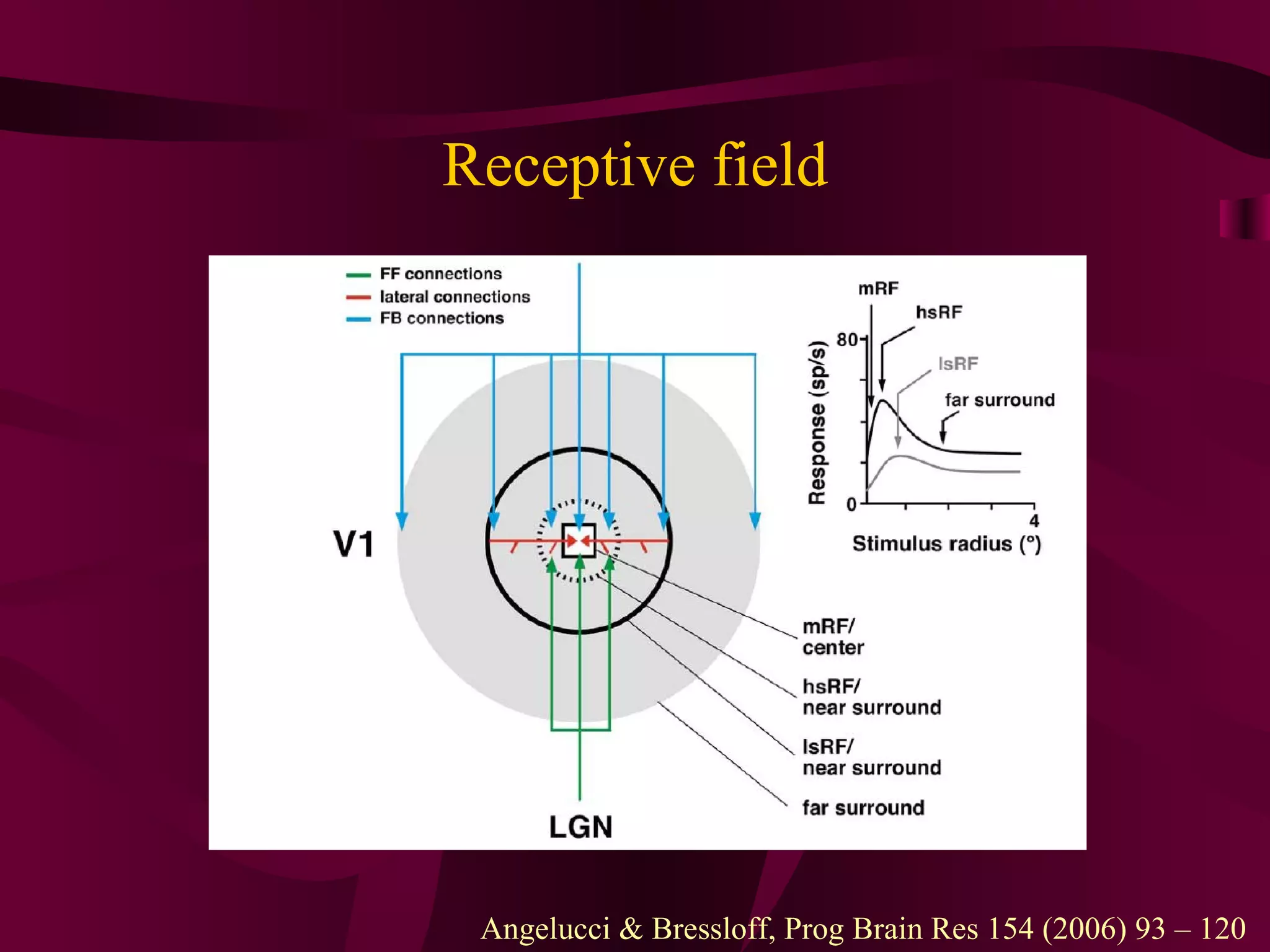
Receptive field Angelucci & Bressloff, Prog Brain Res 154 (2006) 93 – 120
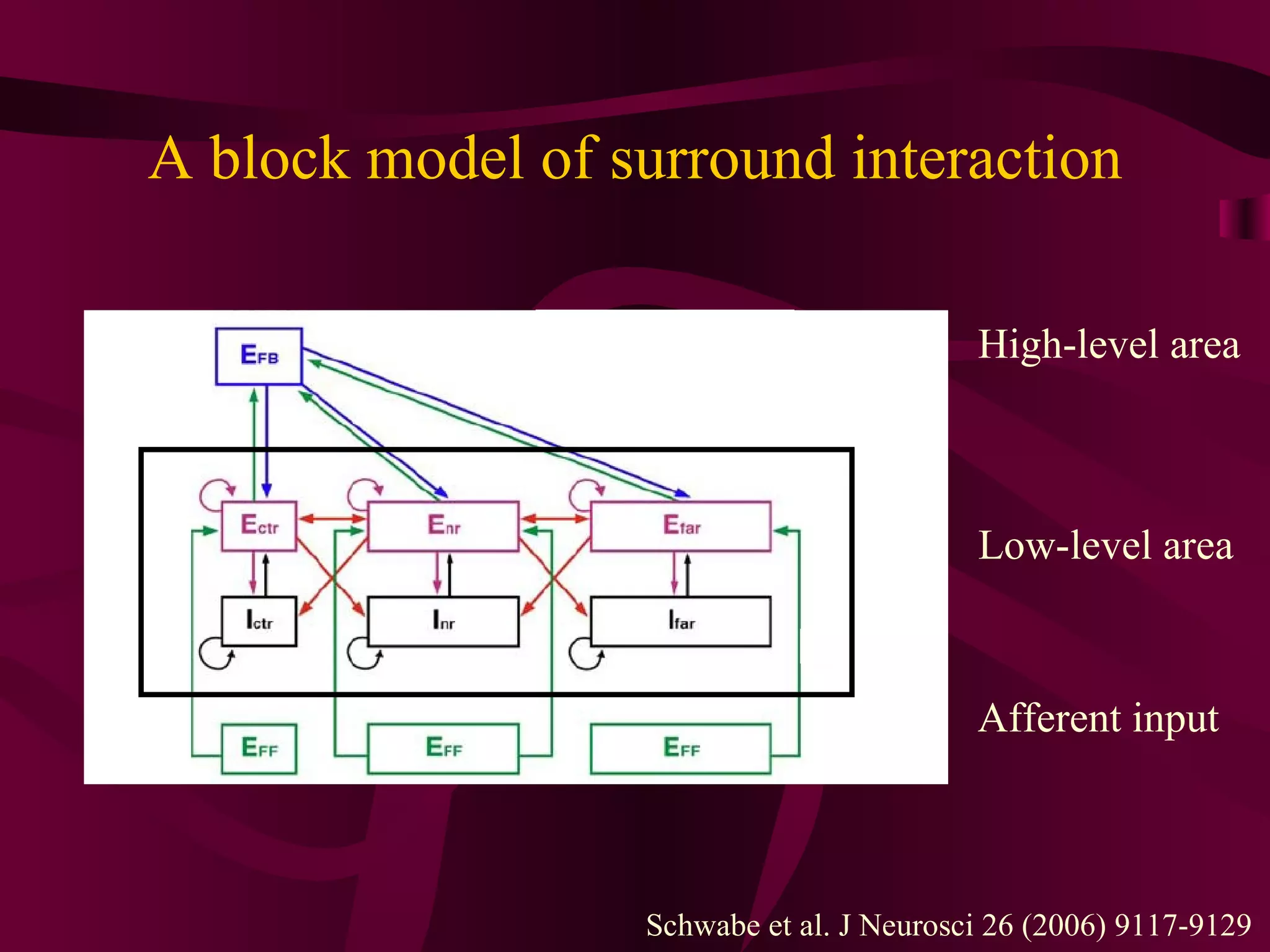
A block model of surround interaction Schwabe et al. J Neurosci 26 (2006) 9117-9129 Afferent input Low-level area High-level area
Subtractive normalization model applied to non-linear interactions in the human cortex What visual information has to do with surround modulation?
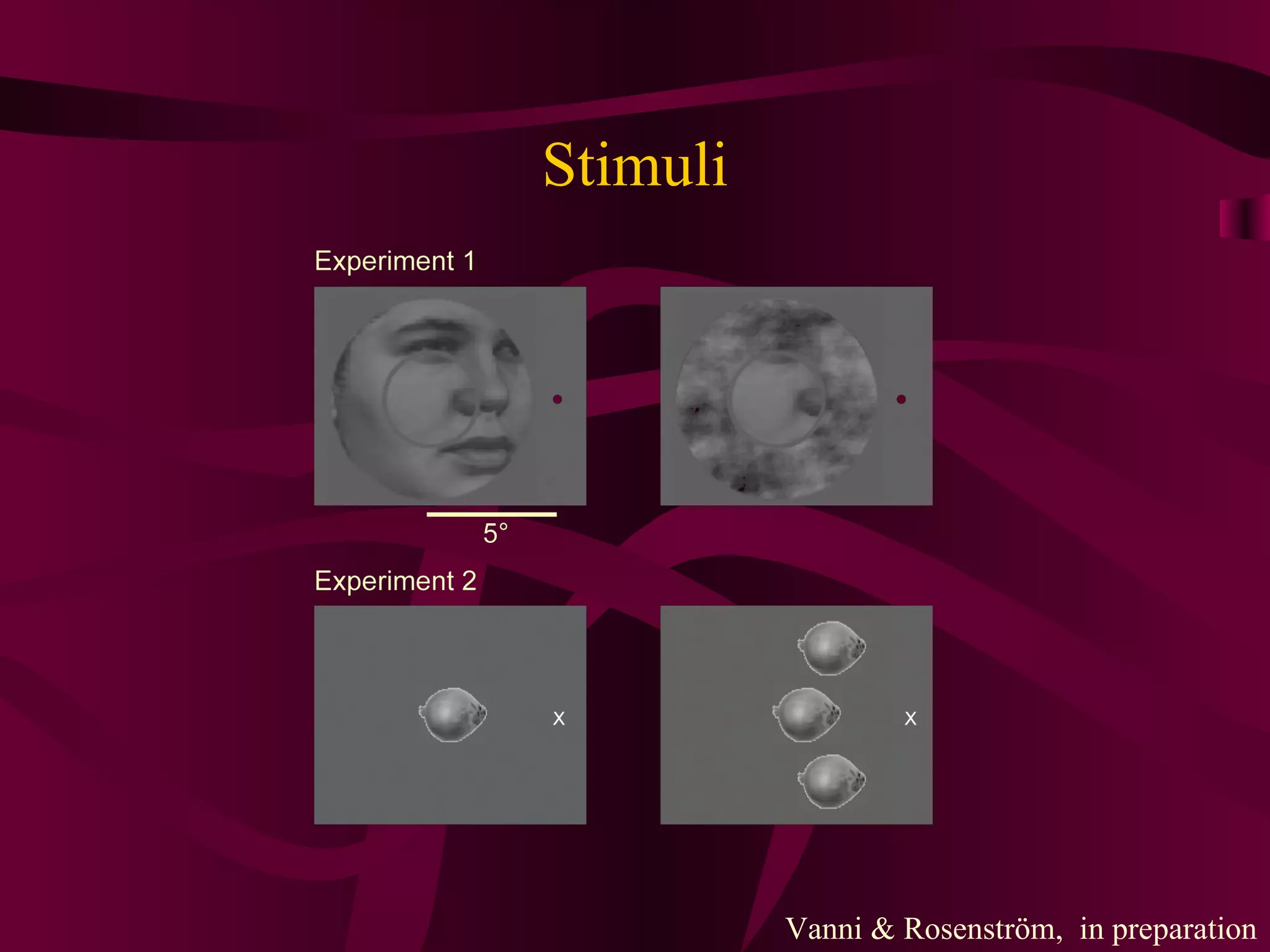
Stimuli Vanni & Rosenström,  in preparation
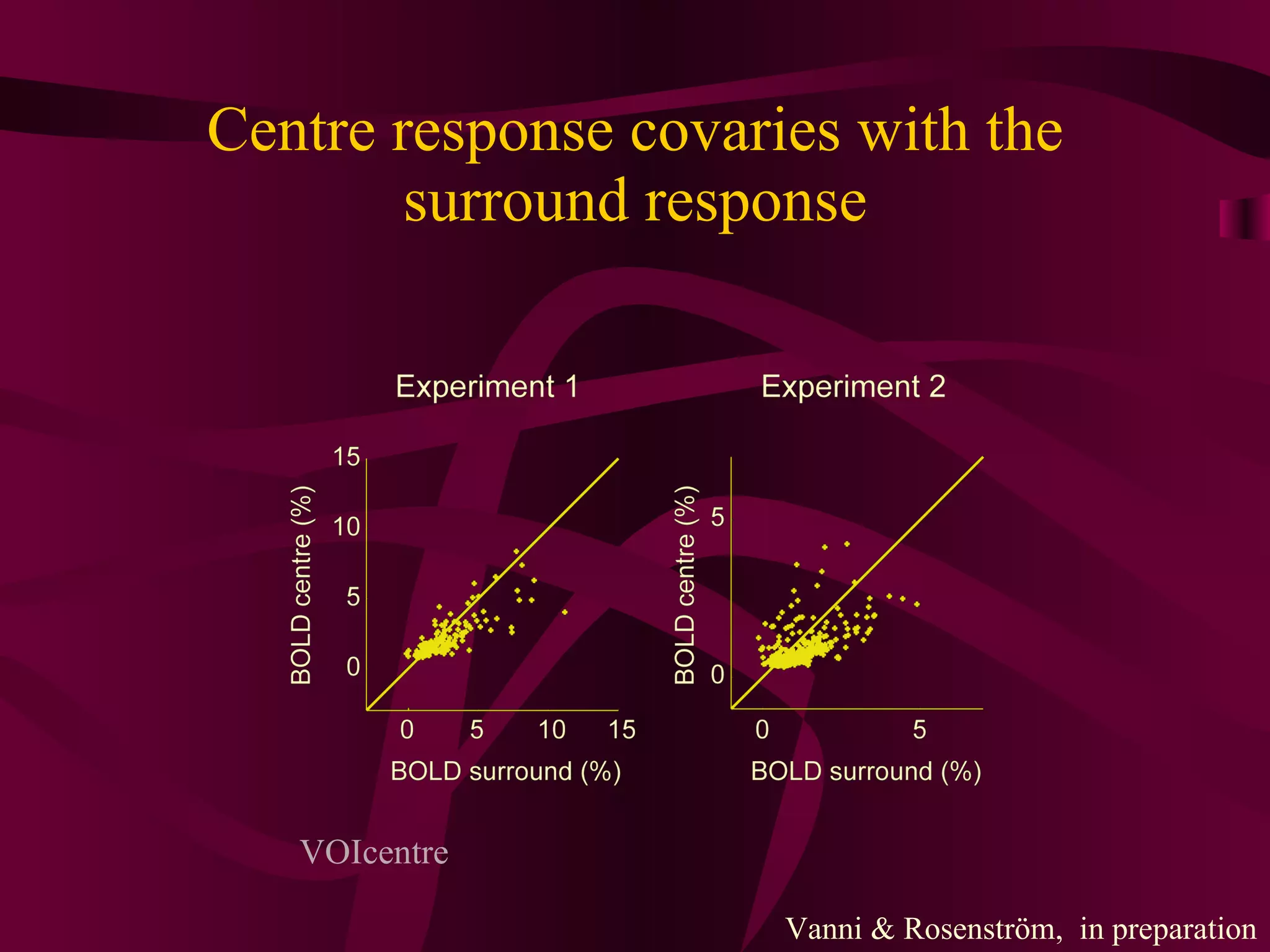
Centre response covaries with the surround response Vanni & Rosenström,  in preparation VOIcentre
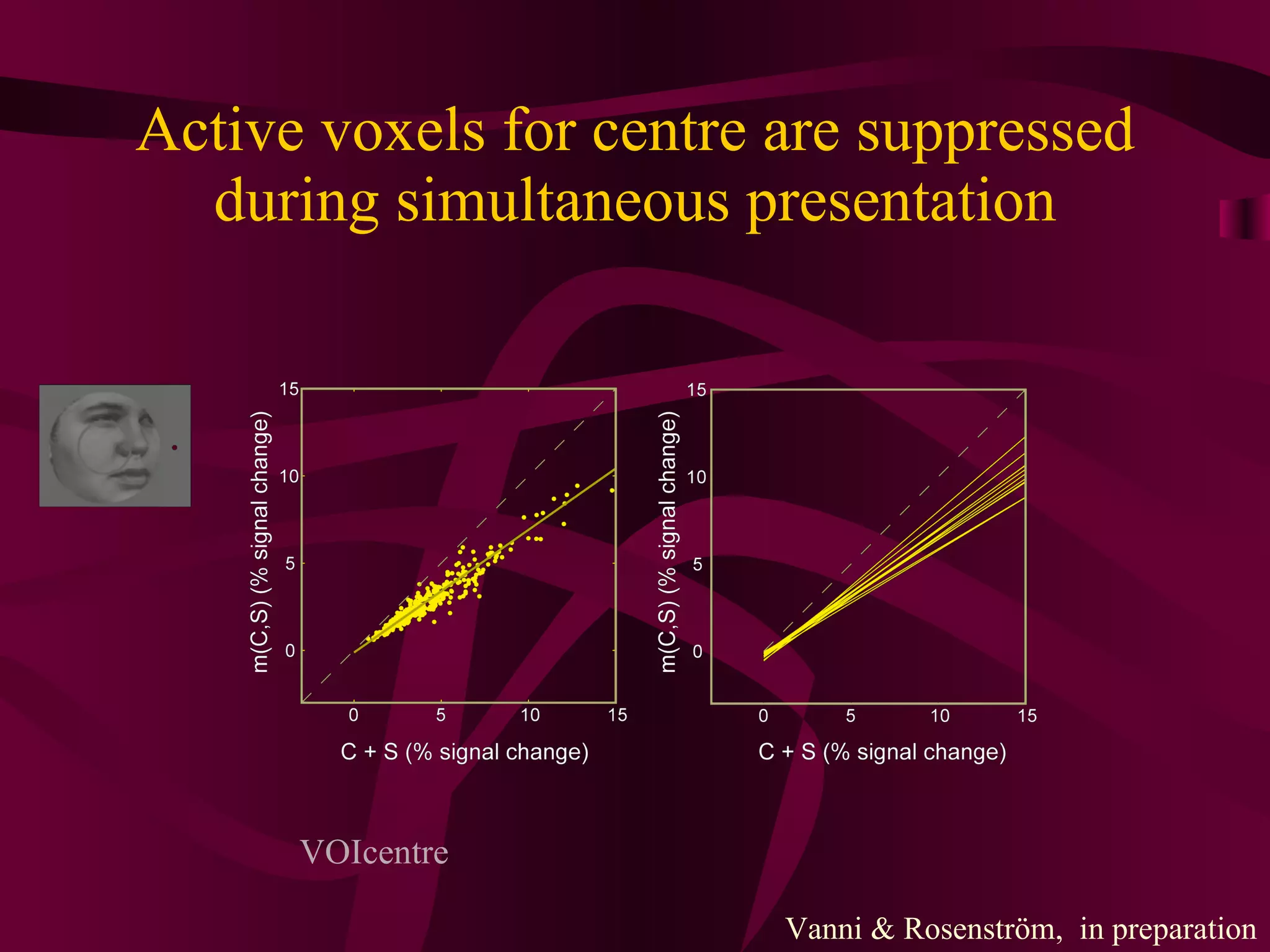
Active voxels for centre are suppressed during simultaneous presentation Vanni & Rosenström,  in preparation VOIcentre
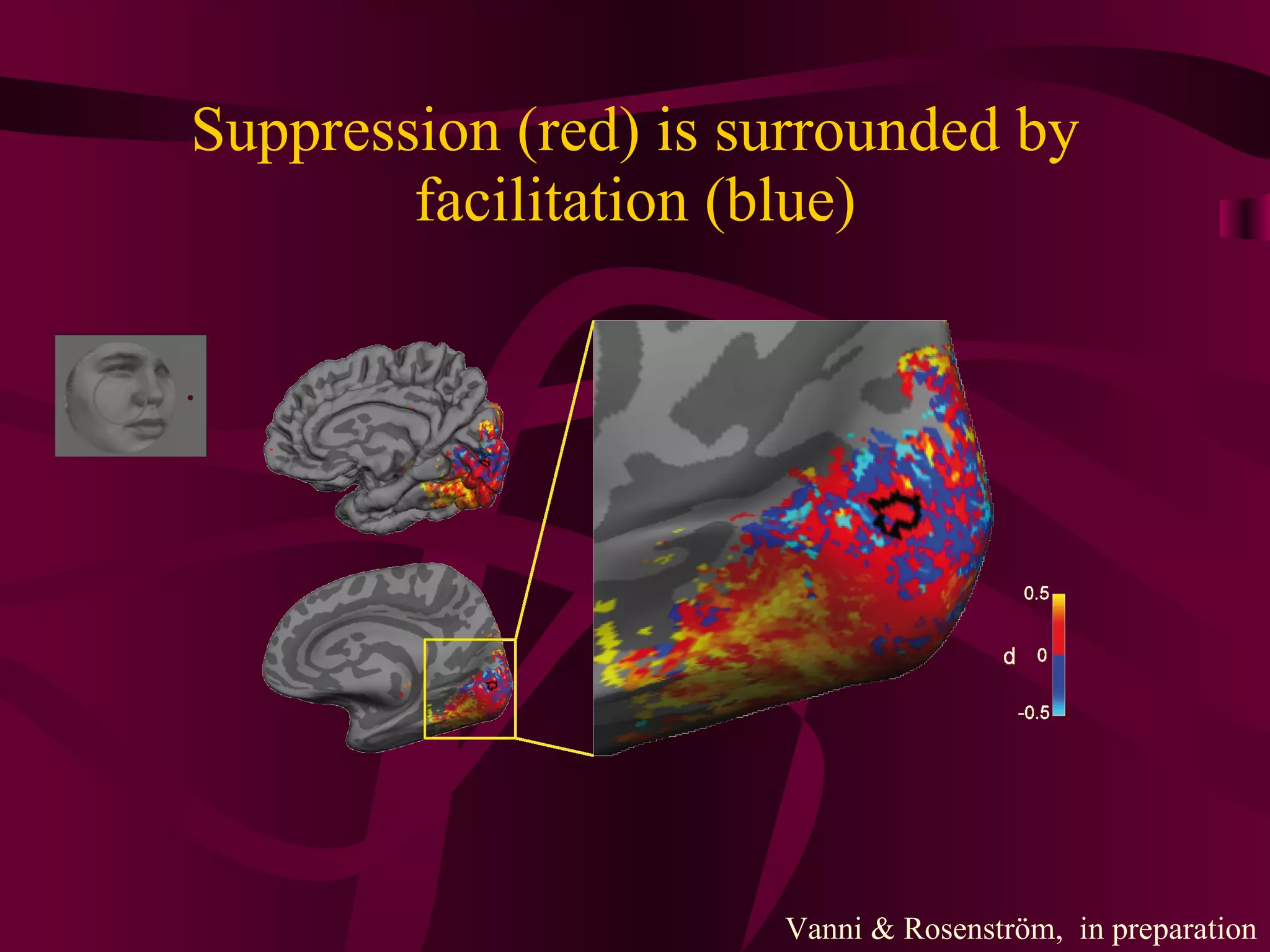
Suppression (red) is surrounded by facilitation (blue) Vanni & Rosenström,  in preparation
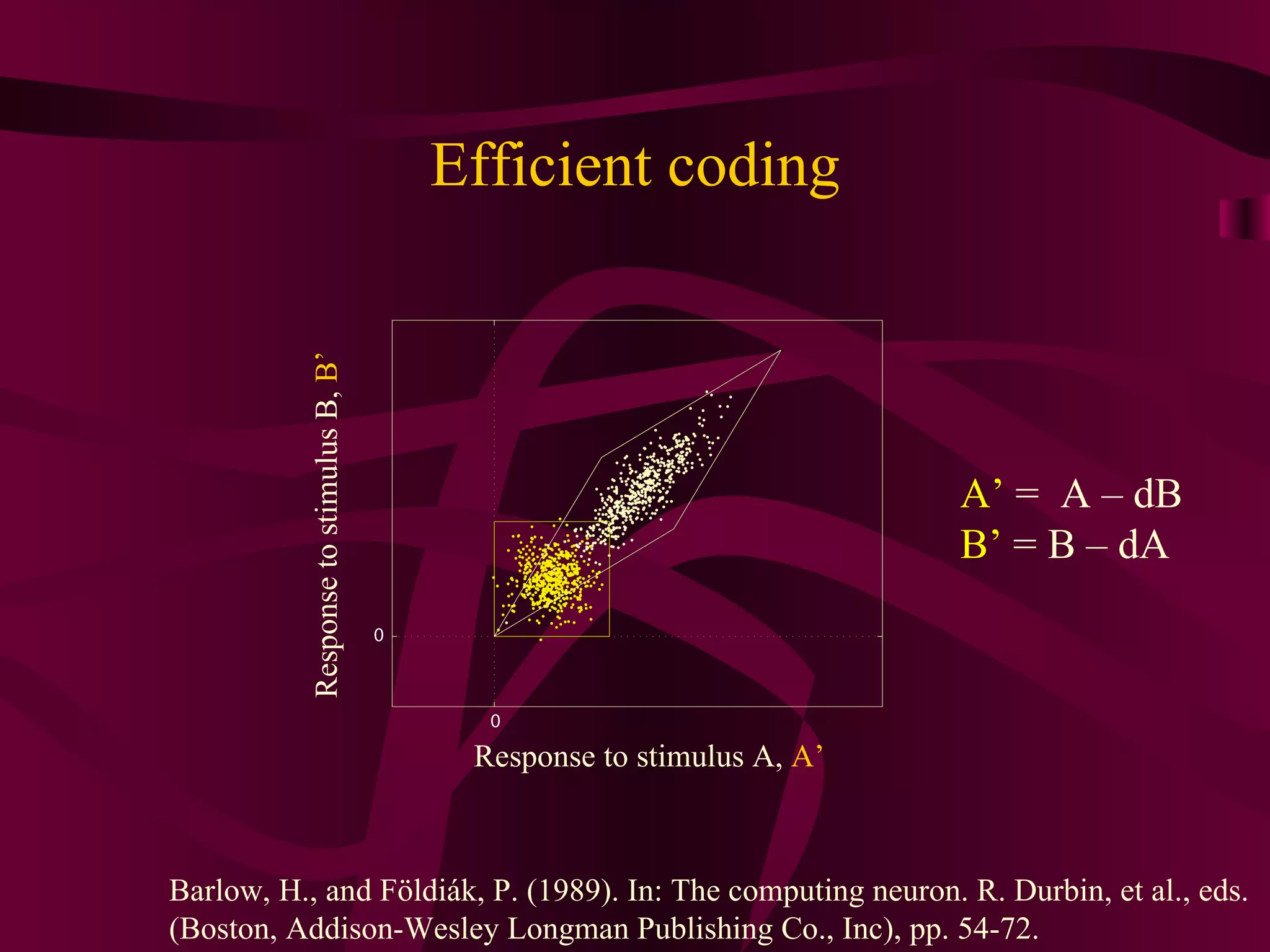
Efficient coding Response to stimulus A,  A’ Response to stimulus B,  B’ A’  =  A – dB B’  = B – dA Barlow, H., and Földiák, P. (1989). In: The computing neuron. R. Durbin, et al., eds.  (Boston, Addison-Wesley Longman Publishing Co., Inc), pp. 54-72.
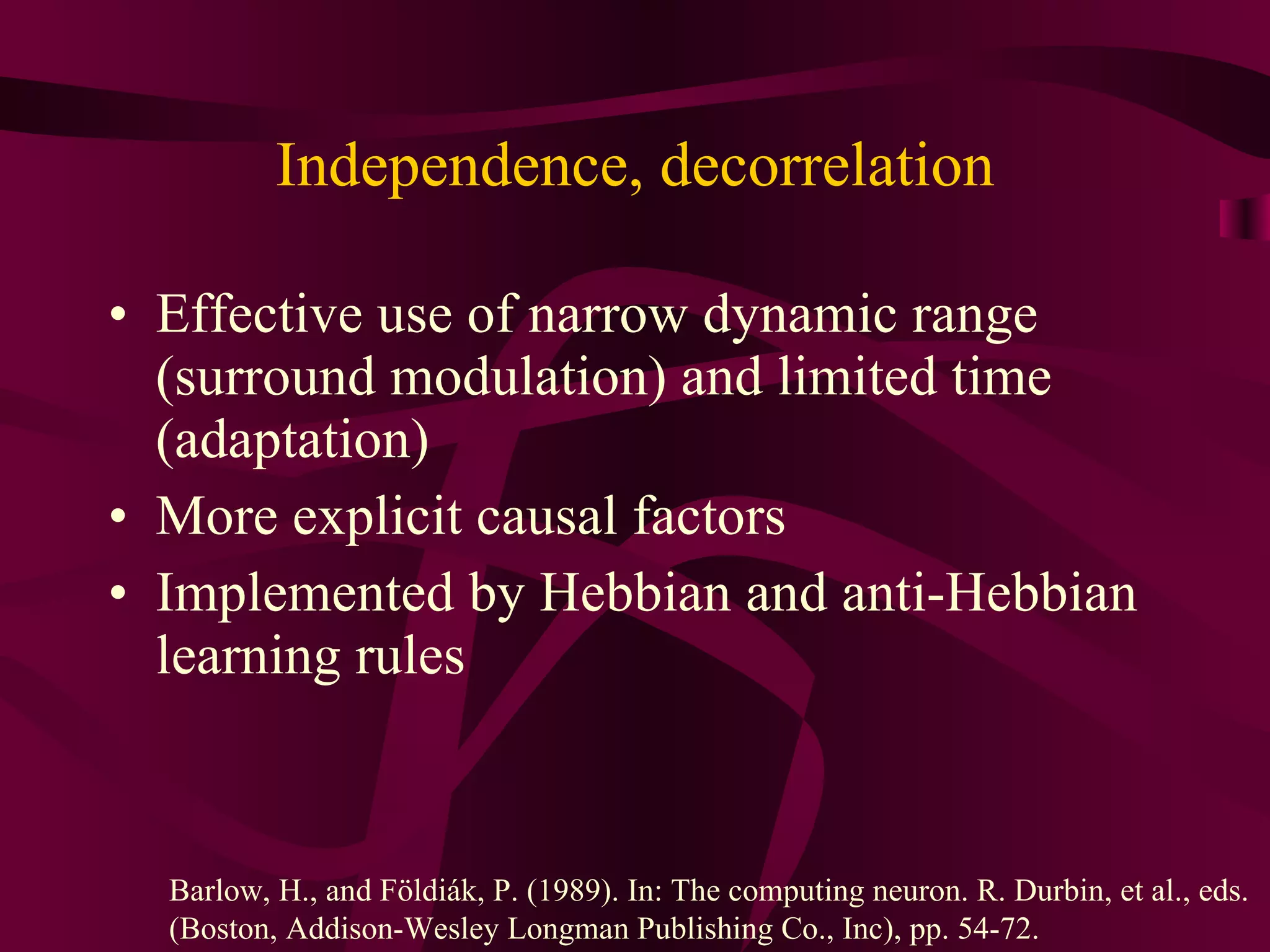
Independence, decorrelation Effective use of narrow dynamic range (surround modulation) and limited time (adaptation) More explicit causal factors Implemented by Hebbian and anti-Hebbian learning rules Barlow, H., and Földiák, P. (1989). In: The computing neuron. R. Durbin, et al., eds.  (Boston, Addison-Wesley Longman Publishing Co., Inc), pp. 54-72.
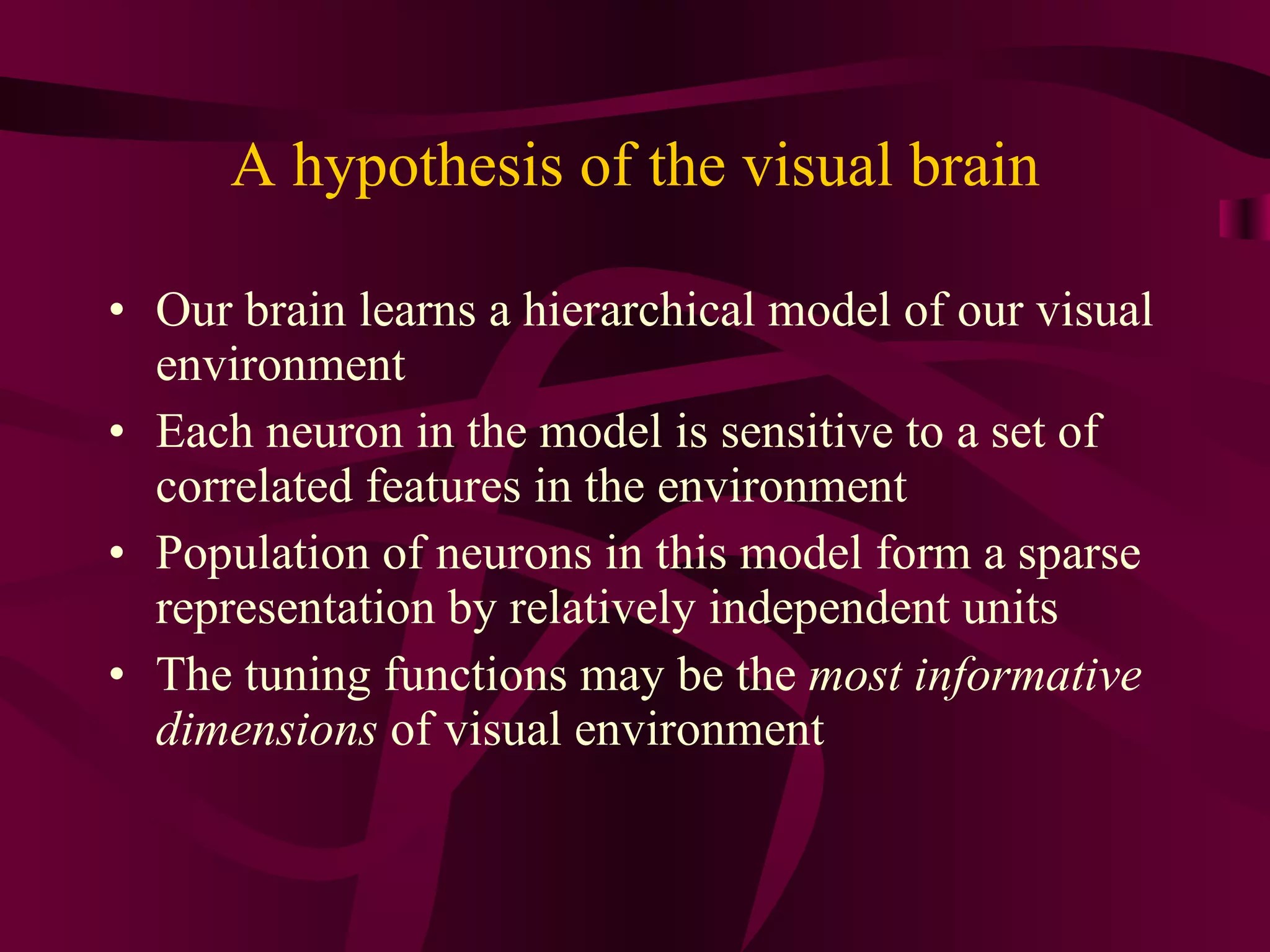
A hypothesis of the visual brain Our brain learns a hierarchical model of our visual environment Each neuron in the model is sensitive to a set of correlated features in the environment Population of neurons in this model form a sparse representation by relatively independent units The tuning functions may be the  most informative dimensions  of visual environment
Collaborators Aalto University Linda Henriksson Lauri Nurminen Tom Rosenström University of Helsinki Jarmo Hurri Aapo Hyvärinen Markku Kilpeläinen Pentti Laurinen ANU, Canberra Andrew James

Vanni_presentation_VIPP2010

  • 1.
    Visual cortex: onefor all and all for one Simo Vanni, MD PhD Vision systems physiology group Brain Research Unit, Low Temperature Laboratory Aalto University School of Science and Technology
  • 2.
    What is commonto subjective experience, visual perception, and neural activation? Statistics of individual visual environment
  • 3.
    Sensory and motorareas in human brain Van Essen (2003) in Visual Neurosciences 27 % 7 % 7 % 8 %
  • 4.
    Felleman & VanEssen, Cerebral Cortex 1 (1991) 1-47
  • 5.
    Felleman & VanEssen, Cerebral Cortex 1 (1991) 1-47
  • 6.
    Mapping of visualcortex Courtesy of Linda Henriksson
  • 7.
    Visual information Correlatedfeatures Sparse coding Independent representations
  • 8.
    Visual information Correlatedfeatures Sparse coding Independent representations
  • 9.
  • 10.
    Pixel intensity correlationsDistance Distance Distance (pixels) Correlation From: Hyvärinen et al. (2009) Natural Image Statistics : A Probabilistic Approach to Early Computational Vision. London: Springer.
  • 11.
    From the eyeto the brain Retina Thalamus Cerebral, cortex
  • 12.
    Correlated phases atmultiple scales Henriksson, Hyvärinen & Vanni. J Neurosci 29 (2009) 14342-14351
  • 13.
    Sensitivity to correlatedphase Henriksson, Hyvärinen & Vanni. J Neurosci 29 (2009) 14342-14351
  • 14.
    Orientation correlations Geissleret al., Vision Research 41 (2001) 711–724
  • 15.
    A neuron learnsto be selective Dyan & Abbot: Theoretical Neuroscience (2001) MIT Press
  • 16.
    Different tuning functionsfor orientation Dyan & Abbot: Theoretical Neuroscience (2001) MIT Press Neuron 1 Neuron 2 Neuron 3 Neuron 4
  • 17.
    Multiple systems ontop of each other Hübener ym, J Neurosci 17 (1997) 9270-9284 Ocular dominance and orientation Spatial frequency and orientation
  • 18.
    What is avisual object…
  • 19.
  • 20.
    Visual information is the regularities of co-occurence, ”statistics”, of our environment
  • 21.
    Visual information Correlatedfeatures Sparse coding Independent representations
  • 22.
    What is sparsecoding Many units are inactive, while few units are strongly active (population sparseness) A single unit has on average low activity, with occasional bursts at high frequency (lifetime sparseness) Mean energy consumption down Computational benefits
  • 23.
    Sparse coding Vinje& Gallant, Science 287 (2000) 1273-1276
  • 24.
    Sparse coding ofdifferent tuning functions in the primary visual cortex Position Eye (stereo image) Spatial frequency (scale) Orientation Direction and speed of motion Wavelength (color) Courtesy of Aapo Hyvärinen
  • 25.
  • 26.
  • 27.
    Visual information Correlatedfeatures Sparse coding Independent representations
  • 28.
  • 29.
  • 30.
    Area tuning functionVarying size of drifting gratings Courtesy of Lauri Nurminen and Markku Kilpeläinen
  • 31.
    Receptive field Angelucci& Bressloff, Prog Brain Res 154 (2006) 93 – 120
  • 32.
    A block modelof surround interaction Schwabe et al. J Neurosci 26 (2006) 9117-9129 Afferent input Low-level area High-level area
  • 33.
    Subtractive normalization modelapplied to non-linear interactions in the human cortex What visual information has to do with surround modulation?
  • 34.
    Stimuli Vanni &Rosenström, in preparation
  • 35.
    Centre response covarieswith the surround response Vanni & Rosenström, in preparation VOIcentre
  • 36.
    Active voxels forcentre are suppressed during simultaneous presentation Vanni & Rosenström, in preparation VOIcentre
  • 37.
    Suppression (red) issurrounded by facilitation (blue) Vanni & Rosenström, in preparation
  • 38.
    Efficient coding Responseto stimulus A, A’ Response to stimulus B, B’ A’ = A – dB B’ = B – dA Barlow, H., and Földiák, P. (1989). In: The computing neuron. R. Durbin, et al., eds. (Boston, Addison-Wesley Longman Publishing Co., Inc), pp. 54-72.
  • 39.
    Independence, decorrelation Effectiveuse of narrow dynamic range (surround modulation) and limited time (adaptation) More explicit causal factors Implemented by Hebbian and anti-Hebbian learning rules Barlow, H., and Földiák, P. (1989). In: The computing neuron. R. Durbin, et al., eds. (Boston, Addison-Wesley Longman Publishing Co., Inc), pp. 54-72.
  • 40.
    A hypothesis ofthe visual brain Our brain learns a hierarchical model of our visual environment Each neuron in the model is sensitive to a set of correlated features in the environment Population of neurons in this model form a sparse representation by relatively independent units The tuning functions may be the most informative dimensions of visual environment
  • 41.
    Collaborators Aalto UniversityLinda Henriksson Lauri Nurminen Tom Rosenström University of Helsinki Jarmo Hurri Aapo Hyvärinen Markku Kilpeläinen Pentti Laurinen ANU, Canberra Andrew James

Editor's Notes

  • #2 Helppo fenomenaalinen prosessi mutta vaikea computationaalinen prosessi Visuaalisen informaation käsittelyyn menee aikaa Tutkimalla aivojen rakenteita ja toimintaa voidaan yrittää ymmärtää tiedonkäsittelyn periaatteita Tiedonkäsittelyn ajallinen järjestys kertoo mitä aivokuoren yksiköitä tarvitaan missäkin tiedonkäsittelyn vaiheessa Perustietämys apinoista
  • #4 46
  • #5 63
  • #6 64
  • #10 10
  • #12 55
  • #18 60
  • #20 6
  • #24 89
  • #25 57