Aortic Regurgitation
Dr Sandip Guragain
DM resident (Cardiology)
Aortic valve
• located between the left ventricle and the
ascending aorta (aortic orifice).
• The aortic valve consists of three cusps:
– Right ,
– Left ,
– Posterior.
• The left and right aortic sinuses mark the origin of
the left and right coronary arteries.
Structure:
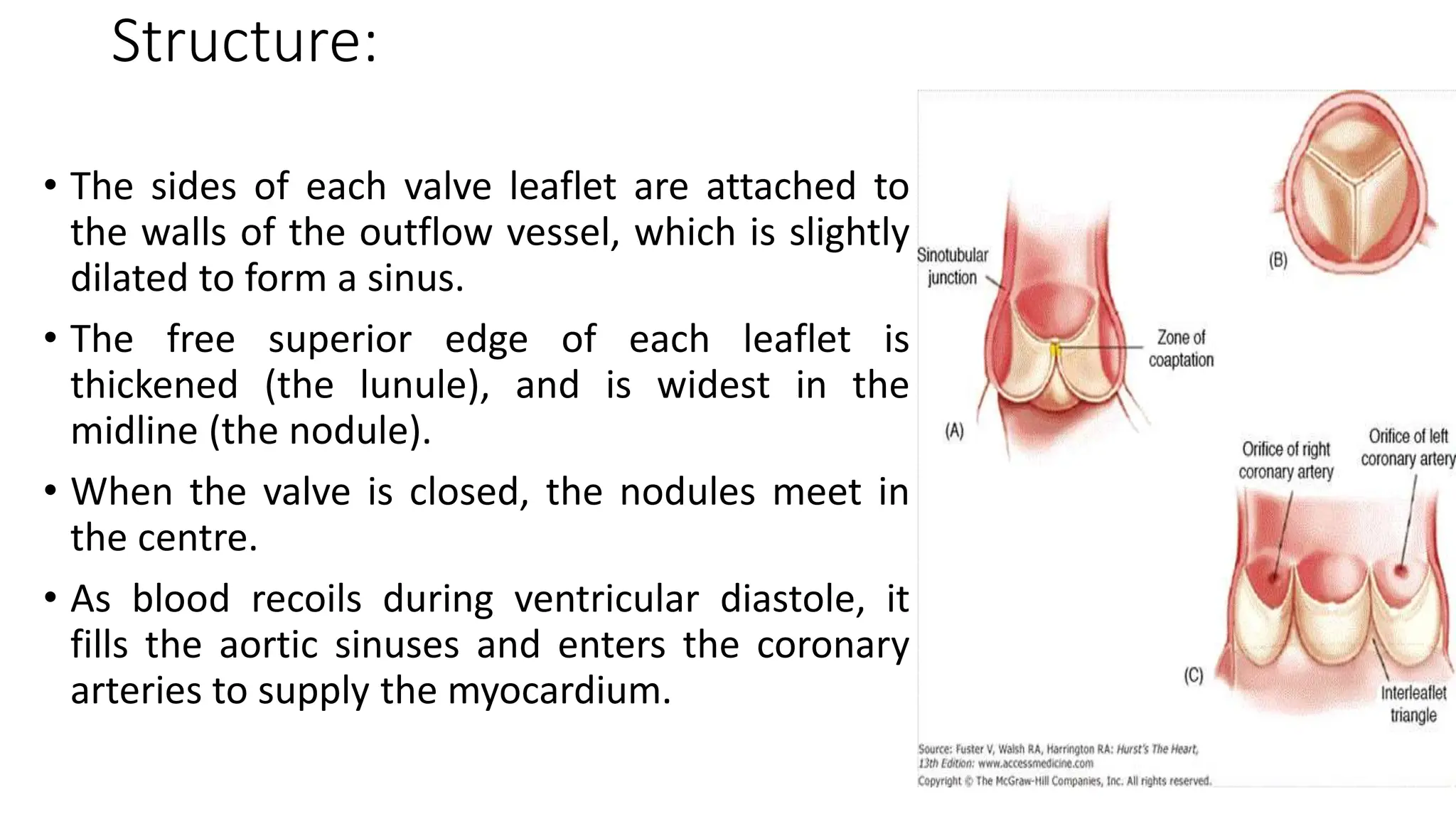
• The sides of each valve leaflet are attached to
the walls of the outflow vessel, which is slightly
dilated to form a sinus.
• The free superior edge of each leaflet is
thickened (the lunule), and is widest in the
midline (the nodule).
• When the valve is closed, the nodules meet in
the centre.
• As blood recoils during ventricular diastole, it
fills the aortic sinuses and enters the coronary
arteries to supply the myocardium.
EPIDEMIOLOGY OF AR:
• A study from the Framingham Heart Study found that, in a population-based
cohort, AR of at least trace severity on color Doppler echocardiography was
present in 13 percent of men and 8.5 percent of women.
• More than trace AR was unusual before age 50 and then increased progressively.
• For mild AR, the prevalence was 3.7, 12.1, and 12.2 percent in men at ages 50 to
59, 60 to 69, and 70 to 83, respectively. The comparable values in women were
1.9, 6.0, and 14.6 percent.
• For moderate to severe AR, the prevalence was 0.5, 0.6, and 2.2 percent in men
at ages 50 to 59, 60 to 69, and 70 to 83, respectively. The comparable values in
women were 0.2, 0.8, and 2.3 percent.
Etiology:
Normal LV ejection dynamics:
AR-pathophysiology
CHROIC COMPENSATED AR:
• Volume overloadcompensatory mechanism
• LV EDV increases without increase in diastolic pressure due o
increased compliance
• LV preload reserve is maintained initially
• Eccentric hypertrophy
• Sarcomeres laid in series
• Preload at sarcomere level is near normal
• Normal contractile performance of each unit contributes to
enhanced stroke volume
CHROIC COMPENSATED AR:
• Increased afterload:
• Increased chamber volume
• Increased systolic pressure
• Increased systolic wall stress
• Eccentric LVH
• Continued increase in chamber volume and afterload- matched
by continued recruitement of preload reserve and
compensatory hypertrophy.
Chronic decompensated AR
• Afterload mismatch (irreversible)
• Interstial fibrosis
• Impaired LV contractility
• Impaired LV emptying
• increase in ESV and a fall in ejection fraction (EF), total stroke volume, and forward stroke
volume.
• Further cardiac dilation and re-elevation of LV filling pressure occur
Myocardial ischemia:
• The major portion of coronary blood flow occurs during diastole.
• Aortic pressure is lower than normal in ARreduced coronary
perfusion.
• Increased oxygen demands and reduced supply, sets the stage for the
development of myocardial ischemia, especially during exercise.
Deterioration of LV function.
Acute AR-pathophysiology
• Hemodynamic significant AR of sudden onset, into a
LV not previously subjected to volume overload.
• Volume overload is poorly tolerated
•Ventricular compliance is normal
•Lv operating on steep portion of diastolic p/v
relation
•End diastolic LV pressure markedly increased
approaching aortic diastolic pressure
Acute AR-pathophysiology
• LV fails to increase stroke volume (not hypertrophied or dilated)-
decreased cardiac output
• Increae in LVEDP causes rise in mean LA pressure and PCWP-
Pulmonary edema
• premature closure of MV early crossover of pressures
• Diastolc MR
• Arterial BP-
• Fall in systolic bp
• Normal pulse pressure
• Diastolic pressure maintained by reflex increase in SVR in failure
Clinical features : Chronic AR
• Asmptomatic phase longer; most often in the fourth or fifth decade of
life.
• Dyspnoea most common symptoms
• Angina in 20% patients
• Decreased perfusion –low aortic diast. Pressure
• Increased myocard. Demand
• A/w coronary atherosclerosis
• Osteal coronary invt in syphilitic AR; takayasu arteritis
• Palpitations:
• awareness of forceful vent.contraction
• Vent. Arrythmia in decompensated stage
• Syncope-5 to 10%
Physical findings:
• BP:
• SBP DBP
• Korotkoff sounds often persist to zero; Intra-arterial pressure rarely
falls below 30 mm Hg.
• Korotkoff sounds phase IV correlates with the diastolic pressure.
• As heart failure develops, peripheral vasoconstriction may occur and
arterial diastolic pressure may rise.
• Apical impulse: diffuse and hyperdynamic; displaced laterally and
inferiorly.
• Systolic thrill at the base of the heart or suprasternal notch, and over the
carotid arteries.
• In many patients, a carotid shudder is palpable.
PRECORDIAL Examination:
• S1 soft
• Increased LVEDP- EARLIER closure of MV
• Elevated diastolic pressure-less valve excursion.
• S2-
• Soft A2- valvular structural abnormality
• Delayed A2- prolonged LV ejection time
• P2 may be obscured by murmur
• S3- In failure
• S4
• Decreased LV compliance
• Long PR interval
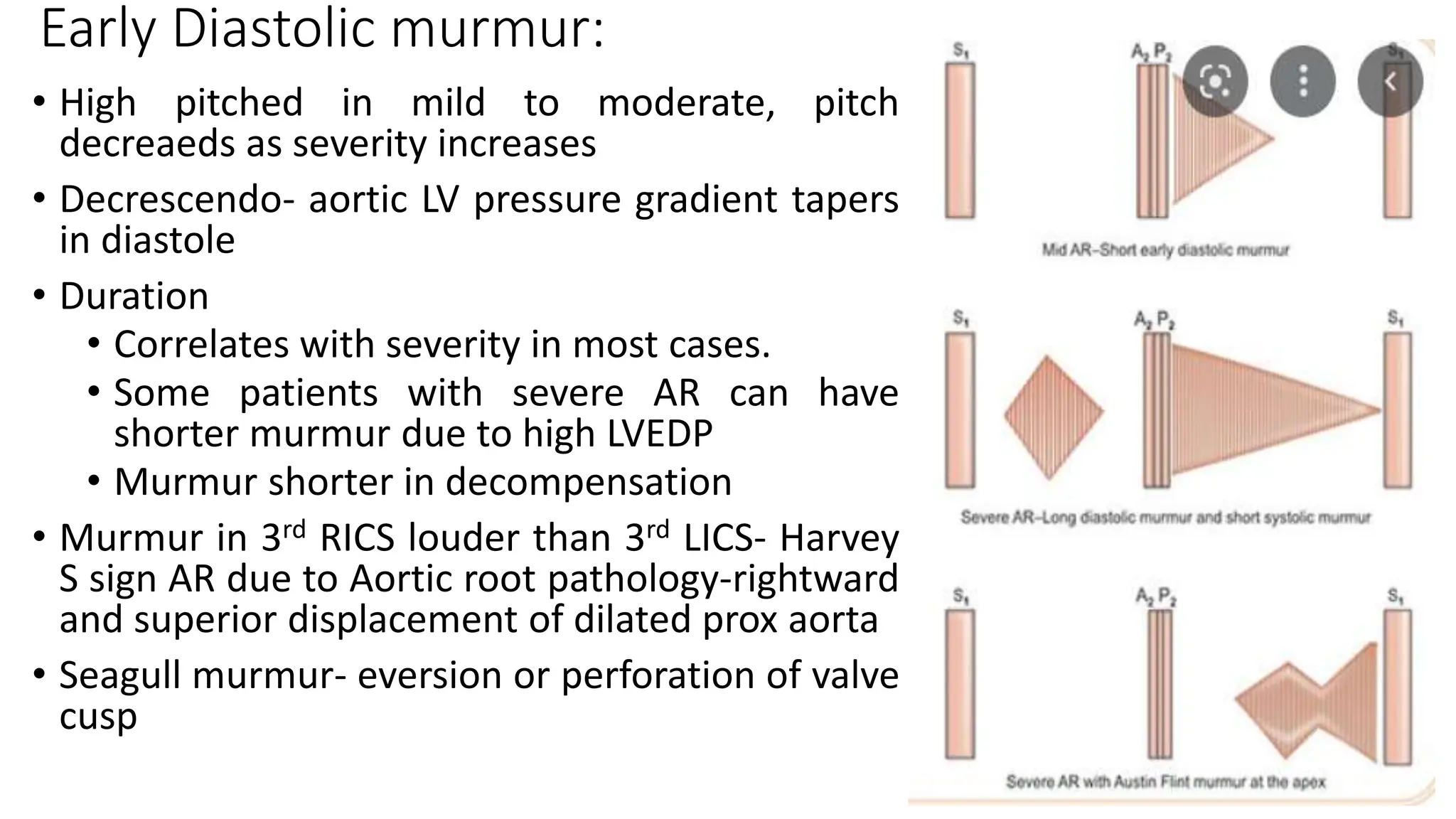
Early Diastolic murmur:
• High pitched in mild to moderate, pitch
decreaeds as severity increases
• Decrescendo- aortic LV pressure gradient tapers
in diastole
• Duration
• Correlates with severity in most cases.
• Some patients with severe AR can have
shorter murmur due to high LVEDP
• Murmur shorter in decompensation
• Murmur in 3rd RICS louder than 3rd LICS- Harvey
S sign AR due to Aortic root pathology-rightward
and superior displacement of dilated prox aorta
• Seagull murmur- eversion or perforation of valve
cusp
• Systolic ejection murmur:
• Increased LV stroke volume
• Abnormal Aortic valve
• Austin Flint murmur
• Low pitched, mid or late diastolic apical murmur
• Mehanism
• AR jet pushing AML or the free LV wall
• Convincing evidence for obstruction to mitral inflow in these patients is
lacking.
• Severity of AR & AFM
• Mild- absent
• Moderate-in late diastole
• Severe- earlier, may extend into presystole
• Very severe –prmaure closure of MV- absent presystolic component
Acute AR c/f:
• Rapid onset of symptoms-
• Rapid rise of LA pressure
• Abrupt reduction of cardiac outpt
• Tachycardia
• BP
• Systolic pressure normal or slightly fall
• Elevated diast BP
• Narrow pulse pressure
Acute AR c/f:
• Soft S1
• Soft A2
• LV S3—rapid early diastolic filling
• Absent LVS4
• EDM
• Short rapid diastolic
equilibration of aortic & LV
pressure in diastole
• Low or medium pitch-
• Low gradient
• a/w CCF
• Austin Flint murmur presystolic
component absent
Echocardiography:
• Increased LV End Diastolic Dimensions, near normal end systolic
dimensions and increased contractility –compensated phase
• Increased end systolic dimension and depressed contractility-
decompensated phase
M Mode of mv
• Diastolic fluttering of AML in chronic AR
• Early closure of MV in Acute AR
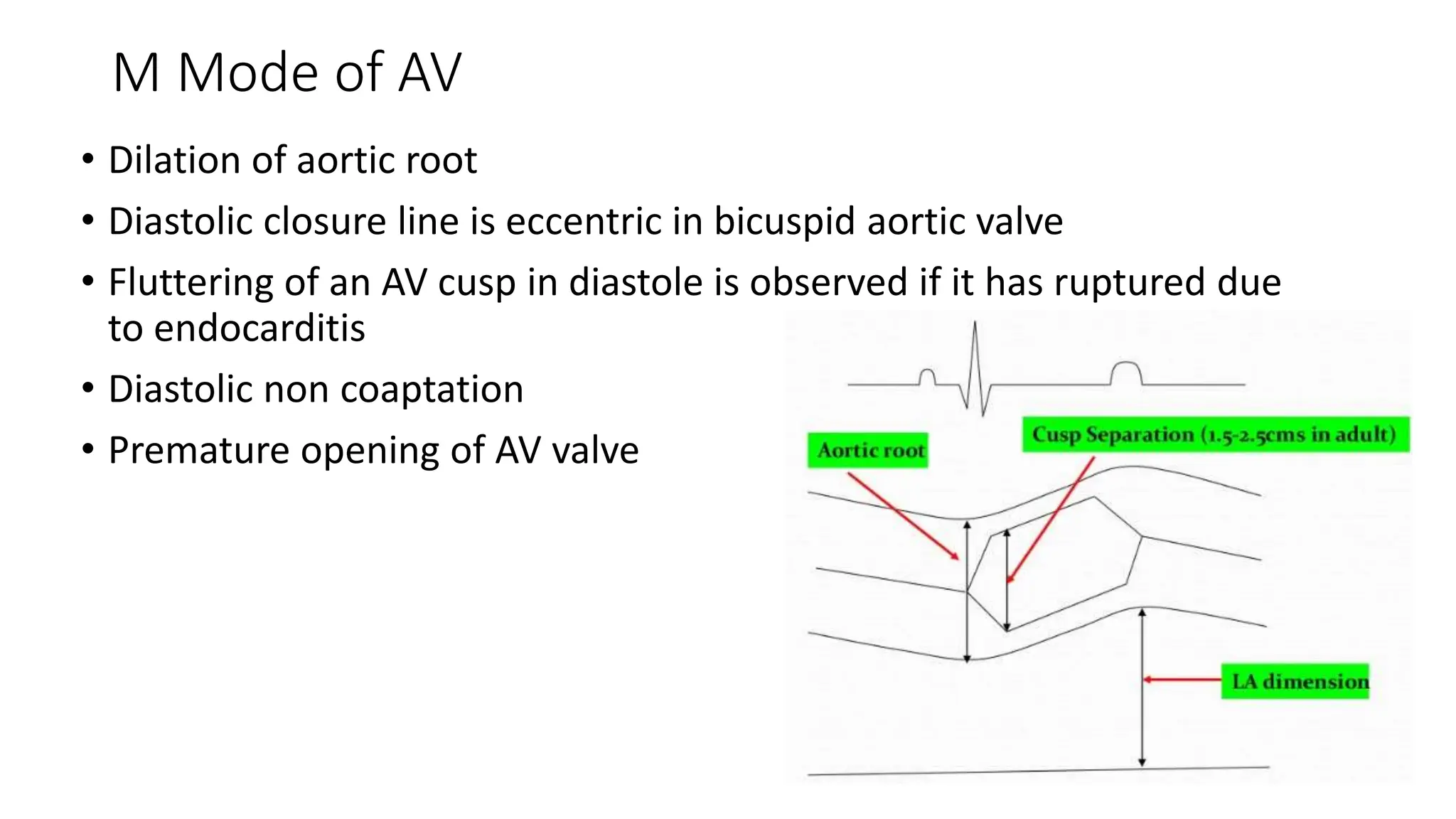
M Mode of AV
• Dilation of aortic root
• Diastolic closure line is eccentric in bicuspid aortic valve
• Fluttering of an AV cusp in diastole is observed if it has ruptured due
to endocarditis
• Diastolic non coaptation
• Premature opening of AV valve
Aortic regurgitation (AR) grading by semiquantitative parameters.
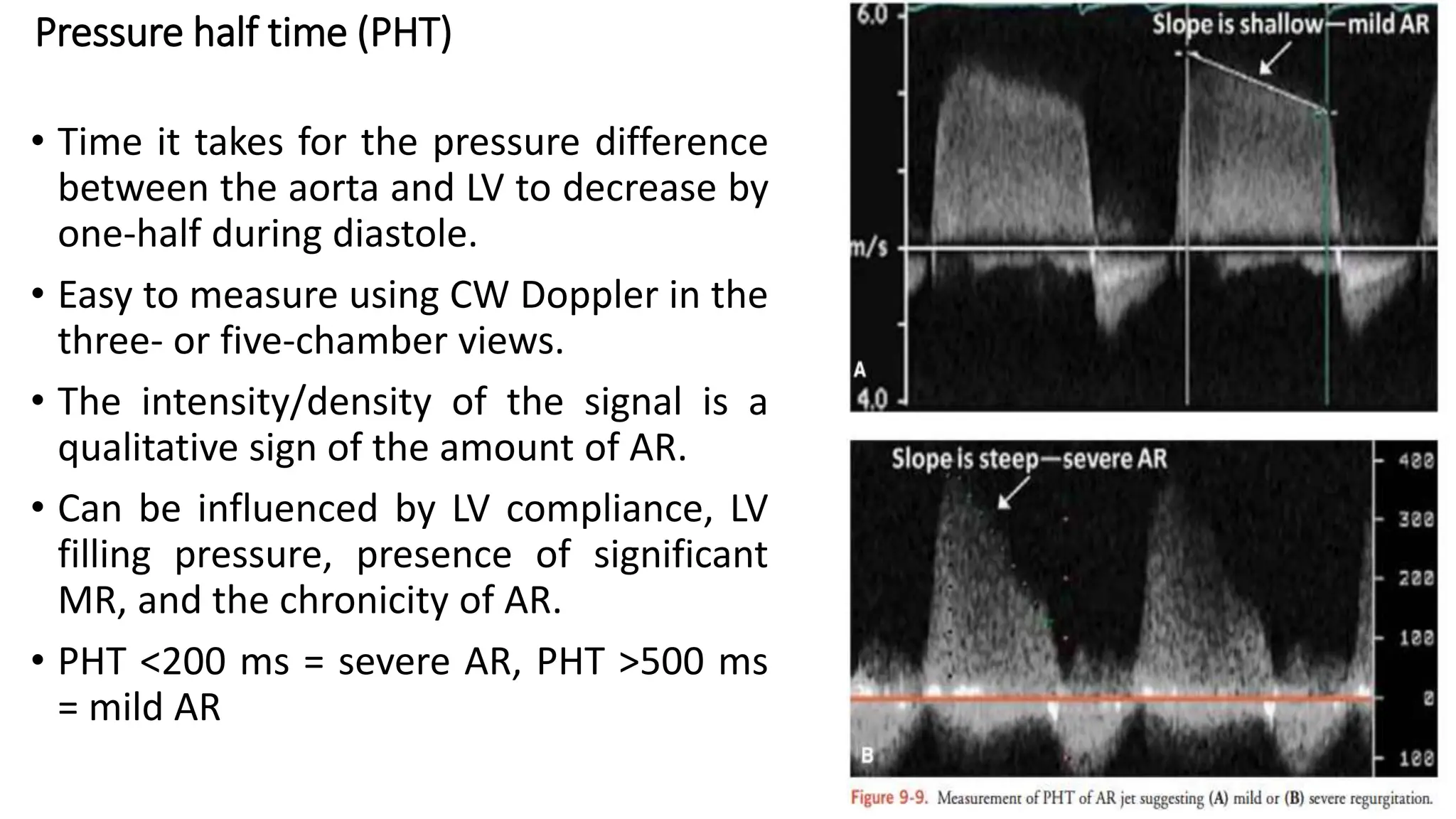
Pressure half time (PHT)
• Time it takes for the pressure difference
between the aorta and LV to decrease by
one-half during diastole.
• Easy to measure using CW Doppler in the
three- or five-chamber views.
• The intensity/density of the signal is a
qualitative sign of the amount of AR.
• Can be influenced by LV compliance, LV
filling pressure, presence of significant
MR, and the chronicity of AR.
• PHT <200 ms = severe AR, PHT >500 ms
= mild AR
Diastolic flow reversal in aorta
• Aortic flow reversal can be assessed with PW Doppler in the proximal
descending thoracic aorta (suprasternal view) or in the abdominal
aorta (in the subcostal view).
• Holodiastolic flow reversal suggests at least moderate AR with the
greatest specificity being the presence of holodiastolic flow reversal in
the abdominal aorta
• Severe AR is suggested when the VTI of flow reversal approaches the
VTI of forward flow in the aorta.
• Early, brief diastolic flow reversal may be seen, especially in young
patients with compliant aorta and is NORMAL.
• It is important to distinguish this flow from HOLOdiastolic flow
reversal, which is always ABNORMAL.
Quantitative Doppler methods
• Regurgitant volume= SV LVOT-SV MV/PV
• Alternatively SVLVOT may be calculated as LVEDV −
LVESV
• Reg fraction:= reg volume/ total stroke volume
• ERO= reg volume/ VTI AR
• Advantage:
• Indeopendent of loading conditions or LV
compliance
• Limitations:
• Small errors in annulus size measuements- large
error in volume calculations
• Acuracy reduced in outflow
tract obstructions,shunts
• Forward stroke volume estimation affected by
MR/PR
Staging:
Staging:
• Cardiac Magnetic Resonance
• Degree of aortic dilation in patients with BAV and other diseases
affecting the aortic root and ascending aorta,
• Accurate measurements of regurgitant volumes and the regurgitant
orifice to assess severity of AR
• Most accurate noninvasive technique for assessing LVESV, end-
diastolic volume, and mass.
• Recommended when echocardiographic evaluation of LV size and
function or severity of regurgitation is suboptimal
• Angiography
• For angiographic assessment of AR, contrast material should be
injected rapidly (i.e., at 55 to 60 mL at 20 mL/sec/sec) into the aortic
root
• Filming should be carried out in the right and left anterior oblique
projections.
• Opacification may be improved by filming during a Valsalva maneuver.
MONITORING:
• Monitor changes in symptoms, severity of AR, and LV systolic dysfunction.
• Patients with chronic AR should undergo at least yearly clinical evaluation
including history and physical examination.
• Serial monitoring is generally performed by transthoracic echocardiogram
since physical findings are not reliable.
• If the echocardiogram is inconclusive, cardiovascular magnetic resonance
(CMR) imaging is suggested.
• Cardiac catheterization is recommended if noninvasive tests are inconclusive
or if there is a need to assess coronary anatomy prior to aortic valve surgery.
Echocardiography
• As recommended in the 2014 American Heart Association/American
College of Cardiology valve guideline:
• For mild AR, echocardiograms every three to five years.
• For moderate AR, echocardiograms every one to two years.
• For severe AR, echocardiograms every 6 to 12 months;
• In addition to this schedule for routine monitoring, echocardiography
should be performed more frequently if the patient becomes symptomatic
or has equivocal symptoms or a decline in exercise tolerance.
Natural history of AR:
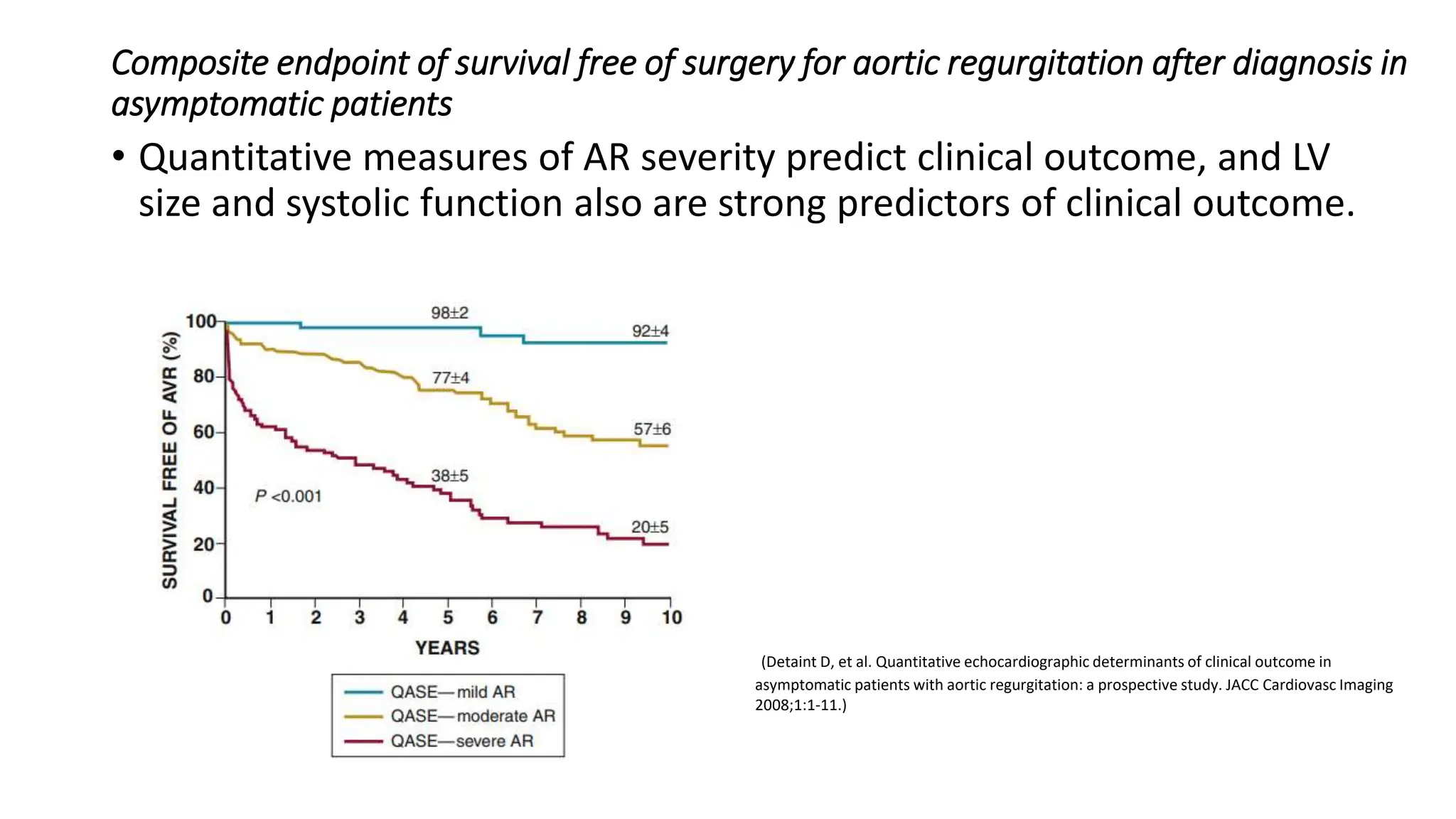
Composite endpoint of survival free of surgery for aortic regurgitation after diagnosis in
asymptomatic patients
• Quantitative measures of AR severity predict clinical outcome, and LV
size and systolic function also are strong predictors of clinical outcome.
(Detaint D, et al. Quantitative echocardiographic determinants of clinical outcome in
asymptomatic patients with aortic regurgitation: a prospective study. JACC Cardiovasc Imaging
2008;1:1-11.)
• In series involving younger asymptomatic patients
(mean age, 39 years) with severe AR and a normal
LVEF:
•The mortality rate was less than 1% per year
•More than 45% of the patients remained
asymptomatic with normal LV function at 10 years.
•The average rate of developing symptoms or LV
systolic dysfunction was less than 6% per year
Symptomatic Patients
• Once the patient becomes symptomatic, the downhill course
becomes rapidly progressive.
• Congestive heart failure, punctuated by episodes of acute pulmonary
edema, and sudden death may occur in previously symptomatic
patients with LV dilation.
• Data compiled in the presurgical era death usually occurred within 4
years after the development of angina pectoris and within 2 years
after the onset of heart failure.
• Even in the current era, 4-year survival without surgery in patients
with New York Heart Association (NYHA) class III or IV symptoms is
only approximately 30%
Survival without surgery in symptomatic chronic aortic regurgitation,
Dujardin KS, et al. Mortality and morbidity of aortic regurgitation
in clinical practice: a long-term follow-up study. Circulation 1999;99:1851-1857.
Treatment of Chronic Aortic Regurgitation
Medical Therapy
• No specific therapy to prevent disease progression in chronic AR
• RCT of DHP-CCB and (ACE inhibitors have not shown consistent clinical
benefit in terms of blunting progression of LV dilation or delaying in need for
AVR.
• Treat hypertension (systolic blood pressure [SBP] >140 mm Hg), coronary
artery disease (CAD), atrial arrhythmias, and any other cardiovascular
comorbidities
• Chronic medical therapy may be necessary for some patients
• who refuse surgery
• have a prohibitive risk of surgery because of comorbid conditions
• Should receive an aggressive evidence-based heart failure regimen with
ACE inhibitors (and perhaps other vasodilators), diuretics, and salt
restriction;
• Beta blockers may also be beneficial.
• Despite Nitroglycerin and other nitrates are not as helpful in relieving
anginal pain they are reasonable to try.
• In patients who are candidates for surgery but who have severely
decompensated LV dysfunction, vasodilator therapy may be particularly
helpful to stabilize patients prior to AVR.
Recommendations for physical activity and exercise:
• Athletes with greater-than-mild AR should be evaluated yearly
• Exercise testing to at least the level of activity achieved in competition and training is helpful
• Stage B with normal LVEF and normal or mildly increased LV end-systolic dimension (LVESD)
with normal exercise tolerance on exercise testing can participate in all competitive sports.
• Athletes with mild to moderate degrees of AR with normal LVEF and moderately increased
LVESD (<50 mm [men], <40 mm [women], or <25 mm/m2 [either sex]) with normal exercise
tolerance on exercise testing can participate in all competitive sports.
• Athletes with severe AR, LVEF ≥50 percent, and LVESD <50 mm (men), <40 mm (women), or
<25 mm/m2 (either sex) with normal exercise and no progression of AR severity or degree of
increase in LVESD on serial Doppler echocardiography may continue to participate in all
competitive sports.
• It is reasonable for athletes with AR and aortic dimensions of 41 to 44 mm to participate in
sports with low risk of bodily contact.
• Athletes with severe AR and symptoms (stage D), or LV systolic dysfunction with ejection
fraction <50 percent (stage C2), or LVESD >50 mm or >25 mm/m2 (stage C2), or severe increase
in LV end-diastolic dimension (LVEDD >70 mm or ‡35.3 mm/m2 [men], >65 mm or ‡40.8
mm/m2 [women]) should not participate in competitive sports.
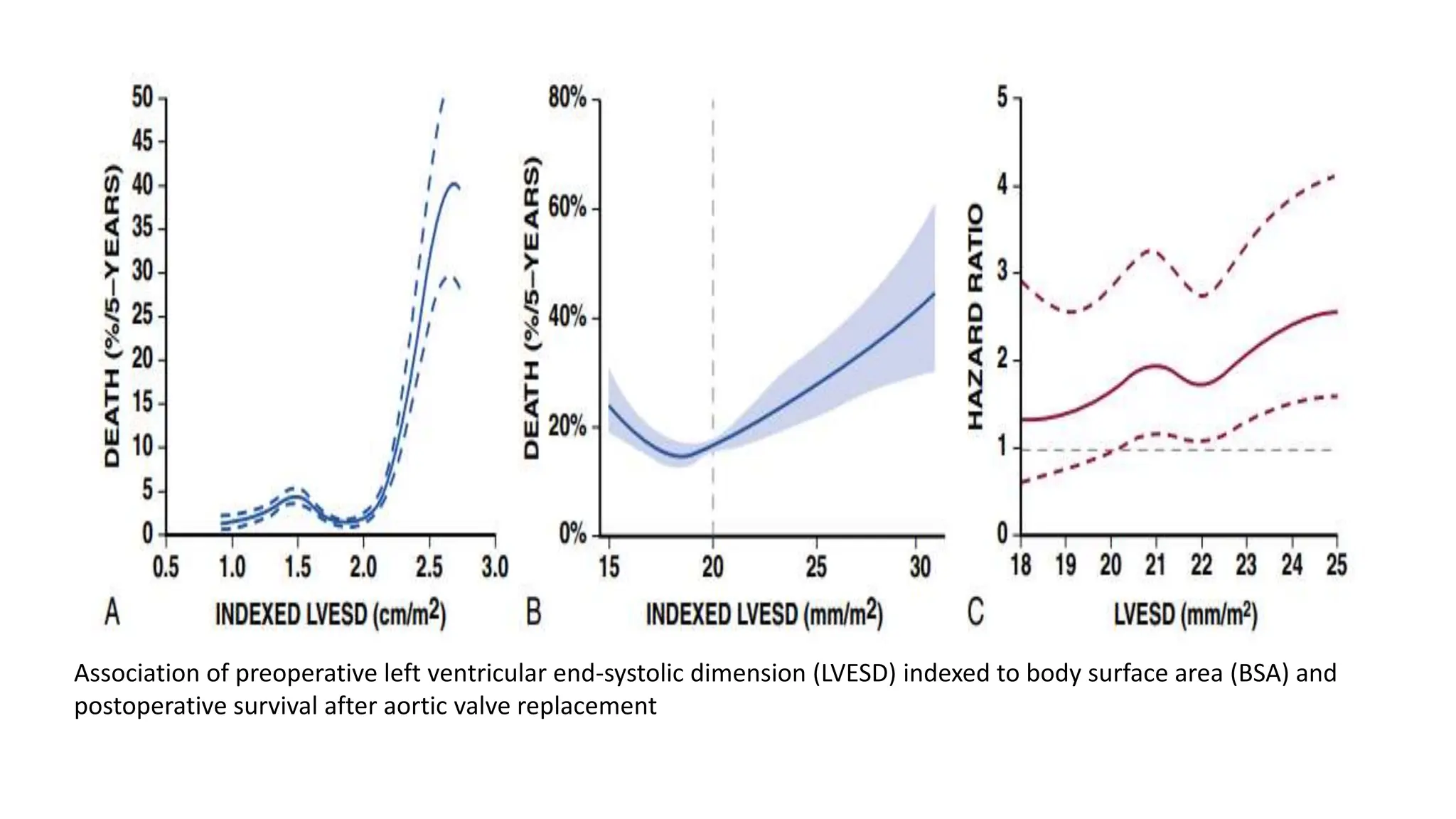
• Indexed LVESD or LVESV, which adjust for body size, may be more
robust indicators for timing of surgical intervention than absolute
dimensions and volumes.
• Patients with an LVESD index of 2.5 cm/m2 or LVESV index of 45
mL/m2 or greater are at higher risk for adverse outcomes.
• LVESV index value of 45 mL/m2 matches the ASE criteria for severe LV
dilation
Association of preoperative left ventricular end-systolic dimension (LVESD) indexed to body surface area (BSA) and
postoperative survival after aortic valve replacement
OPERATIVE PROCEDURES
• The standard surgical approach for chronic AR is AVR.
• The indications for AVR secondary to aortic sinus or ascending
aortic disease are similar to those for patients with primary
valvular disease.
• Repair of the aortic sinuses or replace the ascending aorta is
indicated if the amount of aortic dilation is greater than 45 mm
• Experience is accumulating with surgical aortic valve repair, in
selected younger patients in experienced centre
• For selected patients with AR caused by aortic dilation with no aortic
valve thickening, calcification, or deformity, valve-sparing
replacement of the aortic sinuses and ascending aorta is a possible
option
• TAVR for AR is under investigation but is not an established
approach,and it is not recommended in current guidelines
Management of Acute Aortic Regurgitation
• Prompt surgical intervention is indicated.
• While the patient is being prepared for surgery, treatment
with an intravenous positive inotropic agent (dopamine or
dobutamine) and/or a vasodilator (nitroprusside) often is
necessary.
• The agent and dosage should be selected on the basis of
arterial pressure
• Beta blockers and intra-aortic balloon counterpulsation are
contraindicated; lead to rapid hemodynamic
decompensation.
• In hemodynamically stable patients with acute AR secondary to active
infective endocarditis, operation may be deferred to allow 5 to 7 days
of intensive antibiotic therapy
• AVR should be undertaken at the earliest sign of hemodynamic
instability or if there is any evidence of abscess formation.
• If an acute aortic dissection is the cause for the AR, the aorta will also
need to be fixed during surgery
• Thank you…..

valvular heart diseaseAORTIC REGURGITATION.pptx

  • 1.
    Aortic Regurgitation Dr SandipGuragain DM resident (Cardiology)
  • 2.
    Aortic valve • locatedbetween the left ventricle and the ascending aorta (aortic orifice). • The aortic valve consists of three cusps: – Right , – Left , – Posterior. • The left and right aortic sinuses mark the origin of the left and right coronary arteries.
  • 3.
    Structure: • The sidesof each valve leaflet are attached to the walls of the outflow vessel, which is slightly dilated to form a sinus. • The free superior edge of each leaflet is thickened (the lunule), and is widest in the midline (the nodule). • When the valve is closed, the nodules meet in the centre. • As blood recoils during ventricular diastole, it fills the aortic sinuses and enters the coronary arteries to supply the myocardium.
  • 4.
    EPIDEMIOLOGY OF AR: •A study from the Framingham Heart Study found that, in a population-based cohort, AR of at least trace severity on color Doppler echocardiography was present in 13 percent of men and 8.5 percent of women. • More than trace AR was unusual before age 50 and then increased progressively. • For mild AR, the prevalence was 3.7, 12.1, and 12.2 percent in men at ages 50 to 59, 60 to 69, and 70 to 83, respectively. The comparable values in women were 1.9, 6.0, and 14.6 percent. • For moderate to severe AR, the prevalence was 0.5, 0.6, and 2.2 percent in men at ages 50 to 59, 60 to 69, and 70 to 83, respectively. The comparable values in women were 0.2, 0.8, and 2.3 percent.
  • 5.
  • 6.
  • 7.
  • 8.
    CHROIC COMPENSATED AR: •Volume overloadcompensatory mechanism • LV EDV increases without increase in diastolic pressure due o increased compliance • LV preload reserve is maintained initially • Eccentric hypertrophy • Sarcomeres laid in series • Preload at sarcomere level is near normal • Normal contractile performance of each unit contributes to enhanced stroke volume
  • 9.
    CHROIC COMPENSATED AR: •Increased afterload: • Increased chamber volume • Increased systolic pressure • Increased systolic wall stress • Eccentric LVH • Continued increase in chamber volume and afterload- matched by continued recruitement of preload reserve and compensatory hypertrophy.
  • 10.
    Chronic decompensated AR •Afterload mismatch (irreversible) • Interstial fibrosis • Impaired LV contractility • Impaired LV emptying • increase in ESV and a fall in ejection fraction (EF), total stroke volume, and forward stroke volume. • Further cardiac dilation and re-elevation of LV filling pressure occur
  • 11.
    Myocardial ischemia: • Themajor portion of coronary blood flow occurs during diastole. • Aortic pressure is lower than normal in ARreduced coronary perfusion. • Increased oxygen demands and reduced supply, sets the stage for the development of myocardial ischemia, especially during exercise. Deterioration of LV function.
  • 12.
    Acute AR-pathophysiology • Hemodynamicsignificant AR of sudden onset, into a LV not previously subjected to volume overload. • Volume overload is poorly tolerated •Ventricular compliance is normal •Lv operating on steep portion of diastolic p/v relation •End diastolic LV pressure markedly increased approaching aortic diastolic pressure
  • 13.
    Acute AR-pathophysiology • LVfails to increase stroke volume (not hypertrophied or dilated)- decreased cardiac output • Increae in LVEDP causes rise in mean LA pressure and PCWP- Pulmonary edema • premature closure of MV early crossover of pressures • Diastolc MR • Arterial BP- • Fall in systolic bp • Normal pulse pressure • Diastolic pressure maintained by reflex increase in SVR in failure
  • 16.
    Clinical features :Chronic AR • Asmptomatic phase longer; most often in the fourth or fifth decade of life. • Dyspnoea most common symptoms • Angina in 20% patients • Decreased perfusion –low aortic diast. Pressure • Increased myocard. Demand • A/w coronary atherosclerosis • Osteal coronary invt in syphilitic AR; takayasu arteritis • Palpitations: • awareness of forceful vent.contraction • Vent. Arrythmia in decompensated stage • Syncope-5 to 10%
  • 18.
    Physical findings: • BP: •SBP DBP • Korotkoff sounds often persist to zero; Intra-arterial pressure rarely falls below 30 mm Hg. • Korotkoff sounds phase IV correlates with the diastolic pressure. • As heart failure develops, peripheral vasoconstriction may occur and arterial diastolic pressure may rise. • Apical impulse: diffuse and hyperdynamic; displaced laterally and inferiorly. • Systolic thrill at the base of the heart or suprasternal notch, and over the carotid arteries. • In many patients, a carotid shudder is palpable.
  • 19.
    PRECORDIAL Examination: • S1soft • Increased LVEDP- EARLIER closure of MV • Elevated diastolic pressure-less valve excursion. • S2- • Soft A2- valvular structural abnormality • Delayed A2- prolonged LV ejection time • P2 may be obscured by murmur • S3- In failure • S4 • Decreased LV compliance • Long PR interval
  • 20.
    Early Diastolic murmur: •High pitched in mild to moderate, pitch decreaeds as severity increases • Decrescendo- aortic LV pressure gradient tapers in diastole • Duration • Correlates with severity in most cases. • Some patients with severe AR can have shorter murmur due to high LVEDP • Murmur shorter in decompensation • Murmur in 3rd RICS louder than 3rd LICS- Harvey S sign AR due to Aortic root pathology-rightward and superior displacement of dilated prox aorta • Seagull murmur- eversion or perforation of valve cusp
  • 21.
    • Systolic ejectionmurmur: • Increased LV stroke volume • Abnormal Aortic valve • Austin Flint murmur • Low pitched, mid or late diastolic apical murmur • Mehanism • AR jet pushing AML or the free LV wall • Convincing evidence for obstruction to mitral inflow in these patients is lacking. • Severity of AR & AFM • Mild- absent • Moderate-in late diastole • Severe- earlier, may extend into presystole • Very severe –prmaure closure of MV- absent presystolic component
  • 22.
    Acute AR c/f: •Rapid onset of symptoms- • Rapid rise of LA pressure • Abrupt reduction of cardiac outpt • Tachycardia • BP • Systolic pressure normal or slightly fall • Elevated diast BP • Narrow pulse pressure
  • 23.
    Acute AR c/f: •Soft S1 • Soft A2 • LV S3—rapid early diastolic filling • Absent LVS4 • EDM • Short rapid diastolic equilibration of aortic & LV pressure in diastole • Low or medium pitch- • Low gradient • a/w CCF • Austin Flint murmur presystolic component absent
  • 24.
    Echocardiography: • Increased LVEnd Diastolic Dimensions, near normal end systolic dimensions and increased contractility –compensated phase • Increased end systolic dimension and depressed contractility- decompensated phase
  • 25.
    M Mode ofmv • Diastolic fluttering of AML in chronic AR • Early closure of MV in Acute AR
  • 26.
    M Mode ofAV • Dilation of aortic root • Diastolic closure line is eccentric in bicuspid aortic valve • Fluttering of an AV cusp in diastole is observed if it has ruptured due to endocarditis • Diastolic non coaptation • Premature opening of AV valve
  • 27.
    Aortic regurgitation (AR)grading by semiquantitative parameters.
  • 28.
    Pressure half time(PHT) • Time it takes for the pressure difference between the aorta and LV to decrease by one-half during diastole. • Easy to measure using CW Doppler in the three- or five-chamber views. • The intensity/density of the signal is a qualitative sign of the amount of AR. • Can be influenced by LV compliance, LV filling pressure, presence of significant MR, and the chronicity of AR. • PHT <200 ms = severe AR, PHT >500 ms = mild AR
  • 29.
    Diastolic flow reversalin aorta • Aortic flow reversal can be assessed with PW Doppler in the proximal descending thoracic aorta (suprasternal view) or in the abdominal aorta (in the subcostal view). • Holodiastolic flow reversal suggests at least moderate AR with the greatest specificity being the presence of holodiastolic flow reversal in the abdominal aorta • Severe AR is suggested when the VTI of flow reversal approaches the VTI of forward flow in the aorta. • Early, brief diastolic flow reversal may be seen, especially in young patients with compliant aorta and is NORMAL. • It is important to distinguish this flow from HOLOdiastolic flow reversal, which is always ABNORMAL.
  • 31.
    Quantitative Doppler methods •Regurgitant volume= SV LVOT-SV MV/PV • Alternatively SVLVOT may be calculated as LVEDV − LVESV • Reg fraction:= reg volume/ total stroke volume • ERO= reg volume/ VTI AR • Advantage: • Indeopendent of loading conditions or LV compliance • Limitations: • Small errors in annulus size measuements- large error in volume calculations • Acuracy reduced in outflow tract obstructions,shunts • Forward stroke volume estimation affected by MR/PR
  • 32.
  • 33.
  • 34.
    • Cardiac MagneticResonance • Degree of aortic dilation in patients with BAV and other diseases affecting the aortic root and ascending aorta, • Accurate measurements of regurgitant volumes and the regurgitant orifice to assess severity of AR • Most accurate noninvasive technique for assessing LVESV, end- diastolic volume, and mass. • Recommended when echocardiographic evaluation of LV size and function or severity of regurgitation is suboptimal
  • 35.
    • Angiography • Forangiographic assessment of AR, contrast material should be injected rapidly (i.e., at 55 to 60 mL at 20 mL/sec/sec) into the aortic root • Filming should be carried out in the right and left anterior oblique projections. • Opacification may be improved by filming during a Valsalva maneuver.
  • 36.
    MONITORING: • Monitor changesin symptoms, severity of AR, and LV systolic dysfunction. • Patients with chronic AR should undergo at least yearly clinical evaluation including history and physical examination. • Serial monitoring is generally performed by transthoracic echocardiogram since physical findings are not reliable. • If the echocardiogram is inconclusive, cardiovascular magnetic resonance (CMR) imaging is suggested. • Cardiac catheterization is recommended if noninvasive tests are inconclusive or if there is a need to assess coronary anatomy prior to aortic valve surgery.
  • 37.
    Echocardiography • As recommendedin the 2014 American Heart Association/American College of Cardiology valve guideline: • For mild AR, echocardiograms every three to five years. • For moderate AR, echocardiograms every one to two years. • For severe AR, echocardiograms every 6 to 12 months; • In addition to this schedule for routine monitoring, echocardiography should be performed more frequently if the patient becomes symptomatic or has equivocal symptoms or a decline in exercise tolerance.
  • 38.
  • 39.
    Composite endpoint ofsurvival free of surgery for aortic regurgitation after diagnosis in asymptomatic patients • Quantitative measures of AR severity predict clinical outcome, and LV size and systolic function also are strong predictors of clinical outcome. (Detaint D, et al. Quantitative echocardiographic determinants of clinical outcome in asymptomatic patients with aortic regurgitation: a prospective study. JACC Cardiovasc Imaging 2008;1:1-11.)
  • 40.
    • In seriesinvolving younger asymptomatic patients (mean age, 39 years) with severe AR and a normal LVEF: •The mortality rate was less than 1% per year •More than 45% of the patients remained asymptomatic with normal LV function at 10 years. •The average rate of developing symptoms or LV systolic dysfunction was less than 6% per year
  • 41.
    Symptomatic Patients • Oncethe patient becomes symptomatic, the downhill course becomes rapidly progressive. • Congestive heart failure, punctuated by episodes of acute pulmonary edema, and sudden death may occur in previously symptomatic patients with LV dilation. • Data compiled in the presurgical era death usually occurred within 4 years after the development of angina pectoris and within 2 years after the onset of heart failure. • Even in the current era, 4-year survival without surgery in patients with New York Heart Association (NYHA) class III or IV symptoms is only approximately 30%
  • 42.
    Survival without surgeryin symptomatic chronic aortic regurgitation, Dujardin KS, et al. Mortality and morbidity of aortic regurgitation in clinical practice: a long-term follow-up study. Circulation 1999;99:1851-1857.
  • 43.
    Treatment of ChronicAortic Regurgitation Medical Therapy • No specific therapy to prevent disease progression in chronic AR • RCT of DHP-CCB and (ACE inhibitors have not shown consistent clinical benefit in terms of blunting progression of LV dilation or delaying in need for AVR. • Treat hypertension (systolic blood pressure [SBP] >140 mm Hg), coronary artery disease (CAD), atrial arrhythmias, and any other cardiovascular comorbidities • Chronic medical therapy may be necessary for some patients • who refuse surgery • have a prohibitive risk of surgery because of comorbid conditions
  • 44.
    • Should receivean aggressive evidence-based heart failure regimen with ACE inhibitors (and perhaps other vasodilators), diuretics, and salt restriction; • Beta blockers may also be beneficial. • Despite Nitroglycerin and other nitrates are not as helpful in relieving anginal pain they are reasonable to try. • In patients who are candidates for surgery but who have severely decompensated LV dysfunction, vasodilator therapy may be particularly helpful to stabilize patients prior to AVR.
  • 45.
    Recommendations for physicalactivity and exercise: • Athletes with greater-than-mild AR should be evaluated yearly • Exercise testing to at least the level of activity achieved in competition and training is helpful • Stage B with normal LVEF and normal or mildly increased LV end-systolic dimension (LVESD) with normal exercise tolerance on exercise testing can participate in all competitive sports. • Athletes with mild to moderate degrees of AR with normal LVEF and moderately increased LVESD (<50 mm [men], <40 mm [women], or <25 mm/m2 [either sex]) with normal exercise tolerance on exercise testing can participate in all competitive sports. • Athletes with severe AR, LVEF ≥50 percent, and LVESD <50 mm (men), <40 mm (women), or <25 mm/m2 (either sex) with normal exercise and no progression of AR severity or degree of increase in LVESD on serial Doppler echocardiography may continue to participate in all competitive sports. • It is reasonable for athletes with AR and aortic dimensions of 41 to 44 mm to participate in sports with low risk of bodily contact. • Athletes with severe AR and symptoms (stage D), or LV systolic dysfunction with ejection fraction <50 percent (stage C2), or LVESD >50 mm or >25 mm/m2 (stage C2), or severe increase in LV end-diastolic dimension (LVEDD >70 mm or ‡35.3 mm/m2 [men], >65 mm or ‡40.8 mm/m2 [women]) should not participate in competitive sports.
  • 48.
    • Indexed LVESDor LVESV, which adjust for body size, may be more robust indicators for timing of surgical intervention than absolute dimensions and volumes. • Patients with an LVESD index of 2.5 cm/m2 or LVESV index of 45 mL/m2 or greater are at higher risk for adverse outcomes. • LVESV index value of 45 mL/m2 matches the ASE criteria for severe LV dilation
  • 49.
    Association of preoperativeleft ventricular end-systolic dimension (LVESD) indexed to body surface area (BSA) and postoperative survival after aortic valve replacement
  • 50.
    OPERATIVE PROCEDURES • Thestandard surgical approach for chronic AR is AVR. • The indications for AVR secondary to aortic sinus or ascending aortic disease are similar to those for patients with primary valvular disease. • Repair of the aortic sinuses or replace the ascending aorta is indicated if the amount of aortic dilation is greater than 45 mm • Experience is accumulating with surgical aortic valve repair, in selected younger patients in experienced centre
  • 51.
    • For selectedpatients with AR caused by aortic dilation with no aortic valve thickening, calcification, or deformity, valve-sparing replacement of the aortic sinuses and ascending aorta is a possible option • TAVR for AR is under investigation but is not an established approach,and it is not recommended in current guidelines
  • 52.
    Management of AcuteAortic Regurgitation • Prompt surgical intervention is indicated. • While the patient is being prepared for surgery, treatment with an intravenous positive inotropic agent (dopamine or dobutamine) and/or a vasodilator (nitroprusside) often is necessary. • The agent and dosage should be selected on the basis of arterial pressure • Beta blockers and intra-aortic balloon counterpulsation are contraindicated; lead to rapid hemodynamic decompensation.
  • 53.
    • In hemodynamicallystable patients with acute AR secondary to active infective endocarditis, operation may be deferred to allow 5 to 7 days of intensive antibiotic therapy • AVR should be undertaken at the earliest sign of hemodynamic instability or if there is any evidence of abscess formation. • If an acute aortic dissection is the cause for the AR, the aorta will also need to be fixed during surgery
  • 54.

Editor's Notes

  • #5 At least trace AR by color Doppler echocardiography is common, even in healthy subjects.
  • #30 The jet area can be traced by planimetry. LVOT area is calculated as 0.785 × (LVOT diameter/2)2 . B
  • #33 PW Doppler with the pulse sample volume placed in the descending thoracic aorta near the origin of the left subclavian artery, showing that there is diastolic flow reversal suggestive of at least moderate AR. If diastolic flow reversal is seen even more distally, in the abdominal aorta, the AR is likely severe.
  • #41 Monitor asymptomatic patients with chronic AR and normal LV systolic function,
  • #49 to confirm asymptomatic status and assess blood pressure responses. Among elite athletes, the upper limit of normal for LVEDD is 66 to 70 mm in men and approximately 66 mm in women
  • #56 Even a normal ventricle cannot sustain the burden of acute, severe volume overload.