




Value Driven
The Future of Software Development


                               Christopher Marsh
                               Head of Technical Architecture, AKQA
The Past
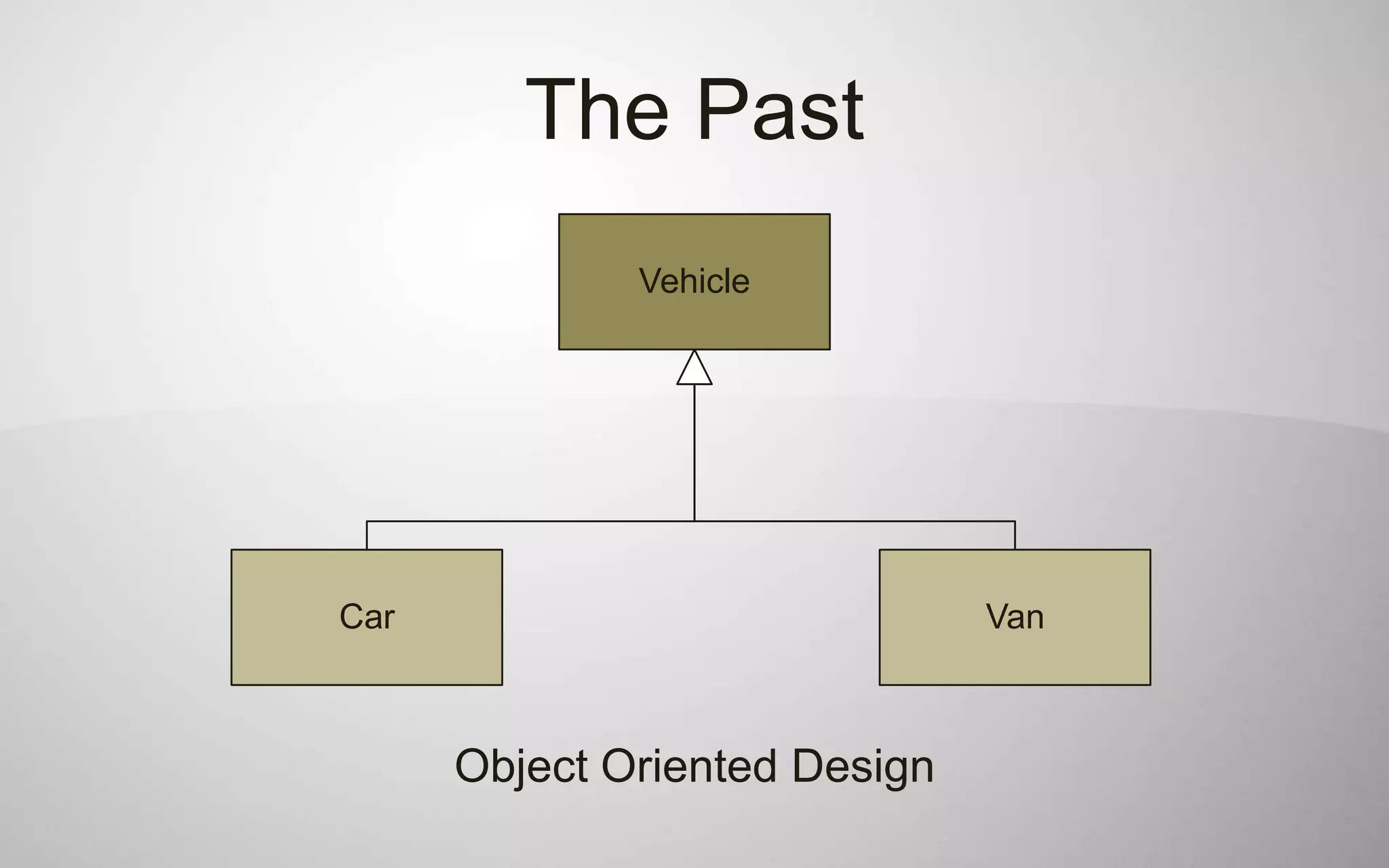
              Vehicle


Car                            Van


      Object Oriented Design
The Past


Functional Programming
The Past
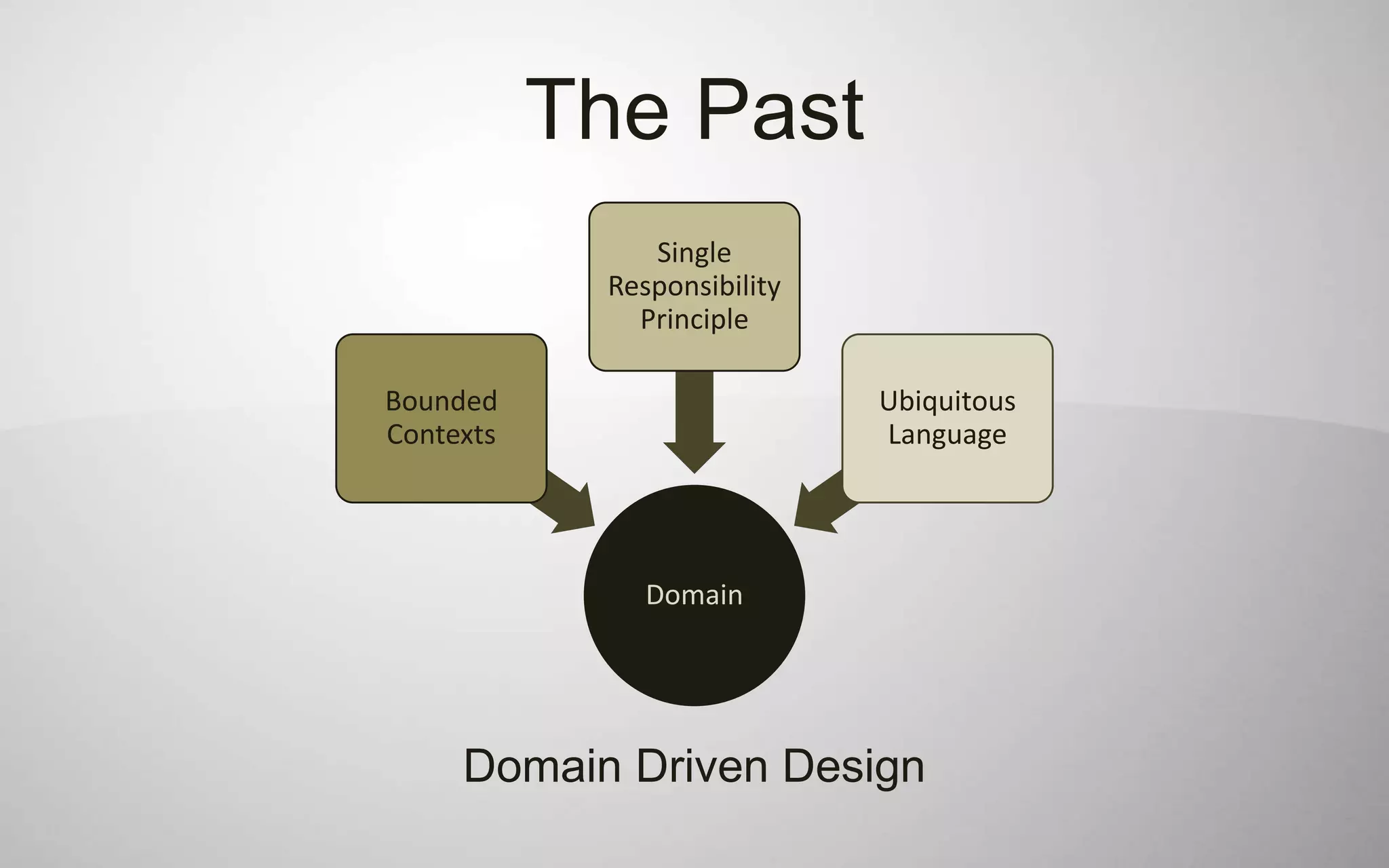
               Single
            Responsibility
              Principle

Bounded                      Ubiquitous
Contexts                     Language


               Domain


     Domain Driven Design
The Past

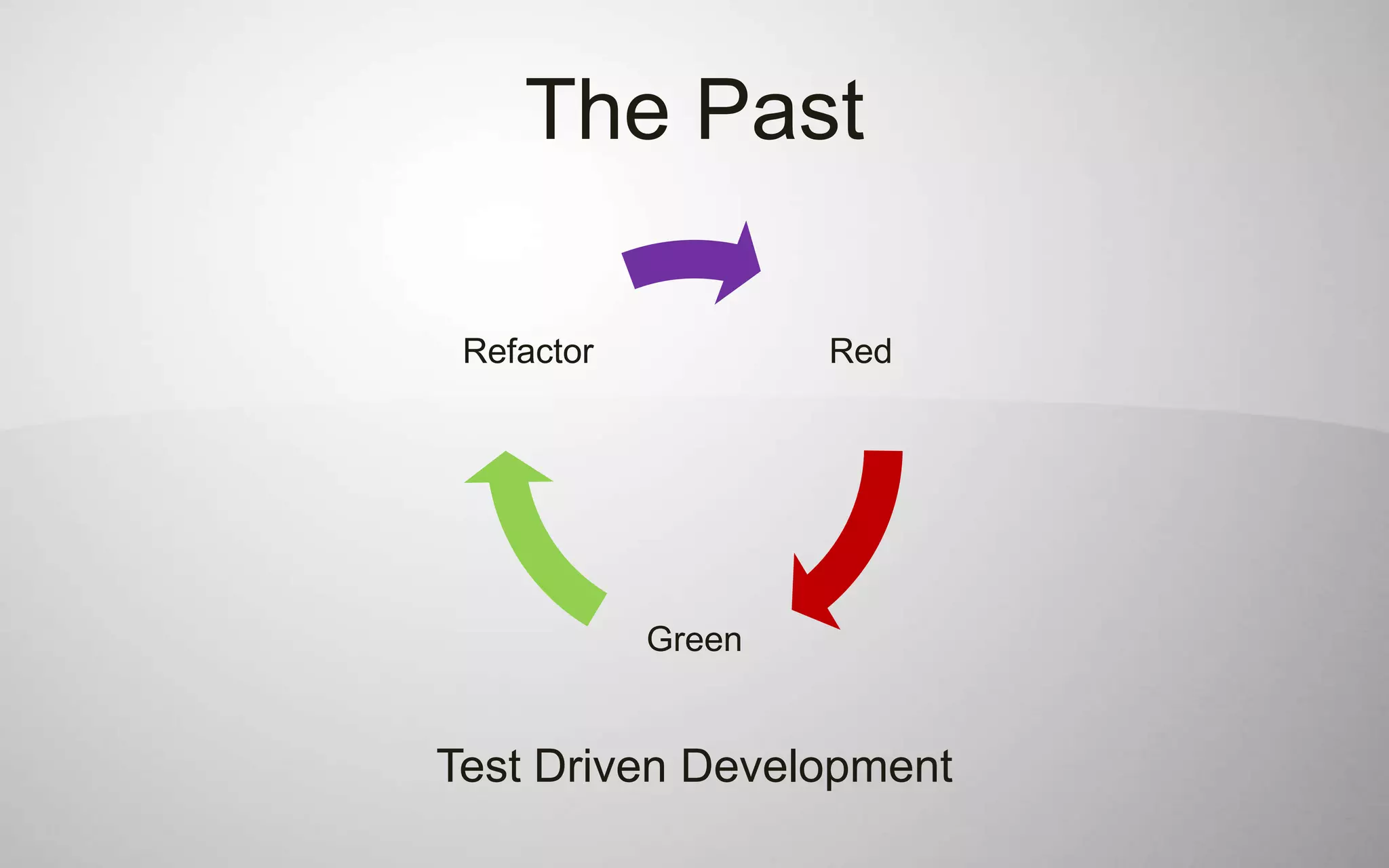
 Refactor           Red


            Green


Test Driven Development
The Past
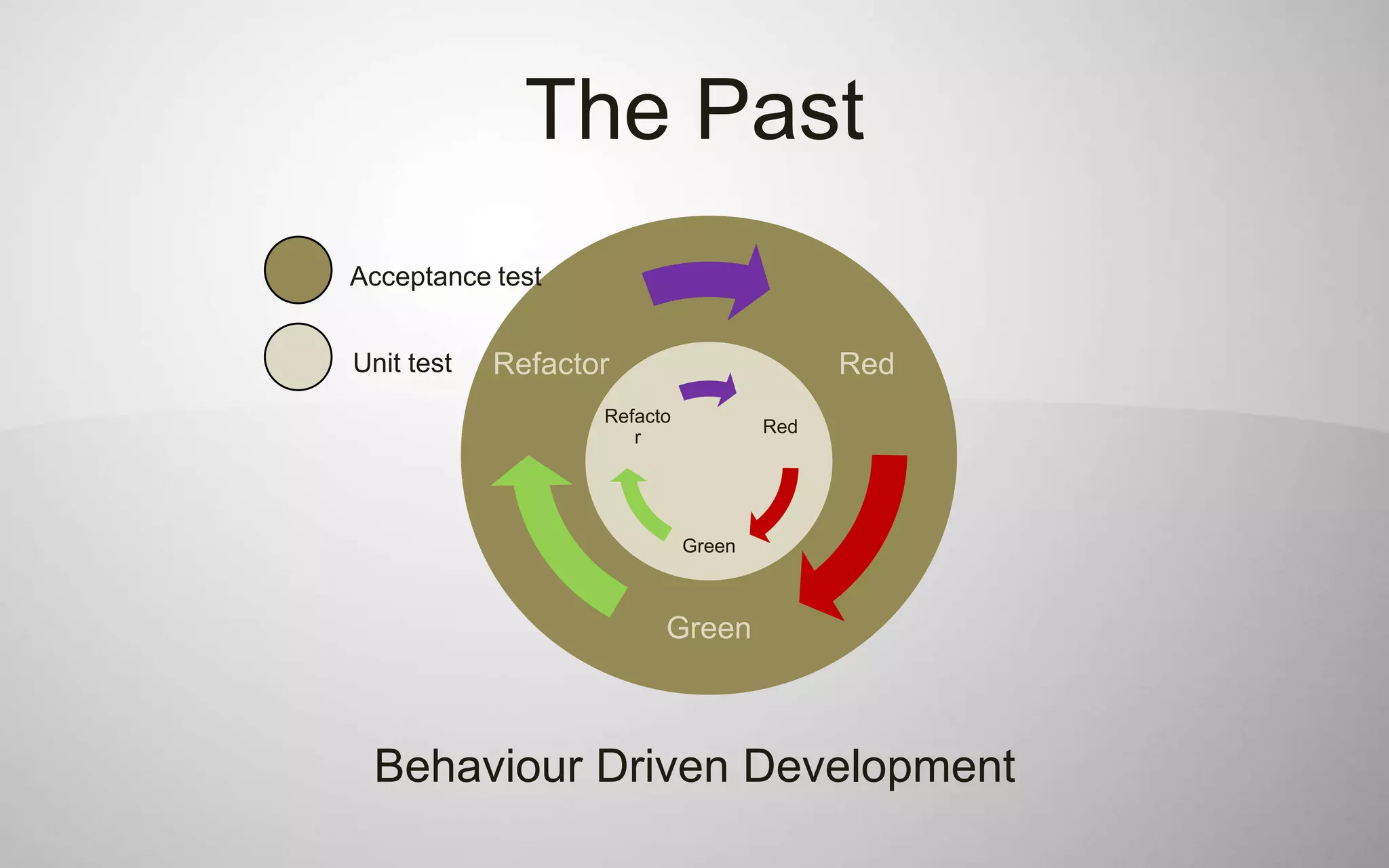
Acceptance test


Unit test   Refactor                       Red
                   Refacto
                                     Red
                      r


                             Green


                         Green


 Behaviour Driven Development
The Past


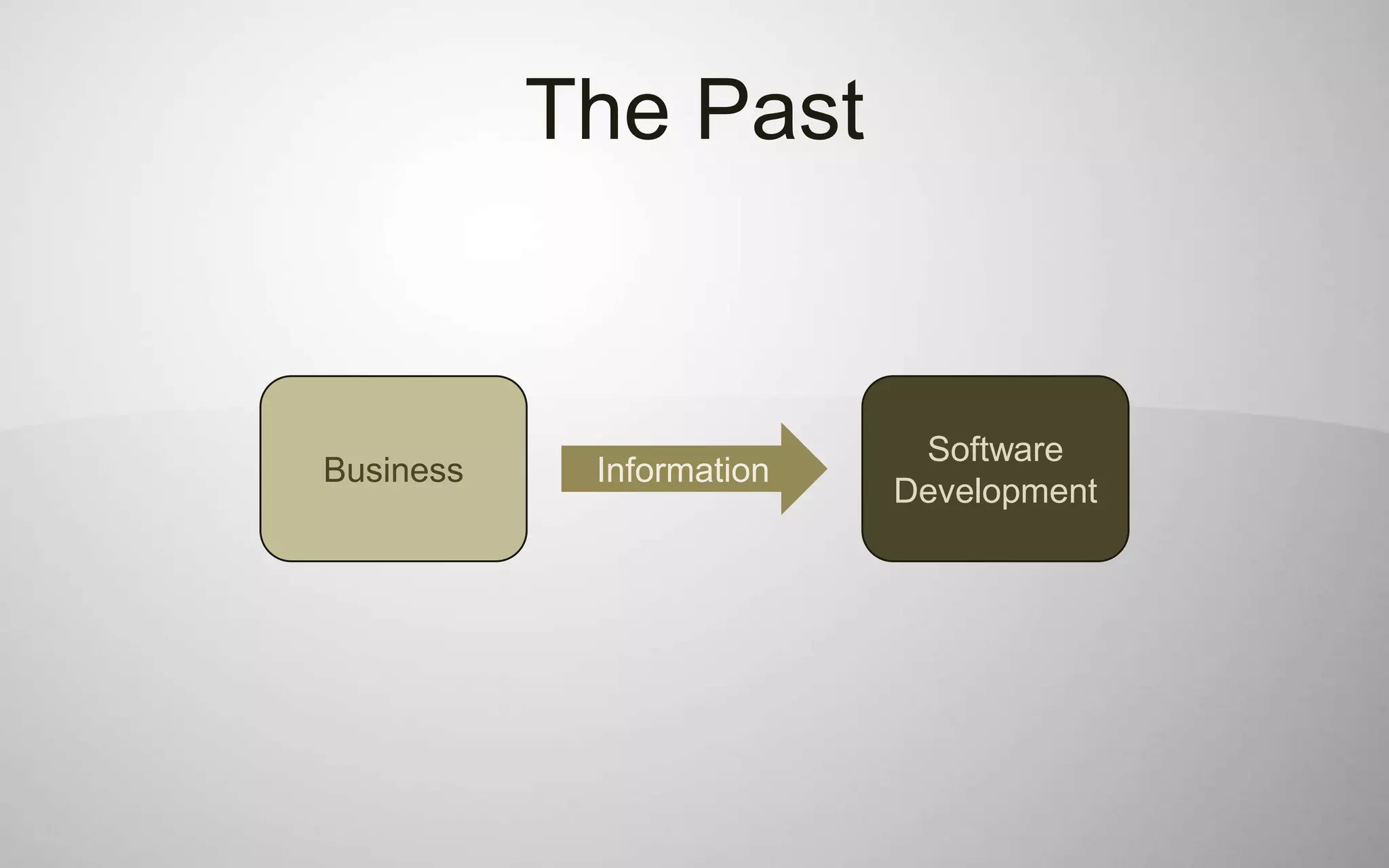
                           Software
Business    Information
                          Development
The Future

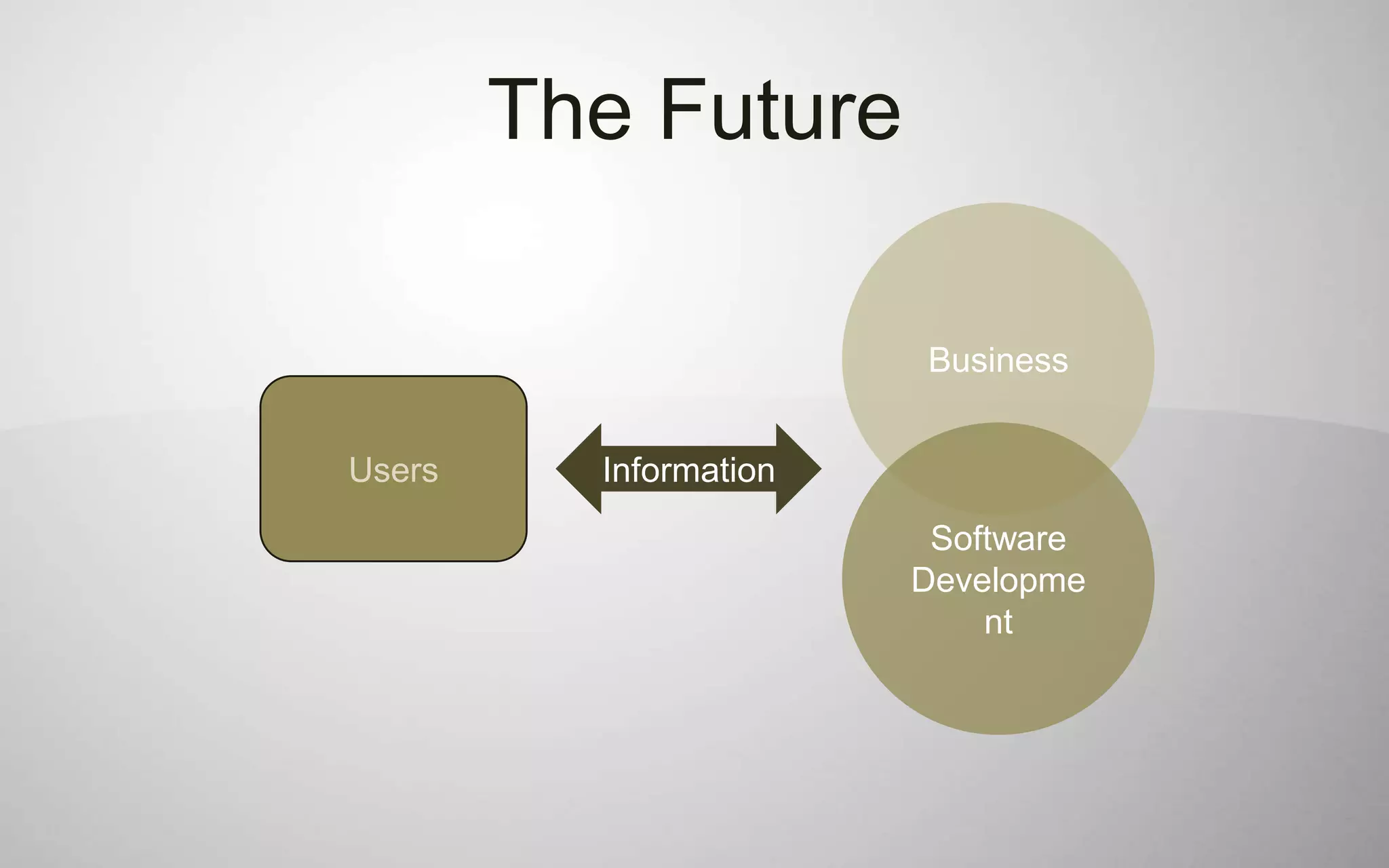
                        Business


Users     Information
                         Software
                        Developme
                            nt
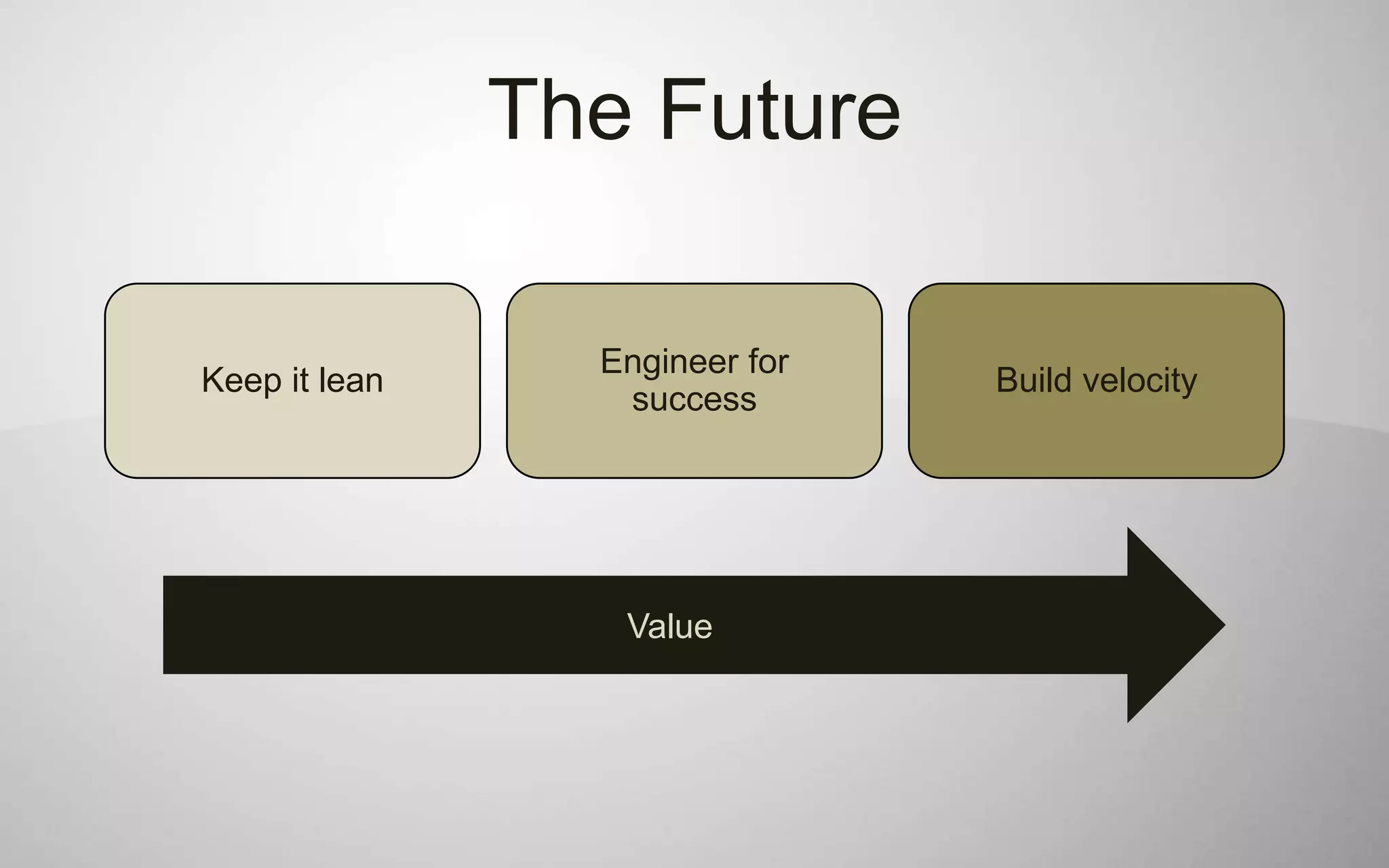
The Future

                 Engineer for
Keep it lean                    Build velocity
                  success


                  Value
KEEP IT LEAN
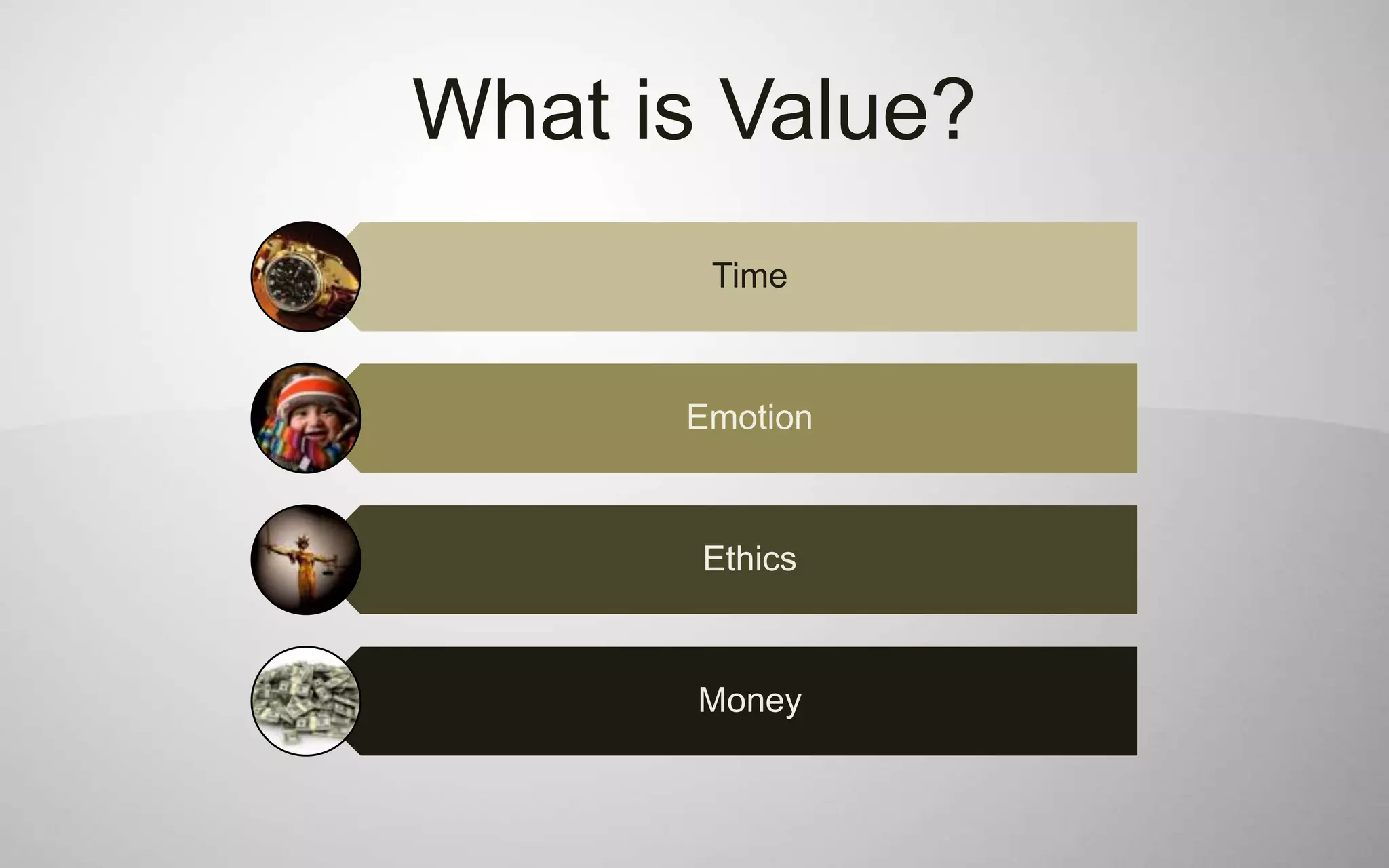
What is Value?
       Time


      Emotion


       Ethics


       Money
Lean Startup – Eric Ries


   “A human institution designed to create new
products and services under conditions of extreme
                   uncertainty.”
                                  Lean Startup, Eric Ries
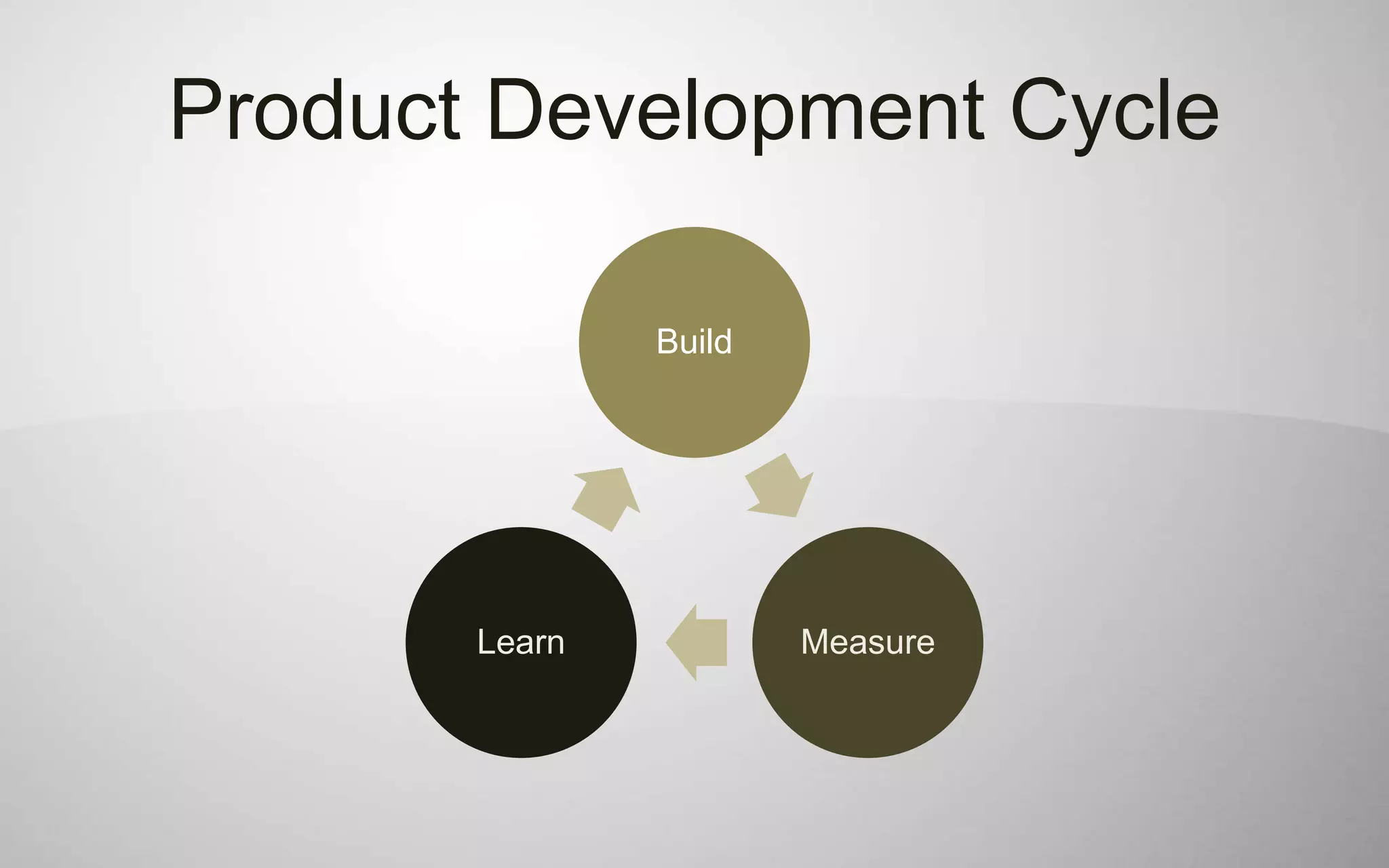
Product Development Cycle

               Build


       Learn           Measure
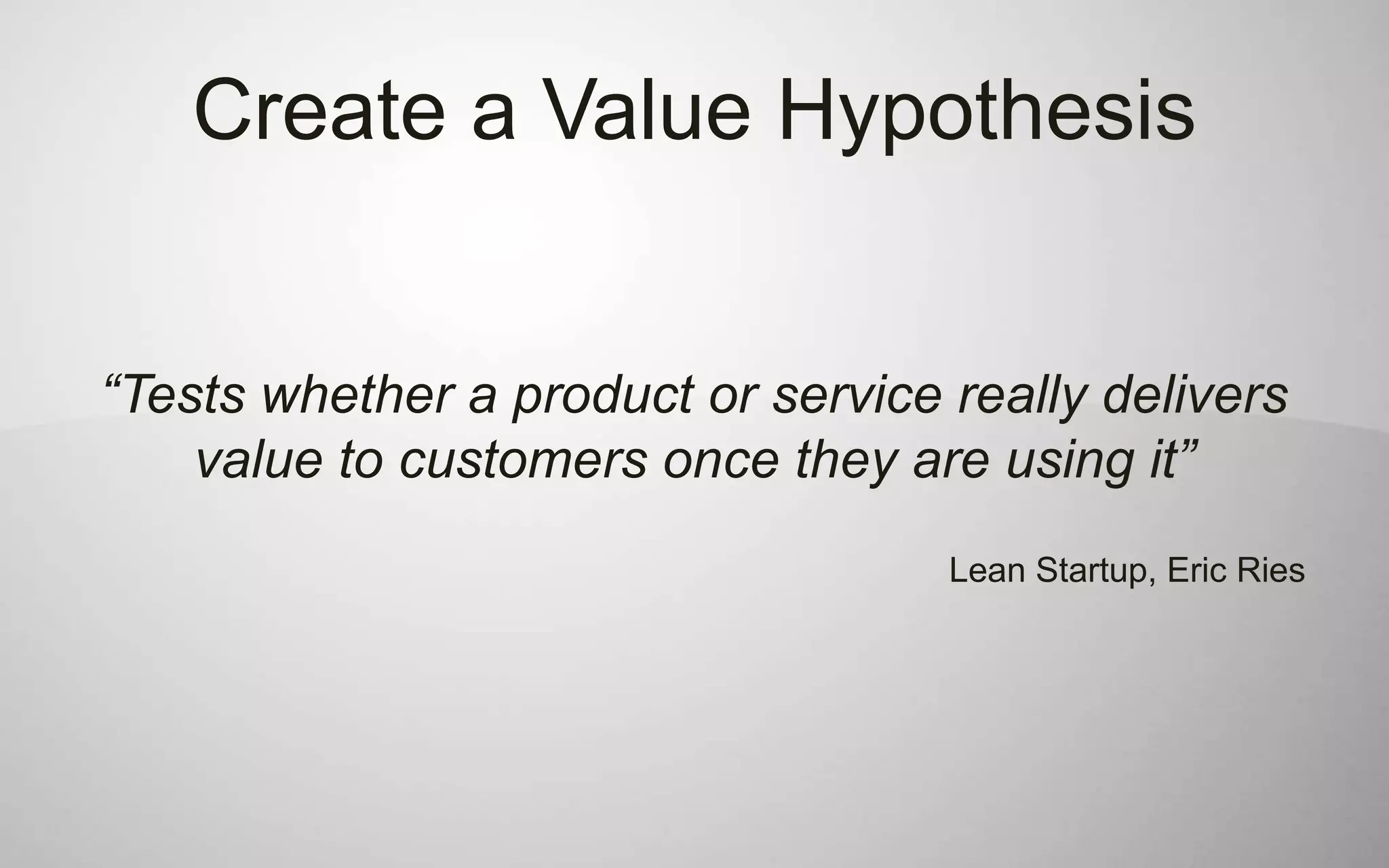
Create a Value Hypothesis


“Tests whether a product or service really delivers
    value to customers once they are using it”
                                    Lean Startup, Eric Ries
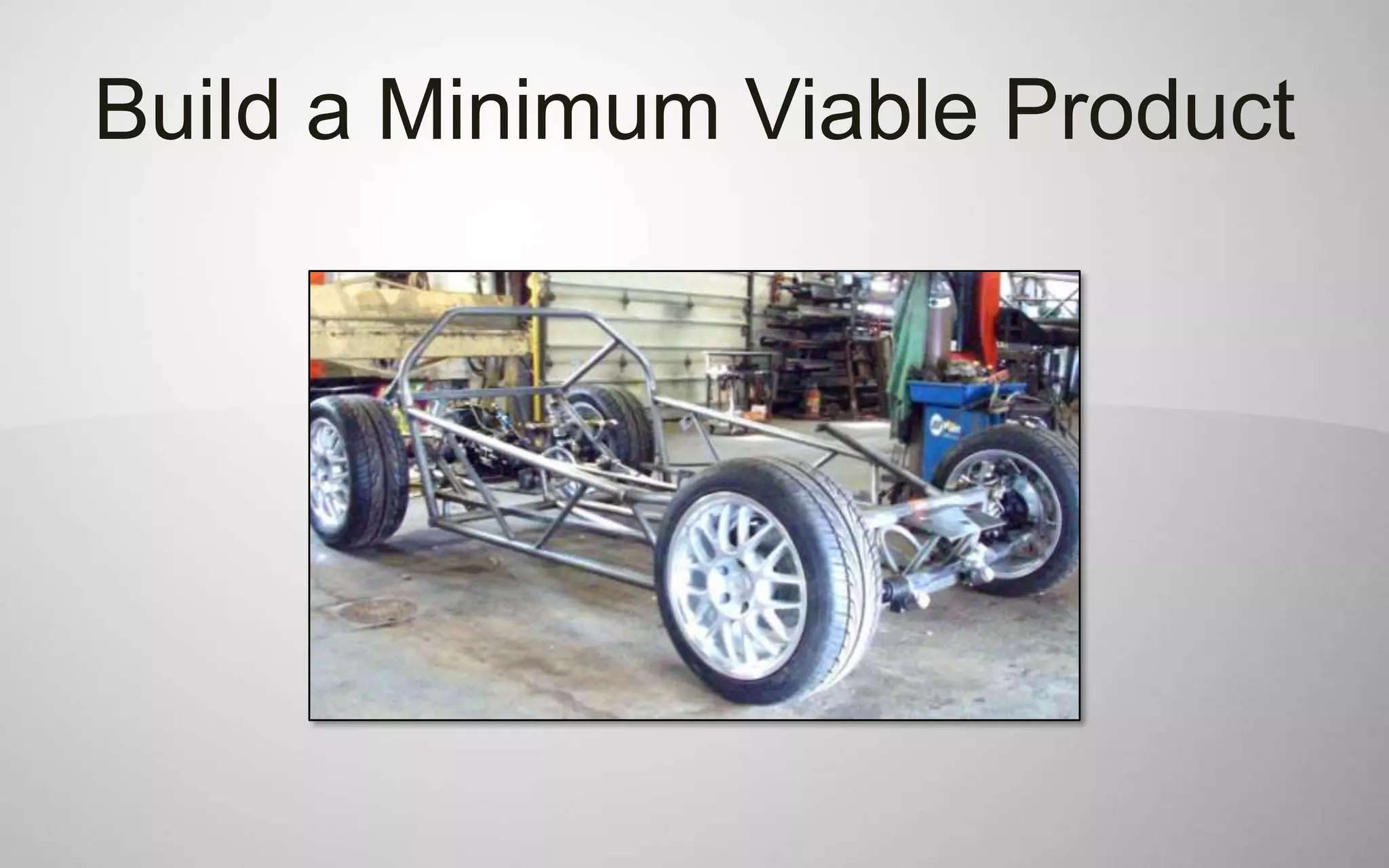
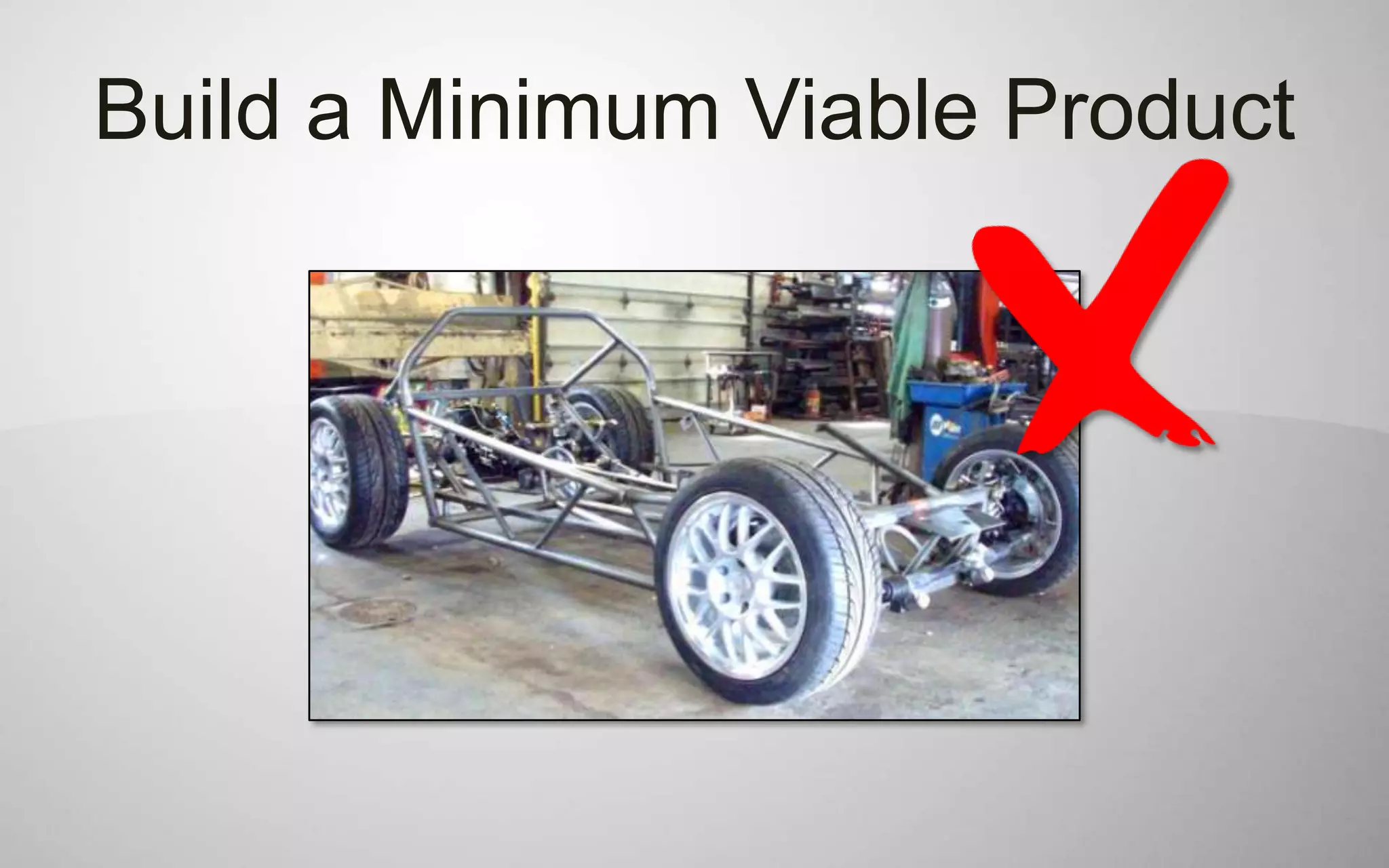
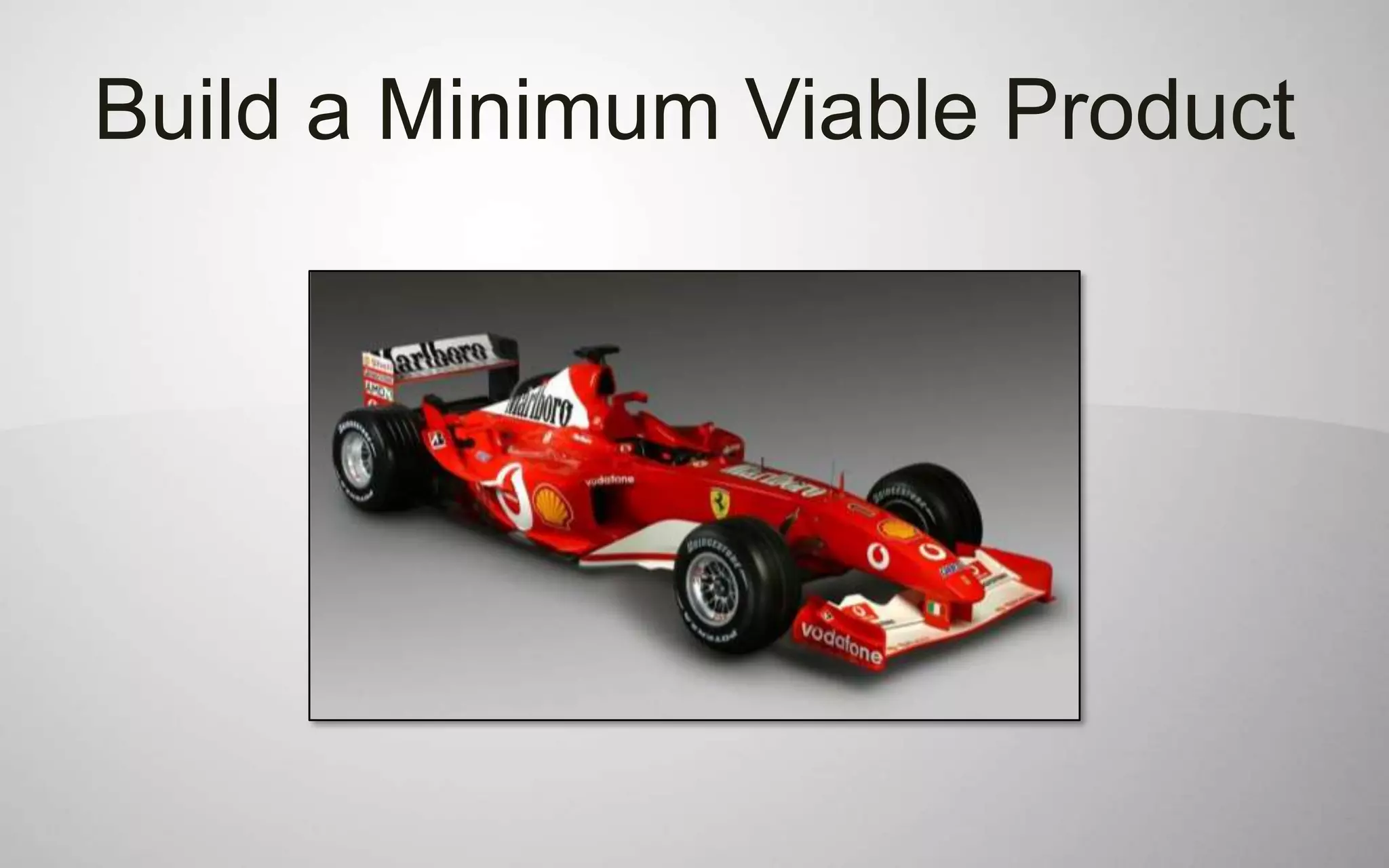
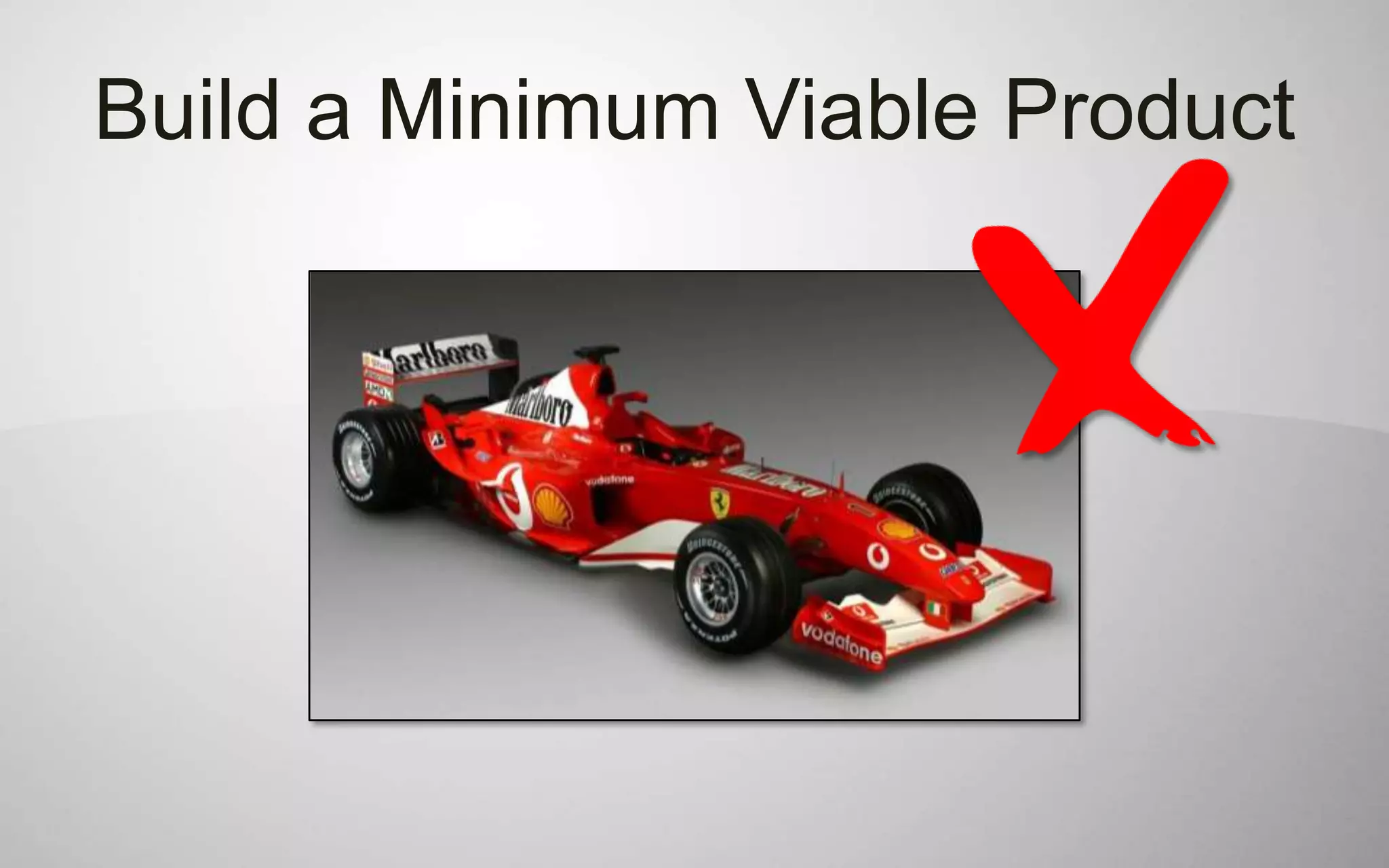
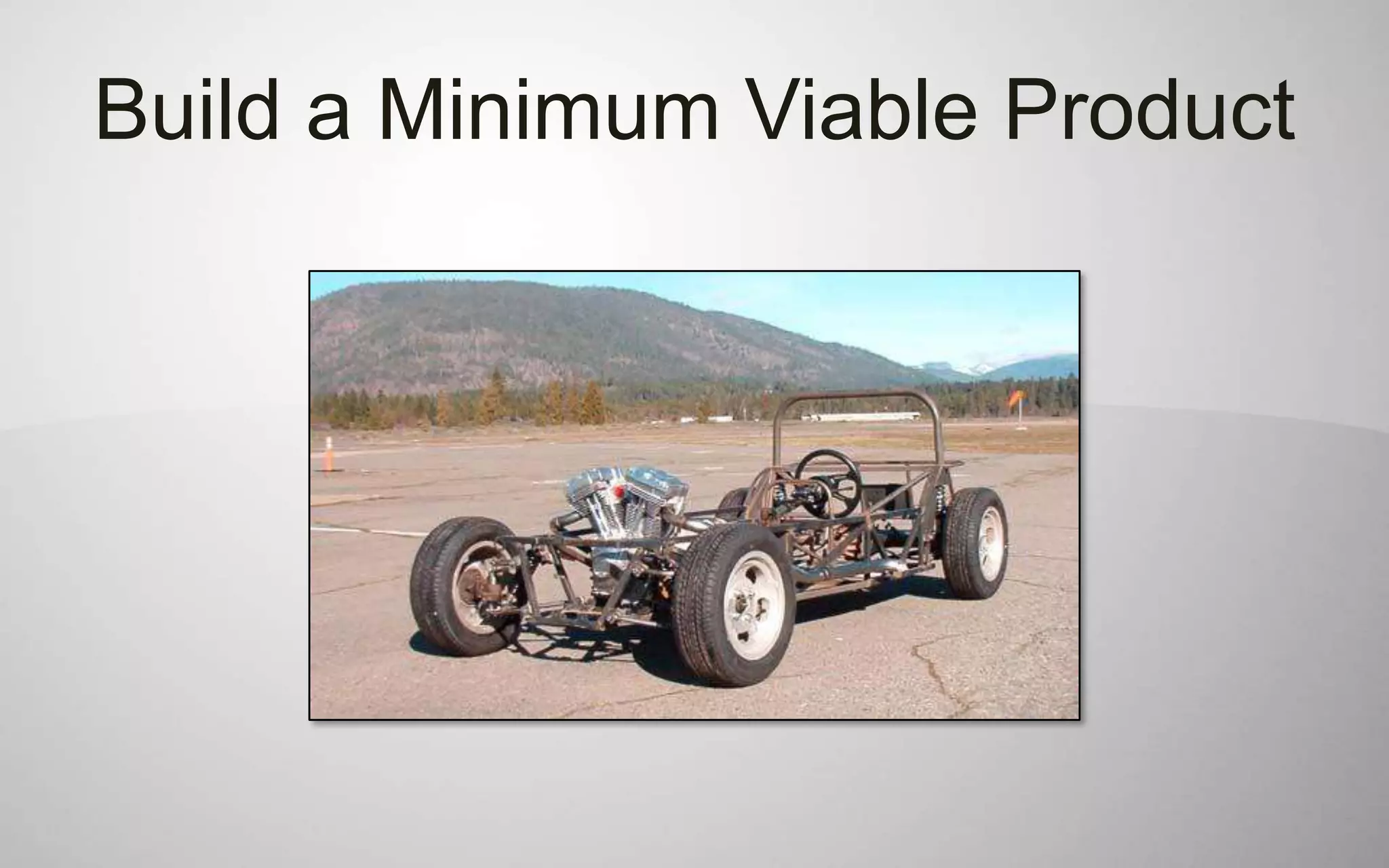
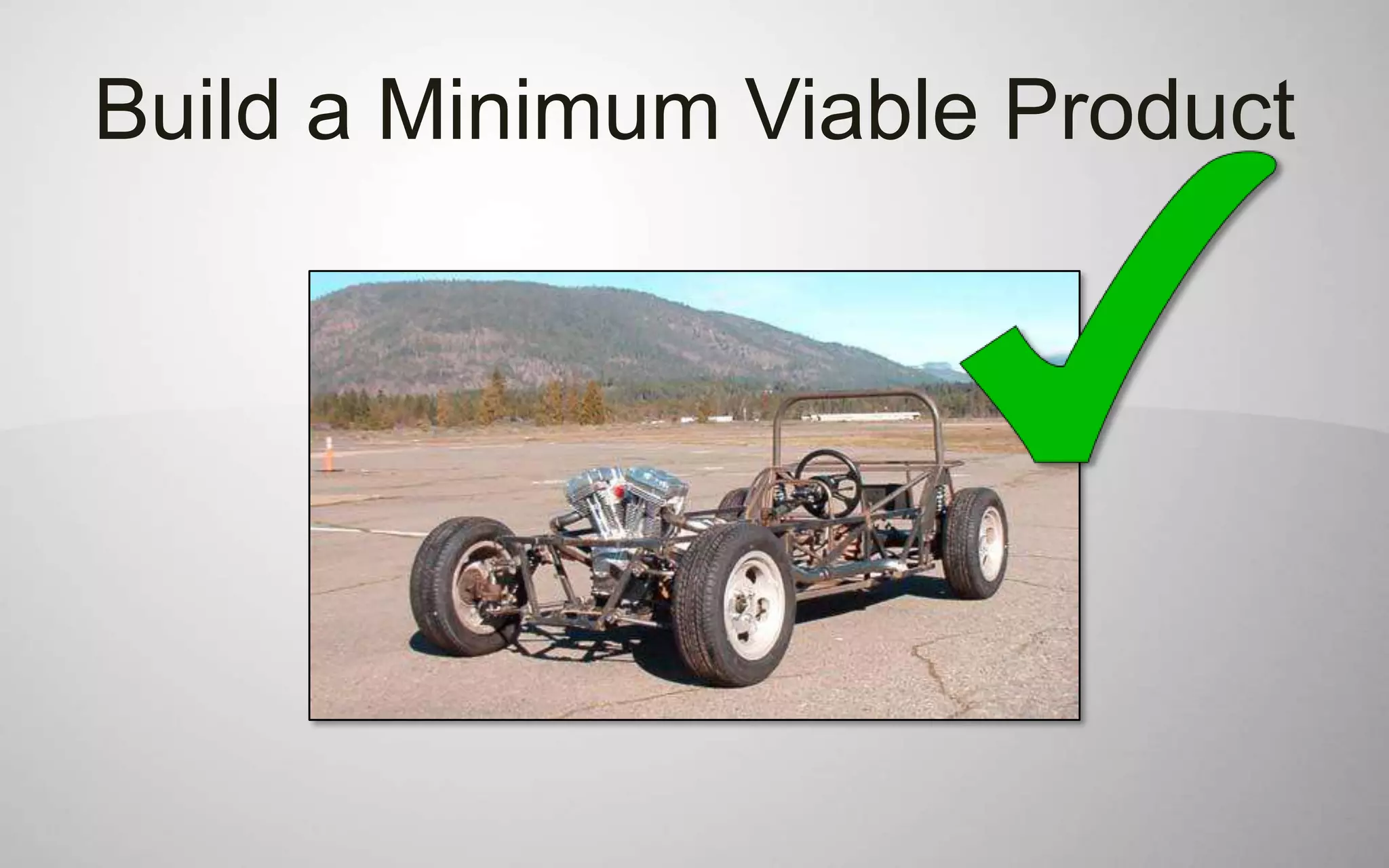
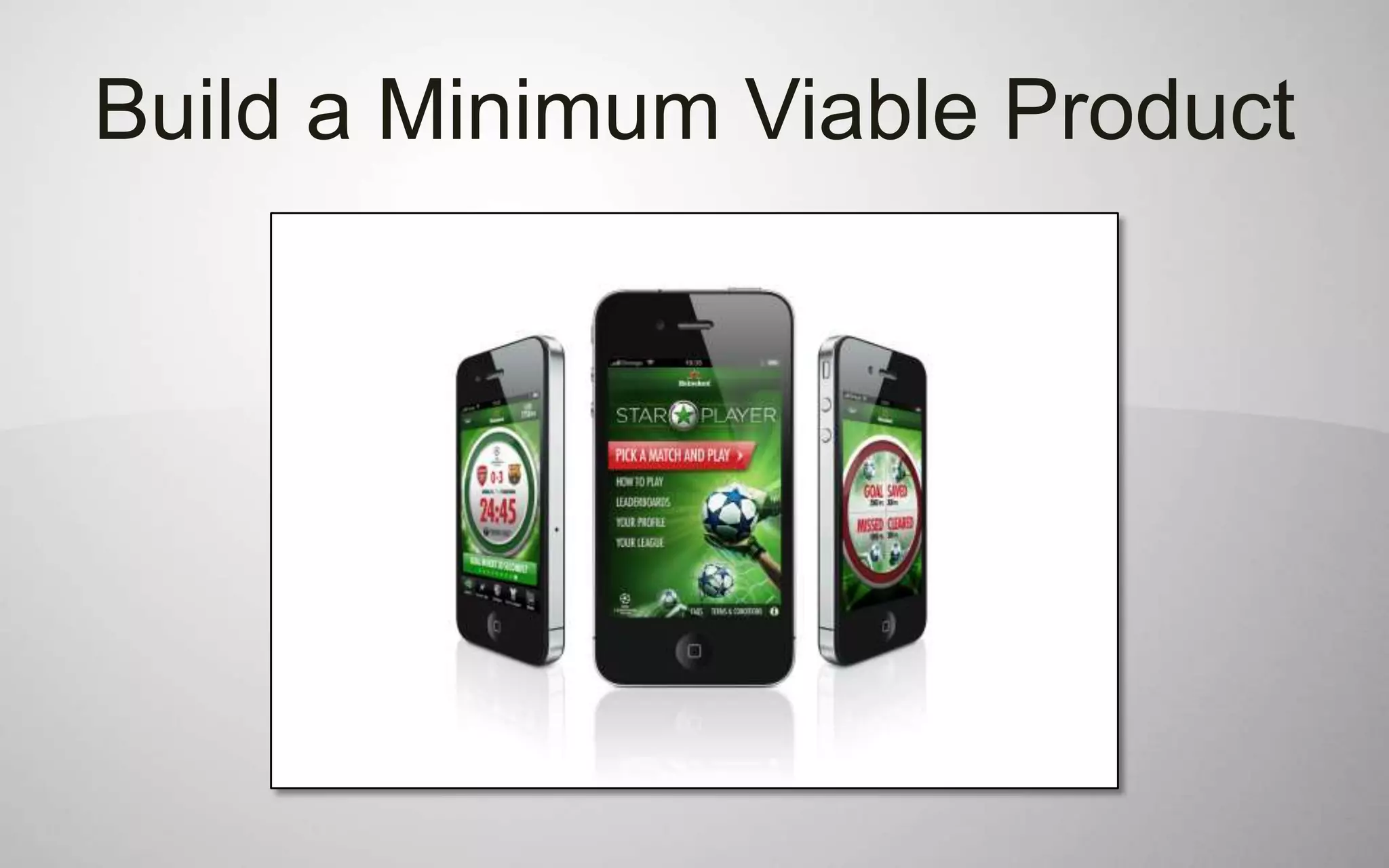
Build a Minimum Viable Product
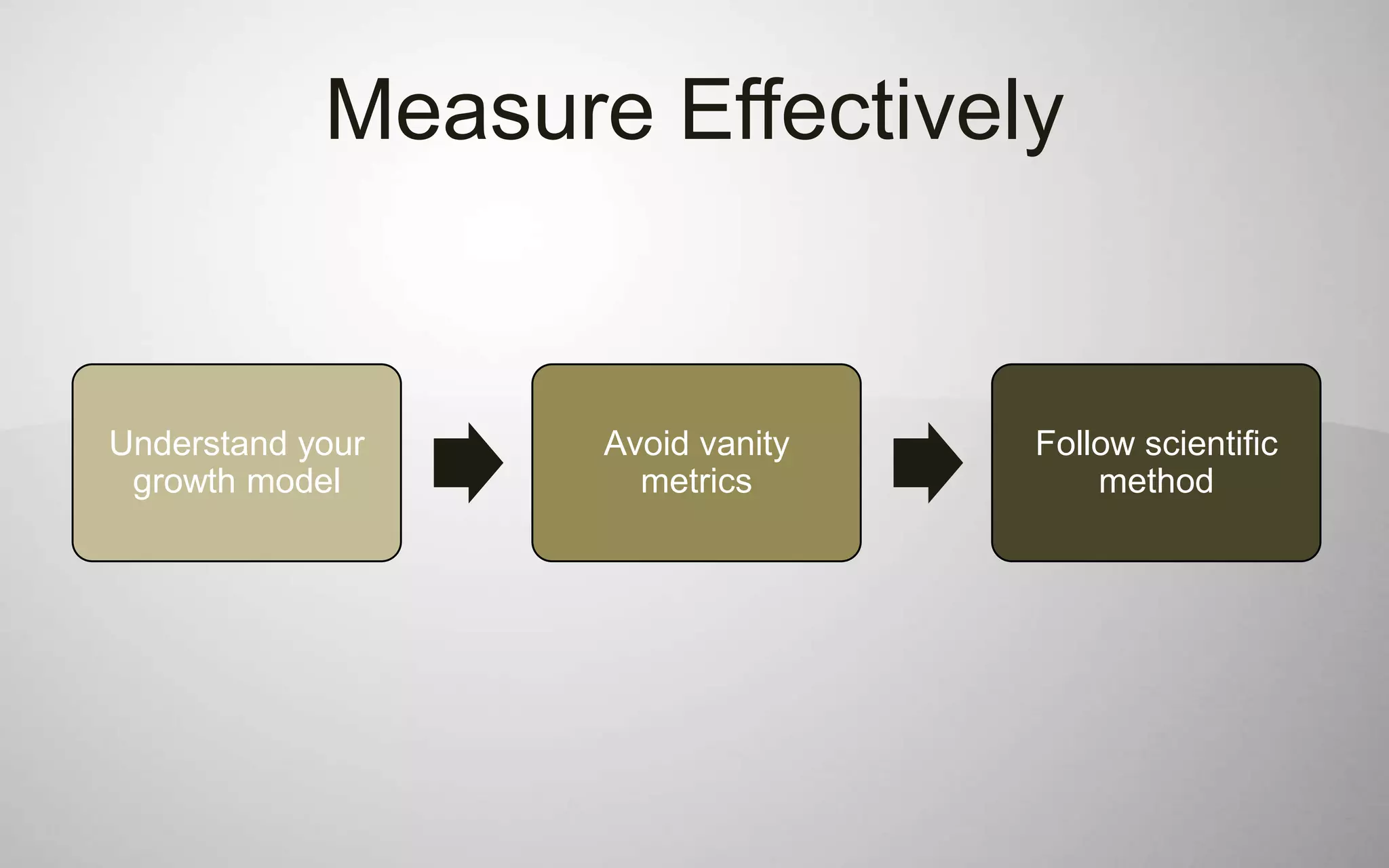
Measure Effectively


Understand your    Avoid vanity   Follow scientific
 growth model        metrics          method
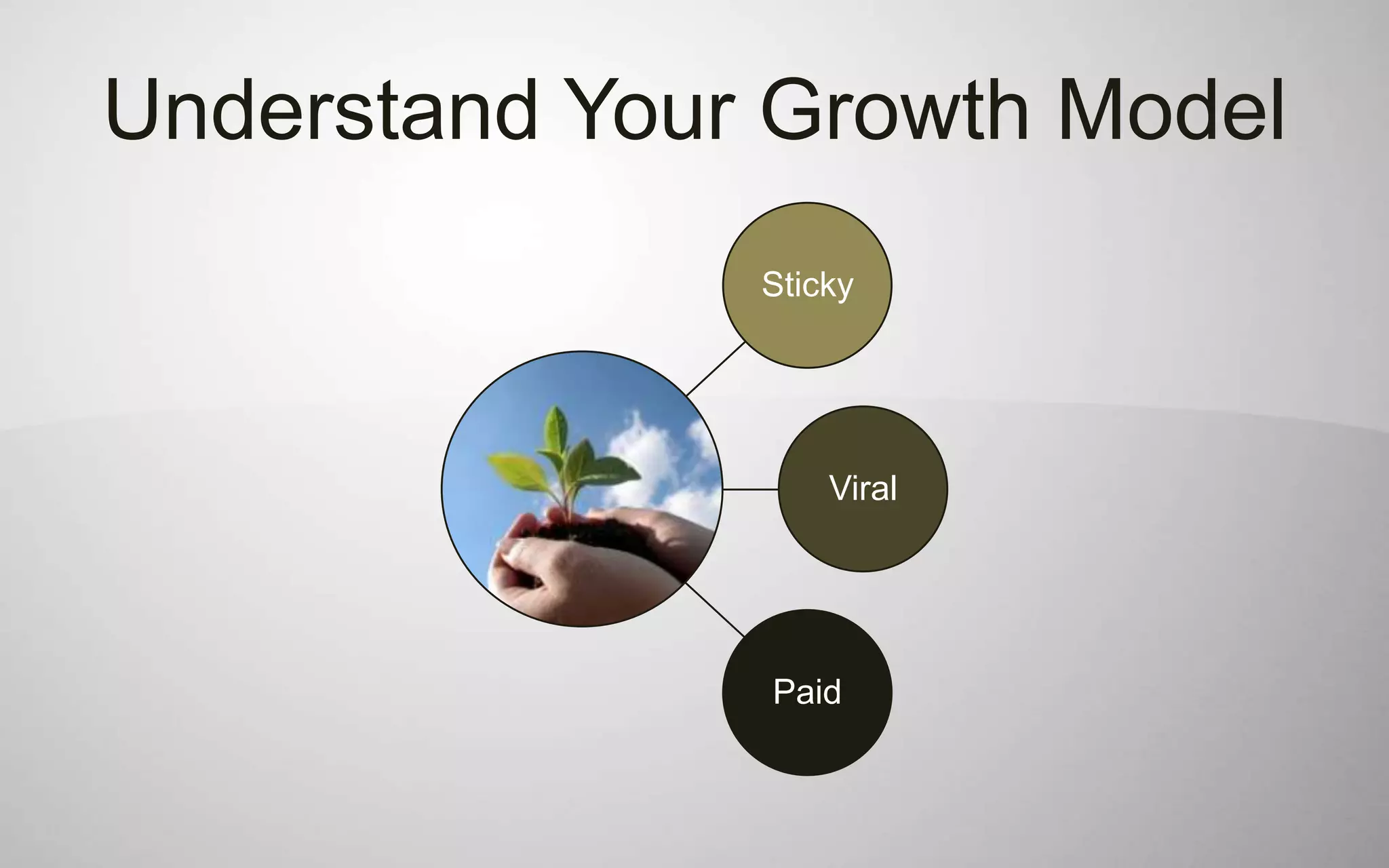
Understand Your Growth Model
               Sticky


                   Viral


               Paid
Growth hacking

“A growth hacker is a person whose true north is
 growth. Everything they do is scrutinized by its
      potential impact on scalable growth.”

                        Sean Ellis, http://startup-marketing.com
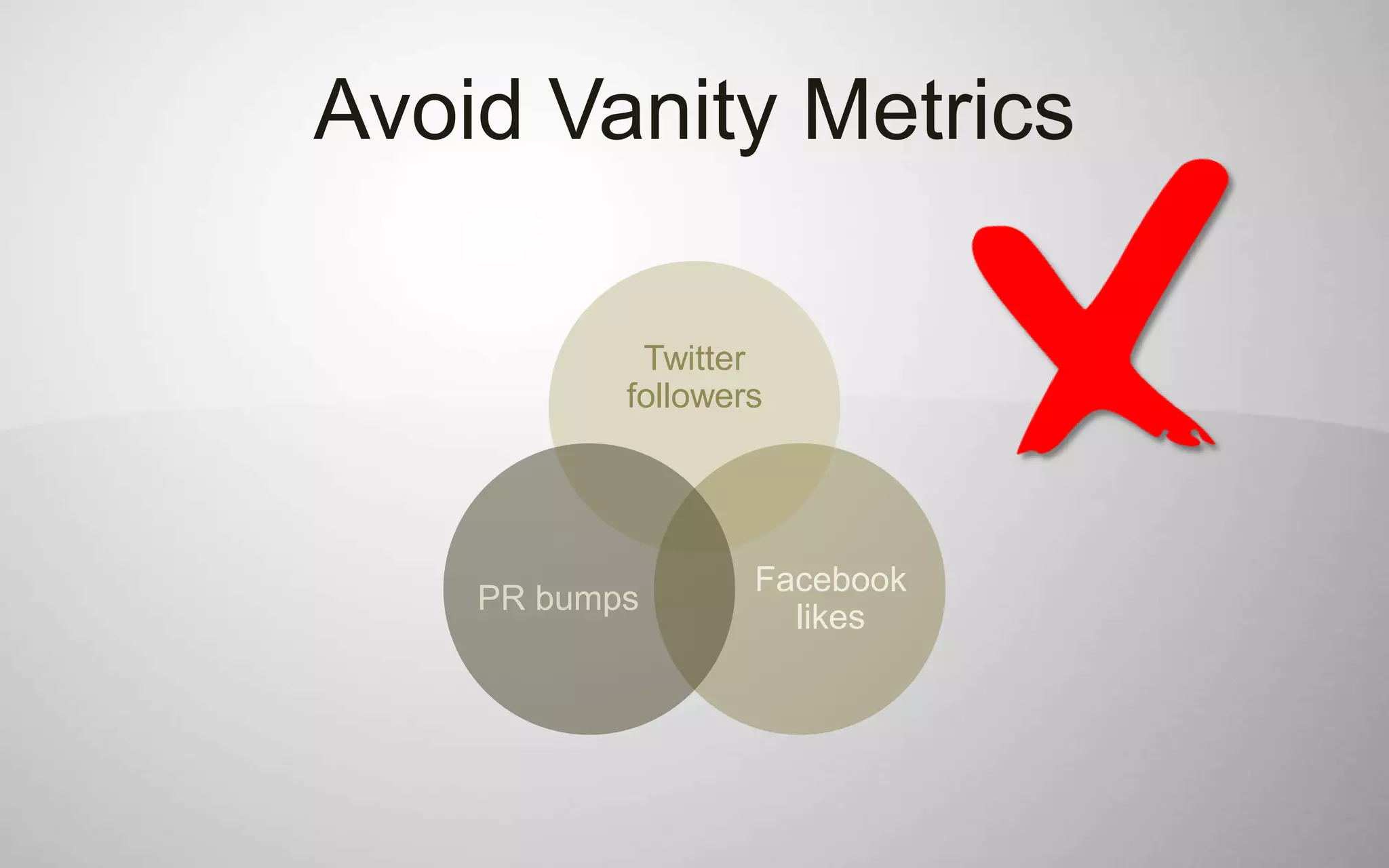
Avoid Vanity Metrics

            Twitter
           followers


                   Facebook
    PR bumps
                     likes
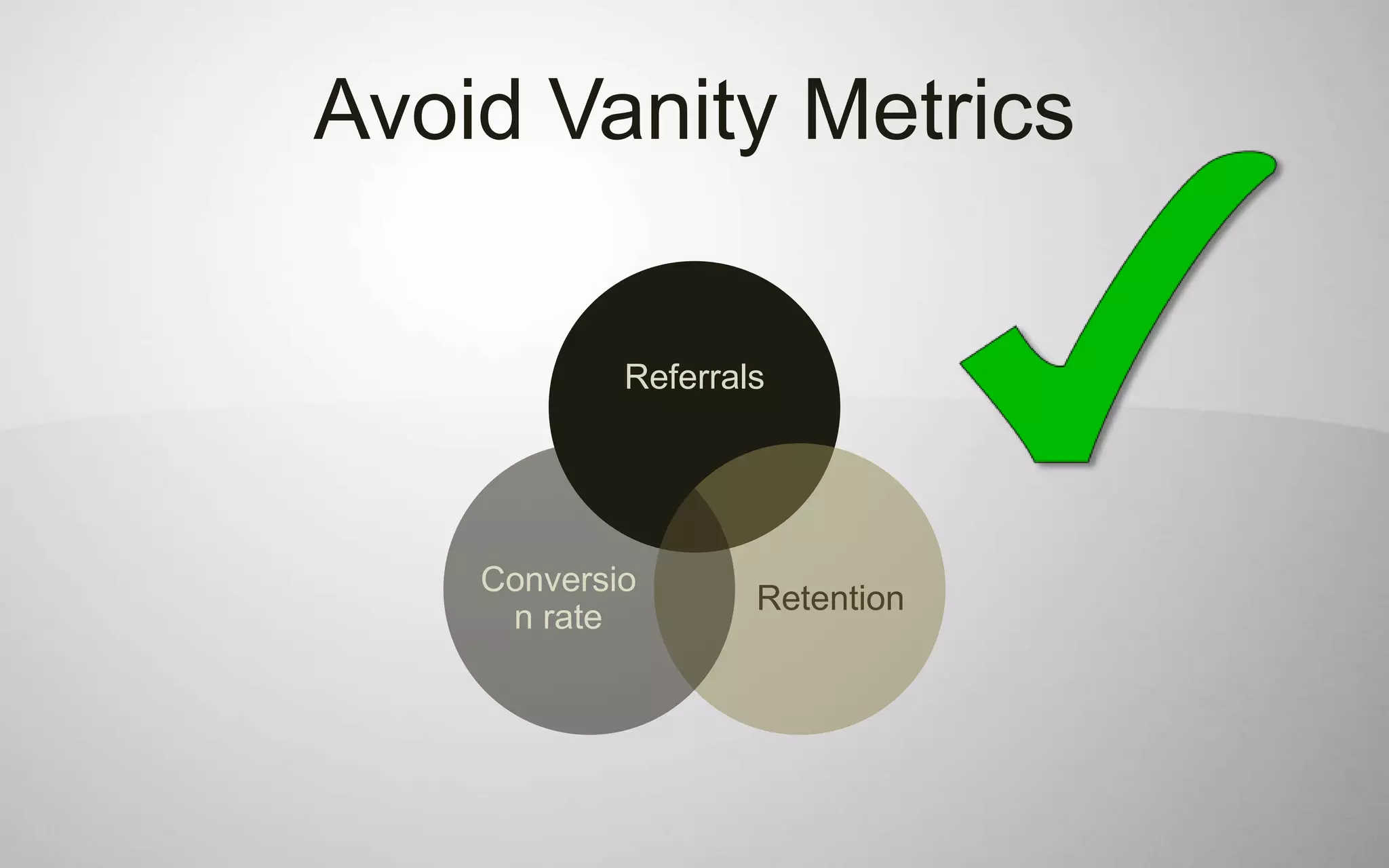
Avoid Vanity Metrics

            Referrals


    Conversio
                    Retention
     n rate
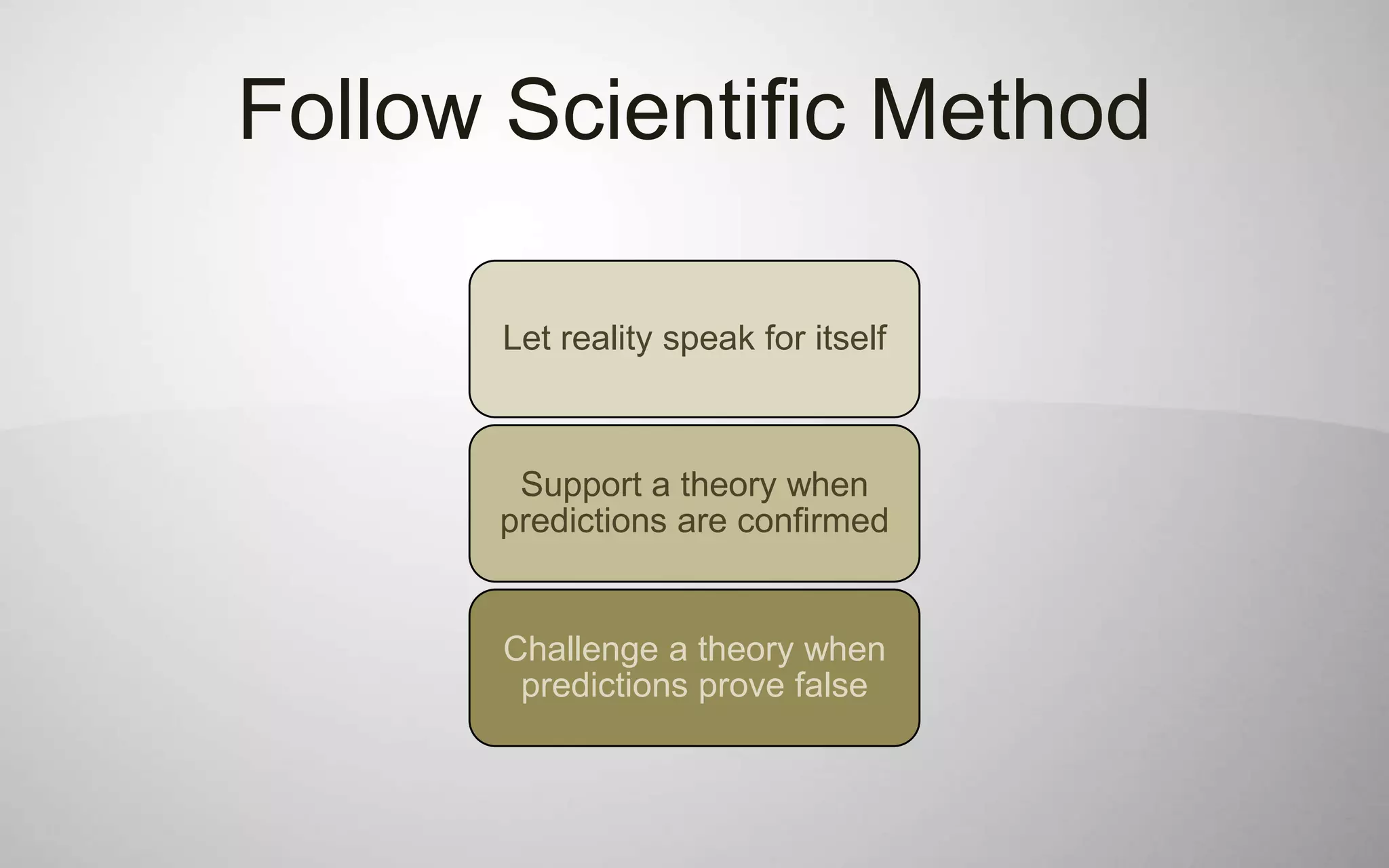
Follow Scientific Method

      Let reality speak for itself


       Support a theory when
      predictions are confirmed


      Challenge a theory when
       predictions prove false
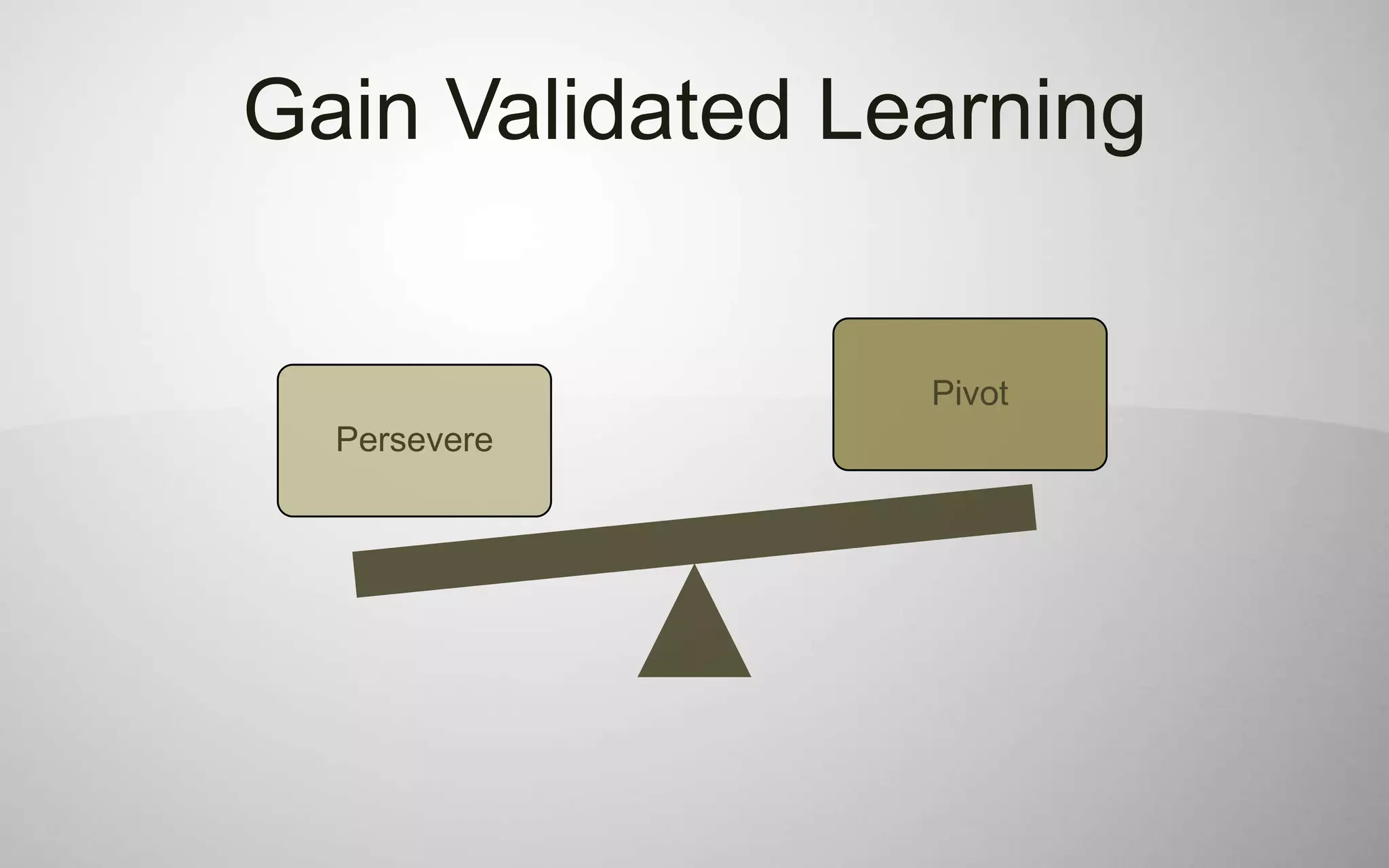
Gain Validated Learning


                 Pivot
  Persevere
ENGINEER FOR SUCCESS
Just Enough Platform


         vs
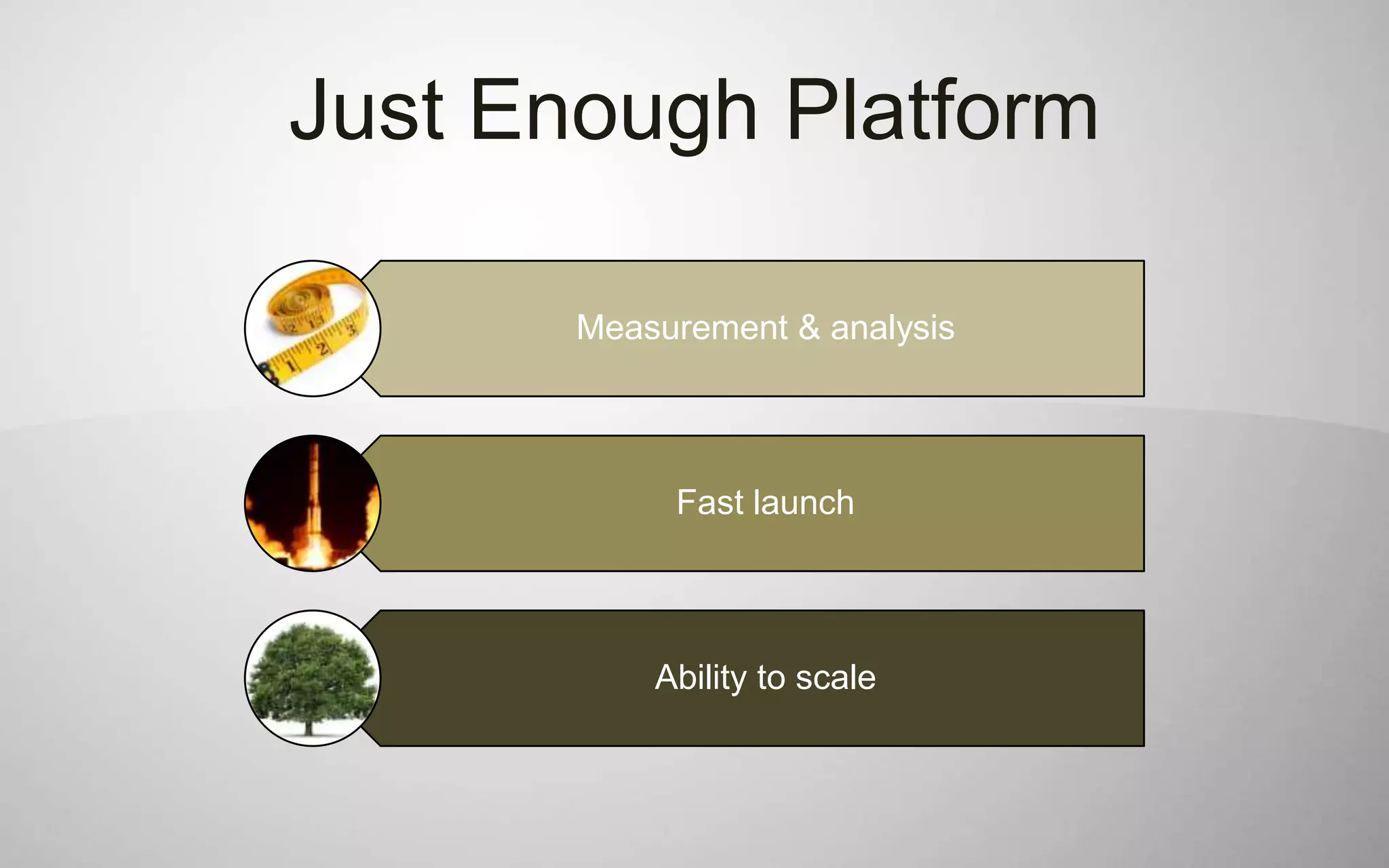
Just Enough Platform

       Measurement & analysis


            Fast launch


           Ability to scale
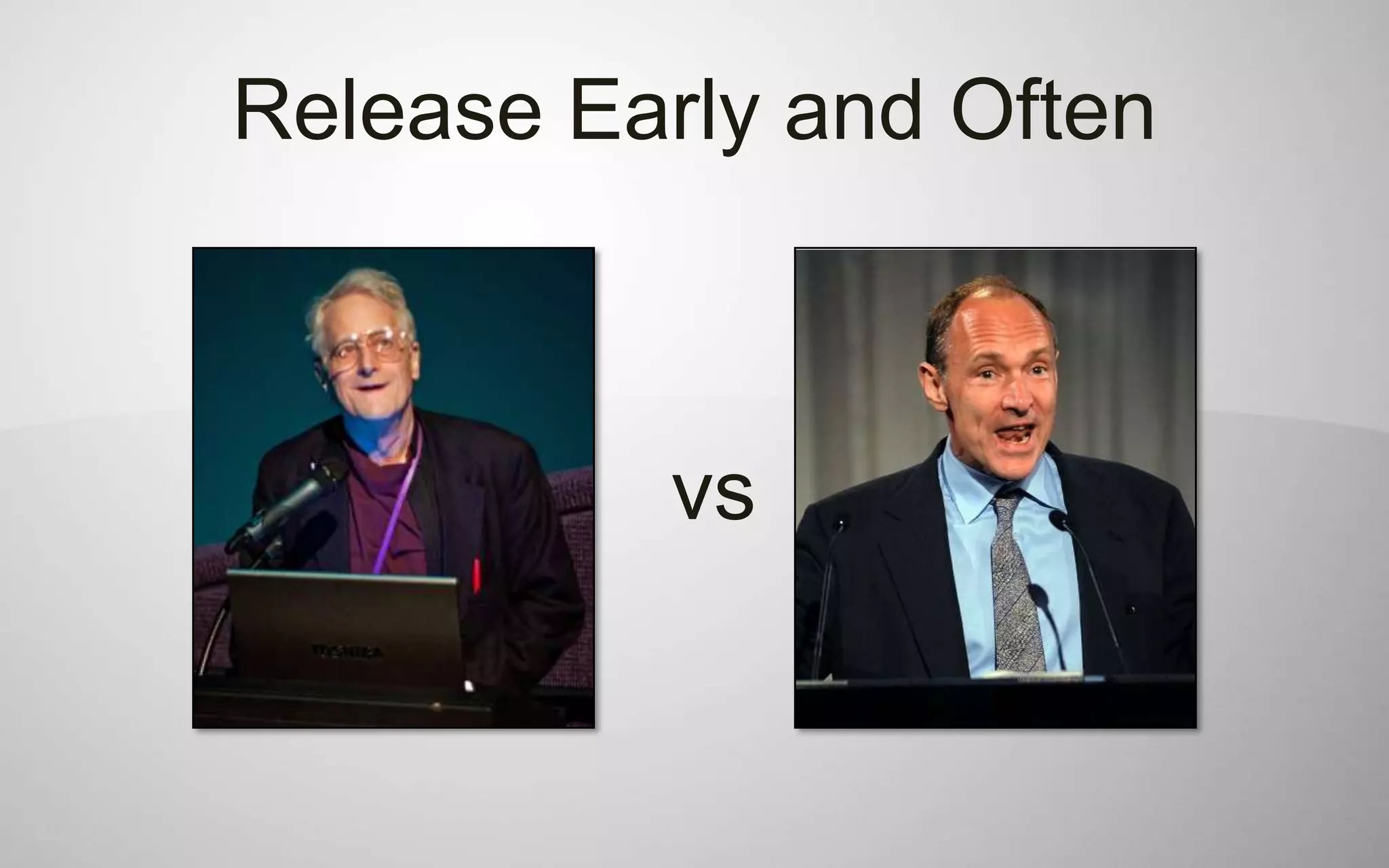
Release Early and Often


          vs
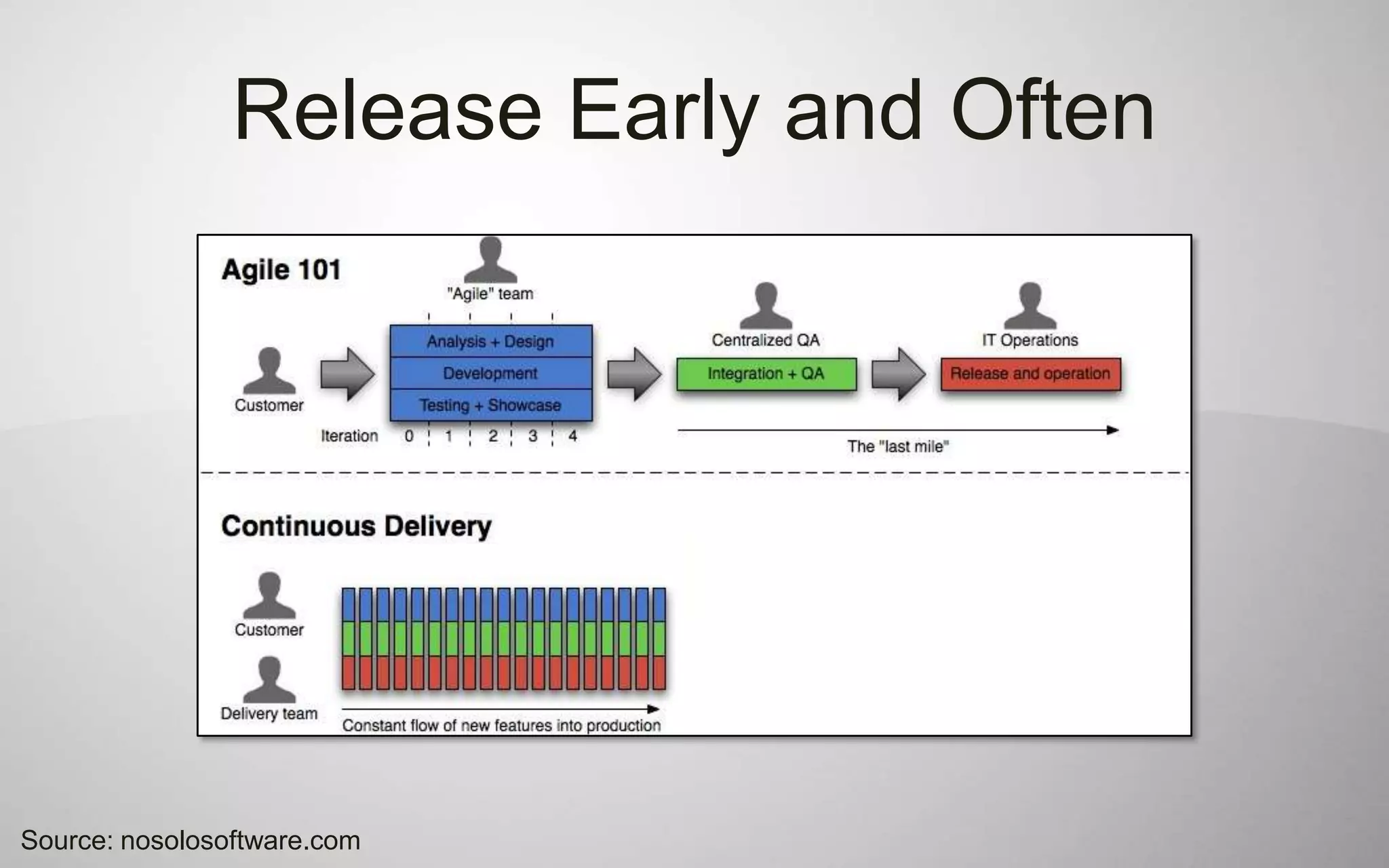
Release Early and Often


Source: nosolosoftware.com
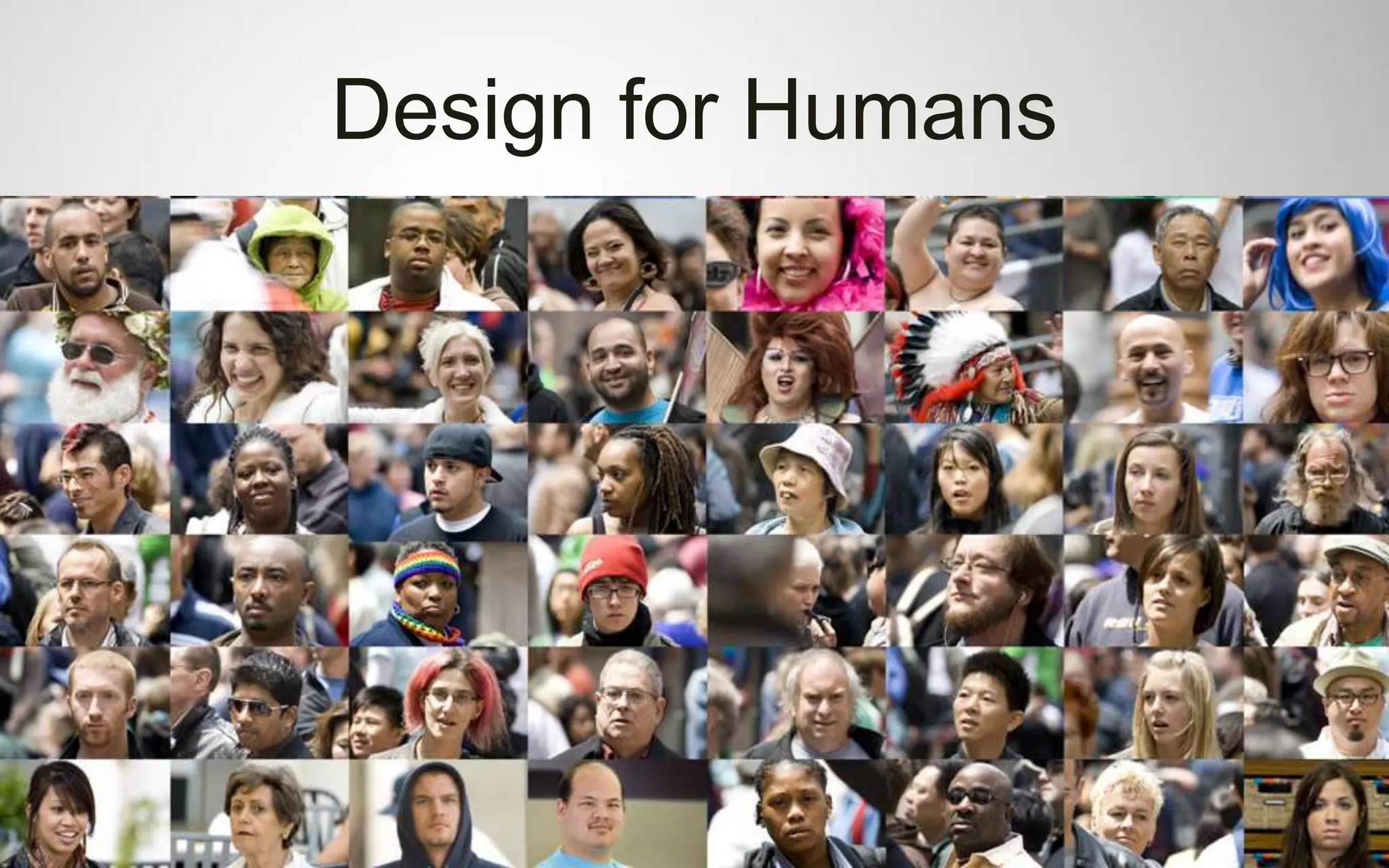
Design for Humans
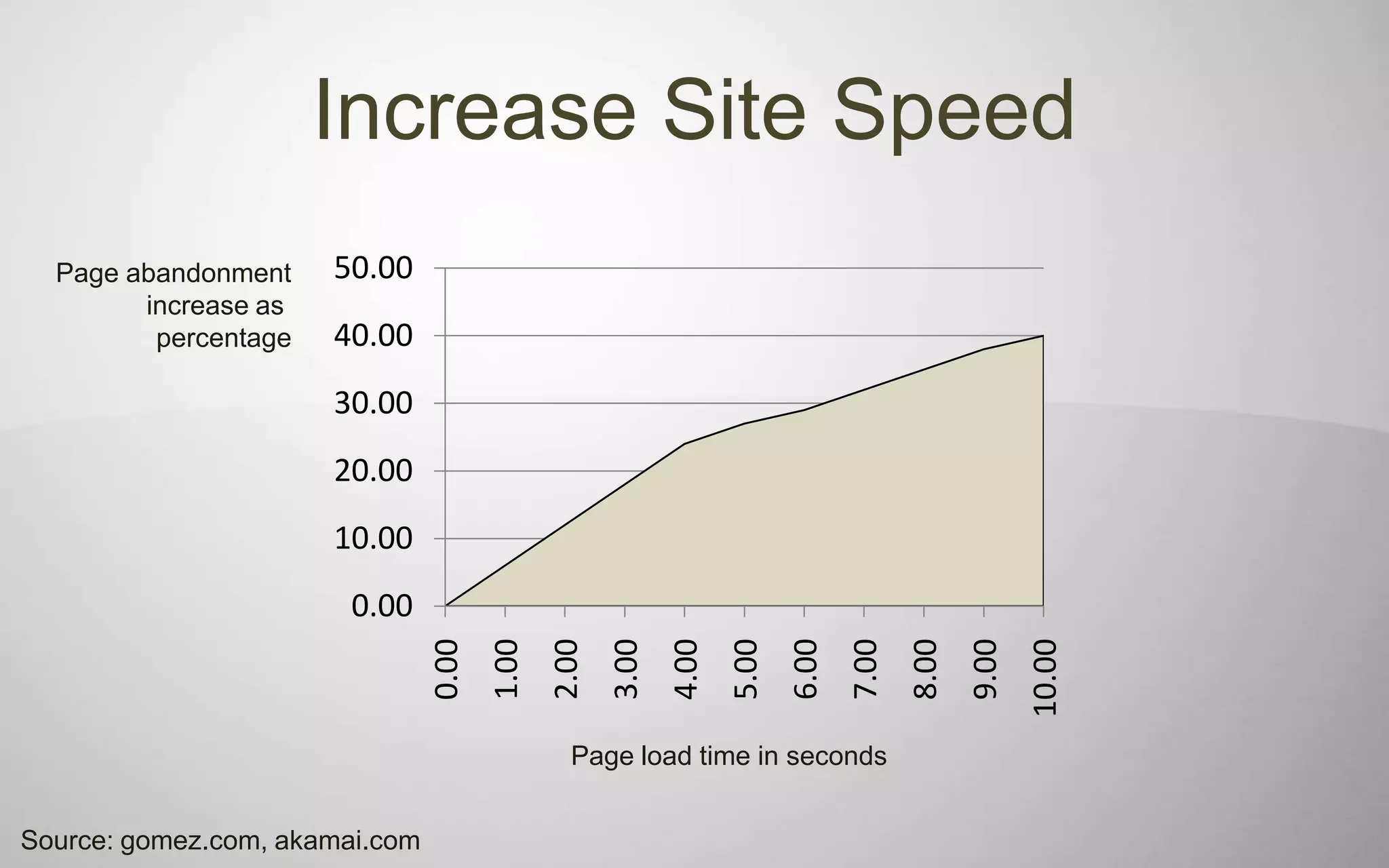
Increase Site Speed
  Page abandonment    50.00
        increase as
         percentage   40.00
                      30.00
                      20.00
                      10.00
                       0.00


                                                                          6.00
                                0.00
                                       1.00
                                              2.00
                                                     3.00
                                                            4.00
                                                                   5.00


                                                                                 7.00
                                                                                        8.00
                                                                                               9.00
                                                                                                      10.00
                                                Page load time in seconds


Source: gomez.com, akamai.com
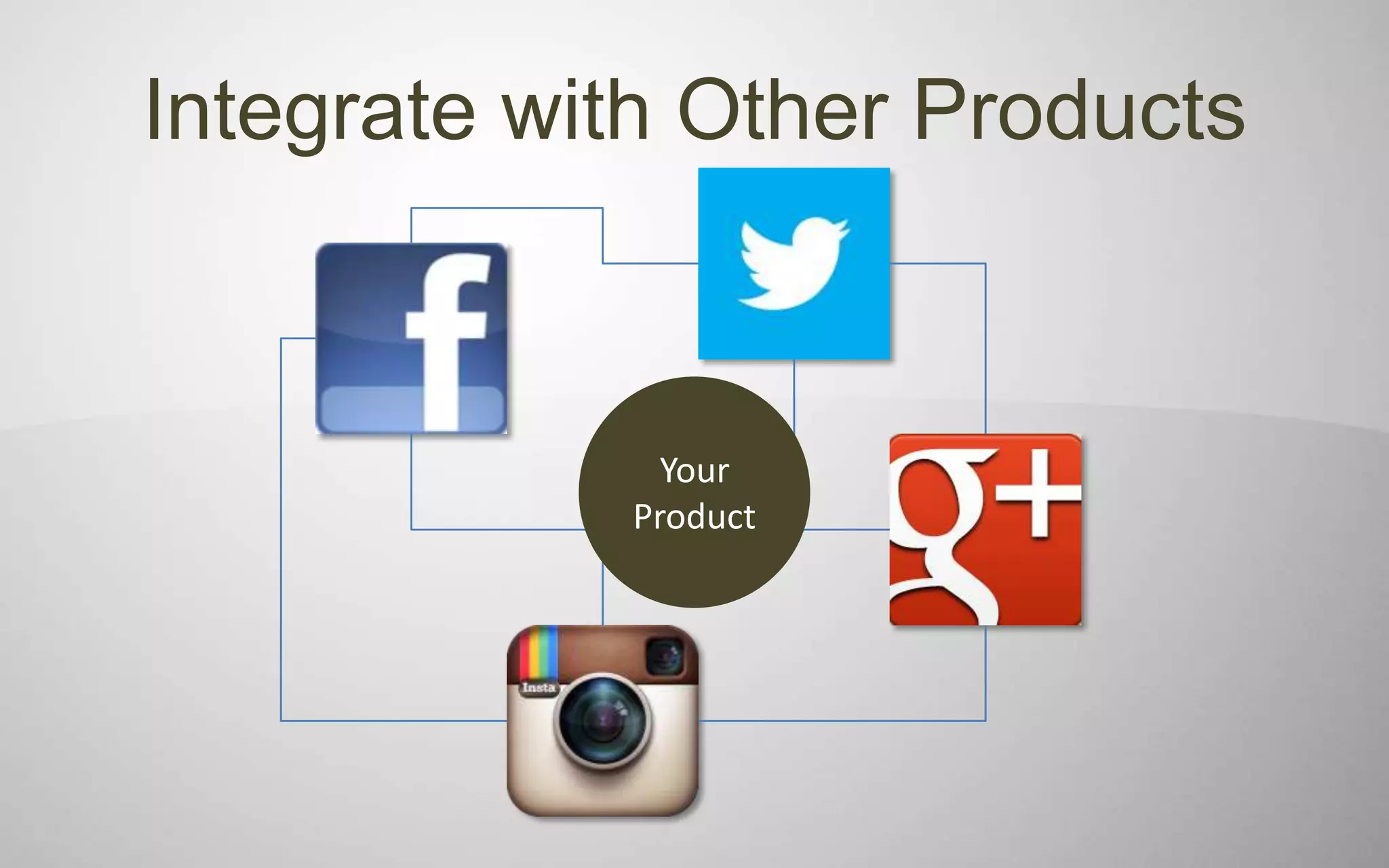
Integrate with Other Products


              Your
            Product
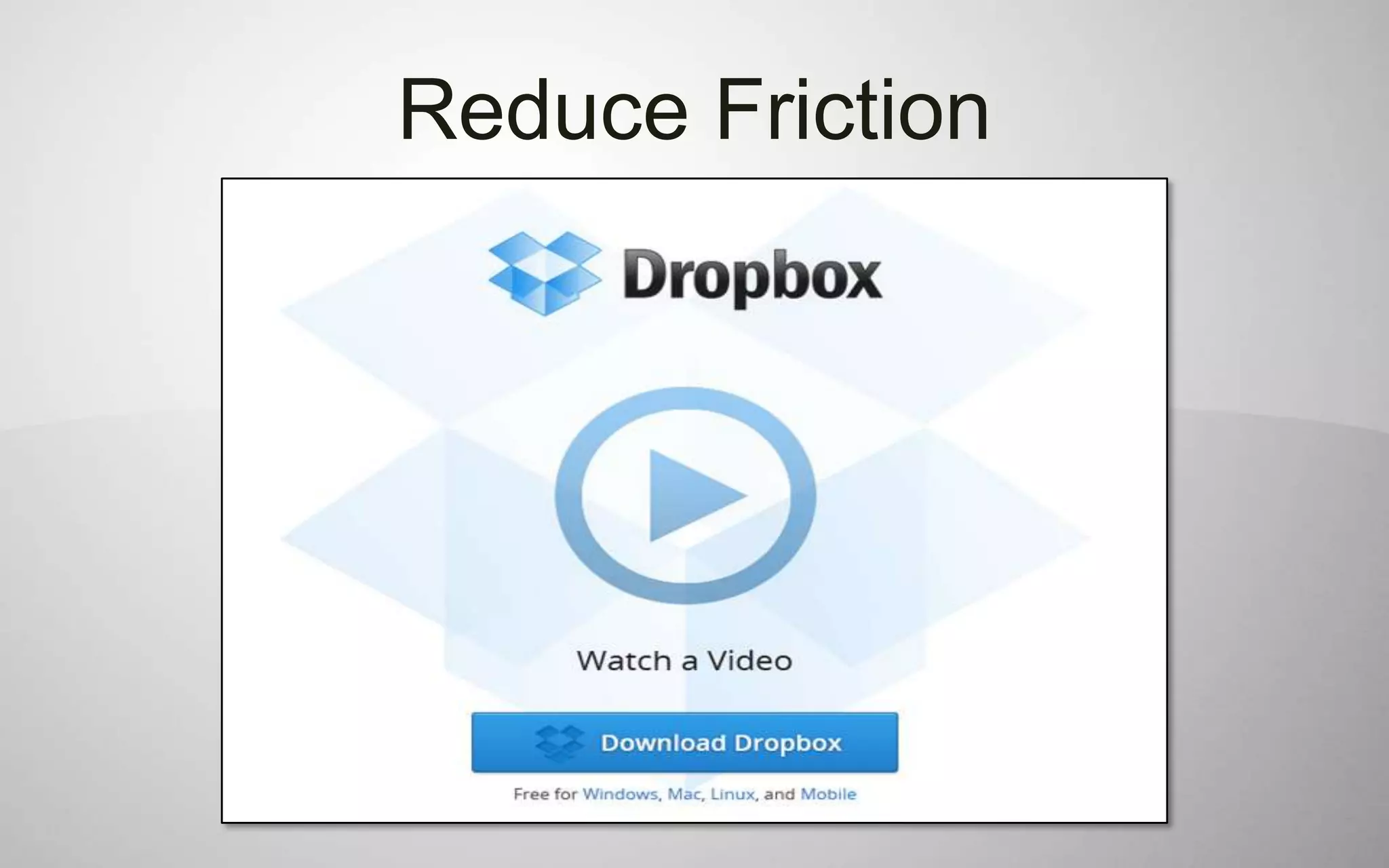
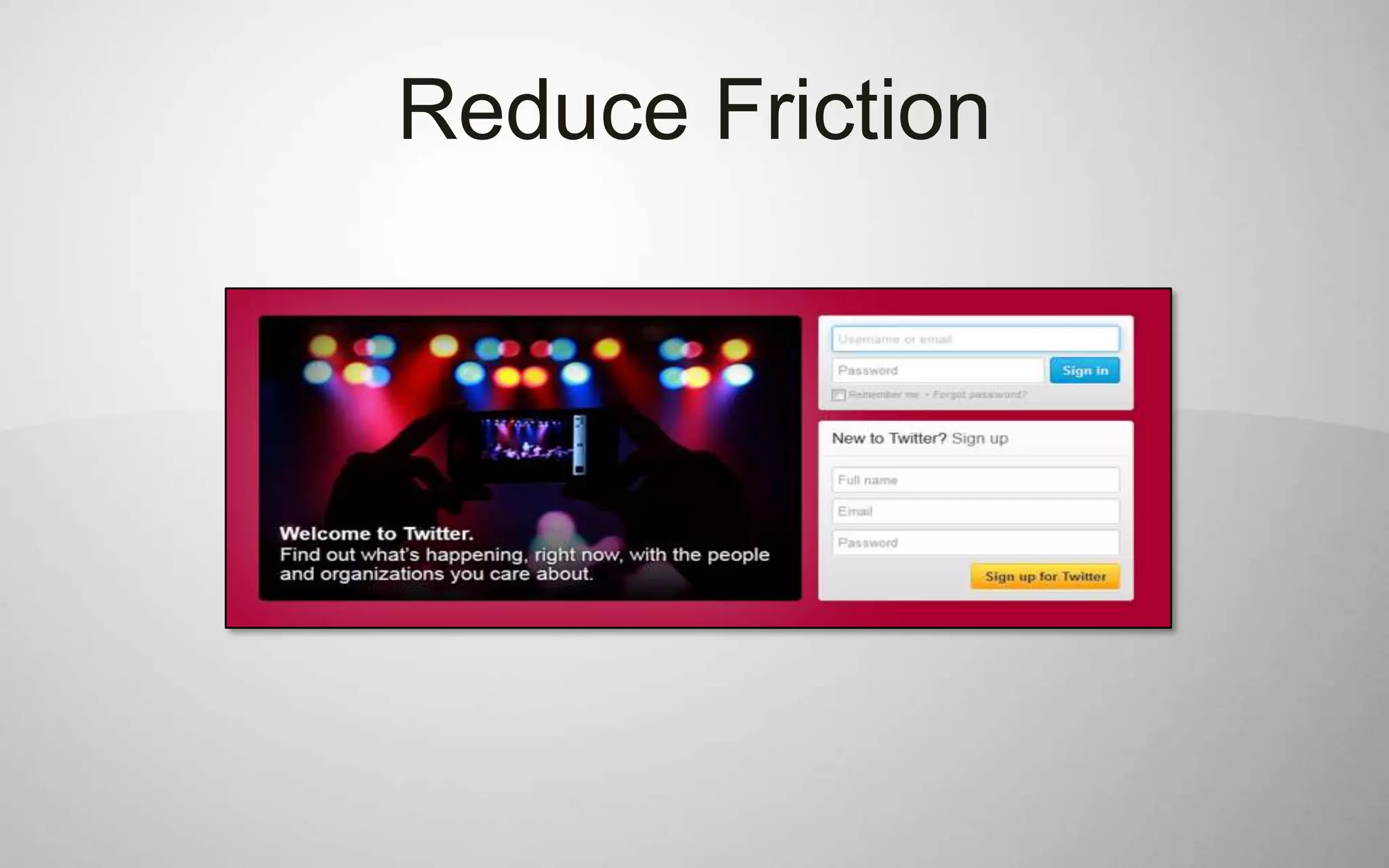
Reduce Friction
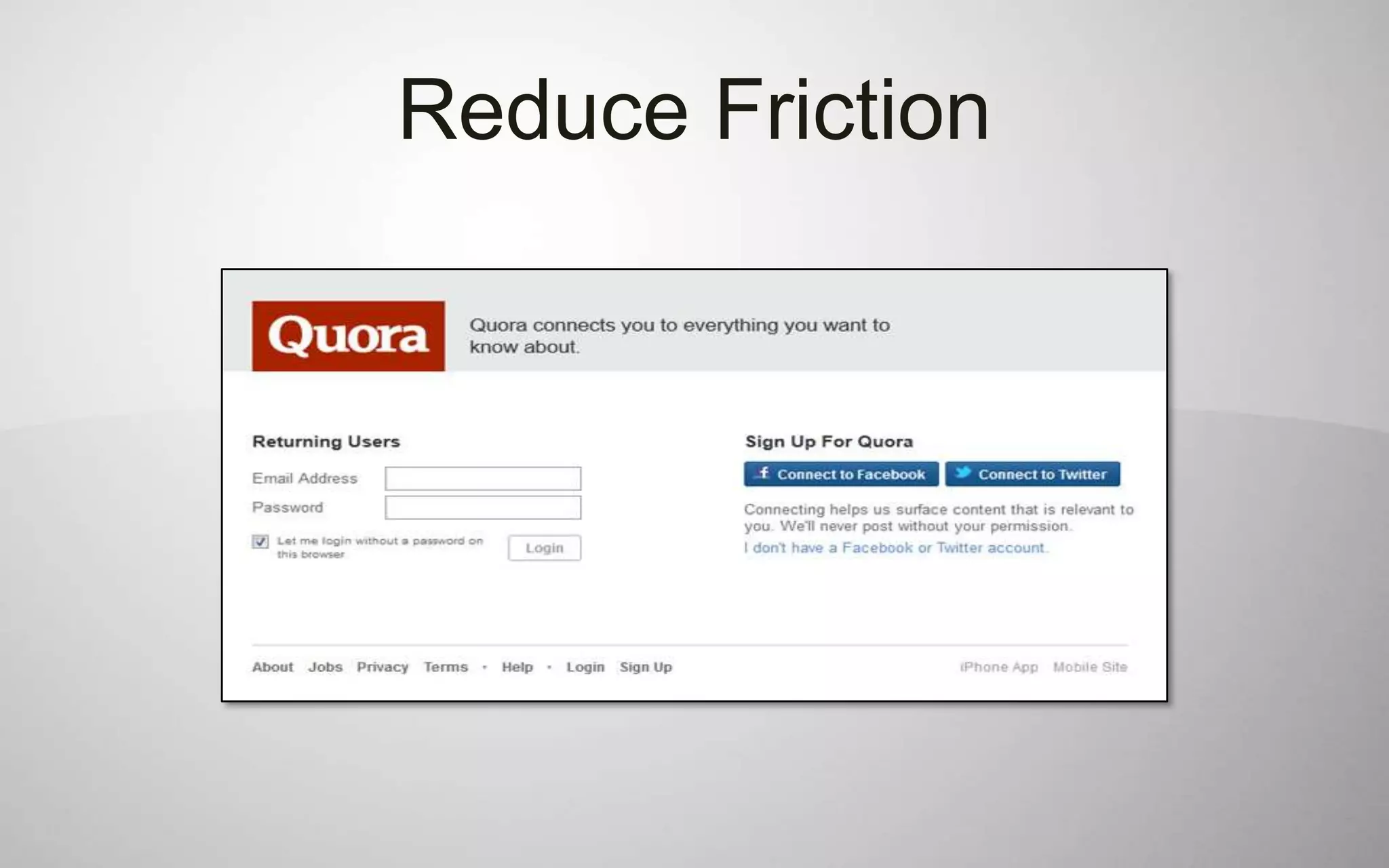
Reduce Friction
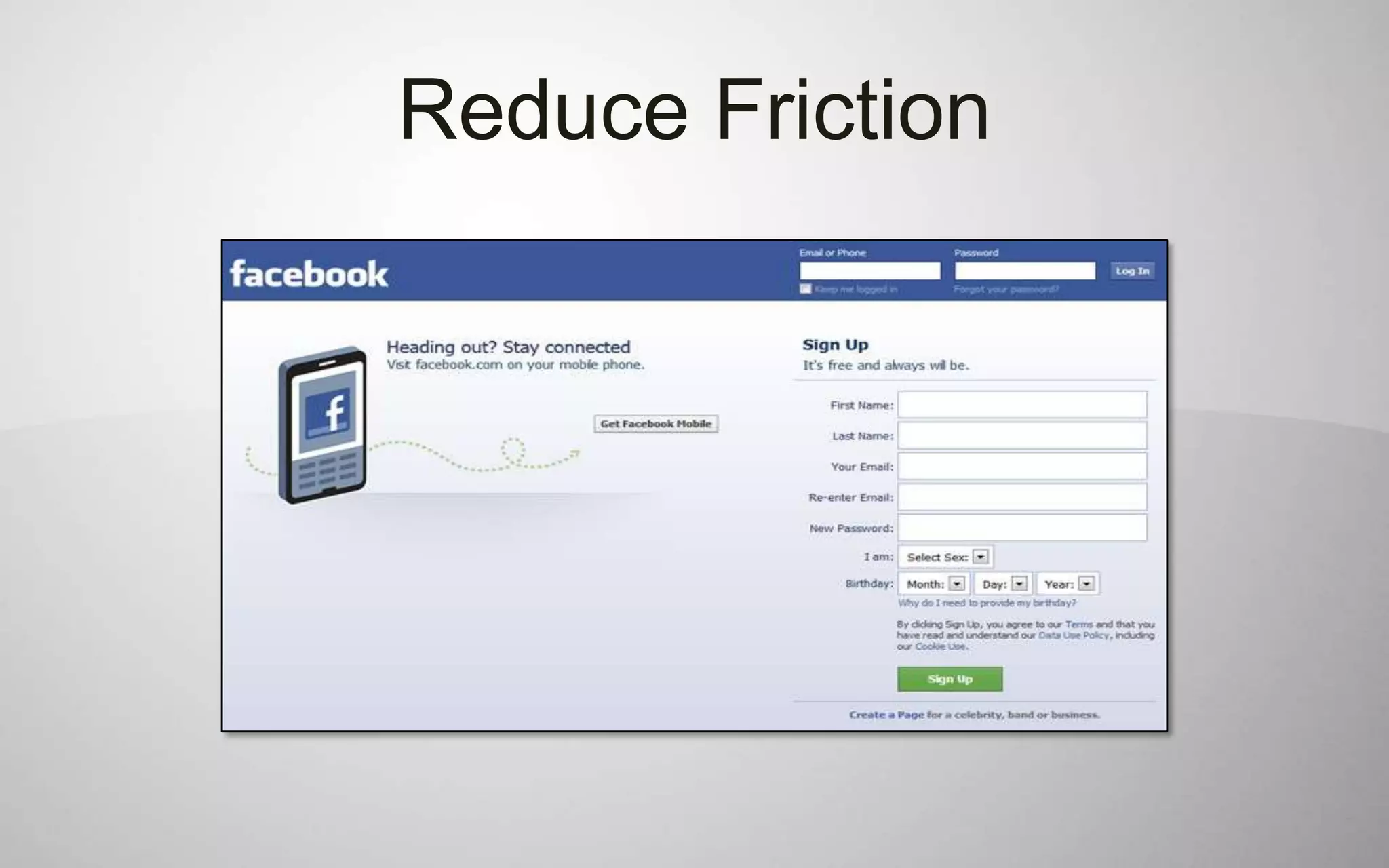
Reduce Friction
Reduce Friction
Reduce Friction
BUILD VELOCITY
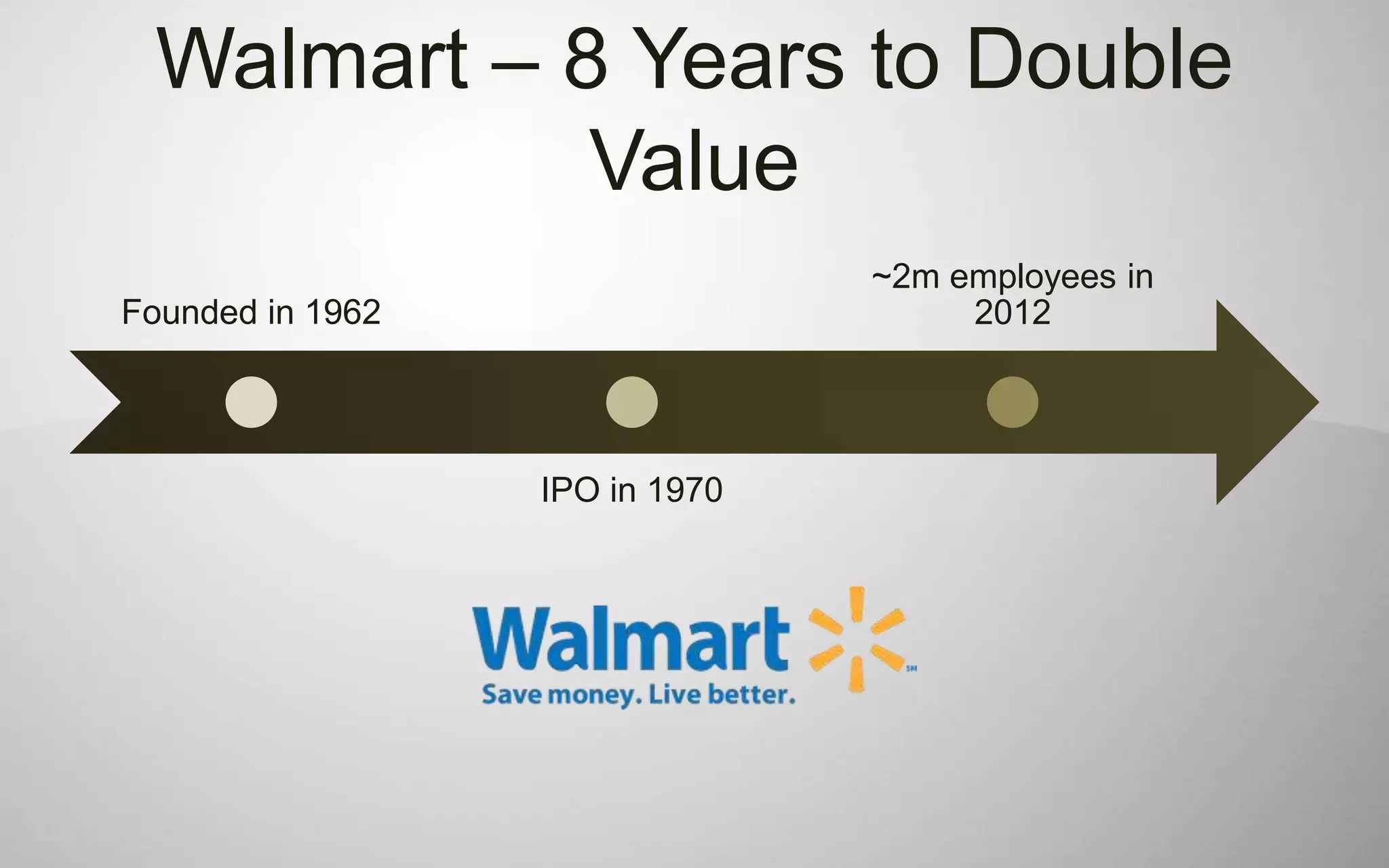
Walmart – 8 Years to Double
            Value
                                ~2m employees in
Founded in 1962                      2012


                  IPO in 1970
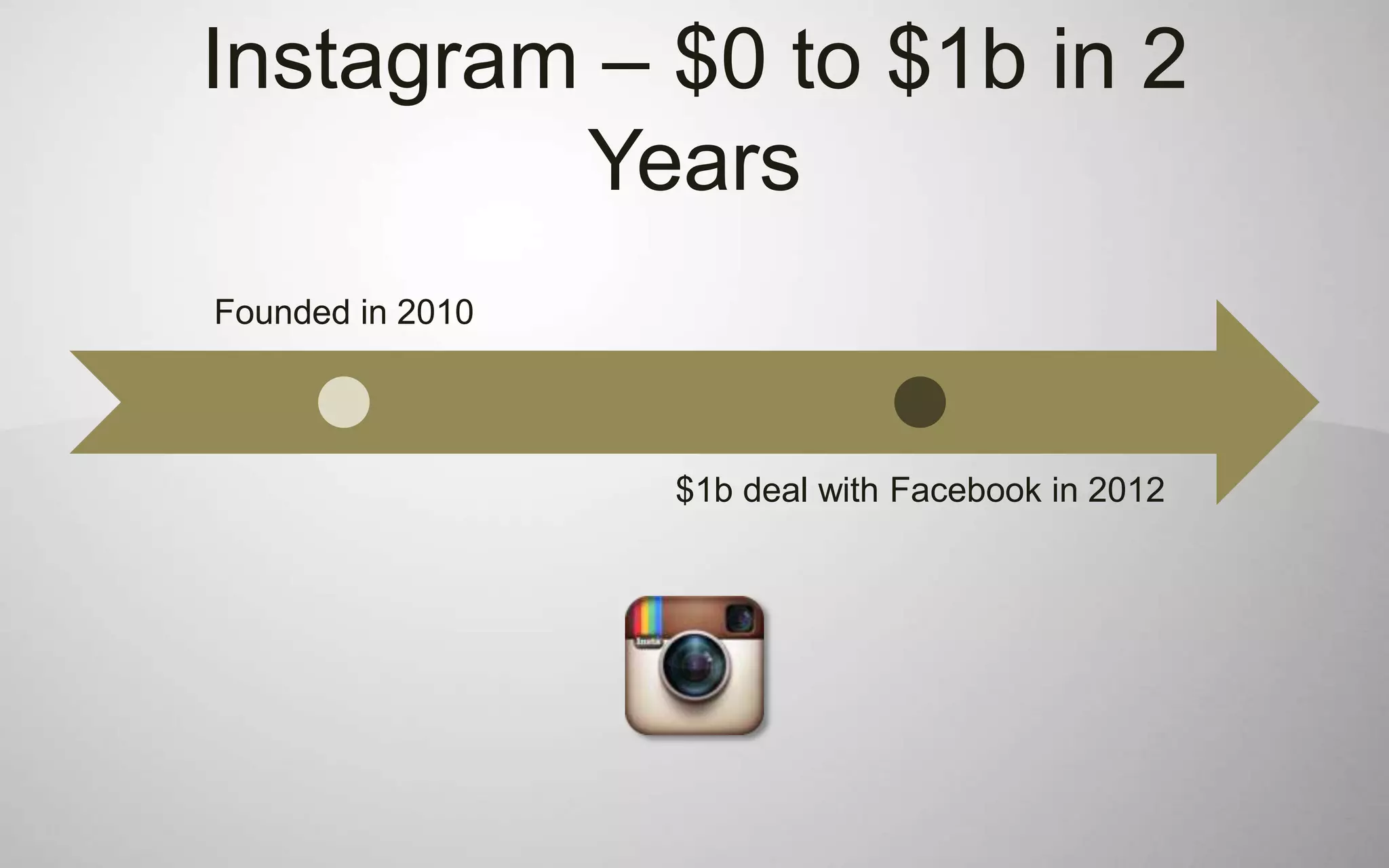
Instagram – $0 to $1b in 2
         Years
Founded in 2010


                  $1b deal with Facebook in 2012
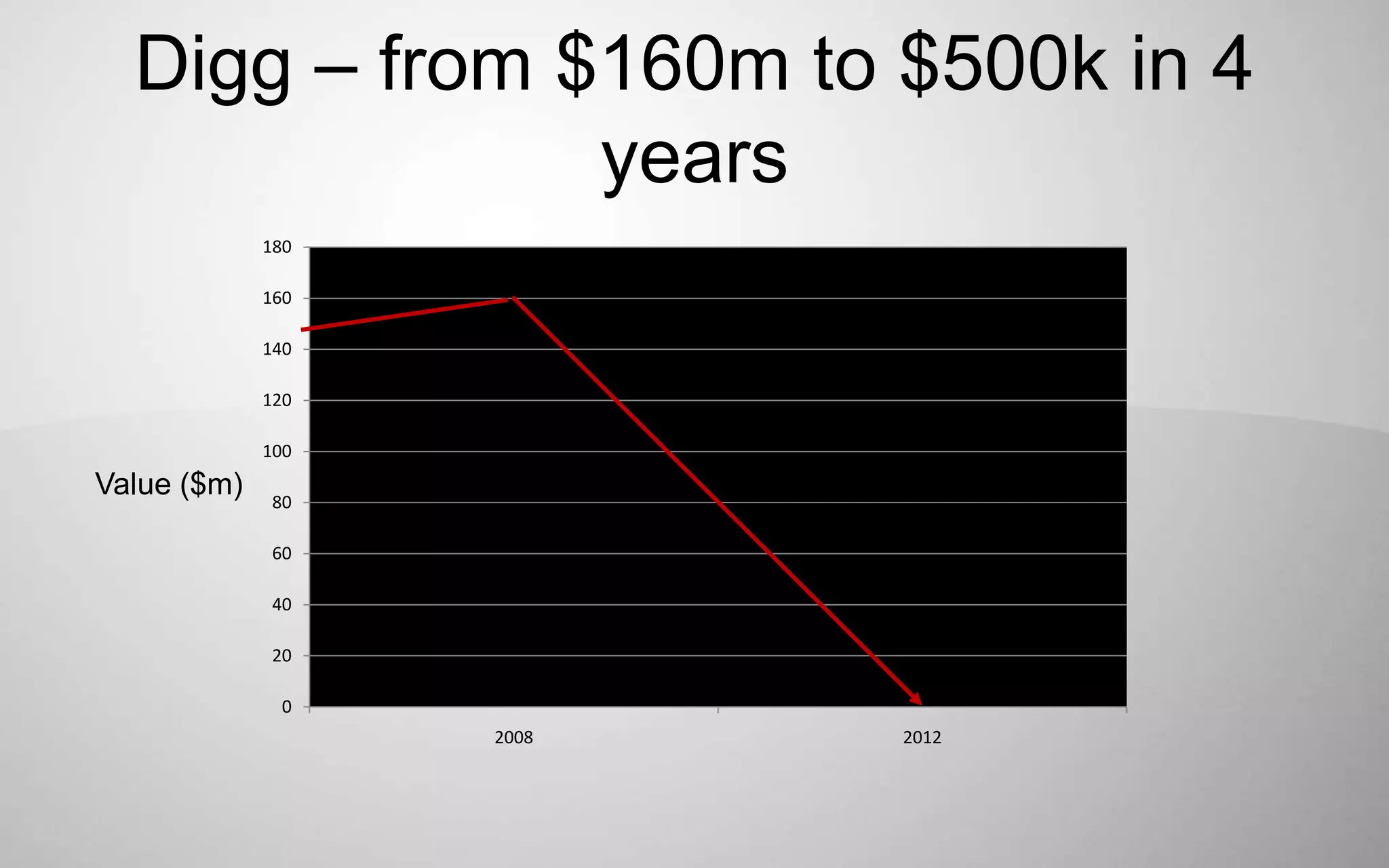
Digg – from $160m to $500k in 4
               years
             180

             160

             140

             120

             100
Value ($m)   80

             60

             40

             20

               0
                   2008   2012
Velocity – Ajaz Ahmed & Stephan
           Ollander
Velocity – Ajaz Ahmed & Stephan
               Ollander


 “The best advertising isn’t advertising”
                                  Third law of Velocity
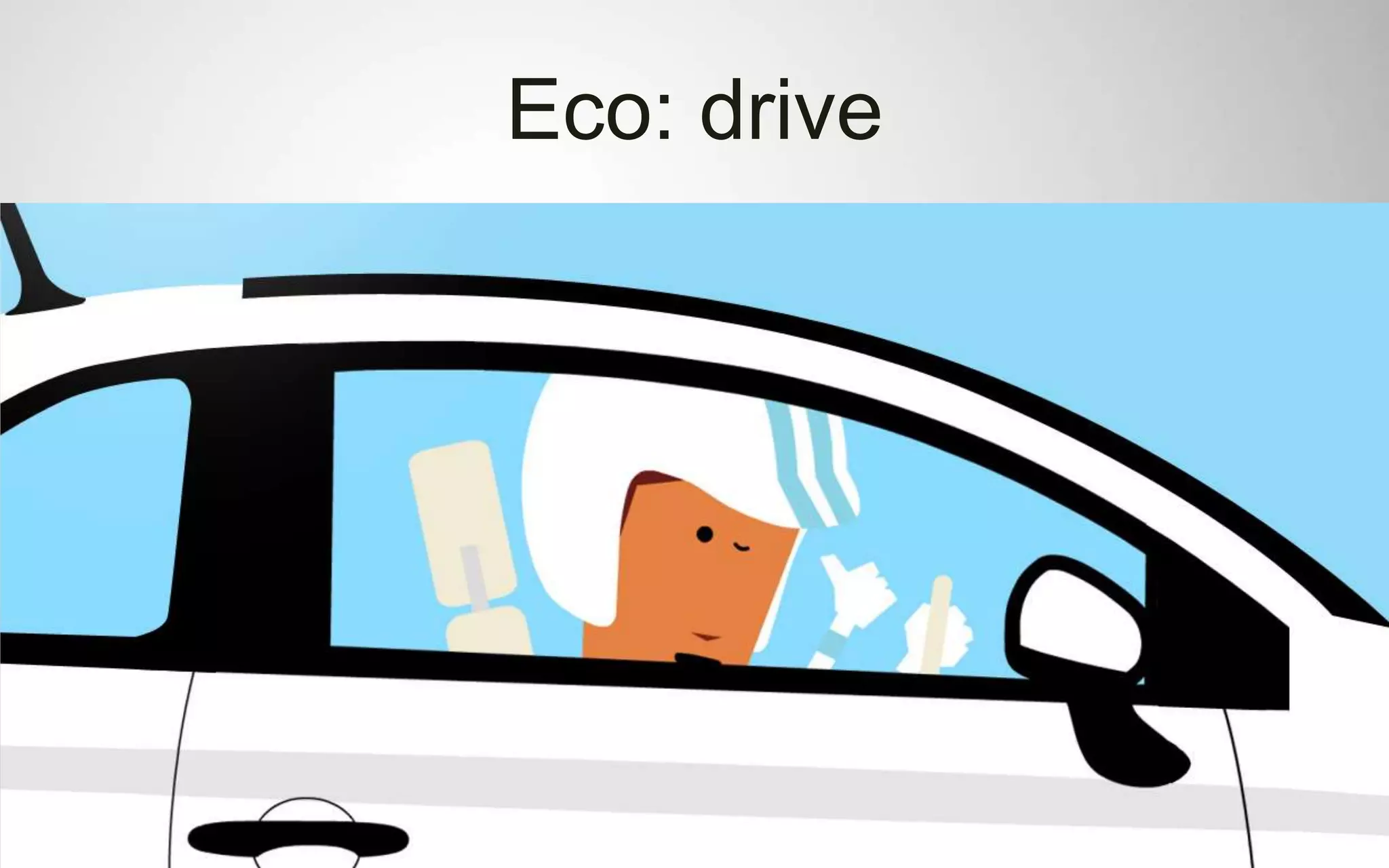
Eco: drive
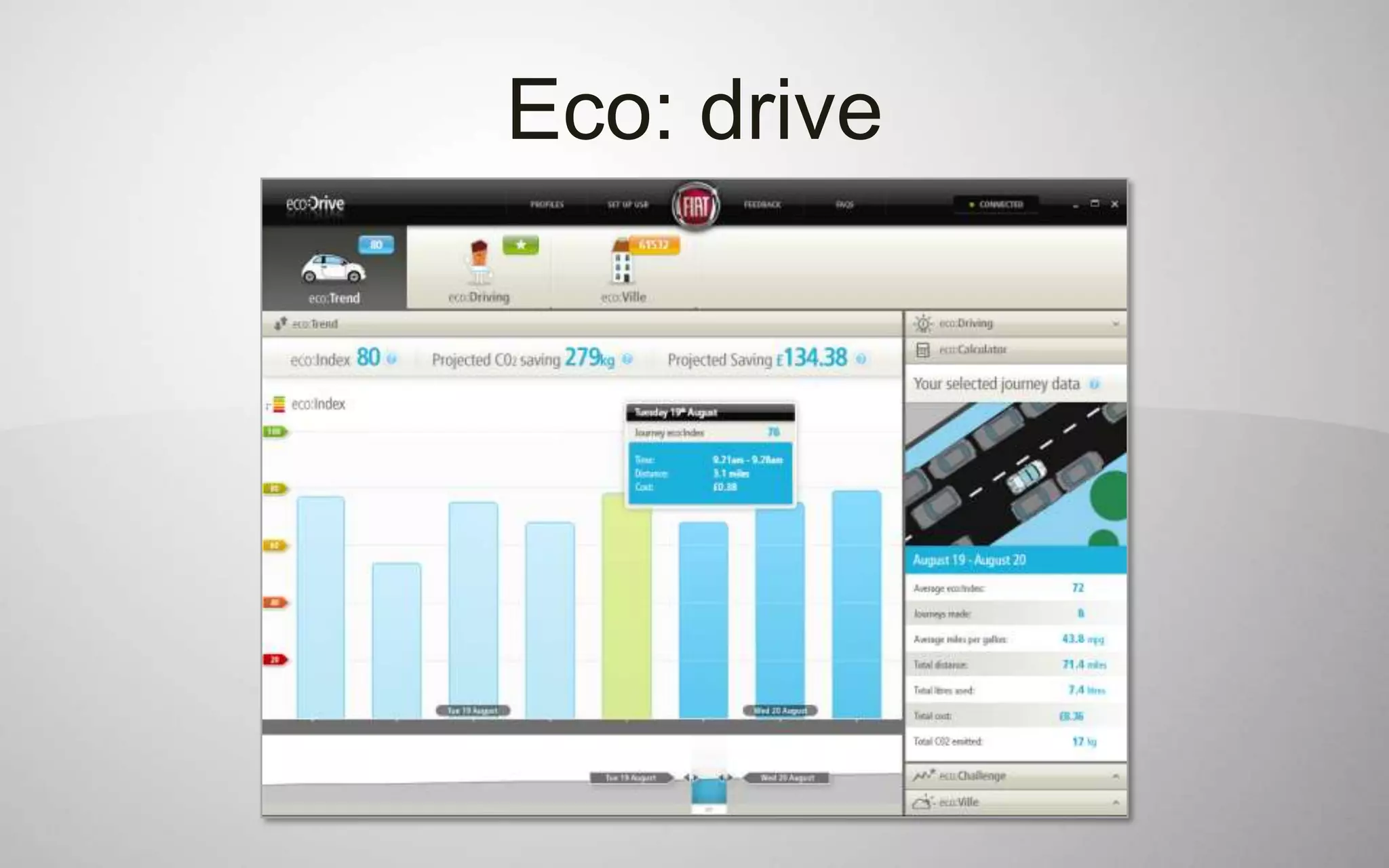
Eco: drive
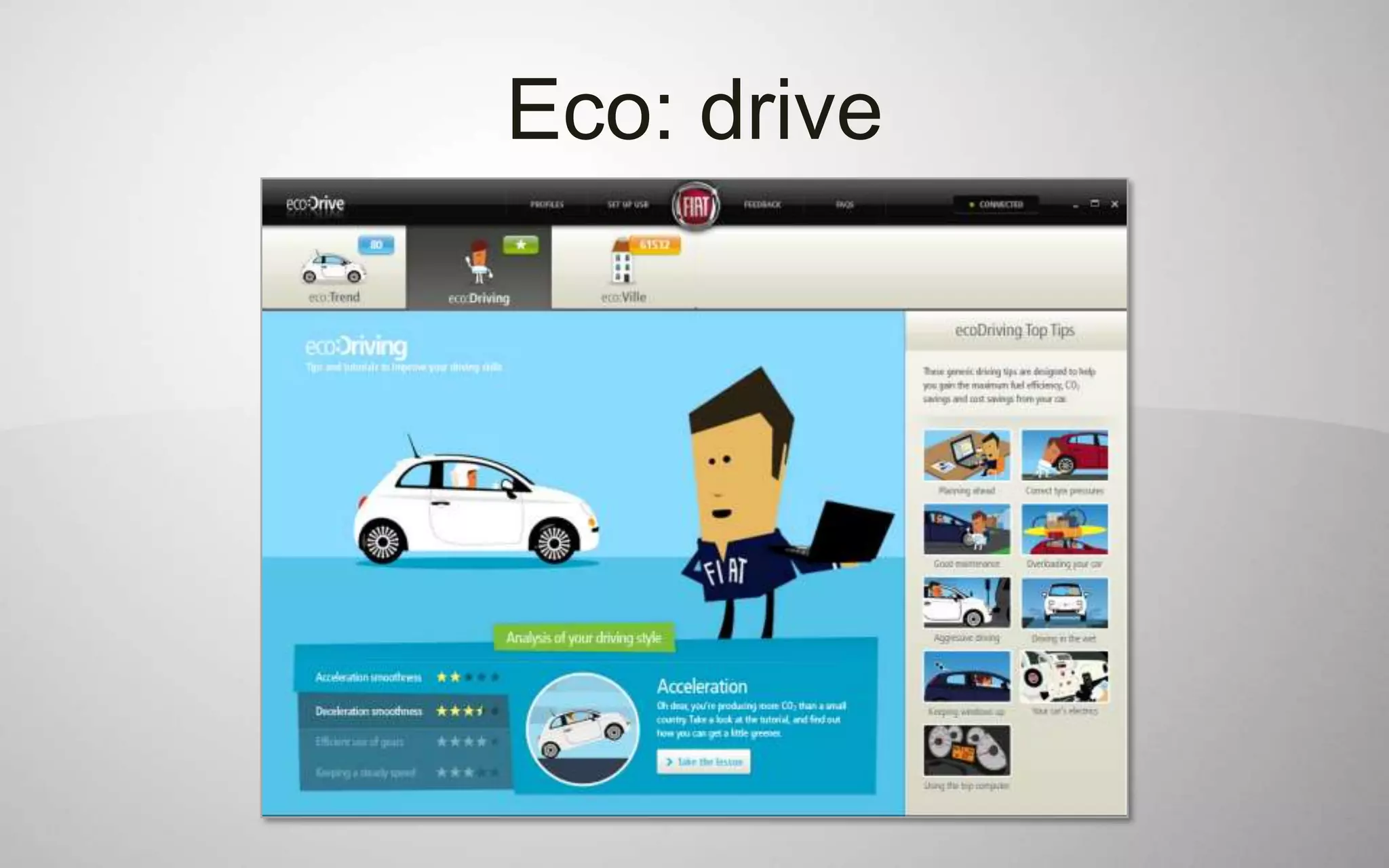
Eco: drive
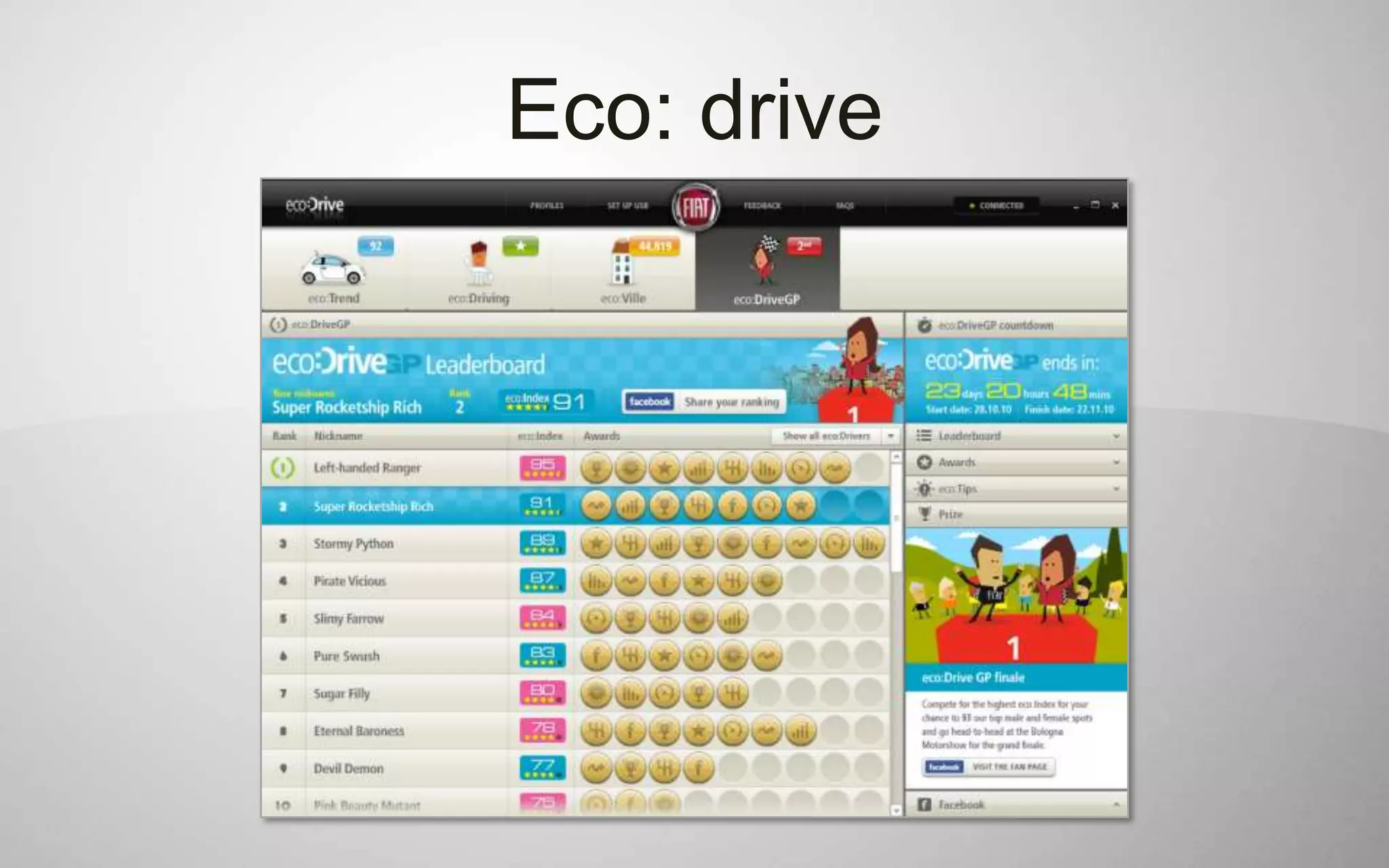
Eco: drive
Eco: drive
Eco: drive
AND FINALLY…
Make software that matters
References
•   Lean Startup, Eric Ries
•   Velocity, Ajaz Ahmed & Stephan Ollander
•   http://blog.kissmetrics.com/the-6-best-growth-hacks/
•   http://startup-marketing.com/where-are-all-the-growth-hackers/
•   http://nosolosoftware.com/

Value driven - the future of software development

Editor's Notes

  • #16 Stereo anecdote.
  • #25 Sticky – retaining users; acquisition is greater than churn. Word of mouth. Evernote.Viral – product use requires acquisition. Social networks. Facebook.Paid – average cost of customer acquisition is less than revenue generated by customers. Software licenses. Atlassian.
  • #31 Three rules:Just enough platformRelease early and oftenDesign for humans
  • #32 NHS National Programme for IT platform, started in 2002, centralised health system/patient records. Nearly 10 years and £12b later, scheme scrapped.Facebook, started in 2004 for one university, PHP, 8 years later has over 900m users.
  • #34 These guys both invented the world wide web. On the left, Ted Nelson, who is famous for running the IT project with the largest delay in history. In 1960, he started “Project Xanadu”, which invented the concept of Hypertext. The first release – incomplete, and buggy – went live in 1998; version “1.0” was released in 2010. Wired magazine called the Xanadu project “the longest running vapourware project in the history of the computer industry”.The ideas behind project Xanadu were revolutionary, and could have changed the world if they’d been turned into a product.The guy on the right is Tim Berners-Lee, who invented HTTP; he was a physicist working at CERN, and came up with the idea for the HTTP protocol in March 1989; in December 1990, he released version 0.1, along with a very basic web browser. 9 months later, the first ever website went live. We all know what happened next. Facebook announced recently that they have gone to a release schedule that allows 2 releases per day. On a platform that serves nearly a billion users. Flickr releases around 50 times per day. Release early, release often!
  • #47 First major site to feature socially ranked newsDidn’t fully understand why it was workingFailed to innovatePlatformproblems
  • #48 Stephan Ollander – Vice President of Digital Sport for NikeAjaz Ahmed – founder of AKQA“Users are no longer interested in plug and play, they just want to play”
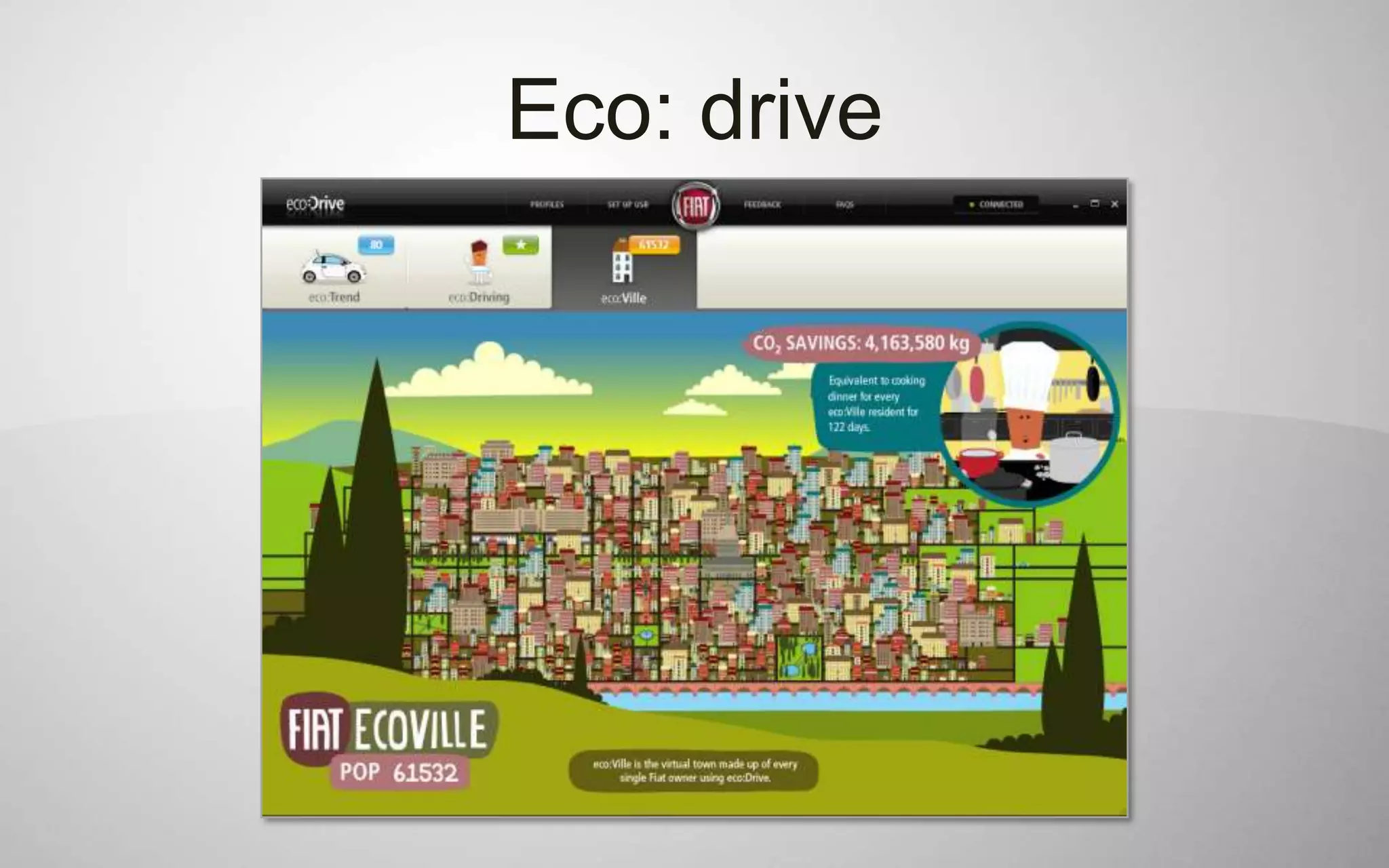
  • #50 Eco:drive is a product we developed for the automotive manufacturer Fiat. It allows car drivers to download data collected by their car as they are driving, which they can then analyse later. Eco:drive started development 4 years ago, and is still under development. In that time, there have been 28 public releases.
  • #51 The team and the client had lots of ideas around features that they wanted including in the product. The challenge was deciding on a minimal set of features to be included in the initial release, allowing the team to quickly and reliably get a product to market. So after three months the team launched a product with a limited feature set. This feature set included a mechanism for easy updating, a mechanism for analysing data, support for two vehicles, and two lessons. A lesson is a type of recommendation on efficiency gains, e.g. acceleration, deceleration, speed and braking. This initial product was a desktop application.
  • #52 Why doesn’t this work for my model?More lessons.After the initial release, the team listened to customer feedback. The main feedback at this point was “Why doesn’t this work for my model?”, and “We’d like more lessons”. So over the next few releases, the team concentrated on increasing support for more models, and also added the remaining two lessons.
  • #53 Focus groups – non-compete. Feedback – compete.Produced Eco:drive GP.The team had initially used focus groups to ascertain what users would want from the Eco:drive platform, and they had indicated that this was not a product that should be framed by a competitive environment. However, feedback gained from real users using the real product was different, and indicated that users wanted to compete. This makes the important point that whilst focus groups can be a useful way to gather information prior to a product launch, there is no substitute for observing the behaviour of real users in the wild. The team took this information on board, and concentrated on producing Eco:drive GP, which allowed users to share their data in a competitive context.
  • #54 Users wanted more community.Built centralised platform.Penetration into web/mobile markets.Brand alignment with ecologically sound principles.Users didn’t care, wanted cost savings. Brand realigned.Building on the product that the team had developed so far, observing user behaviour, and soliciting feedback, it became clear that users wanted more of a community environment. There were obvious benefits to the brand in having more control, so the team built a centralised platform. This platform enabled penetration into both mobile and web markets, but also allowed the client to create stories aligning the brand with ecologically sound principles. However, once again being able to measure and record user behaviour and solicit feedback led to valuable insights. Users didn’t really care about ecologically sound principles, they cared much more about cost savings. The tight build-measure-learn feedback loop that the team were iterating over meant that it was easy for the client to adapt to this feedback and realign the brand with financial savings.
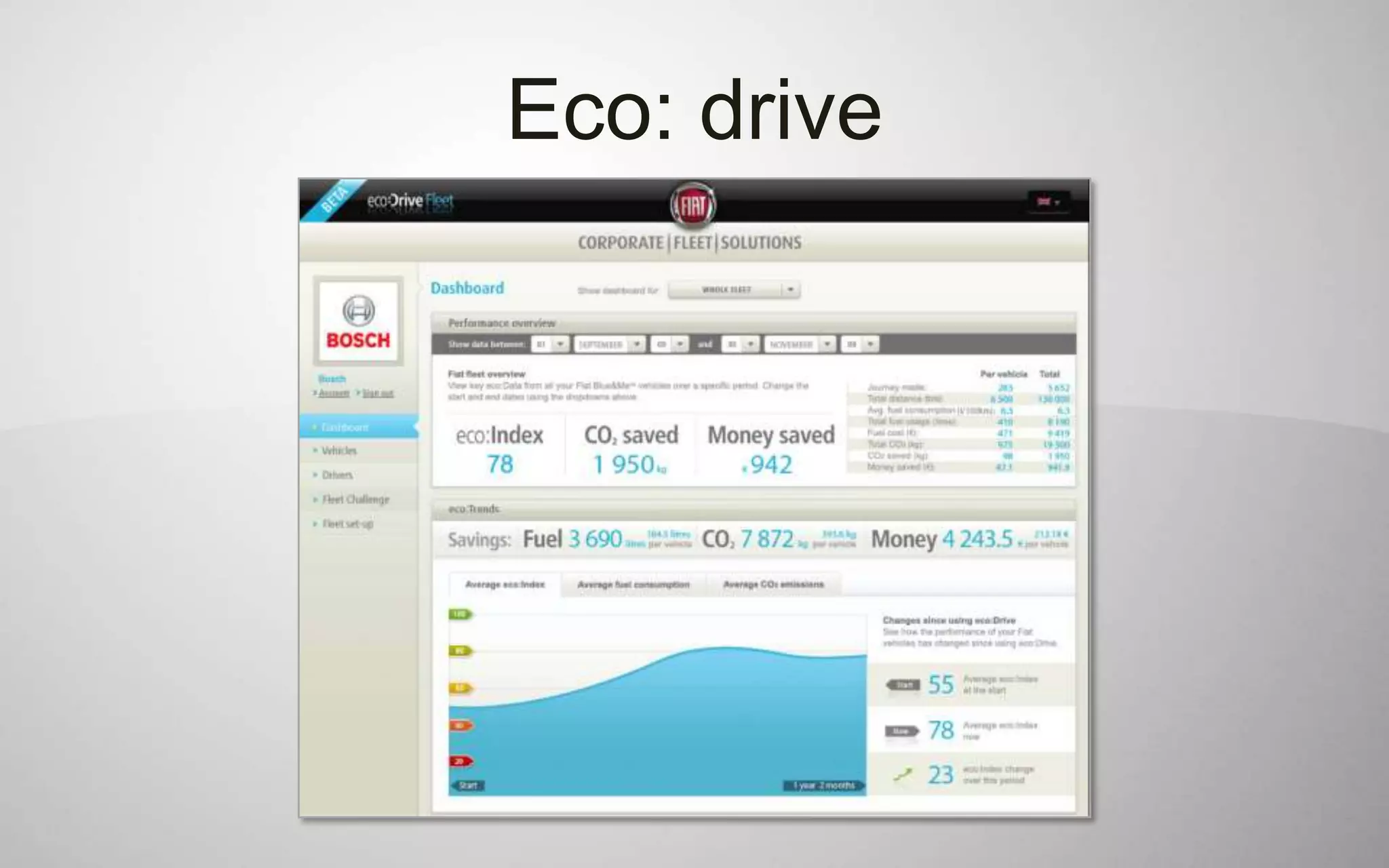
  • #55 The client also had feedback – how do we use this product to sell cars? So the team built Eco:drive fleet, which enables businesses to manage their fleet of vehicles using the Eco:drive product. This isn’t the end of the story as Eco:drive is still being developed, I can give you an update next year on what we’ve done since!
  • #57 Keeping it leanEngineer for successBuild velocityAs software developers concentrate on creating value for the user, with behaviour being a means to an end.