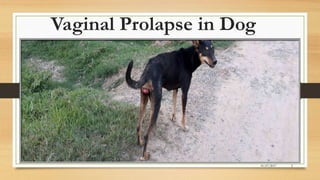
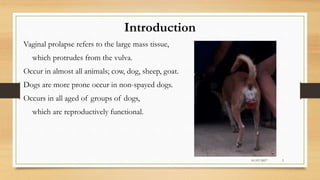
Vaginal prolapse in dogs is characterized by a protruding tissue mass from the vulva, often occurring in non-spayed, reproductively functional females during heat or pregnancy. The condition can result from estrogen stimulation or vaginal hyperplasia and presents in three stages, with varying clinical symptoms and treatment options. Diagnosis typically involves a physical examination, and while stage I may require minimal intervention, more advanced stages necessitate surgical treatment to prevent complications.