UX in an Agile World
Fadi Stephan
What is your
experience
with design on
Scrum teams?
What worked?
What didn’t work?
What challenges have
you experienced?
Technology Consultant
Agile Trainer & Coach
Founder of Kaizenko
Transform | Innovate | Deliver
Fadi
Stephan
www.kaizenko.com
in/fadistephan
KAIZENKO
KAIZENKOLLC
KAIZENKO
KAI.ZEN.KO
@FadiStephan
Making design work
with Scrum can be
hard.
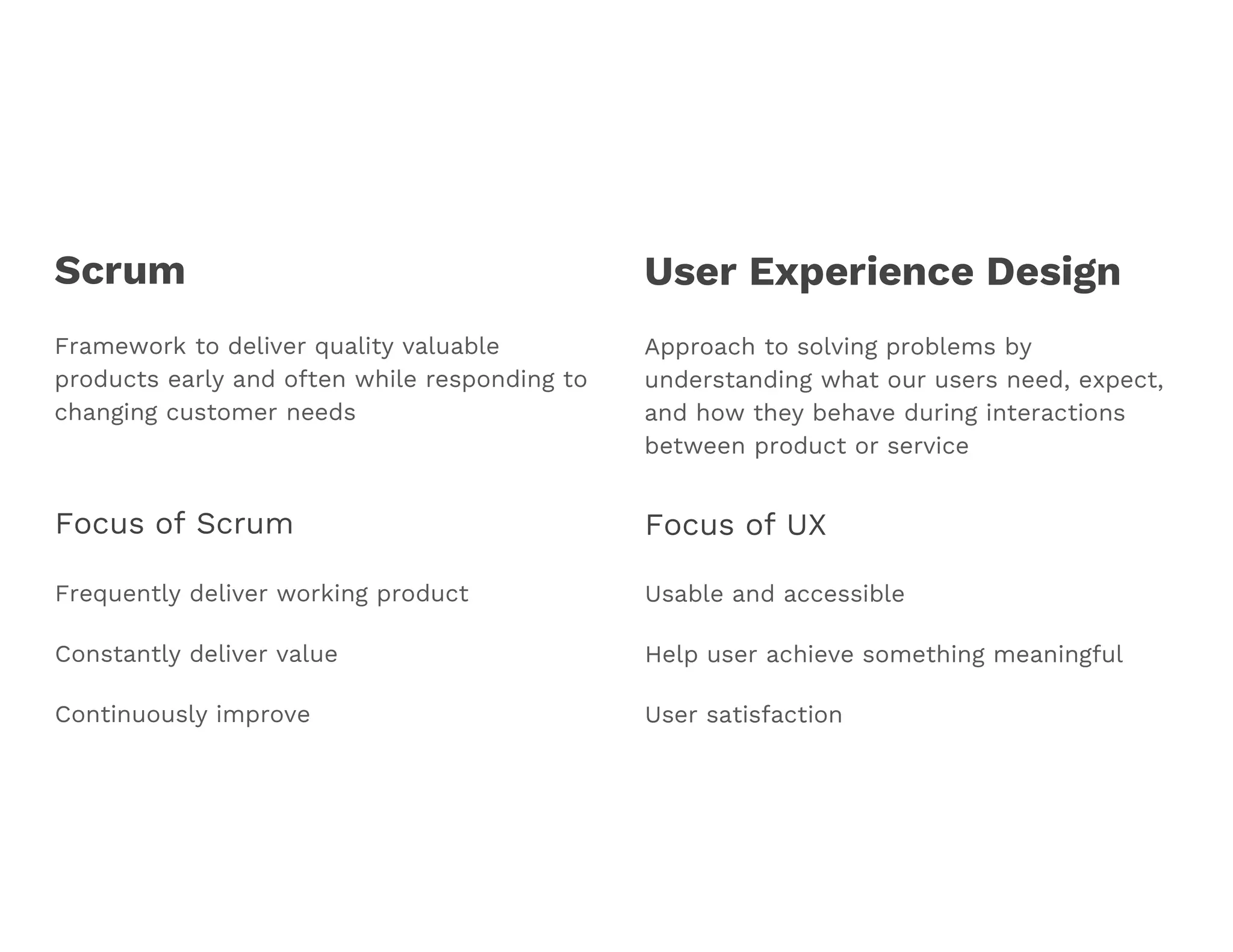
Scrum
Framework to deliver quality valuable
products early and often while responding to
changing customer needs
User Experience Design
Approach to solving problems by
understanding what our users need, expect,
and how they behave during interactions
between product or service
Focus of Scrum
Frequently deliver working product
Constantly deliver value
Continuously improve
Focus of UX
Usable and accessible
Help user achieve something meaningful
User satisfaction
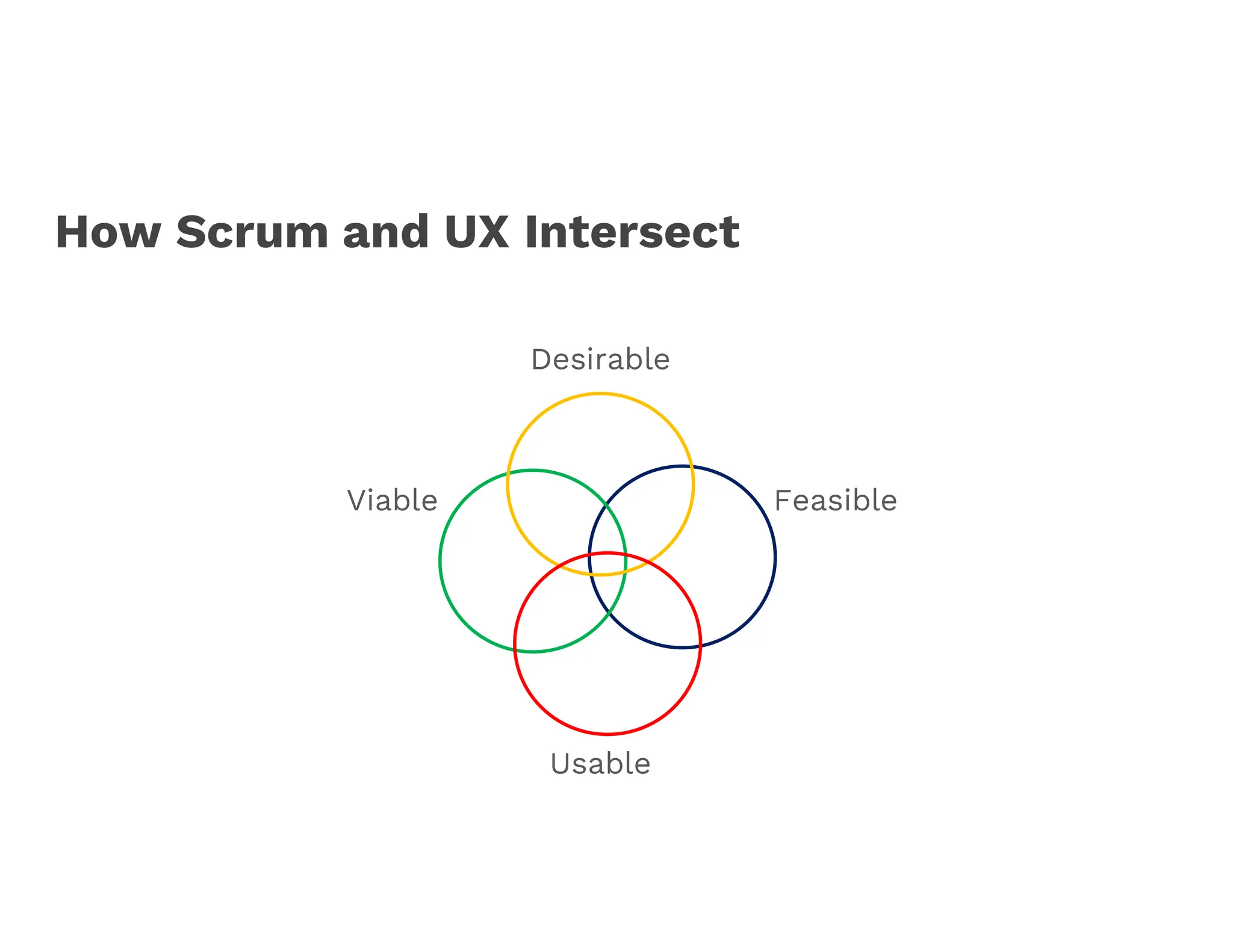
How Scrum and UX Intersect
Viable Feasible
Desirable
Usable
Build the right thing
and build it right.
Design is essential
to success in
satisfying your
users.
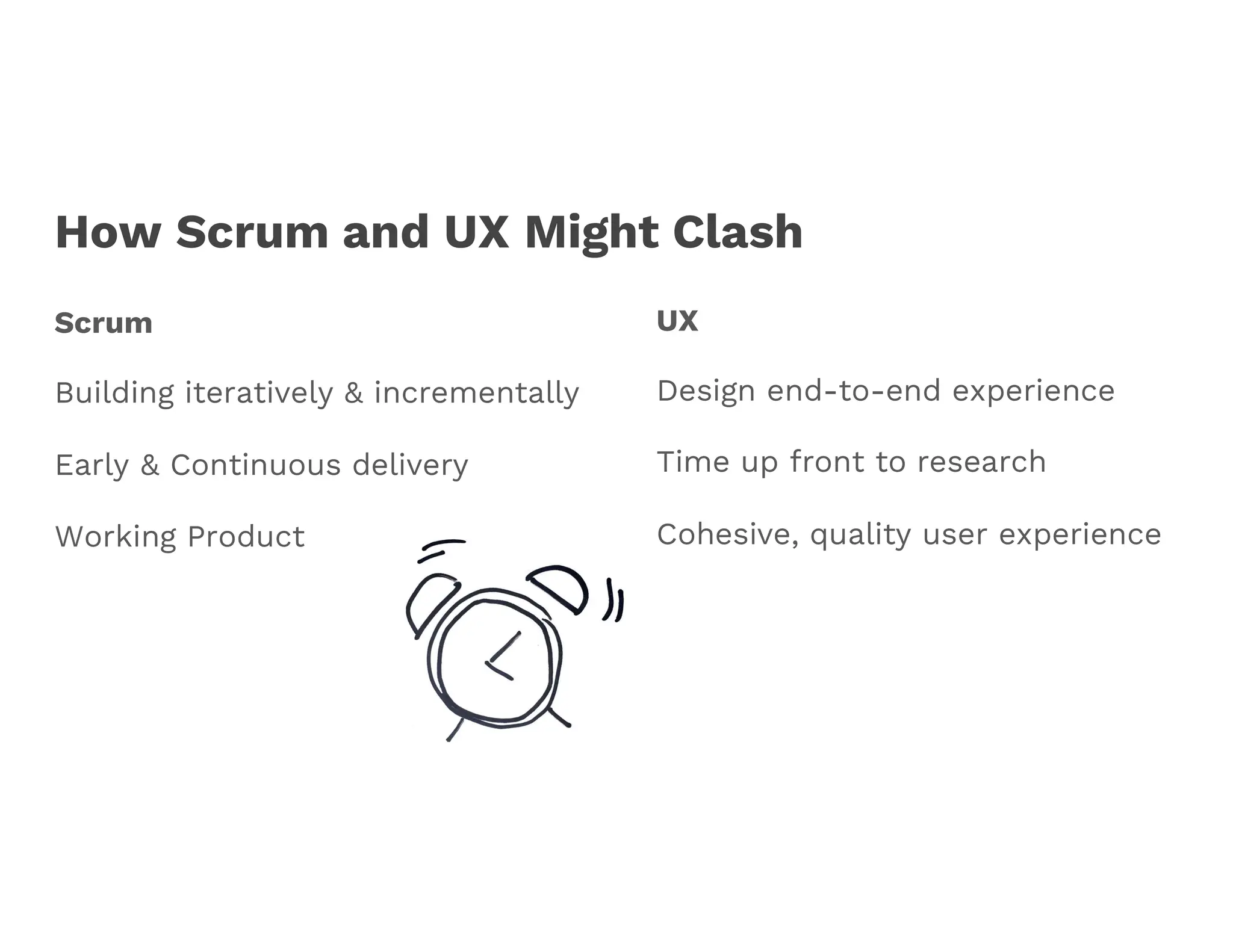
Early & Continuous delivery
Scrum
Building iteratively & incrementally
How Scrum and UX Might Clash
UX
Design end-to-end experience
Time up front to research
Cohesive, quality user experience
Working Product
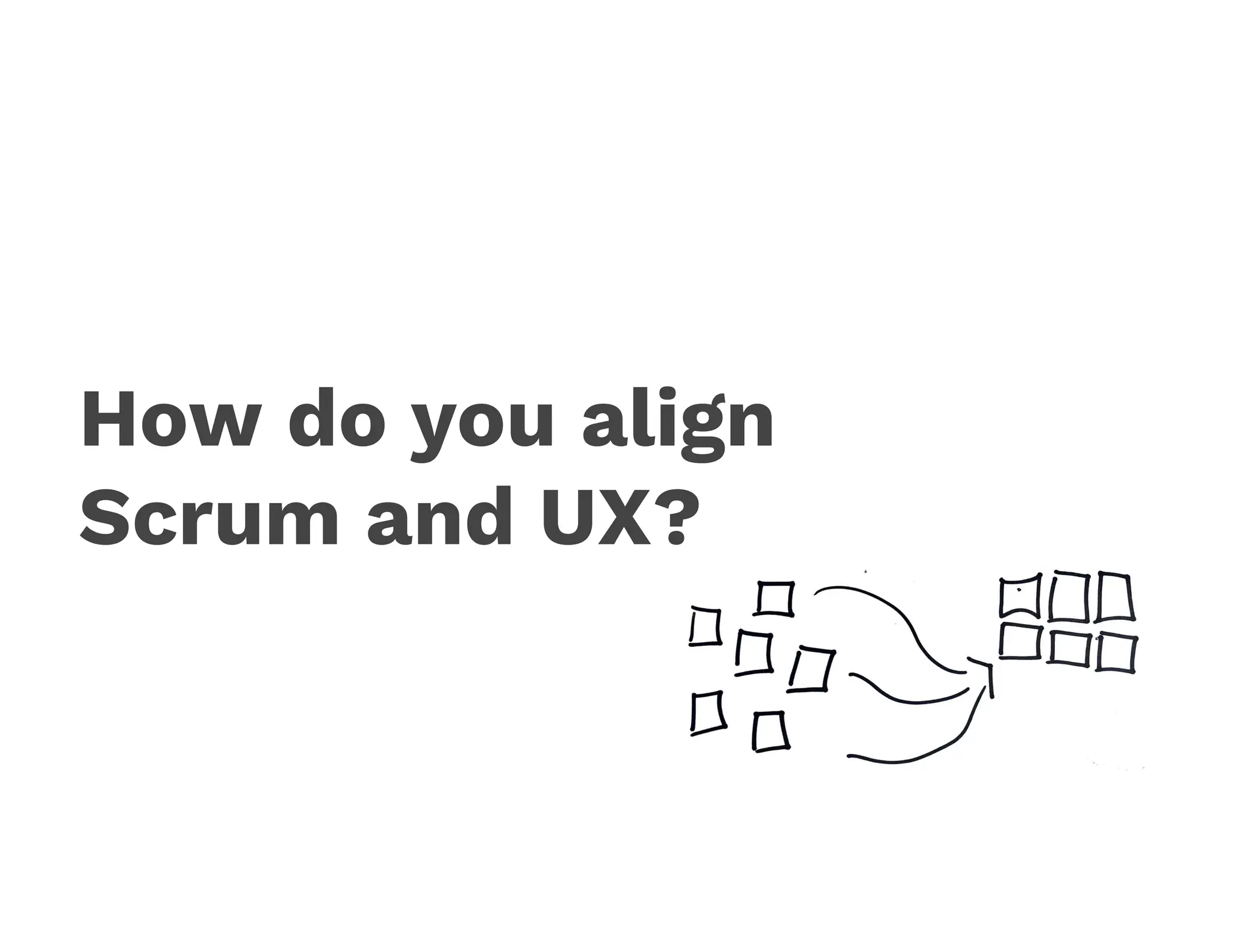
How do you align
Scrum and UX?
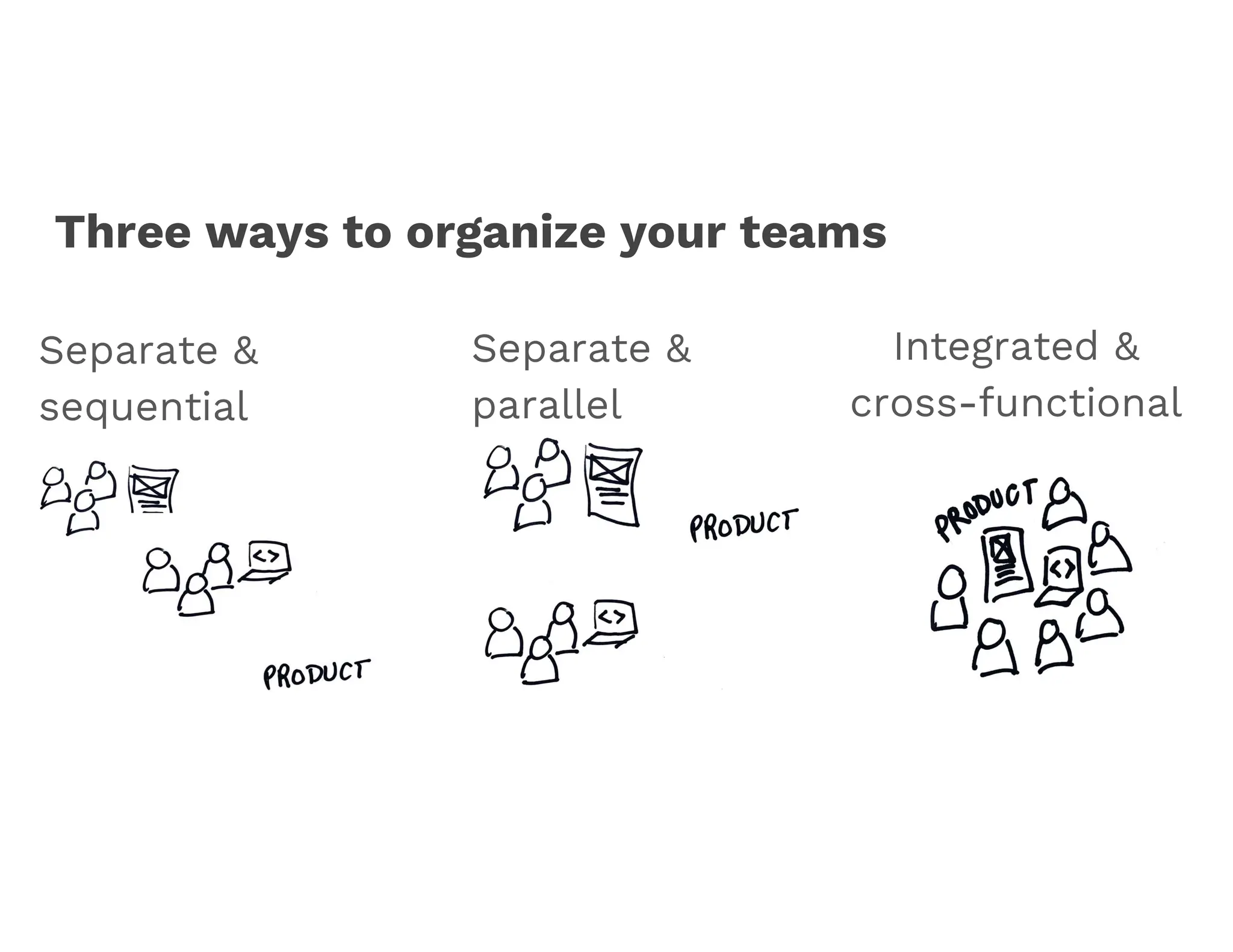
Three ways to organize your teams
Separate &
parallel
Integrated &
cross-functional
Separate &
sequential
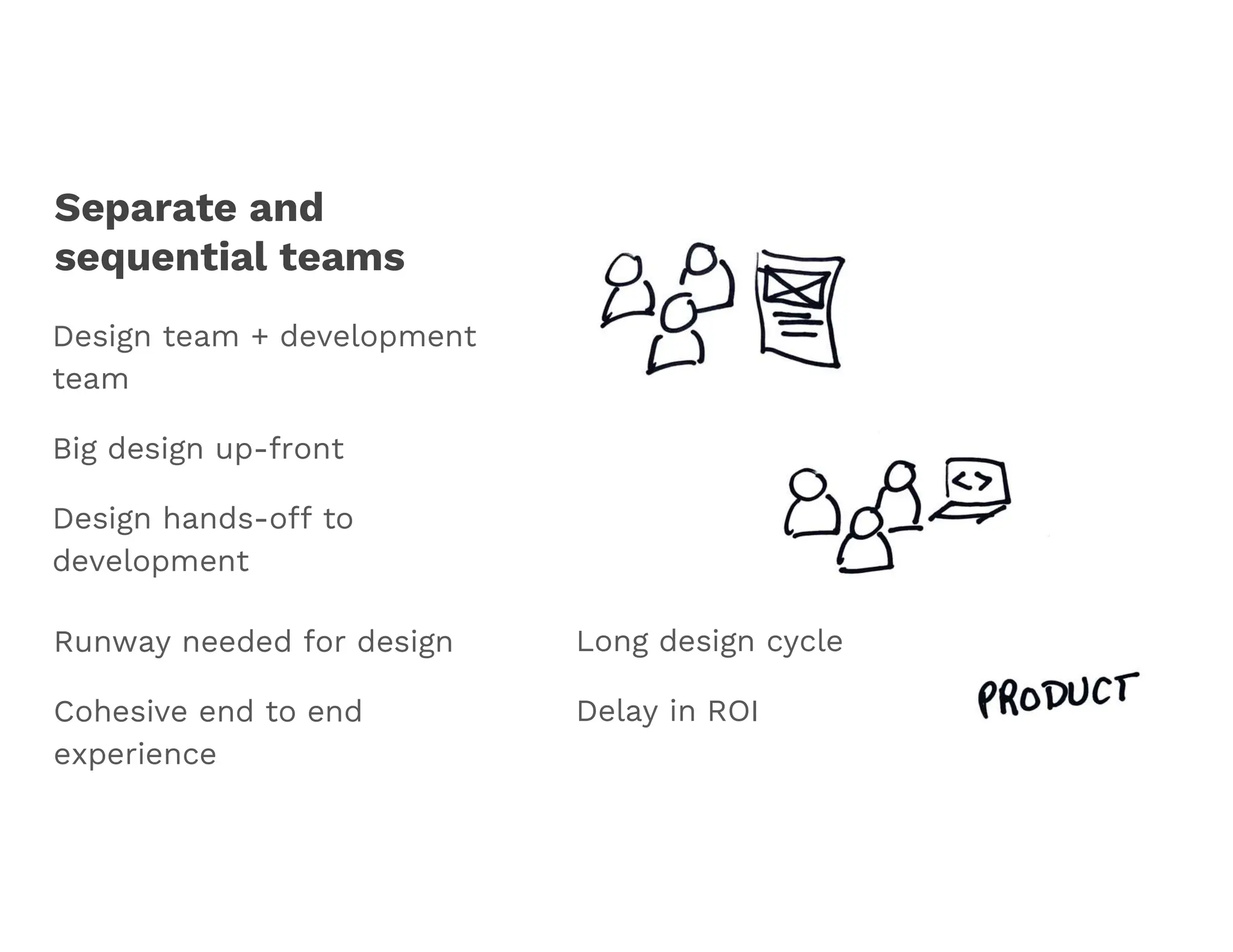
Separate and
sequential teams
Long design cycle
Delay in ROI
Design team + development
team
Big design up-front
Design hands-off to
development
Runway needed for design
Cohesive end to end
experience
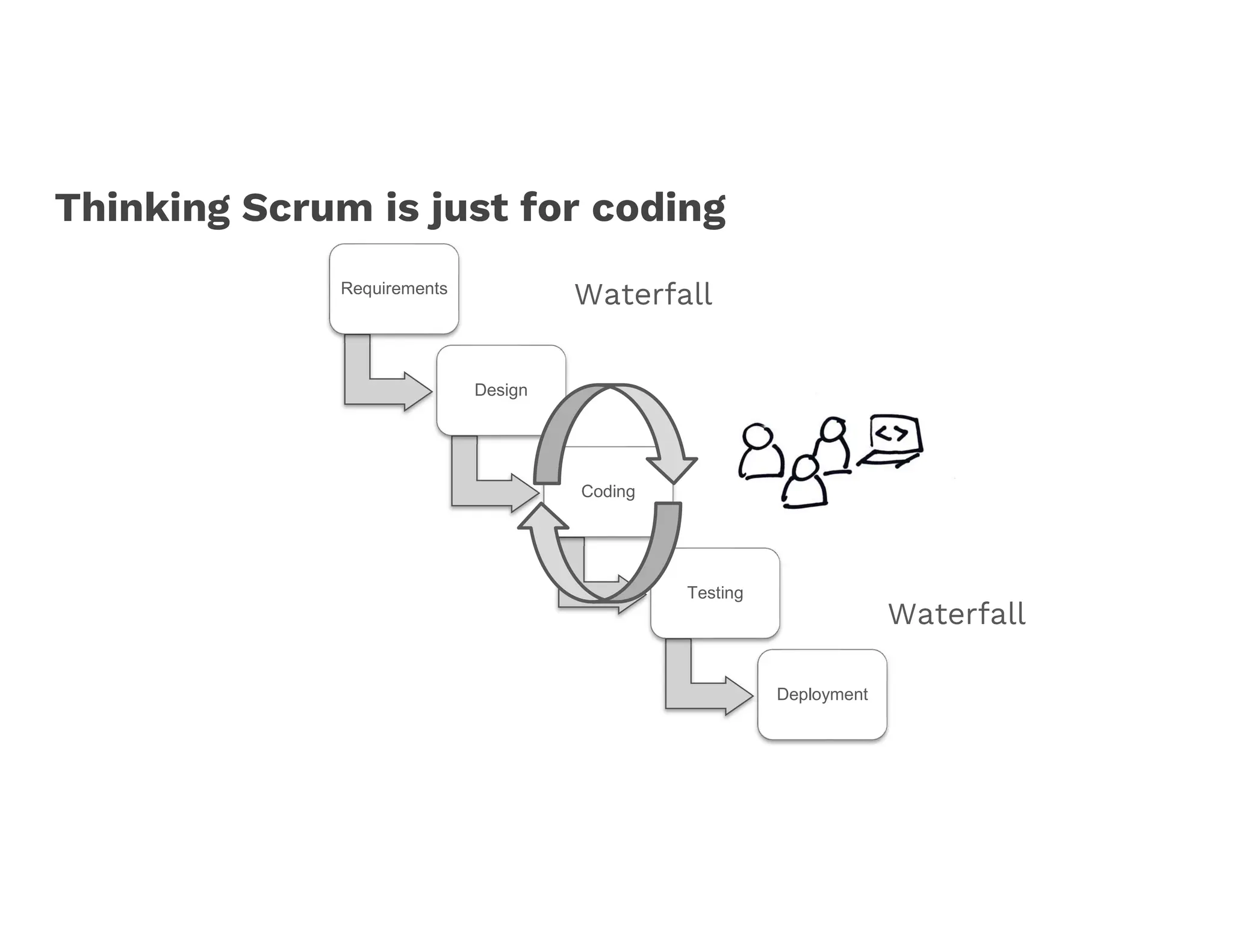
Requirements
Design
Coding
Testing
Deployment
Thinking Scrum is just for coding
Waterfall
Waterfall
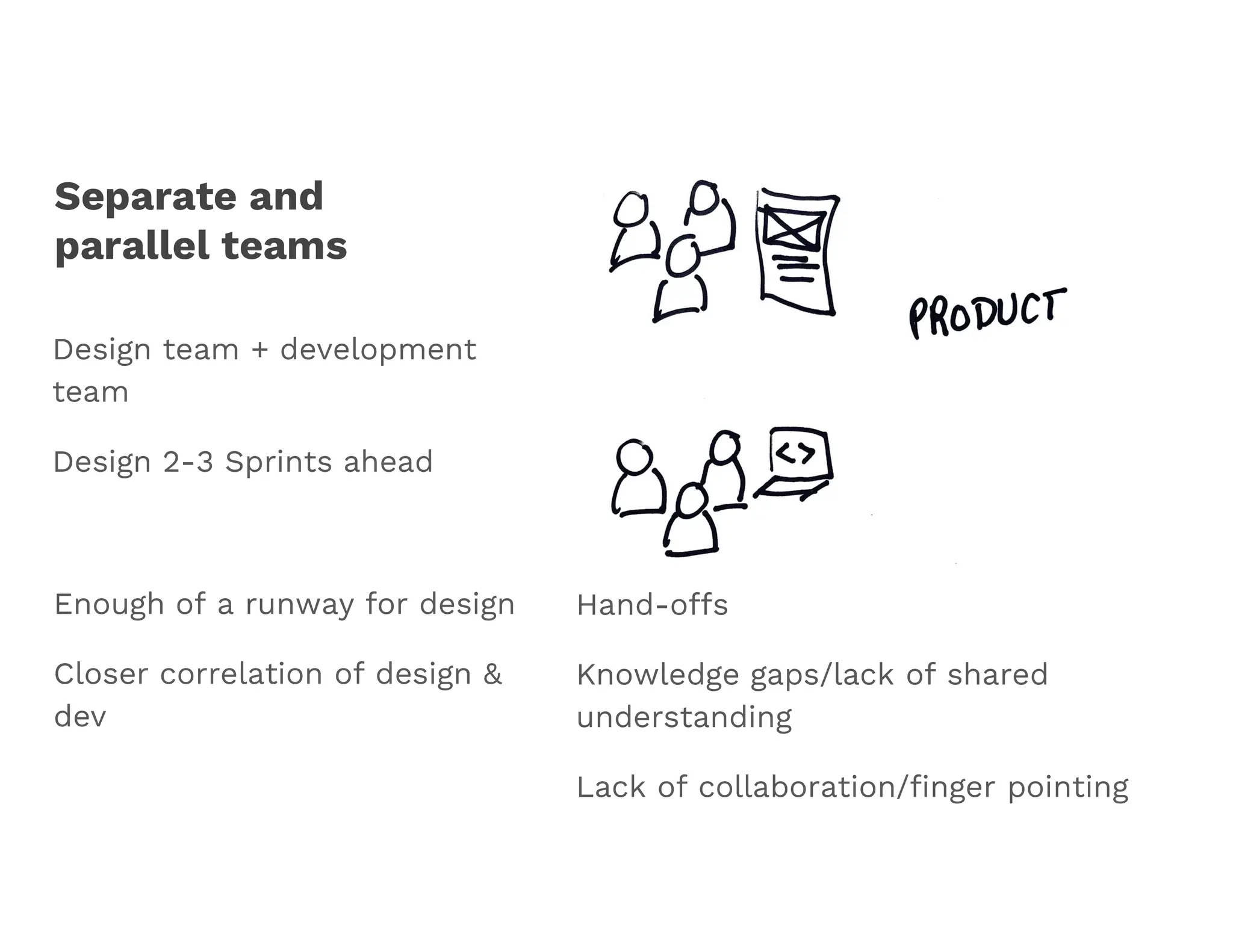
Separate and
parallel teams
Hand-offs
Knowledge gaps/lack of shared
understanding
Lack of collaboration/finger pointing
Design team + development
team
Design 2-3 Sprints ahead
Enough of a runway for design
Closer correlation of design &
dev
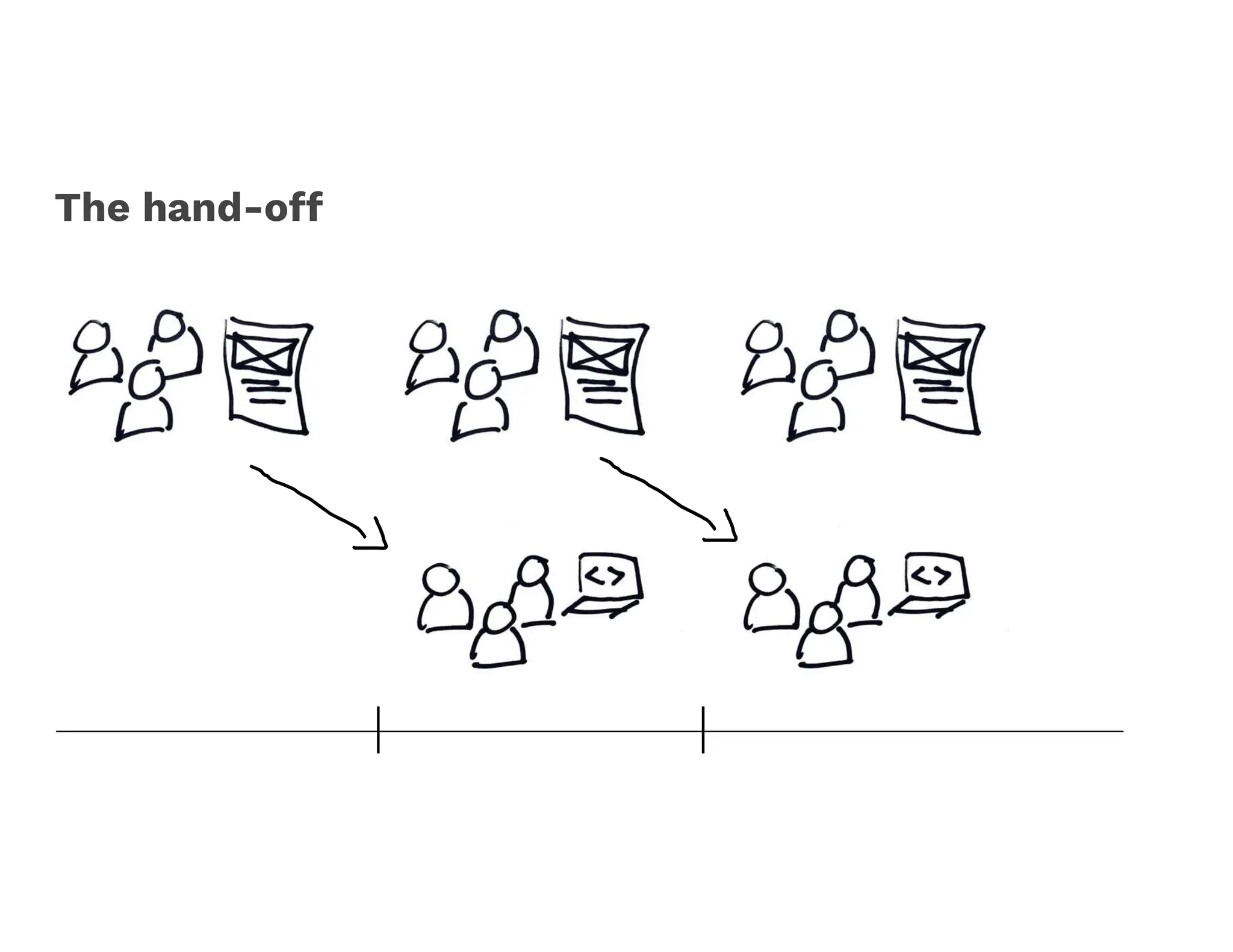
The hand-off
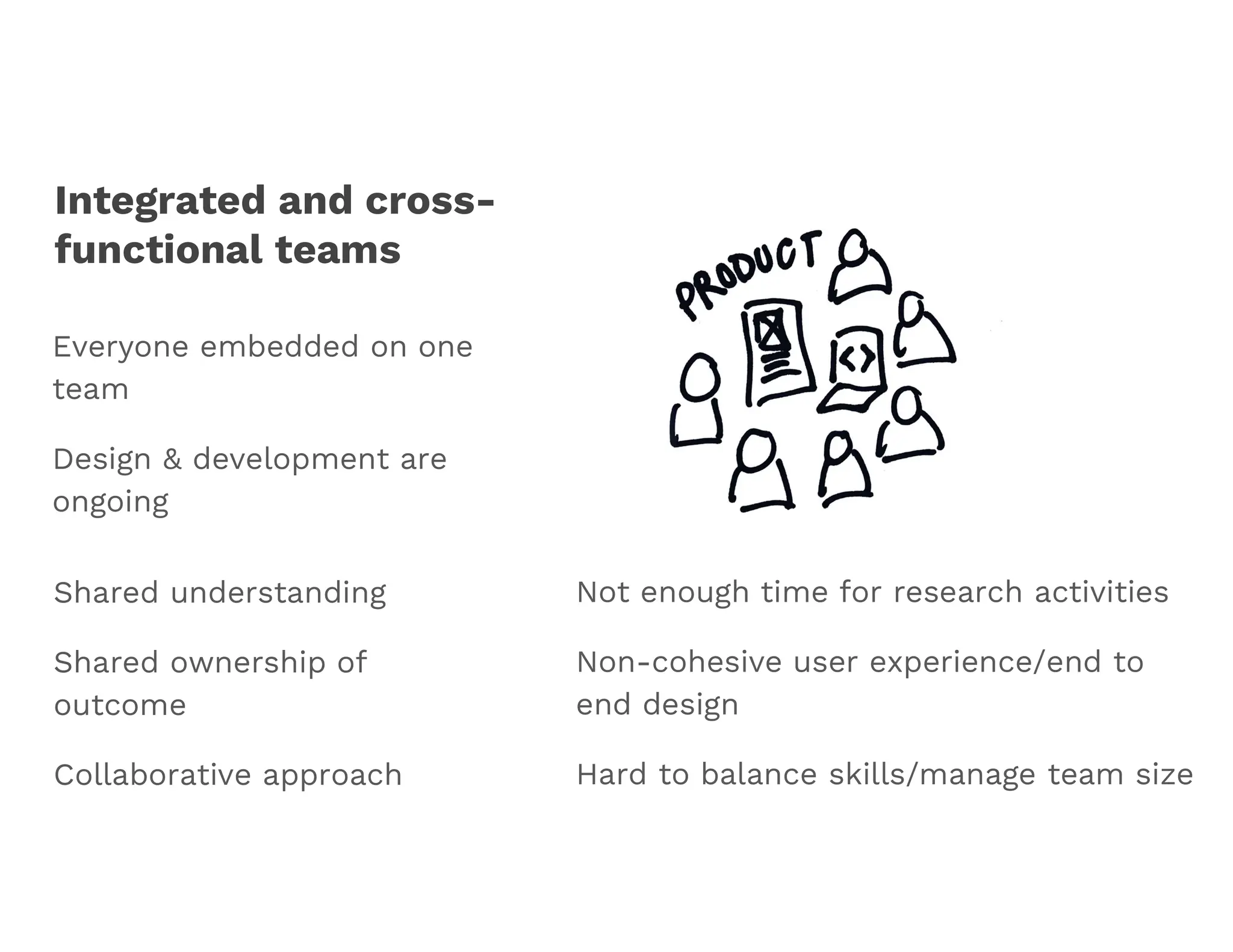
Integrated and cross-
functional teams
Not enough time for research activities
Non-cohesive user experience/end to
end design
Hard to balance skills/manage team size
Everyone embedded on one
team
Design & development are
ongoing
Shared understanding
Shared ownership of
outcome
Collaborative approach
How do we
succeed at
UX in an Agile
World?
Try integrated and
cross-functional
teams.
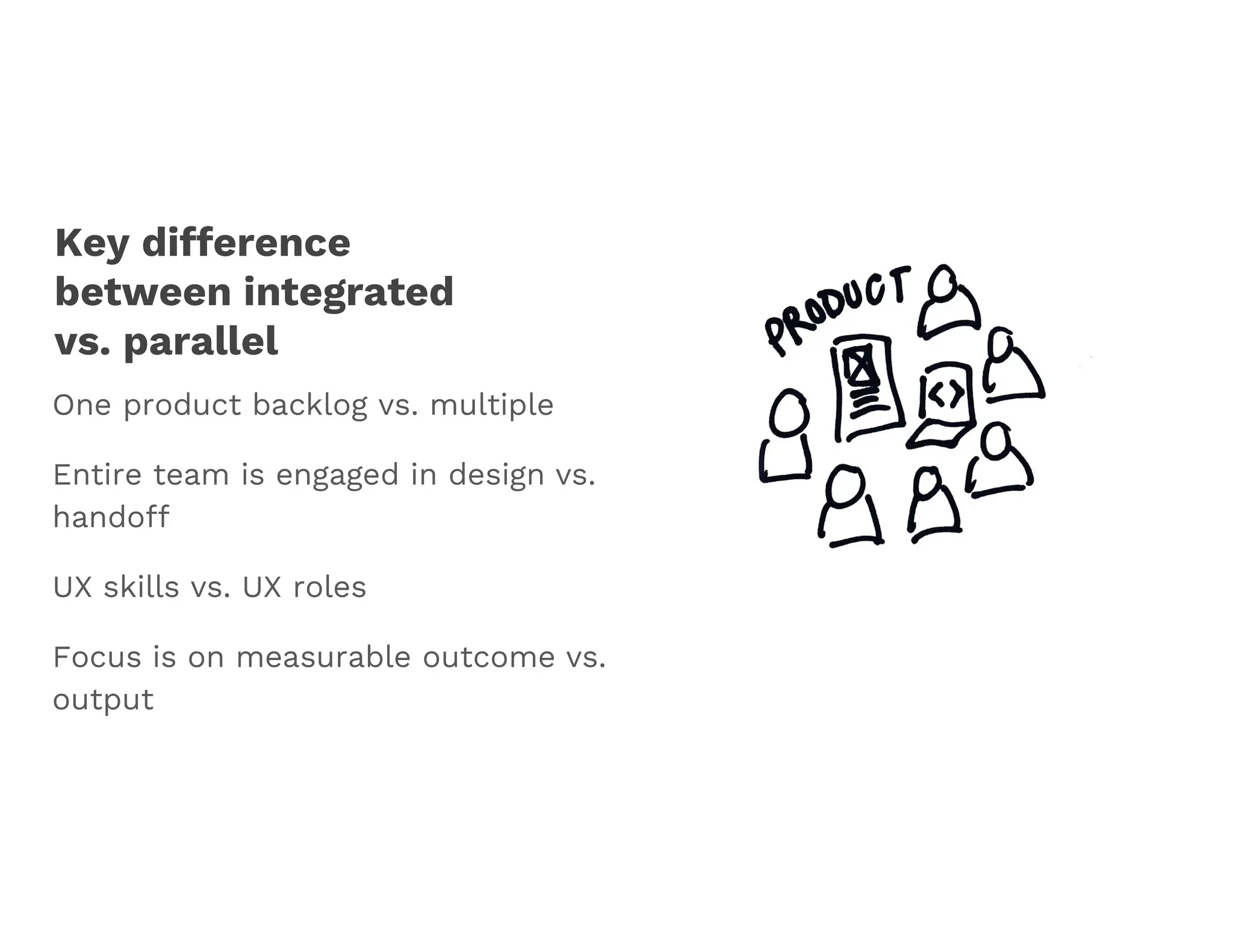
Key difference
between integrated
vs. parallel
One product backlog vs. multiple
Entire team is engaged in design vs.
handoff
UX skills vs. UX roles
Focus is on measurable outcome vs.
output
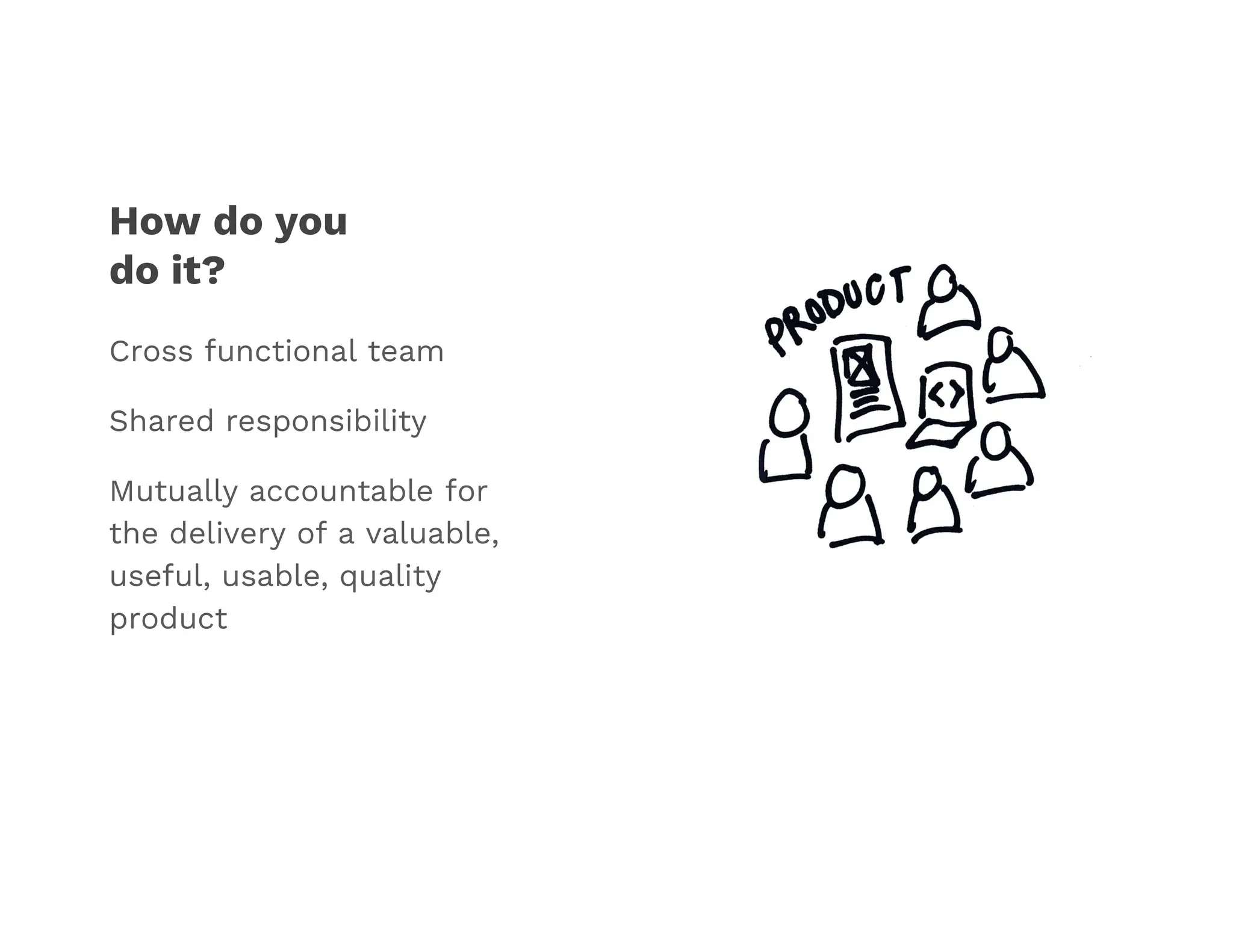
How do you
do it?
Cross functional team
Shared responsibility
Mutually accountable for
the delivery of a valuable,
useful, usable, quality
product
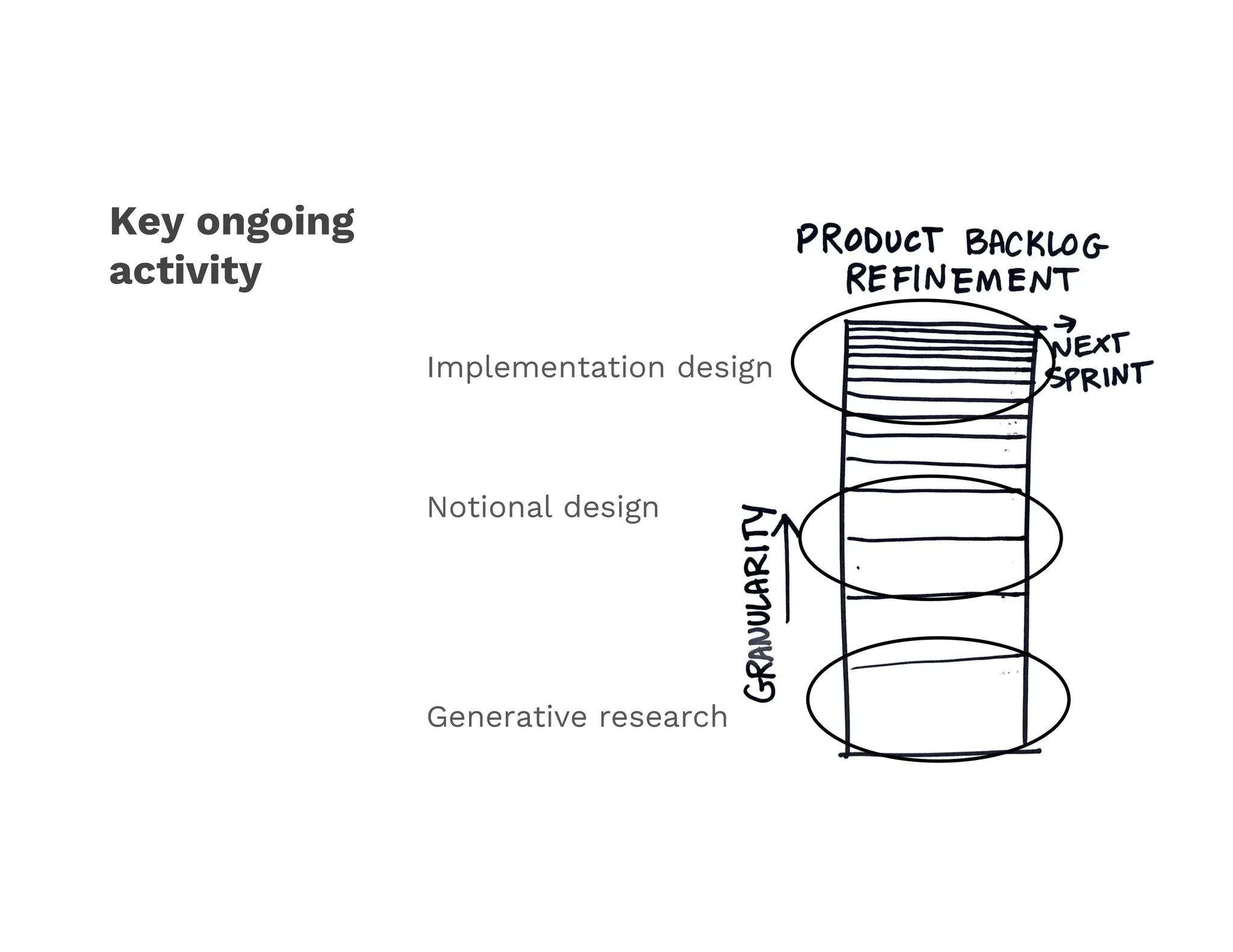
Key ongoing
activity
Implementation design
Notional design
Generative research
A Product Backlog
consists of
problems for the
Scrum team to
validate and solve.
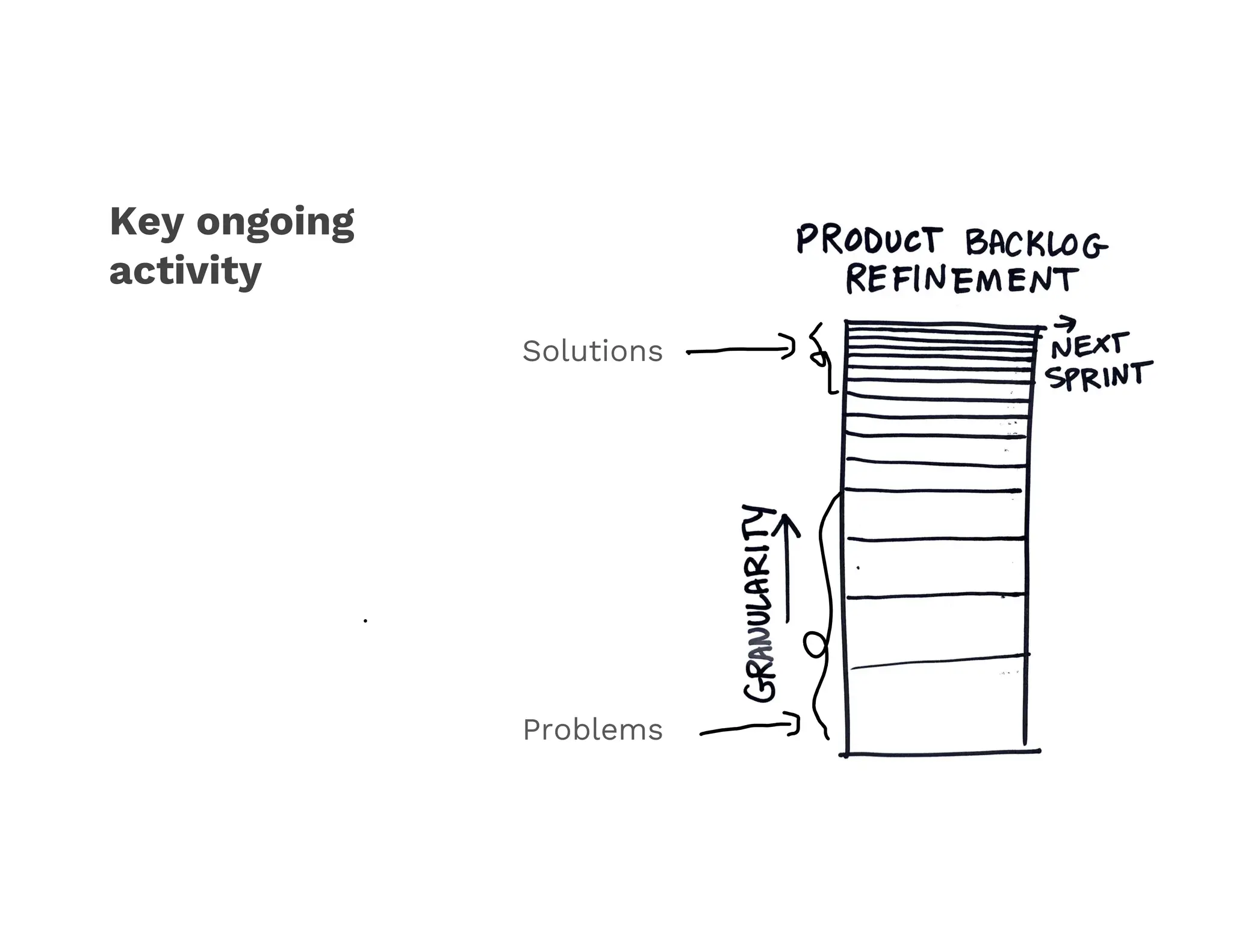
Key ongoing
activity
Solutions
Problems
A Sprint is not just
about
implementation or
delivery.
A Sprint is about
research, learning,
discovery,
validation, and
delivery.
Planning ahead and looking back
Ensure top Product Backlog Items are ready for the next Sprint
Plan out research activities for new Product Backlog Items or
items moving up the Product Backlog (strategically)
Validate product matches design as product increments are being
developed
Help out wherever needed
Validate previous product increments deliver value and are usable
Help PO reprioritize Product Backlog based on learnings, insights
and measurable outcomes
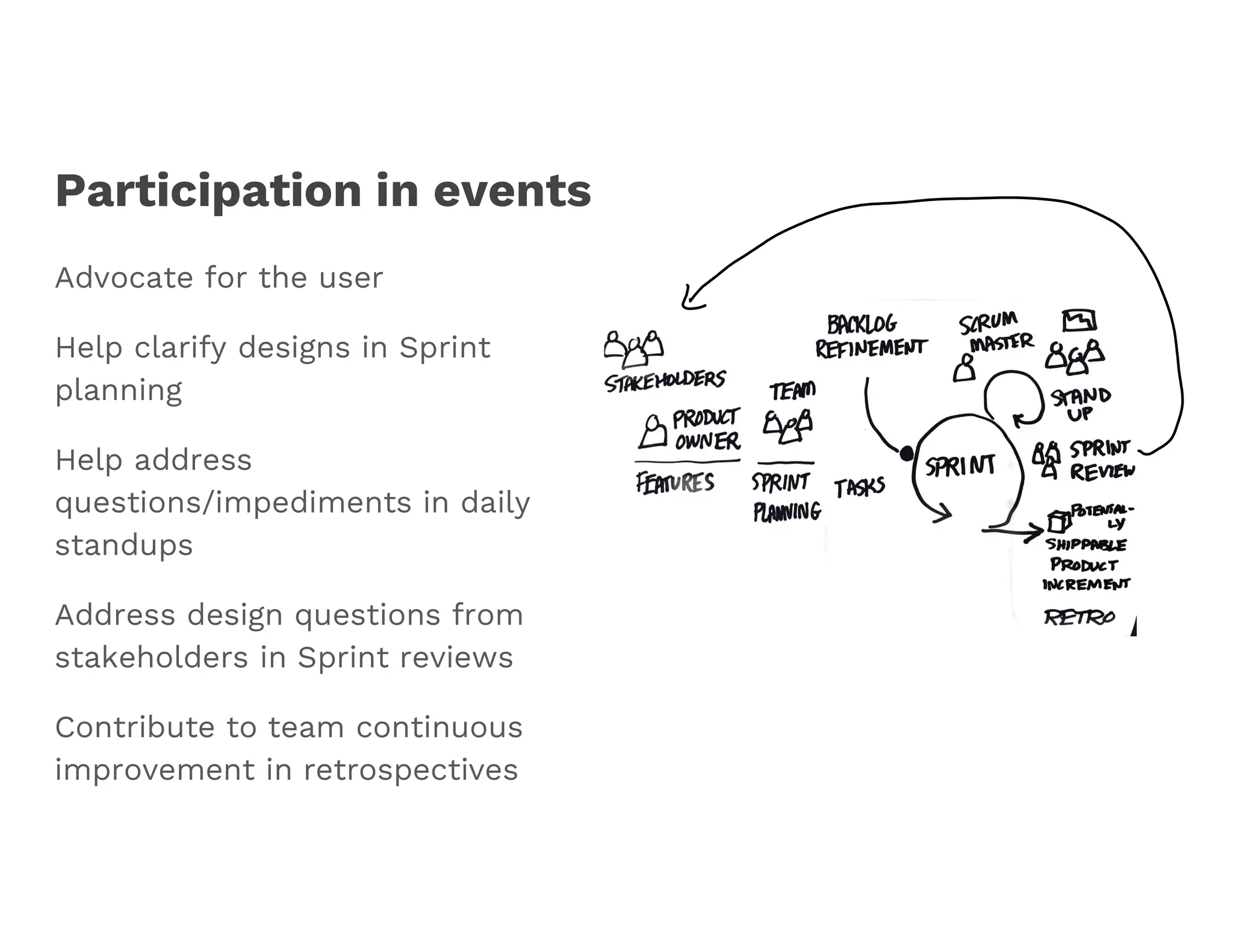
Participation in events
Advocate for the user
Help clarify designs in Sprint
planning
Help address
questions/impediments in daily
standups
Address design questions from
stakeholders in Sprint reviews
Contribute to team continuous
improvement in retrospectives
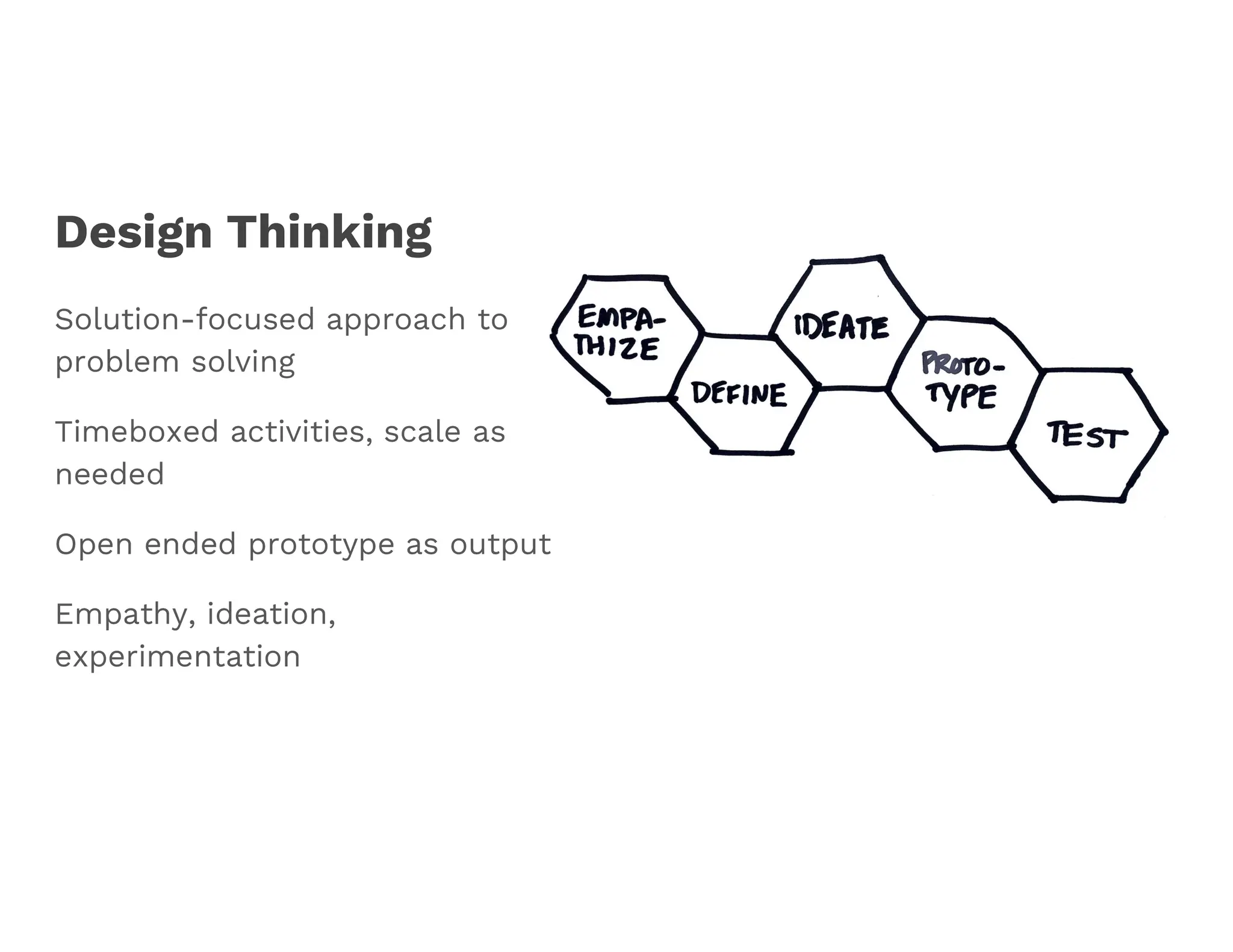
Design Thinking
Solution-focused approach to
problem solving
Timeboxed activities, scale as
needed
Open ended prototype as output
Empathy, ideation,
experimentation
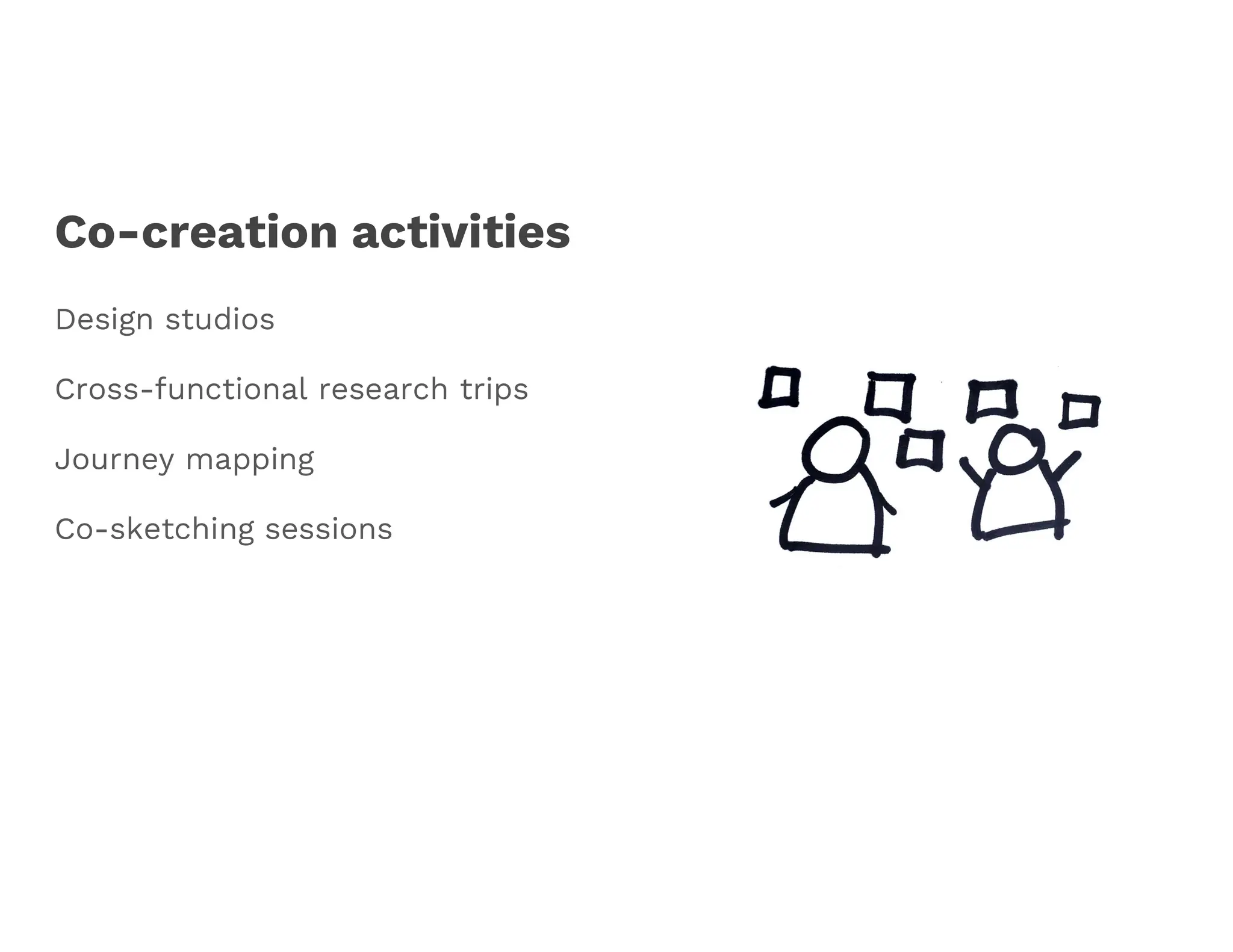
Co-creation activities
Design studios
Cross-functional research trips
Journey mapping
Co-sketching sessions
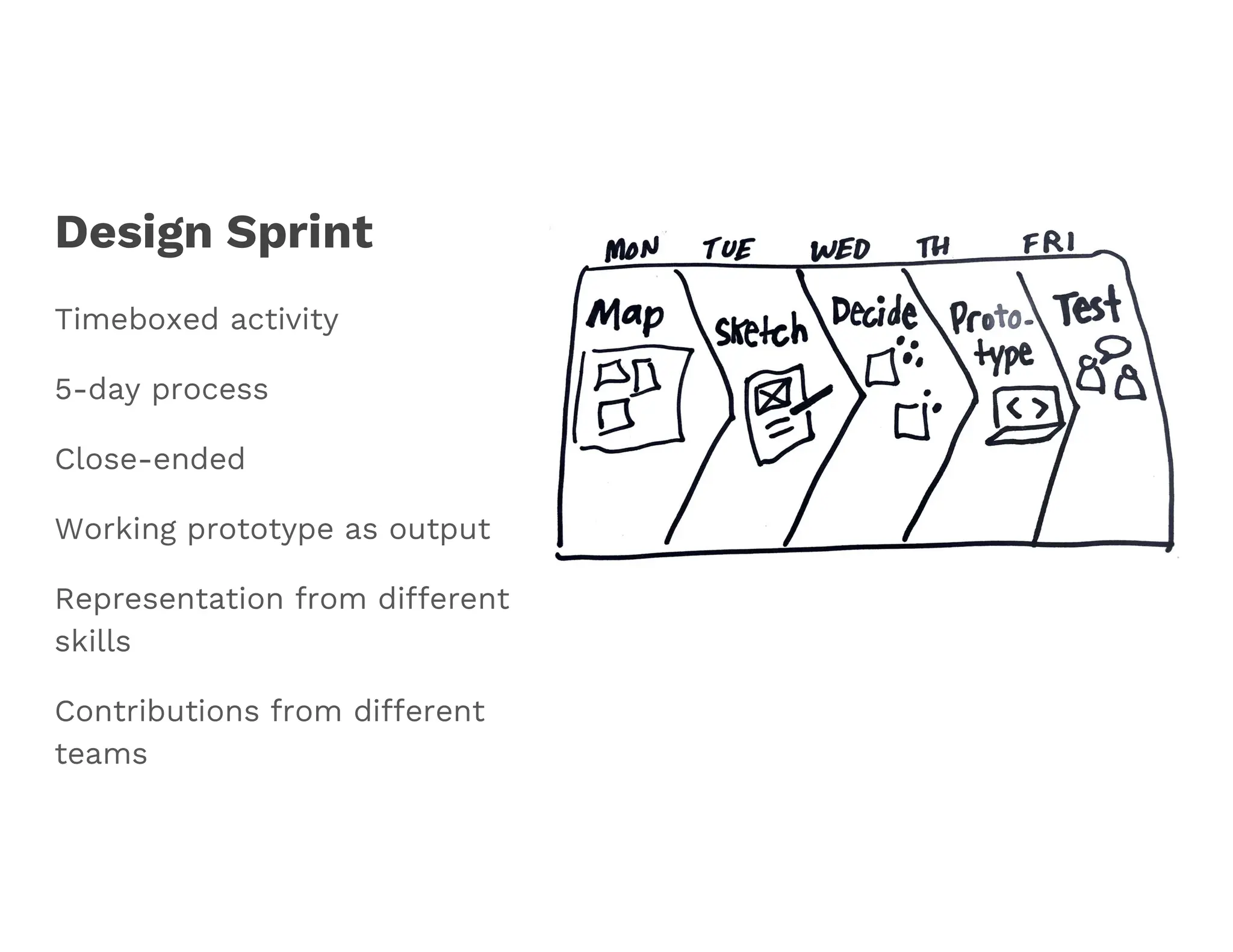
Design Sprint
Timeboxed activity
5-day process
Close-ended
Working prototype as output
Representation from different
skills
Contributions from different
teams
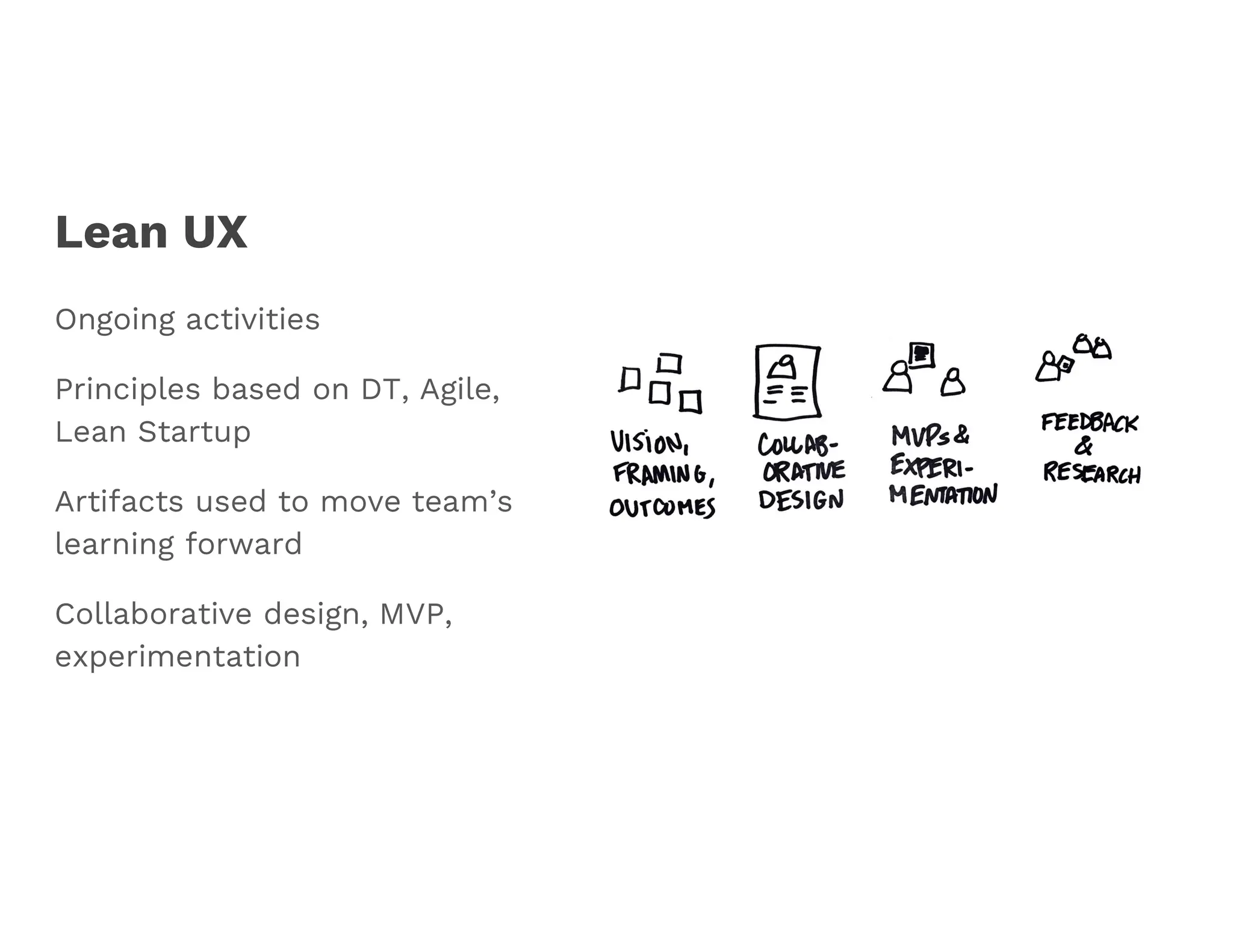
Lean UX
Ongoing activities
Principles based on DT, Agile,
Lean Startup
Artifacts used to move team’s
learning forward
Collaborative design, MVP,
experimentation
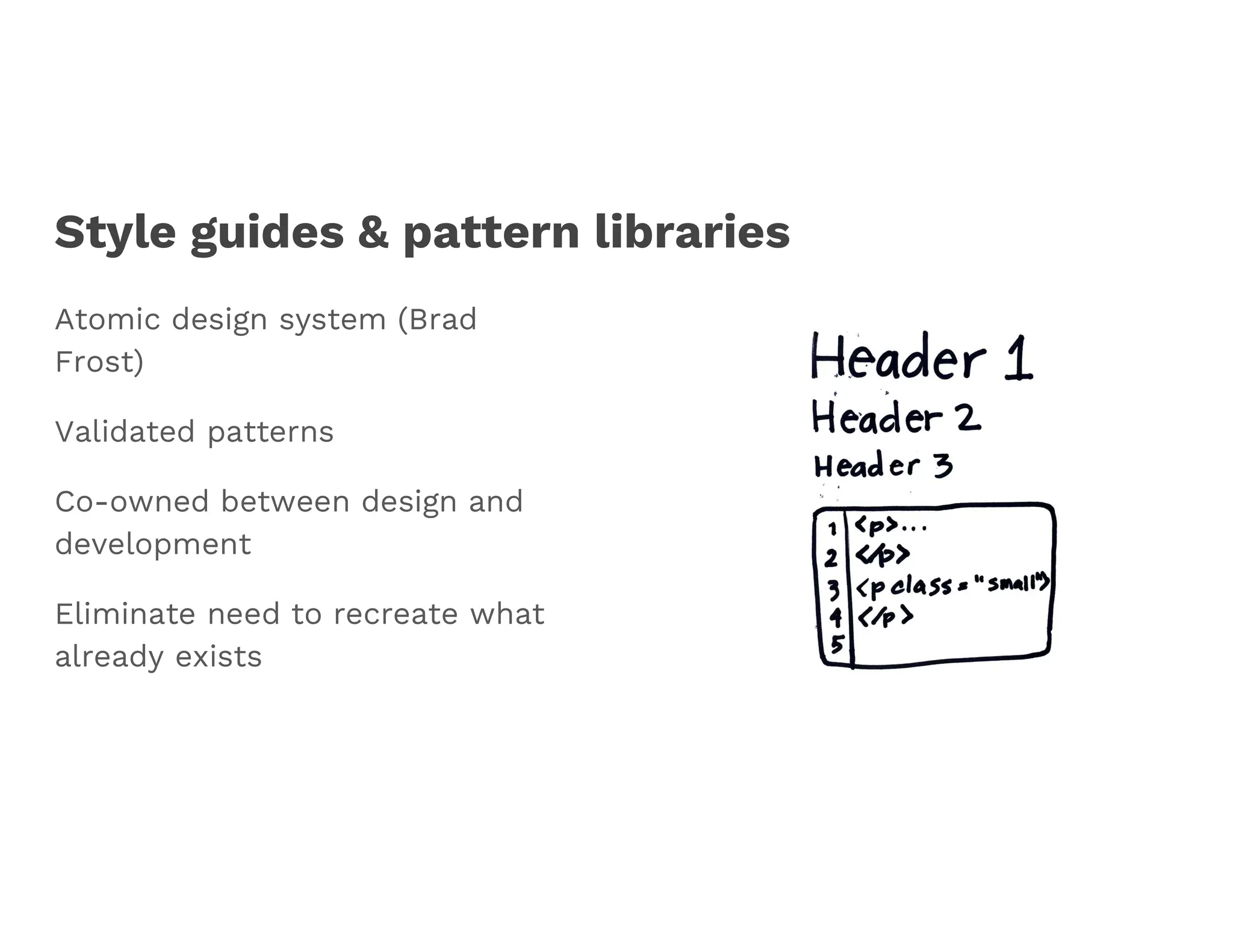
Style guides & pattern libraries
Atomic design system (Brad
Frost)
Validated patterns
Co-owned between design and
development
Eliminate need to recreate what
already exists
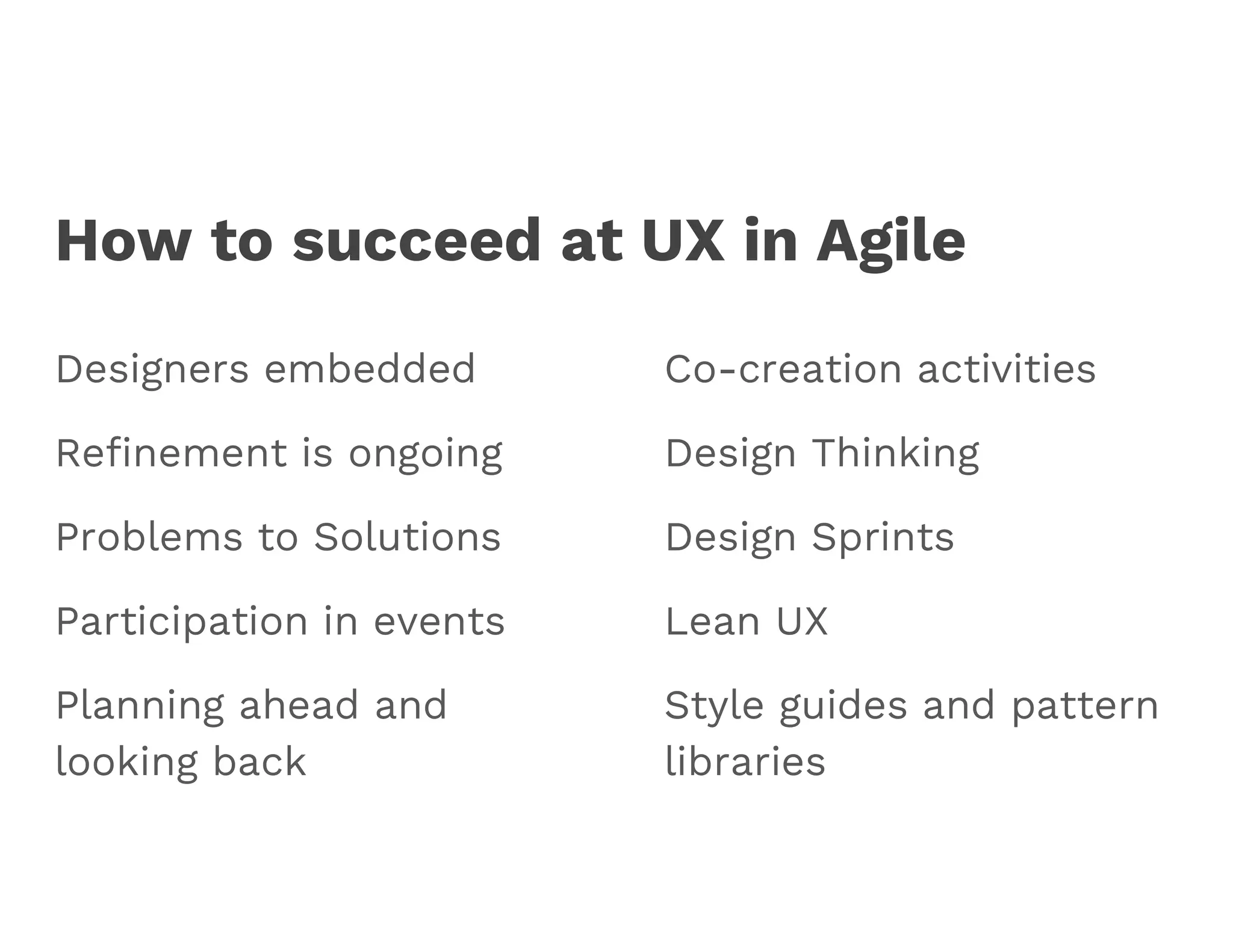
How to succeed at UX in Agile
Designers embedded
Refinement is ongoing
Problems to Solutions
Participation in events
Planning ahead and
looking back
Co-creation activities
Design Thinking
Design Sprints
Lean UX
Style guides and pattern
libraries
UX in an Agile World
Fadi Stephan
With thanks to Designers
Brad Lehman & Daphne Puerto

UX in an Agile World - Scrum Gathering

  • 1.
    UX in anAgile World Fadi Stephan
  • 2.
    What is your experience withdesign on Scrum teams? What worked? What didn’t work? What challenges have you experienced?
  • 3.
    Technology Consultant Agile Trainer& Coach Founder of Kaizenko Transform | Innovate | Deliver Fadi Stephan www.kaizenko.com in/fadistephan KAIZENKO KAIZENKOLLC KAIZENKO KAI.ZEN.KO @FadiStephan
  • 4.
    Making design work withScrum can be hard.
  • 5.
    Scrum Framework to deliverquality valuable products early and often while responding to changing customer needs User Experience Design Approach to solving problems by understanding what our users need, expect, and how they behave during interactions between product or service Focus of Scrum Frequently deliver working product Constantly deliver value Continuously improve Focus of UX Usable and accessible Help user achieve something meaningful User satisfaction
  • 6.
    How Scrum andUX Intersect Viable Feasible Desirable Usable
  • 7.
    Build the rightthing and build it right.
  • 8.
    Design is essential tosuccess in satisfying your users.
  • 9.
    Early & Continuousdelivery Scrum Building iteratively & incrementally How Scrum and UX Might Clash UX Design end-to-end experience Time up front to research Cohesive, quality user experience Working Product
  • 10.
    How do youalign Scrum and UX?
  • 11.
    Three ways toorganize your teams Separate & parallel Integrated & cross-functional Separate & sequential
  • 12.
    Separate and sequential teams Longdesign cycle Delay in ROI Design team + development team Big design up-front Design hands-off to development Runway needed for design Cohesive end to end experience
  • 13.
  • 14.
    Separate and parallel teams Hand-offs Knowledgegaps/lack of shared understanding Lack of collaboration/finger pointing Design team + development team Design 2-3 Sprints ahead Enough of a runway for design Closer correlation of design & dev
  • 15.
  • 16.
    Integrated and cross- functionalteams Not enough time for research activities Non-cohesive user experience/end to end design Hard to balance skills/manage team size Everyone embedded on one team Design & development are ongoing Shared understanding Shared ownership of outcome Collaborative approach
  • 17.
    How do we succeedat UX in an Agile World?
  • 18.
  • 19.
    Key difference between integrated vs.parallel One product backlog vs. multiple Entire team is engaged in design vs. handoff UX skills vs. UX roles Focus is on measurable outcome vs. output
  • 20.
    How do you doit? Cross functional team Shared responsibility Mutually accountable for the delivery of a valuable, useful, usable, quality product
  • 21.
  • 22.
    A Product Backlog consistsof problems for the Scrum team to validate and solve.
  • 23.
  • 24.
    A Sprint isnot just about implementation or delivery.
  • 25.
    A Sprint isabout research, learning, discovery, validation, and delivery.
  • 26.
    Planning ahead andlooking back Ensure top Product Backlog Items are ready for the next Sprint Plan out research activities for new Product Backlog Items or items moving up the Product Backlog (strategically) Validate product matches design as product increments are being developed Help out wherever needed Validate previous product increments deliver value and are usable Help PO reprioritize Product Backlog based on learnings, insights and measurable outcomes
  • 27.
    Participation in events Advocatefor the user Help clarify designs in Sprint planning Help address questions/impediments in daily standups Address design questions from stakeholders in Sprint reviews Contribute to team continuous improvement in retrospectives
  • 28.
    Design Thinking Solution-focused approachto problem solving Timeboxed activities, scale as needed Open ended prototype as output Empathy, ideation, experimentation
  • 29.
    Co-creation activities Design studios Cross-functionalresearch trips Journey mapping Co-sketching sessions
  • 30.
    Design Sprint Timeboxed activity 5-dayprocess Close-ended Working prototype as output Representation from different skills Contributions from different teams
  • 31.
    Lean UX Ongoing activities Principlesbased on DT, Agile, Lean Startup Artifacts used to move team’s learning forward Collaborative design, MVP, experimentation
  • 32.
    Style guides &pattern libraries Atomic design system (Brad Frost) Validated patterns Co-owned between design and development Eliminate need to recreate what already exists
  • 33.
    How to succeedat UX in Agile Designers embedded Refinement is ongoing Problems to Solutions Participation in events Planning ahead and looking back Co-creation activities Design Thinking Design Sprints Lean UX Style guides and pattern libraries
  • 34.
    UX in anAgile World Fadi Stephan With thanks to Designers Brad Lehman & Daphne Puerto