ENVIROMENTAL ENGINEERING (Msc)
Group Project
Water Treatment Disinfection
Technologies
Outlines
– Theory Of Disinfection
– Types Of Disinfection
– Chlorination
– Chlorine Demand
– Methodology
– Conclusion
– Cost breakdown
– Work Plan
INTRODUCTION
 The term “ Plastic” includes materials composed of various elements such as carbon,
hydrogen, nitrogen and sulfur.
 Plastics are macro molecules, formed by polymerization & having the ability to be shaped by
the application of reasonable amount of heat & pressure or any other form of force.
 Polyethylene, polyvinyl chloride and polystyrene is largely used in the manufacturing of
plastic.
 Global plastic waste has grown at an alarming rate for decades. However, the traditional
landfill and incineration treatments may cause air pollution and valuable land squander.
 Chemically, these plastics are non-biodegradable and can add to ground and water pollution.
 Therefore Plastic waste has to be utilized and recycled efficiently. This paper provides a
review of product of Plastic bricks which can effectively use plastic waste as an alternating
material.
TYPES OF PLASTIC MATERIALS
 Plastics, depending on their physical properties, may be classified as thermoplastic
or thermosetting plastic materials
 Thermoplastic materials can be formed into desired shapes under heat & pressure
and be come solids on cooling. If they are subjected to te same conditions of heat
& pressure , they can be remolded.
 Thermosetting materials which once shaped can not be softened/ remolded by the
application of heat.
 Out of total uses of plastic , 80% are thermoplastic & 20% are thermosetting.
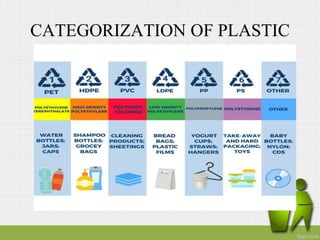
CATEGORIZATION OF PLASTIC
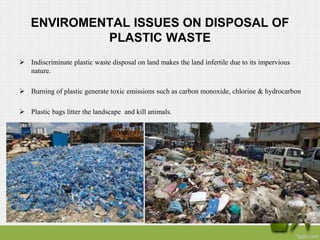
ENVIROMENTAL ISSUES ON DISPOSAL OF
PLASTIC WASTE
 Indiscriminate plastic waste disposal on land makes the land infertile due to its impervious
nature.
 Burning of plastic generate toxic emissions such as carbon monoxide, chlorine & hydrocarbon
 Plastic bags litter the landscape and kill animals.
Statement of Problem
 The Organic component of Solid Waste may not be too much of a problem since that is
biodegradable.
 However, the Plastic Waste component of Solid Waste poses a lot of problem in our
environment because it is non-biodegradable and therefore can stay in the environment for a
considerable length of time causing all sorts of problems.
 Currently, the disposal of plastic waste is by incineration and landfill in Ethiopia, which is a
treat to the environment.
 Incineration of waste plastic is not environmentally friendly and sustainable since this may
release carbon dioxide, a major contributor to global warming (greenhouse effect) and also
landfilling is not desirable since plastic is non- degradable.
 Most of gutters in Ethiopia are currently choked with plastic waste and this has resulted in
floods, loss of property and also causing high rate of malaria and cholera .
 Recycling of plastic waste seems to be the best solution to plastic waste menace.
Objectives
 The main objective of this project is to produce plastic Sand Based Tiles
(Pavement) from plastic waste .
Specific Objective
 To alter the current waste management system and create an efficient way
of utilizing waste plastics.
 To Minimize and reuse generation of waste plastic on the land and water
to avoid land and water degradation and consequent pollution hazard.
 To produce cost-effective materials which a common person can afford
easily.
Significance of the Study
 Utilizing plastic waste for the production of eco- friendly, strong, durable,
stable, waterproof, lightweight, good soundness and attractive bricks and
tiles.
 Playing a significant role to changing waste management system of our
country, so as to modify the linear economy to circular economy.
 Create a job opportunity for the unemployed youth
 Reduce air and water pollution
 Decrease ecosystem destruction
Materials and Methods
Materials
 Plastic waste
 Sand
 Temperature regulated bowl
 Stirrer
 Sieve
 Measuring balance
 Trowel
 Mold
 Compressor
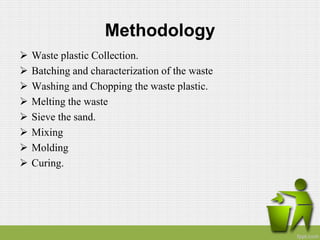
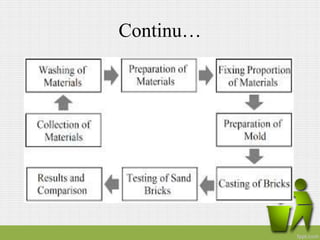
Methodology
 Waste plastic Collection.
 Batching and characterization of the waste
 Washing and Chopping the waste plastic.
 Melting the waste
 Sieve the sand.
 Mixing
 Molding
 Curing.
Continu…
Characterization
Compressive Strength Test
 This test is done to know the compressive strength of the brick and
pavement.
 It is also called the crushing strength of brick and pavement
 In this test, a brick specimen is put on compressive strength testing
machine and the pressure will applied at a constant rate till it breaks.
Water Absorption Test
 In this test the bricks and pavement first weighted in dry condition and they
are immersed in water for 24hours.
 The bricks or pavements to be tested should be dry in an oven at a
temperature of 105oC to 115oC till it attains constant weight
Crushing test
 This is the main test conducted to test the suitability of the brick for
construction work. This test is executed with the help of compression
testing machine.
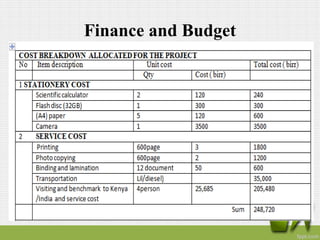
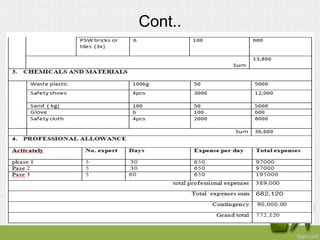
Finance and Budget
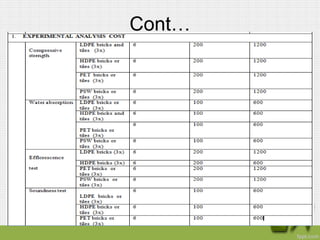
Cont…
Cont..
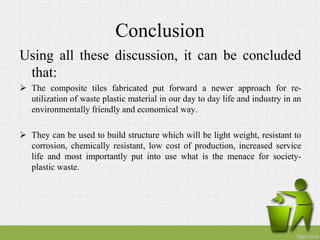
Conclusion
Using all these discussion, it can be concluded
that:
 The composite tiles fabricated put forward a newer approach for re-
utilization of waste plastic material in our day to day life and industry in an
environmentally friendly and economical way.
 They can be used to build structure which will be light weight, resistant to
corrosion, chemically resistant, low cost of production, increased service
life and most importantly put into use what is the menace for society-
plastic waste.
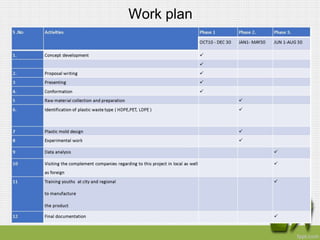
Work plan
.

utilization of waste plastic

  • 1.
    ENVIROMENTAL ENGINEERING (Msc) GroupProject Water Treatment Disinfection Technologies
  • 2.
    Outlines – Theory OfDisinfection – Types Of Disinfection – Chlorination – Chlorine Demand – Methodology – Conclusion – Cost breakdown – Work Plan
  • 3.
    INTRODUCTION  The term“ Plastic” includes materials composed of various elements such as carbon, hydrogen, nitrogen and sulfur.  Plastics are macro molecules, formed by polymerization & having the ability to be shaped by the application of reasonable amount of heat & pressure or any other form of force.  Polyethylene, polyvinyl chloride and polystyrene is largely used in the manufacturing of plastic.  Global plastic waste has grown at an alarming rate for decades. However, the traditional landfill and incineration treatments may cause air pollution and valuable land squander.  Chemically, these plastics are non-biodegradable and can add to ground and water pollution.  Therefore Plastic waste has to be utilized and recycled efficiently. This paper provides a review of product of Plastic bricks which can effectively use plastic waste as an alternating material.
  • 4.
    TYPES OF PLASTICMATERIALS  Plastics, depending on their physical properties, may be classified as thermoplastic or thermosetting plastic materials  Thermoplastic materials can be formed into desired shapes under heat & pressure and be come solids on cooling. If they are subjected to te same conditions of heat & pressure , they can be remolded.  Thermosetting materials which once shaped can not be softened/ remolded by the application of heat.  Out of total uses of plastic , 80% are thermoplastic & 20% are thermosetting.
  • 5.
  • 6.
    ENVIROMENTAL ISSUES ONDISPOSAL OF PLASTIC WASTE  Indiscriminate plastic waste disposal on land makes the land infertile due to its impervious nature.  Burning of plastic generate toxic emissions such as carbon monoxide, chlorine & hydrocarbon  Plastic bags litter the landscape and kill animals.
  • 7.
    Statement of Problem The Organic component of Solid Waste may not be too much of a problem since that is biodegradable.  However, the Plastic Waste component of Solid Waste poses a lot of problem in our environment because it is non-biodegradable and therefore can stay in the environment for a considerable length of time causing all sorts of problems.  Currently, the disposal of plastic waste is by incineration and landfill in Ethiopia, which is a treat to the environment.  Incineration of waste plastic is not environmentally friendly and sustainable since this may release carbon dioxide, a major contributor to global warming (greenhouse effect) and also landfilling is not desirable since plastic is non- degradable.  Most of gutters in Ethiopia are currently choked with plastic waste and this has resulted in floods, loss of property and also causing high rate of malaria and cholera .  Recycling of plastic waste seems to be the best solution to plastic waste menace.
  • 8.
    Objectives  The mainobjective of this project is to produce plastic Sand Based Tiles (Pavement) from plastic waste . Specific Objective  To alter the current waste management system and create an efficient way of utilizing waste plastics.  To Minimize and reuse generation of waste plastic on the land and water to avoid land and water degradation and consequent pollution hazard.  To produce cost-effective materials which a common person can afford easily.
  • 9.
    Significance of theStudy  Utilizing plastic waste for the production of eco- friendly, strong, durable, stable, waterproof, lightweight, good soundness and attractive bricks and tiles.  Playing a significant role to changing waste management system of our country, so as to modify the linear economy to circular economy.  Create a job opportunity for the unemployed youth  Reduce air and water pollution  Decrease ecosystem destruction
  • 10.
    Materials and Methods Materials Plastic waste  Sand  Temperature regulated bowl  Stirrer  Sieve  Measuring balance  Trowel  Mold  Compressor
  • 11.
    Methodology  Waste plasticCollection.  Batching and characterization of the waste  Washing and Chopping the waste plastic.  Melting the waste  Sieve the sand.  Mixing  Molding  Curing.
  • 12.
  • 13.
    Characterization Compressive Strength Test This test is done to know the compressive strength of the brick and pavement.  It is also called the crushing strength of brick and pavement  In this test, a brick specimen is put on compressive strength testing machine and the pressure will applied at a constant rate till it breaks.
  • 14.
    Water Absorption Test In this test the bricks and pavement first weighted in dry condition and they are immersed in water for 24hours.  The bricks or pavements to be tested should be dry in an oven at a temperature of 105oC to 115oC till it attains constant weight Crushing test  This is the main test conducted to test the suitability of the brick for construction work. This test is executed with the help of compression testing machine.
  • 15.
  • 16.
  • 17.
  • 18.
    Conclusion Using all thesediscussion, it can be concluded that:  The composite tiles fabricated put forward a newer approach for re- utilization of waste plastic material in our day to day life and industry in an environmentally friendly and economical way.  They can be used to build structure which will be light weight, resistant to corrosion, chemically resistant, low cost of production, increased service life and most importantly put into use what is the menace for society- plastic waste.
  • 19.
  • 20.