MANAGE YOUR CURRENT
AND FUTURE TALENTS
Jakarta, 20September 2016
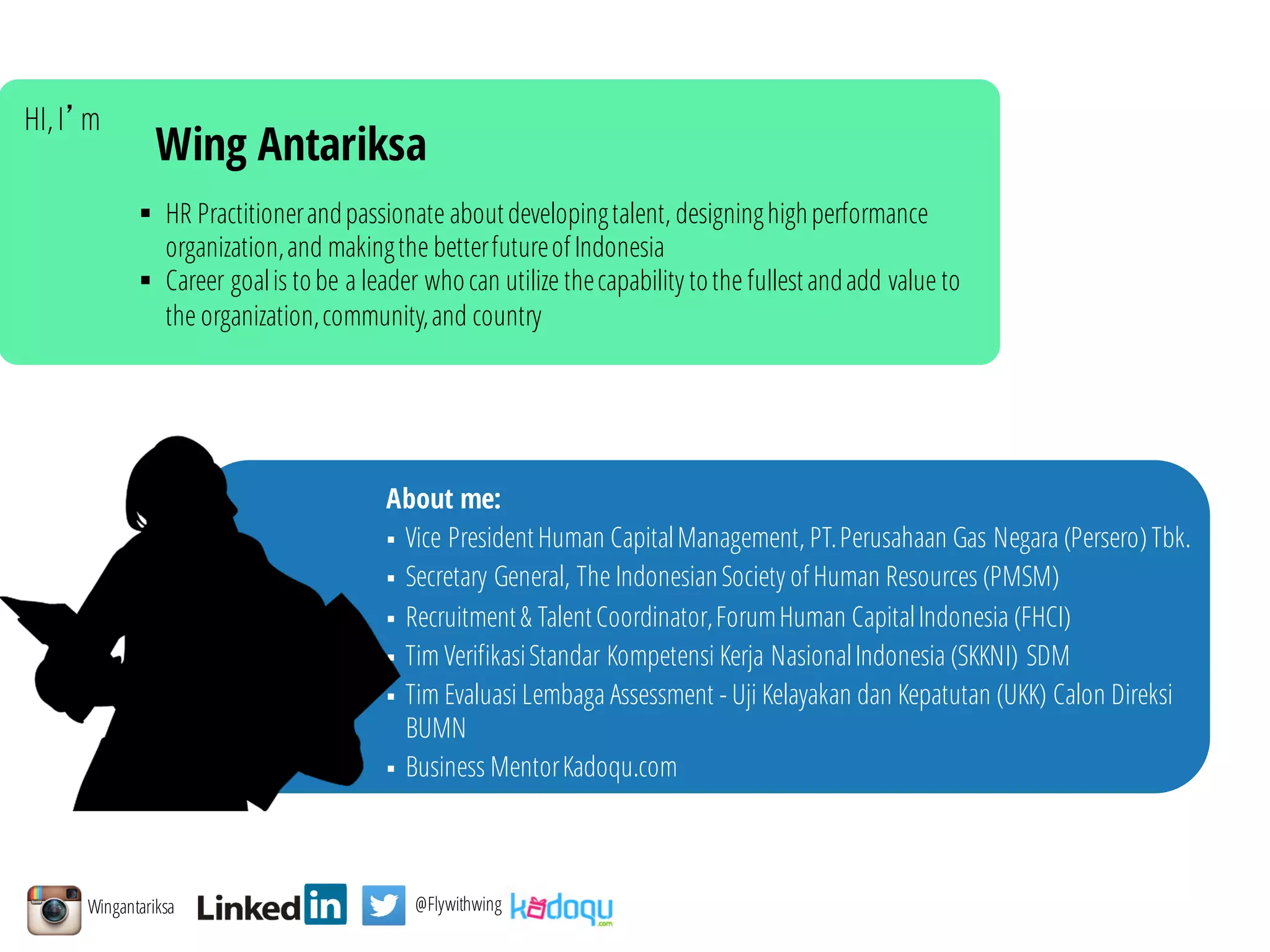
About me:
§ Vice President Human CapitalManagement, PT.Perusahaan Gas Negara (Persero) Tbk.
§ Secretary General, The IndonesianSociety of Human Resources (PMSM)
§ Recruitment & Talent Coordinator,ForumHuman CapitalIndonesia (FHCI)
§ Tim VerifikasiStandar Kompetensi Kerja NasionalIndonesia (SKKNI) SDM
§ Tim Evaluasi Lembaga Assessment - Uji Kelayakan dan Kepatutan (UKK) Calon Direksi
BUMN
§ Business MentorKadoqu.com
Wingantariksa @Flywithwing
Wing Antariksa
§ HR Practitionerandpassionate about developingtalent, designinghighperformance
organization,and makingthe betterfutureof Indonesia
§ Career goalis tobe a leader whocan utilize thecapability tothe fullest andadd value to
the organization,community,and country
HI,I’m
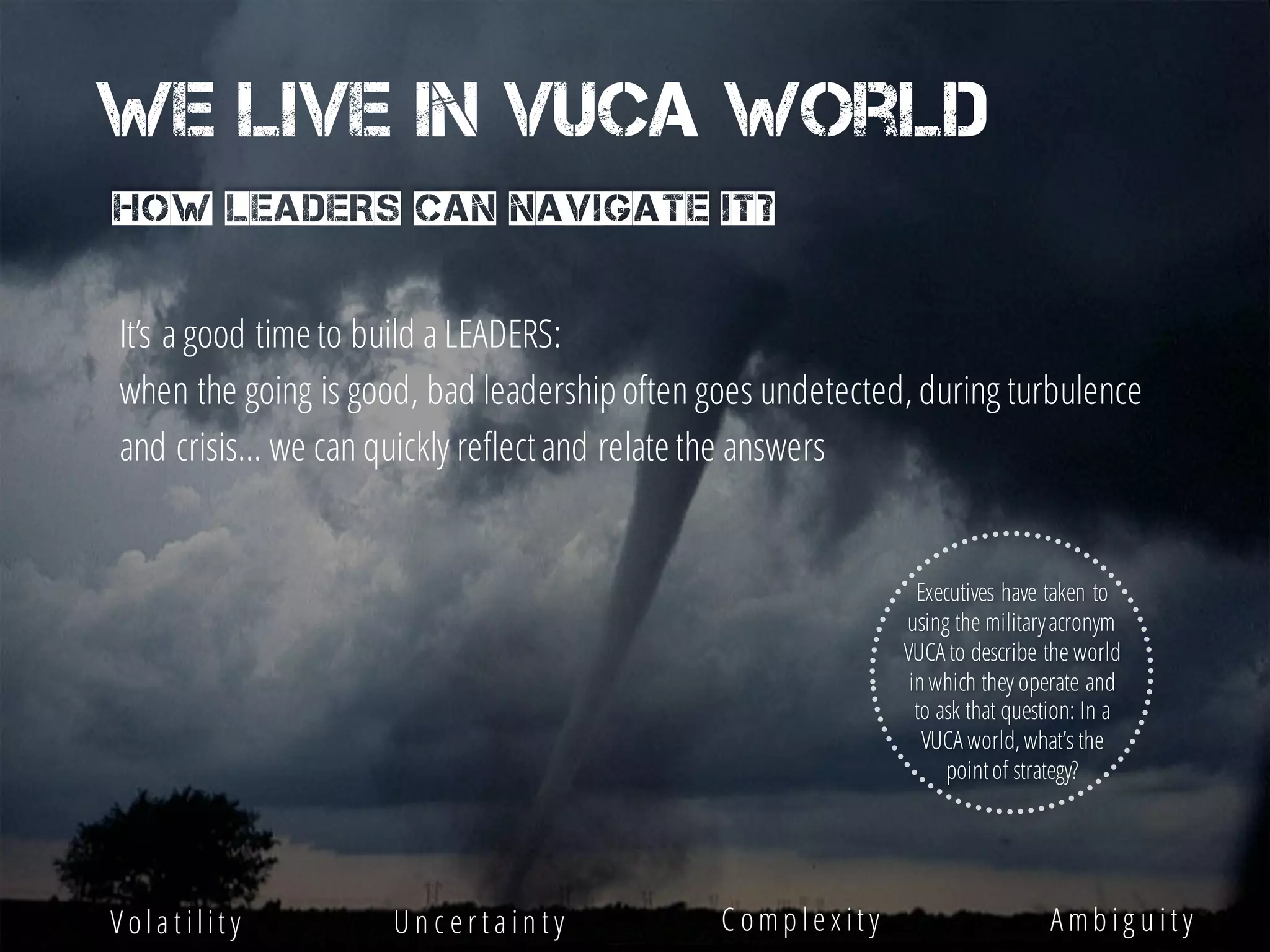
We live in VUCA world
How leaders can navigate it?
Executives have taken to
using the militaryacronym
VUCA to describe the world
inwhich they operate and
to ask that question: In a
VUCA world, what’s the
pointof strategy?
V ola t ilit y U n c e r t a in t y C omp le x it y A mb ig u it y
It’s a good time to build a LEADERS:
when the going is good, bad leadership often goes undetected, during turbulence
and crisis… we can quickly reflectand relate the answers
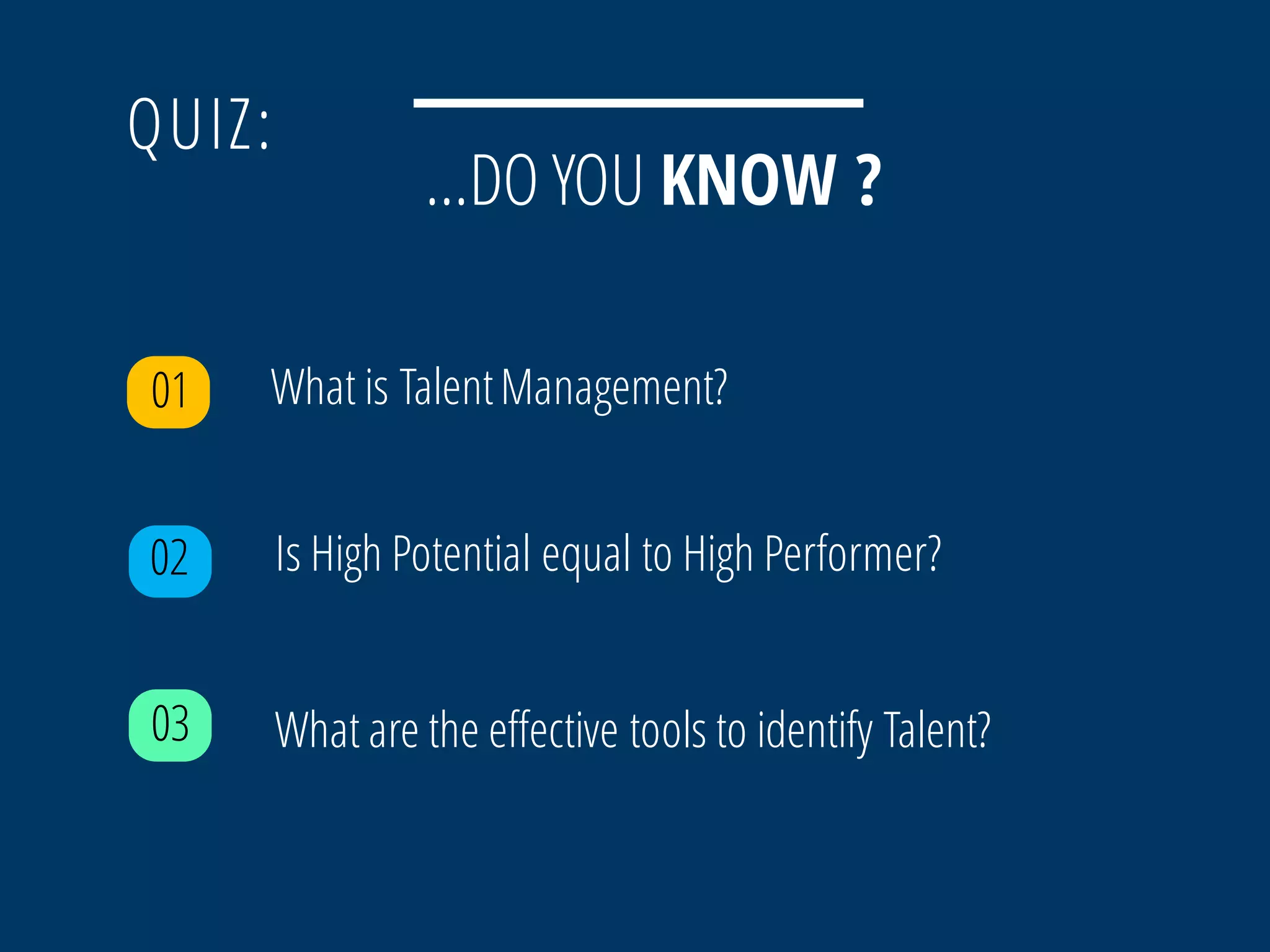
QUIZ:
…DO YOU KNOW ?
01
02 Is High Potential equal to High Performer?
03 What are the effective tools to identify Talent?
What is TalentManagement?
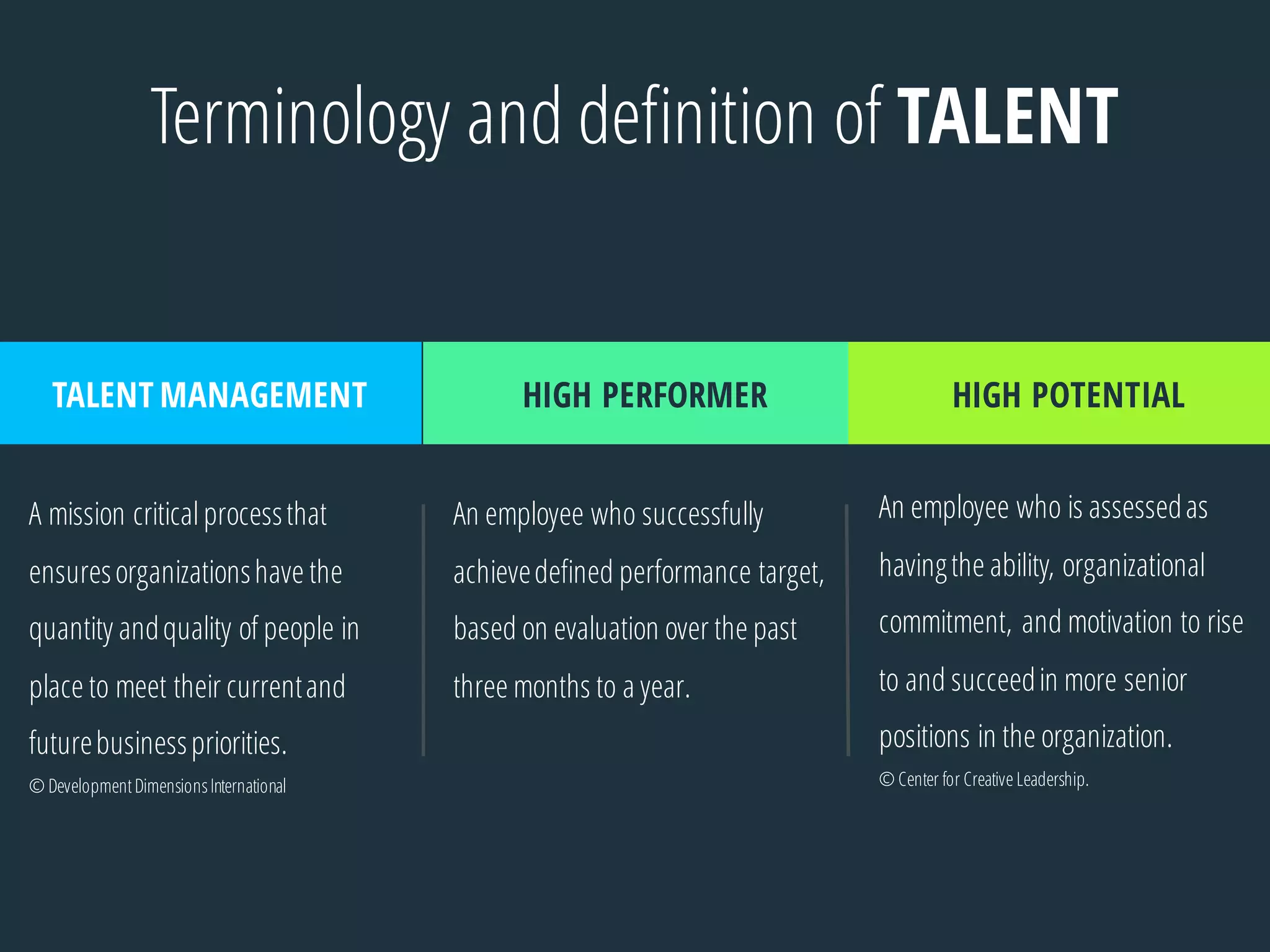
Terminology and definition of TALENT
TALENT MANAGEMENT HIGH PERFORMER HIGH POTENTIAL
A mission criticalprocessthat
ensuresorganizationshave the
quantity andquality of people in
place to meet their currentand
futurebusinesspriorities.
© DevelopmentDimensionsInternational
An employee who successfully
achievedefined performance target,
based on evaluation over the past
three months to a year.
An employee who is assessedas
havingthe ability, organizational
commitment, and motivation to rise
to and succeedin more senior
positions in the organization.
© Center for Creative Leadership.
ONLY 15% of today’s high performers
are high potential talent
A thorough talent management program
is not just about
spotting 'star performers' in the organization
and designinga high-flying leadership
training program
Critical elements to create EFFECTIVE TALENT
MANAGEMENT to beat the competition
ALIGN WITH BUSINESS
STRATEGY
Clarify your business
strategy, thenalign that
withyour talent strategy
1
GET LEADERSHIP
COMMITMENT
The most successful
initiativesare driven by HR
withactive and enthusiastic
support
fromthe CEO and other
senior leaders
2
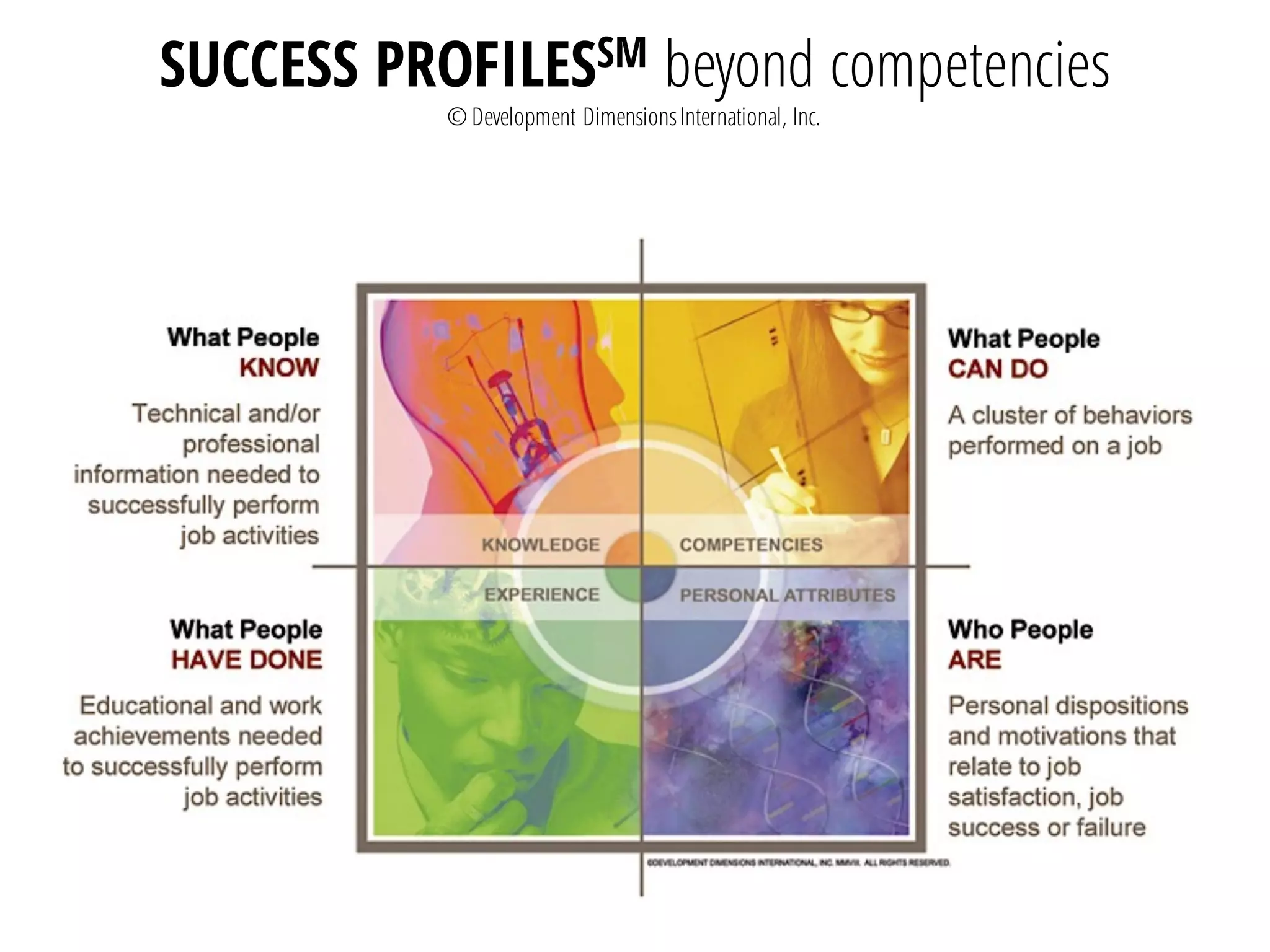
KNOW WHAT
YOU’RE LOOKING FOR
Utilize thepower of
competencies and
beyond…personal
attributes,knowledge,
and experience
3
Defining FUTURE
LEADERS
“If you don’tknowwhat you’re
lookingfor,you’ll neverknow
when you findit”
SUCCESS PROFILESSM beyond competencies
© Development DimensionsInternational, Inc.
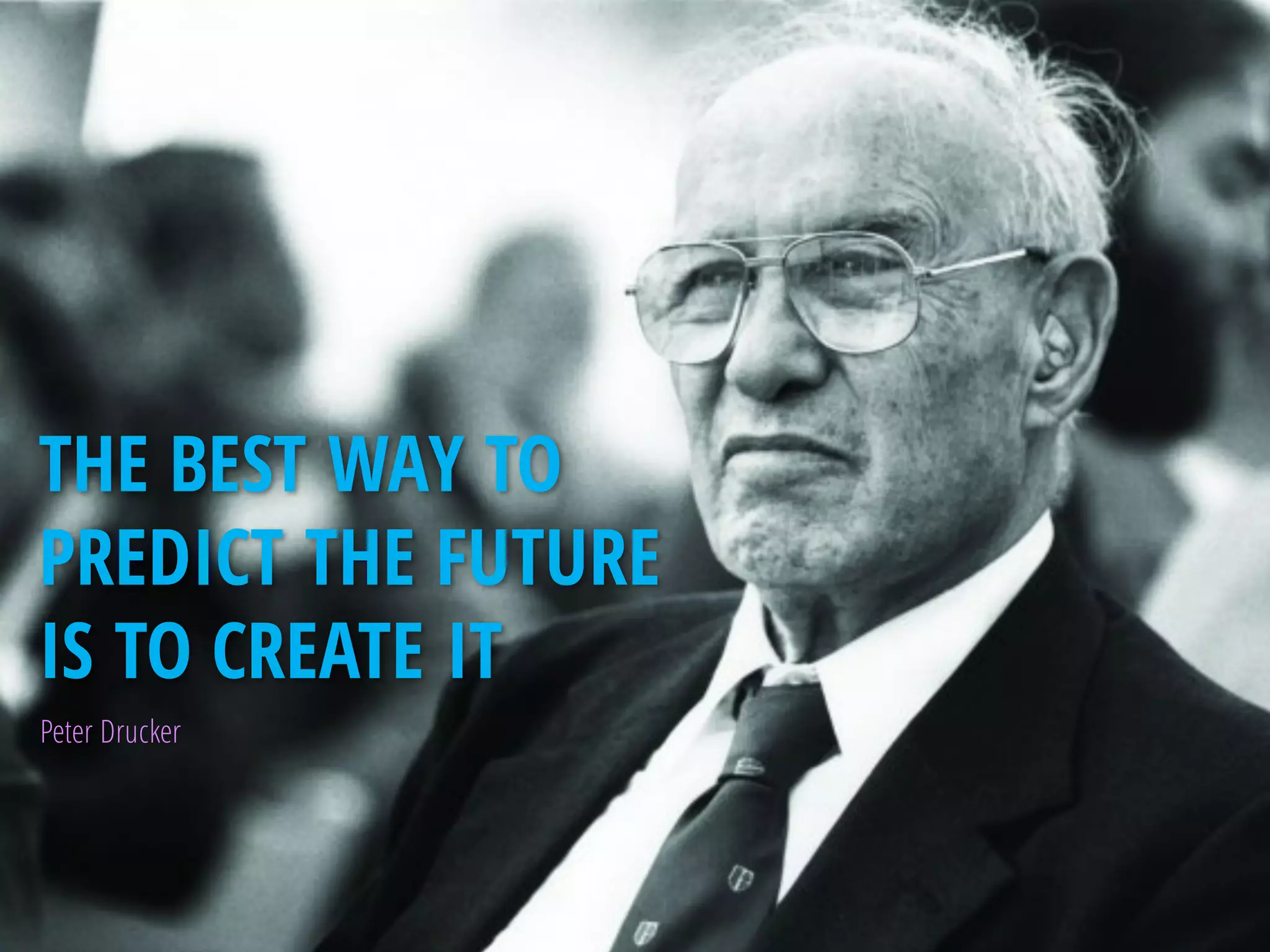
THE BEST WAY TO
PREDICT THE FUTURE
IS TO CREATE IT
Peter Drucker
QUESTIONS:
01
02 How are high potentials treated differently thanother
employees in your organization?
03
Have you been formally identified as a high-potential
employee?
Doesyour organizationhave a formalprocess for identifying
high-potential employees?
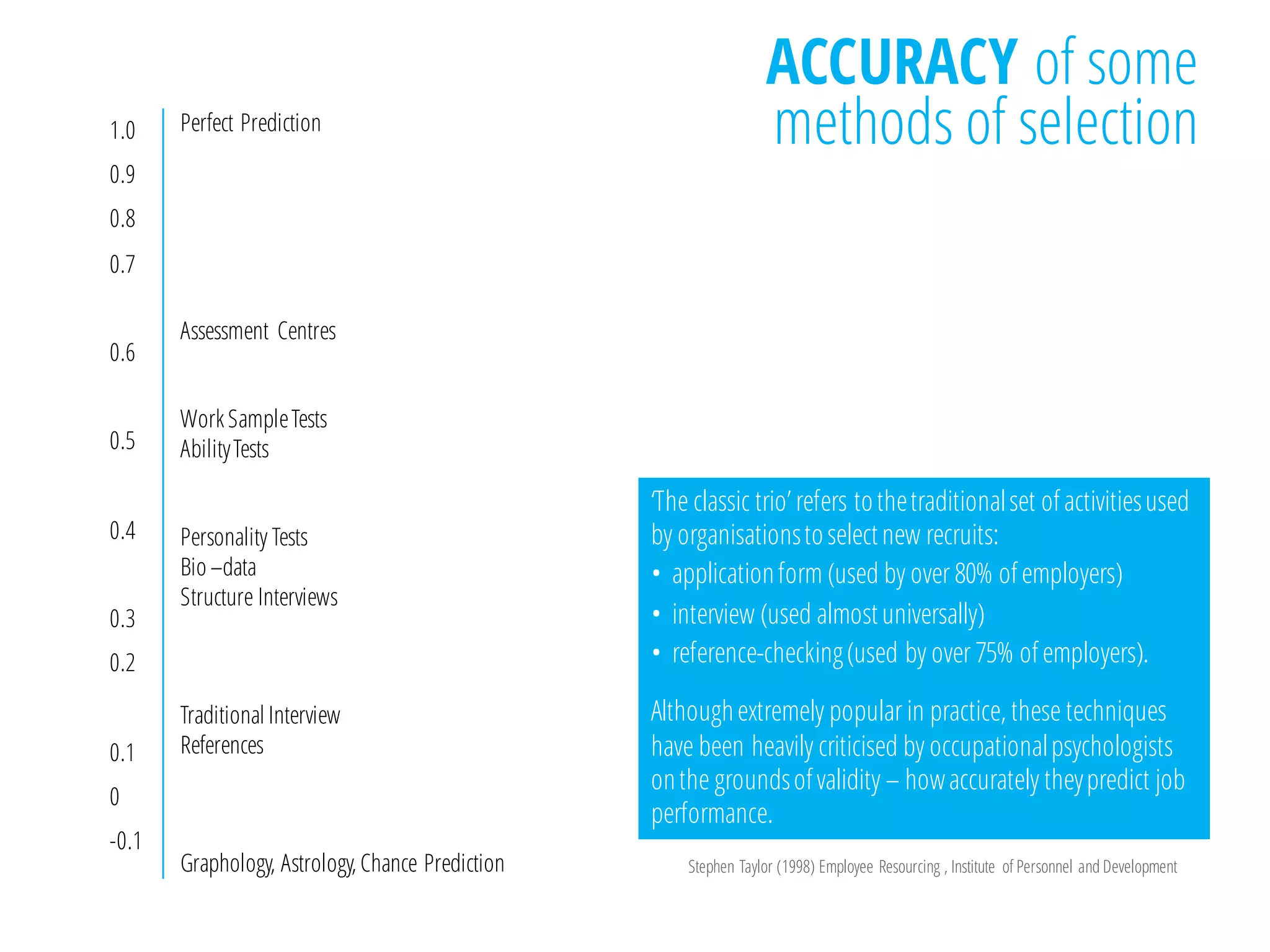
1.0
0.9
0.8
0.7
0.6
0.5
0.4
0.3
0.2
0.1
0
-0.1
ACCURACY of some
methods of selection
Stephen Taylor (1998) Employee Resourcing , Institute of Personnel and Development
Perfect Prediction
Assessment Centres
Work SampleTests
AbilityTests
Personality Tests
Bio –data
Structure Interviews
Traditional Interview
References
Graphology, Astrology, Chance Prediction
‘The classic trio’ refers tothetraditionalset of activitiesused
by organisationstoselect new recruits:
• applicationform (used by over 80% of employers)
• interview (used almost universally)
• reference-checking(used by over 75% of employers).
Althoughextremely popular in practice, these techniques
have been heavily criticised by occupationalpsychologists
onthe groundsof validity – howaccurately theypredict job
performance.
1. ACCURACY: the ability of your selection process to
validlypredict applicants’ job performance
2. EQUITY: the assurance that yourselection system
givesevery qualified applicant a fair and equal chance
to be selected
3. BUY-IN: the extent to which the people involvedin
the selection process perceive its worth
The most effective selection systems share three goals:
Diagnosing
DEVELOPMENT
NEEDS
“It is a poordoctorwho starts
treatmentbeforeknowingwhat the
problemis”
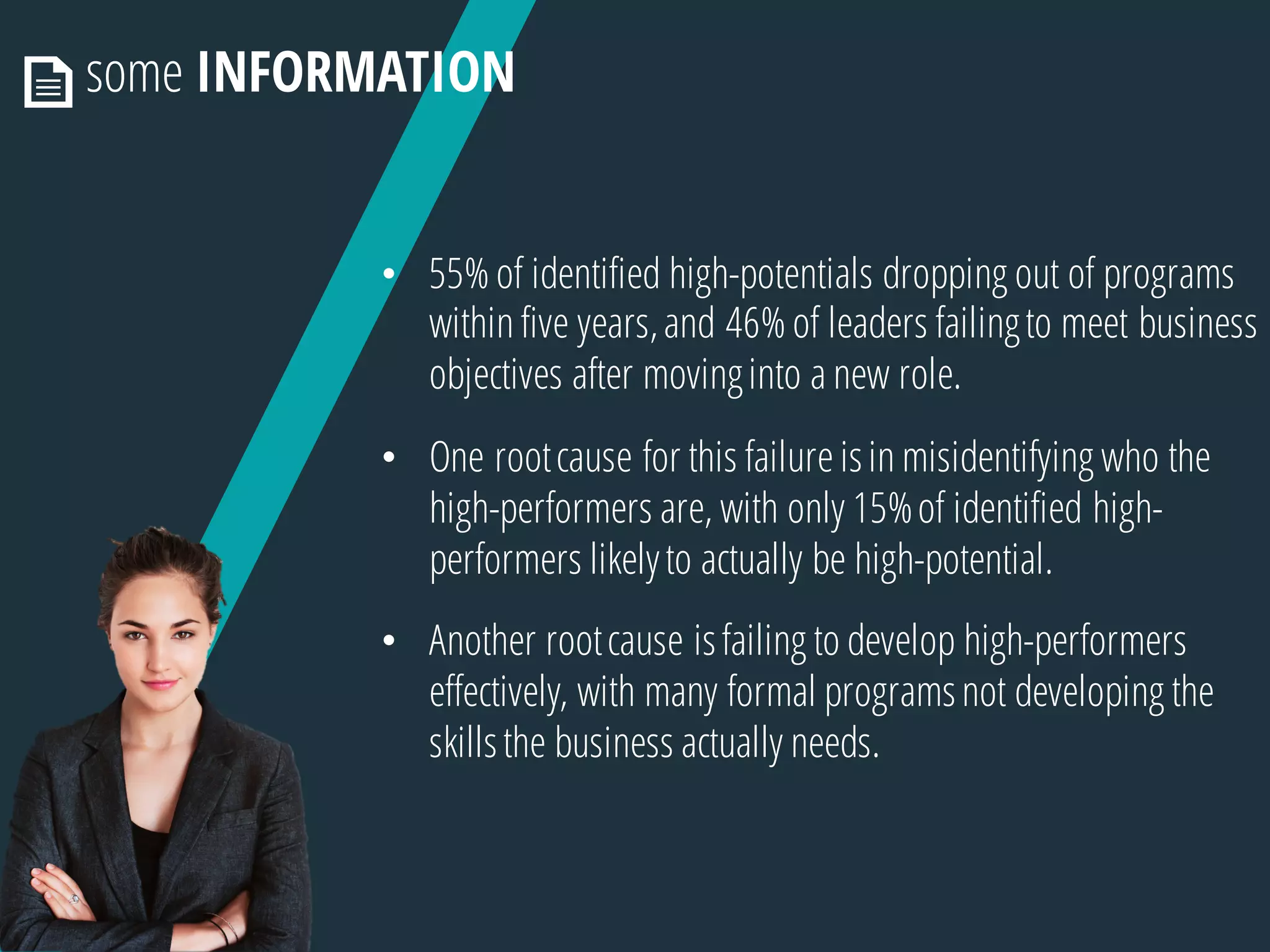
some INFORMATION
• 55% of identified high-potentials dropping out of programs
within five years,and 46% of leaders failingto meet business
objectives after movinginto a new role.
• One rootcause for this failureisin misidentifying who the
high-performers are, with only 15%of identified high-
performers likelyto actually be high-potential.
• Another rootcause isfailing to develop high-performers
effectively, with many formal programsnot developing the
skillsthe business actually needs.
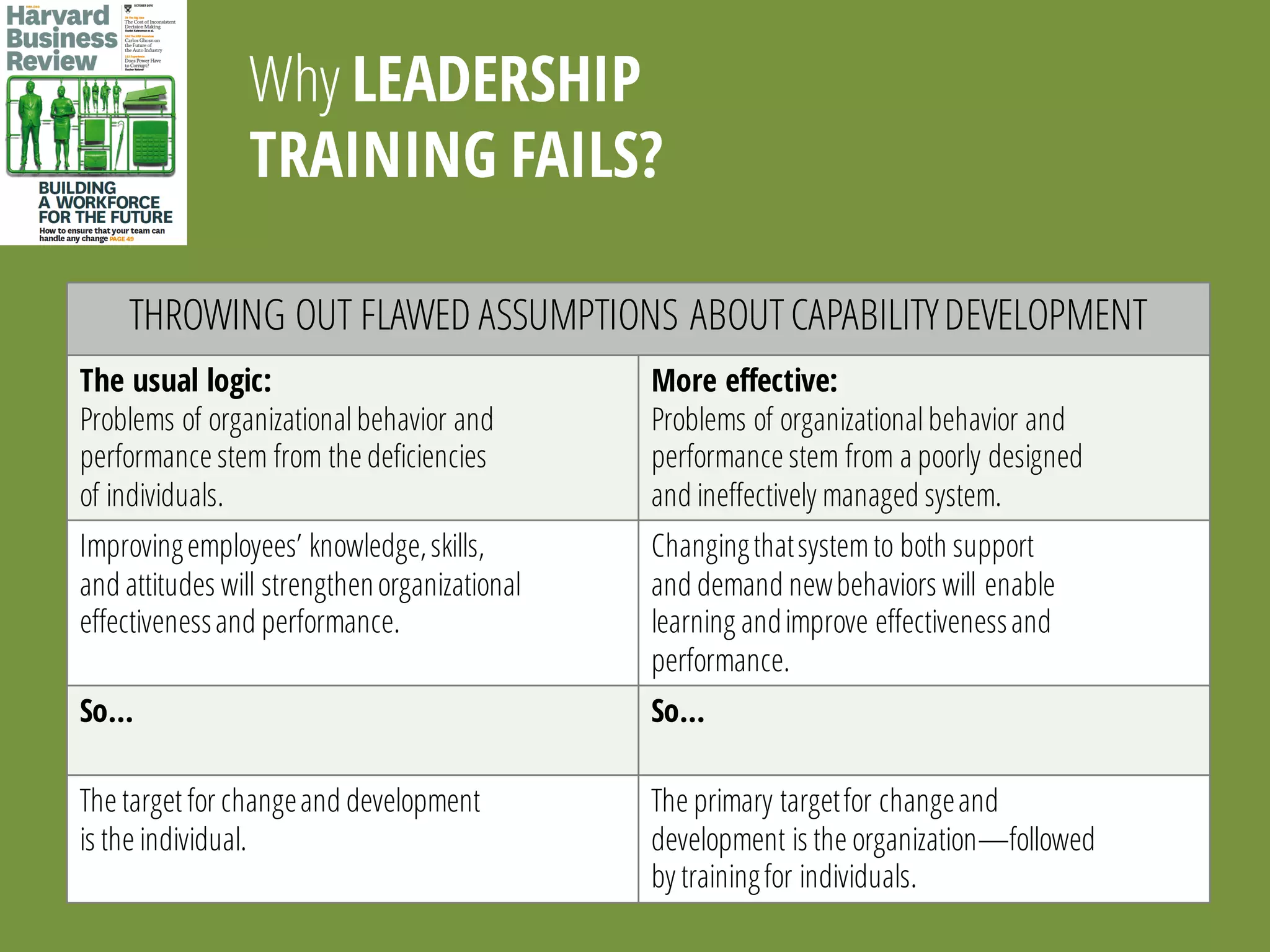
Why LEADERSHIP
TRAINING FAILS?
THROWING OUT FLAWED ASSUMPTIONS ABOUT CAPABILITYDEVELOPMENT
The usual logic:
Problems of organizationalbehavior and
performance stem from the deficiencies
of individuals.
More effective:
Problems of organizationalbehavior and
performance stem from a poorly designed
and ineffectively managed system.
Improvingemployees’ knowledge,skills,
and attitudes will strengthenorganizational
effectivenessand performance.
Changingthatsystemto both support
and demand newbehaviors will enable
learning andimprove effectivenessand
performance.
So… So…
The target for changeand development
is the individual.
The primary targetfor changeand
development is the organization—followed
by trainingfor individuals.
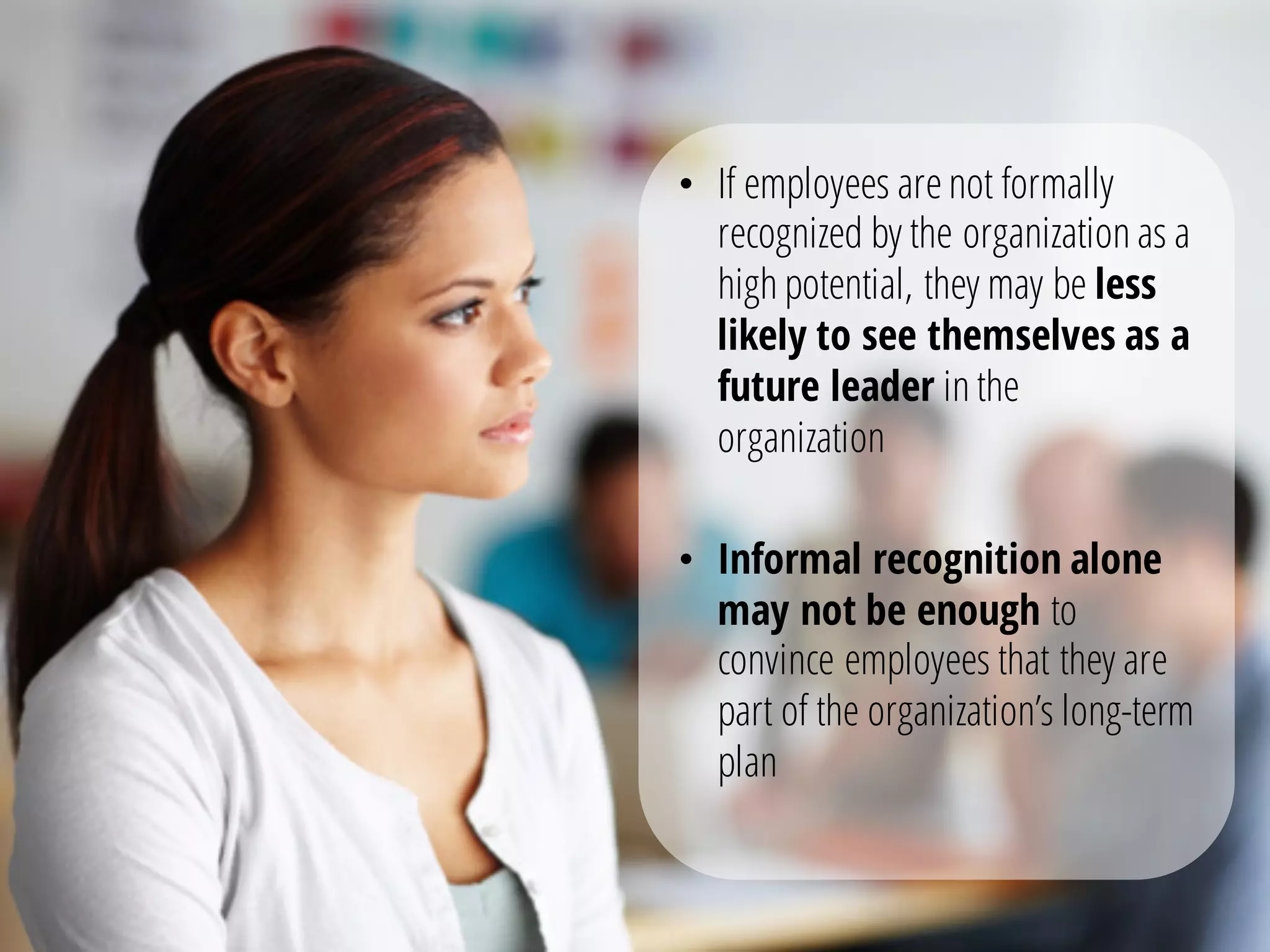
• If employees arenot formally
recognized by the organization as a
high potential, they may be less
likely to see themselves as a
future leader in the
organization
• Informal recognition alone
may not be enough to
convince employees that they are
part of the organization’s long-term
plan
LET’S WATCH
T H E E N D

Using Technology to Manage your Current and Future Talents

  • 1.
    MANAGE YOUR CURRENT ANDFUTURE TALENTS Jakarta, 20September 2016
  • 2.
    About me: § VicePresident Human CapitalManagement, PT.Perusahaan Gas Negara (Persero) Tbk. § Secretary General, The IndonesianSociety of Human Resources (PMSM) § Recruitment & Talent Coordinator,ForumHuman CapitalIndonesia (FHCI) § Tim VerifikasiStandar Kompetensi Kerja NasionalIndonesia (SKKNI) SDM § Tim Evaluasi Lembaga Assessment - Uji Kelayakan dan Kepatutan (UKK) Calon Direksi BUMN § Business MentorKadoqu.com Wingantariksa @Flywithwing Wing Antariksa § HR Practitionerandpassionate about developingtalent, designinghighperformance organization,and makingthe betterfutureof Indonesia § Career goalis tobe a leader whocan utilize thecapability tothe fullest andadd value to the organization,community,and country HI,I’m
  • 3.
    We live inVUCA world How leaders can navigate it? Executives have taken to using the militaryacronym VUCA to describe the world inwhich they operate and to ask that question: In a VUCA world, what’s the pointof strategy? V ola t ilit y U n c e r t a in t y C omp le x it y A mb ig u it y It’s a good time to build a LEADERS: when the going is good, bad leadership often goes undetected, during turbulence and crisis… we can quickly reflectand relate the answers
  • 4.
    QUIZ: …DO YOU KNOW? 01 02 Is High Potential equal to High Performer? 03 What are the effective tools to identify Talent? What is TalentManagement?
  • 5.
    Terminology and definitionof TALENT TALENT MANAGEMENT HIGH PERFORMER HIGH POTENTIAL A mission criticalprocessthat ensuresorganizationshave the quantity andquality of people in place to meet their currentand futurebusinesspriorities. © DevelopmentDimensionsInternational An employee who successfully achievedefined performance target, based on evaluation over the past three months to a year. An employee who is assessedas havingthe ability, organizational commitment, and motivation to rise to and succeedin more senior positions in the organization. © Center for Creative Leadership.
  • 6.
    ONLY 15% oftoday’s high performers are high potential talent
  • 7.
    A thorough talentmanagement program is not just about spotting 'star performers' in the organization and designinga high-flying leadership training program
  • 8.
    Critical elements tocreate EFFECTIVE TALENT MANAGEMENT to beat the competition ALIGN WITH BUSINESS STRATEGY Clarify your business strategy, thenalign that withyour talent strategy 1 GET LEADERSHIP COMMITMENT The most successful initiativesare driven by HR withactive and enthusiastic support fromthe CEO and other senior leaders 2 KNOW WHAT YOU’RE LOOKING FOR Utilize thepower of competencies and beyond…personal attributes,knowledge, and experience 3
  • 9.
    Defining FUTURE LEADERS “If youdon’tknowwhat you’re lookingfor,you’ll neverknow when you findit”
  • 10.
    SUCCESS PROFILESSM beyondcompetencies © Development DimensionsInternational, Inc.
  • 11.
    THE BEST WAYTO PREDICT THE FUTURE IS TO CREATE IT Peter Drucker
  • 12.
    QUESTIONS: 01 02 How arehigh potentials treated differently thanother employees in your organization? 03 Have you been formally identified as a high-potential employee? Doesyour organizationhave a formalprocess for identifying high-potential employees?
  • 13.
    1.0 0.9 0.8 0.7 0.6 0.5 0.4 0.3 0.2 0.1 0 -0.1 ACCURACY of some methodsof selection Stephen Taylor (1998) Employee Resourcing , Institute of Personnel and Development Perfect Prediction Assessment Centres Work SampleTests AbilityTests Personality Tests Bio –data Structure Interviews Traditional Interview References Graphology, Astrology, Chance Prediction ‘The classic trio’ refers tothetraditionalset of activitiesused by organisationstoselect new recruits: • applicationform (used by over 80% of employers) • interview (used almost universally) • reference-checking(used by over 75% of employers). Althoughextremely popular in practice, these techniques have been heavily criticised by occupationalpsychologists onthe groundsof validity – howaccurately theypredict job performance.
  • 14.
    1. ACCURACY: theability of your selection process to validlypredict applicants’ job performance 2. EQUITY: the assurance that yourselection system givesevery qualified applicant a fair and equal chance to be selected 3. BUY-IN: the extent to which the people involvedin the selection process perceive its worth The most effective selection systems share three goals:
  • 15.
    Diagnosing DEVELOPMENT NEEDS “It is apoordoctorwho starts treatmentbeforeknowingwhat the problemis”
  • 16.
    some INFORMATION • 55%of identified high-potentials dropping out of programs within five years,and 46% of leaders failingto meet business objectives after movinginto a new role. • One rootcause for this failureisin misidentifying who the high-performers are, with only 15%of identified high- performers likelyto actually be high-potential. • Another rootcause isfailing to develop high-performers effectively, with many formal programsnot developing the skillsthe business actually needs.
  • 17.
    Why LEADERSHIP TRAINING FAILS? THROWINGOUT FLAWED ASSUMPTIONS ABOUT CAPABILITYDEVELOPMENT The usual logic: Problems of organizationalbehavior and performance stem from the deficiencies of individuals. More effective: Problems of organizationalbehavior and performance stem from a poorly designed and ineffectively managed system. Improvingemployees’ knowledge,skills, and attitudes will strengthenorganizational effectivenessand performance. Changingthatsystemto both support and demand newbehaviors will enable learning andimprove effectivenessand performance. So… So… The target for changeand development is the individual. The primary targetfor changeand development is the organization—followed by trainingfor individuals.
  • 18.
    • If employeesarenot formally recognized by the organization as a high potential, they may be less likely to see themselves as a future leader in the organization • Informal recognition alone may not be enough to convince employees that they are part of the organization’s long-term plan
  • 19.
  • 20.
    T H EE N D