USING INCENTIVES
TO ACHIEVE
COMMUNITY GOALS
Economic Development Financing Tools
National League of Cities
Congress of Cities - Seattle, WA
November 15, 2013
Ellen Harpel, President
Business Development Advisors
1

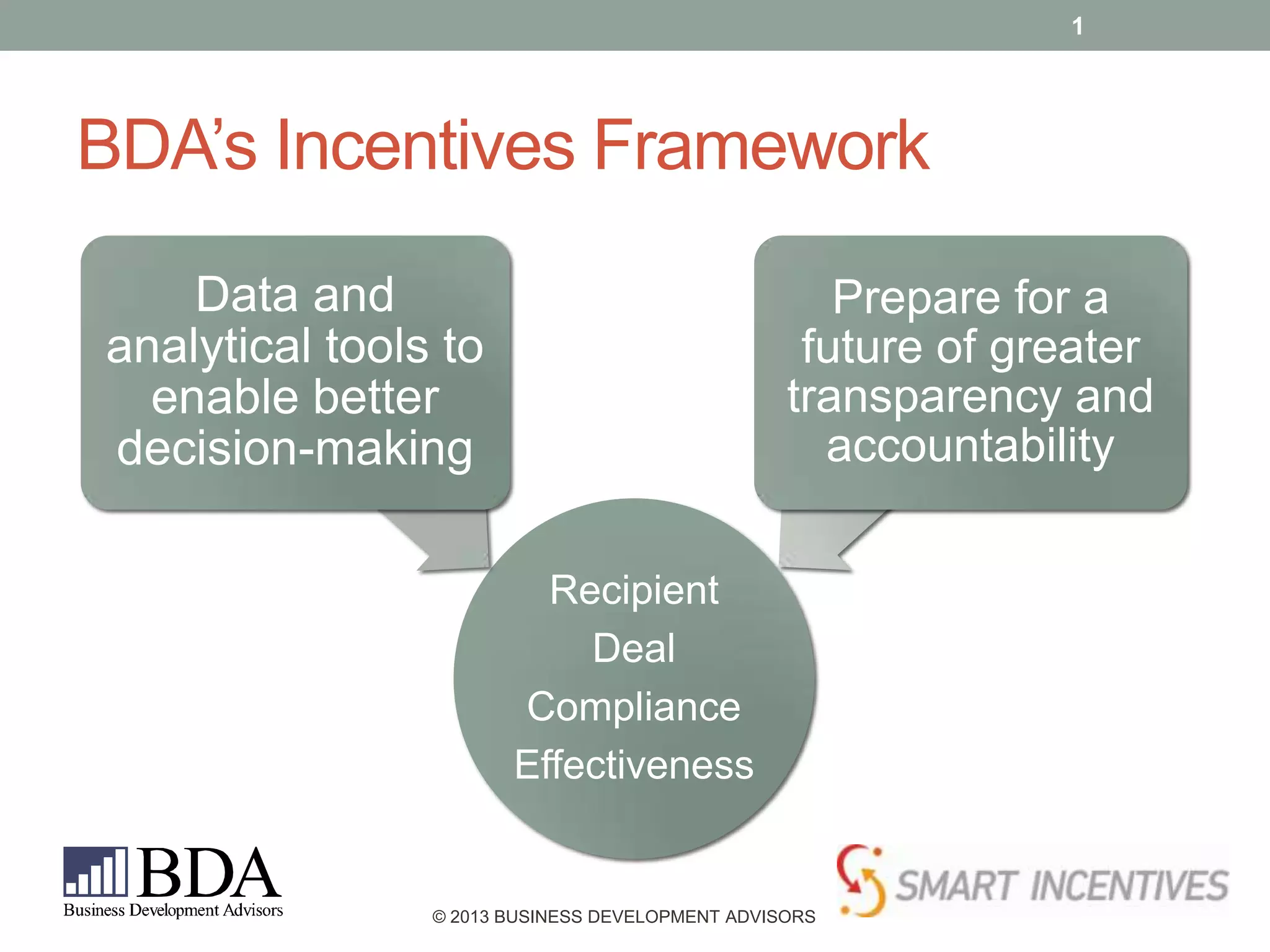
BDA’s Incentives Framework
Data and
analytical tools to
enable better
decision-making

Prepare for a
future of greater
transparency and
accountability
Recipient
Deal
Compliance
Effectiveness

© 2013 BUSINESS DEVELOPMENT ADVISORS
2

I. Incentive Basics
• Categories
• Direct business financing
• Indirect business financing
• Community-oriented
• Tax-related
• Types
• Bonds
• Grants
• Investments
• Loans
• Tax abatements, credits, deductions, exemptions
Source: C2ER - www.stateincentives.org
© 2013 BUSINESS DEVELOPMENT ADVISORS
3

Incentive Basics (continued)
• Business Need
• Capital access
• Facility/site location
• Infrastructure
• Marketing
• Product/process improvement
• Regulatory climate
• Workforce
• Discretionary and non-discretionary
• Targeted (or not) by industry or geography

© 2013 BUSINESS DEVELOPMENT ADVISORS
4

II. Using Incentives – Is this a good deal?
• Project Benefits

• Fiscal Impact
• Economic Impact

Can this incentive deal generate net benefits
for your community?

© 2013 BUSINESS DEVELOPMENT ADVISORS
5

Project Benefits
• Project characteristics
• Jobs, wages, investment, location
• Fit with economic development strategy
• Target industries, business types, regional support, match with
program criteria
• Timeframe
• Timing and lifespan
• Likelihood of Success
• Other backers? Risk level?

© 2013 BUSINESS DEVELOPMENT ADVISORS
6

Fiscal Impact
• Tax and budgetary implications for state and local

government of incentive decisions
• Are taxes generated likely to exceed the cost of the
incentive and additional costs of service
• Consider:
• Can you quantify the cost and timing of the incentive?
• What type of tax revenue will the project generate?
• What additional expenditures might be required?

• Do a formal analysis

© 2013 BUSINESS DEVELOPMENT ADVISORS
7

Economic Impact
• Traces the flow of money throughout the economy after

the initial investment
• To estimate the contribution of economic activities to a
regional or state economy
• Economic impact depends on industrial structure and size
of your region
• Consider:
• Indirect and induced impacts?
• Quality of data inputs
• Interpret carefully

© 2013 BUSINESS DEVELOPMENT ADVISORS
8

III. Managing Incentives – WAS this a
good deal?
• Monitor compliance - performance
• Assess effectiveness - evaluation
• Reporting and policy feedback

© 2013 BUSINESS DEVELOPMENT ADVISORS
9

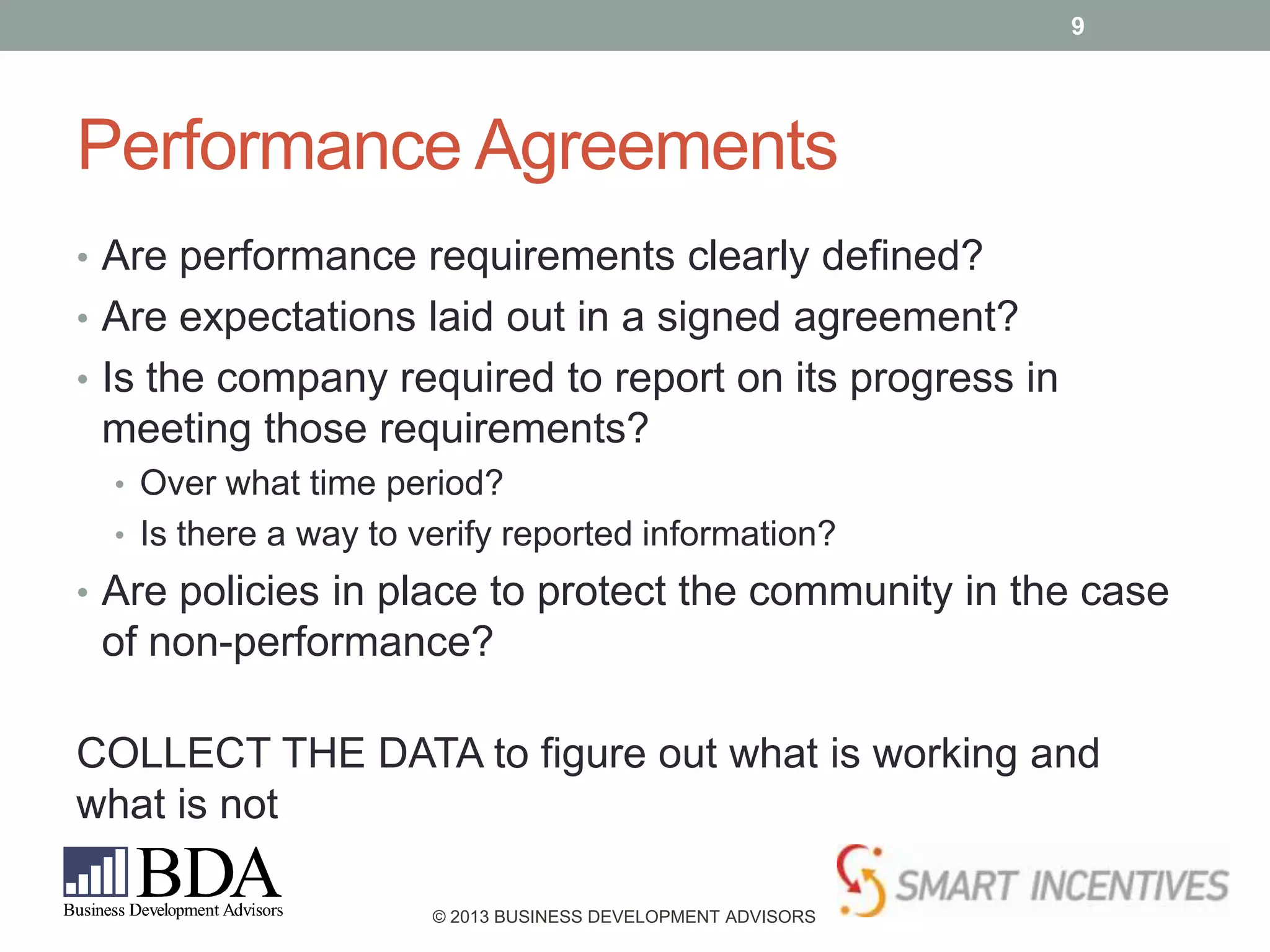
Performance Agreements
• Are performance requirements clearly defined?
• Are expectations laid out in a signed agreement?
• Is the company required to report on its progress in

meeting those requirements?
• Over what time period?
• Is there a way to verify reported information?

• Are policies in place to protect the community in the case

of non-performance?

COLLECT THE DATA to figure out what is working and
what is not
© 2013 BUSINESS DEVELOPMENT ADVISORS
10

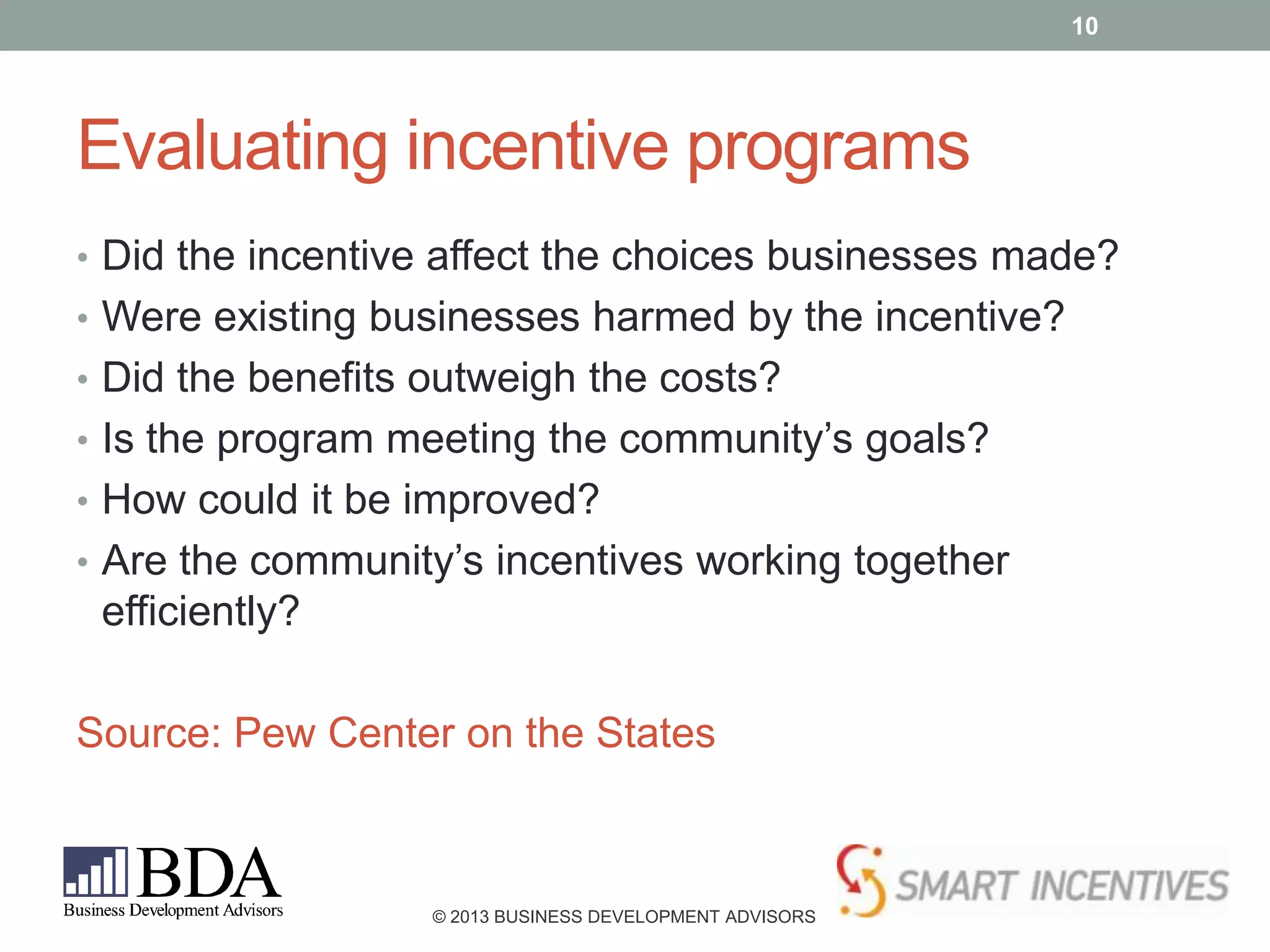
Evaluating incentive programs
• Did the incentive affect the choices businesses made?
• Were existing businesses harmed by the incentive?
• Did the benefits outweigh the costs?
• Is the program meeting the community’s goals?
• How could it be improved?

• Are the community’s incentives working together

efficiently?
Source: Pew Center on the States

© 2013 BUSINESS DEVELOPMENT ADVISORS
11

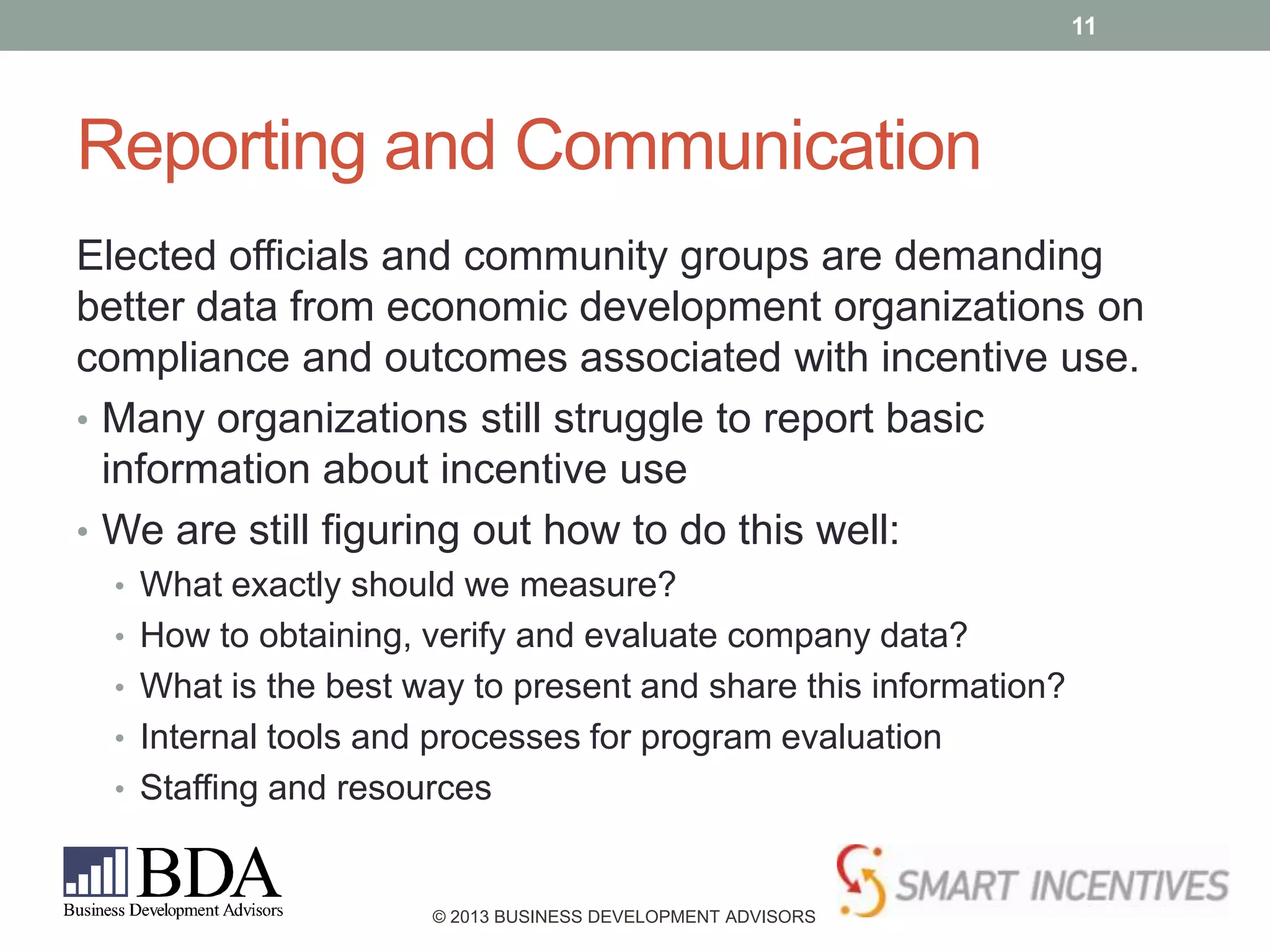
Reporting and Communication
Elected officials and community groups are demanding
better data from economic development organizations on
compliance and outcomes associated with incentive use.
• Many organizations still struggle to report basic
information about incentive use
• We are still figuring out how to do this well:
• What exactly should we measure?
• How to obtaining, verify and evaluate company data?
• What is the best way to present and share this information?
• Internal tools and processes for program evaluation
• Staffing and resources

© 2013 BUSINESS DEVELOPMENT ADVISORS
12

Contact Information
• Ellen Harpel

President
• 571/212.3397
• eharpel@businessdevelopmentadvisors.com
• www.businessdevelopmentadvisors.com
• www.linkedin.com/pub/ellen-harpel/a/448/266

ellen@smartincentives.org
• http://www.smartincentives.org/
• Twitter: @smartincentives

© 2013 BUSINESS DEVELOPMENT ADVISORS
13

Additional Resources
• C2ER State Incentives Database
• Pew Center on the States Economic Development

Incentives Project
• Evidence Counts
• Avoiding Blank Checks

• Smart Incentives blog
• Cost – Benefit Analysis
• informAnalytics
• Impact DataSource
• REMI

© 2013 BUSINESS DEVELOPMENT ADVISORS

Using incentives to achieve community goals nlc 2013

  • 1.
    USING INCENTIVES TO ACHIEVE COMMUNITYGOALS Economic Development Financing Tools National League of Cities Congress of Cities - Seattle, WA November 15, 2013 Ellen Harpel, President Business Development Advisors
  • 2.
    1 BDA’s Incentives Framework Dataand analytical tools to enable better decision-making Prepare for a future of greater transparency and accountability Recipient Deal Compliance Effectiveness © 2013 BUSINESS DEVELOPMENT ADVISORS
  • 3.
    2 I. Incentive Basics •Categories • Direct business financing • Indirect business financing • Community-oriented • Tax-related • Types • Bonds • Grants • Investments • Loans • Tax abatements, credits, deductions, exemptions Source: C2ER - www.stateincentives.org © 2013 BUSINESS DEVELOPMENT ADVISORS
  • 4.
    3 Incentive Basics (continued) •Business Need • Capital access • Facility/site location • Infrastructure • Marketing • Product/process improvement • Regulatory climate • Workforce • Discretionary and non-discretionary • Targeted (or not) by industry or geography © 2013 BUSINESS DEVELOPMENT ADVISORS
  • 5.
    4 II. Using Incentives– Is this a good deal? • Project Benefits • Fiscal Impact • Economic Impact Can this incentive deal generate net benefits for your community? © 2013 BUSINESS DEVELOPMENT ADVISORS
  • 6.
    5 Project Benefits • Projectcharacteristics • Jobs, wages, investment, location • Fit with economic development strategy • Target industries, business types, regional support, match with program criteria • Timeframe • Timing and lifespan • Likelihood of Success • Other backers? Risk level? © 2013 BUSINESS DEVELOPMENT ADVISORS
  • 7.
    6 Fiscal Impact • Taxand budgetary implications for state and local government of incentive decisions • Are taxes generated likely to exceed the cost of the incentive and additional costs of service • Consider: • Can you quantify the cost and timing of the incentive? • What type of tax revenue will the project generate? • What additional expenditures might be required? • Do a formal analysis © 2013 BUSINESS DEVELOPMENT ADVISORS
  • 8.
    7 Economic Impact • Tracesthe flow of money throughout the economy after the initial investment • To estimate the contribution of economic activities to a regional or state economy • Economic impact depends on industrial structure and size of your region • Consider: • Indirect and induced impacts? • Quality of data inputs • Interpret carefully © 2013 BUSINESS DEVELOPMENT ADVISORS
  • 9.
    8 III. Managing Incentives– WAS this a good deal? • Monitor compliance - performance • Assess effectiveness - evaluation • Reporting and policy feedback © 2013 BUSINESS DEVELOPMENT ADVISORS
  • 10.
    9 Performance Agreements • Areperformance requirements clearly defined? • Are expectations laid out in a signed agreement? • Is the company required to report on its progress in meeting those requirements? • Over what time period? • Is there a way to verify reported information? • Are policies in place to protect the community in the case of non-performance? COLLECT THE DATA to figure out what is working and what is not © 2013 BUSINESS DEVELOPMENT ADVISORS
  • 11.
    10 Evaluating incentive programs •Did the incentive affect the choices businesses made? • Were existing businesses harmed by the incentive? • Did the benefits outweigh the costs? • Is the program meeting the community’s goals? • How could it be improved? • Are the community’s incentives working together efficiently? Source: Pew Center on the States © 2013 BUSINESS DEVELOPMENT ADVISORS
  • 12.
    11 Reporting and Communication Electedofficials and community groups are demanding better data from economic development organizations on compliance and outcomes associated with incentive use. • Many organizations still struggle to report basic information about incentive use • We are still figuring out how to do this well: • What exactly should we measure? • How to obtaining, verify and evaluate company data? • What is the best way to present and share this information? • Internal tools and processes for program evaluation • Staffing and resources © 2013 BUSINESS DEVELOPMENT ADVISORS
  • 13.
    12 Contact Information • EllenHarpel President • 571/212.3397 • eharpel@businessdevelopmentadvisors.com • www.businessdevelopmentadvisors.com • www.linkedin.com/pub/ellen-harpel/a/448/266 ellen@smartincentives.org • http://www.smartincentives.org/ • Twitter: @smartincentives © 2013 BUSINESS DEVELOPMENT ADVISORS
  • 14.
    13 Additional Resources • C2ERState Incentives Database • Pew Center on the States Economic Development Incentives Project • Evidence Counts • Avoiding Blank Checks • Smart Incentives blog • Cost – Benefit Analysis • informAnalytics • Impact DataSource • REMI © 2013 BUSINESS DEVELOPMENT ADVISORS