
Aligning Incentives
with Equitable
Economic
Development
ELLEN HARPEL
EQUITABLE ECONOMIC DEVELOPMENT
FELLOWSHIP WEBINAR
MARCH 2019
About us
Smart Incentives helps communities make
sound decisions throughout the incentives
process
üAnalyze incentive offerings and program design
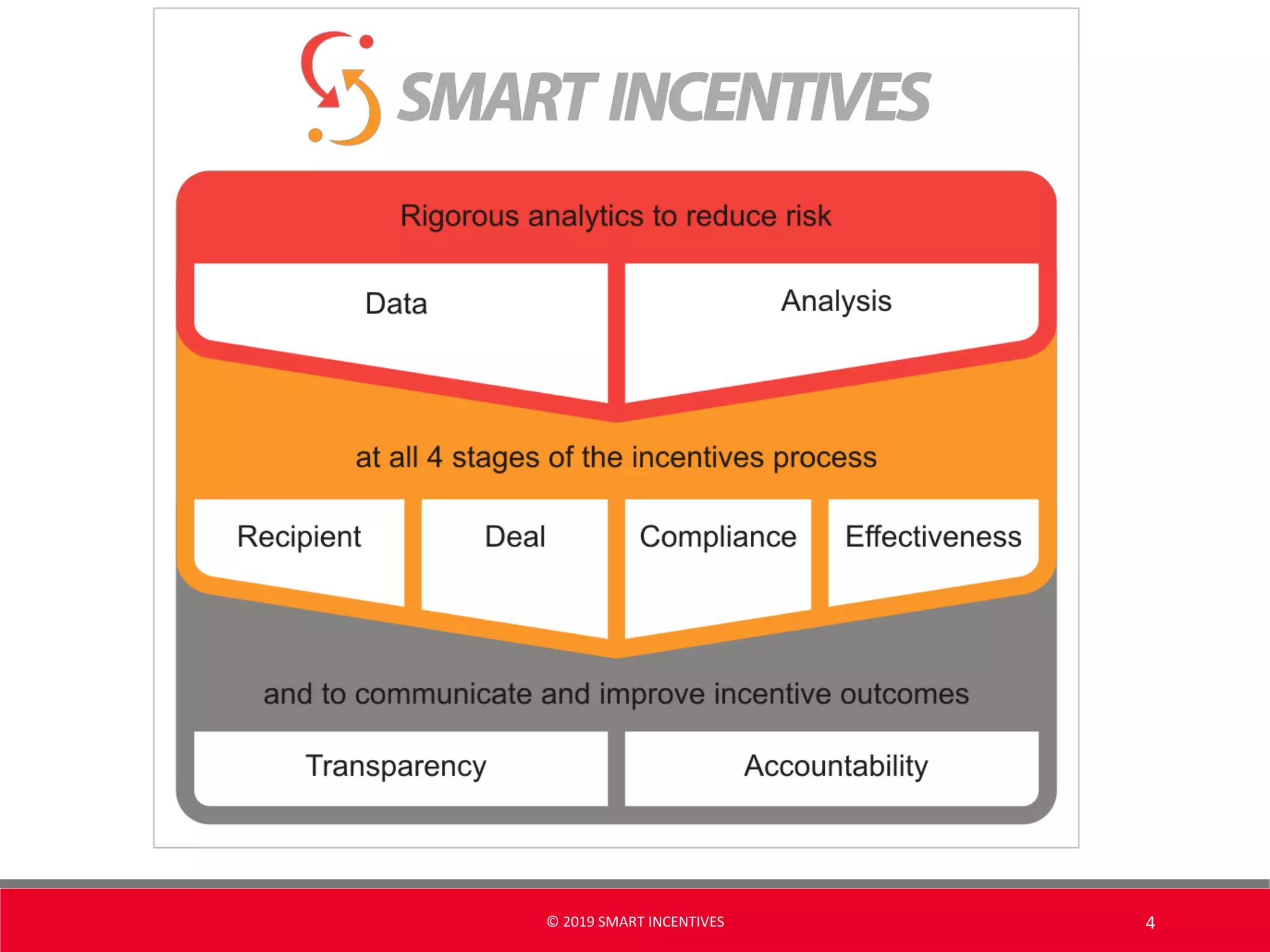
üApply the Smart Incentives 4x4 framework for program
management
üOffer access to high-quality business intelligence, data,
and analytical methods to guide decisions
üImprove evaluations and reporting on program results
2© 2019 SMART INCENTIVES
Why do we use incentives?
To achieve our community’s economic development goals
◦ Jobs
◦ Worker training
◦ Business development
◦ Investment
◦ Downtown revitalization
◦ Brownfield redevelopment
◦ Quality of life and quality of place
◦ Strengthen tax base
Incentives are not just about winning a deal. Smart incentive use is
always connected to a larger economic development strategy.
© 2019 SMART INCENTIVES 3
© 2019 SMART INCENTIVES 4
Lessons from
Amazon HQ2
© 2019 SMART INCENTIVES 5
Invest in the
community,
not just the
company
Incentives alone do not
carry the day.
Education, infrastructure
and housing create a
competitive environment.
Incentives should not
shortchange these
investments.
The best incentive offers
include investments that
benefit benefit both
residents and the
business.
© 2019 SMART INCENTIVES 6
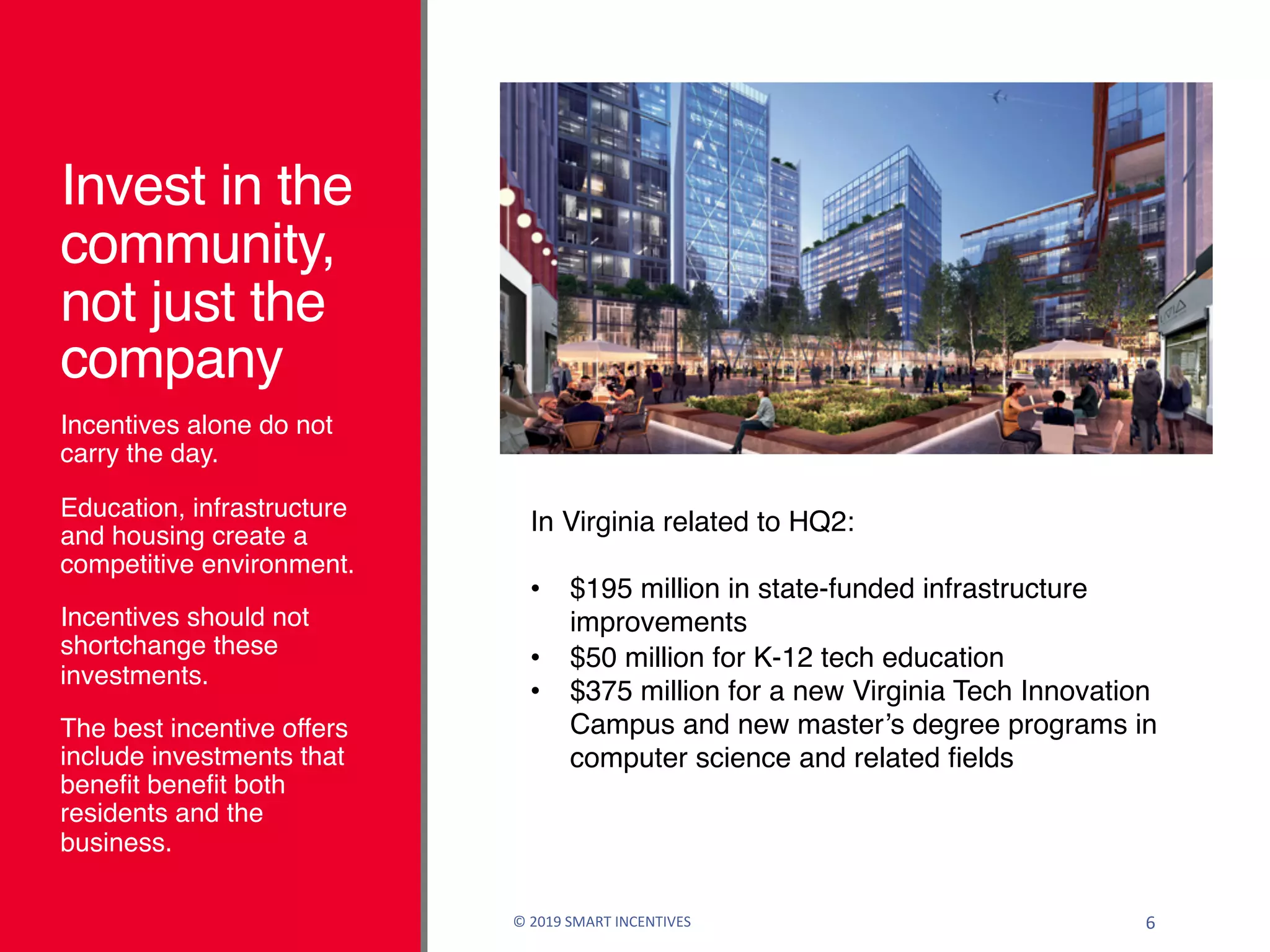
In Virginia related to HQ2:
• $195 million in state-funded infrastructure
improvements
• $50 million for K-12 tech education
• $375 million for a new Virginia Tech Innovation
Campus and new master’s degree programs in
computer science and related fields
Address
potential
downsides
Be realistic about costs
as well as benefits.
Projecting a positive
economic impact may no
longer be sufficient.
Who will benefit?
Will some residents feel
negative effects from
construction? In the
housing market?
Worsening congestion?
© 2019 SMART INCENTIVES 7
Always be
engaging
Don’t wait until a big
project comes along to
talk about your strategy.
Follow your own rules.
Build new coalitions.
Use multiple online and
in-person methods.
Make information easy to
find.
Report regularly on
outcomes.
© 2019 SMART INCENTIVES 8
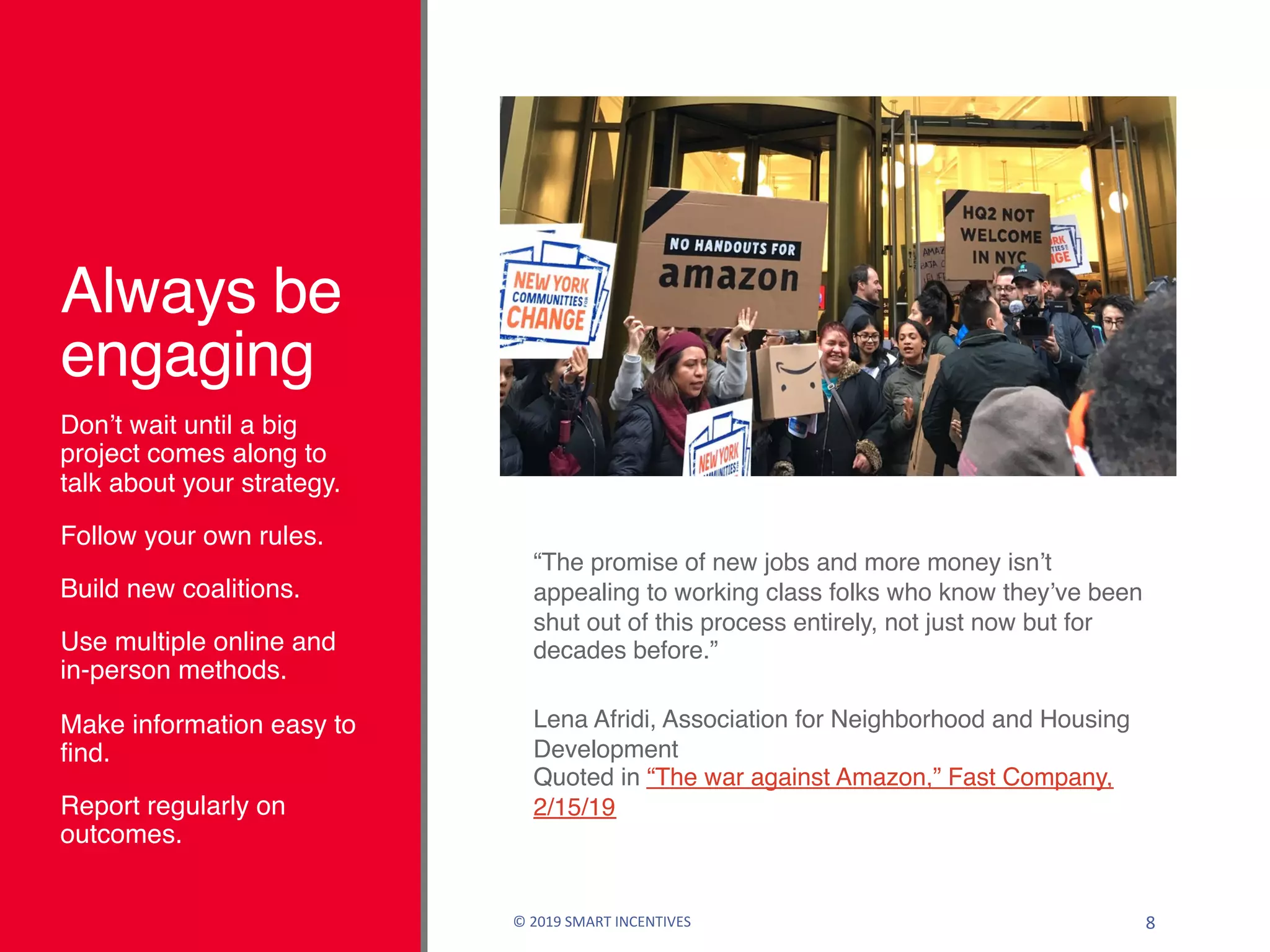
“The promise of new jobs and more money isn’t
appealing to working class folks who know they’ve been
shut out of this process entirely, not just now but for
decades before.”
Lena Afridi, Association for Neighborhood and Housing
Development
Quoted in “The war against Amazon,” Fast Company,
2/15/19
Equity goals
and metrics
© 2019 SMART INCENTIVES 9
How to establish clear and
measurable program goals
Review your portfolio of incentive offerings
Examine the stated purpose of each incentive program
◦ Does the program serve your current economic development strategy?
◦ How does it relate to equitable economic objectives?
Consider how the program is actually used
◦ What types of projects have been incentivized over the last 5 years?
◦ Do program guidelines and scoring incorporate the equity themes that
are important in your community?
Are there gaps in program offerings? Are new program guidelines
needed?
Articulate the link between incentive programs and equity goals
© 2019 SMART INCENTIVES 10
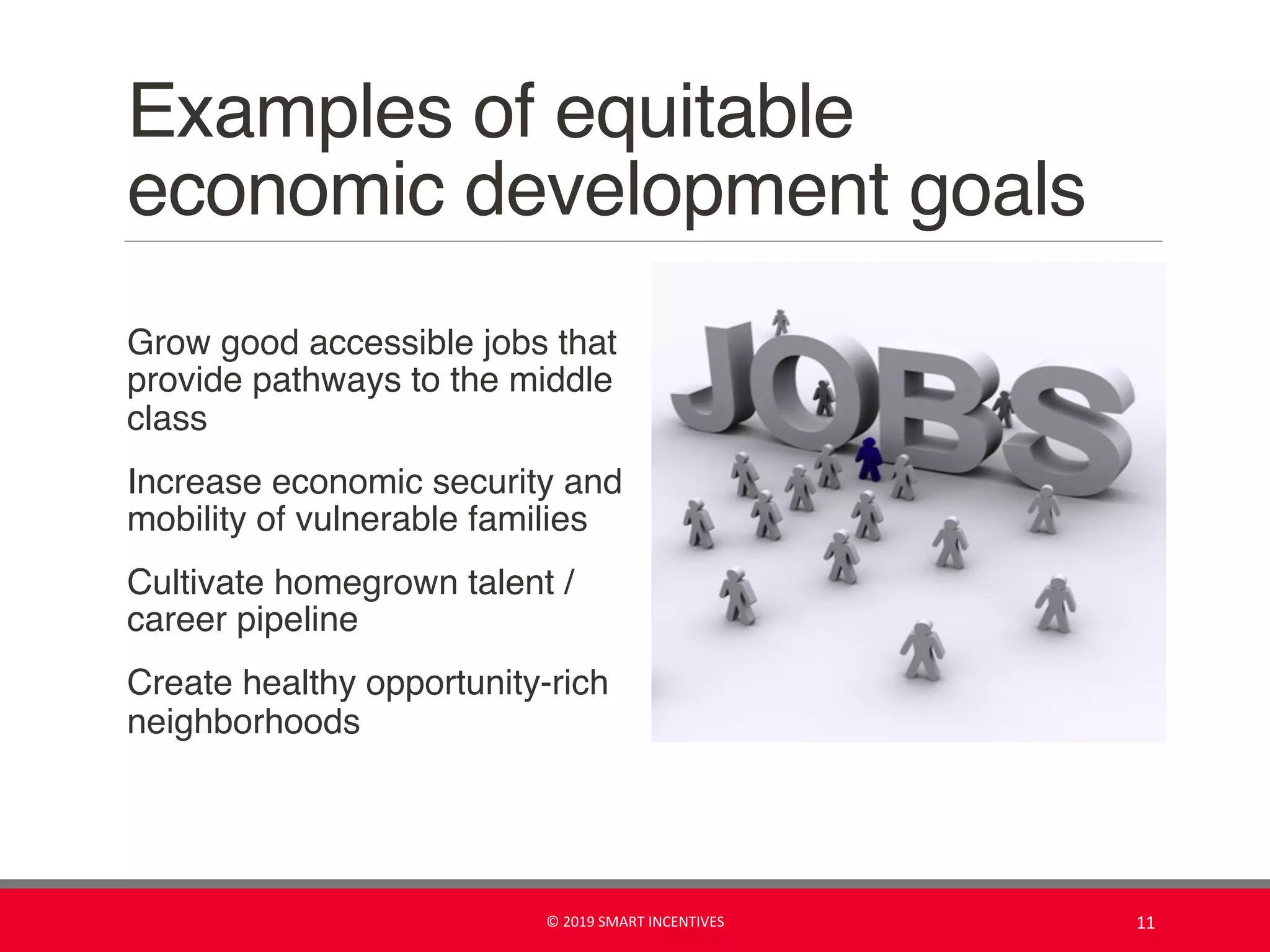
Examples of equitable
economic development goals
Grow good accessible jobs that
provide pathways to the middle
class
Increase economic security and
mobility of vulnerable families
Cultivate homegrown talent /
career pipeline
Create healthy opportunity-rich
neighborhoods
© 2019 SMART INCENTIVES 11
Examples of program
metrics
Jobs:
◦ Wage standards
◦ Middle skill jobs
◦ Procurement/purchasing patterns
Increase economic mobility
◦ Targeted hiring
◦ Training provided/completed
Career pipeline
◦ Sector-specific workforce training program
completions and placements
Neighborhoods
◦ Improvements in parks, services, amenities,
food systems
◦ Transit, water lines, broadband in
underserved neighborhoods
◦ Increase access to high-quality affordable
homes
© 2019 SMART INCENTIVES 12
Report on equity-related
outcomes
Communicating expectations to incentive applicants
◦ Consistent, sustained language on what the city is trying to achieve
◦ City is an investment partner, not a project supplicant
◦ City’s ROI may include making progress toward equitable outcomes
Communicating results to your community
◦ Transparent data on program usage
◦ Reporting on compliance with project terms and equity outcomes
◦ Did this deal/this incentive program generate net benefits for the
community? Did it contribute to the equitable economic development
goals the city set for itself?
© 2018 SMART INCENTIVES 13
Summary
1. Equity goals and incentive program purposes often
overlap. Make the connection explicit.
2. Be intentional in incorporating equity goals during
each stage of the incentive process
3. Choose (carefully) metrics to assess progress
4. Report on promises made and whether community
expectations were met
5. Use this process to sustain the commitment to
equitable economic development
© 2019 SMART INCENTIVES 14
Contact
Ellen Harpel
President
571/212.3397
ellen@smartincentives.org
http://www.smartincentives.org/
@SmartIncentives
15© 2019 SMART INCENTIVES

Aligning incentives with equitable economic development

  • 1.
    Aligning Incentives with Equitable Economic Development ELLENHARPEL EQUITABLE ECONOMIC DEVELOPMENT FELLOWSHIP WEBINAR MARCH 2019
  • 2.
    About us Smart Incentiveshelps communities make sound decisions throughout the incentives process üAnalyze incentive offerings and program design üApply the Smart Incentives 4x4 framework for program management üOffer access to high-quality business intelligence, data, and analytical methods to guide decisions üImprove evaluations and reporting on program results 2© 2019 SMART INCENTIVES
  • 3.
    Why do weuse incentives? To achieve our community’s economic development goals ◦ Jobs ◦ Worker training ◦ Business development ◦ Investment ◦ Downtown revitalization ◦ Brownfield redevelopment ◦ Quality of life and quality of place ◦ Strengthen tax base Incentives are not just about winning a deal. Smart incentive use is always connected to a larger economic development strategy. © 2019 SMART INCENTIVES 3
  • 4.
    © 2019 SMARTINCENTIVES 4
  • 5.
    Lessons from Amazon HQ2 ©2019 SMART INCENTIVES 5
  • 6.
    Invest in the community, notjust the company Incentives alone do not carry the day. Education, infrastructure and housing create a competitive environment. Incentives should not shortchange these investments. The best incentive offers include investments that benefit benefit both residents and the business. © 2019 SMART INCENTIVES 6 In Virginia related to HQ2: • $195 million in state-funded infrastructure improvements • $50 million for K-12 tech education • $375 million for a new Virginia Tech Innovation Campus and new master’s degree programs in computer science and related fields
  • 7.
    Address potential downsides Be realistic aboutcosts as well as benefits. Projecting a positive economic impact may no longer be sufficient. Who will benefit? Will some residents feel negative effects from construction? In the housing market? Worsening congestion? © 2019 SMART INCENTIVES 7
  • 8.
    Always be engaging Don’t waituntil a big project comes along to talk about your strategy. Follow your own rules. Build new coalitions. Use multiple online and in-person methods. Make information easy to find. Report regularly on outcomes. © 2019 SMART INCENTIVES 8 “The promise of new jobs and more money isn’t appealing to working class folks who know they’ve been shut out of this process entirely, not just now but for decades before.” Lena Afridi, Association for Neighborhood and Housing Development Quoted in “The war against Amazon,” Fast Company, 2/15/19
  • 9.
    Equity goals and metrics ©2019 SMART INCENTIVES 9
  • 10.
    How to establishclear and measurable program goals Review your portfolio of incentive offerings Examine the stated purpose of each incentive program ◦ Does the program serve your current economic development strategy? ◦ How does it relate to equitable economic objectives? Consider how the program is actually used ◦ What types of projects have been incentivized over the last 5 years? ◦ Do program guidelines and scoring incorporate the equity themes that are important in your community? Are there gaps in program offerings? Are new program guidelines needed? Articulate the link between incentive programs and equity goals © 2019 SMART INCENTIVES 10
  • 11.
    Examples of equitable economicdevelopment goals Grow good accessible jobs that provide pathways to the middle class Increase economic security and mobility of vulnerable families Cultivate homegrown talent / career pipeline Create healthy opportunity-rich neighborhoods © 2019 SMART INCENTIVES 11
  • 12.
    Examples of program metrics Jobs: ◦Wage standards ◦ Middle skill jobs ◦ Procurement/purchasing patterns Increase economic mobility ◦ Targeted hiring ◦ Training provided/completed Career pipeline ◦ Sector-specific workforce training program completions and placements Neighborhoods ◦ Improvements in parks, services, amenities, food systems ◦ Transit, water lines, broadband in underserved neighborhoods ◦ Increase access to high-quality affordable homes © 2019 SMART INCENTIVES 12
  • 13.
    Report on equity-related outcomes Communicatingexpectations to incentive applicants ◦ Consistent, sustained language on what the city is trying to achieve ◦ City is an investment partner, not a project supplicant ◦ City’s ROI may include making progress toward equitable outcomes Communicating results to your community ◦ Transparent data on program usage ◦ Reporting on compliance with project terms and equity outcomes ◦ Did this deal/this incentive program generate net benefits for the community? Did it contribute to the equitable economic development goals the city set for itself? © 2018 SMART INCENTIVES 13
  • 14.
    Summary 1. Equity goalsand incentive program purposes often overlap. Make the connection explicit. 2. Be intentional in incorporating equity goals during each stage of the incentive process 3. Choose (carefully) metrics to assess progress 4. Report on promises made and whether community expectations were met 5. Use this process to sustain the commitment to equitable economic development © 2019 SMART INCENTIVES 14
  • 15.