Lauren Menage
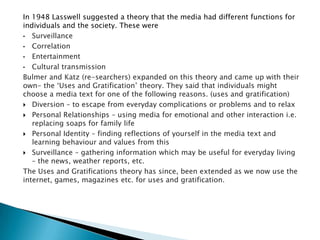
In 1948 Lasswell suggested a theory that the media had different functions for
individuals and the society. These were
• Surveillance
• Correlation
• Entertainment
• Cultural transmission
Bulmer and Katz (re-searchers) expanded on this theory and came up with their
own- the ‘Uses and Gratification’ theory. They said that individuals might
choose a media text for one of the following reasons. (uses and gratification)
 Diversion – to escape from everyday complications or problems and to relax
 Personal Relationships – using media for emotional and other interaction i.e.
   replacing soaps for family life
 Personal Identity – finding reflections of yourself in the media text and
   learning behaviour and values from this
 Surveillance – gathering information which may be useful for everyday living
   – the news, weather reports, etc.
The Uses and Gratifications theory has since, been extended as we now use the
internet, games, magazines etc. for uses and gratification.
PERSONAL
DIVERSION: Top Of        RELATIONSHIPS: by
The Pops magazine        reading about celebs
allows the young         and gossip in TOTP
readers to forget        magazine you can
about what's             keep up to date with
happening around         your friends, peers
them and they can        and family.
relax and read about
the celebs they like
and all the gossip and
music around them.


                         PERSONAL IDENTITY:
                         In TOTP magazine
                         they often try to get
SURVEILLANCE:            the reader involved
TOTP magazine            whether its using
allows the               the word ‘We’ or
audience to get the      containing parts in
latest information       the magazine to do
on celebrities and       with some of the
their lifestyles. In     readers. Young
this issue we will       readers could also
get the updates on       just find a celeb in
One Direction and        TOTP that relates to
other celebs             them or is similar to
featured.                them.

Uses and gratifications theory

  • 1.
  • 2.
    In 1948 Lasswellsuggested a theory that the media had different functions for individuals and the society. These were • Surveillance • Correlation • Entertainment • Cultural transmission Bulmer and Katz (re-searchers) expanded on this theory and came up with their own- the ‘Uses and Gratification’ theory. They said that individuals might choose a media text for one of the following reasons. (uses and gratification)  Diversion – to escape from everyday complications or problems and to relax  Personal Relationships – using media for emotional and other interaction i.e. replacing soaps for family life  Personal Identity – finding reflections of yourself in the media text and learning behaviour and values from this  Surveillance – gathering information which may be useful for everyday living – the news, weather reports, etc. The Uses and Gratifications theory has since, been extended as we now use the internet, games, magazines etc. for uses and gratification.
  • 3.
    PERSONAL DIVERSION: Top Of RELATIONSHIPS: by The Pops magazine reading about celebs allows the young and gossip in TOTP readers to forget magazine you can about what's keep up to date with happening around your friends, peers them and they can and family. relax and read about the celebs they like and all the gossip and music around them. PERSONAL IDENTITY: In TOTP magazine they often try to get SURVEILLANCE: the reader involved TOTP magazine whether its using allows the the word ‘We’ or audience to get the containing parts in latest information the magazine to do on celebrities and with some of the their lifestyles. In readers. Young this issue we will readers could also get the updates on just find a celeb in One Direction and TOTP that relates to other celebs them or is similar to featured. them.