Hello,
Adobe Max!
Meagan Fisher
@owltastic on Twitter
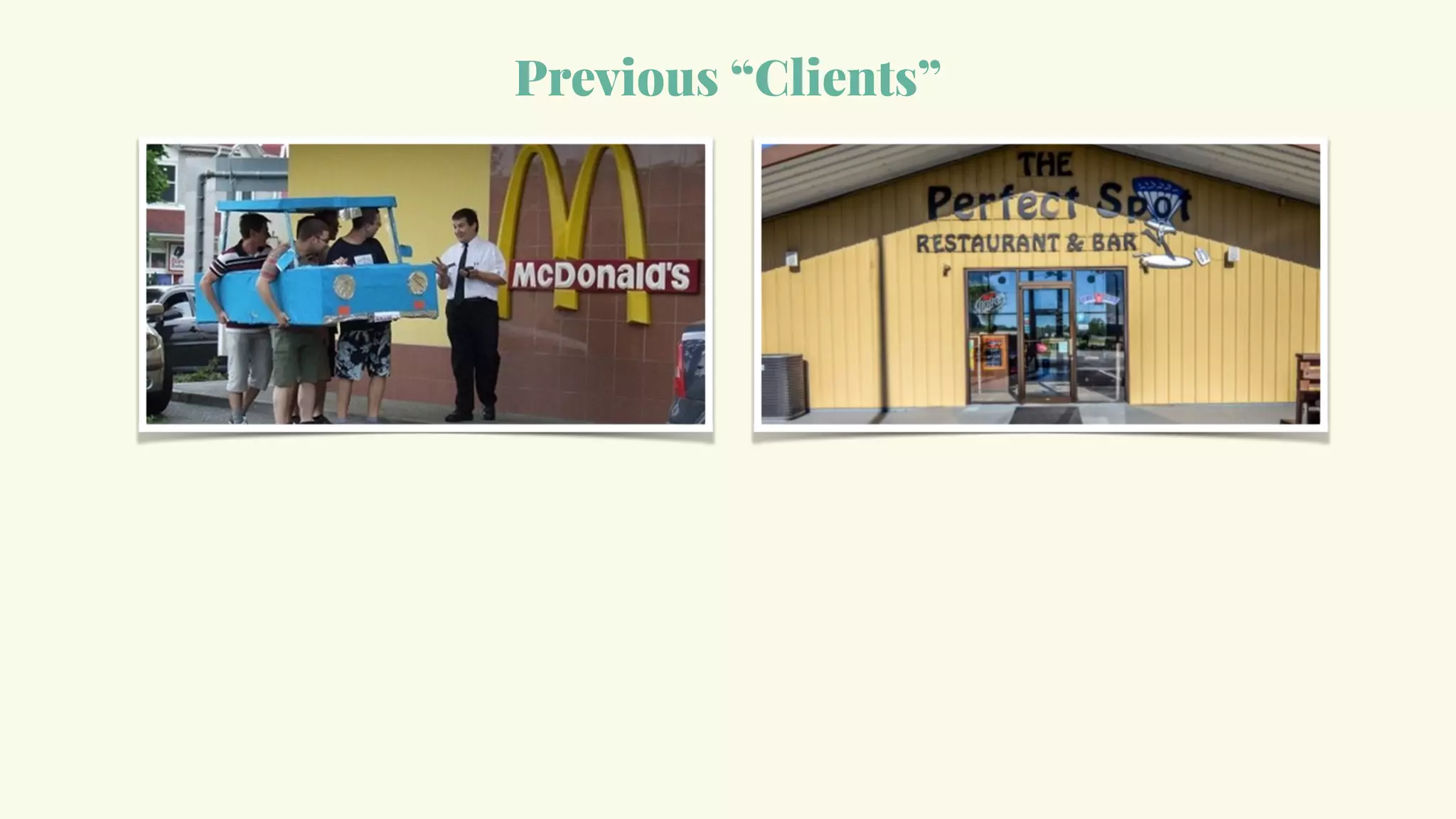
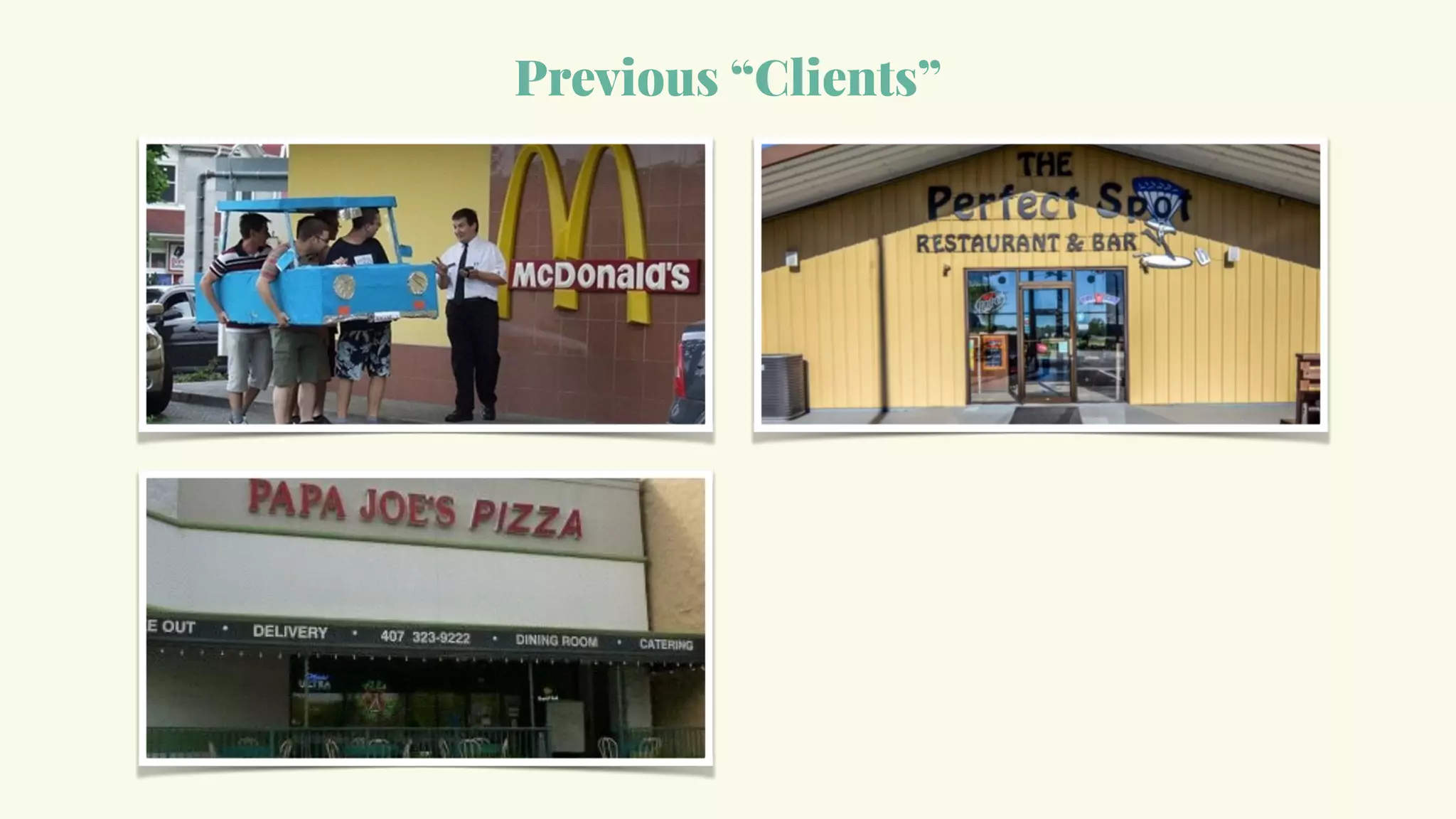
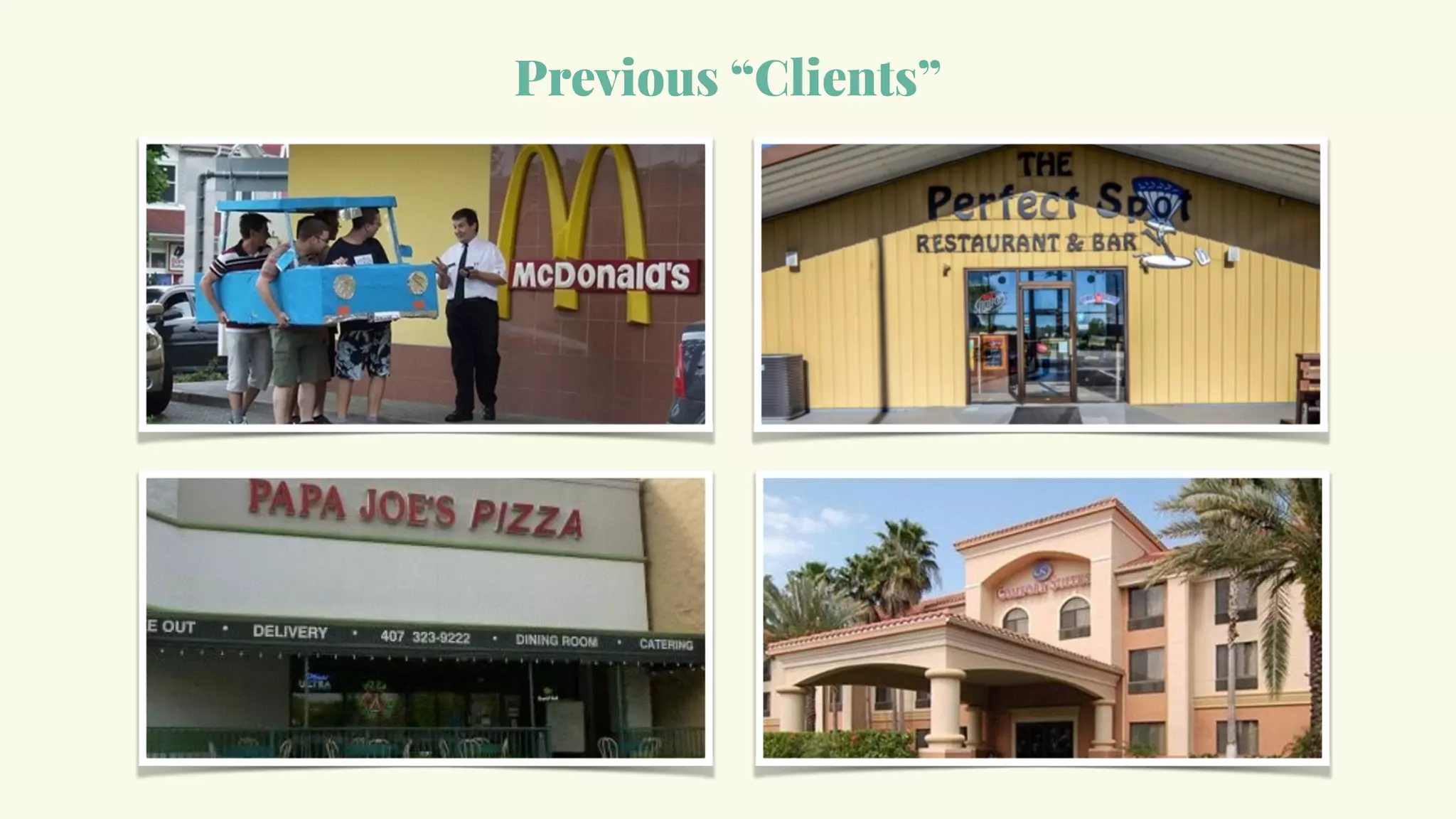
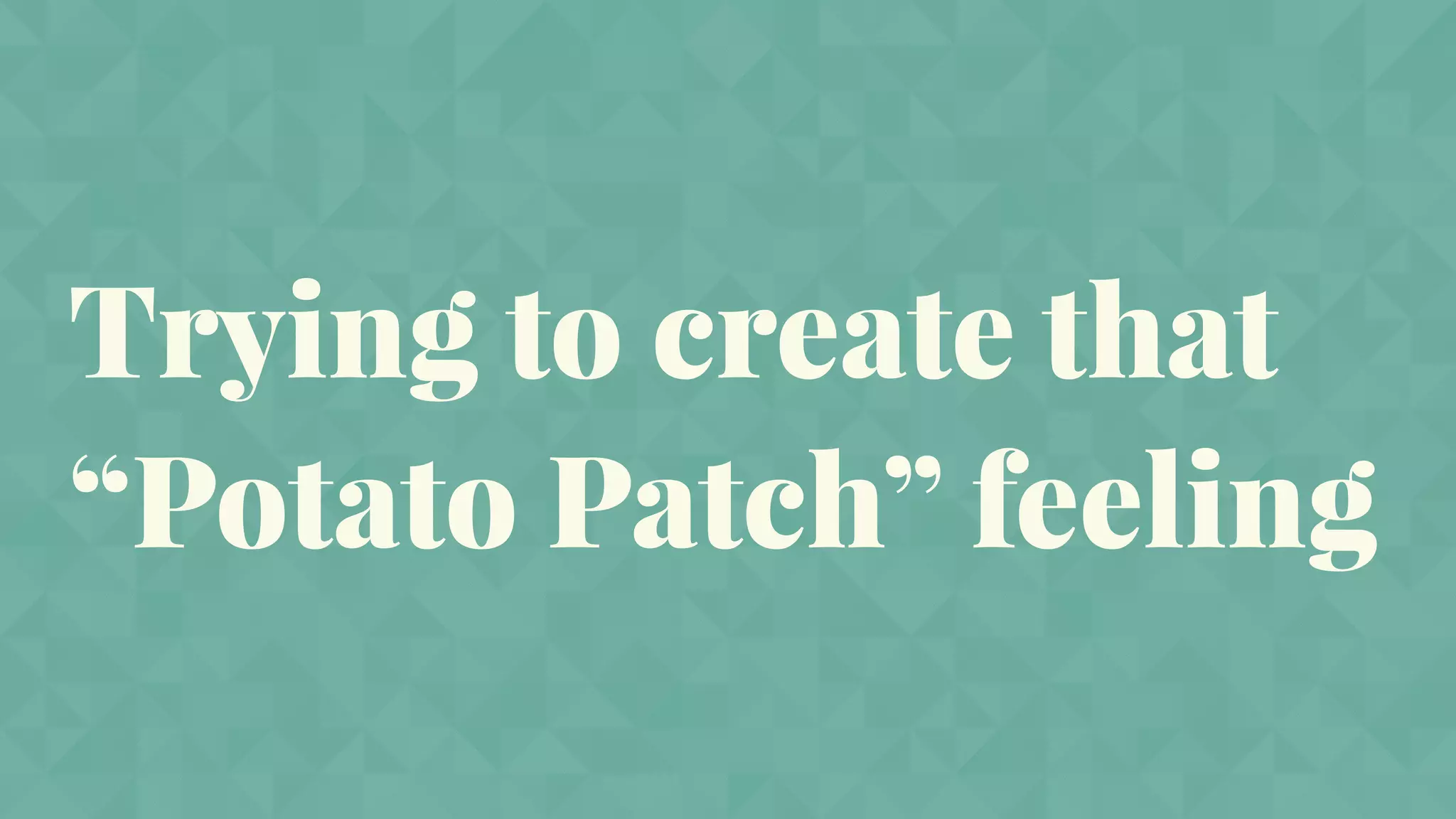
Previous “Clients”
Previous “Clients”
Previous “Clients”
Previous “Clients”
Previous “Clients”
“Be a valuable business in our
community and inspire loyal
customer advocates.”
The Goal of Service
Industry Companies
Trying to create that
“Potato Patch” feeling
Create an environment
where customers feel
welcomed, supported,
& valued.
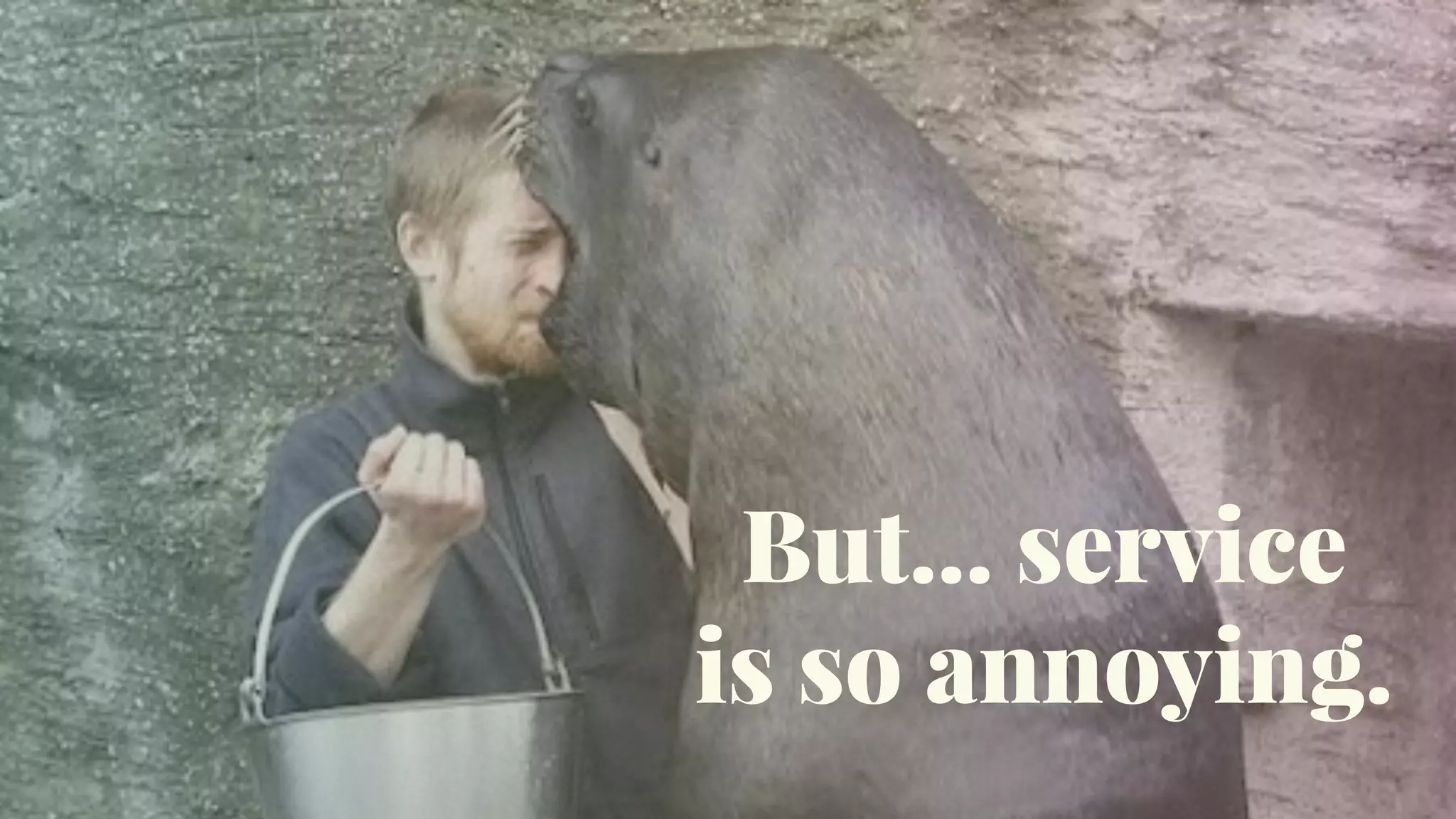
But… service
is so annoying.
Software
✓ Consistent
✓ Streamlined
✓ Efficient
Software
✓ Consistent
✓ Streamlined
✓ Efficient
Software
✓ Consistent
✓ Streamlined
✓ Efficient
✓ Forgettable
✓ Inhumane
✓ Joyless
“Be a valuable business in
our community and inspire
loyal customer advocates.”
Online businesses
Create an environment
where customers feel
welcomed, supported,
& valued.
“We must be more than user-
centered, we must be human-
centered—to know people
first as people, not as users or
customers or clients. Our
designs are conceived from a
deep understanding of
humanity and with the desire
to help individuals
accomplish their goals.”
https://www.ibm.com/
design/language/framework
Putting the humanity
back in software:
1. Have a welcoming personality.
2. Speak like a human being.
3. Get them to the “kick-ass zone.”
4. Design for reality.
1. Have a welcoming
personality.
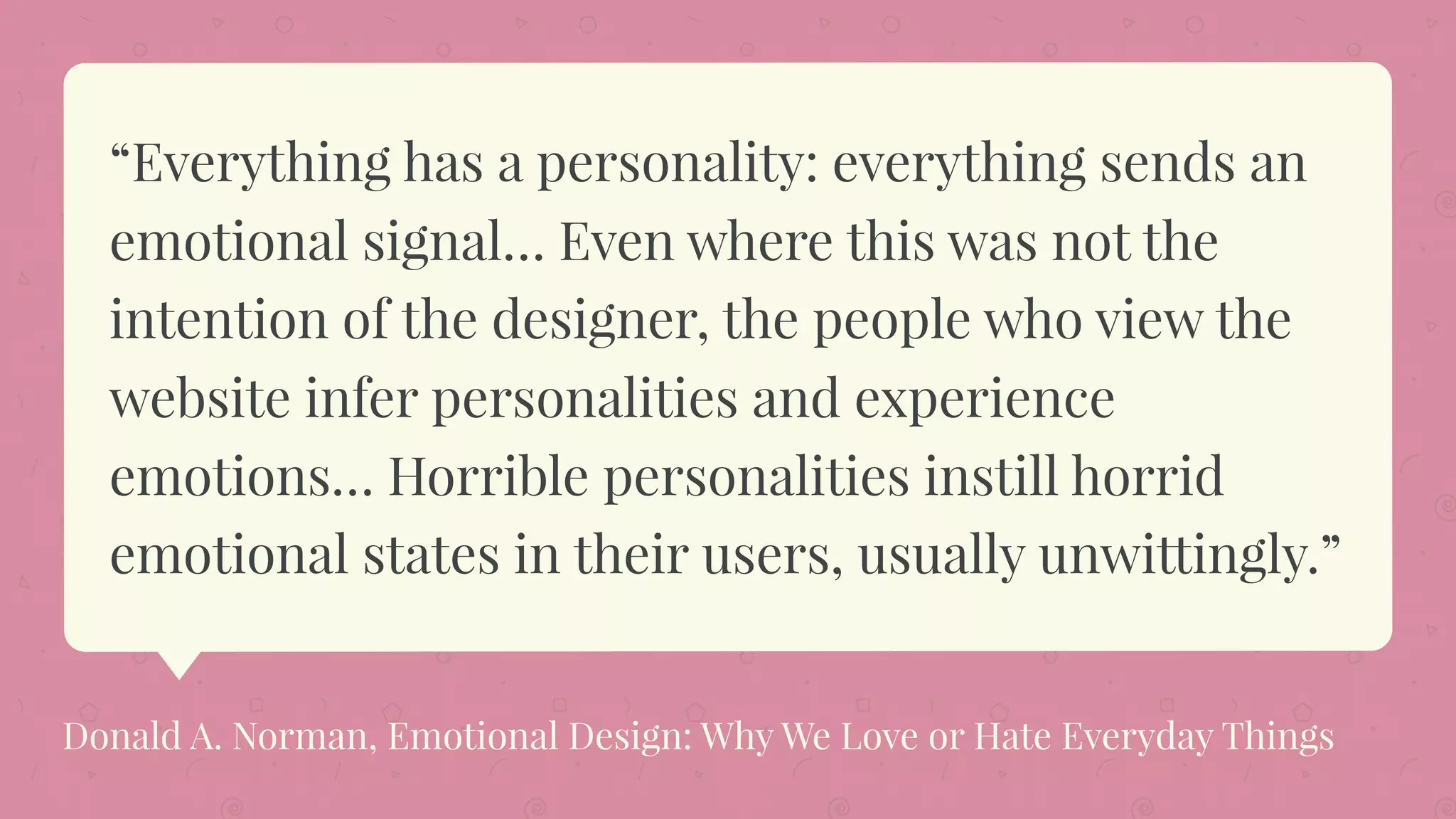
“Everything has a personality: everything sends an
emotional signal… Even where this was not the
intention of the designer, the people who view the
website infer personalities and experience
emotions… Horrible personalities instill horrid
emotional states in their users, usually unwittingly.”
Donald A. Norman, Emotional Design: Why We Love or Hate Everyday Things
Accidentally
Horrible vs. Beloved
Personalities
“The major dimensions of
personality are dominance
and friendliness… positive
emotions are associated with
a friendly demeanor… while
negative emotions are
associated with
unfriendliness.”
Dominant
Passive
Unfriendly Friendly
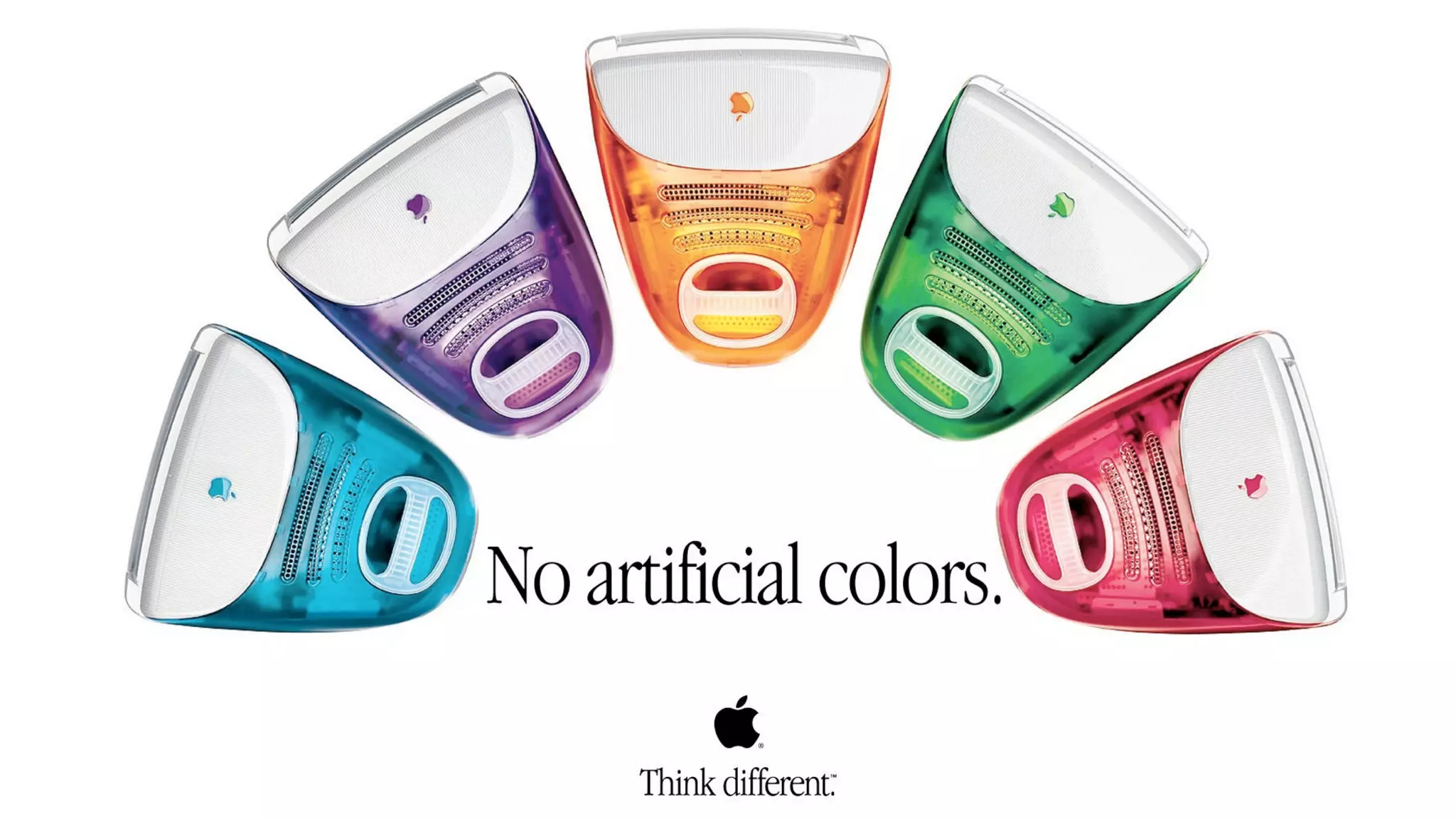
Dominant vs. Friendly
Angular Curved
LightHeavy
Aa High Contrast Aa Low Contrast
Dense Whitespace
Bold Regular
Uppercase Lowercase
abc abc
XYZ xyz
Yikes.
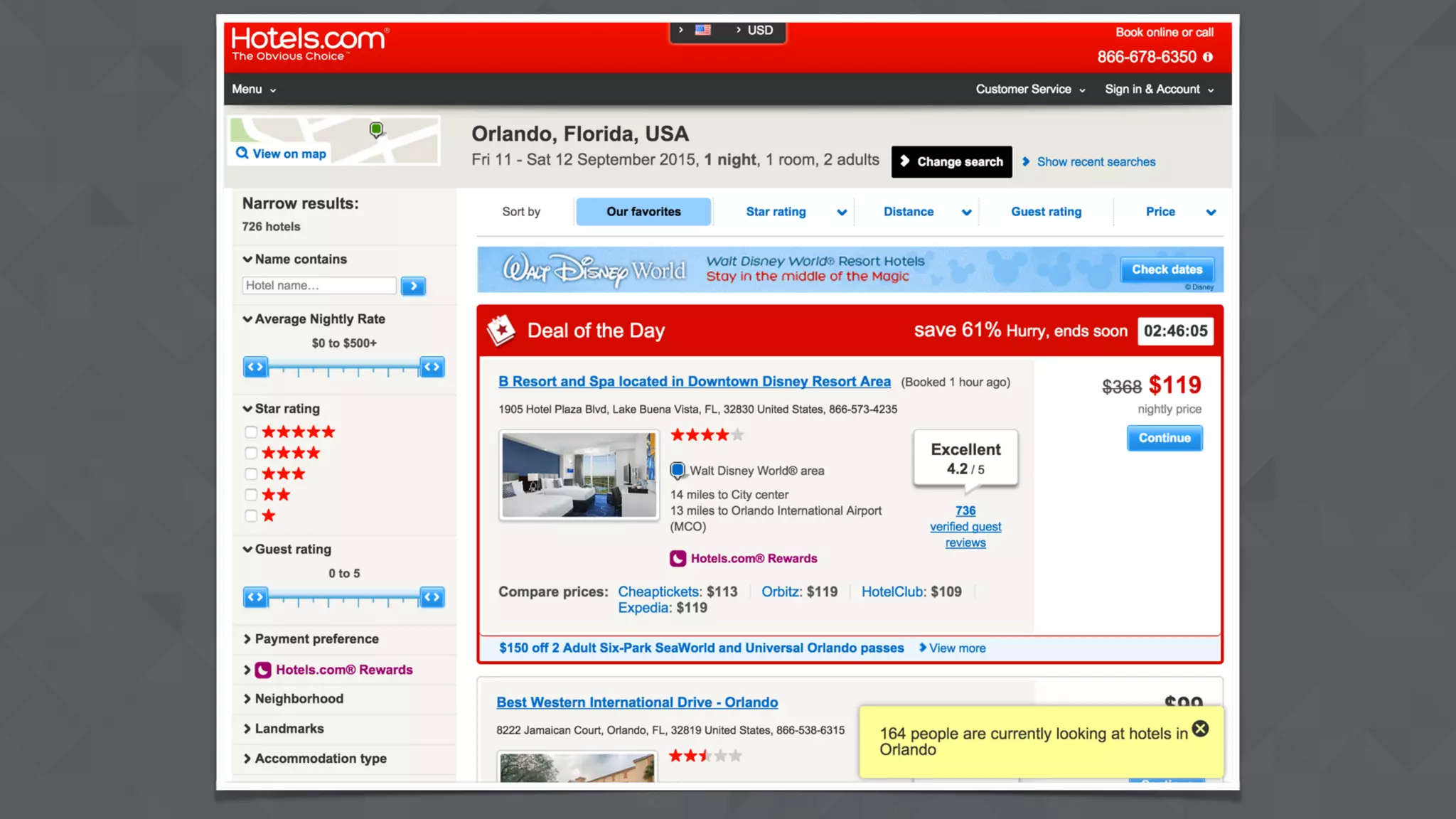
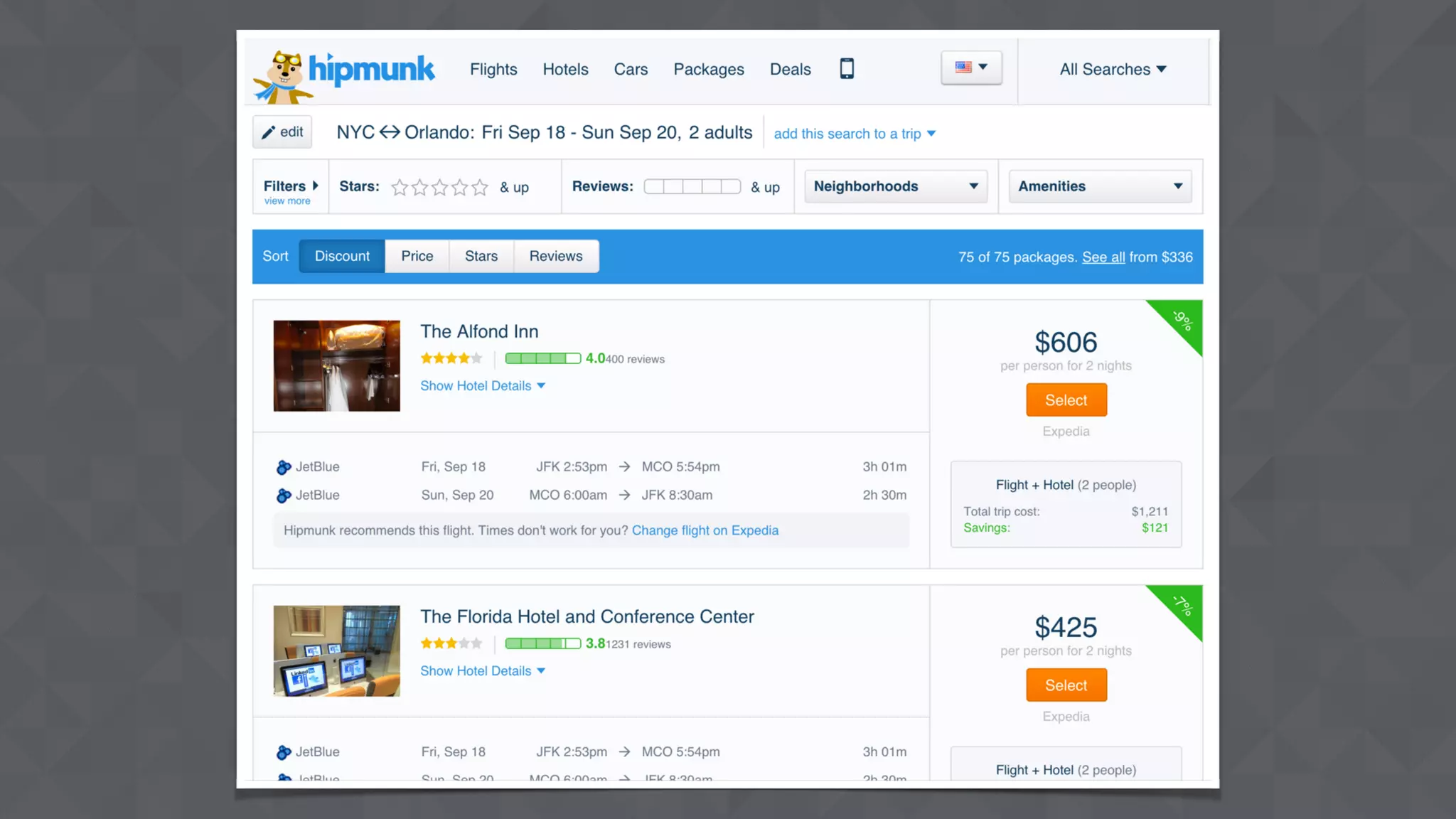
Let’s look at modern
“travel agents.”
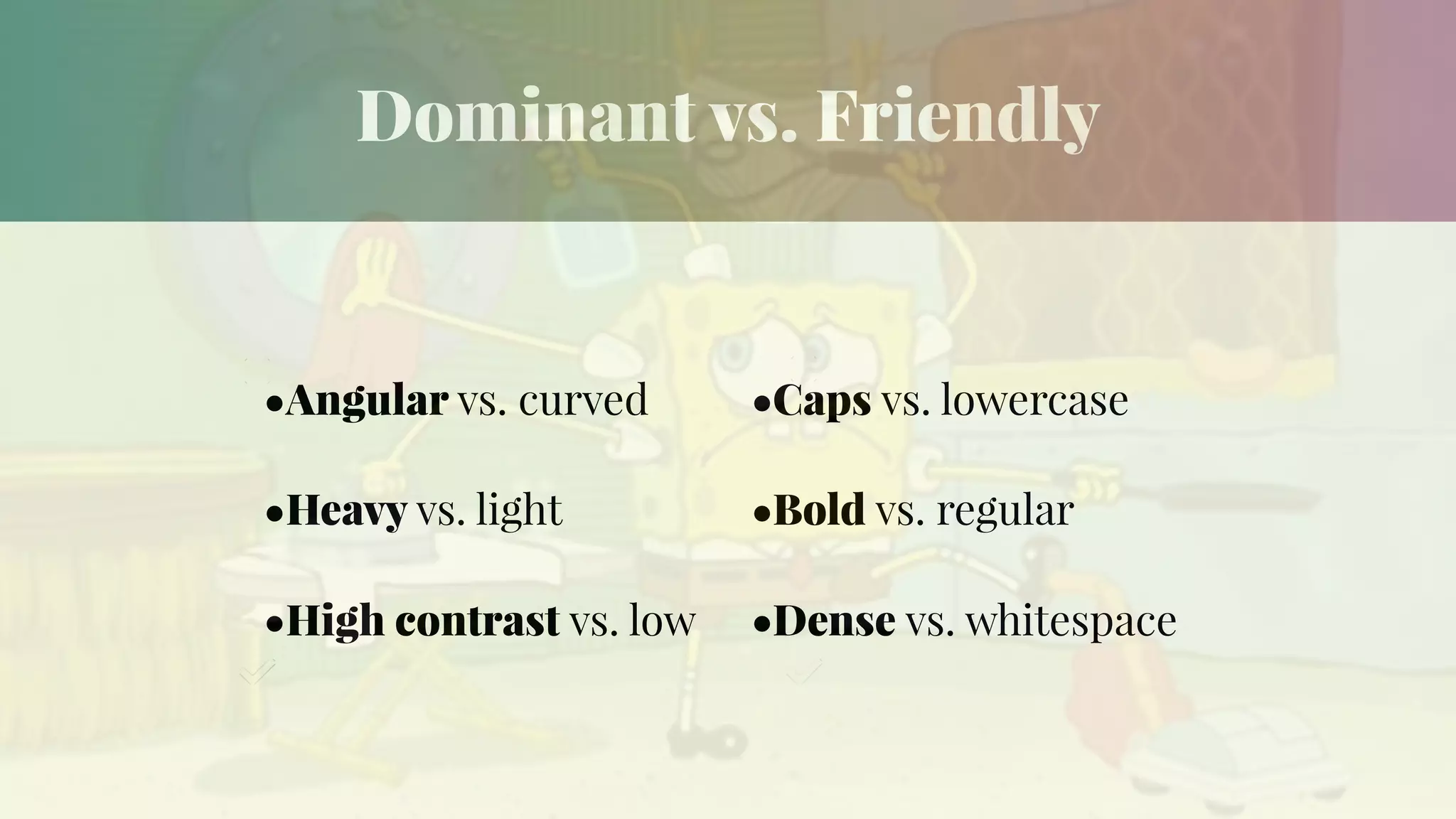
Dominant vs. Friendly
•Angular vs. curved
•Heavy vs. light
•High contrast vs. low
•Caps vs. lowercase
•Bold vs. regular
•Dense vs. whitespace
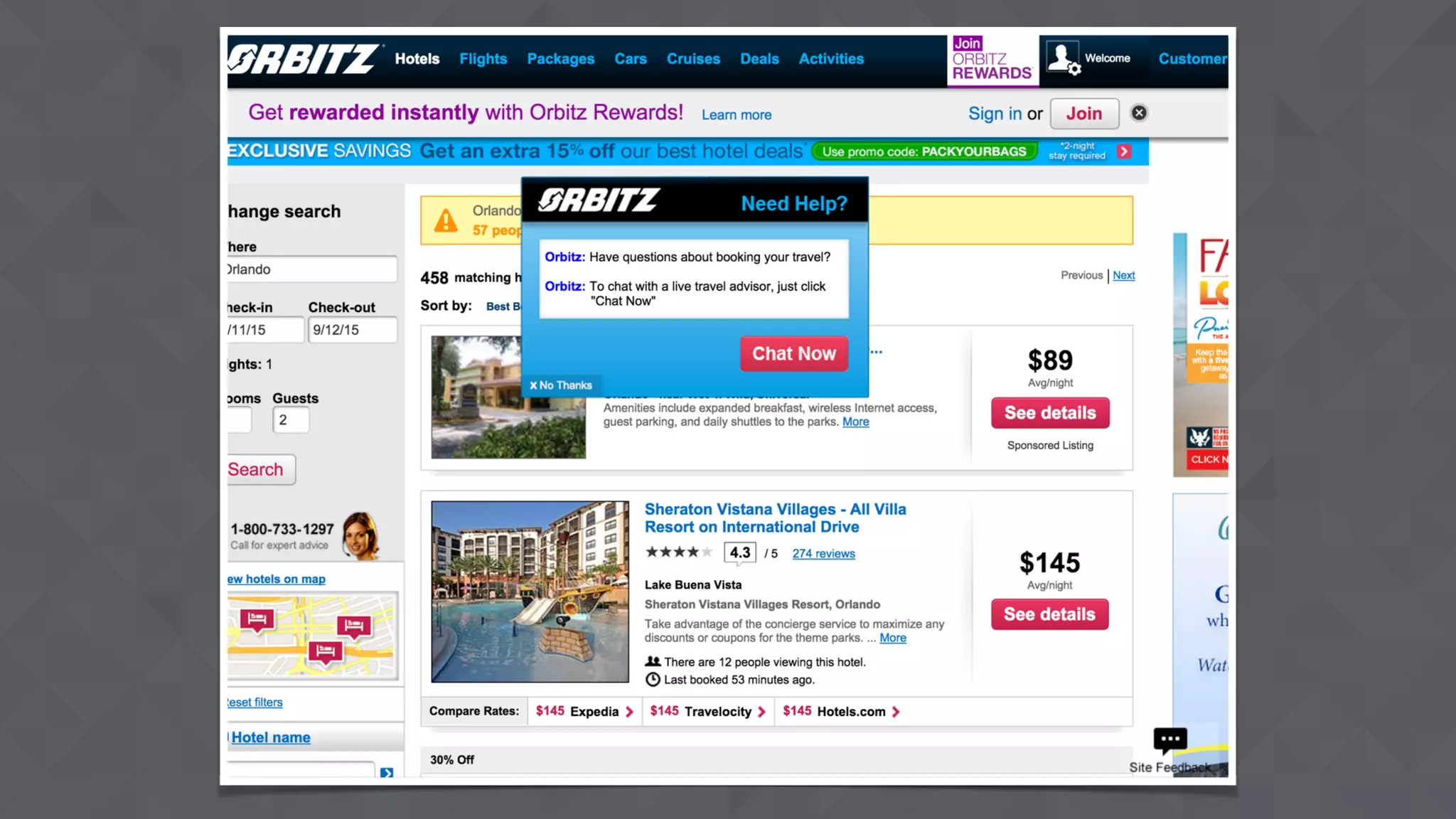
Dominant vs. Friendly
•Angular vs. curved
•Heavy vs. light
•High contrast vs. low
•Caps vs. lowercase
•Bold vs. regular
•Dense vs. whitespace
Dominant vs. Friendly
•Angular vs. curved
•Heavy vs. light
•High contrast vs. low
•Caps vs. lowercase
•Bold vs. regular
•Dense vs. whitespace
“Our main philosophy is that we want
you to spend as little time on our site as
possible with the least amount of pain.”
Steve Huffman, Hipmunk cofounder.
via Forbes, “Why Hipmunk Is The World's Best Travel Site”
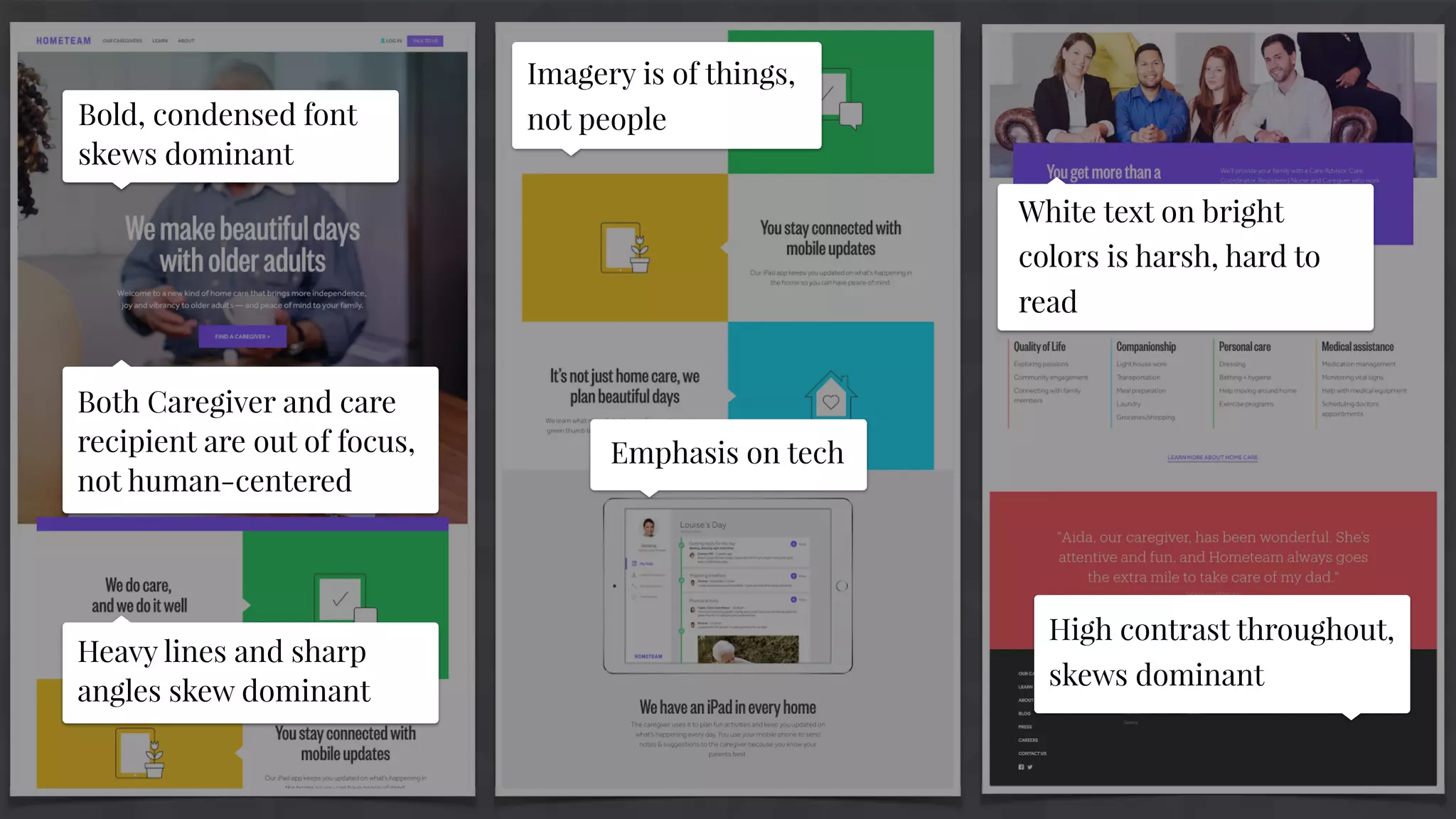
Hometeam Personality Characteristics
Solution Oriented
Modern
Innovative
Intelligent
Technology-driven
Transparent
Expert
Trustworthy
Mature
Direct
Compassionate
Understanding
Optimistic
Accessible
Human-centered
Solid
Self-assured
Confident
Leading
Visionary
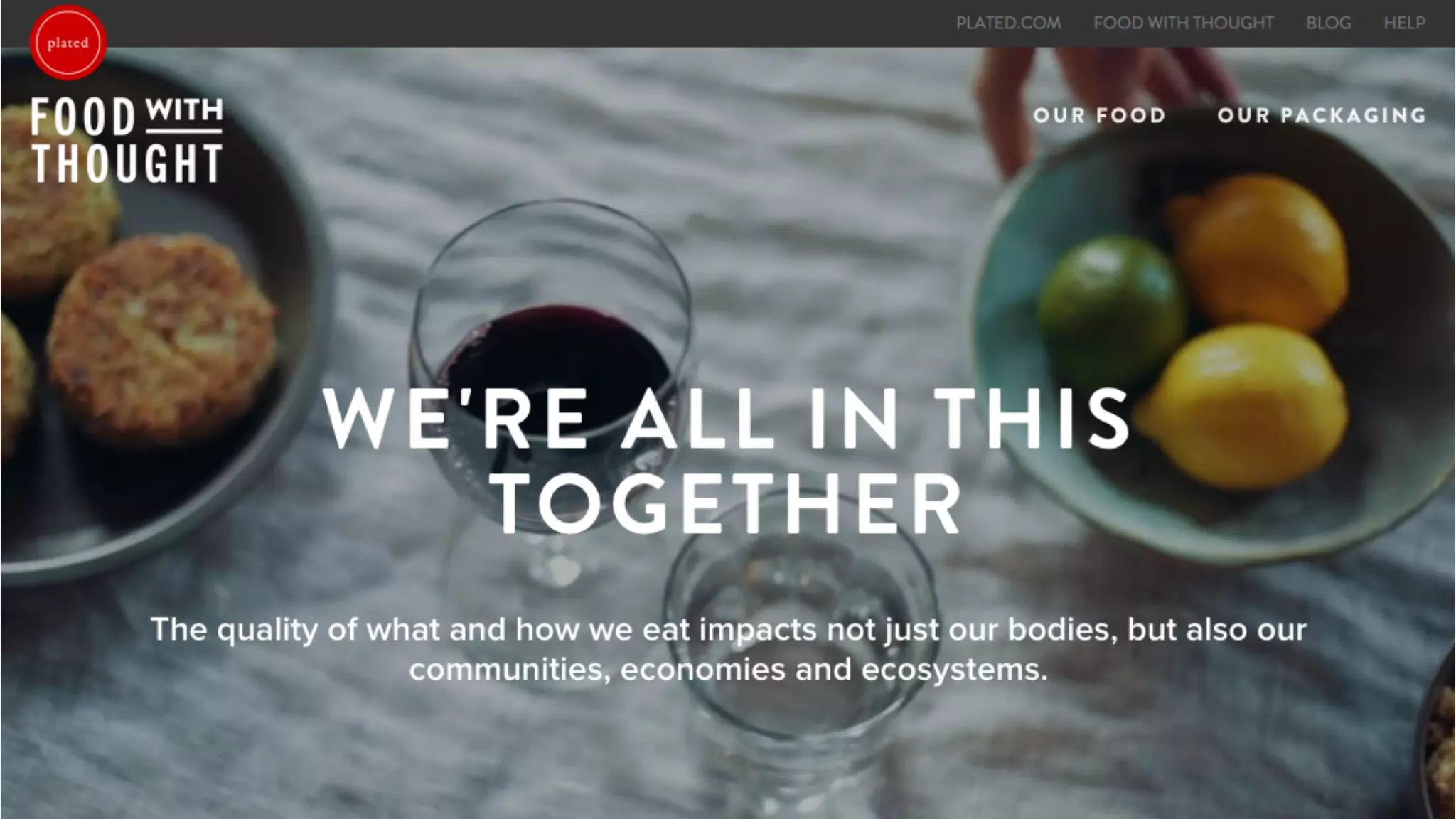
Imagery is of things,
not peopleBold, condensed font
skews dominant
Heavy lines and sharp
angles skew dominant
Emphasis on tech
White text on bright
colors is harsh, hard to
read
Both Caregiver and care
recipient are out of focus,
not human-centered
High contrast throughout,
skews dominant
“We understand that you
have a busy life, and are
devastated by your Mom’s
dementia. You wish you
could be there for her. We’re
here to help so you can enjoy
being her daughter again.”
Our current visuals do a
great job of expressing:
✓ Confidence
✓ Energy
✓ Modernity
✓ “We’re different”
✓ Tech-powered
Solution Oriented
Transparent
Compassionate
Solid
✓ Empathy
✓ Maturity
✓ Trustworthiness
✓ Sensitivity
✓ Human-centered
We have the opportunity
to better express:
Solution Oriented
Transparent
Compassionate
Solid
Does this design show
dominance or friendliness? Is
that what’s intended?
Does the design support or
detract from your key message?
Consider your personality.
Put a face on your business.
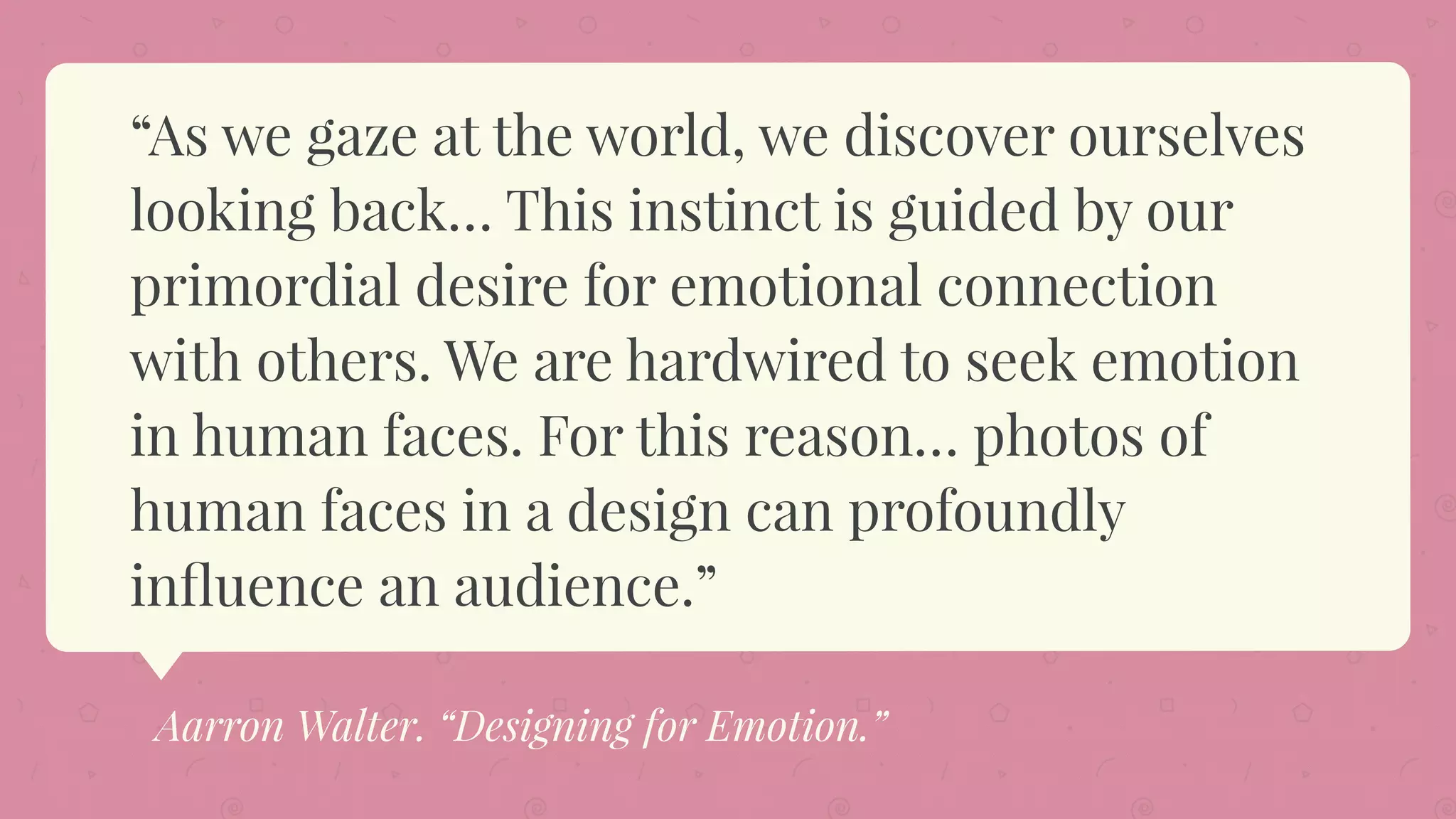
“As we gaze at the world, we discover ourselves
looking back… This instinct is guided by our
primordial desire for emotional connection
with others. We are hardwired to seek emotion
in human faces. For this reason… photos of
human faces in a design can profoundly
influence an audience.”
Aarron Walter. “Designing for Emotion.”
twitter.com/facespics
Friendly
faces signal
safety &
belonging.
Cute mascots
aren’t right for
every business.
“We want people to think of Dropbox as a place to collaborate, and a big part
of that is elevating the people you connect with. One way we're doing that is
thinking about places we can surface user's faces on the web.”
Daniel Eden, dribbble.com/shots/1972358-Faceholder
You can start
small & keep
it simple.
Sprout, the
emotional
little video.
2. Speak like a
human being.
“How can we leverage our
content to identify, target,
and engage top innovative
pinfluencers?”
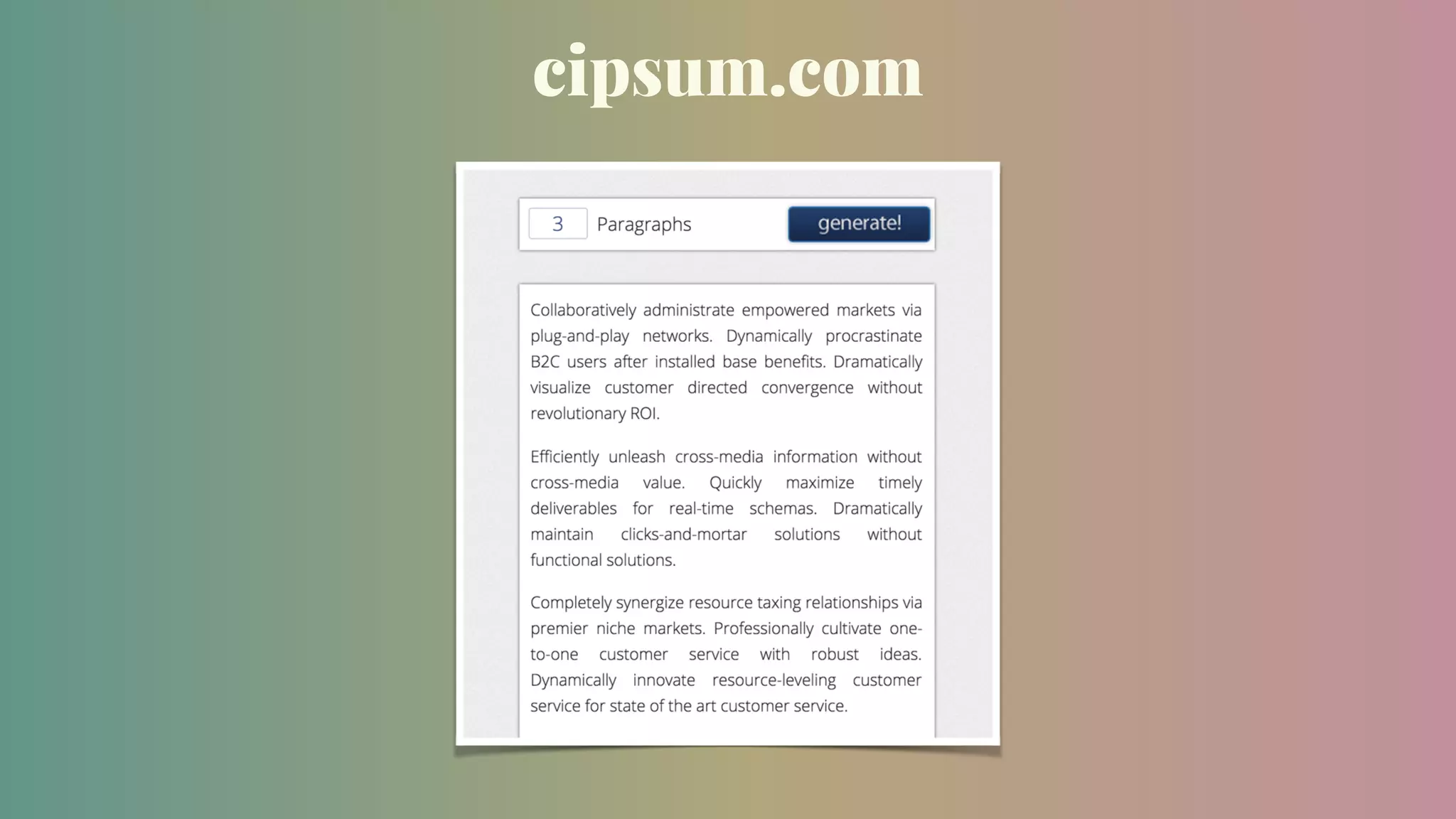
cipsum.com
sansbullshitsans.com
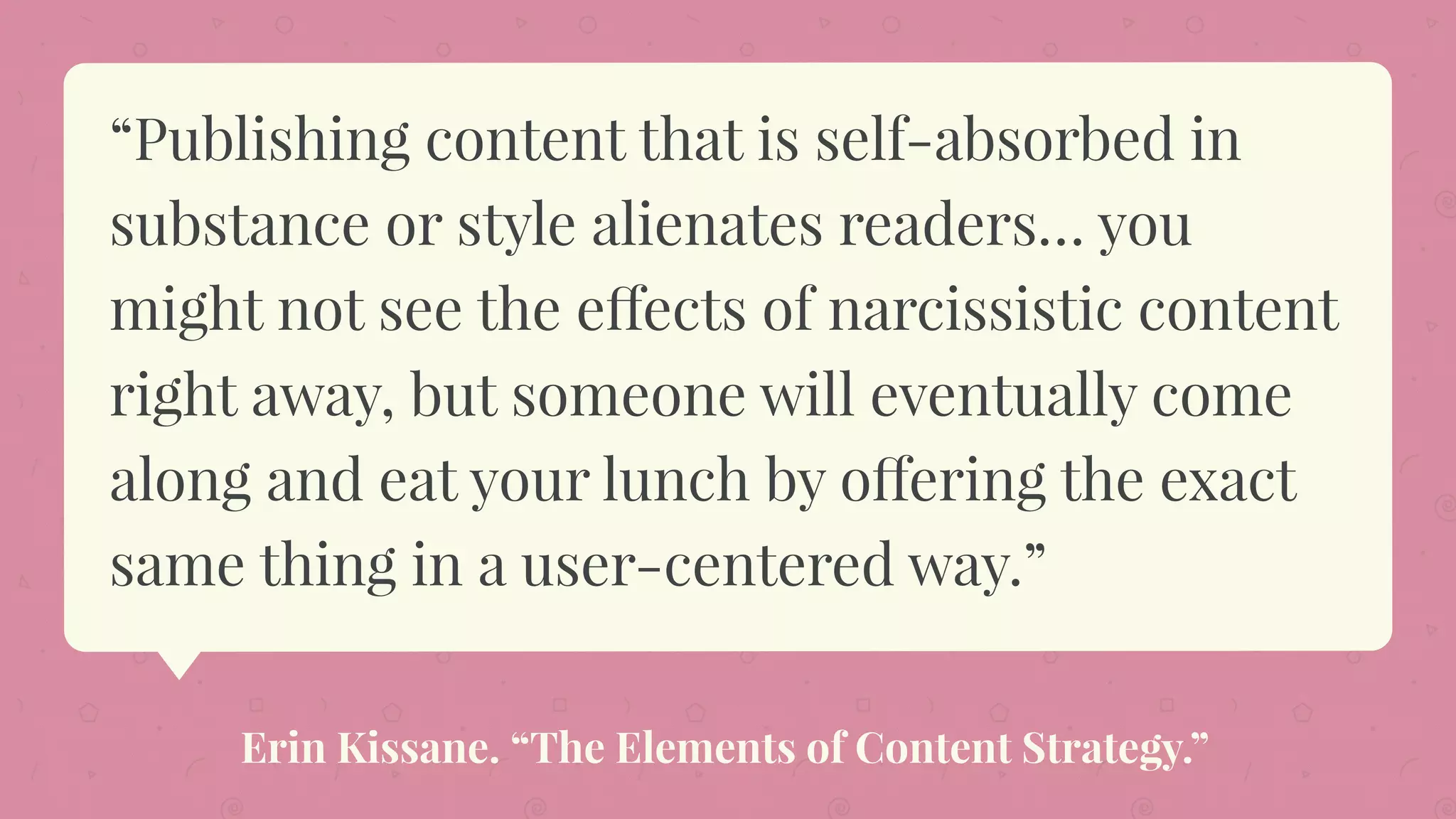
“Publishing content that is self-absorbed in
substance or style alienates readers… you
might not see the effects of narcissistic content
right away, but someone will eventually come
along and eat your lunch by offering the exact
same thing in a user-centered way.”
Erin Kissane. “The Elements of Content Strategy.”
“Publishing content that is self-absorbed in
substance or style alienates readers… you
might not see the effects of narcissistic content
right away, but someone will eventually come
along and eat your lunch by offering the exact
same thing in a user-centered way.”
Erin Kissane. “The Elements of Content Strategy.”
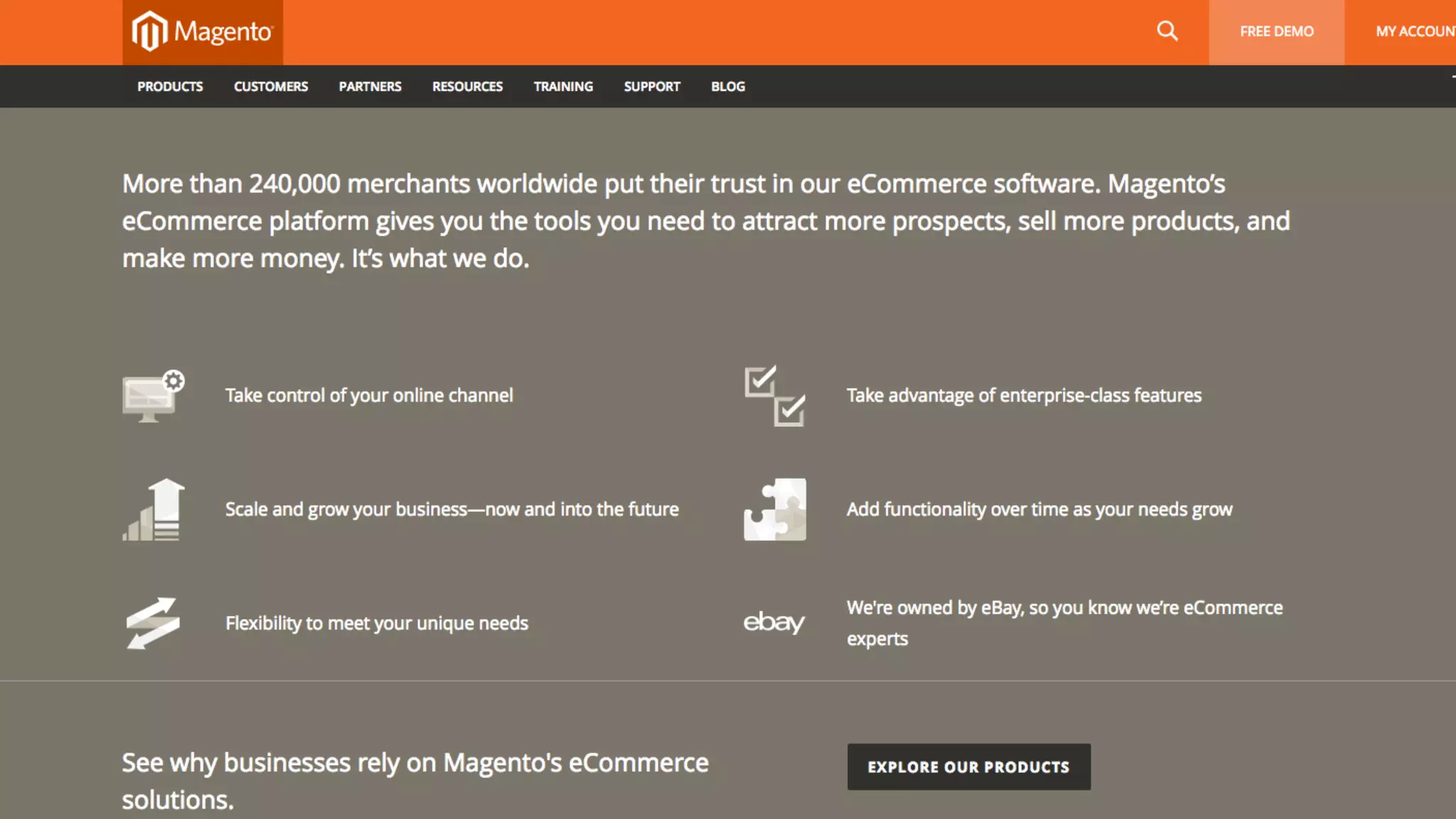
This could be
any business
to business
service!
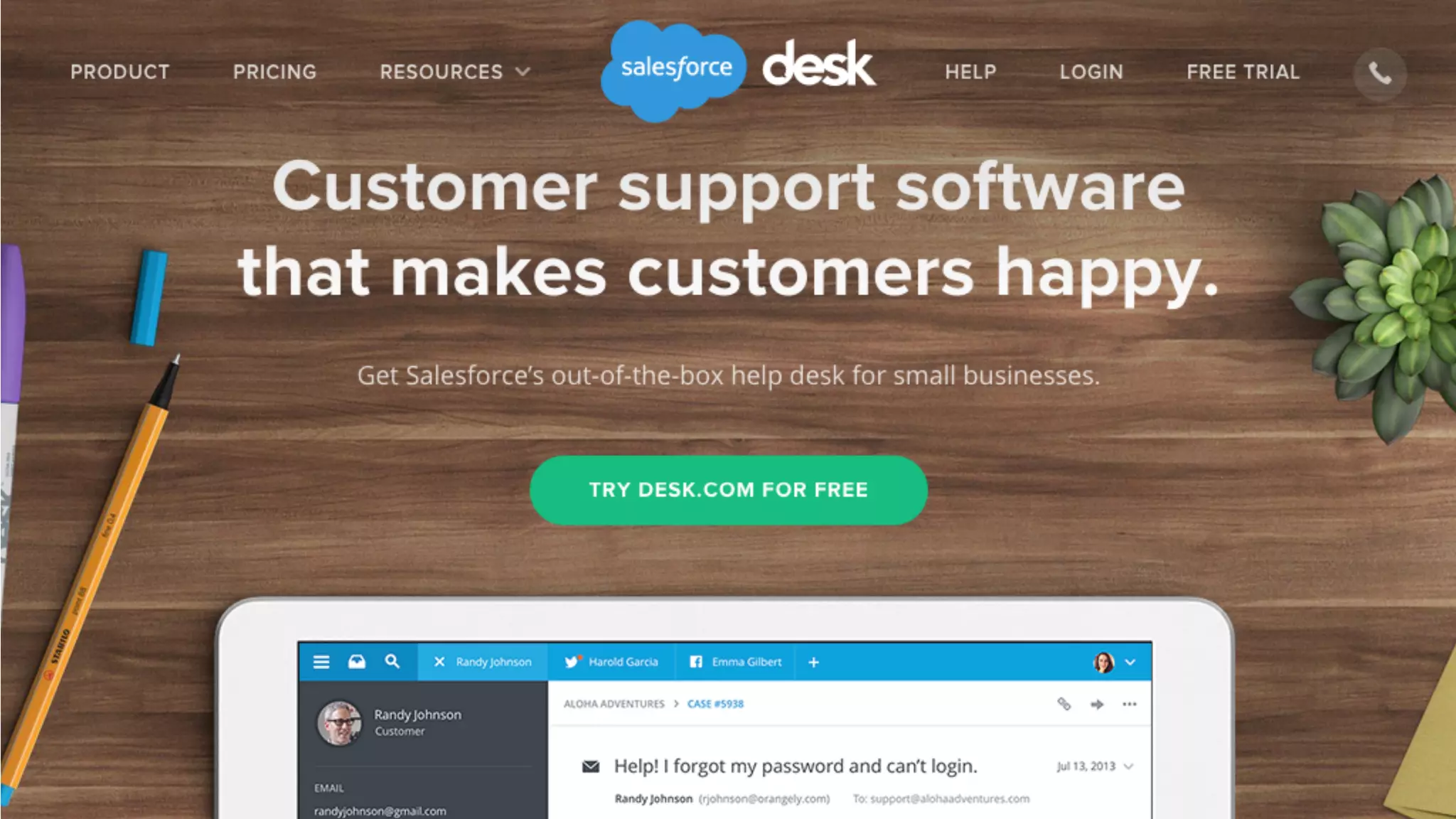
✓ Take control of your online
channel
✓ Take advantage of
enterprise-class features
✓ Scale and grow your business
– now and into the future
✓ Flexibility to meet your
unique needs
“Only NetSuite’s customer service software
gives everyone that interfaces with the
customer access to complete, key customer
data in real time empowering them to better
support your customers while driving upsell
and cross-sell.”
what the hell.
“As you read aloud, pretend you’re
talking to a real person and ask
yourself ‘Would I say this to someone
in real life?’ Sometimes our writing
makes us sound stodgier or colder
than we’d like.”
Kate Kiefer Lee of MailChimp
Believe in Something
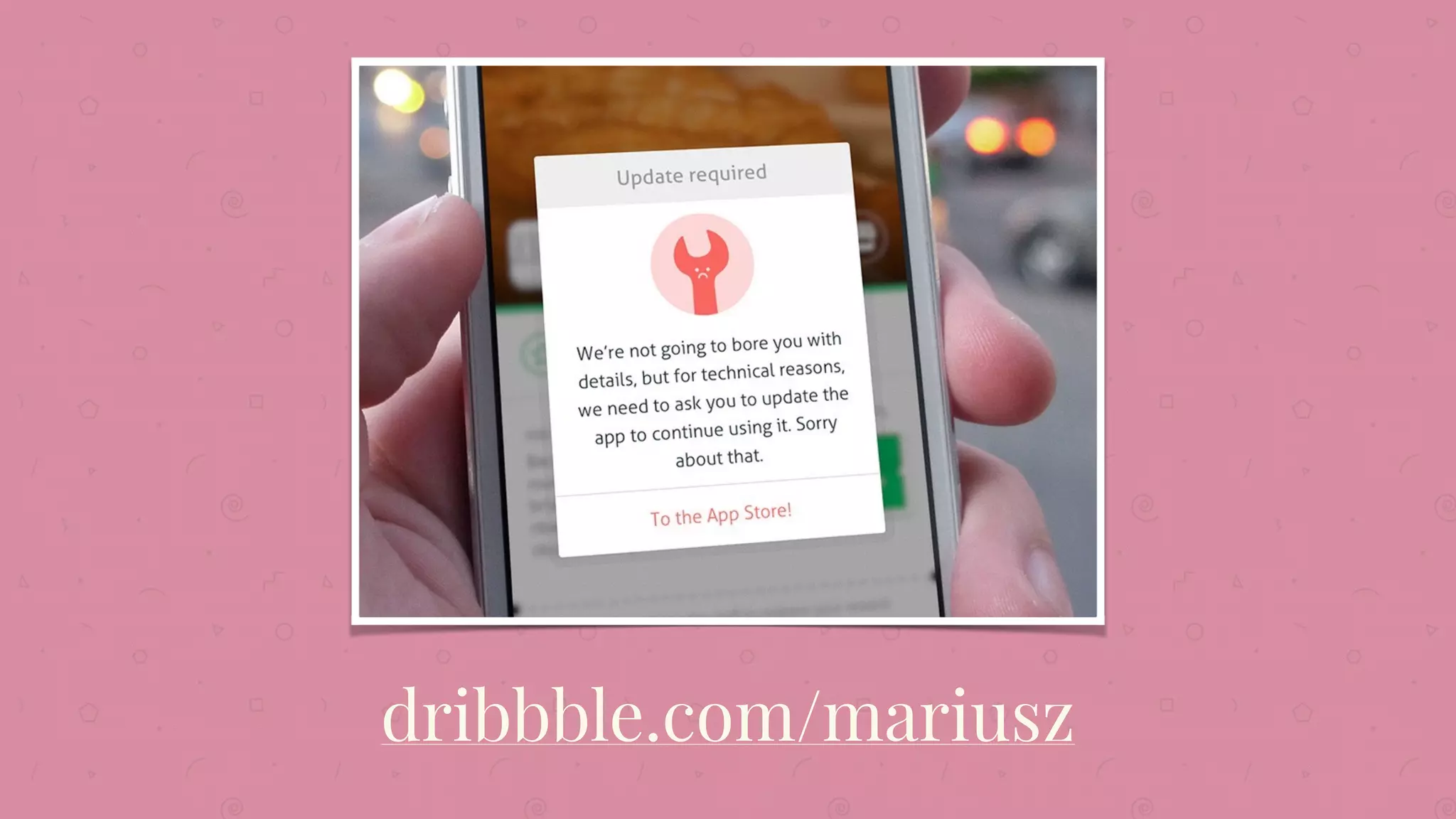
“Words don’t always need to be
pressed into service for
functional needs; sometimes
they can be used simply to satisfy
our emotional needs. We’re
emotional creatures… bringing a
smile to your users’ faces can
make a world of difference.”
dribbble.com/mariusz
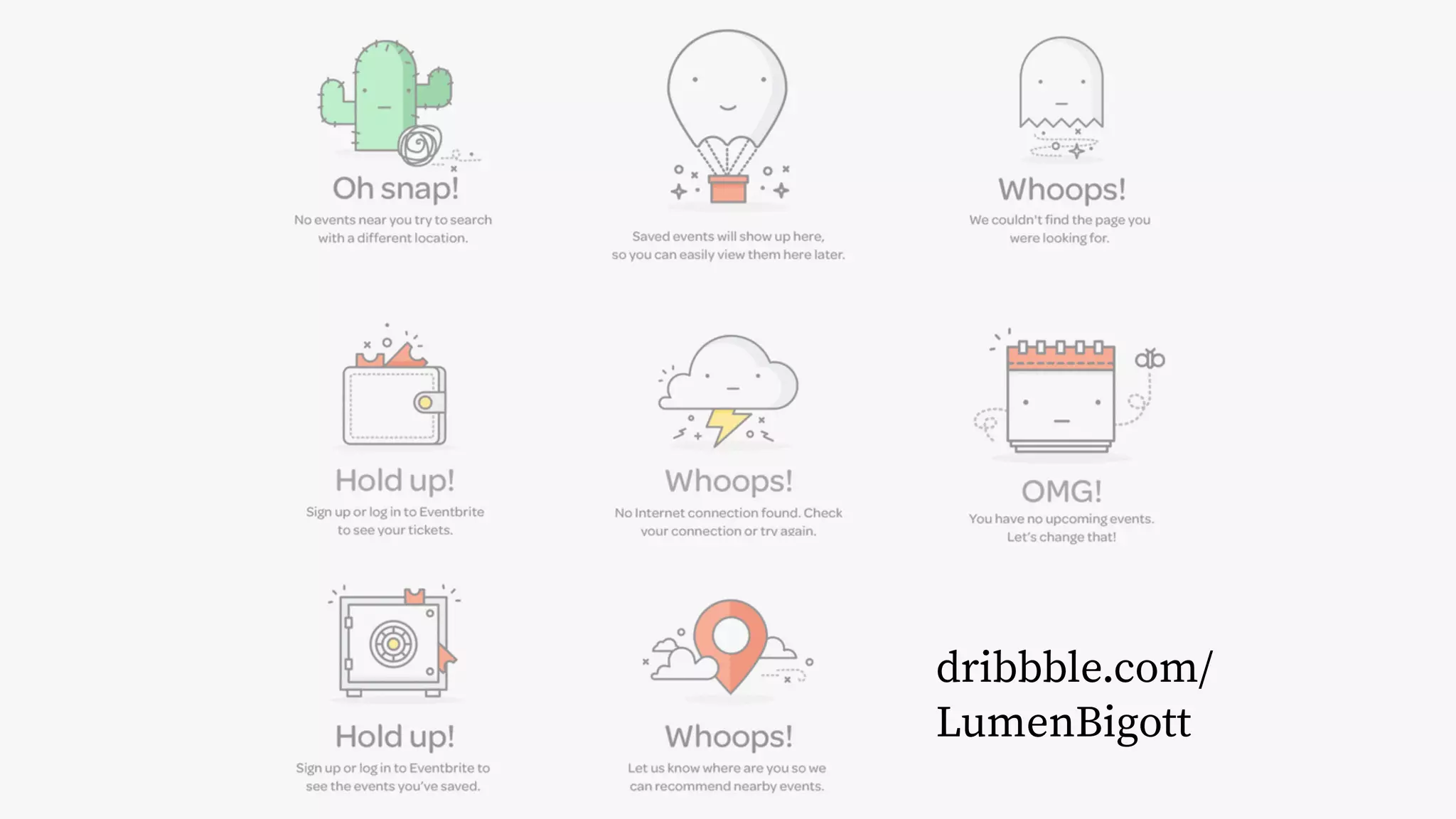
dribbble.com/
LumenBigott
3. Get users to the
kick-ass zone.
“How long do your users spend in the
‘I suck’ (or ‘this product sucks’) zone?
Once they’ve crossed the suck
threshold, how long does it take before
they start to feel like they kick ass?”
Kathy Sierra,
Creating Passionate Users
I Love Vine Wine
Chardonnay, South Africa
“A spicy apple (pie?)
scented wine. Dry with
almost a creamy texture.
The winemaker blasts
classical music to his vines
all day. Wonder if it helps…”
Chardonnay, South Africa
“A spicy apple (pie?)
scented wine. Dry with
almost a creamy texture.
The winemaker blasts
classical music to his vines
all day. Wonder if it helps…”
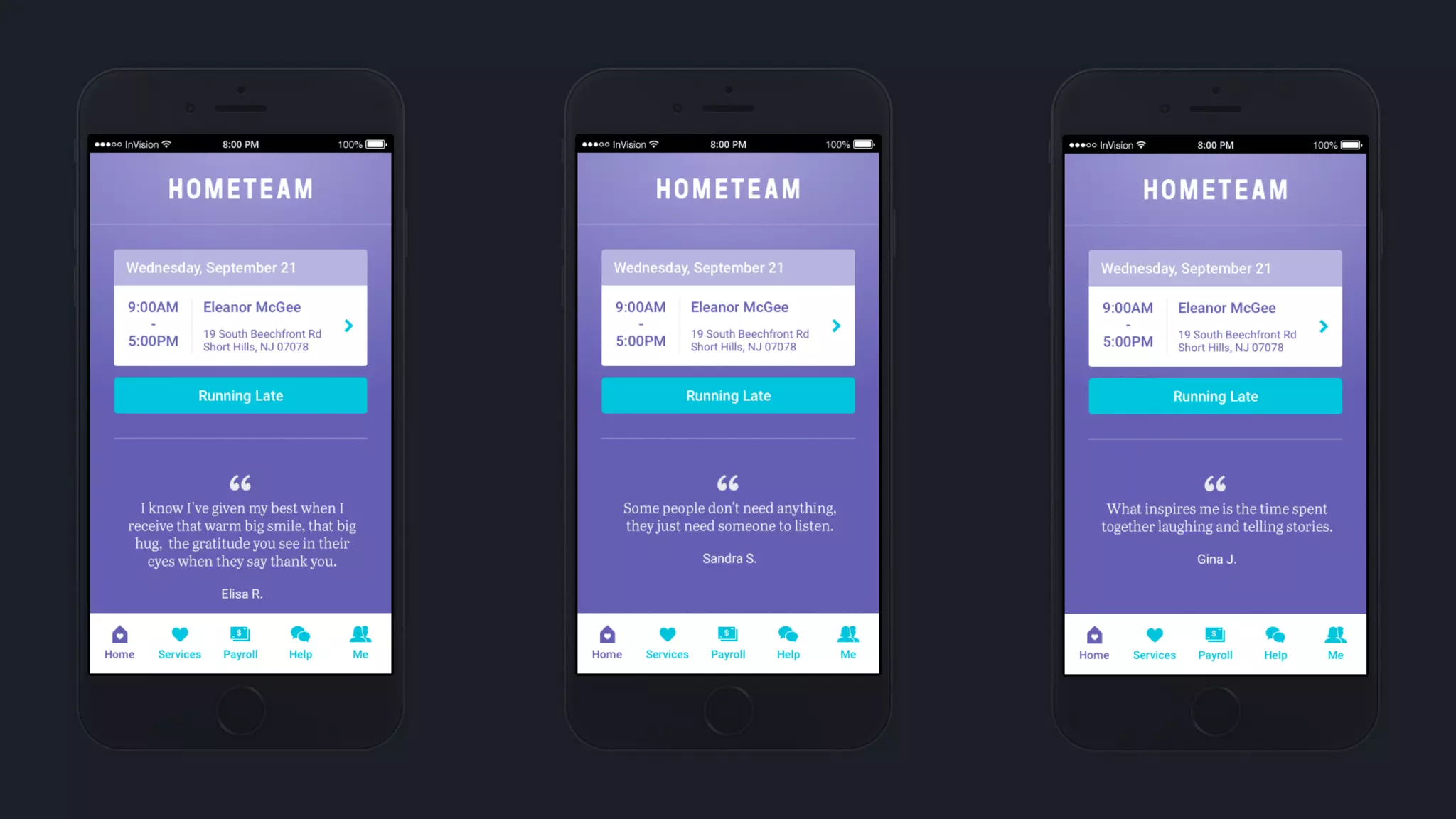
Make
beginning
home care
easy &
effective.
We can make this shorter!
I suck. I rule!
4. Design
for reality.
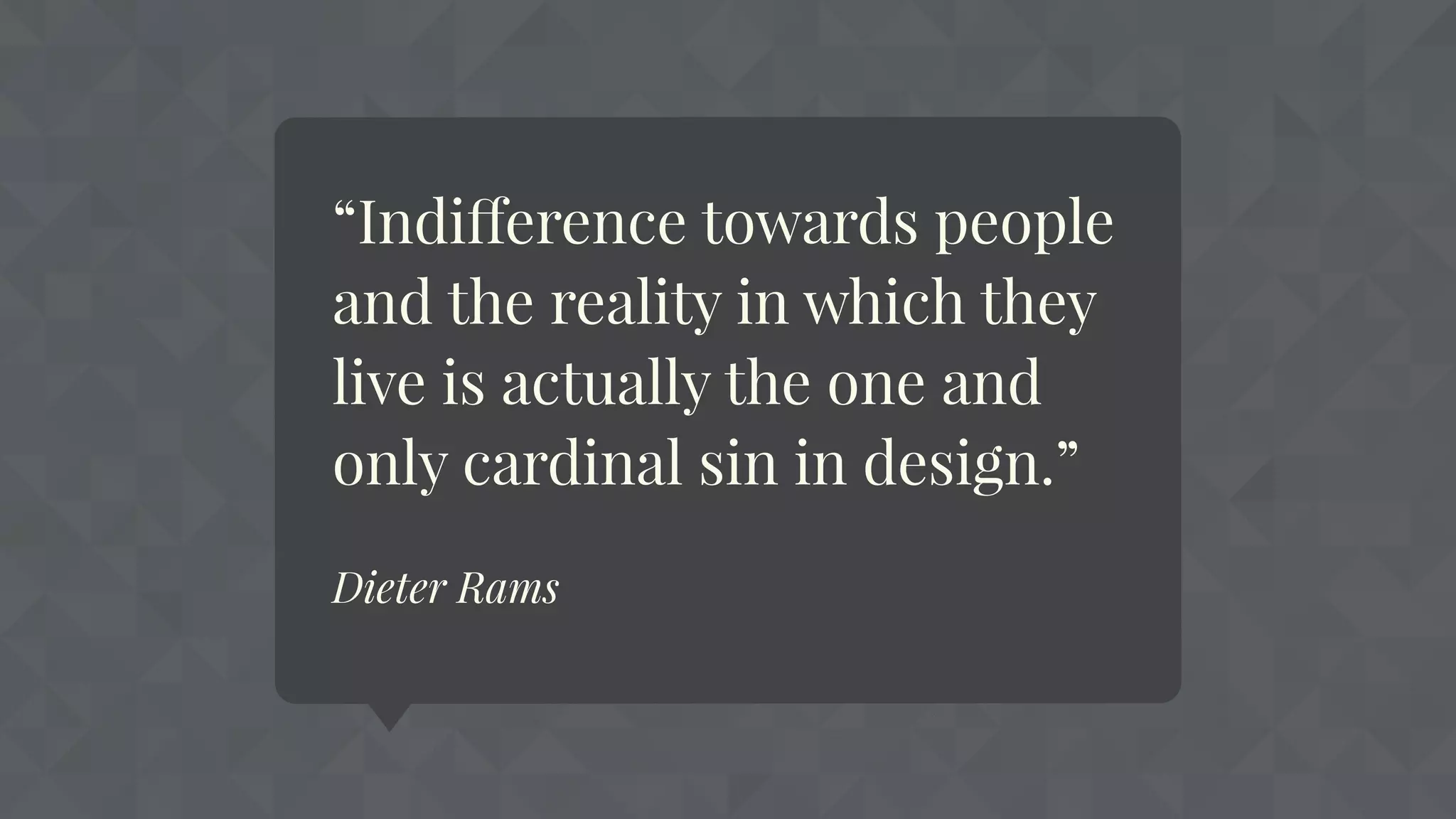
“Indifference towards people
and the reality in which they
live is actually the one and
only cardinal sin in design.”
Dieter Rams
hu·mane – adjective: having or showing
compassion or benevolence, inflicting
the minimum amount of pain.
In real life, we adapt for
emotion. We empathize,
and connect.
“Delight”
“Delight”
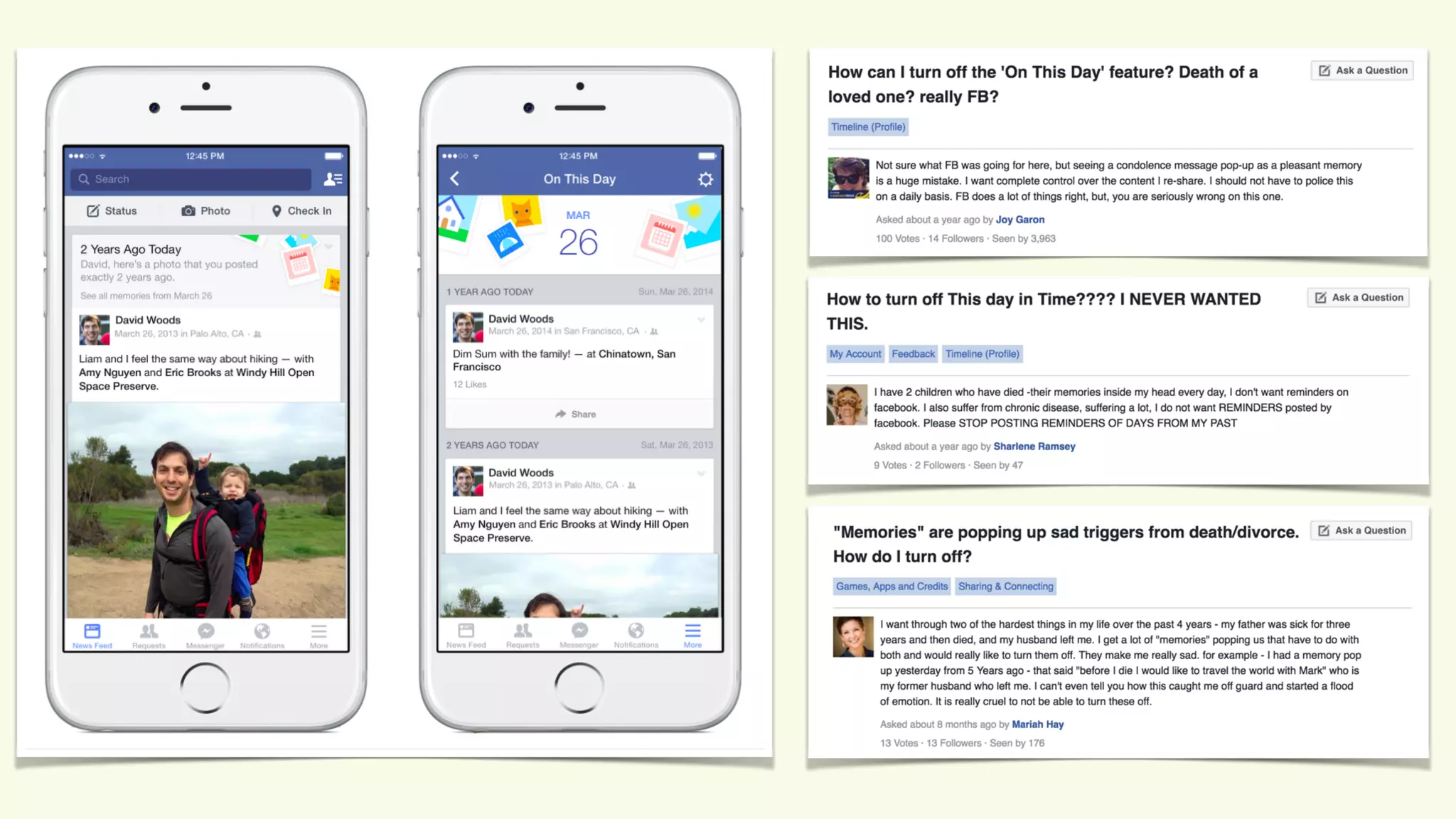
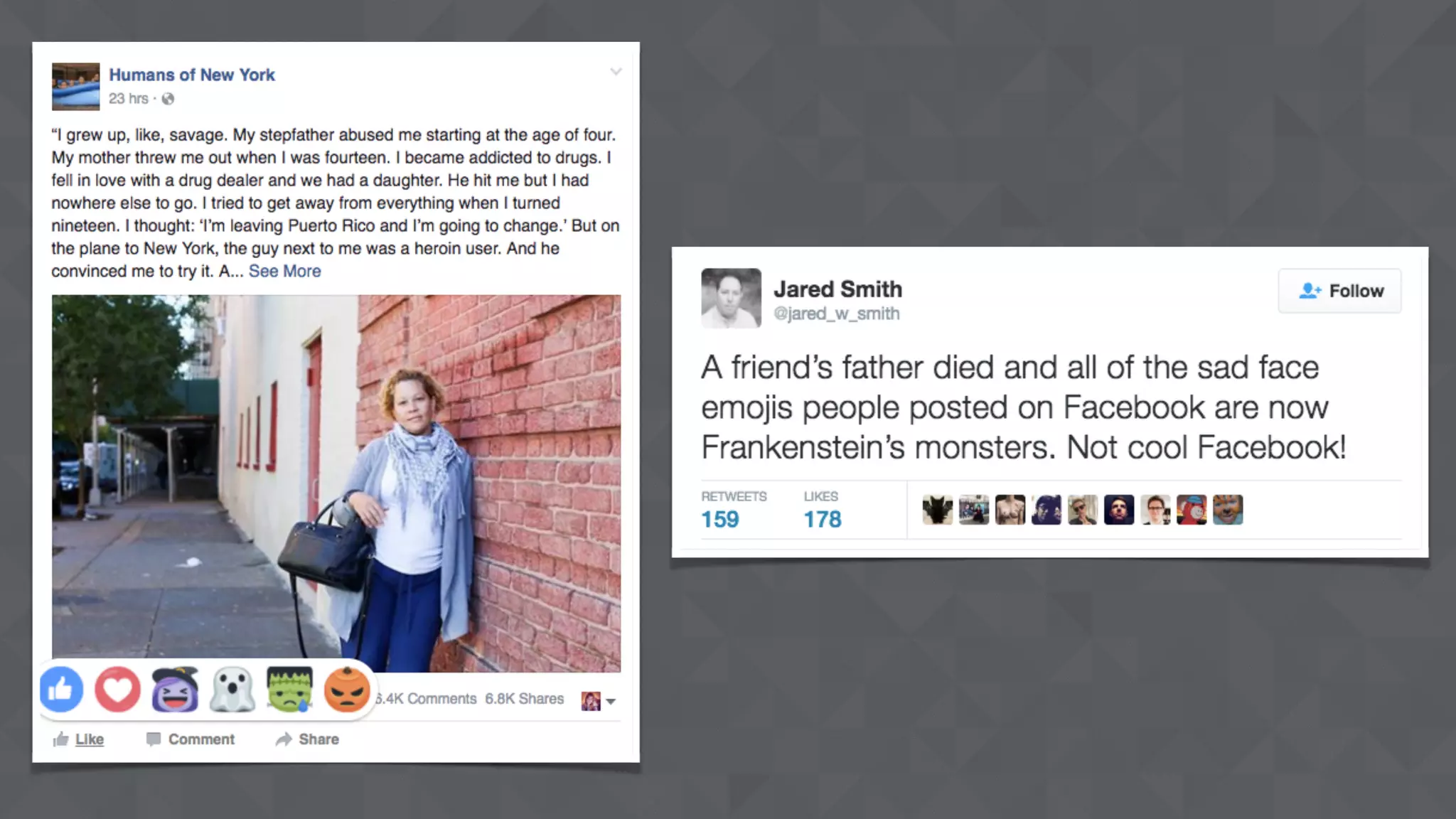
“Inadvertent
Algorithmic Cruelty”
by Eric Meyer
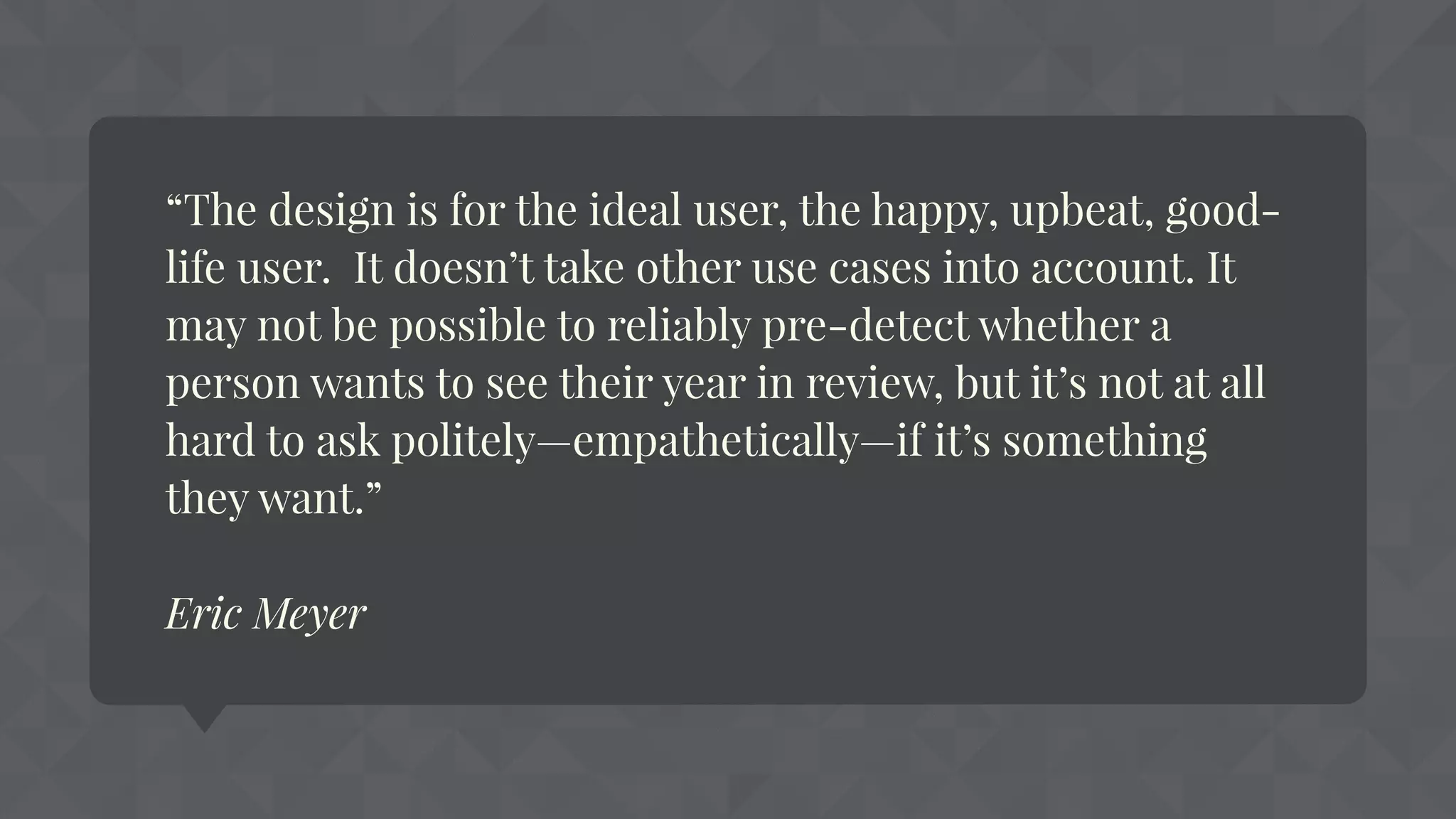
“The design is for the ideal user, the happy, upbeat, good-
life user. It doesn’t take other use cases into account. It
may not be possible to reliably pre-detect whether a
person wants to see their year in review, but it’s not at all
hard to ask politely—empathetically—if it’s something
they want.”
Eric Meyer
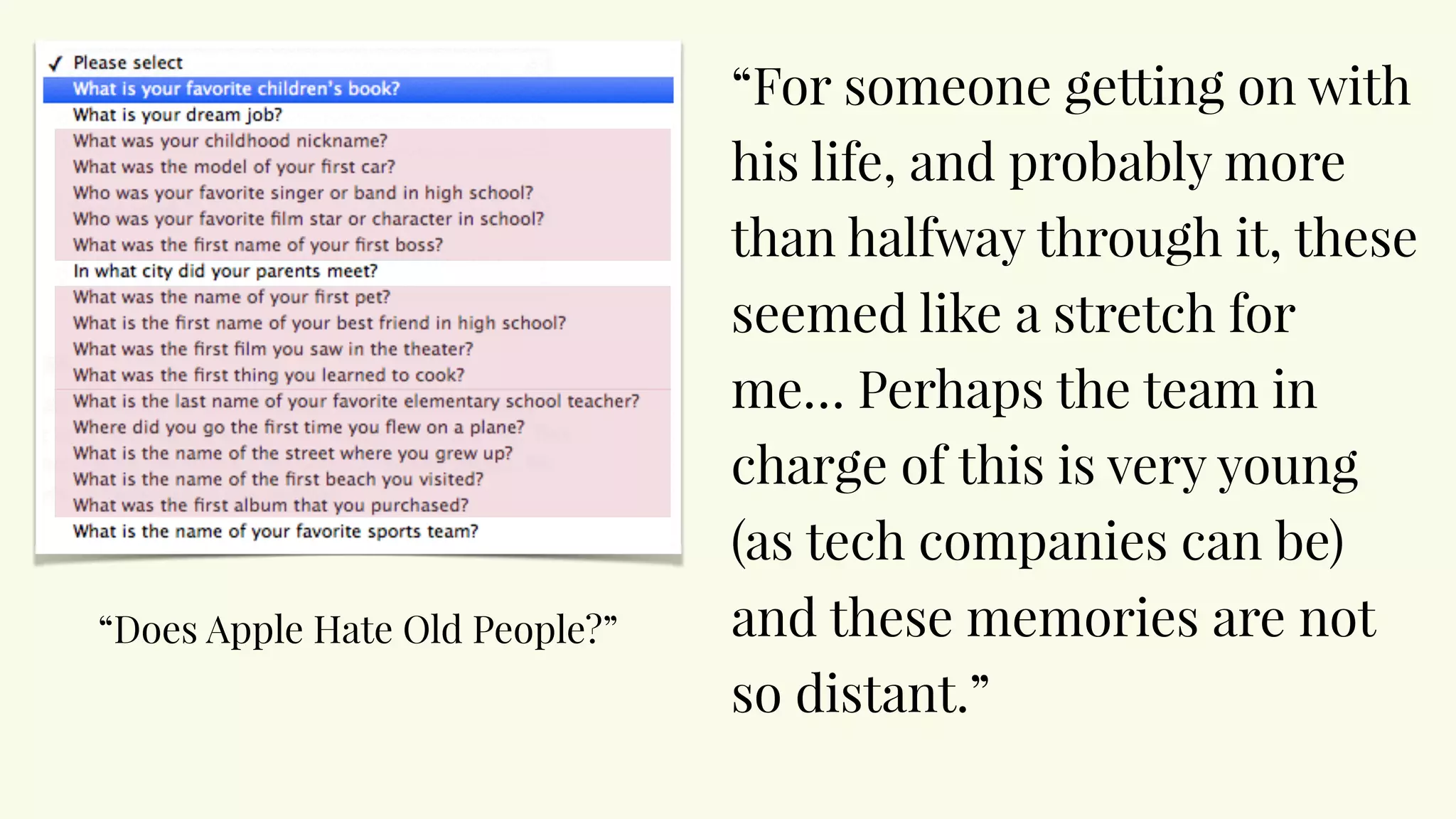
“For someone getting on with
his life, and probably more
than halfway through it, these
seemed like a stretch for
me… Perhaps the team in
charge of this is very young
(as tech companies can be)
and these memories are not
so distant.”
“Does Apple Hate Old People?”
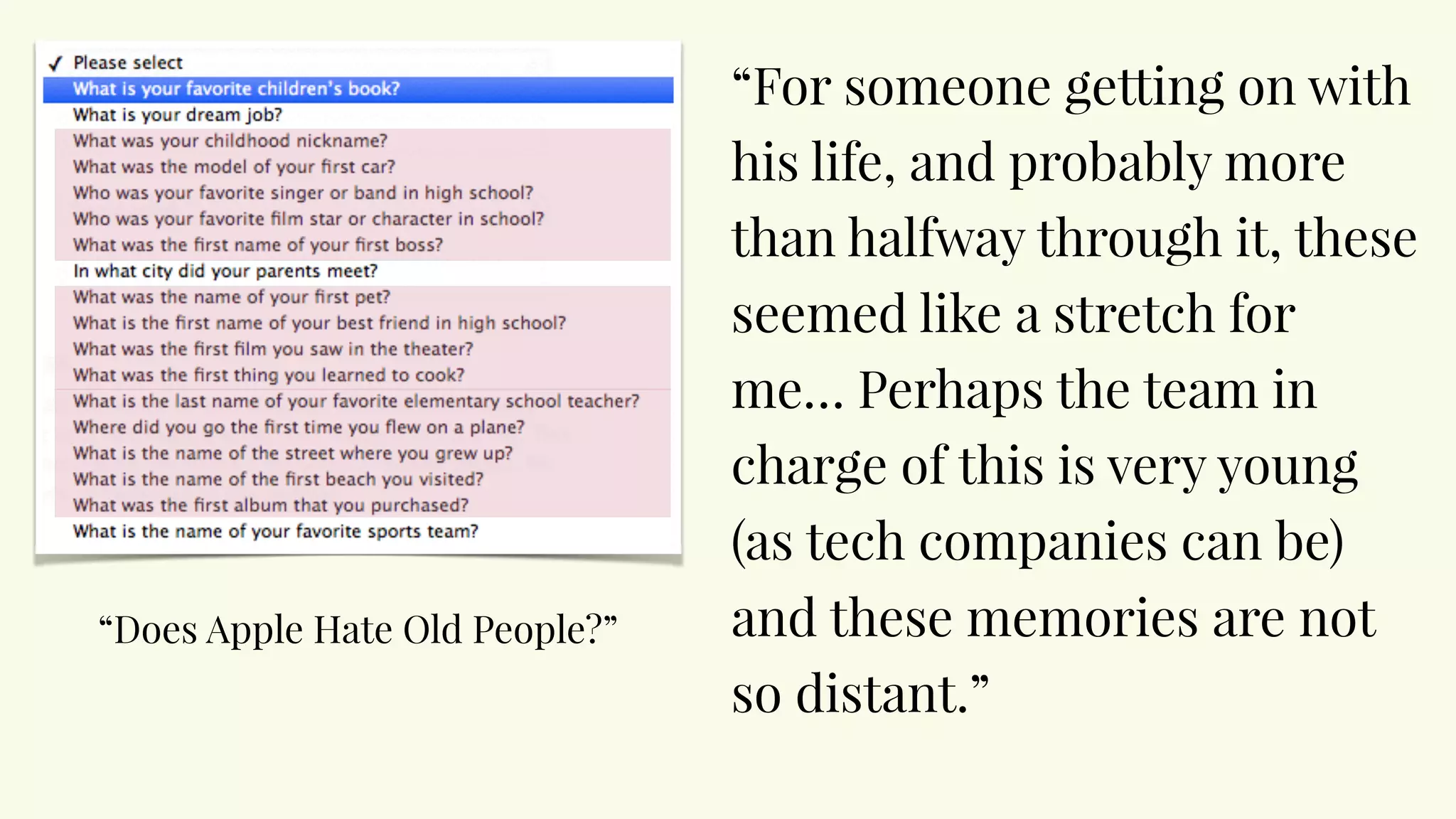
“For someone getting on with
his life, and probably more
than halfway through it, these
seemed like a stretch for
me… Perhaps the team in
charge of this is very young
(as tech companies can be)
and these memories are not
so distant.”
“Does Apple Hate Old People?”
“Perhaps if the titans of
Silicon Valley hired more
engineers of color,
things like this wouldn't
happen so often… Or,
you know, ever.”
via “Google Photos labeled black people
‘gorillas’” – USA Today
“There’s really only a question. And the question is,
do you want your work to re-inscribe sexism, or
racism, or homophobia? Do you want your work to
cause anxiety, or to trigger trauma, or to alienate
people? Or do you want your work to make the world
a little bit more welcoming, a little bit safer, a little
less hostile?”
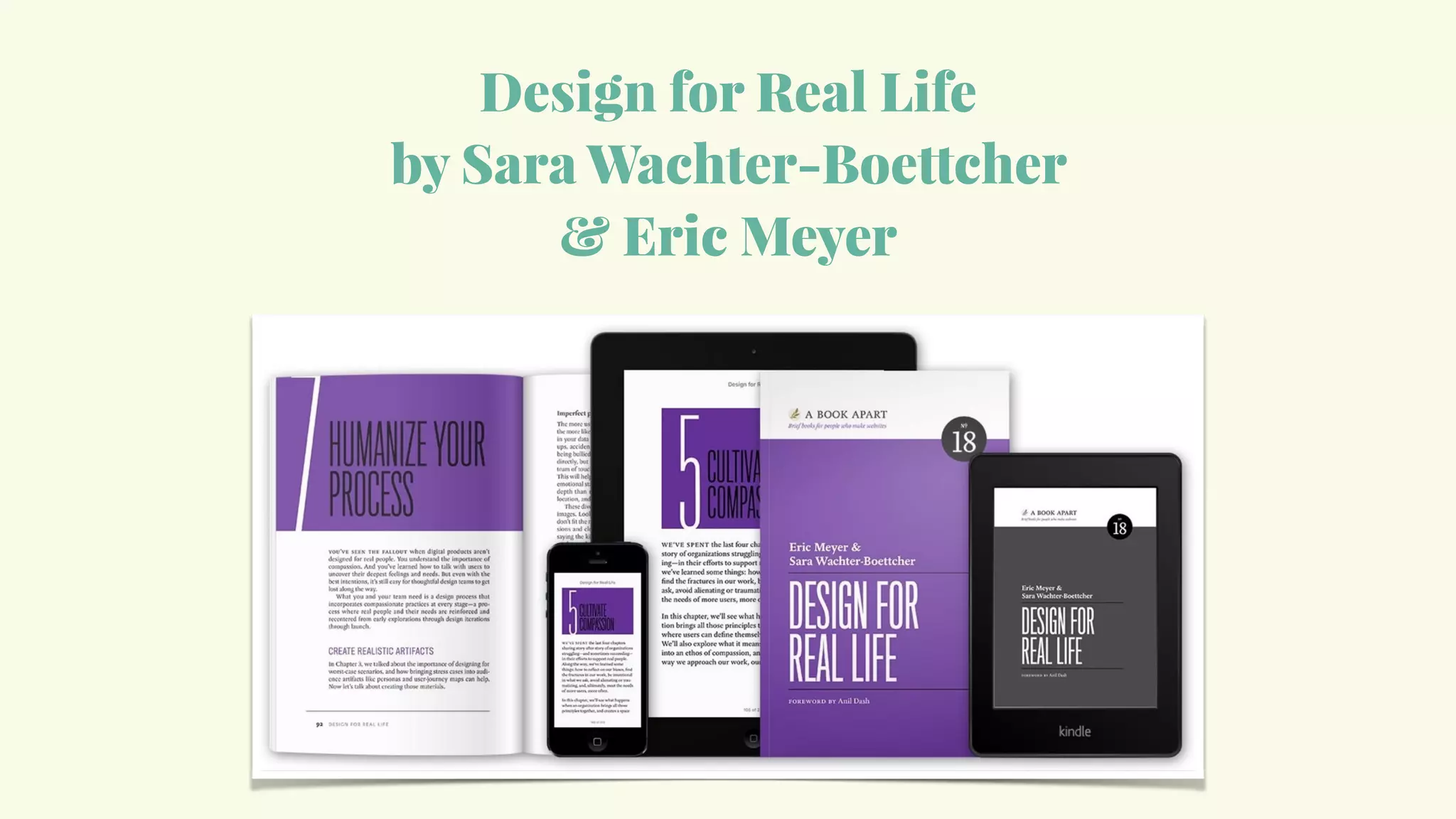
Sara Wachter-Boettcher
Design for Real Life
by Sara Wachter-Boettcher
& Eric Meyer
What can we do?
• Work with diverse teams
• Prioritize “stress cases”
• Appoint a “design dissenter”
• Get to know & represent all users
What can we do?
• Work with diverse teams
• Prioritize “stress cases”
• Appoint a “design dissenter”
• Get to know & represent all users
What can we do?
• Work with diverse teams
• Prioritize “stress cases”
• Appoint a “design dissenter”
• Get to know & represent all users
What can we do?
• Work with diverse teams
• Prioritize “stress cases”
• Appoint a “design dissenter”
• Get to know & represent all users
How do we avoid
pain & provide
support?
“Make friends with
reality. Cultivate a desire
to be proven wrong as
quickly as possible and
for the lowest cost.”
Erika Hall, Just Enough Research
“Successful design teams have each team
member spend a minimum of two hours every
six weeks watching real users interacting with
either their design or a competitor’s design.”
Jared Spool, “Exposure Hours Drive UX Innovation”
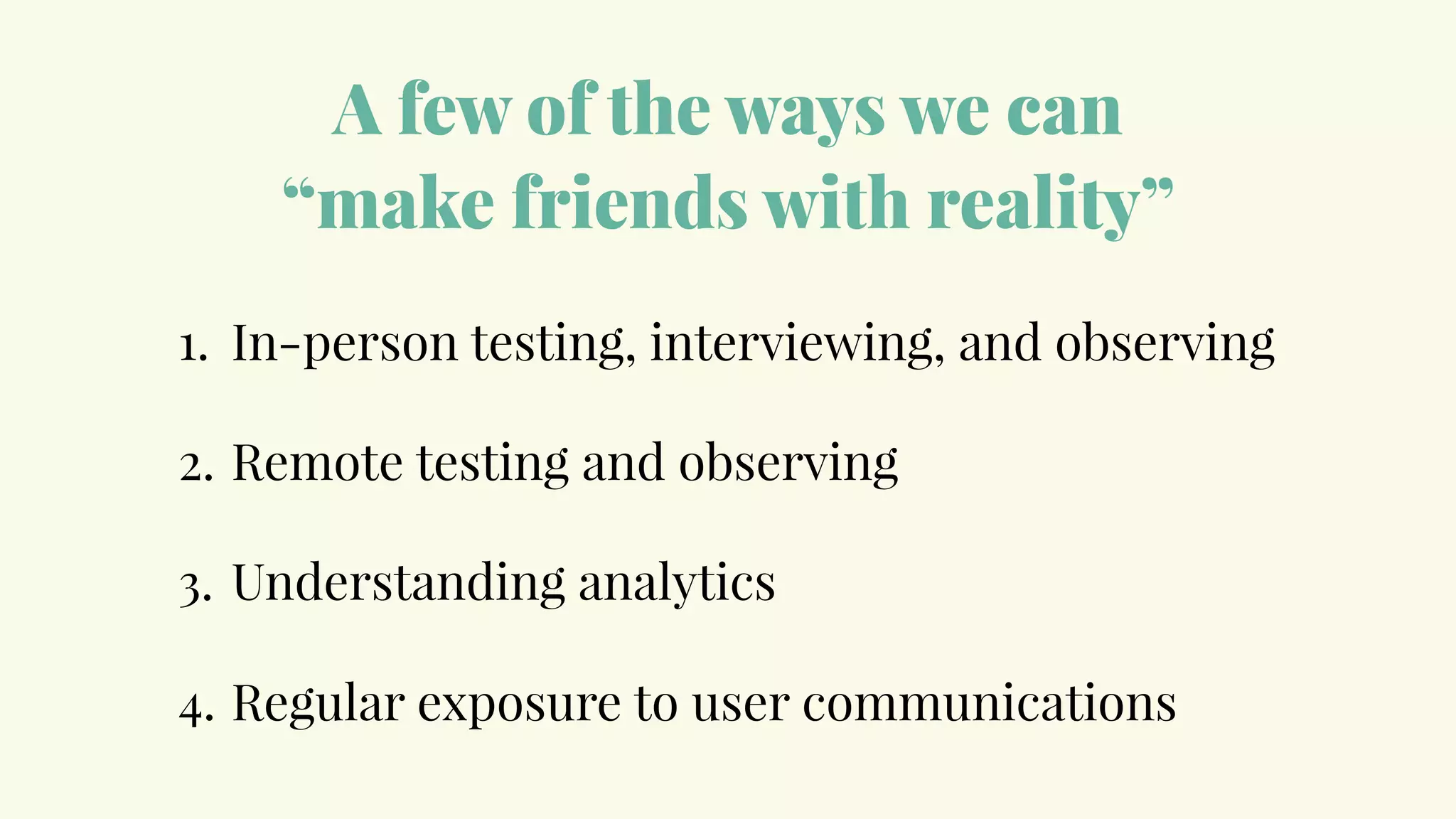
A few of the ways we can
“make friends with reality”
1. In-person testing, interviewing, and observing
2. Remote testing and observing
3. Understanding analytics
4. Regular exposure to user communications
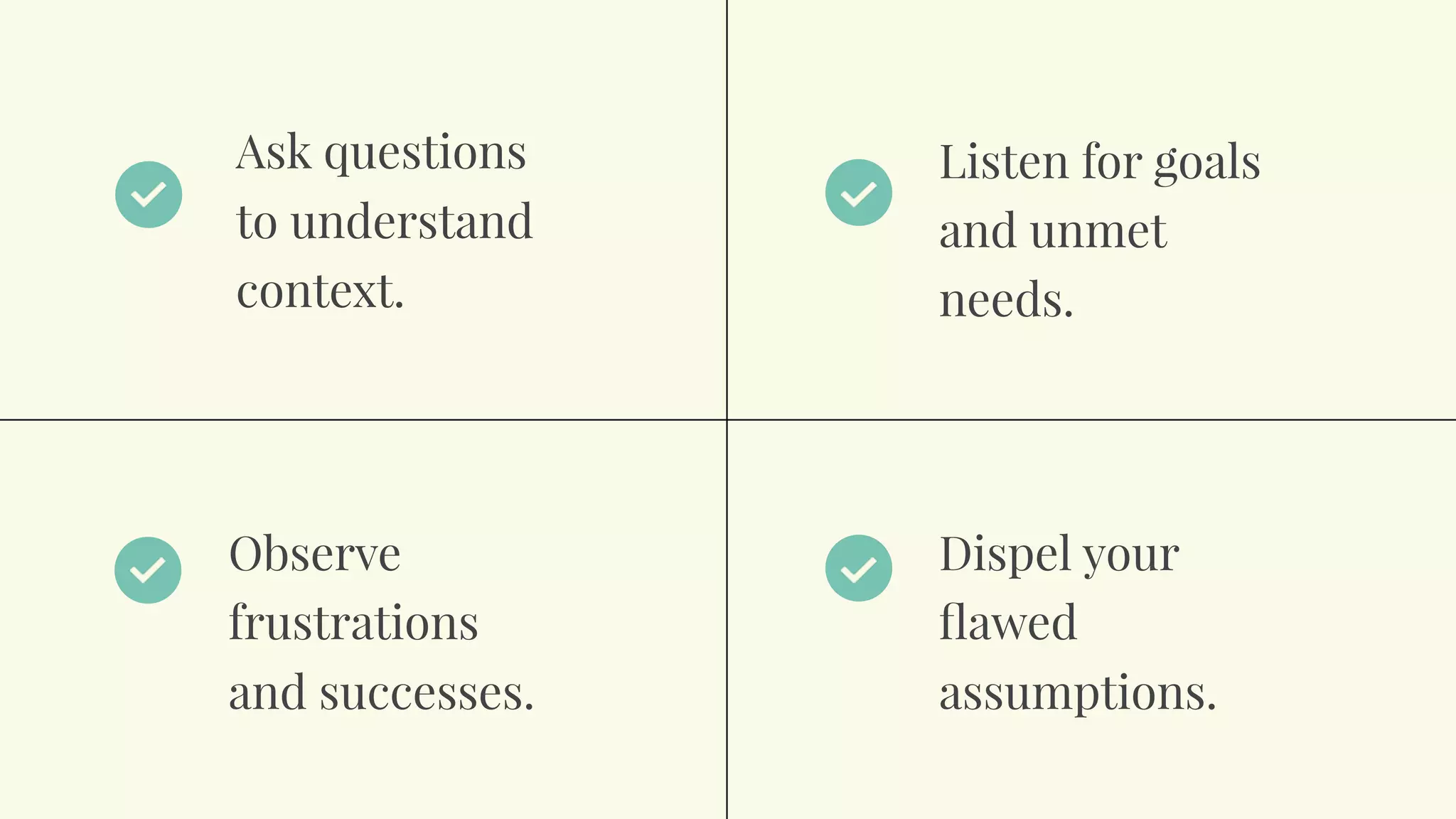
Ask questions
to understand
context.
Listen for goals
and unmet
needs.
Observe
frustrations
and successes.
Dispel your
flawed
assumptions.
Ask questions
to understand
context.
Listen for
goals &
unmet needs.
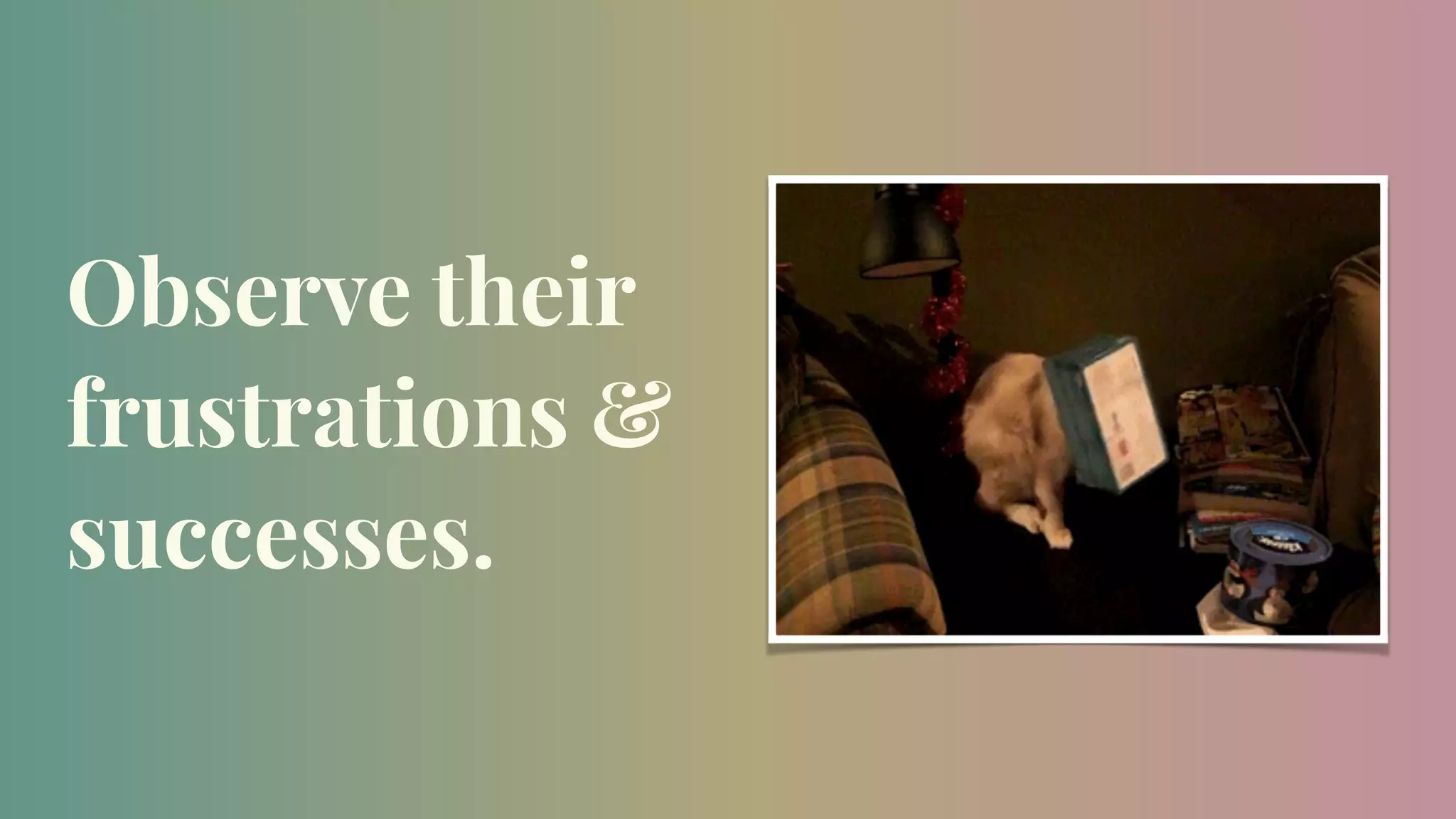
Observe their
frustrations &
successes.
Dispel your
flawed
assumptions.
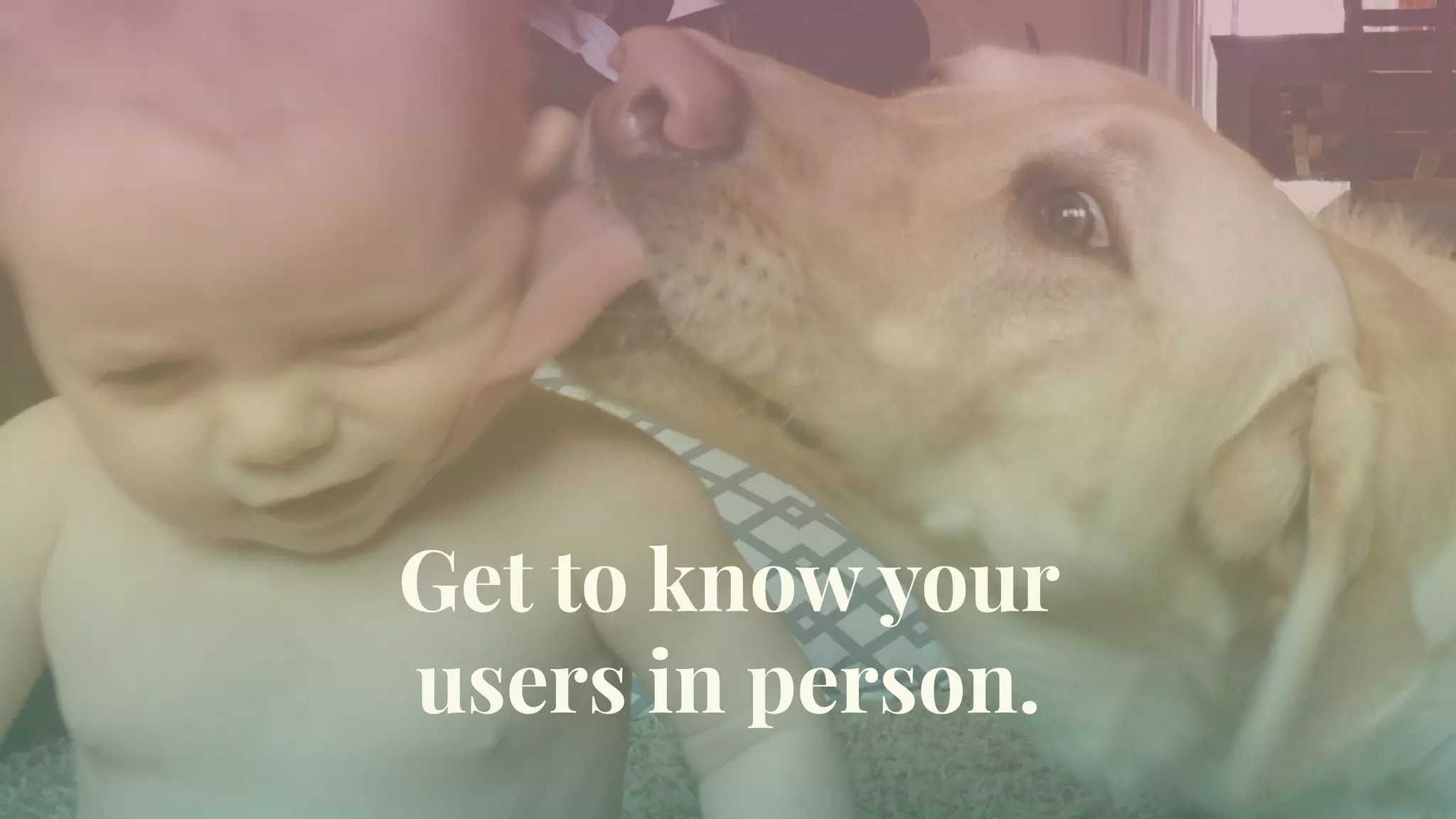
Get to know your
users in person.
Meeting users in person
achieves all of these goals.
Ask questions to
understand context.
Listen for unmet
needs and goals.
Observe frustrations
and successes.
Dispel your mistaken
assumptions.
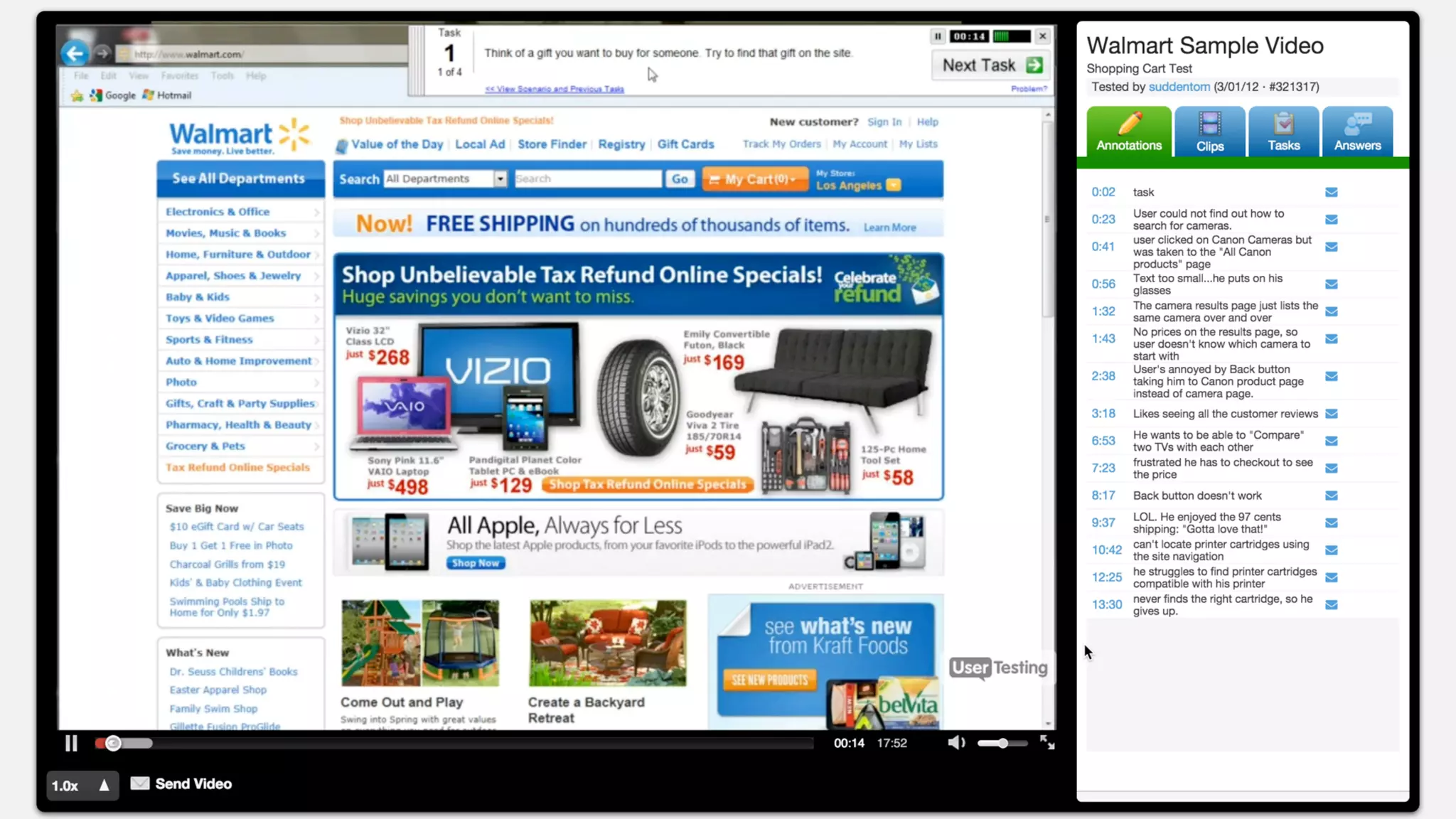
Watch them use your product or service.
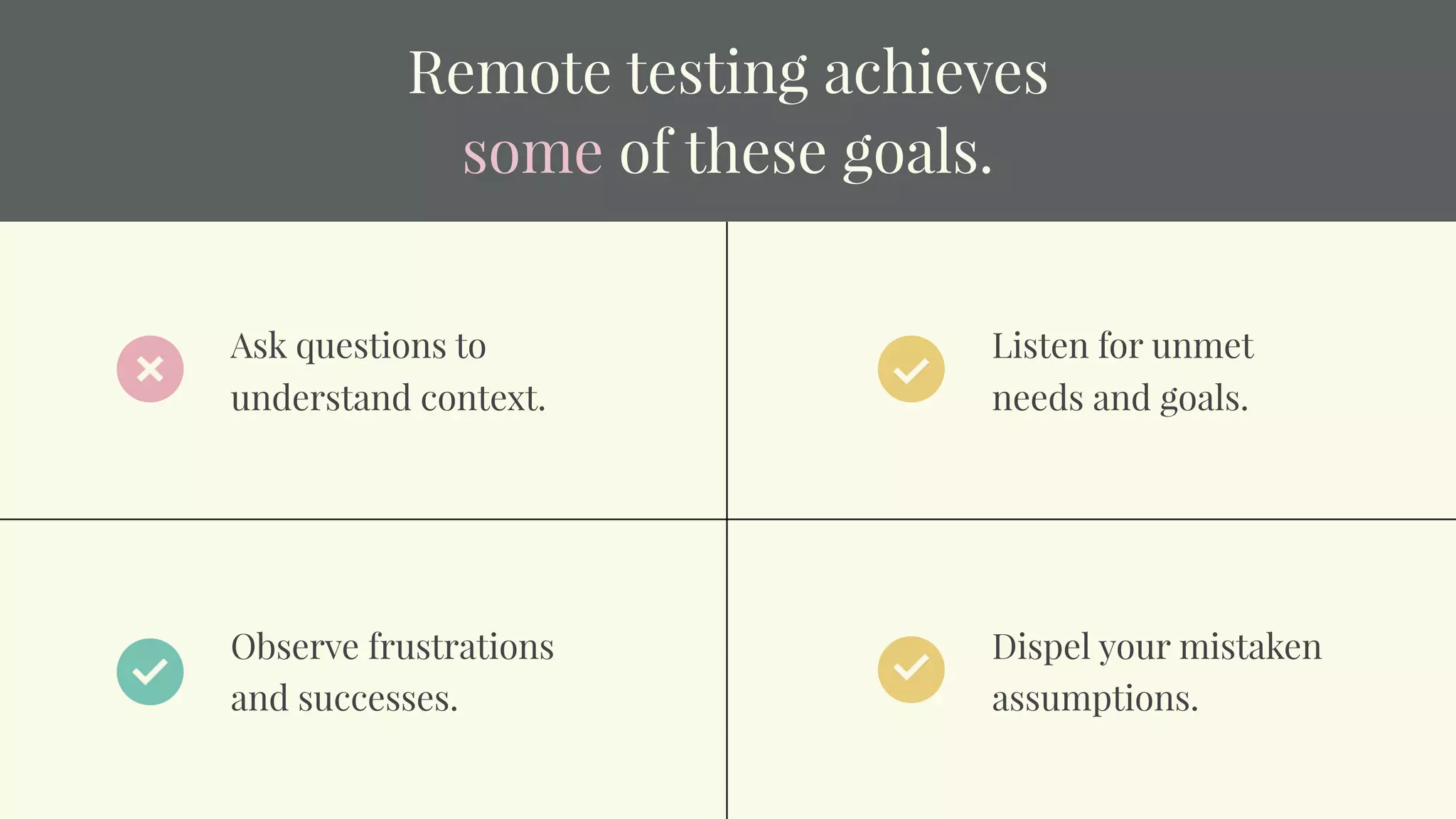
Remote testing achieves
some of these goals.
Ask questions to
understand context.
Listen for unmet
needs and goals.
Observe frustrations
and successes.
Dispel your mistaken
assumptions.
Observational tools achieve
a few of these goals.
Ask questions to
understand context.
Listen for unmet
needs and goals.
Observe frustrations
and successes.
Dispel your mistaken
assumptions.
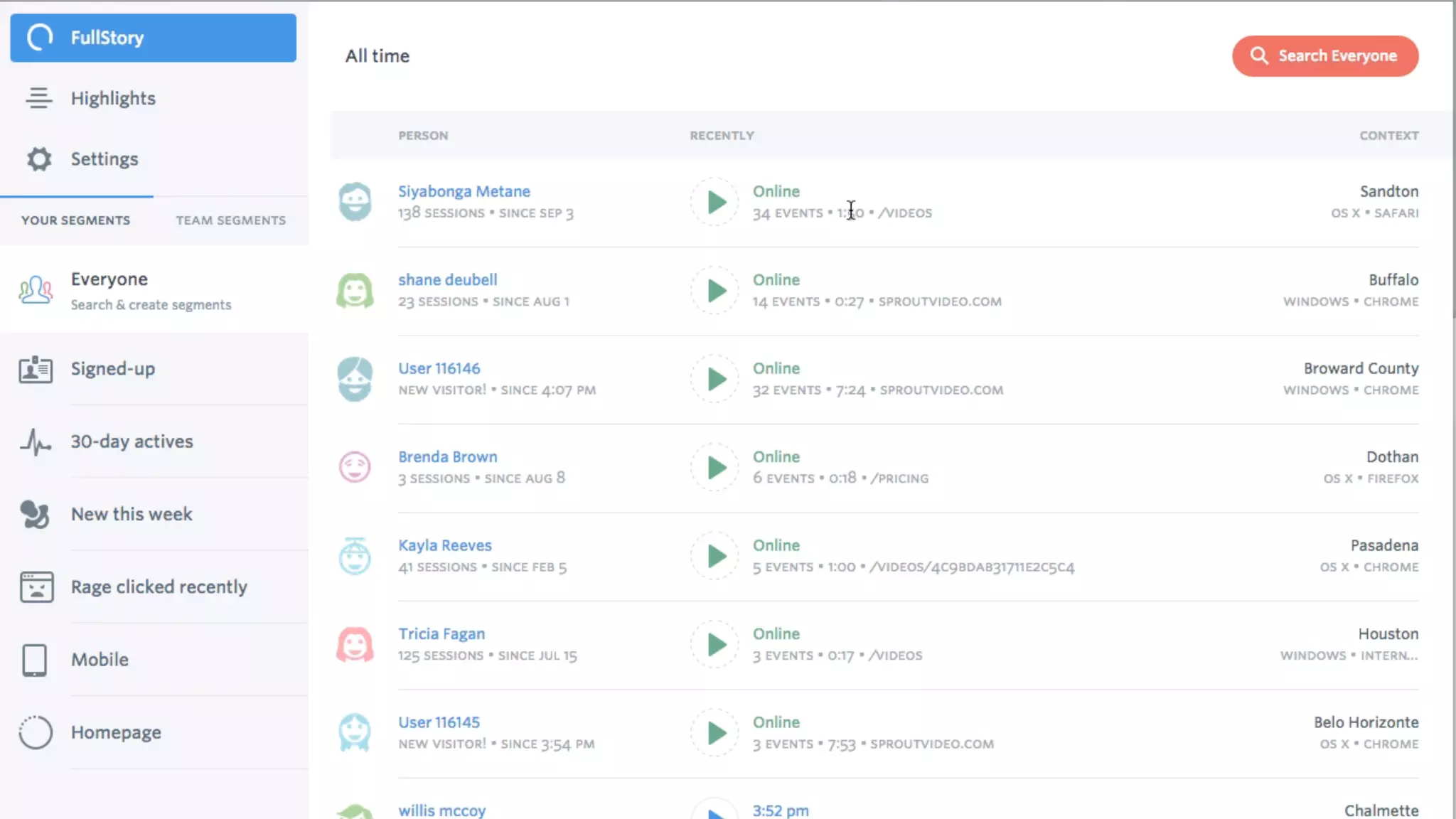
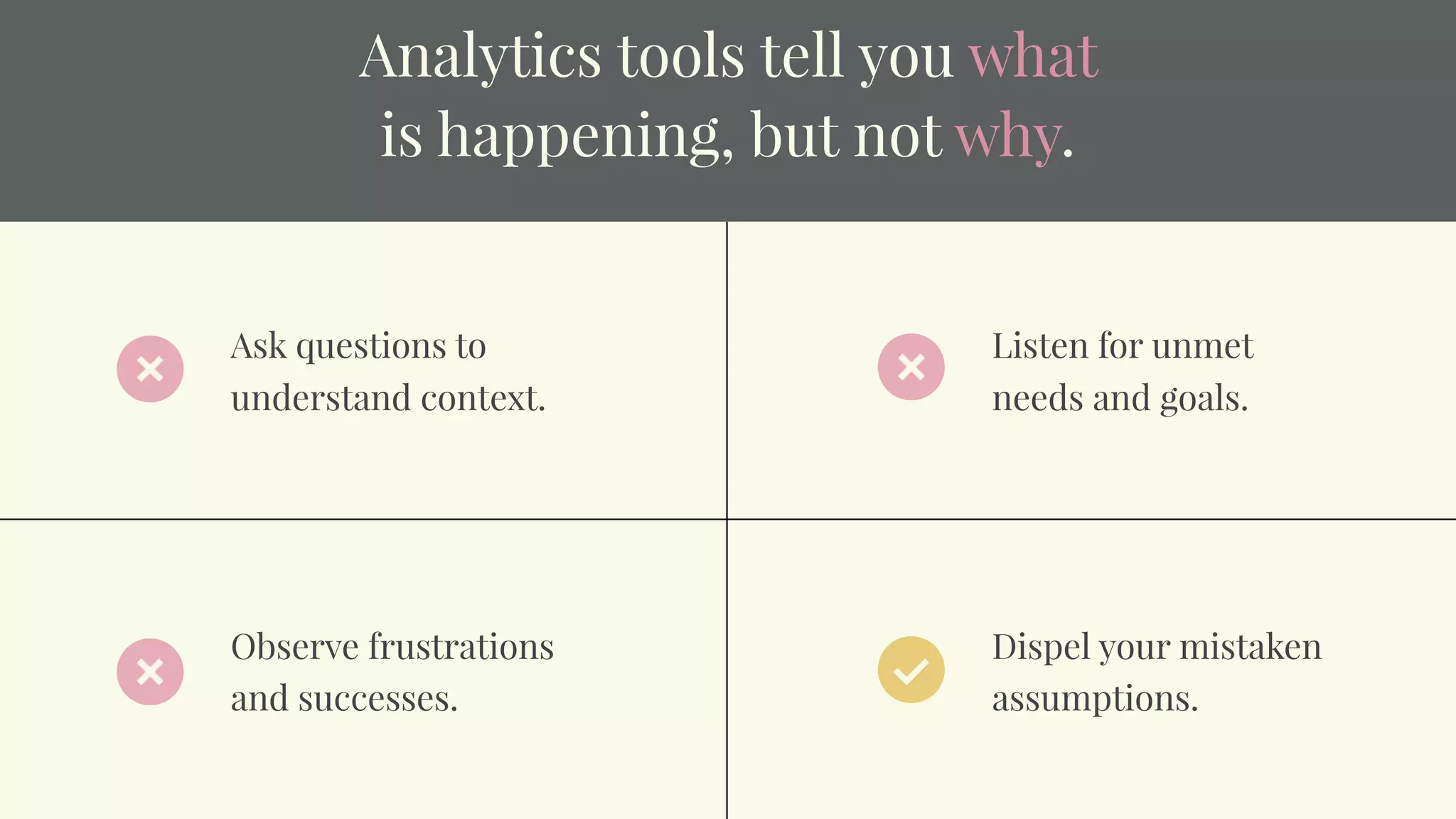
Analytics tools tell you what
is happening, but not why.
Ask questions to
understand context.
Listen for unmet
needs and goals.
Observe frustrations
and successes.
Dispel your mistaken
assumptions.
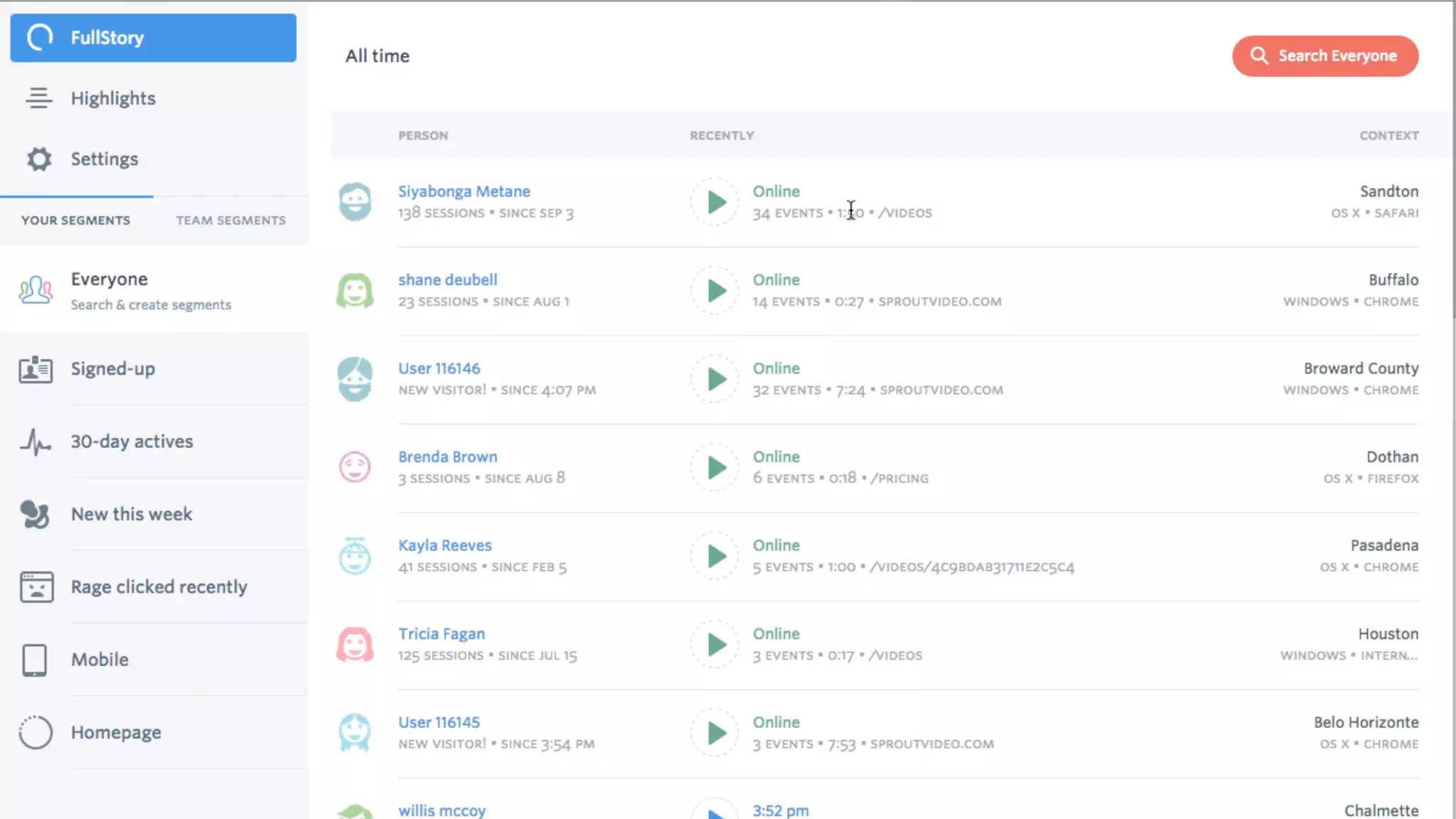
Listen to what users
are already telling you.
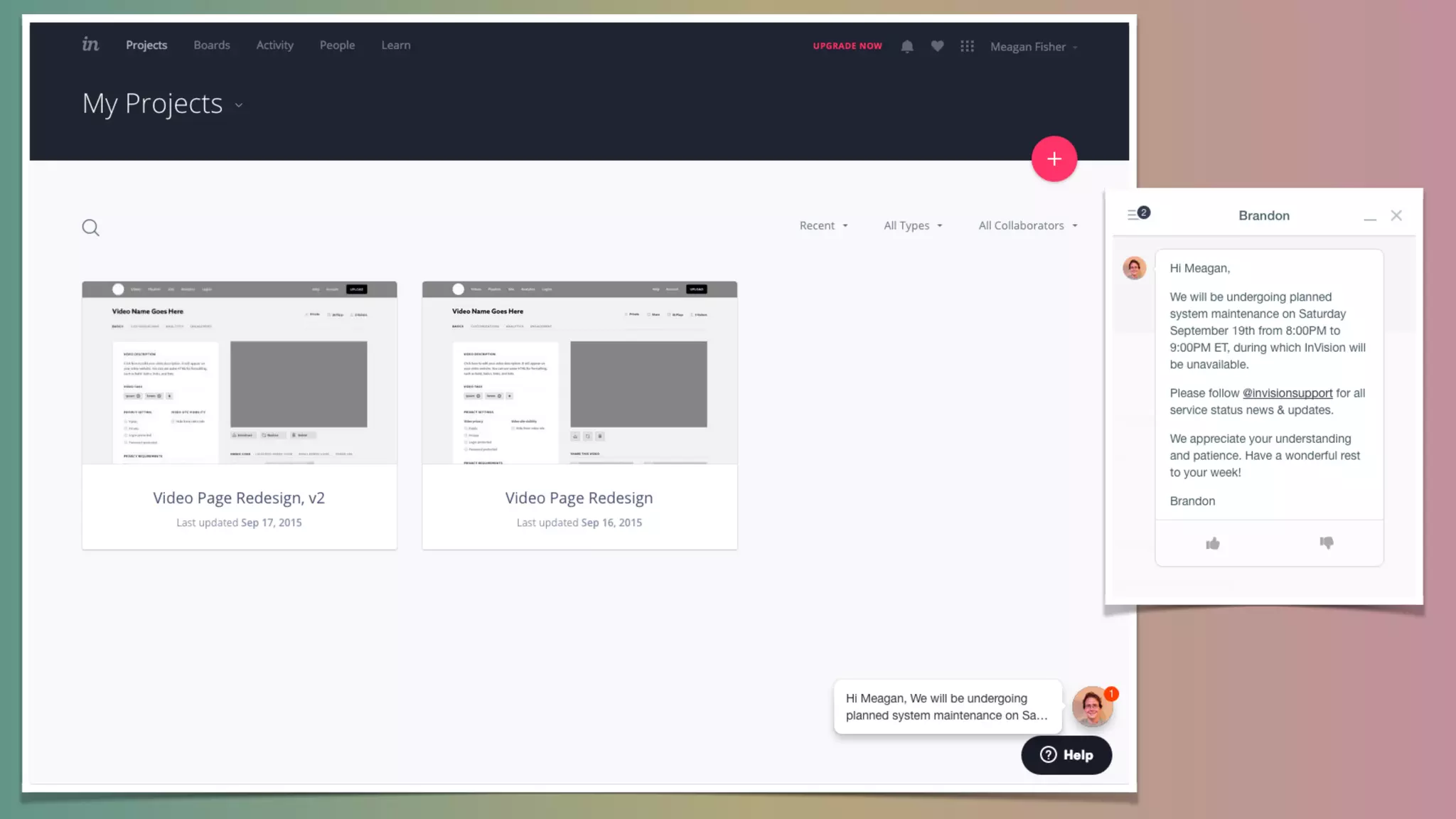
Be easy
to reach.
Hi Mary,
Thank you for checking us out! My name is Courtney and
I'm responsible for making sure your trial is a success.
What are you trying to achieve with our service? How are
you defining success? With this information, I can point
you in the direction of the features that will be most useful
to you, recommend helpful documentation, and brainstorm
with you about how to get the most out of our platform.
Shoot me a quick email, and I'll get right back to you.
Have a great day!
Courtney
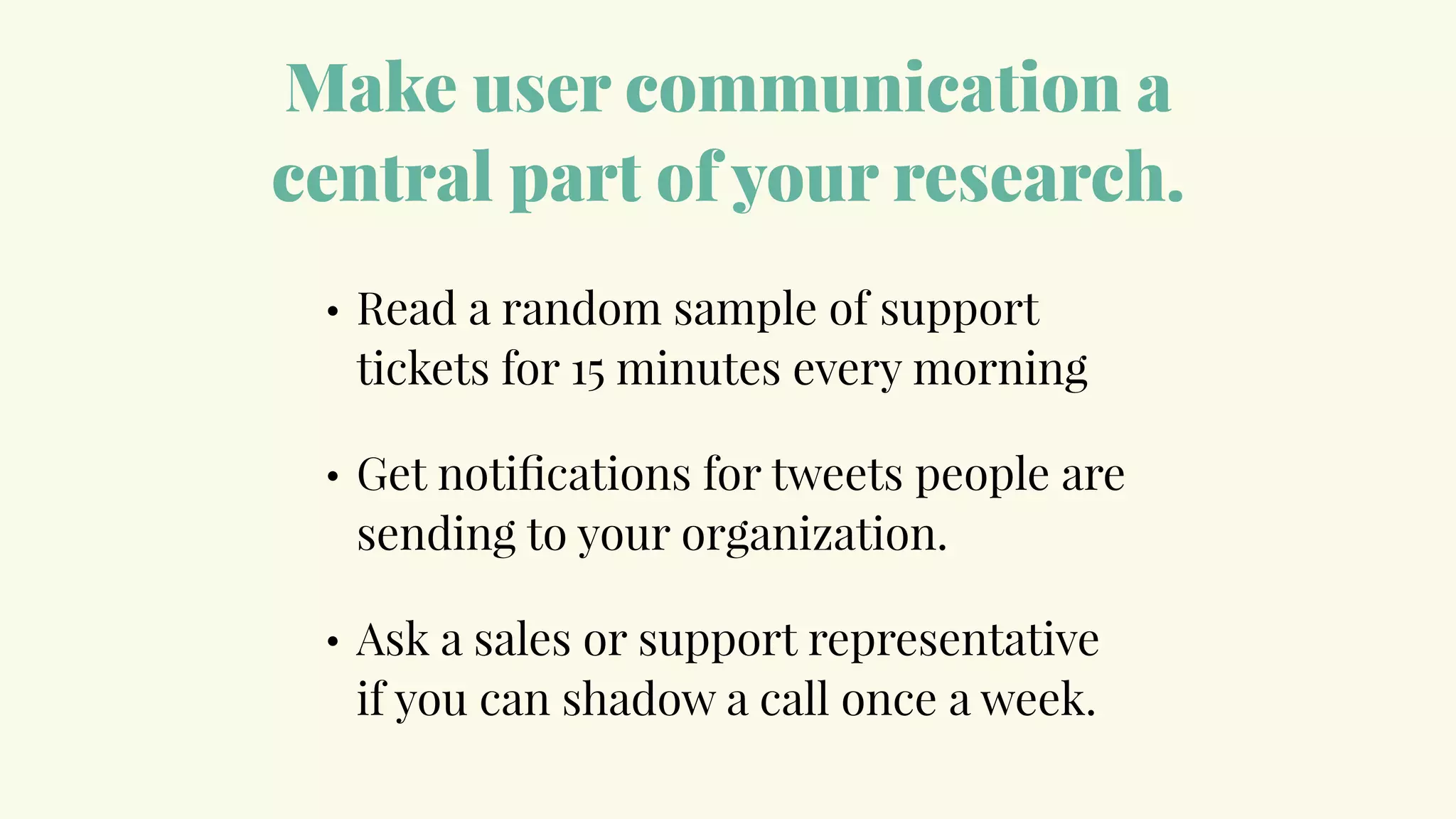
Make user communication a
central part of your research.
• Read a random sample of support
tickets for 15 minutes every morning
• Get notifications for tweets people are
sending to your organization.
• Ask a sales or support representative
if you can shadow a call once a week.
“Let’s think of our designs not as a
facade for interaction, but as people
with whom our audience can have an
inspired conversation. Products are
people too.”
Aaron Walter, “Designing for Emotion.”
Show people they are welcome,
supported, & valued.
• Have a welcoming personality.
• Speak like a human being.
• Get users to the kick-ass zone.
• Connect with their reality.
Thanks!
@owltastic on Twitter
contact@owltastic.com
owltastic.com

Users are People Too Adobe Max Presentation

  • 1.
  • 2.
  • 3.
  • 4.
  • 5.
  • 6.
  • 7.
    “Be a valuablebusiness in our community and inspire loyal customer advocates.” The Goal of Service Industry Companies
  • 9.
    Trying to createthat “Potato Patch” feeling
  • 10.
    Create an environment wherecustomers feel welcomed, supported, & valued.
  • 11.
  • 12.
  • 13.
  • 14.
    Software ✓ Consistent ✓ Streamlined ✓Efficient ✓ Forgettable ✓ Inhumane ✓ Joyless
  • 15.
    “Be a valuablebusiness in our community and inspire loyal customer advocates.” Online businesses
  • 16.
    Create an environment wherecustomers feel welcomed, supported, & valued.
  • 18.
    “We must bemore than user- centered, we must be human- centered—to know people first as people, not as users or customers or clients. Our designs are conceived from a deep understanding of humanity and with the desire to help individuals accomplish their goals.” https://www.ibm.com/ design/language/framework
  • 19.
    Putting the humanity backin software: 1. Have a welcoming personality. 2. Speak like a human being. 3. Get them to the “kick-ass zone.” 4. Design for reality.
  • 20.
    1. Have awelcoming personality.
  • 21.
    “Everything has apersonality: everything sends an emotional signal… Even where this was not the intention of the designer, the people who view the website infer personalities and experience emotions… Horrible personalities instill horrid emotional states in their users, usually unwittingly.” Donald A. Norman, Emotional Design: Why We Love or Hate Everyday Things
  • 22.
  • 23.
    “The major dimensionsof personality are dominance and friendliness… positive emotions are associated with a friendly demeanor… while negative emotions are associated with unfriendliness.”
  • 24.
  • 25.
    Dominant vs. Friendly AngularCurved LightHeavy Aa High Contrast Aa Low Contrast Dense Whitespace Bold Regular Uppercase Lowercase abc abc XYZ xyz
  • 27.
  • 29.
    Let’s look atmodern “travel agents.”
  • 32.
    Dominant vs. Friendly •Angularvs. curved •Heavy vs. light •High contrast vs. low •Caps vs. lowercase •Bold vs. regular •Dense vs. whitespace
  • 35.
    Dominant vs. Friendly •Angularvs. curved •Heavy vs. light •High contrast vs. low •Caps vs. lowercase •Bold vs. regular •Dense vs. whitespace
  • 37.
    Dominant vs. Friendly •Angularvs. curved •Heavy vs. light •High contrast vs. low •Caps vs. lowercase •Bold vs. regular •Dense vs. whitespace
  • 38.
    “Our main philosophyis that we want you to spend as little time on our site as possible with the least amount of pain.” Steve Huffman, Hipmunk cofounder. via Forbes, “Why Hipmunk Is The World's Best Travel Site”
  • 40.
    Hometeam Personality Characteristics SolutionOriented Modern Innovative Intelligent Technology-driven Transparent Expert Trustworthy Mature Direct Compassionate Understanding Optimistic Accessible Human-centered Solid Self-assured Confident Leading Visionary
  • 42.
    Imagery is ofthings, not peopleBold, condensed font skews dominant Heavy lines and sharp angles skew dominant Emphasis on tech White text on bright colors is harsh, hard to read Both Caregiver and care recipient are out of focus, not human-centered High contrast throughout, skews dominant
  • 44.
    “We understand thatyou have a busy life, and are devastated by your Mom’s dementia. You wish you could be there for her. We’re here to help so you can enjoy being her daughter again.”
  • 45.
    Our current visualsdo a great job of expressing: ✓ Confidence ✓ Energy ✓ Modernity ✓ “We’re different” ✓ Tech-powered Solution Oriented Transparent Compassionate Solid ✓ Empathy ✓ Maturity ✓ Trustworthiness ✓ Sensitivity ✓ Human-centered We have the opportunity to better express: Solution Oriented Transparent Compassionate Solid
  • 47.
    Does this designshow dominance or friendliness? Is that what’s intended? Does the design support or detract from your key message? Consider your personality.
  • 48.
    Put a faceon your business.
  • 49.
    “As we gazeat the world, we discover ourselves looking back… This instinct is guided by our primordial desire for emotional connection with others. We are hardwired to seek emotion in human faces. For this reason… photos of human faces in a design can profoundly influence an audience.” Aarron Walter. “Designing for Emotion.”
  • 50.
  • 51.
  • 56.
    Cute mascots aren’t rightfor every business.
  • 57.
    “We want peopleto think of Dropbox as a place to collaborate, and a big part of that is elevating the people you connect with. One way we're doing that is thinking about places we can surface user's faces on the web.” Daniel Eden, dribbble.com/shots/1972358-Faceholder
  • 61.
    You can start small& keep it simple.
  • 62.
  • 64.
    2. Speak likea human being.
  • 65.
    “How can weleverage our content to identify, target, and engage top innovative pinfluencers?”
  • 67.
  • 68.
  • 69.
    “Publishing content thatis self-absorbed in substance or style alienates readers… you might not see the effects of narcissistic content right away, but someone will eventually come along and eat your lunch by offering the exact same thing in a user-centered way.” Erin Kissane. “The Elements of Content Strategy.”
  • 70.
    “Publishing content thatis self-absorbed in substance or style alienates readers… you might not see the effects of narcissistic content right away, but someone will eventually come along and eat your lunch by offering the exact same thing in a user-centered way.” Erin Kissane. “The Elements of Content Strategy.”
  • 72.
    This could be anybusiness to business service! ✓ Take control of your online channel ✓ Take advantage of enterprise-class features ✓ Scale and grow your business – now and into the future ✓ Flexibility to meet your unique needs
  • 75.
    “Only NetSuite’s customerservice software gives everyone that interfaces with the customer access to complete, key customer data in real time empowering them to better support your customers while driving upsell and cross-sell.”
  • 76.
  • 79.
    “As you readaloud, pretend you’re talking to a real person and ask yourself ‘Would I say this to someone in real life?’ Sometimes our writing makes us sound stodgier or colder than we’d like.” Kate Kiefer Lee of MailChimp
  • 80.
  • 86.
    “Words don’t alwaysneed to be pressed into service for functional needs; sometimes they can be used simply to satisfy our emotional needs. We’re emotional creatures… bringing a smile to your users’ faces can make a world of difference.”
  • 89.
  • 91.
  • 94.
    3. Get usersto the kick-ass zone.
  • 95.
    “How long doyour users spend in the ‘I suck’ (or ‘this product sucks’) zone? Once they’ve crossed the suck threshold, how long does it take before they start to feel like they kick ass?” Kathy Sierra, Creating Passionate Users
  • 96.
  • 100.
    Chardonnay, South Africa “Aspicy apple (pie?) scented wine. Dry with almost a creamy texture. The winemaker blasts classical music to his vines all day. Wonder if it helps…”
  • 101.
    Chardonnay, South Africa “Aspicy apple (pie?) scented wine. Dry with almost a creamy texture. The winemaker blasts classical music to his vines all day. Wonder if it helps…”
  • 105.
  • 106.
    We can makethis shorter! I suck. I rule!
  • 107.
  • 108.
    “Indifference towards people andthe reality in which they live is actually the one and only cardinal sin in design.” Dieter Rams
  • 109.
    hu·mane – adjective: havingor showing compassion or benevolence, inflicting the minimum amount of pain.
  • 110.
    In real life,we adapt for emotion. We empathize, and connect.
  • 111.
  • 112.
  • 113.
  • 114.
    “The design isfor the ideal user, the happy, upbeat, good- life user. It doesn’t take other use cases into account. It may not be possible to reliably pre-detect whether a person wants to see their year in review, but it’s not at all hard to ask politely—empathetically—if it’s something they want.” Eric Meyer
  • 120.
    “For someone gettingon with his life, and probably more than halfway through it, these seemed like a stretch for me… Perhaps the team in charge of this is very young (as tech companies can be) and these memories are not so distant.” “Does Apple Hate Old People?”
  • 121.
    “For someone gettingon with his life, and probably more than halfway through it, these seemed like a stretch for me… Perhaps the team in charge of this is very young (as tech companies can be) and these memories are not so distant.” “Does Apple Hate Old People?”
  • 122.
    “Perhaps if thetitans of Silicon Valley hired more engineers of color, things like this wouldn't happen so often… Or, you know, ever.” via “Google Photos labeled black people ‘gorillas’” – USA Today
  • 123.
    “There’s really onlya question. And the question is, do you want your work to re-inscribe sexism, or racism, or homophobia? Do you want your work to cause anxiety, or to trigger trauma, or to alienate people? Or do you want your work to make the world a little bit more welcoming, a little bit safer, a little less hostile?” Sara Wachter-Boettcher
  • 124.
    Design for RealLife by Sara Wachter-Boettcher & Eric Meyer
  • 125.
    What can wedo? • Work with diverse teams • Prioritize “stress cases” • Appoint a “design dissenter” • Get to know & represent all users
  • 126.
    What can wedo? • Work with diverse teams • Prioritize “stress cases” • Appoint a “design dissenter” • Get to know & represent all users
  • 127.
    What can wedo? • Work with diverse teams • Prioritize “stress cases” • Appoint a “design dissenter” • Get to know & represent all users
  • 128.
    What can wedo? • Work with diverse teams • Prioritize “stress cases” • Appoint a “design dissenter” • Get to know & represent all users
  • 129.
    How do weavoid pain & provide support?
  • 130.
    “Make friends with reality.Cultivate a desire to be proven wrong as quickly as possible and for the lowest cost.” Erika Hall, Just Enough Research
  • 131.
    “Successful design teamshave each team member spend a minimum of two hours every six weeks watching real users interacting with either their design or a competitor’s design.” Jared Spool, “Exposure Hours Drive UX Innovation”
  • 132.
    A few ofthe ways we can “make friends with reality” 1. In-person testing, interviewing, and observing 2. Remote testing and observing 3. Understanding analytics 4. Regular exposure to user communications
  • 133.
    Ask questions to understand context. Listenfor goals and unmet needs. Observe frustrations and successes. Dispel your flawed assumptions.
  • 134.
  • 135.
  • 136.
  • 137.
  • 138.
    Get to knowyour users in person.
  • 140.
    Meeting users inperson achieves all of these goals. Ask questions to understand context. Listen for unmet needs and goals. Observe frustrations and successes. Dispel your mistaken assumptions.
  • 141.
    Watch them useyour product or service.
  • 143.
    Remote testing achieves someof these goals. Ask questions to understand context. Listen for unmet needs and goals. Observe frustrations and successes. Dispel your mistaken assumptions.
  • 145.
    Observational tools achieve afew of these goals. Ask questions to understand context. Listen for unmet needs and goals. Observe frustrations and successes. Dispel your mistaken assumptions.
  • 146.
    Analytics tools tellyou what is happening, but not why. Ask questions to understand context. Listen for unmet needs and goals. Observe frustrations and successes. Dispel your mistaken assumptions.
  • 147.
    Listen to whatusers are already telling you.
  • 148.
  • 149.
    Hi Mary, Thank youfor checking us out! My name is Courtney and I'm responsible for making sure your trial is a success. What are you trying to achieve with our service? How are you defining success? With this information, I can point you in the direction of the features that will be most useful to you, recommend helpful documentation, and brainstorm with you about how to get the most out of our platform. Shoot me a quick email, and I'll get right back to you. Have a great day! Courtney
  • 150.
    Make user communicationa central part of your research. • Read a random sample of support tickets for 15 minutes every morning • Get notifications for tweets people are sending to your organization. • Ask a sales or support representative if you can shadow a call once a week.
  • 151.
    “Let’s think ofour designs not as a facade for interaction, but as people with whom our audience can have an inspired conversation. Products are people too.” Aaron Walter, “Designing for Emotion.”
  • 152.
    Show people theyare welcome, supported, & valued. • Have a welcoming personality. • Speak like a human being. • Get users to the kick-ass zone. • Connect with their reality.
  • 153.