USE CASE
SCALABILITY
&
PERFORMANCE
Presented by: RABIA
Roll no: 04
 use case in SQL refers to a scenario where a specific query or
operation is used to solve a particular problem or achieve a
certain goal. Here are some common use cases in SQL
 :1. Data retrieval: Retrieving specific data from a database, such
as fetching all customers from a certain region.
 2. Data manipulation: Inserting, updating, or deleting data in a
database, such as adding a new customer or updating an
existing order.
 3. Data analysis: Performing calculations and aggregations on
data, such as finding the total sales for a quarter or the average
order value.
USE CASE
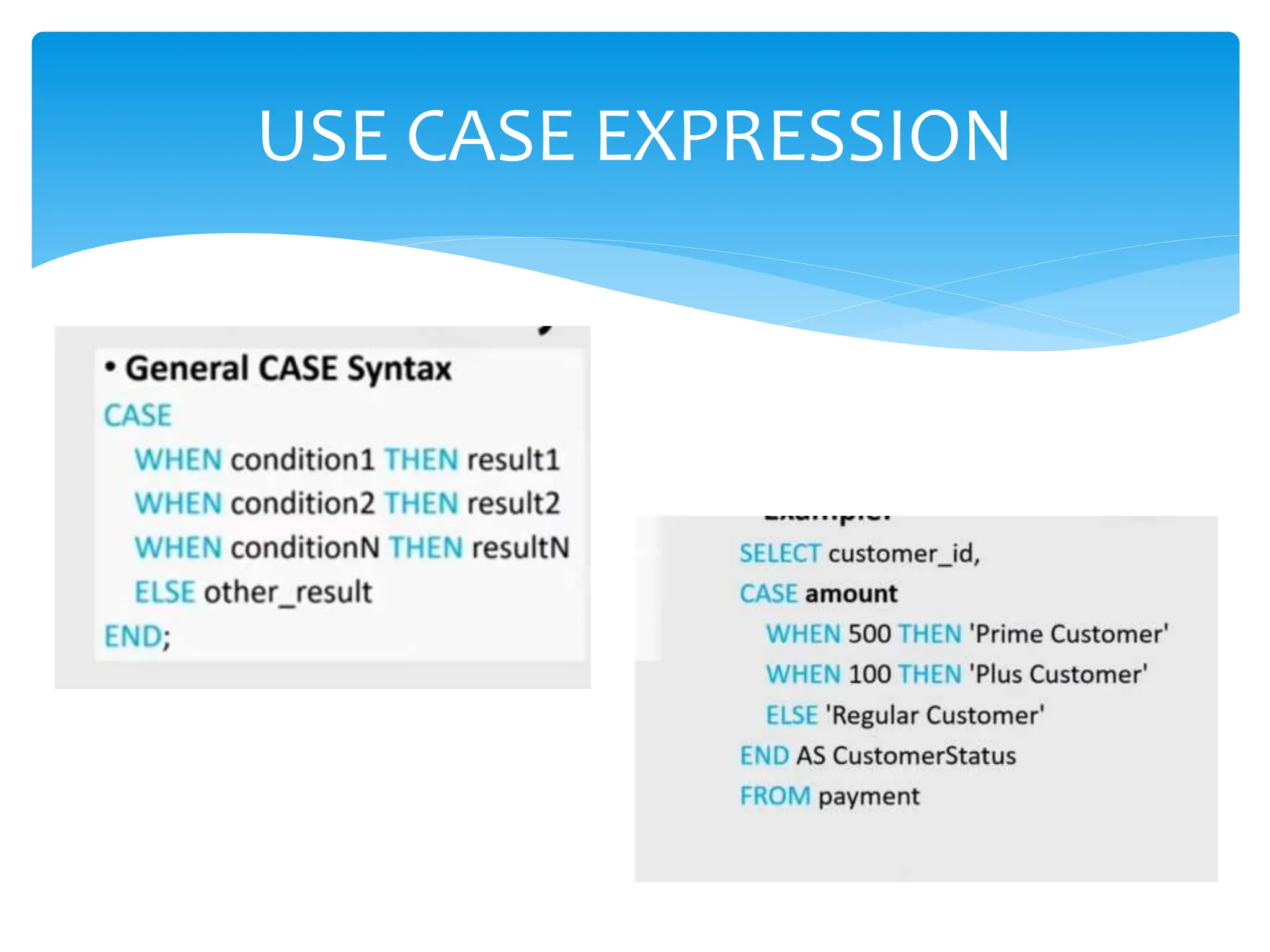
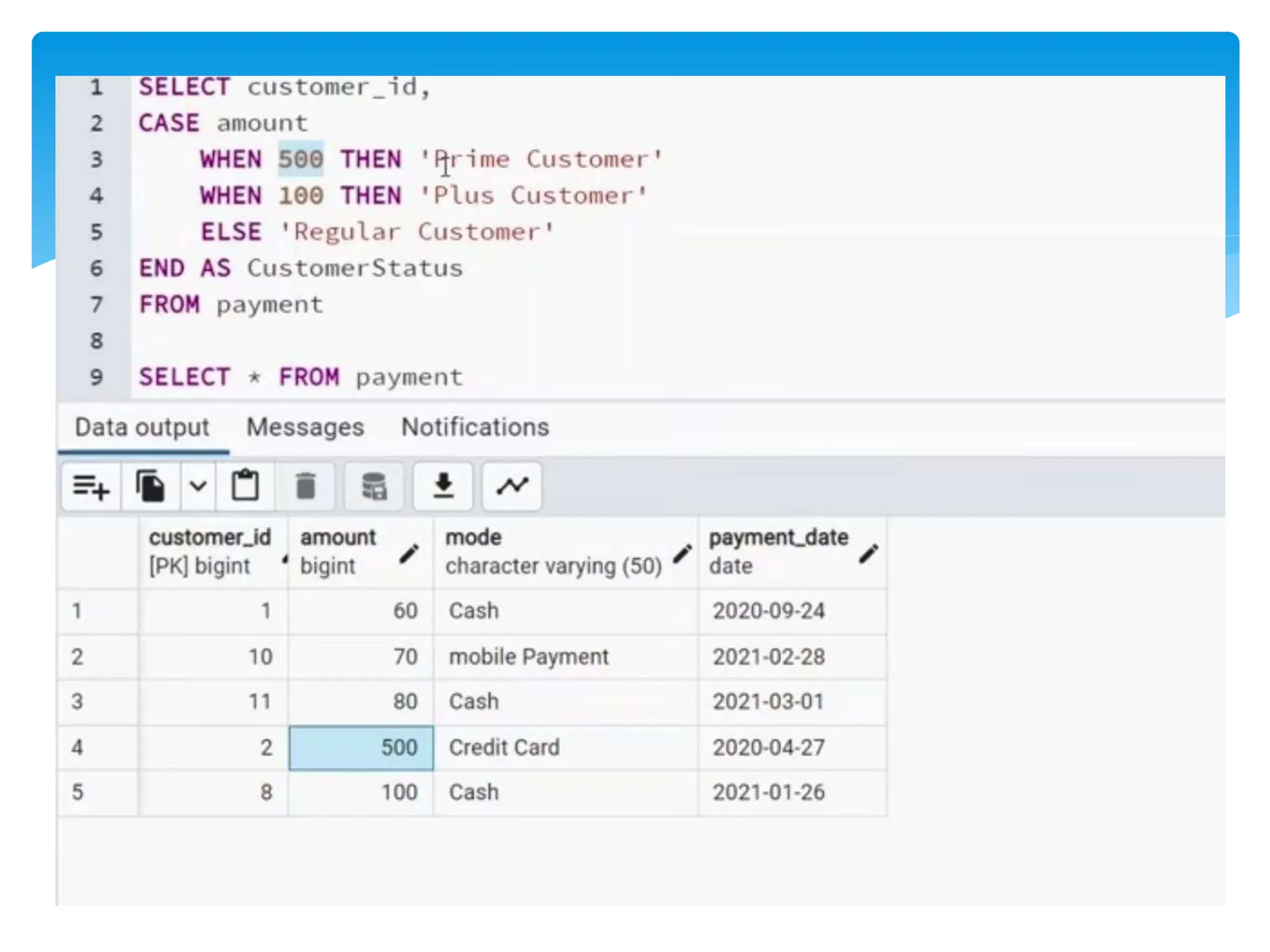
USE CASE EXPRESSION
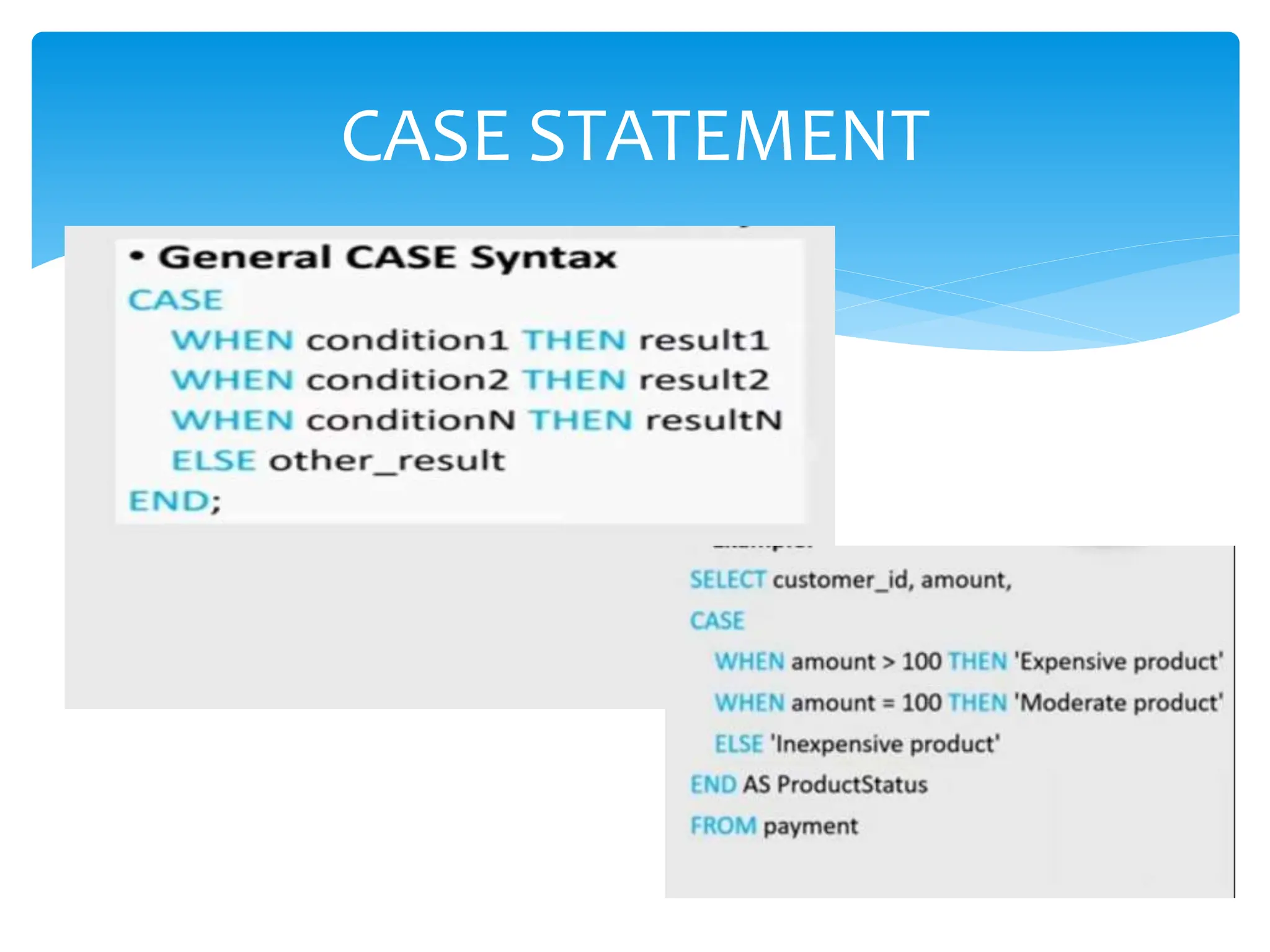
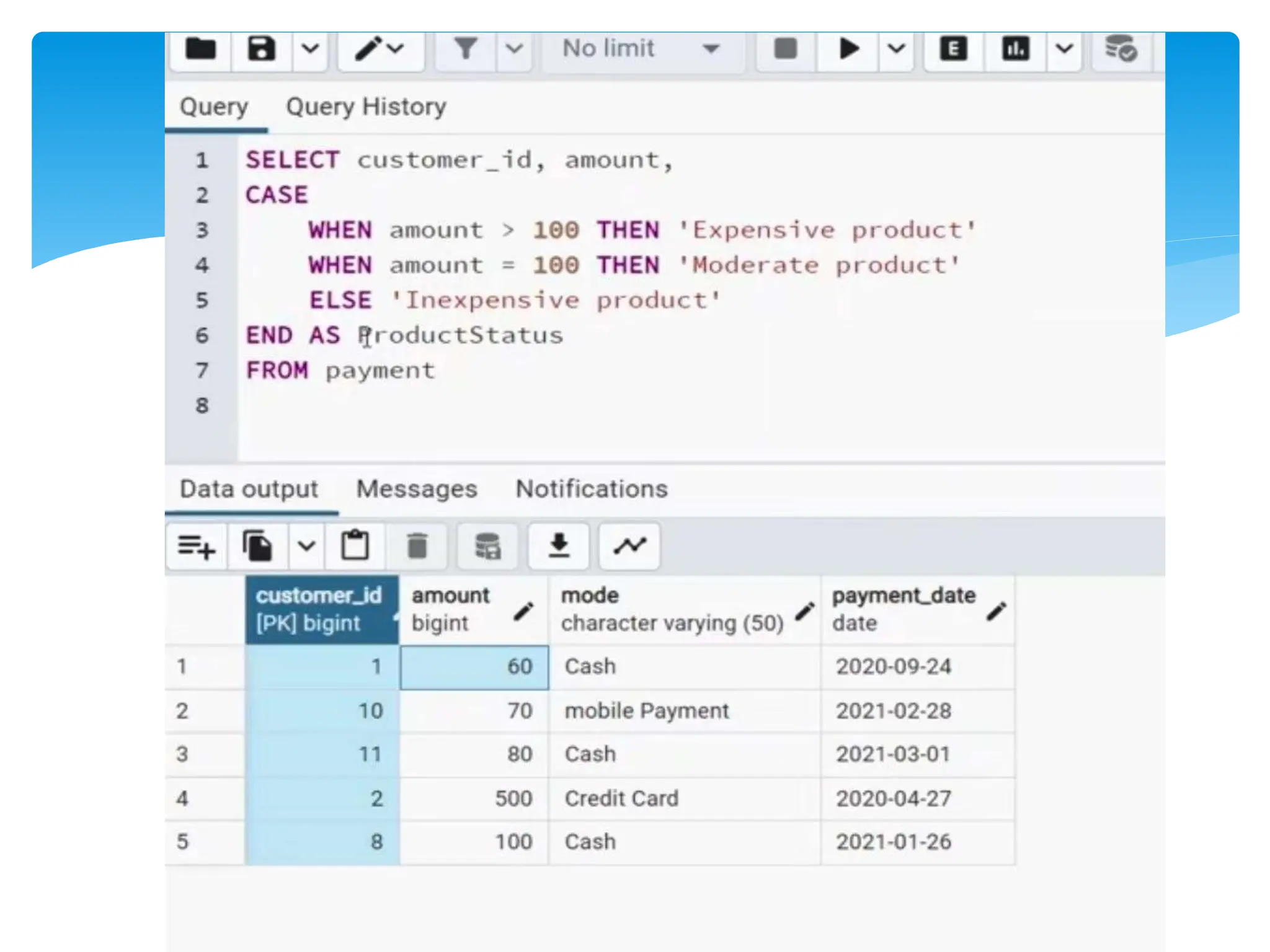
CASE STATEMENT
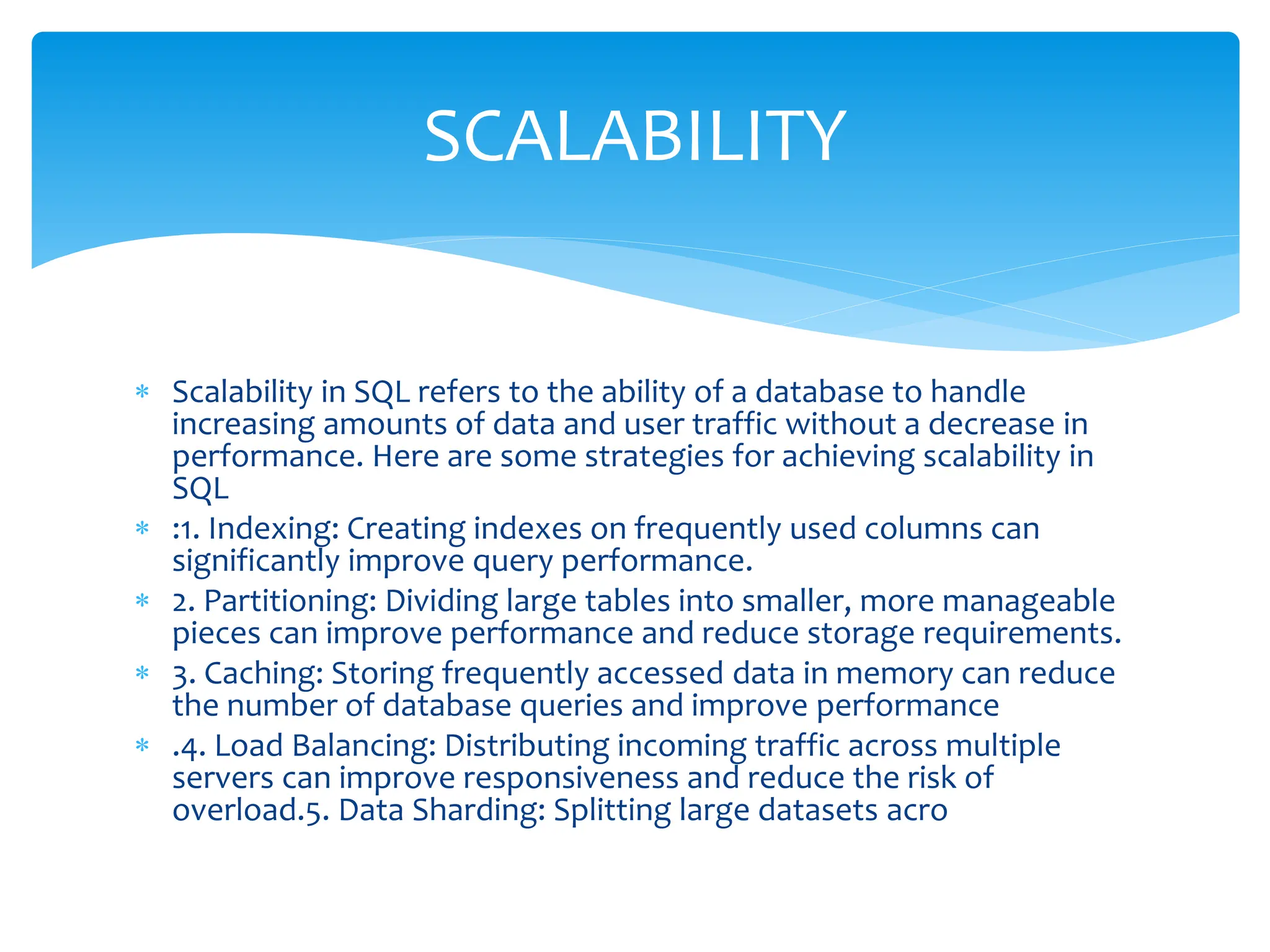
 Scalability in SQL refers to the ability of a database to handle
increasing amounts of data and user traffic without a decrease in
performance. Here are some strategies for achieving scalability in
SQL
 :1. Indexing: Creating indexes on frequently used columns can
significantly improve query performance.
 2. Partitioning: Dividing large tables into smaller, more manageable
pieces can improve performance and reduce storage requirements.
 3. Caching: Storing frequently accessed data in memory can reduce
the number of database queries and improve performance
 .4. Load Balancing: Distributing incoming traffic across multiple
servers can improve responsiveness and reduce the risk of
overload.5. Data Sharding: Splitting large datasets acro
SCALABILITY
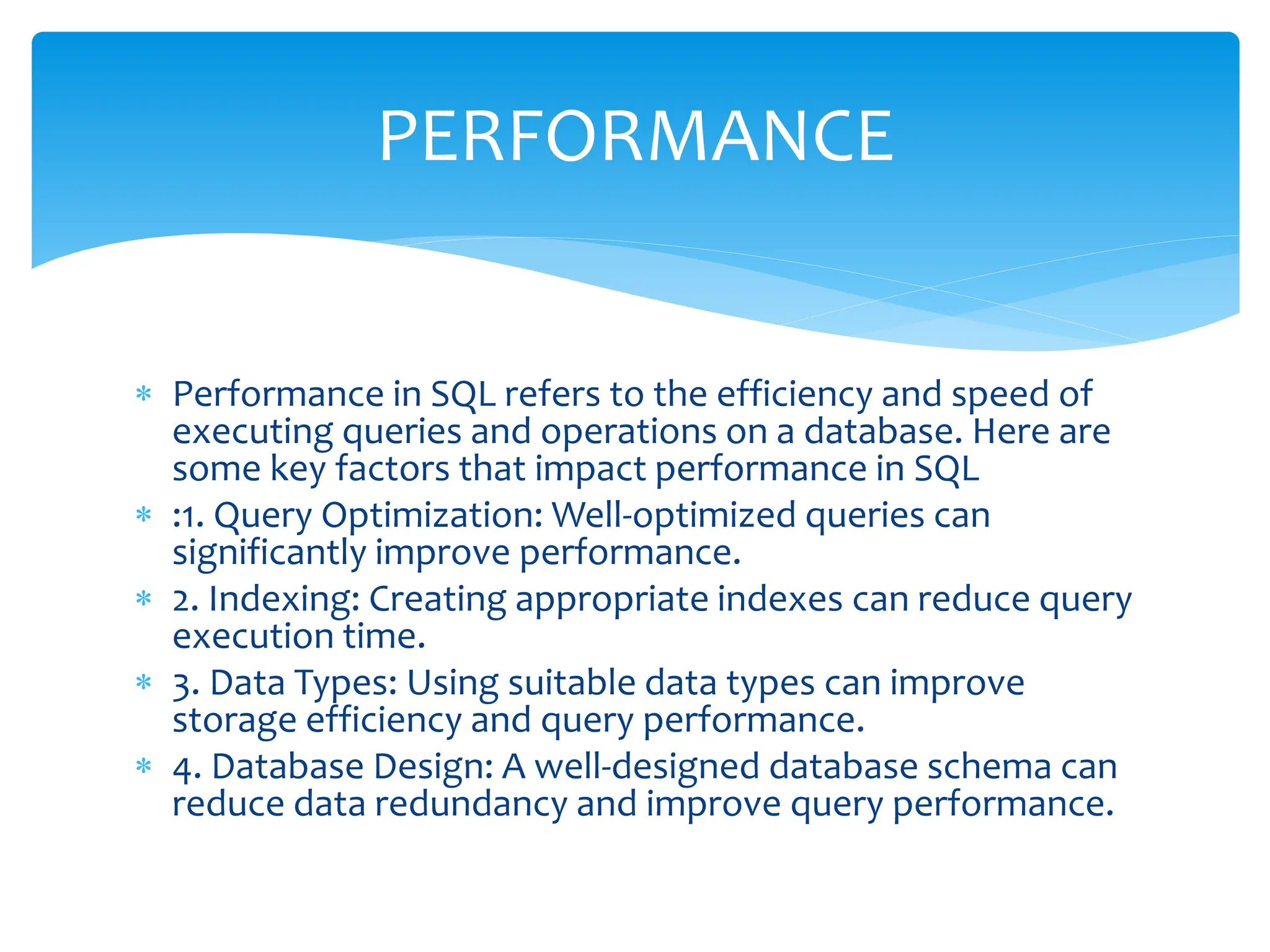
 Performance in SQL refers to the efficiency and speed of
executing queries and operations on a database. Here are
some key factors that impact performance in SQL
 :1. Query Optimization: Well-optimized queries can
significantly improve performance.
 2. Indexing: Creating appropriate indexes can reduce query
execution time.
 3. Data Types: Using suitable data types can improve
storage efficiency and query performance.
 4. Database Design: A well-designed database schema can
reduce data redundancy and improve query performance.
PERFORMANCE
THANK YOU!

USE CASE rabia_032117.pptx very good for understanding

  • 1.
  • 2.
     use casein SQL refers to a scenario where a specific query or operation is used to solve a particular problem or achieve a certain goal. Here are some common use cases in SQL  :1. Data retrieval: Retrieving specific data from a database, such as fetching all customers from a certain region.  2. Data manipulation: Inserting, updating, or deleting data in a database, such as adding a new customer or updating an existing order.  3. Data analysis: Performing calculations and aggregations on data, such as finding the total sales for a quarter or the average order value. USE CASE
  • 3.
  • 5.
  • 7.
     Scalability inSQL refers to the ability of a database to handle increasing amounts of data and user traffic without a decrease in performance. Here are some strategies for achieving scalability in SQL  :1. Indexing: Creating indexes on frequently used columns can significantly improve query performance.  2. Partitioning: Dividing large tables into smaller, more manageable pieces can improve performance and reduce storage requirements.  3. Caching: Storing frequently accessed data in memory can reduce the number of database queries and improve performance  .4. Load Balancing: Distributing incoming traffic across multiple servers can improve responsiveness and reduce the risk of overload.5. Data Sharding: Splitting large datasets acro SCALABILITY
  • 8.
     Performance inSQL refers to the efficiency and speed of executing queries and operations on a database. Here are some key factors that impact performance in SQL  :1. Query Optimization: Well-optimized queries can significantly improve performance.  2. Indexing: Creating appropriate indexes can reduce query execution time.  3. Data Types: Using suitable data types can improve storage efficiency and query performance.  4. Database Design: A well-designed database schema can reduce data redundancy and improve query performance. PERFORMANCE
  • 9.