XII Encontro da comunidade SQLPort
   Name: Gonçalo Chaves
   Alias: Chaves
   Job: Senior Analyst
   Company: Viatecla
   Im: evolution69@msn.com
   Tw: @gchaves
   Hobbies: reading, photo, gaming
   Email: gchaves@viatecla.com
   Communities: xamlpt, pontonetpt, sqlport
“The biggest problem in databases is
         the base data…”
   Main challenges
   Why we don’t care
   Analysis and procedures
   Tools
   Use Cases
   References
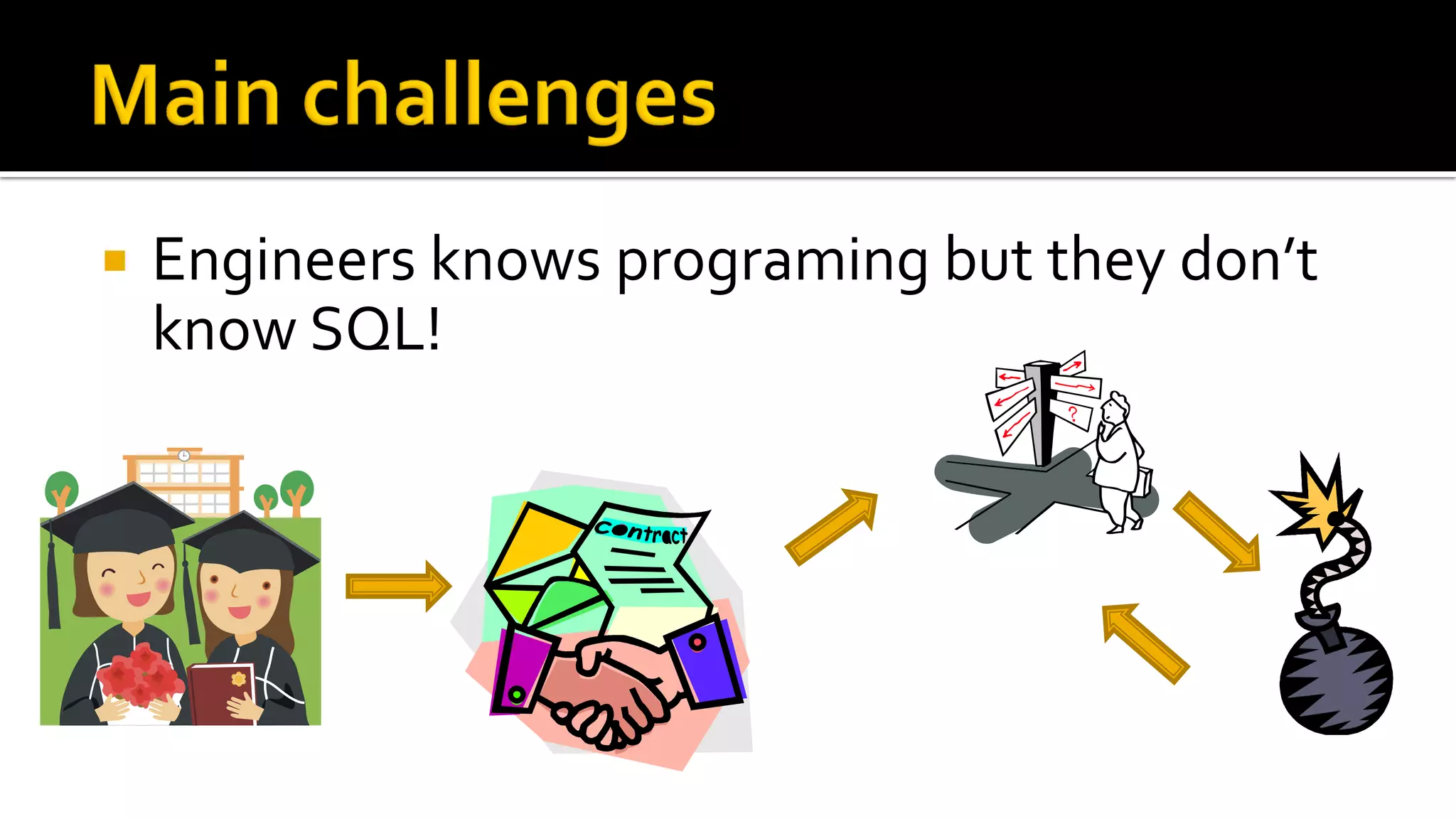
   Engineers knows programing but they don’t
    know SQL!
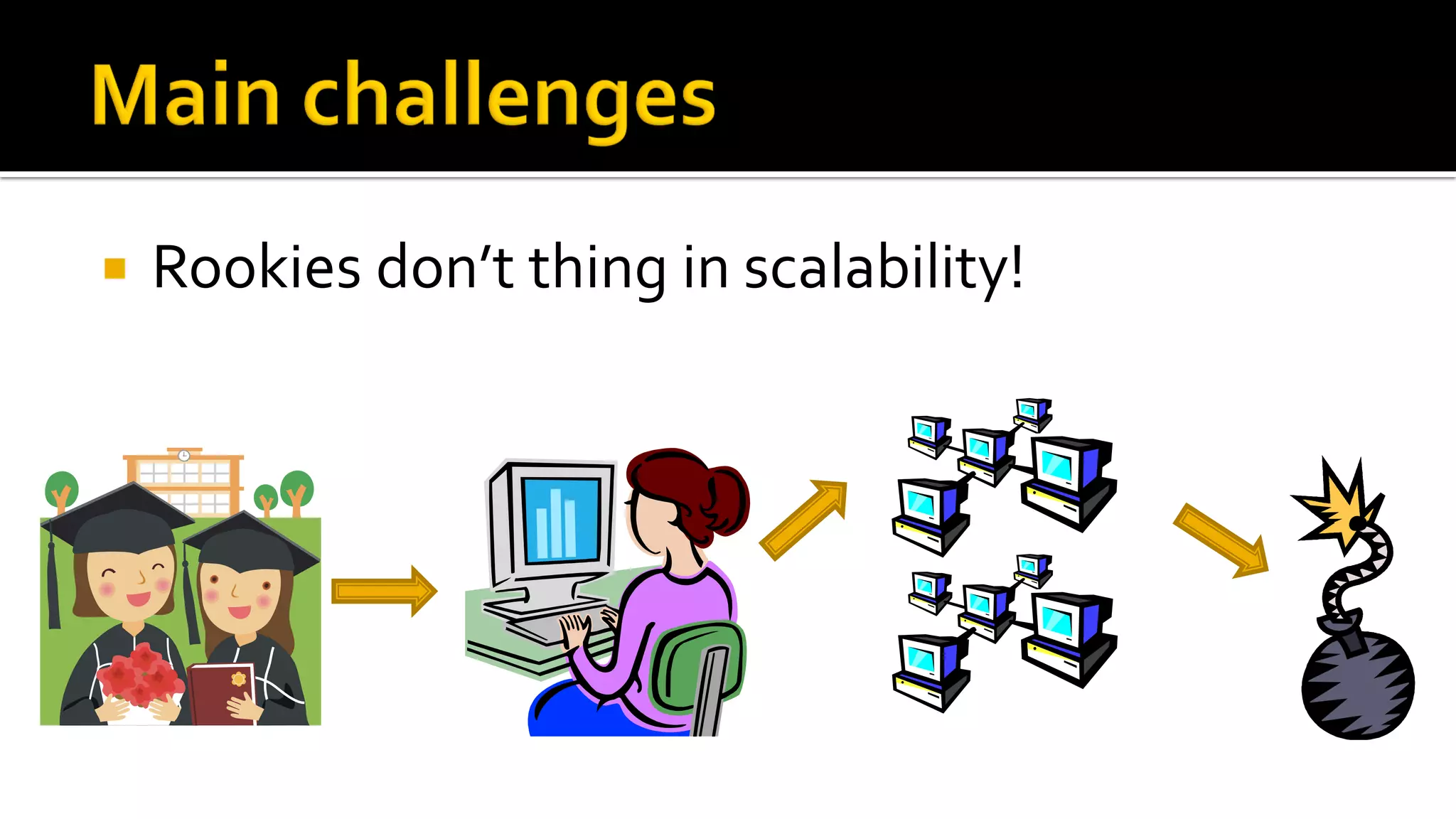
   Rookies don’t thing in scalability!
   High availability
   Scale and Scale
   Trustful transactions
   Performance and tuning
   Maintenance and archiving
   Partitioning
   Data integrity
   The easy path
   Comfort, learning is a painful process
   No professional training
   No time!
   The big truck rule
   Scale and trust aren’t known
   “Microsoft’s lema”
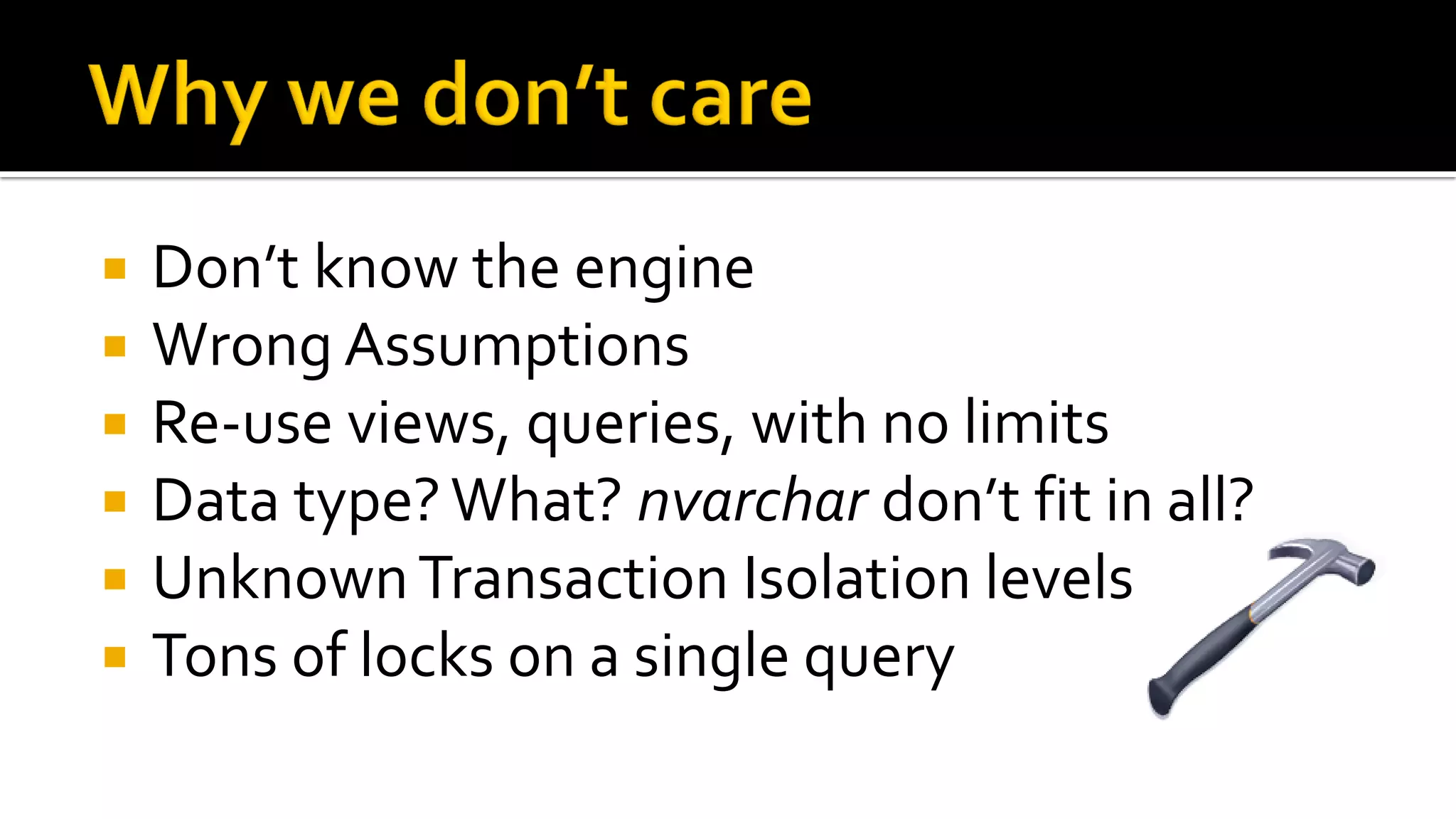
   Don’t know the engine
   Wrong Assumptions
   Re-use views, queries, with no limits
   Data type? What? nvarchar don’t fit in all?
   Unknown Transaction Isolation levels
   Tons of locks on a single query
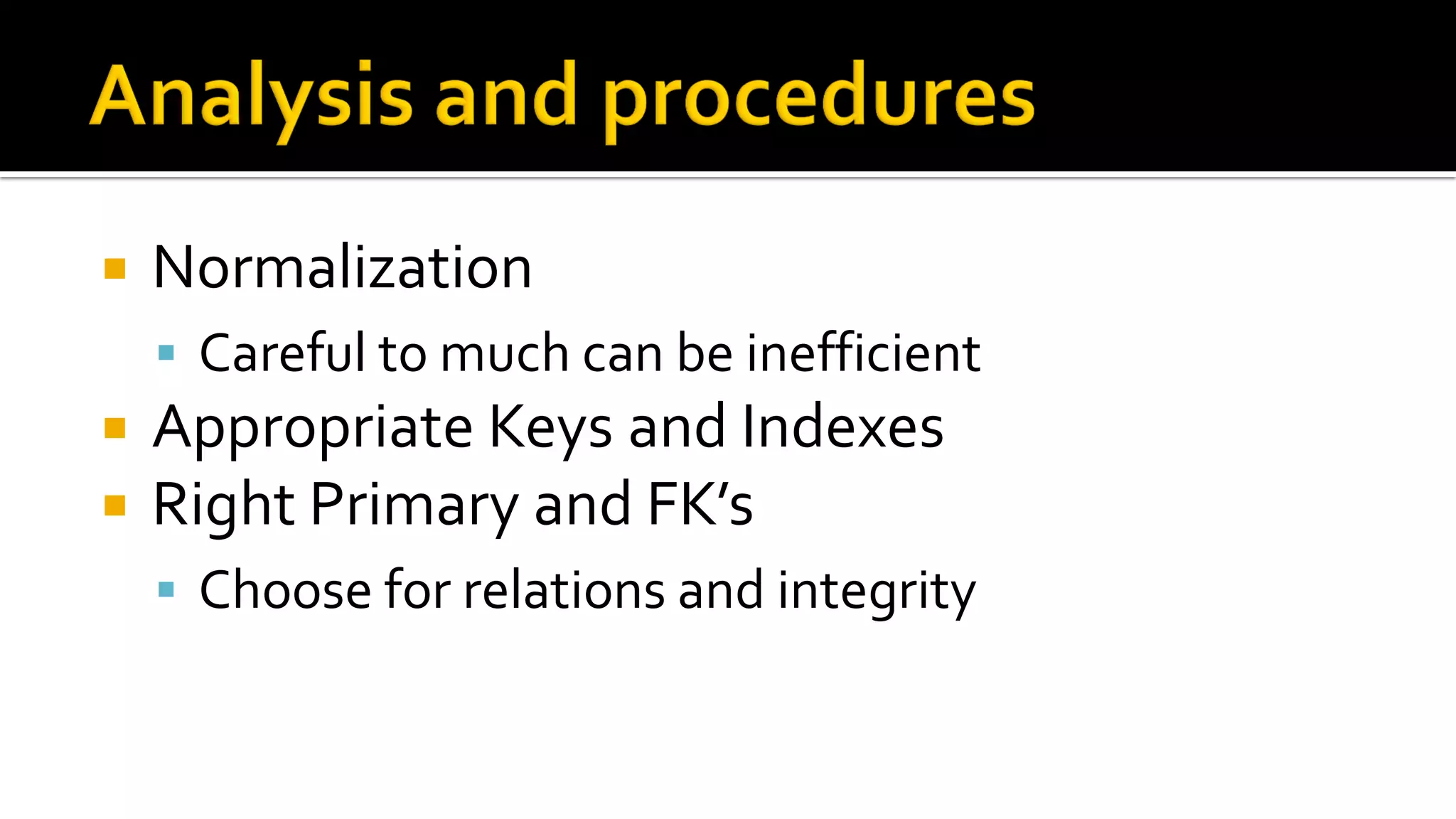
   Normalization
     Careful to much can be inefficient
   Appropriate Keys and Indexes
   Right Primary and FK’s
     Choose for relations and integrity
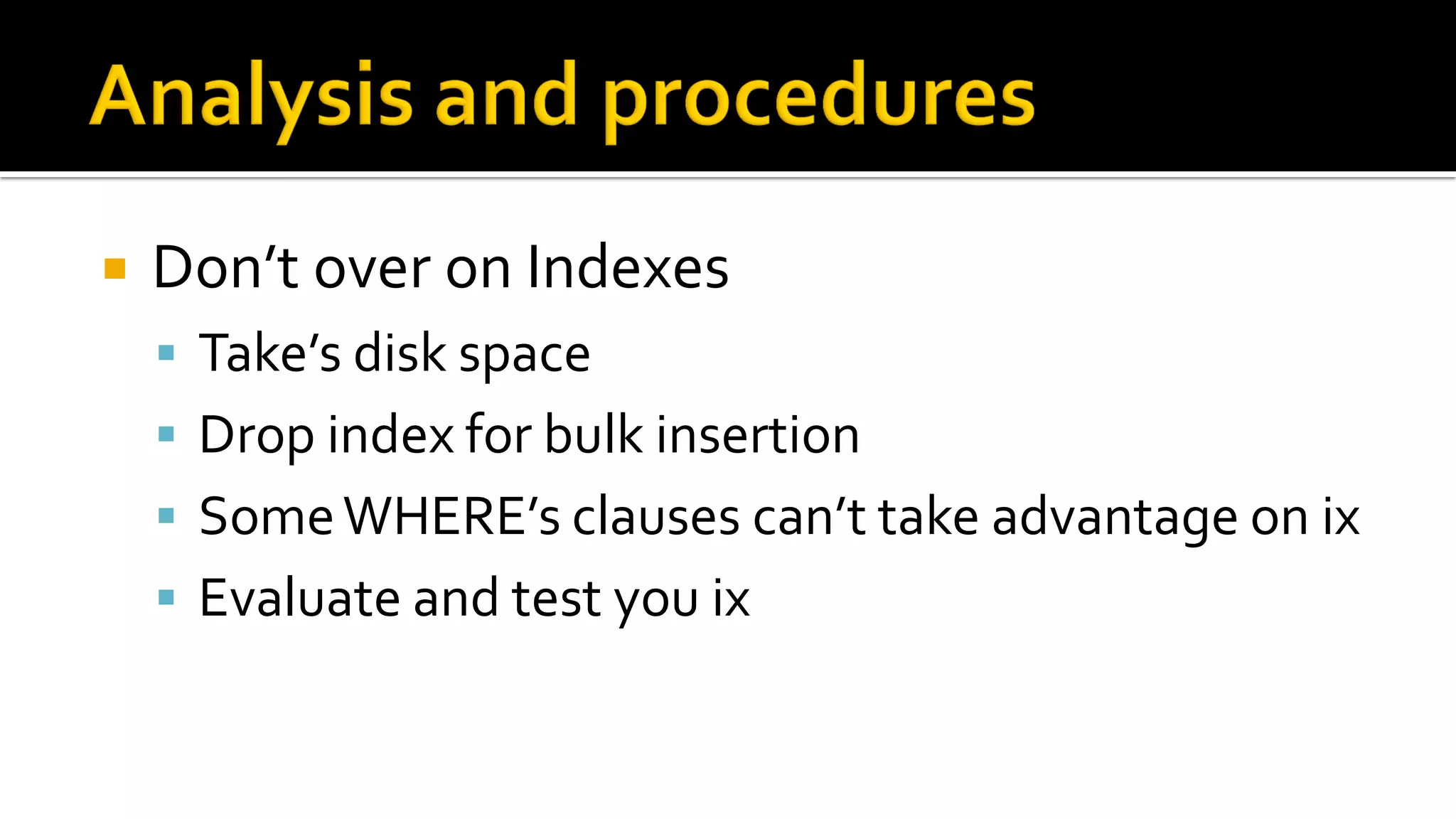
   Don’t over on Indexes
     Take’s disk space
     Drop index for bulk insertion
     Some WHERE’s clauses can’t take advantage on ix
     Evaluate and test you ix
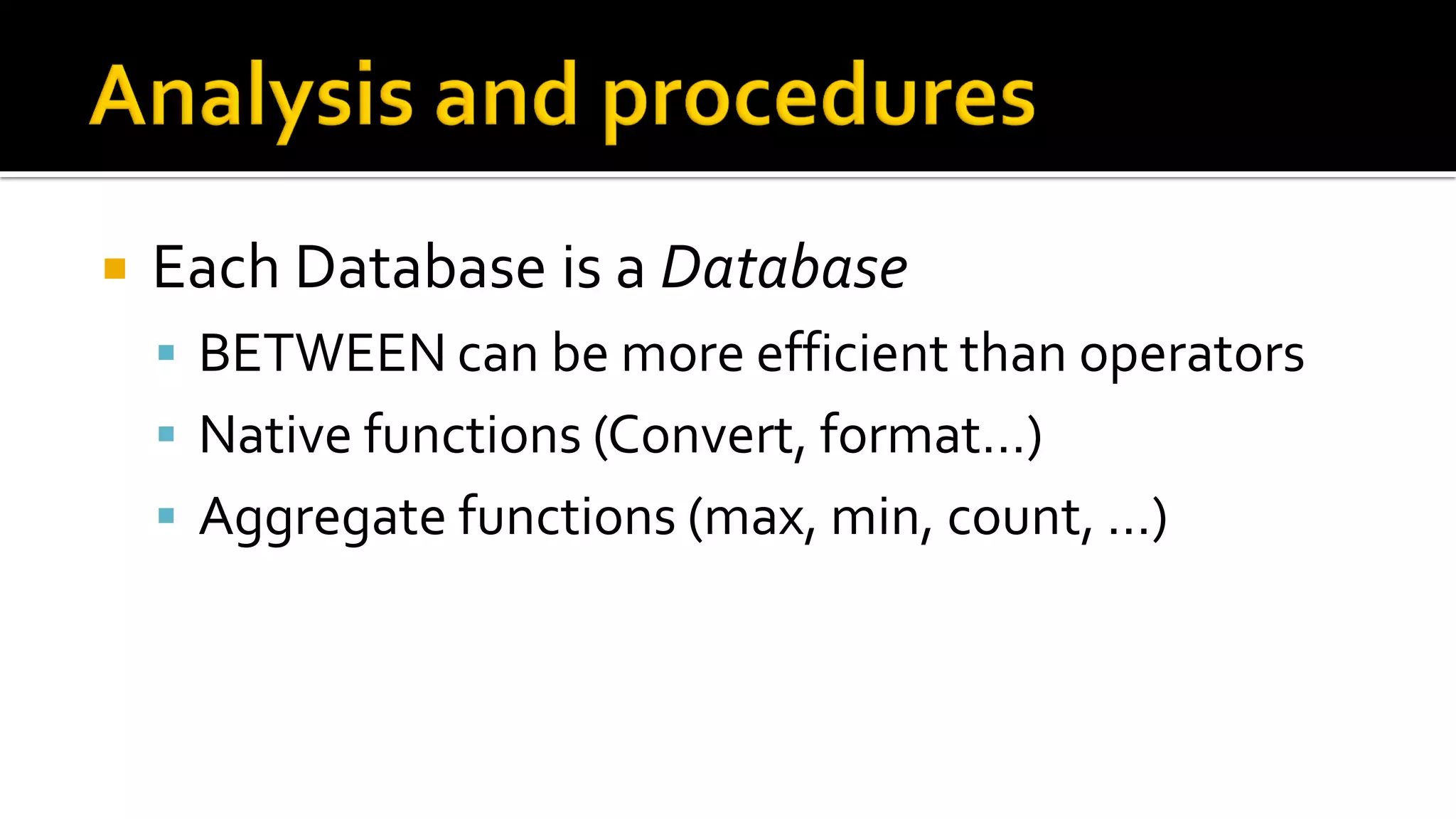
   Each Database is a Database
     BETWEEN can be more efficient than operators
     Native functions (Convert, format…)
     Aggregate functions (max, min, count, …)
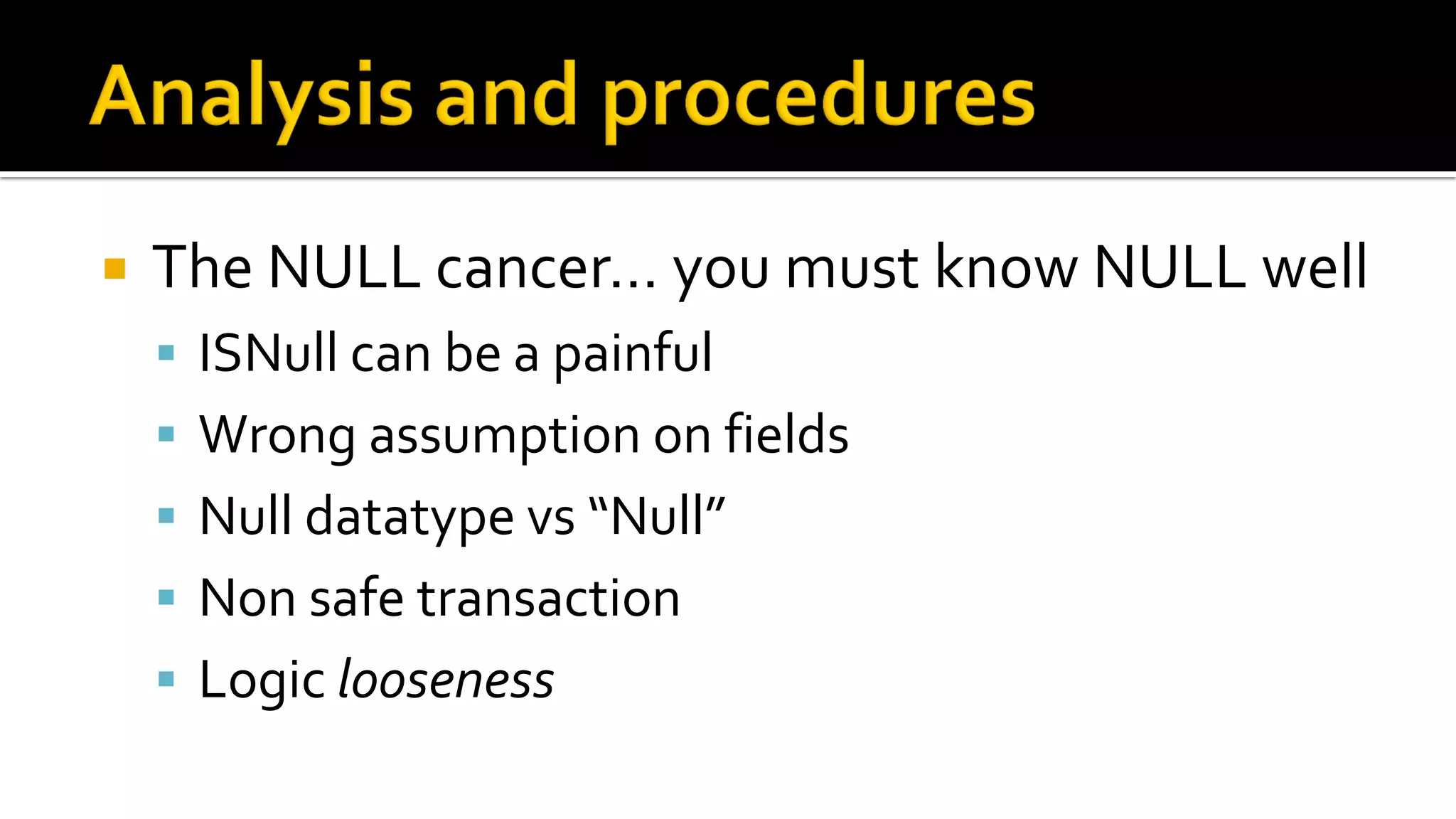
   The NULL cancer… you must know NULL well
     ISNull can be a painful
     Wrong assumption on fields
     Null datatype vs “Null”
     Non safe transaction
     Logic looseness
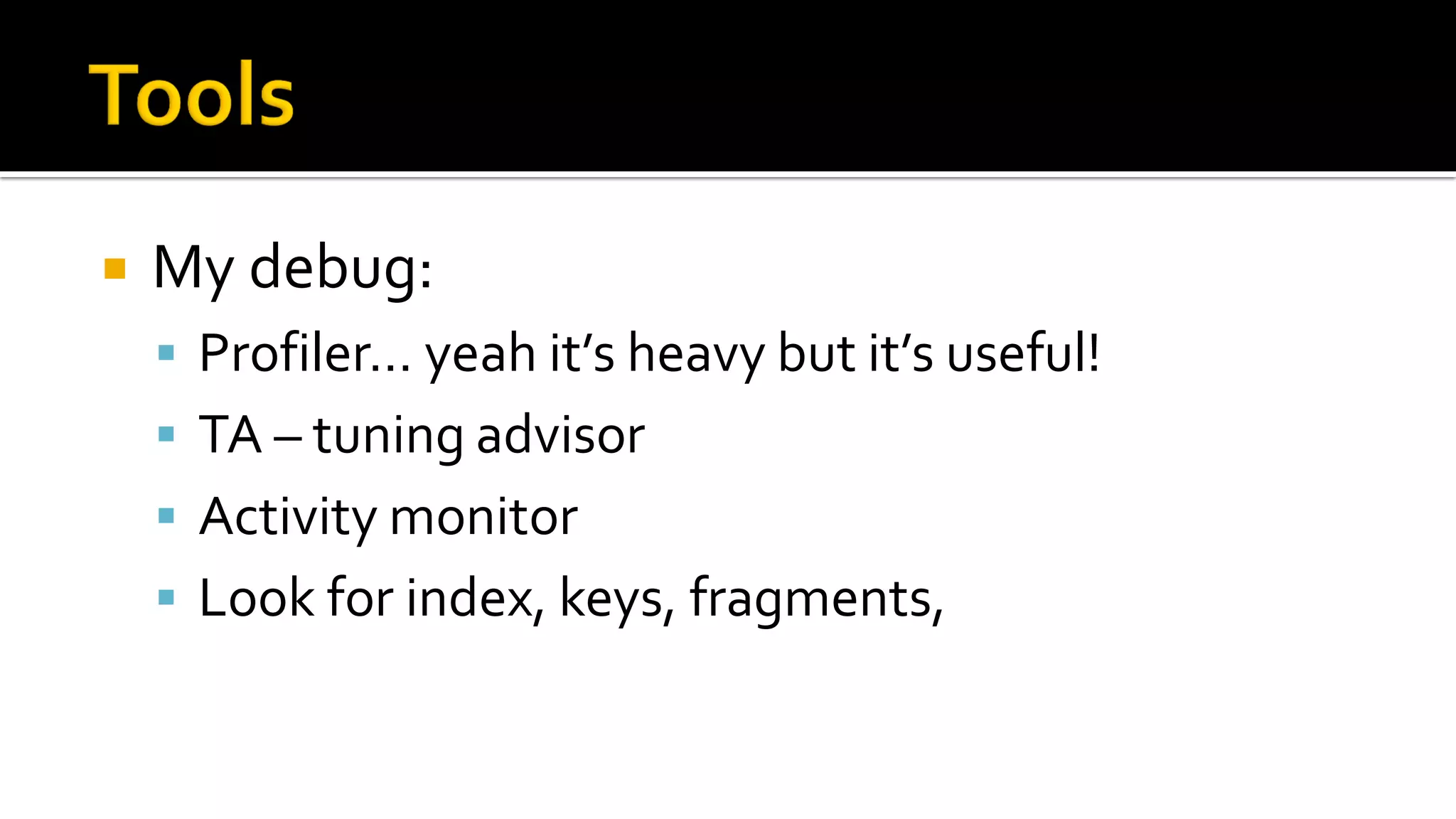
   My debug:
     Profiler… yeah it’s heavy but it’s useful!
     TA – tuning advisor
     Activity monitor
     Look for index, keys, fragments,
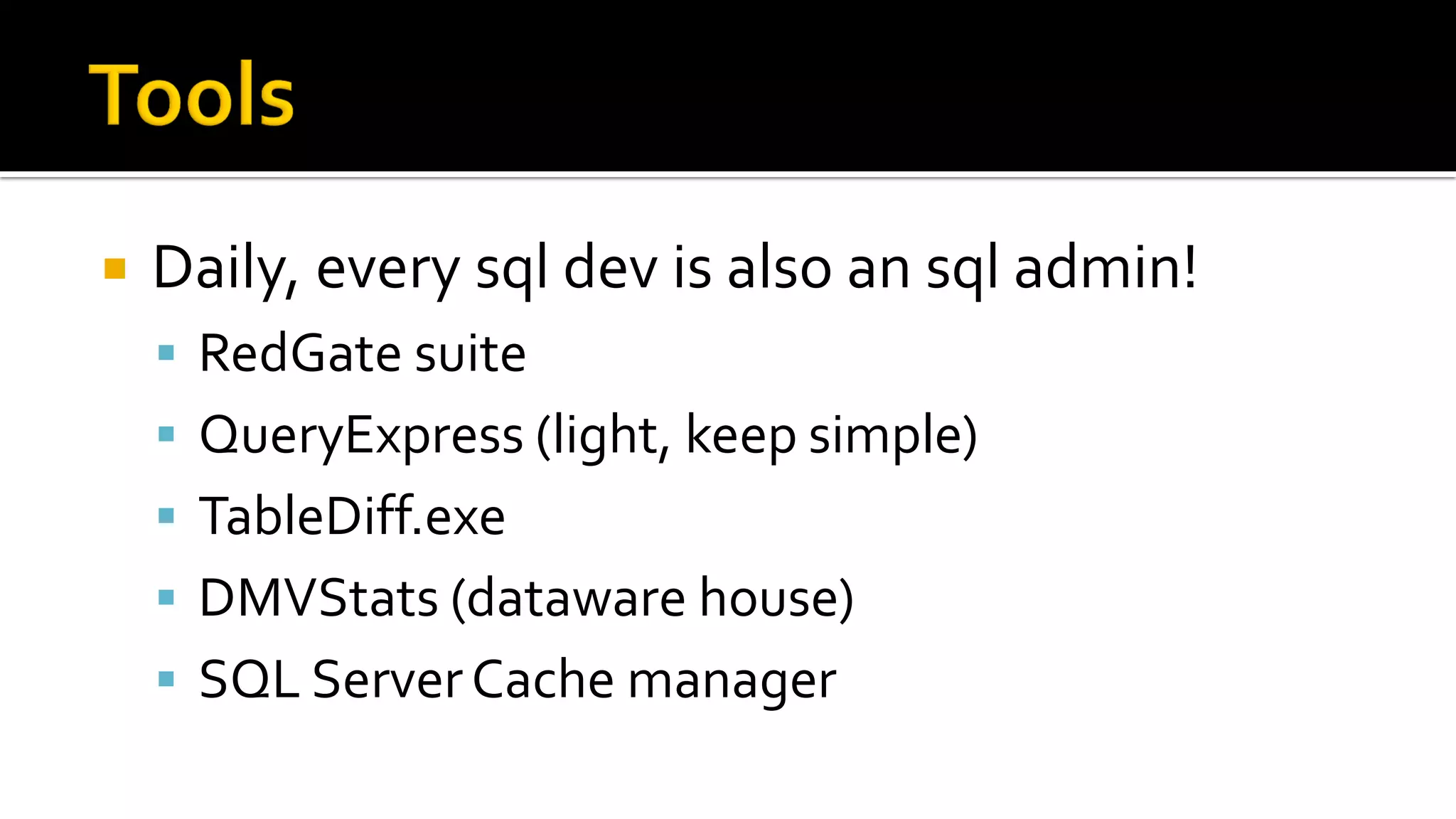
   Daily, every sql dev is also an sql admin!
     RedGate suite
     QueryExpress (light, keep simple)
     TableDiff.exe
     DMVStats (dataware house)
     SQL Server Cache manager
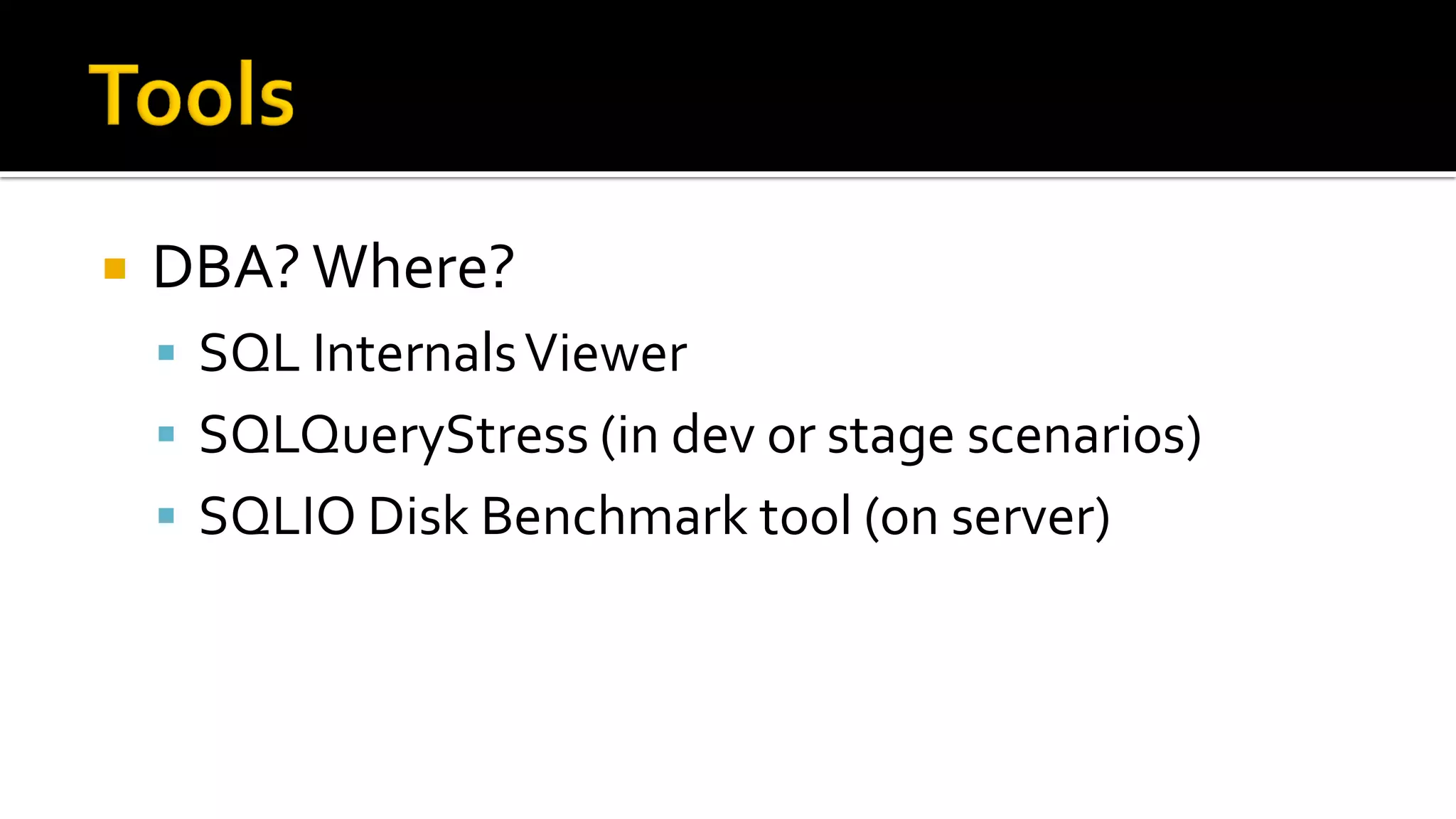
   DBA? Where?
     SQL Internals Viewer
     SQLQueryStress (in dev or stage scenarios)
     SQLIO Disk Benchmark tool (on server)
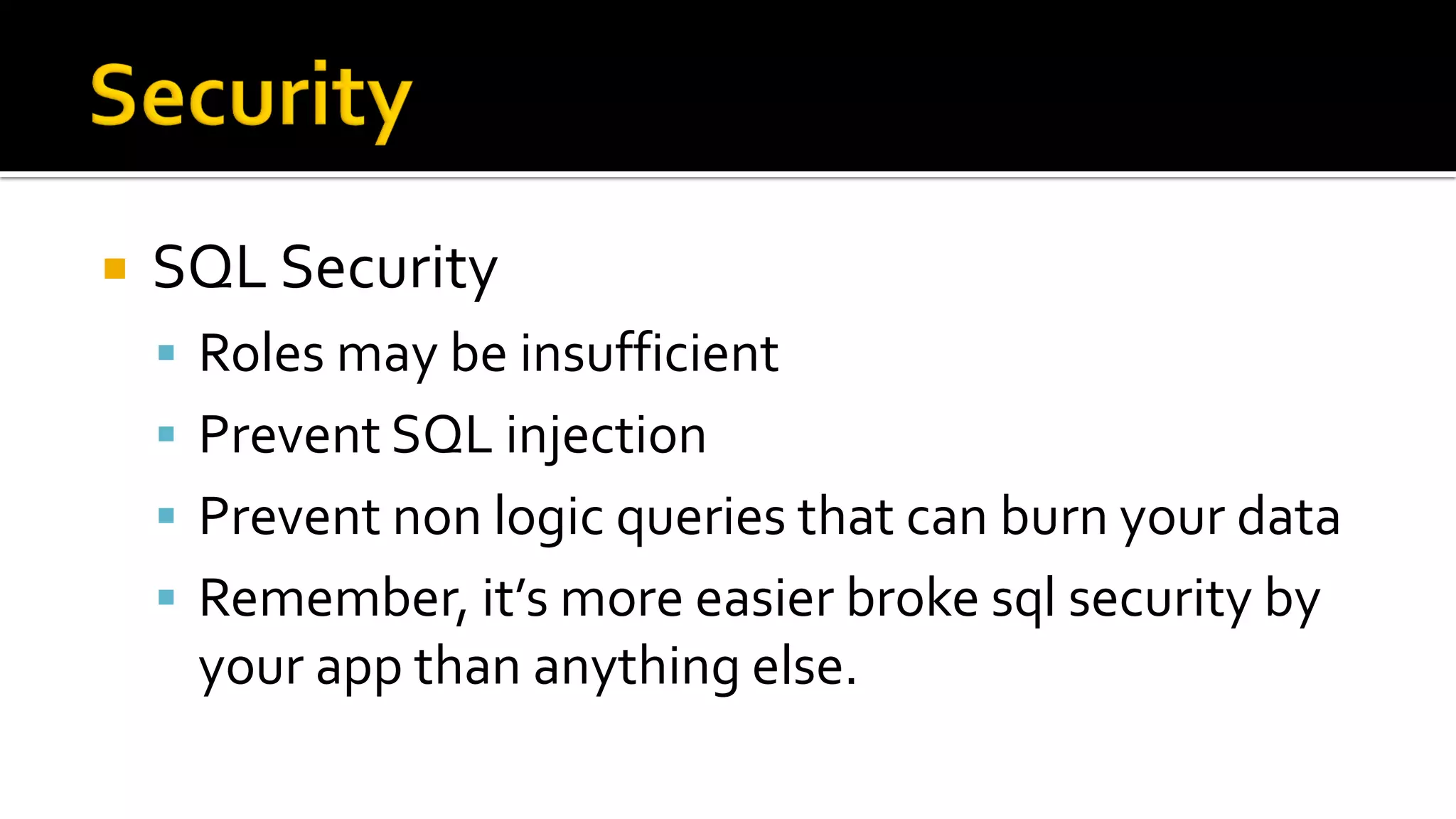
   SQL Security
     Roles may be insufficient
     Prevent SQL injection
     Prevent non logic queries that can burn your data
     Remember, it’s more easier broke sql security by
     your app than anything else.
   The devil ….


    SELECT *
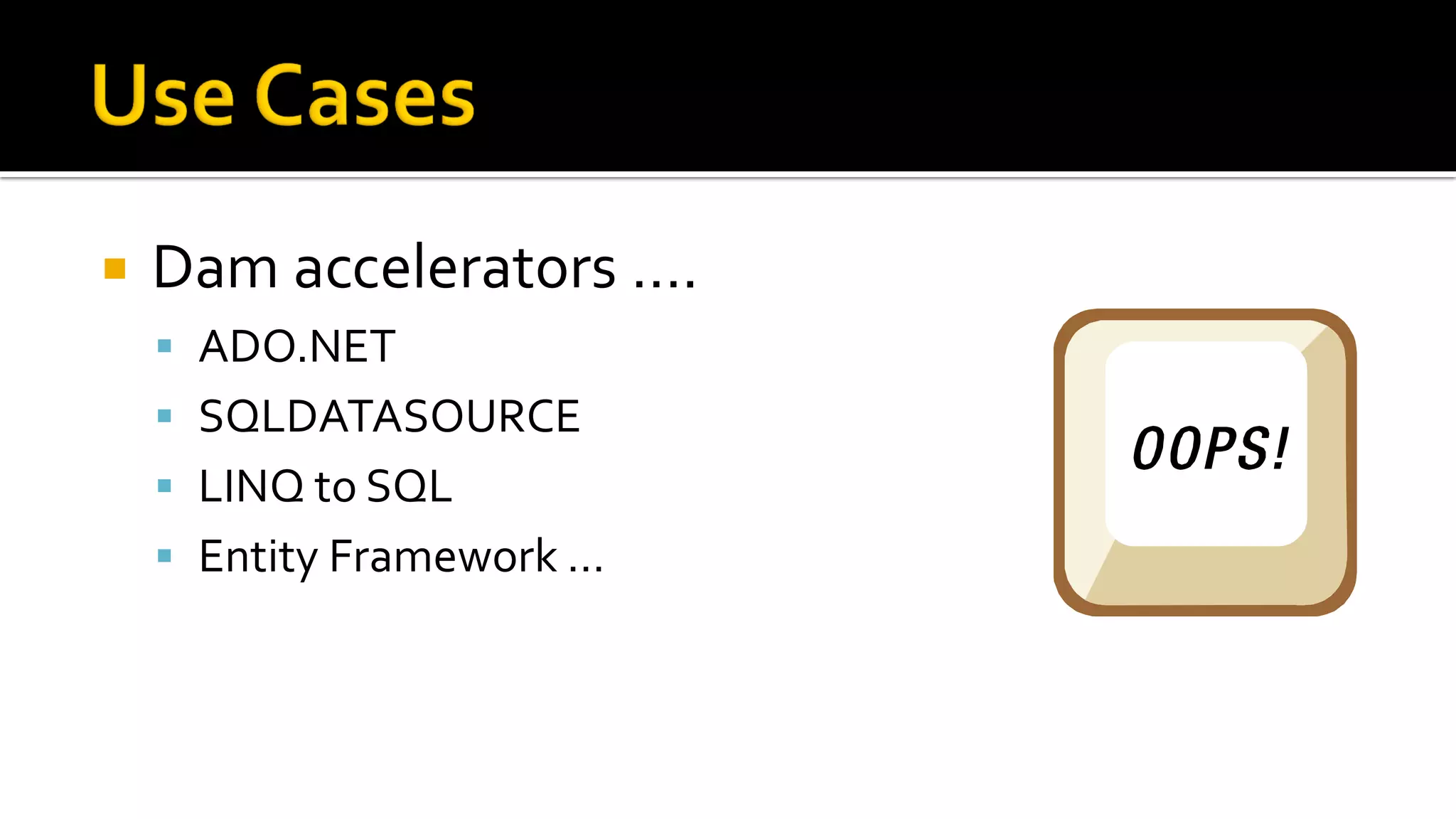
   Dam accelerators ….
     ADO.NET
     SQLDATASOURCE
     LINQ to SQL
     Entity Framework …
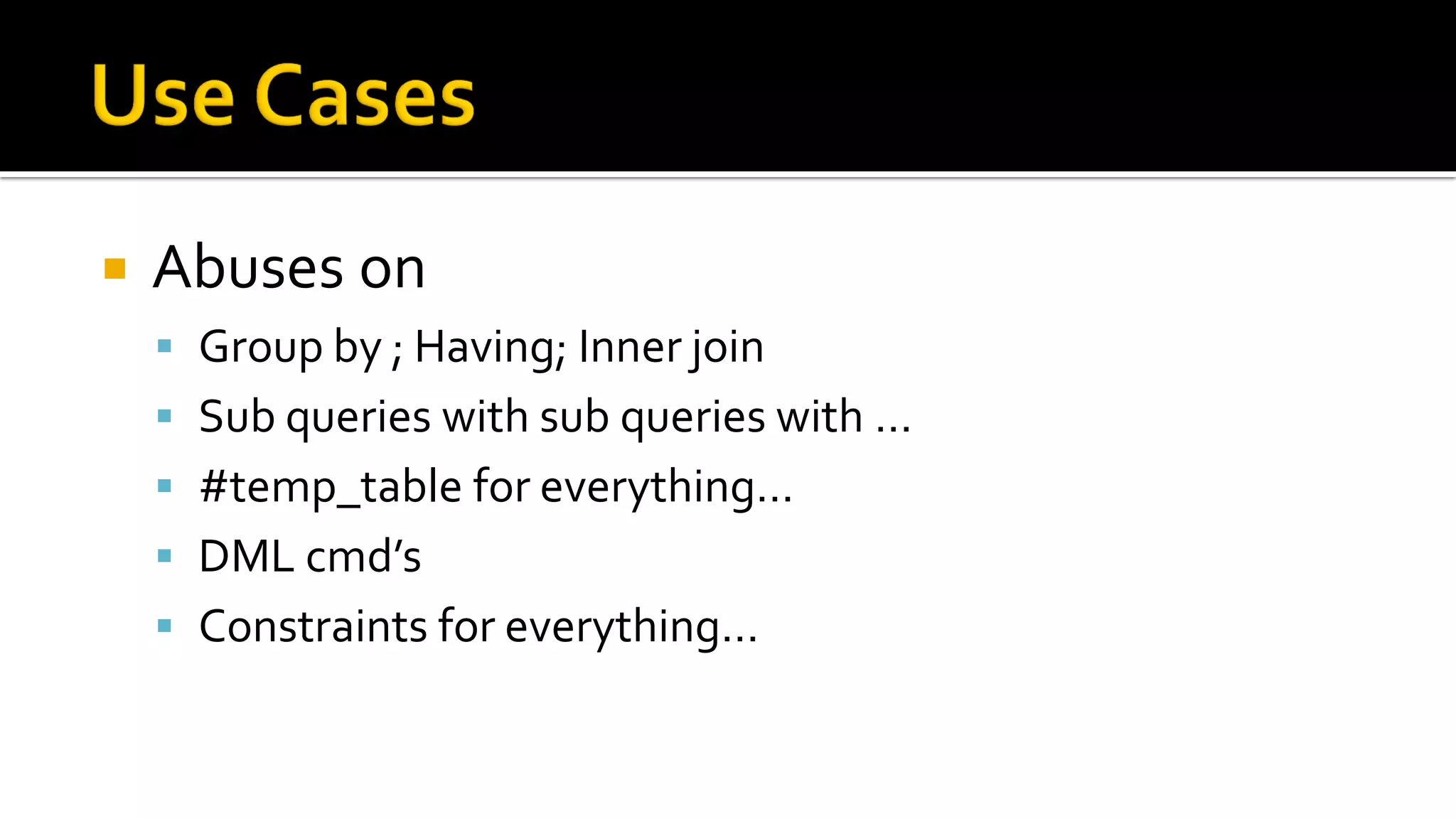
   Abuses on
     Group by ; Having; Inner join
     Sub queries with sub queries with …
     #temp_table for everything…
     DML cmd’s
     Constraints for everything…
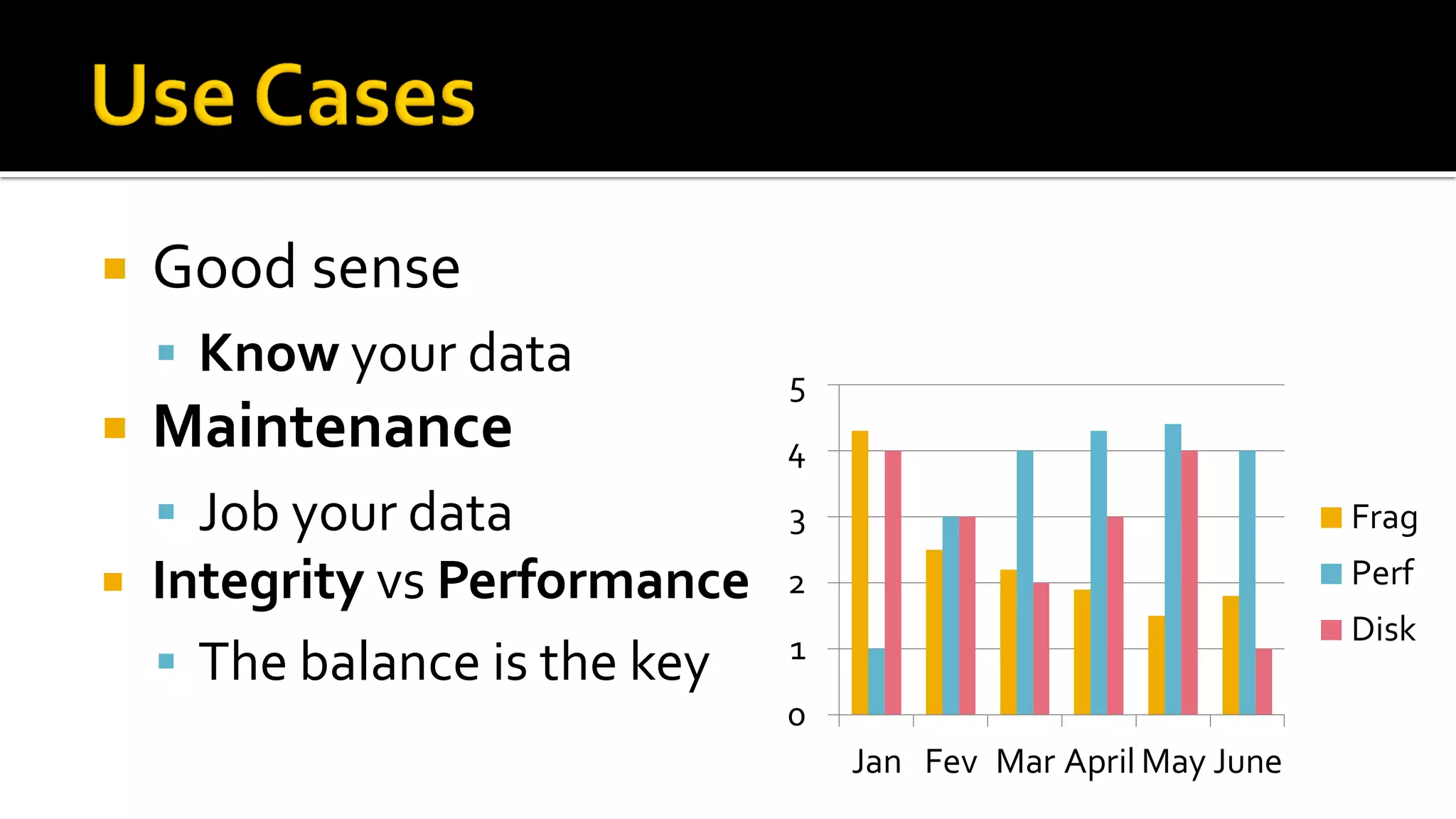
   Good sense
     Know your data           5
   Maintenance                4
     Job your data            3                                Frag
   Integrity vs Performance   2                                Perf
                                                                Disk
                               1
     The balance is the key
                               0
                                   Jan Fev Mar April May June
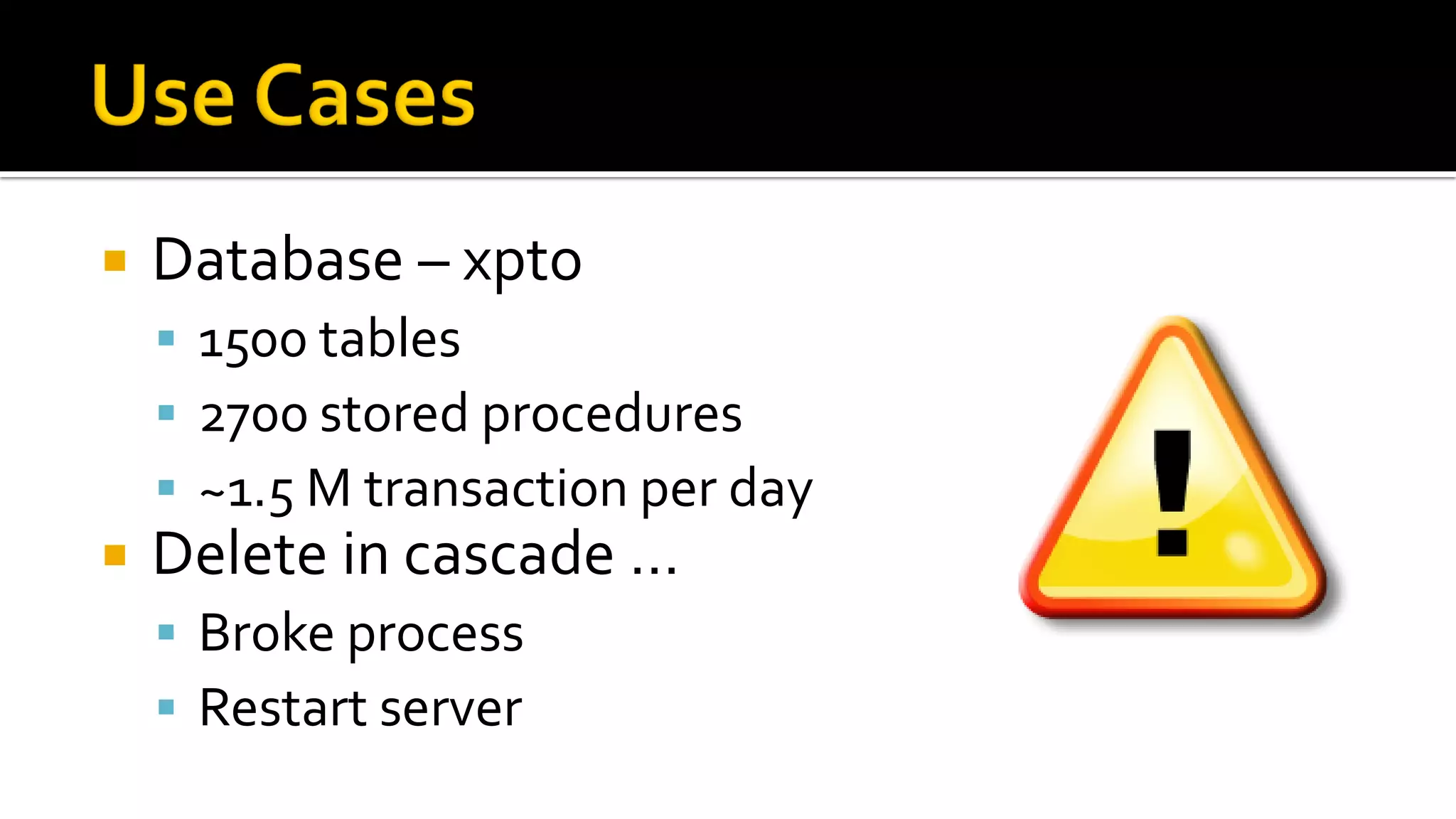
   Database – xpto
     1500 tables
     2700 stored procedures
     ~1.5 M transaction per day
   Delete in cascade …
     Broke process
     Restart server
   Normalize has needed
   Test your database
   Schedule jobs
   Create Index’s where needed
   Use right tools
     full text search, TA, SSIS
   Avoid triggers
   Partitioning
   Archive data
   Data type right usage
   Think in your transaction mode
   Use safe locks
   Test, application stress and faulty
   Document you DB 
   Keep scripts in safe
   Update your scripts
   Use facts not assumptions
   Cross your test with others
   Right lock safe usage
   Define db architecture
   A good DB start’s on your apps
   Cache is more than welcome
   “The 4 connections challenge..”
   Multiple Environments keep DB’s updated
   Keep your analysis update
 Developers exists in C# not in SQL – Deal with it!
 Train your team – code review; sessions; books
 Use the right tools on right scenarios
 Integrity vs Performance
 Keep in mind security concerns
 Make Maintenance plans – from the beginning
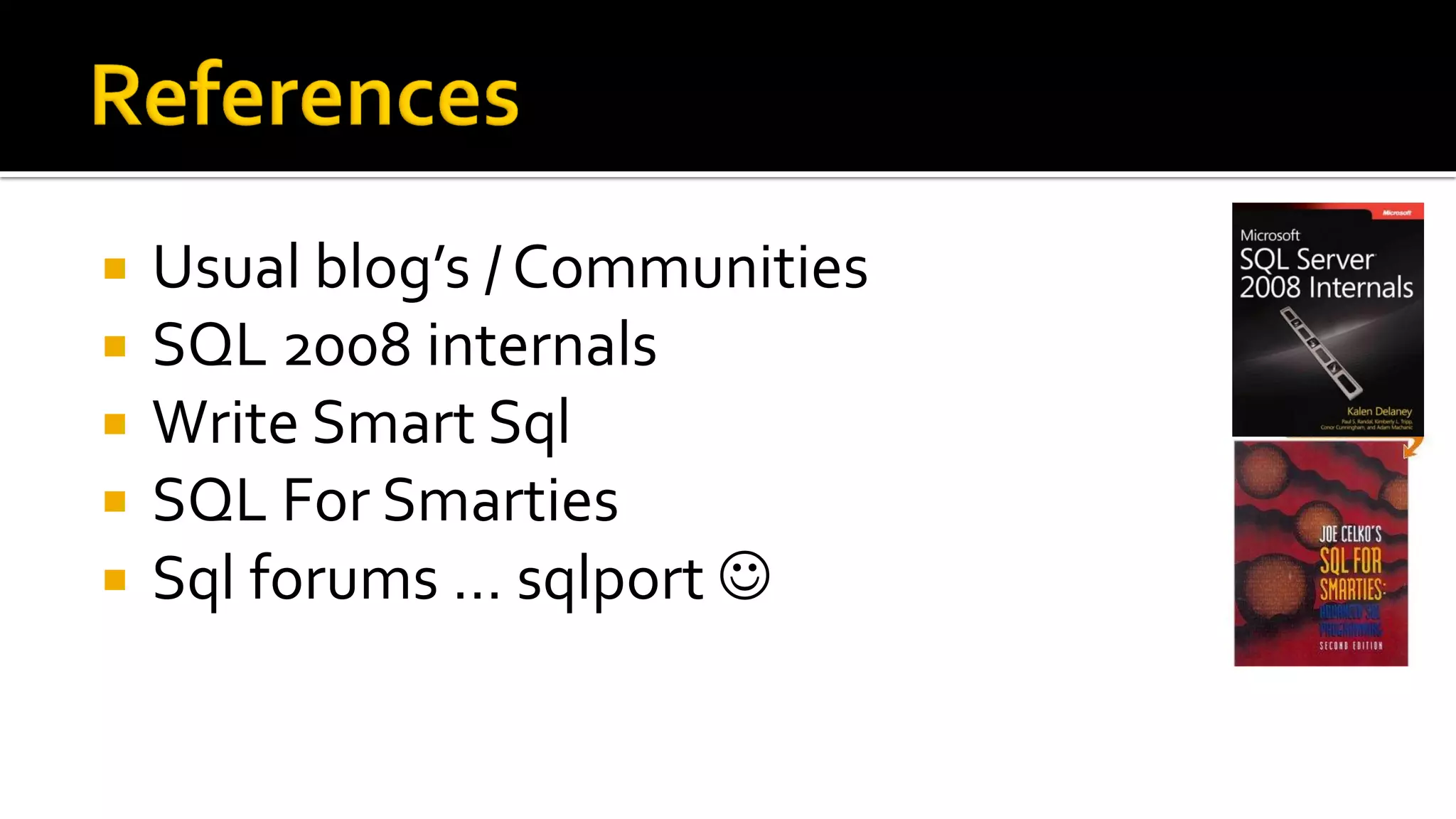
 Usual blog’s / Communities
 SQL 2008 internals
 Write Smart Sql
 SQL For Smarties
 Sql forums … sqlport 
 Thank you all 
 Do right SQL before the pain!
 Follow me at:
  http://pontonetpt.org/blogs/chaves
  http://xamlpt.com/blogs/chaves
 gchaves@viatecla.com
 www.viatecla.com

Backpack Tools4 Sql Dev

  • 1.
    XII Encontro dacomunidade SQLPort
  • 2.
    Name: Gonçalo Chaves  Alias: Chaves  Job: Senior Analyst  Company: Viatecla  Im: evolution69@msn.com  Tw: @gchaves  Hobbies: reading, photo, gaming  Email: gchaves@viatecla.com  Communities: xamlpt, pontonetpt, sqlport
  • 3.
    “The biggest problemin databases is the base data…”
  • 4.
    Main challenges  Why we don’t care  Analysis and procedures  Tools  Use Cases  References
  • 5.
    Engineers knows programing but they don’t know SQL!
  • 6.
    Rookies don’t thing in scalability!
  • 7.
    High availability  Scale and Scale  Trustful transactions  Performance and tuning  Maintenance and archiving  Partitioning  Data integrity
  • 8.
    The easy path  Comfort, learning is a painful process  No professional training  No time!  The big truck rule  Scale and trust aren’t known  “Microsoft’s lema”
  • 9.
    Don’t know the engine  Wrong Assumptions  Re-use views, queries, with no limits  Data type? What? nvarchar don’t fit in all?  Unknown Transaction Isolation levels  Tons of locks on a single query
  • 10.
    Normalization  Careful to much can be inefficient  Appropriate Keys and Indexes  Right Primary and FK’s  Choose for relations and integrity
  • 11.
    Don’t over on Indexes  Take’s disk space  Drop index for bulk insertion  Some WHERE’s clauses can’t take advantage on ix  Evaluate and test you ix
  • 12.
    Each Database is a Database  BETWEEN can be more efficient than operators  Native functions (Convert, format…)  Aggregate functions (max, min, count, …)
  • 13.
    The NULL cancer… you must know NULL well  ISNull can be a painful  Wrong assumption on fields  Null datatype vs “Null”  Non safe transaction  Logic looseness
  • 14.
    My debug:  Profiler… yeah it’s heavy but it’s useful!  TA – tuning advisor  Activity monitor  Look for index, keys, fragments,
  • 15.
    Daily, every sql dev is also an sql admin!  RedGate suite  QueryExpress (light, keep simple)  TableDiff.exe  DMVStats (dataware house)  SQL Server Cache manager
  • 16.
    DBA? Where?  SQL Internals Viewer  SQLQueryStress (in dev or stage scenarios)  SQLIO Disk Benchmark tool (on server)
  • 17.
    SQL Security  Roles may be insufficient  Prevent SQL injection  Prevent non logic queries that can burn your data  Remember, it’s more easier broke sql security by your app than anything else.
  • 18.
    The devil …. SELECT *
  • 19.
    Dam accelerators ….  ADO.NET  SQLDATASOURCE  LINQ to SQL  Entity Framework …
  • 20.
    Abuses on  Group by ; Having; Inner join  Sub queries with sub queries with …  #temp_table for everything…  DML cmd’s  Constraints for everything…
  • 21.
    Good sense  Know your data 5  Maintenance 4  Job your data 3 Frag  Integrity vs Performance 2 Perf Disk 1  The balance is the key 0 Jan Fev Mar April May June
  • 22.
    Database – xpto  1500 tables  2700 stored procedures  ~1.5 M transaction per day  Delete in cascade …  Broke process  Restart server
  • 23.
    Normalize has needed  Test your database  Schedule jobs  Create Index’s where needed  Use right tools  full text search, TA, SSIS
  • 24.
    Avoid triggers  Partitioning  Archive data  Data type right usage  Think in your transaction mode  Use safe locks  Test, application stress and faulty
  • 25.
    Document you DB   Keep scripts in safe  Update your scripts  Use facts not assumptions  Cross your test with others  Right lock safe usage  Define db architecture
  • 26.
    A good DB start’s on your apps  Cache is more than welcome  “The 4 connections challenge..”  Multiple Environments keep DB’s updated  Keep your analysis update
  • 27.
     Developers existsin C# not in SQL – Deal with it!  Train your team – code review; sessions; books  Use the right tools on right scenarios  Integrity vs Performance  Keep in mind security concerns  Make Maintenance plans – from the beginning
  • 28.
     Usual blog’s/ Communities  SQL 2008 internals  Write Smart Sql  SQL For Smarties  Sql forums … sqlport 
  • 29.
     Thank youall   Do right SQL before the pain!  Follow me at: http://pontonetpt.org/blogs/chaves http://xamlpt.com/blogs/chaves  gchaves@viatecla.com  www.viatecla.com