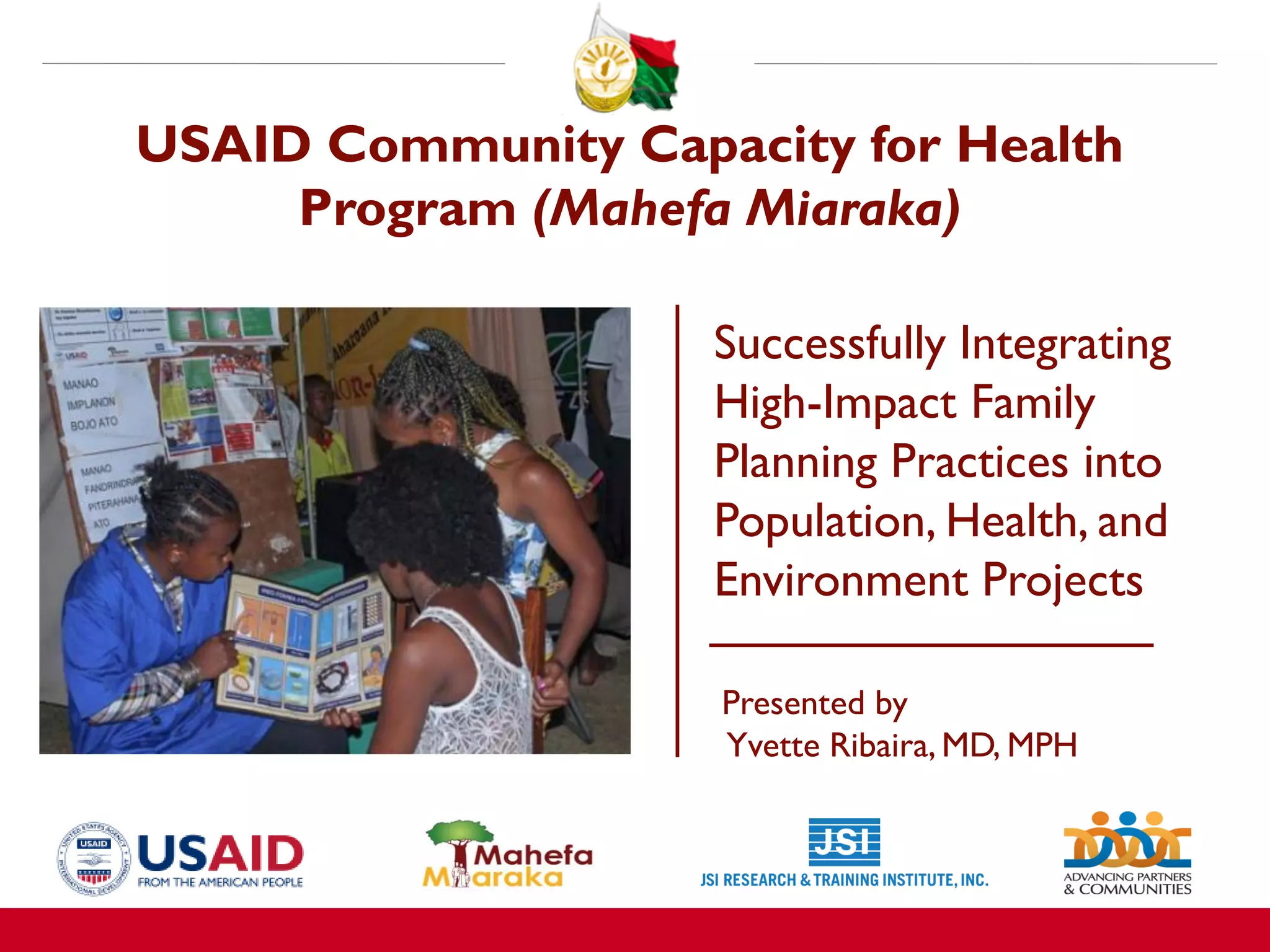
USAID Community Capacity for Health
Program (Mahefa Miaraka)
Successfully Integrating
High-Impact Family
Planning Practices into
Population, Health, and
Environment Projects
Presented by
Yvette Ribaira, MD, MPH
binar, February 6, 2019
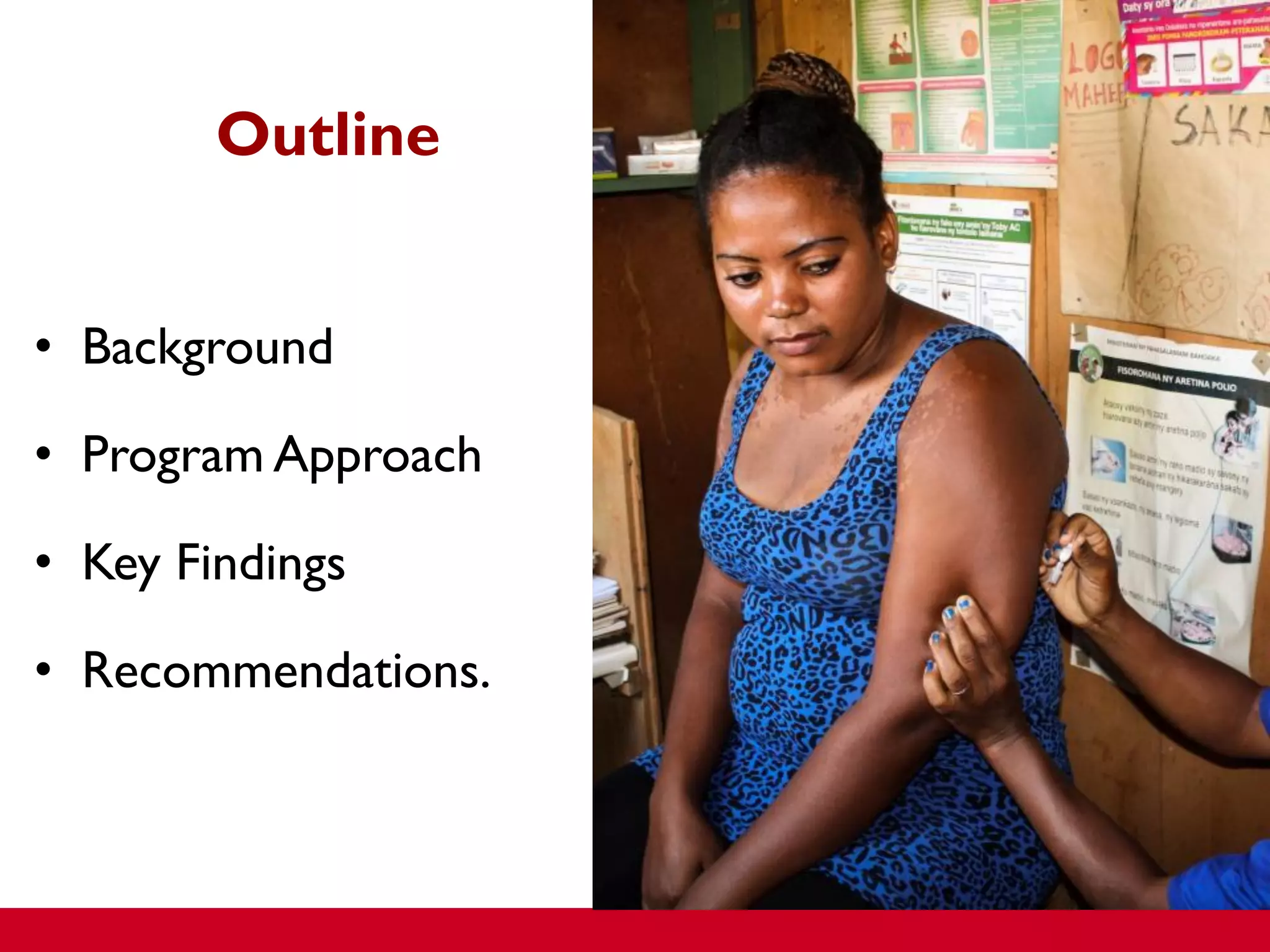
Outline
• Background
• Program Approach
• Key Findings
• Recommendations.
Background
• 80% endemic species
• 80% of the population is rural
• 76% of the population is poor
• 2.7% population growth
• Lack of access to FP services
Sources: DHS, 2008/09 – WB, 2017
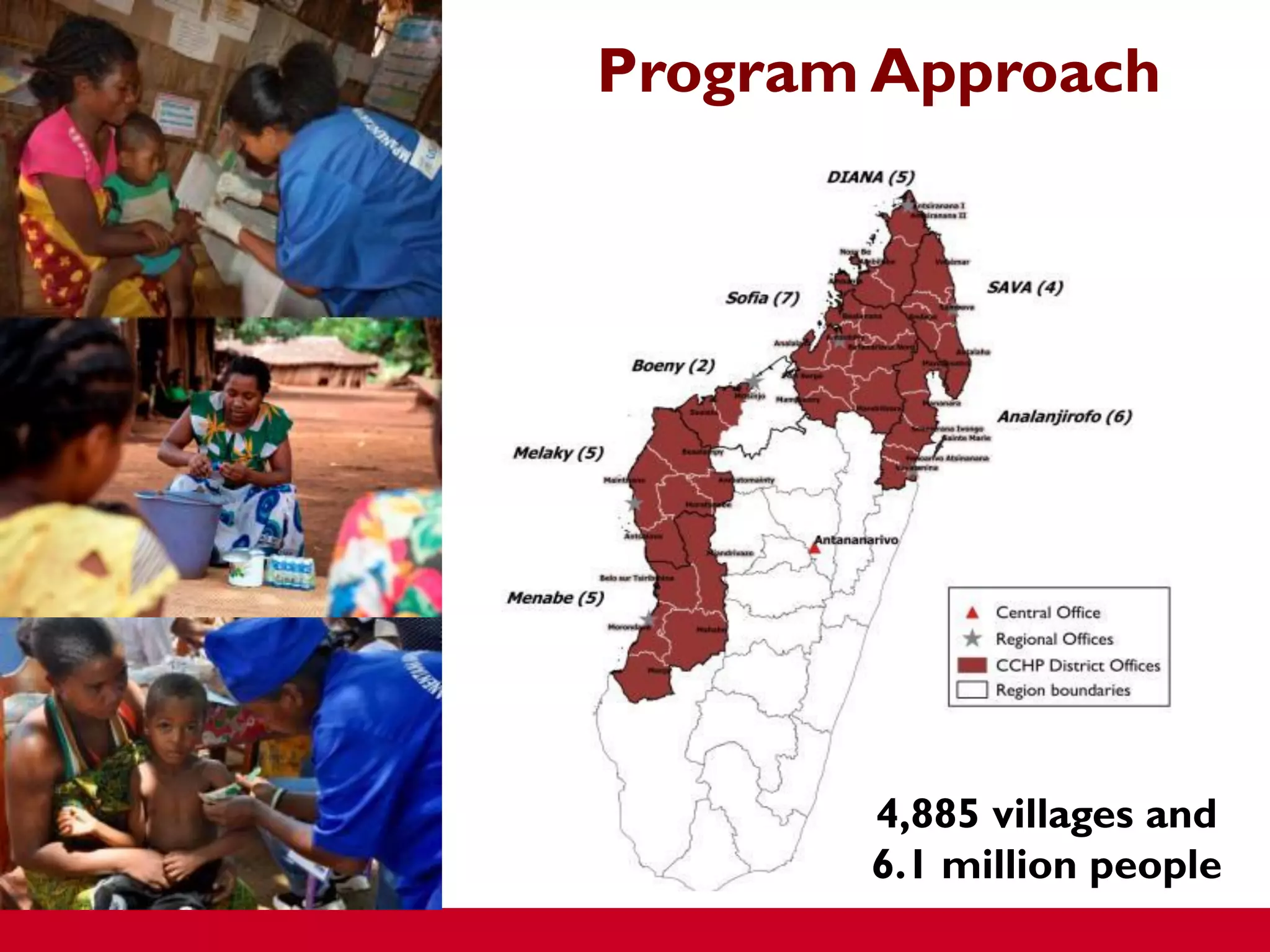
Program Approach
4,885 villages and
6.1 million people
Program Approach (cont’d)
Community health
forms the foundation
of the health system
Community health
to improve
geographical access
to primary care
Community health to
reach UHC and
achieve SDG
Institutional
framework to
standardize health
interventions
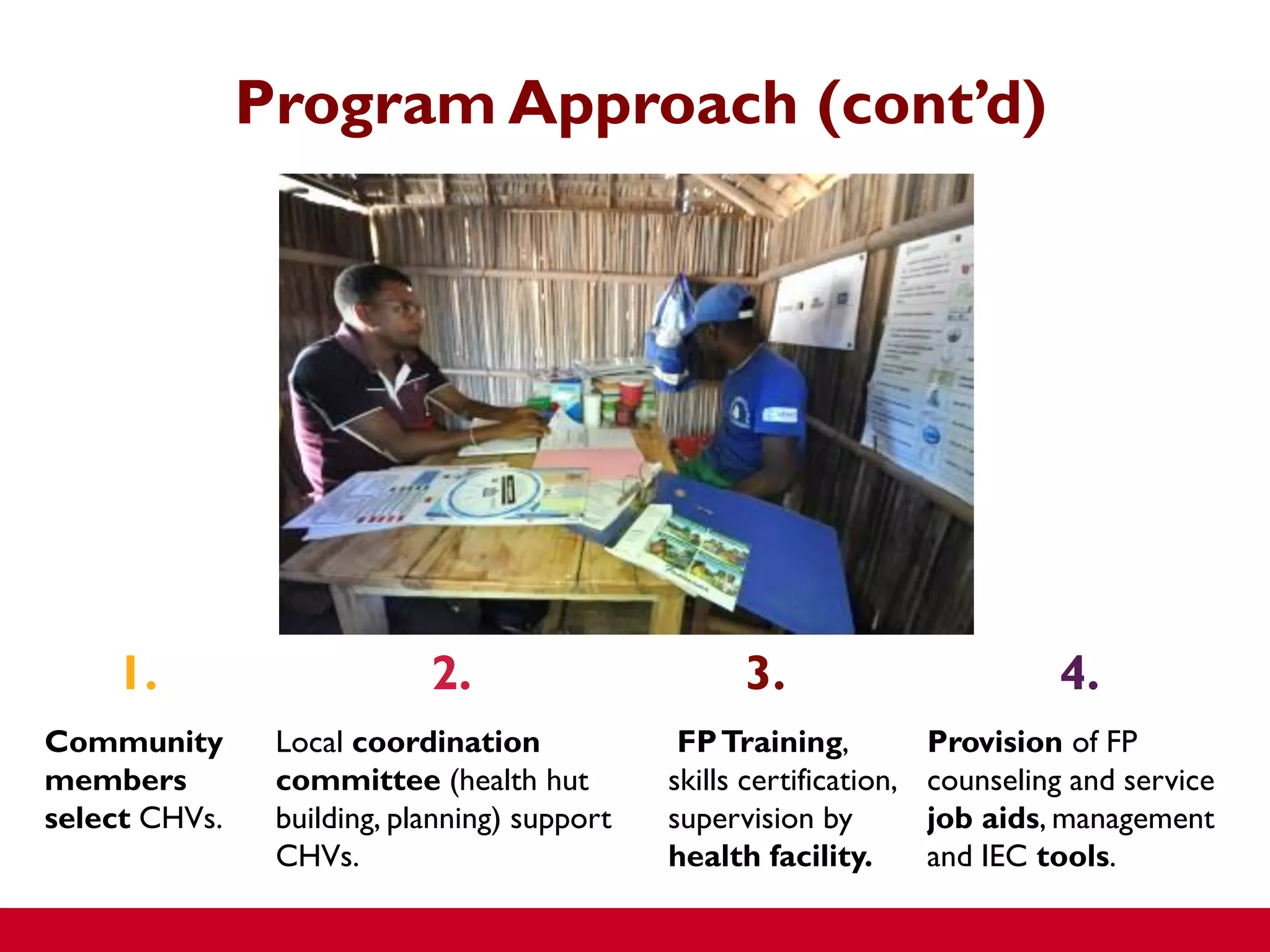
Program Approach (cont’d)
Community
members
select CHVs.
Local coordination
committee (health hut
building, planning) support
CHVs.
FPTraining,
skills certification,
supervision by
health facility.
Provision of FP
counseling and service
job aids, management
and IEC tools.
1. 2. 3. 4.
Program Approach (cont’d)
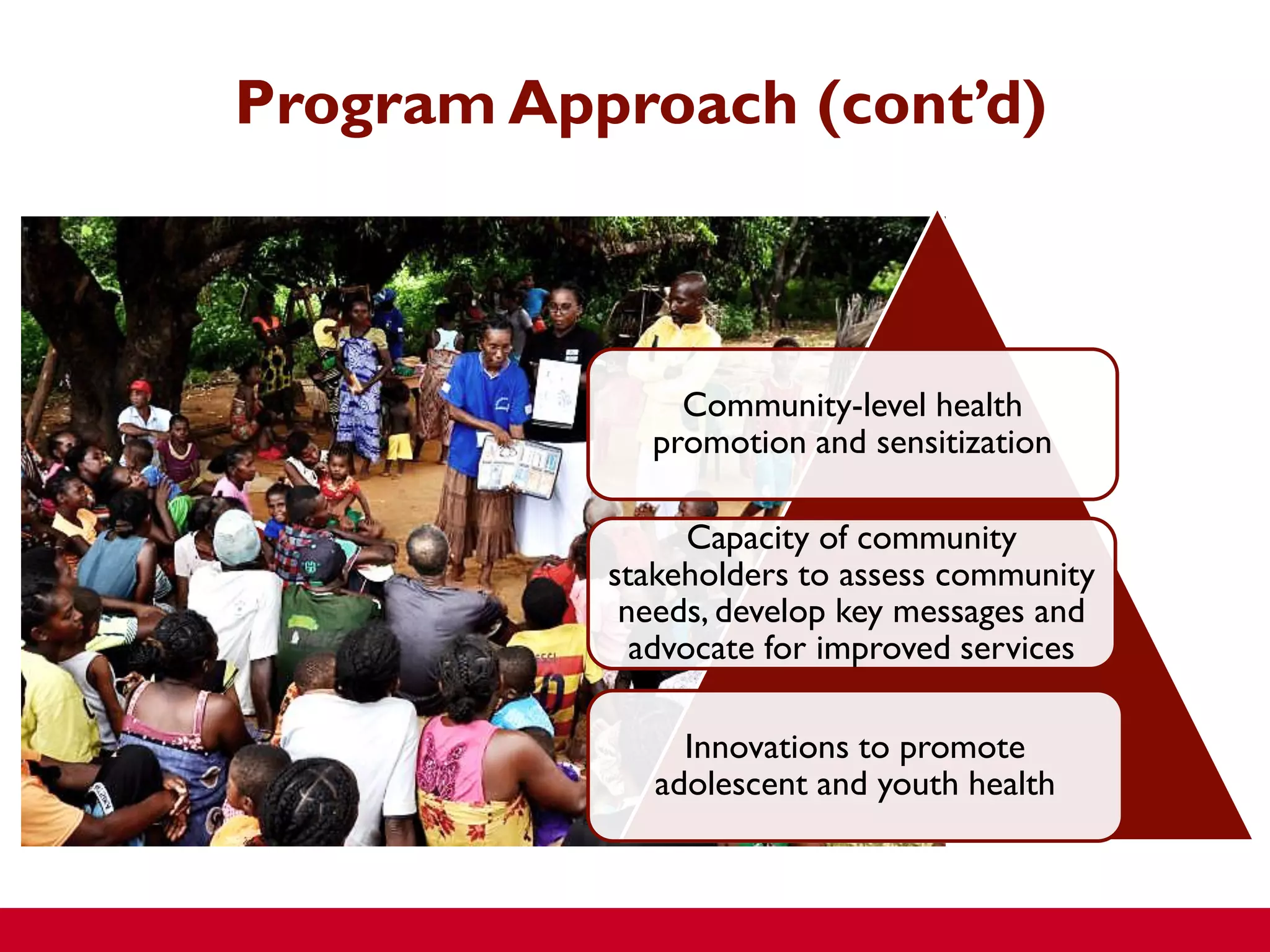
Community-level health
promotion and sensitization
Capacity of community
stakeholders to assess community
needs, develop key messages and
advocate for improved services
Innovations to promote
adolescent and youth health
Key Findings
In Policy Development HIP
• NPCH updated (2017)
• FP law available (2018)
• Norms guideline
reviewed
• CHVs curricula
standardized
Key Findings
CHV Service
Delivery
(n = 6,093)
• 92% CHVs in
environmental
areas trained in
FP service
delivery.
• 54% CHVs male.
• 72% coverage.
Source: Mahefa Miaraka, database, oct 2013 - sept 2018
Key Findings (cont’d):
Evolution of Coverage in Local Services by CHVs
Sources: CCHP, Activity Reports 2012 – 2018
New Family Planning Users
<1% 34% 62% 67% 17% 25% 34% 40% 38% 36%299
48,704
152,821
194,954
34,722
55,355
68,992
111,700 111,700 111,700
94,097
142,502
246,619
289,923
202,632
221,866
204,467
281,818
294,124
306,430
2012 2013 2014 2015 2016 2017 2018 2019 2020 2021
% of CHV's contribution New users at CHV New users at Health Facility
Key Results (cont’d):
Trend in Contraceptive Prevalence and FP Unmet Need
Sources: Penser, 2012 – USAID , OMS, 2014 – USAID, Baseline 2016
30.6%
17.3%
9%
26.9%
41.3%
46.4%
62.0%
0%
10%
20%
30%
40%
50%
60%
70%
2012 2014 2016 2020
% with unmet need in Family Planning Contraceptive Prevalence Rate
Key Results (cont’d):
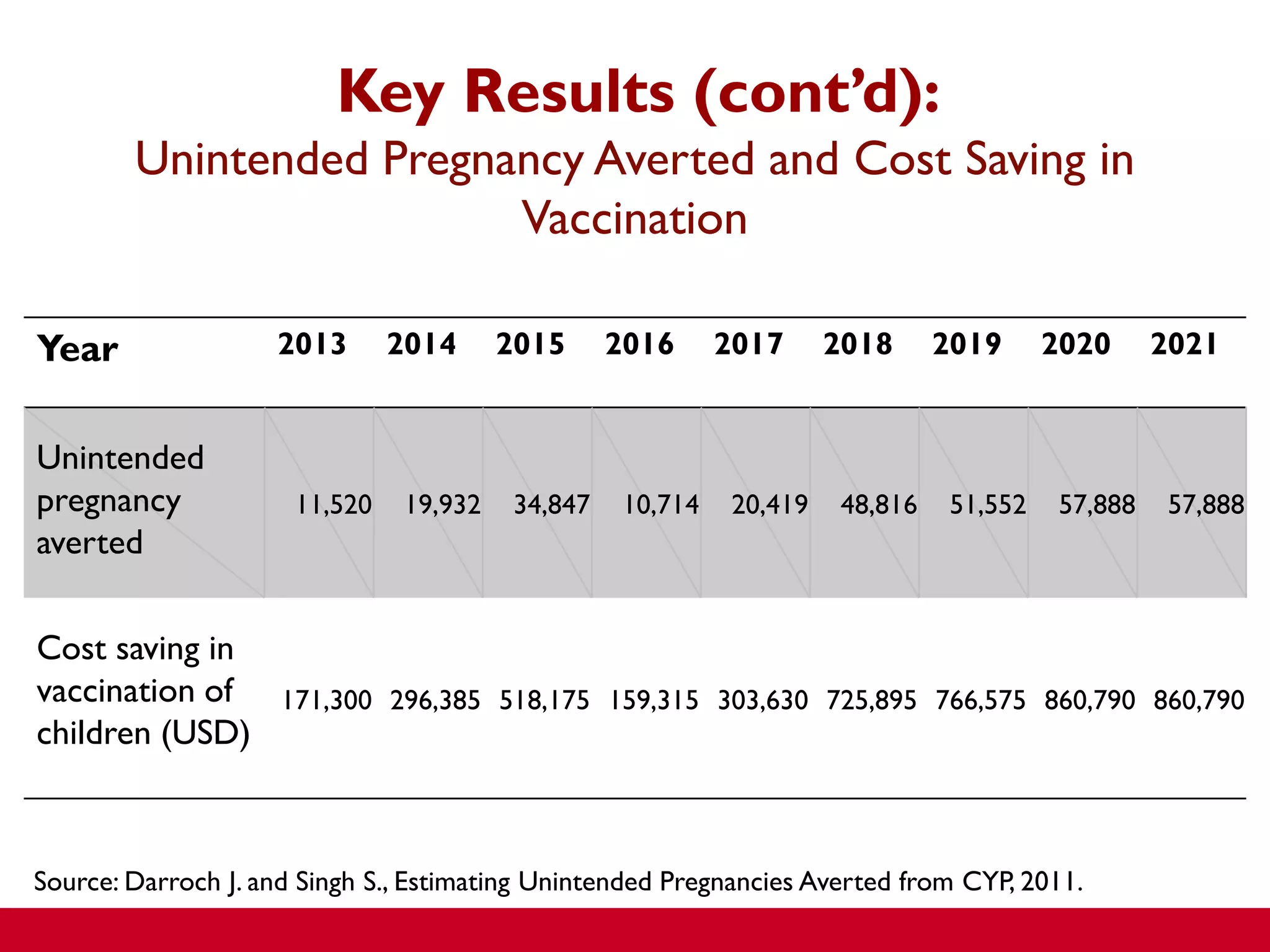
Unintended Pregnancy Averted and Cost Saving in
Vaccination
Source: Darroch J. and Singh S., Estimating Unintended Pregnancies Averted from CYP, 2011.
Year 2013 2014 2015 2016 2017 2018 2019 2020 2021
Unintended
pregnancy
averted
11,520 19,932 34,847 10,714 20,419 48,816 51,552 57,888 57,888
Cost saving in
vaccination of
children (USD)
171,300 296,385 518,175 159,315 303,630 725,895 766,575 860,790 860,790
Key Findings:
People Reached by SBCC Channels
(n = 4,987,099)
HighVisibility
Events
12%
Radio
broadcast
59%
Reached by
CHVs activities
29%
Source: Mahefa Miaraka, annual report, sept 2018
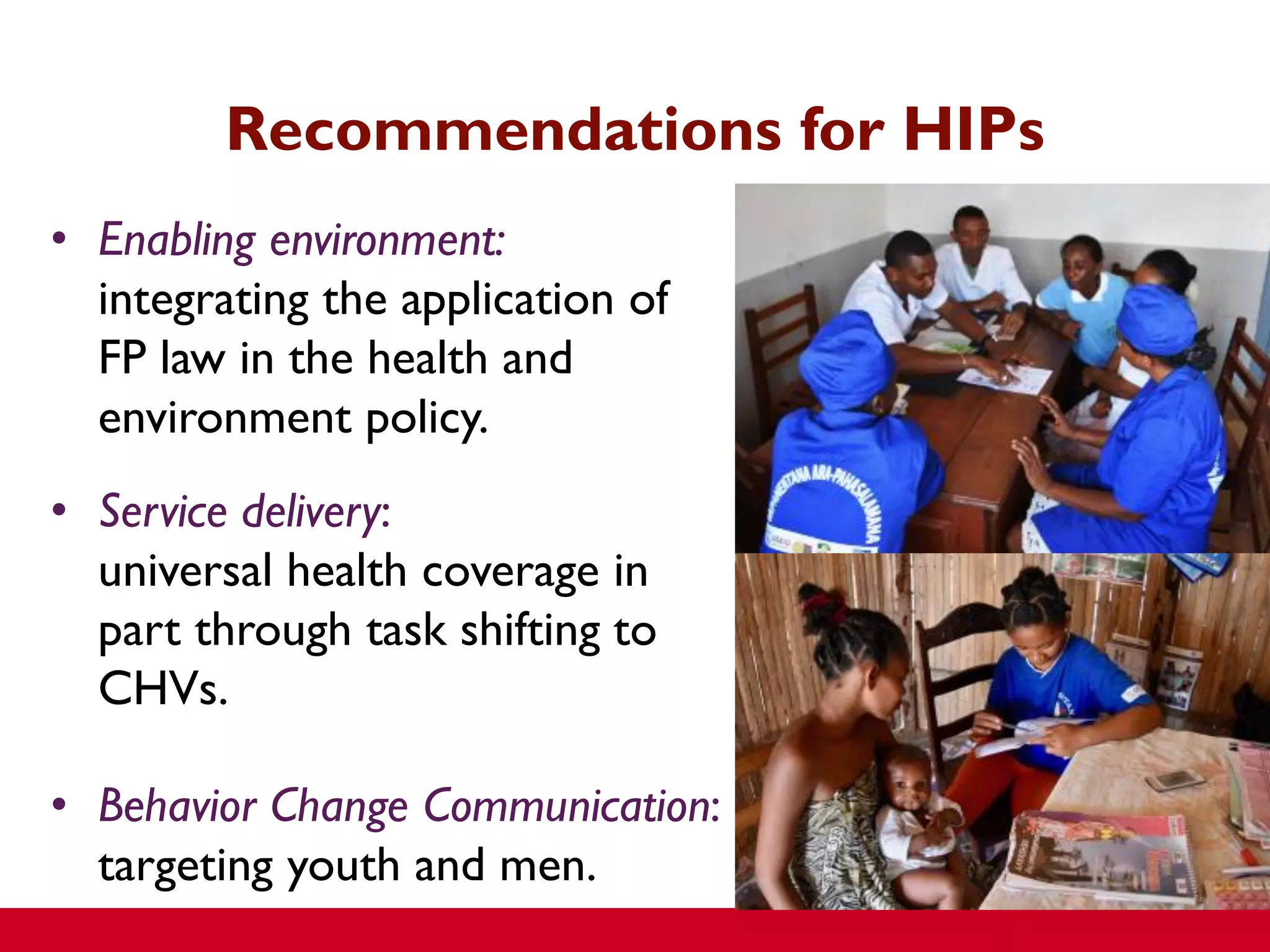
• Enabling environment:
integrating the application of
FP law in the health and
environment policy.
• Service delivery:
universal health coverage in
part through task shifting to
CHVs.
• Behavior Change Communication:
targeting youth and men.
Recommendations for HIPs
Thank you
forYour
Attention!
This presentation was made possible thanks to
the financial support of the American people
through the United States Agency for
International Development (USAID). JSI Research
& Training Institute, Inc. is fully responsible for
the content of this presentation, which does not
necessarily reflect the views of USAID or the US
Government.

USAID Community Capacity for Health Program (Mahefa Miaraka)

  • 1.
    USAID Community Capacityfor Health Program (Mahefa Miaraka) Successfully Integrating High-Impact Family Planning Practices into Population, Health, and Environment Projects Presented by Yvette Ribaira, MD, MPH binar, February 6, 2019
  • 2.
    Outline • Background • ProgramApproach • Key Findings • Recommendations.
  • 3.
    Background • 80% endemicspecies • 80% of the population is rural • 76% of the population is poor • 2.7% population growth • Lack of access to FP services Sources: DHS, 2008/09 – WB, 2017
  • 4.
    Program Approach 4,885 villagesand 6.1 million people
  • 5.
    Program Approach (cont’d) Communityhealth forms the foundation of the health system Community health to improve geographical access to primary care Community health to reach UHC and achieve SDG Institutional framework to standardize health interventions
  • 6.
    Program Approach (cont’d) Community members selectCHVs. Local coordination committee (health hut building, planning) support CHVs. FPTraining, skills certification, supervision by health facility. Provision of FP counseling and service job aids, management and IEC tools. 1. 2. 3. 4.
  • 7.
    Program Approach (cont’d) Community-levelhealth promotion and sensitization Capacity of community stakeholders to assess community needs, develop key messages and advocate for improved services Innovations to promote adolescent and youth health
  • 8.
    Key Findings In PolicyDevelopment HIP • NPCH updated (2017) • FP law available (2018) • Norms guideline reviewed • CHVs curricula standardized
  • 9.
    Key Findings CHV Service Delivery (n= 6,093) • 92% CHVs in environmental areas trained in FP service delivery. • 54% CHVs male. • 72% coverage. Source: Mahefa Miaraka, database, oct 2013 - sept 2018
  • 10.
    Key Findings (cont’d): Evolutionof Coverage in Local Services by CHVs Sources: CCHP, Activity Reports 2012 – 2018 New Family Planning Users <1% 34% 62% 67% 17% 25% 34% 40% 38% 36%299 48,704 152,821 194,954 34,722 55,355 68,992 111,700 111,700 111,700 94,097 142,502 246,619 289,923 202,632 221,866 204,467 281,818 294,124 306,430 2012 2013 2014 2015 2016 2017 2018 2019 2020 2021 % of CHV's contribution New users at CHV New users at Health Facility
  • 11.
    Key Results (cont’d): Trendin Contraceptive Prevalence and FP Unmet Need Sources: Penser, 2012 – USAID , OMS, 2014 – USAID, Baseline 2016 30.6% 17.3% 9% 26.9% 41.3% 46.4% 62.0% 0% 10% 20% 30% 40% 50% 60% 70% 2012 2014 2016 2020 % with unmet need in Family Planning Contraceptive Prevalence Rate
  • 12.
    Key Results (cont’d): UnintendedPregnancy Averted and Cost Saving in Vaccination Source: Darroch J. and Singh S., Estimating Unintended Pregnancies Averted from CYP, 2011. Year 2013 2014 2015 2016 2017 2018 2019 2020 2021 Unintended pregnancy averted 11,520 19,932 34,847 10,714 20,419 48,816 51,552 57,888 57,888 Cost saving in vaccination of children (USD) 171,300 296,385 518,175 159,315 303,630 725,895 766,575 860,790 860,790
  • 13.
    Key Findings: People Reachedby SBCC Channels (n = 4,987,099) HighVisibility Events 12% Radio broadcast 59% Reached by CHVs activities 29% Source: Mahefa Miaraka, annual report, sept 2018
  • 14.
    • Enabling environment: integratingthe application of FP law in the health and environment policy. • Service delivery: universal health coverage in part through task shifting to CHVs. • Behavior Change Communication: targeting youth and men. Recommendations for HIPs
  • 15.
    Thank you forYour Attention! This presentationwas made possible thanks to the financial support of the American people through the United States Agency for International Development (USAID). JSI Research & Training Institute, Inc. is fully responsible for the content of this presentation, which does not necessarily reflect the views of USAID or the US Government.