Ebola Transmission Prevention & Survivor Services
Program, Guinea
June 2016-July 2018
Presentation Outline
• Background
• Program goal and expected results
• Transmission prevention:
monitoring survivor health status,
semen testing
• The challenges of rapid start up and a
limited program life
• Facility renovations to strengthen
WASH infrastructure
• The value of a strong national
survivor association
• Working with Key partners
Background
• 2014-15 Ebola outbreak in Guinea: 3,814 cases, 2,544
deaths, and 1,270 registered survivors with frequent
health complications.
• June 1, 2016—WHO declared the end of Ebola epidemic
in Guinea and recommended close monitoring.
• Research shows the persistence of the virus in survivors
but unknown for how long.
• Design and implementation of the active ring
surveillance program by the Ministry of Health (MOH)
National Agency for Health Security (NAHS) with
assistance from partners.
ETP&SS Goal and Expected Results
• Goal: To reduce or eliminate the risk of Ebola
transmission from survivors to others and to ensure
access to and effective delivery of health care services for
survivors.
• Expected Results
 Coordination with partners strengthened
 Surveillance system in place and operational
 Health care for survivors strengthened and survivors
receive treatment as needed
 Survivor Associations strengthened and stigma reduced.
Catchment Area of the Program
• 6 regions: Conakry, Kindia,
Nzerekore, Kakan, Boke and
Faranah
• Covers close to 100% of
Ebola survivors (1,270 total
in the country)
Transmission Prevention:
Monitoring survivor health status
• March 2017—Review of SA-Ceint
• Recommendations:
– Establish limited number of sentinel sites in all regions
where Ebola survivors live.
– Continue to monitor research results on bodily fluids
and continue semen test every 3 months.
Transmission Prevention:
Monitoring survivor health status
• Sentinel Site definition: geographic area in prefecture or
urban area where at least 5 survivors live.
• 60 sites in the 6 regions: Conakry, Kindia, Nzerekore,
Kakan, Faranah, Boke.
• Role: Collect information on the health status of
survivors and their immediate contacts and submit to
NAHS on a weekly basis.
• 98% of sentinel sites reported regularly.
Transmission Prevention:
Semen Testing
• APC planned and implemented three campaigns for
semen collection from male survivors aged 15 years and
older (n=440).
– 2nd and 3rd campaign in collaboration with the NIH
• APC assisted in providing a refresher training to 30
laboratory officers on how to collect and transport
semen to labs.
• APC procured lab products.
• On average, 86% of the target population provided
semen during the 3 campaigns.
The challenges of rapid start up and a limited
program life
• The limited program life could not allow some activities of
the program to be implemented and monitored for a
longer period of time to see the results and allow
sustainability. For example procuring medicines took a long
time and arrived a short time before he end of the
program.
• The program had to pay office rent for the survivor
network to cover 12 months after the end of the program.
• The MOH/NAHS requested to pursue the semen testing
well beyond the life of the program.
• 23 health facilities selected to be
strengthened in 6 regions with focus
on Conakry, Kindia, and Nzerekore.
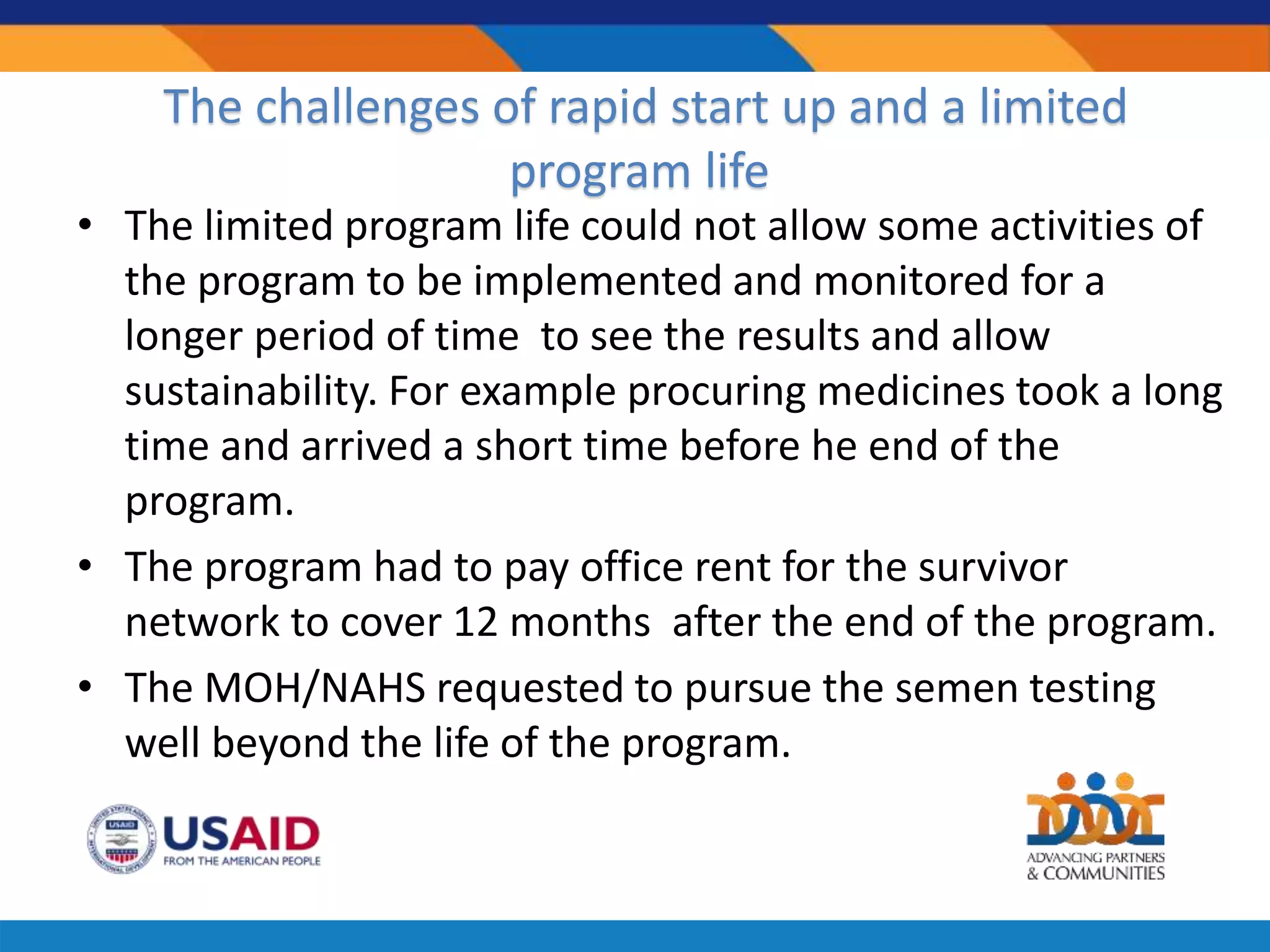
• APC renovated 8 health facilities in
most affected zones with focus on
water and sanitation.
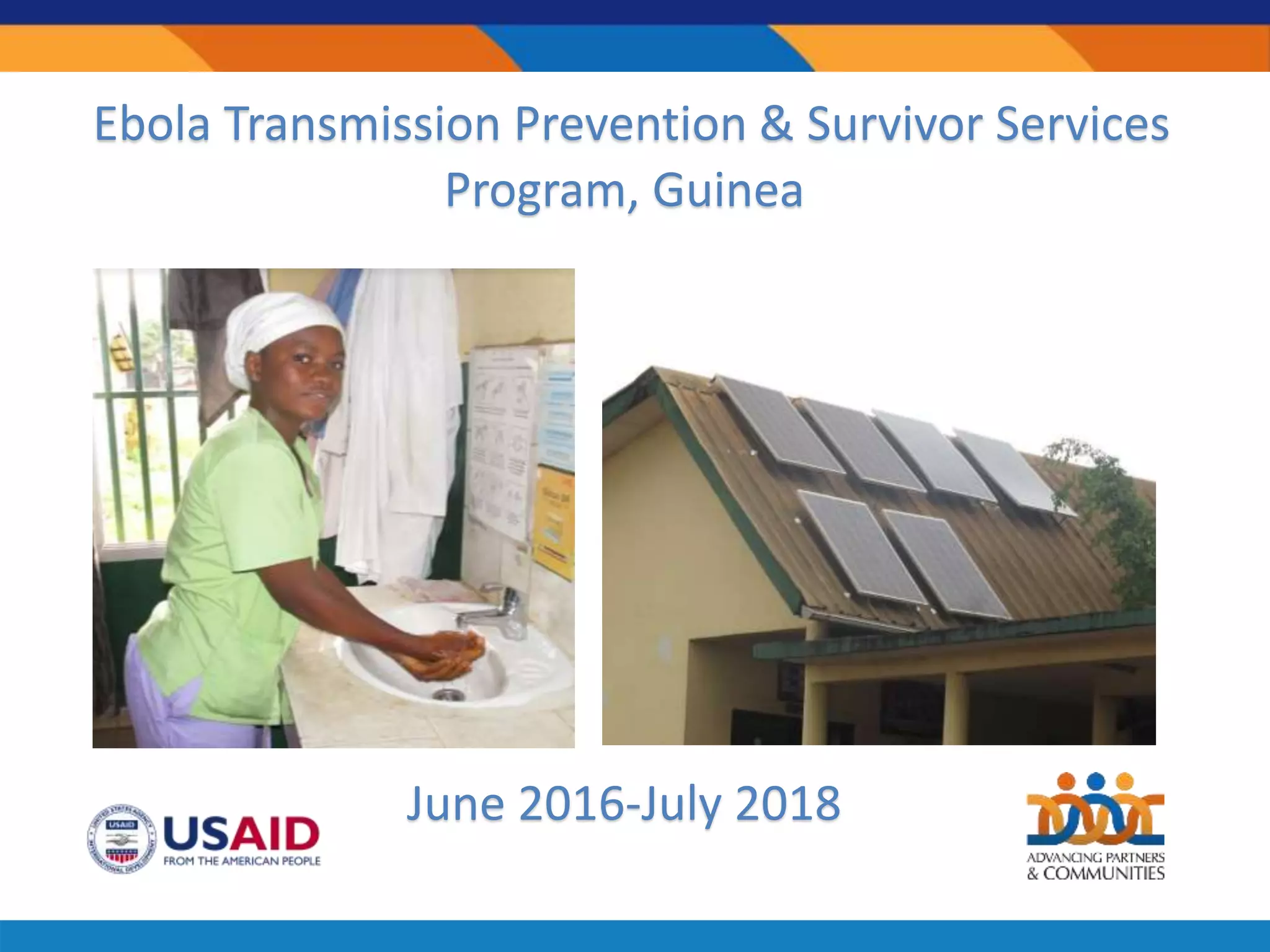
• Results: health personnel can wash
their hands to contribute to infection
prevention, bathrooms are clean, etc.
Facility renovations to strengthen WASH Infrastructure
The Value of a Strong National Survivor Association
• Guinea National Network of Ebola Survivors (RENASEG)
and 23 local associations.
• Support from program to implement action plan to
build RENASEG capacity:
– Result: election of new and strong leadership. RENASEG adopted
constitution and bylaws and is officially recognized by the government
,has office , receive funds from other agencies such as UNDP, Wakili
SA.
– Examples of important roles played by RENASEG include, reduction of
the stigma faced by its members by 77%, weekly collection of the
health status of its members and sensitization for semen collection.
• World Health Organization Guinea Office: Review of SA-
Ceint: cost sharing and participation in technical work. Participation in
several meetings to discuss issues . Participation in several activities
(program regional activities in Liberia and Guinea).
• NIH: Collaboration in the semen collection campaigns: second and third
rounds.
• Post- Ebogui: Information about survivors health status from Post -
Ebogui was the basis for the selection of medicines and quantification of
medicines to be procured by USAID for survivors in need. Development of
clinical care guideline and curriculum development based on Post -Ebogui’s
experience. Post- Ebogui gave presentations on their research results at
APC regional meetings.
Working with Key Partners
Conclusions
• Surveillance program implemented well to get weekly
information on health status of survivors available to the
NAHS/MOH. So far there has not been Ebola cases.
• Survivors Association Network strengthened and about
to become the National Go-To organization to assist all
vulnerable people in Guinea not just Ebola survivors.
Process of changing its name and scope is progressing
to be come (RENAPEVD-GUINEE ).

Ebola Transmission Prevention and Survivor Services Program, Guinea

  • 1.
    Ebola Transmission Prevention& Survivor Services Program, Guinea June 2016-July 2018
  • 2.
    Presentation Outline • Background •Program goal and expected results • Transmission prevention: monitoring survivor health status, semen testing • The challenges of rapid start up and a limited program life • Facility renovations to strengthen WASH infrastructure • The value of a strong national survivor association • Working with Key partners
  • 3.
    Background • 2014-15 Ebolaoutbreak in Guinea: 3,814 cases, 2,544 deaths, and 1,270 registered survivors with frequent health complications. • June 1, 2016—WHO declared the end of Ebola epidemic in Guinea and recommended close monitoring. • Research shows the persistence of the virus in survivors but unknown for how long. • Design and implementation of the active ring surveillance program by the Ministry of Health (MOH) National Agency for Health Security (NAHS) with assistance from partners.
  • 4.
    ETP&SS Goal andExpected Results • Goal: To reduce or eliminate the risk of Ebola transmission from survivors to others and to ensure access to and effective delivery of health care services for survivors. • Expected Results  Coordination with partners strengthened  Surveillance system in place and operational  Health care for survivors strengthened and survivors receive treatment as needed  Survivor Associations strengthened and stigma reduced.
  • 5.
    Catchment Area ofthe Program • 6 regions: Conakry, Kindia, Nzerekore, Kakan, Boke and Faranah • Covers close to 100% of Ebola survivors (1,270 total in the country)
  • 6.
    Transmission Prevention: Monitoring survivorhealth status • March 2017—Review of SA-Ceint • Recommendations: – Establish limited number of sentinel sites in all regions where Ebola survivors live. – Continue to monitor research results on bodily fluids and continue semen test every 3 months.
  • 7.
    Transmission Prevention: Monitoring survivorhealth status • Sentinel Site definition: geographic area in prefecture or urban area where at least 5 survivors live. • 60 sites in the 6 regions: Conakry, Kindia, Nzerekore, Kakan, Faranah, Boke. • Role: Collect information on the health status of survivors and their immediate contacts and submit to NAHS on a weekly basis. • 98% of sentinel sites reported regularly.
  • 8.
    Transmission Prevention: Semen Testing •APC planned and implemented three campaigns for semen collection from male survivors aged 15 years and older (n=440). – 2nd and 3rd campaign in collaboration with the NIH • APC assisted in providing a refresher training to 30 laboratory officers on how to collect and transport semen to labs. • APC procured lab products. • On average, 86% of the target population provided semen during the 3 campaigns.
  • 9.
    The challenges ofrapid start up and a limited program life • The limited program life could not allow some activities of the program to be implemented and monitored for a longer period of time to see the results and allow sustainability. For example procuring medicines took a long time and arrived a short time before he end of the program. • The program had to pay office rent for the survivor network to cover 12 months after the end of the program. • The MOH/NAHS requested to pursue the semen testing well beyond the life of the program.
  • 10.
    • 23 healthfacilities selected to be strengthened in 6 regions with focus on Conakry, Kindia, and Nzerekore. • APC renovated 8 health facilities in most affected zones with focus on water and sanitation. • Results: health personnel can wash their hands to contribute to infection prevention, bathrooms are clean, etc. Facility renovations to strengthen WASH Infrastructure
  • 11.
    The Value ofa Strong National Survivor Association • Guinea National Network of Ebola Survivors (RENASEG) and 23 local associations. • Support from program to implement action plan to build RENASEG capacity: – Result: election of new and strong leadership. RENASEG adopted constitution and bylaws and is officially recognized by the government ,has office , receive funds from other agencies such as UNDP, Wakili SA. – Examples of important roles played by RENASEG include, reduction of the stigma faced by its members by 77%, weekly collection of the health status of its members and sensitization for semen collection.
  • 12.
    • World HealthOrganization Guinea Office: Review of SA- Ceint: cost sharing and participation in technical work. Participation in several meetings to discuss issues . Participation in several activities (program regional activities in Liberia and Guinea). • NIH: Collaboration in the semen collection campaigns: second and third rounds. • Post- Ebogui: Information about survivors health status from Post - Ebogui was the basis for the selection of medicines and quantification of medicines to be procured by USAID for survivors in need. Development of clinical care guideline and curriculum development based on Post -Ebogui’s experience. Post- Ebogui gave presentations on their research results at APC regional meetings. Working with Key Partners
  • 13.
    Conclusions • Surveillance programimplemented well to get weekly information on health status of survivors available to the NAHS/MOH. So far there has not been Ebola cases. • Survivors Association Network strengthened and about to become the National Go-To organization to assist all vulnerable people in Guinea not just Ebola survivors. Process of changing its name and scope is progressing to be come (RENAPEVD-GUINEE ).

Editor's Notes

  • #11 Examples include: Borehole well repaired, bathroom appliances replaced, repair of plumbing for operating rooms, consultation rooms, and bathrooms, and installed water towers and solar powered pumps for reliable water supply.