PrEP E-learning Discussion II
September 24, 2020
2:00-3:00 p.m. SAST
Expert Panelists:
• Dr. Jason Reed, Biomedical HIV Prevention
Technical Advisor, Jhpiego
• Dr. More Mungati, STAR-L Director, EGPAF
Lesotho
Moderator:
• Dr. Seema Ntjabane, Care & Treatment
Specialist, USAID-Lesotho
1
Housekeeping: How to Connect
to Audio by Computer
• Join using computer audio
and a plug-in headset or
computer speakers
2
Panelists
3
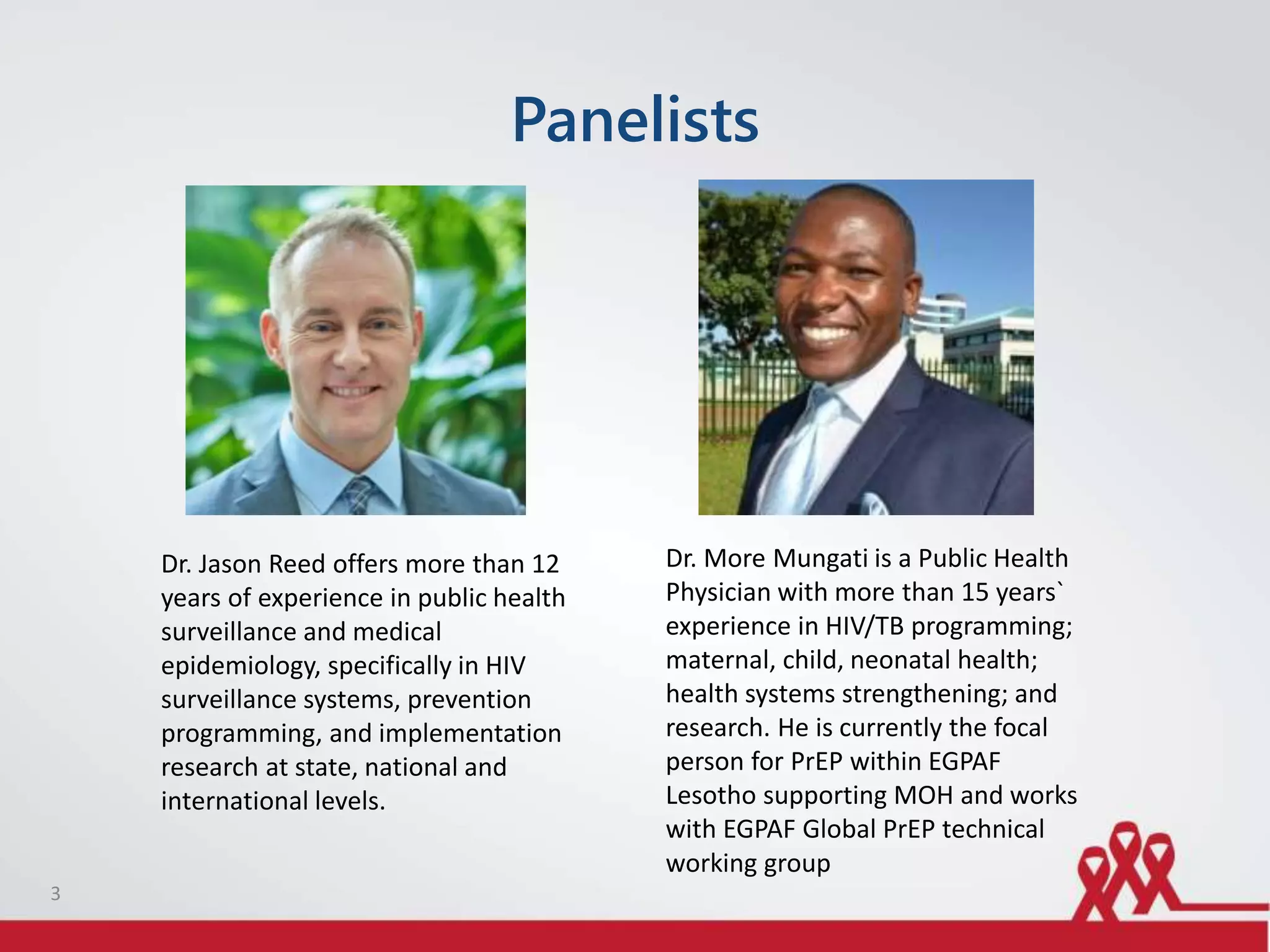
Dr. Jason Reed offers more than 12
years of experience in public health
surveillance and medical
epidemiology, specifically in HIV
surveillance systems, prevention
programming, and implementation
research at state, national and
international levels.
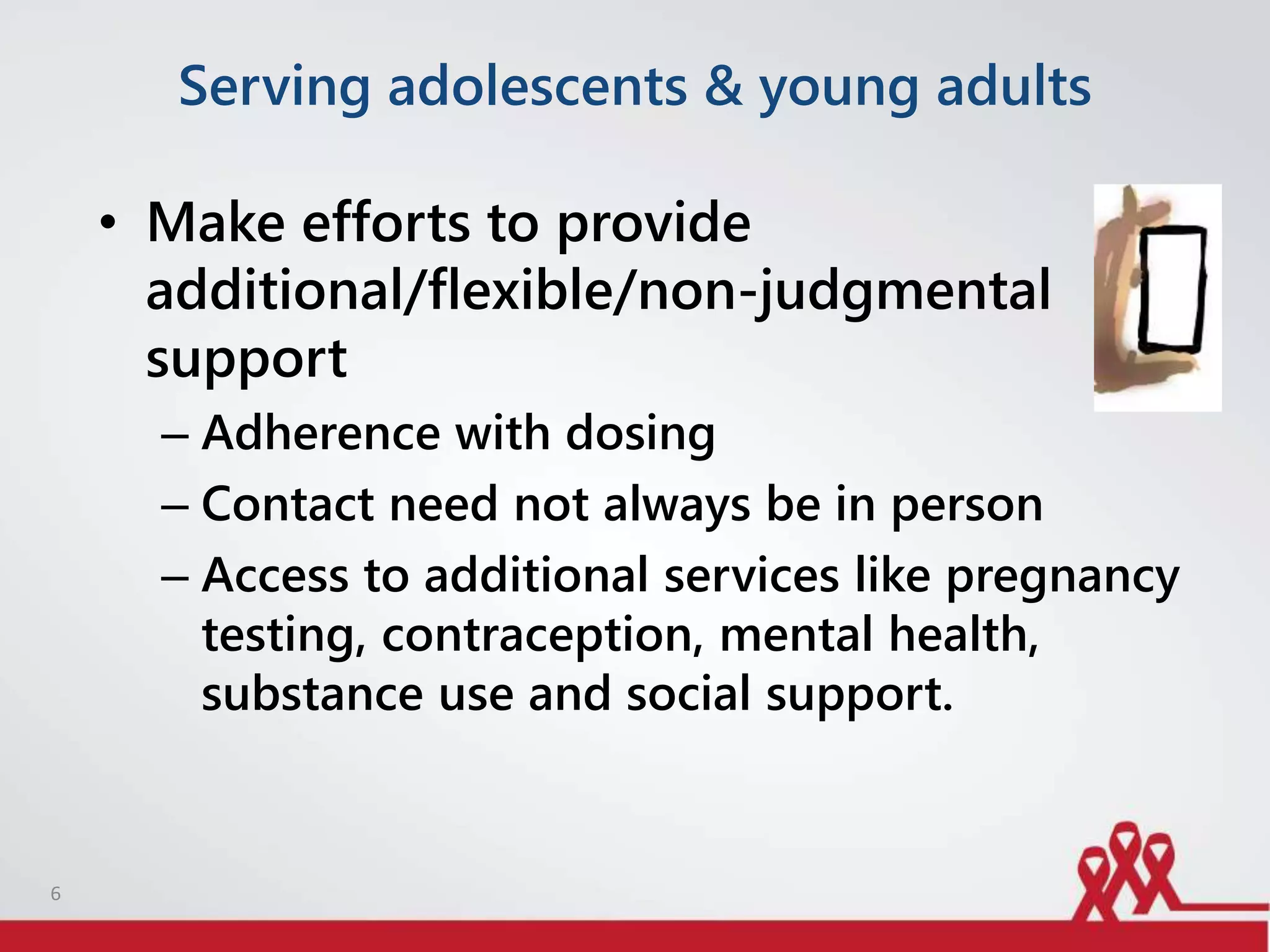
Dr. More Mungati is a Public Health
Physician with more than 15 years`
experience in HIV/TB programming;
maternal, child, neonatal health;
health systems strengthening; and
research. He is currently the focal
person for PrEP within EGPAF
Lesotho supporting MOH and works
with EGPAF Global PrEP technical
working group
Special Situations Arising
for Clinical Management
4
Clinically managing special situations
arising in PrEP clients
1. Adolescent/young adult (< age 25) clients
2. Pregnancy or breastfeeding
3. Clients on hormonal contraception
4. Elevated serum creatinine/decreased
creatinine clearance (<60 mL/min) while using
PrEP
5. Clients with hepatitis B
6. Seroconversion after starting PrEP
7. Clients injecting or using recreational drugs
5
5
Serving adolescents & young adults
• Make efforts to provide
additional/flexible/non-judgmental
support
– Adherence with dosing
– Contact need not always be in person
– Access to additional services like pregnancy
testing, contraception, mental health,
substance use and social support.
6
Pregnancy or breastfeeding
• It is safe to continue taking PrEP
• Becoming pregnant (or beginning
breastfeeding) further increases women’s
risk and the benefits of PrEP
7
Clients on hormonal contraception
• HIV PrEP is safe and effective in clients
using hormonal contraceptives (whether
oral, injectable or implantable)
8
Elevated serum creatinine/decreased
creatinine clearance while using PrEP
• Approx 80% of abnormal creatinine results resolve
without stopping PrEP; re-test creatinine by
redrawing blood on different day
• Consider discontinuing if separate blood specimen
test result is still abnormal
– A serum creatinine elevation
– A decreased creatinine clearance < 60 mL/min
• Creatinine elevations usually reverse after stopping
PrEP
– Once PrEP stopped, recheck creatinine and offer PrEP
restart if results normalized
– Creatinine abnormalities usually do not reoccur after
PrEP restart
9
Hepatitis B
• Stopping HIV PrEP in a client with
hepatitis B can result in a resurgence of
hepatitis B virus, called a “flare.”
– may occur 1 to 3 months after stopping
– often limited to elevations in ALT and AST
• Hepatitis flare from discontinuing PrEP
treated by restarting tenofovir/TDF
10
HIV Seroconversion
• WHO recommends confirming the HIV
diagnosis in PrEP clients by testing second
blood sample
• If an HIV diagnosis is confirmed, offer client
fully suppressive HIV antiretroviral
therapy—ART—as soon as possible; do not
delay
– Only ~3% of PrEP recipients HIV seroconverting
had resistance to TDF or FTC
– Second-line ART regimens for seroconversion
after starting PrEP usually not required11
Injecting/Using Recreational Drugs
• Main approach to HIV prevention is harm
reduction strategies - opioid substitution
therapy and needle syringe programmes
• Clients using/injecting drugs may also be
at risk of sexually acquiring HIV and
benefit from oral PrEP
– But oral PrEP is not a substitute for OST or
syringe programmes
12
SAFETY
EFFECTIVENESS
AVOIDING STIGMA
Counseling Messages for
Clinicians
13
Counseling Clients about PrEP Safety
• PrEP is safe when used by HIV negative people, so we must re-test
for HIV every 3 months (and ideally 1 month after starting)
• There are no side effects in most people; about 10% may
experience side effects (stomach upset, headache), typically mild
and resolve without stopping PrEP
• Rarely, PrEP may cause problems with kidney function or the
hardness of bones
o Let me know if you have a related medical condition or history
• If you have hepatitis B, daily PrEP use may still be safe
o Before stopping PrEP, you should speak with me or another
health care provider, since stopping may cause hepatitis B
infection to worsen
• It is safe to take PrEP throughout pregnancy and breastfeeding
14
Counseling Clients about PrEP Effectiveness
• PrEP highly effective at preventing HIV
(~90%) when used as prescribed
o Easier to take if a daily habit, when brushing teeth,
going to bed; If you forget, take it as soon as you
remember
• For STARTING and STOPPING PrEP
o Needs to be taken for 7 days before you’re protected
against HIV
o Should be taken for 28 days after last possible HIV
exposure/high risk sex for maximum protection
15
Counseling Clients about PrEP Effectiveness
• PrEP still protects against HIV even if you’re
taking it with alcohol or recreational drugs
o Though taking alcohol and drugs may make is more
difficult to remember to take PrEP
• Using condoms and/or contraception is still a
healthy choice; your use of PrEP for HIV
prevention does NOT:
o prevent other sexually transmitted infections
o prevent you or your partner from becoming pregnant
16
Avoiding Stigma
• PrEP clients often stigmatized
– PrEP health care providers can help clients
and influence communities to view PrEP as a
responsible choice to help protect health
– Reducing stigma may increase uptake of
PrEP, daily adherence, and impact on HIV
epidemic
– Seek special training, if needed, to ensure
clients don’t feel judged for their reasons to
seek PrEP, including if they are not
comfortable disclosing17
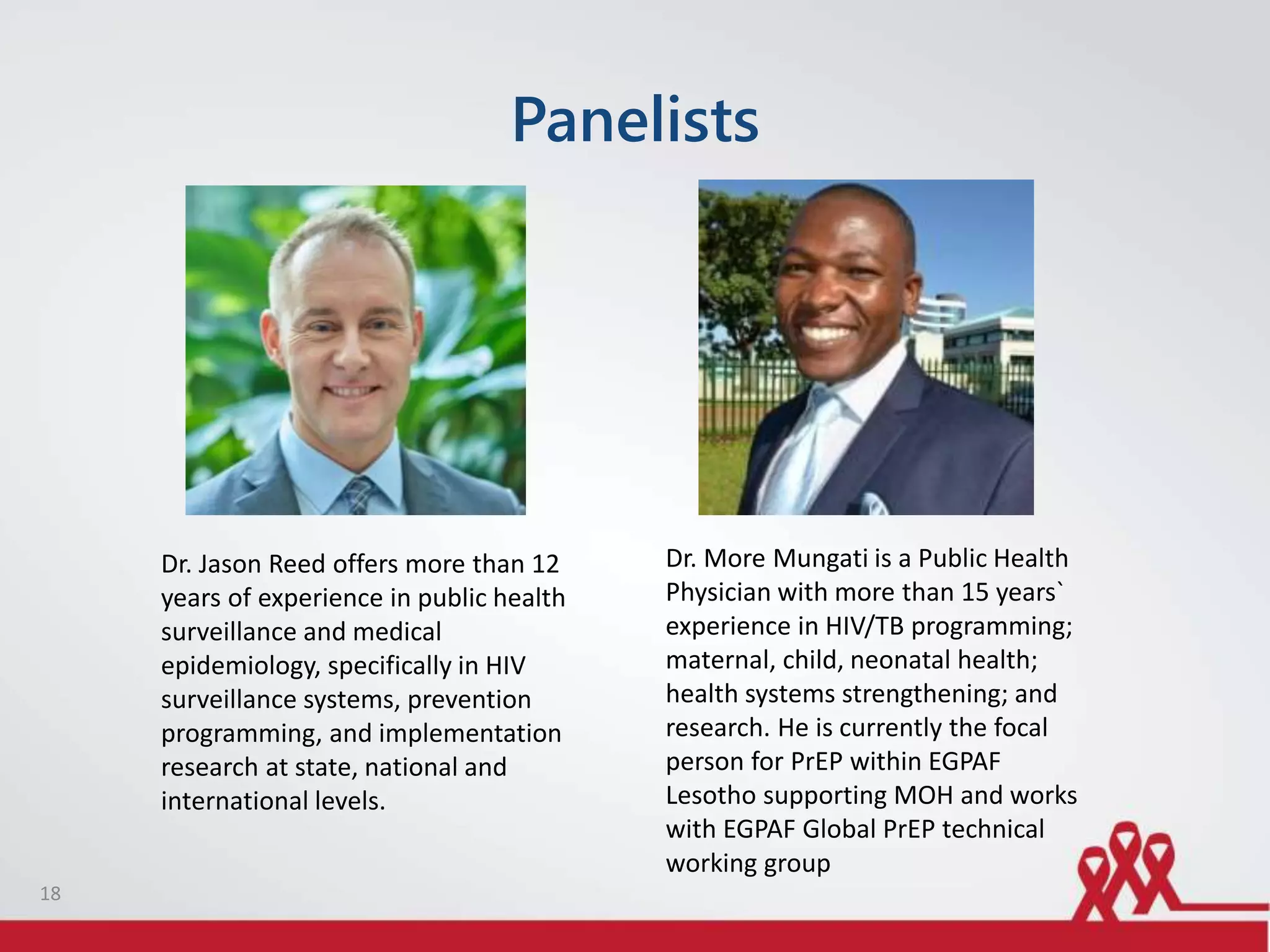
Panelists
18
Dr. Jason Reed offers more than 12
years of experience in public health
surveillance and medical
epidemiology, specifically in HIV
surveillance systems, prevention
programming, and implementation
research at state, national and
international levels.
Dr. More Mungati is a Public Health
Physician with more than 15 years`
experience in HIV/TB programming;
maternal, child, neonatal health;
health systems strengthening; and
research. He is currently the focal
person for PrEP within EGPAF
Lesotho supporting MOH and works
with EGPAF Global PrEP technical
working group
Questions and Answers
19
• Type your questions and comments
into the Chat box
• We will try to get through every
question.
–We will ask our speaker to provide
answers for any questions not covered
during this webinar. We will distribute
these answers to all participants.
Evaluation Survey
20
We have put a link to the survey in chat.
We will also be sending the link when we
send out a link to the slide and Q & A.
We truly appreciate in feedback so that we
can continue to improve these sessions
and make them useful.
Thank you.
21

Oral PrEP Webinar Session II - Lesotho

  • 1.
    PrEP E-learning DiscussionII September 24, 2020 2:00-3:00 p.m. SAST Expert Panelists: • Dr. Jason Reed, Biomedical HIV Prevention Technical Advisor, Jhpiego • Dr. More Mungati, STAR-L Director, EGPAF Lesotho Moderator: • Dr. Seema Ntjabane, Care & Treatment Specialist, USAID-Lesotho 1
  • 2.
    Housekeeping: How toConnect to Audio by Computer • Join using computer audio and a plug-in headset or computer speakers 2
  • 3.
    Panelists 3 Dr. Jason Reedoffers more than 12 years of experience in public health surveillance and medical epidemiology, specifically in HIV surveillance systems, prevention programming, and implementation research at state, national and international levels. Dr. More Mungati is a Public Health Physician with more than 15 years` experience in HIV/TB programming; maternal, child, neonatal health; health systems strengthening; and research. He is currently the focal person for PrEP within EGPAF Lesotho supporting MOH and works with EGPAF Global PrEP technical working group
  • 4.
    Special Situations Arising forClinical Management 4
  • 5.
    Clinically managing specialsituations arising in PrEP clients 1. Adolescent/young adult (< age 25) clients 2. Pregnancy or breastfeeding 3. Clients on hormonal contraception 4. Elevated serum creatinine/decreased creatinine clearance (<60 mL/min) while using PrEP 5. Clients with hepatitis B 6. Seroconversion after starting PrEP 7. Clients injecting or using recreational drugs 5 5
  • 6.
    Serving adolescents &young adults • Make efforts to provide additional/flexible/non-judgmental support – Adherence with dosing – Contact need not always be in person – Access to additional services like pregnancy testing, contraception, mental health, substance use and social support. 6
  • 7.
    Pregnancy or breastfeeding •It is safe to continue taking PrEP • Becoming pregnant (or beginning breastfeeding) further increases women’s risk and the benefits of PrEP 7
  • 8.
    Clients on hormonalcontraception • HIV PrEP is safe and effective in clients using hormonal contraceptives (whether oral, injectable or implantable) 8
  • 9.
    Elevated serum creatinine/decreased creatinineclearance while using PrEP • Approx 80% of abnormal creatinine results resolve without stopping PrEP; re-test creatinine by redrawing blood on different day • Consider discontinuing if separate blood specimen test result is still abnormal – A serum creatinine elevation – A decreased creatinine clearance < 60 mL/min • Creatinine elevations usually reverse after stopping PrEP – Once PrEP stopped, recheck creatinine and offer PrEP restart if results normalized – Creatinine abnormalities usually do not reoccur after PrEP restart 9
  • 10.
    Hepatitis B • StoppingHIV PrEP in a client with hepatitis B can result in a resurgence of hepatitis B virus, called a “flare.” – may occur 1 to 3 months after stopping – often limited to elevations in ALT and AST • Hepatitis flare from discontinuing PrEP treated by restarting tenofovir/TDF 10
  • 11.
    HIV Seroconversion • WHOrecommends confirming the HIV diagnosis in PrEP clients by testing second blood sample • If an HIV diagnosis is confirmed, offer client fully suppressive HIV antiretroviral therapy—ART—as soon as possible; do not delay – Only ~3% of PrEP recipients HIV seroconverting had resistance to TDF or FTC – Second-line ART regimens for seroconversion after starting PrEP usually not required11
  • 12.
    Injecting/Using Recreational Drugs •Main approach to HIV prevention is harm reduction strategies - opioid substitution therapy and needle syringe programmes • Clients using/injecting drugs may also be at risk of sexually acquiring HIV and benefit from oral PrEP – But oral PrEP is not a substitute for OST or syringe programmes 12
  • 13.
  • 14.
    Counseling Clients aboutPrEP Safety • PrEP is safe when used by HIV negative people, so we must re-test for HIV every 3 months (and ideally 1 month after starting) • There are no side effects in most people; about 10% may experience side effects (stomach upset, headache), typically mild and resolve without stopping PrEP • Rarely, PrEP may cause problems with kidney function or the hardness of bones o Let me know if you have a related medical condition or history • If you have hepatitis B, daily PrEP use may still be safe o Before stopping PrEP, you should speak with me or another health care provider, since stopping may cause hepatitis B infection to worsen • It is safe to take PrEP throughout pregnancy and breastfeeding 14
  • 15.
    Counseling Clients aboutPrEP Effectiveness • PrEP highly effective at preventing HIV (~90%) when used as prescribed o Easier to take if a daily habit, when brushing teeth, going to bed; If you forget, take it as soon as you remember • For STARTING and STOPPING PrEP o Needs to be taken for 7 days before you’re protected against HIV o Should be taken for 28 days after last possible HIV exposure/high risk sex for maximum protection 15
  • 16.
    Counseling Clients aboutPrEP Effectiveness • PrEP still protects against HIV even if you’re taking it with alcohol or recreational drugs o Though taking alcohol and drugs may make is more difficult to remember to take PrEP • Using condoms and/or contraception is still a healthy choice; your use of PrEP for HIV prevention does NOT: o prevent other sexually transmitted infections o prevent you or your partner from becoming pregnant 16
  • 17.
    Avoiding Stigma • PrEPclients often stigmatized – PrEP health care providers can help clients and influence communities to view PrEP as a responsible choice to help protect health – Reducing stigma may increase uptake of PrEP, daily adherence, and impact on HIV epidemic – Seek special training, if needed, to ensure clients don’t feel judged for their reasons to seek PrEP, including if they are not comfortable disclosing17
  • 18.
    Panelists 18 Dr. Jason Reedoffers more than 12 years of experience in public health surveillance and medical epidemiology, specifically in HIV surveillance systems, prevention programming, and implementation research at state, national and international levels. Dr. More Mungati is a Public Health Physician with more than 15 years` experience in HIV/TB programming; maternal, child, neonatal health; health systems strengthening; and research. He is currently the focal person for PrEP within EGPAF Lesotho supporting MOH and works with EGPAF Global PrEP technical working group
  • 19.
    Questions and Answers 19 •Type your questions and comments into the Chat box • We will try to get through every question. –We will ask our speaker to provide answers for any questions not covered during this webinar. We will distribute these answers to all participants.
  • 20.
    Evaluation Survey 20 We haveput a link to the survey in chat. We will also be sending the link when we send out a link to the slide and Q & A. We truly appreciate in feedback so that we can continue to improve these sessions and make them useful.
  • 21.

Editor's Notes

  • #8 The medications in PrEP regimens have been widely used in HIV treatment in HIV-positive pregnant and breastfeeding women, and they have shown to be safe. In a study that included HIV-negative women in serodiscordant relationships, there were no differences in birth outcomes, infant birth weight, and congenital malformations in women using PrEP versus placebo.
  • #10 Stopping TDF-containing PrEP is typically sufficient to restore baseline renal function. Additional causes and management of serum creatinine elevations should be considered, especially if any of the following are present: - Serum creatinine elevations are greater than 1.5 fold the upper limit of normal - Increased serum creatinine/decreased creatinine clearance do not return to normal levels within 3 months of stopping PrEP - Abnormal creatinine results worsen ≥ 1 month after stopping PrEP In such cases, consider known causes of chronic or severe renal insufficiency, which are rare in PrEP using populations (e.g., diabetes mellitus, uncontrolled systemic hypertension, hepatitis C virus (HCV) infection, liver failure, and pre-eclampsia during pregnancy).