URETERAL
OBSTRUCTION
BY
BLESSYAMRUTHA PELIMELLI
ID- 19580078
INTRODUCTION
• Urinary system includes the kidneys, ureters,
bladder and urethra.
• The urinary system removes waste from the body
through urine.
• The kidneys are located toward the back of the
upper abdomen.
• They filter waste and fluid from the blood and
produce urine.
• Urine moves from the kidneys through narrow
tubes to the bladder.
• These tubes are called the ureters.
• The bladder stores urine until it's time to urinate.
• Urine leaves the body through another small tube
called the urethra.
WHAT IS URETERAL OBSTRUCTION?
• A ureteral obstruction is a blockage in one or both tubes (ureters)
that carry urine from the kidneys to the bladder.
• Ureteral obstruction can be cured.
• However, if it's not treated, symptoms can quickly move from mild
— pain, fever and infection — to severe — loss of kidney function,
sepsis and death.
• Ureteral obstruction is common. Because its treatable, severe
complications are rare.
SYMPTOMS
Ureteral obstructionmighthave no signs or
symptoms. Signs and symptoms depend on where
the obstructionoccurs, whether it's partial or
complete, how quickly it develops, and whether it
affects one or both kidneys.
Signs and symptoms mightinclude:
• Pain
• Changes in how much urine you produce (urine
output)
• Difficulty urinating
• Blood in the urine
• Urinary tract infections
• High blood pressure (hypertension)
CAUSES
Different types of ureteral obstruction have different causes, some of
them present at birth (congenital). They include:
• A second (duplicated) ureter.
• A blockage (obstruction) where the ureter connects to the kidney or
bladder.
• Ureterocele.
• Retroperitoneal fibrosis.
A second (duplicated) ureter.
• This commoncondition, which is
congenital, causes two ureters to form
on the same kidney.
• The second ureter can be fully or only
partially developed.
• If either ureter doesn't work properly,
urine can back up into the kidney and
cause damage.
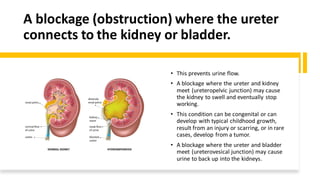
A blockage (obstruction) where the ureter
connects to the kidney or bladder.
• This prevents urine flow.
• A blockage where the ureter and kidney
meet (ureteropelvic junction) may cause
the kidney to swell and eventually stop
working.
• This condition can be congenital or can
develop with typical childhood growth,
result from an injury or scarring, or in rare
cases, develop from a tumor.
• A blockage where the ureter and bladder
meet (ureterovesical junction) may cause
urine to back up into the kidneys.
Ureterocele.
• If a ureter is too narrow and doesn't
allow urine to flow completely, a tiny
bulge in the ureter (ureterocele) may
develop.
• When a ureterocele develops, it's
usually in the section of the ureter
closest to the bladder.
• This can block urine flow and cause
urine to back up into the kidney,
possibly leading to kidney damage.
Retroperitoneal fibrosis.
• This rare disorder occurs when fibrous
tissue grows in the area behind the
abdomen.
• The fibers may grow as the result of
cancer tumors or from taking certain
medicines used to treat migraines.
• The fibers encircle and block the
ureters, causing urine to back up into
the kidneys.
Other possible
causes
Various causes intrinsic or extrinsic the ureter
can lead to ureteral obstruction, including:
• Kidney stones
• Cancerous and noncancerous tumors
• Blood clots
• Enlarged lymph nodes
• Internal tissue growth, such as
endometriosis in females
• Long-term swelling of the ureter wall, usually
due to diseases such as tuberculosis or a
parasite infection called schistosomiasis
COMPLICATIONS
• Ureteral obstructioncan lead to
urinary tract infections and kidney
damage, which can be irreversible.
Diagnosis
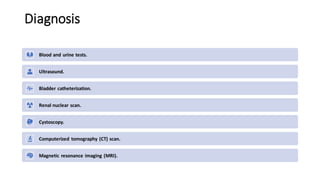
Blood and urine tests.
Ultrasound.
Bladder catheterization.
Renal nuclear scan.
Cystoscopy.
Computerized tomography (CT) scan.
Magnetic resonance imaging (MRI).
TREATMENT
The goal of ureteral obstruction
treatment is to remove blockages, if
possible, or bypass the blockage,
which may help repair damageto the
kidneys.
Treatment might include antibiotics to
clear associated infections.
Drainage
procedures
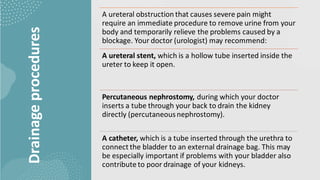
A ureteral obstruction that causes severe pain might
require an immediate procedure to remove urine from your
body and temporarily relieve the problems caused by a
blockage. Your doctor (urologist) may recommend:
A ureteral stent, which is a hollow tube inserted inside the
ureter to keep it open.
Percutaneous nephrostomy, during which your doctor
inserts a tube through your back to drain the kidney
directly (percutaneousnephrostomy).
A catheter, which is a tube inserted through the urethra to
connect the bladder to an external drainage bag. This may
be especially important if problems with your bladder also
contribute to poor drainage of your kidneys.
Surgical
procedures
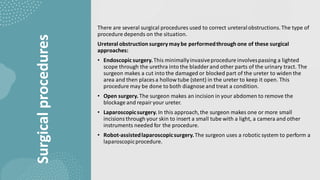
There are several surgical procedures used to correct ureteralobstructions. The type of
procedure depends on the situation.
Ureteral obstruction surgerymaybe performedthrough one of these surgical
approaches:
• Endoscopic surgery.This minimallyinvasiveprocedure involvespassing a lighted
scope through the urethra into the bladder and other parts of the urinary tract. The
surgeon makes a cut into the damaged or blocked part of the ureter to widen the
area and then places a hollow tube (stent) in the ureter to keep it open. This
procedure may be done to both diagnose and treat a condition.
• Open surgery. The surgeon makes an incision in your abdomen to remove the
blockage and repairyour ureter.
• Laparoscopicsurgery. In this approach,the surgeon makes one or more small
incisionsthrough your skin to insert a small tube with a light, a camera and other
instruments needed for the procedure.
• Robot-assistedlaparoscopicsurgery.The surgeon uses a robotic system to perform a
laparoscopicprocedure.
URETERAL OBSTRUCTION_ (blessy).pdf

URETERAL OBSTRUCTION_ (blessy).pdf

  • 1.
  • 2.
    INTRODUCTION • Urinary systemincludes the kidneys, ureters, bladder and urethra. • The urinary system removes waste from the body through urine. • The kidneys are located toward the back of the upper abdomen. • They filter waste and fluid from the blood and produce urine. • Urine moves from the kidneys through narrow tubes to the bladder. • These tubes are called the ureters. • The bladder stores urine until it's time to urinate. • Urine leaves the body through another small tube called the urethra.
  • 3.
    WHAT IS URETERALOBSTRUCTION? • A ureteral obstruction is a blockage in one or both tubes (ureters) that carry urine from the kidneys to the bladder. • Ureteral obstruction can be cured. • However, if it's not treated, symptoms can quickly move from mild — pain, fever and infection — to severe — loss of kidney function, sepsis and death. • Ureteral obstruction is common. Because its treatable, severe complications are rare.
  • 5.
    SYMPTOMS Ureteral obstructionmighthave nosigns or symptoms. Signs and symptoms depend on where the obstructionoccurs, whether it's partial or complete, how quickly it develops, and whether it affects one or both kidneys. Signs and symptoms mightinclude: • Pain • Changes in how much urine you produce (urine output) • Difficulty urinating • Blood in the urine • Urinary tract infections • High blood pressure (hypertension)
  • 6.
    CAUSES Different types ofureteral obstruction have different causes, some of them present at birth (congenital). They include: • A second (duplicated) ureter. • A blockage (obstruction) where the ureter connects to the kidney or bladder. • Ureterocele. • Retroperitoneal fibrosis.
  • 7.
    A second (duplicated)ureter. • This commoncondition, which is congenital, causes two ureters to form on the same kidney. • The second ureter can be fully or only partially developed. • If either ureter doesn't work properly, urine can back up into the kidney and cause damage.
  • 8.
    A blockage (obstruction)where the ureter connects to the kidney or bladder. • This prevents urine flow. • A blockage where the ureter and kidney meet (ureteropelvic junction) may cause the kidney to swell and eventually stop working. • This condition can be congenital or can develop with typical childhood growth, result from an injury or scarring, or in rare cases, develop from a tumor. • A blockage where the ureter and bladder meet (ureterovesical junction) may cause urine to back up into the kidneys.
  • 9.
    Ureterocele. • If aureter is too narrow and doesn't allow urine to flow completely, a tiny bulge in the ureter (ureterocele) may develop. • When a ureterocele develops, it's usually in the section of the ureter closest to the bladder. • This can block urine flow and cause urine to back up into the kidney, possibly leading to kidney damage.
  • 10.
    Retroperitoneal fibrosis. • Thisrare disorder occurs when fibrous tissue grows in the area behind the abdomen. • The fibers may grow as the result of cancer tumors or from taking certain medicines used to treat migraines. • The fibers encircle and block the ureters, causing urine to back up into the kidneys.
  • 11.
    Other possible causes Various causesintrinsic or extrinsic the ureter can lead to ureteral obstruction, including: • Kidney stones • Cancerous and noncancerous tumors • Blood clots • Enlarged lymph nodes • Internal tissue growth, such as endometriosis in females • Long-term swelling of the ureter wall, usually due to diseases such as tuberculosis or a parasite infection called schistosomiasis
  • 12.
    COMPLICATIONS • Ureteral obstructioncanlead to urinary tract infections and kidney damage, which can be irreversible.
  • 13.
    Diagnosis Blood and urinetests. Ultrasound. Bladder catheterization. Renal nuclear scan. Cystoscopy. Computerized tomography (CT) scan. Magnetic resonance imaging (MRI).
  • 14.
    TREATMENT The goal ofureteral obstruction treatment is to remove blockages, if possible, or bypass the blockage, which may help repair damageto the kidneys. Treatment might include antibiotics to clear associated infections.
  • 15.
    Drainage procedures A ureteral obstructionthat causes severe pain might require an immediate procedure to remove urine from your body and temporarily relieve the problems caused by a blockage. Your doctor (urologist) may recommend: A ureteral stent, which is a hollow tube inserted inside the ureter to keep it open. Percutaneous nephrostomy, during which your doctor inserts a tube through your back to drain the kidney directly (percutaneousnephrostomy). A catheter, which is a tube inserted through the urethra to connect the bladder to an external drainage bag. This may be especially important if problems with your bladder also contribute to poor drainage of your kidneys.
  • 16.
    Surgical procedures There are severalsurgical procedures used to correct ureteralobstructions. The type of procedure depends on the situation. Ureteral obstruction surgerymaybe performedthrough one of these surgical approaches: • Endoscopic surgery.This minimallyinvasiveprocedure involvespassing a lighted scope through the urethra into the bladder and other parts of the urinary tract. The surgeon makes a cut into the damaged or blocked part of the ureter to widen the area and then places a hollow tube (stent) in the ureter to keep it open. This procedure may be done to both diagnose and treat a condition. • Open surgery. The surgeon makes an incision in your abdomen to remove the blockage and repairyour ureter. • Laparoscopicsurgery. In this approach,the surgeon makes one or more small incisionsthrough your skin to insert a small tube with a light, a camera and other instruments needed for the procedure. • Robot-assistedlaparoscopicsurgery.The surgeon uses a robotic system to perform a laparoscopicprocedure.