Unlocking the Value of Information in SharePoint- in a Manageable Way Intergen Twilight 28 July 2010Steve LapwoodSenior Management Consultant
SharePoint use – a QUIZ!What is your experience of finding information?How many sites are there?  And how many in frequent use? How are sites set up? What happens when sites “fade”?Who decides and sets up libraries? Who decides and sets up content types?What is wrong with this picture?Who in the room uses SharePoint?  What for?Who administers the sites? What guidelines are there for storing content in sites?How widespread is SharePoint in your organisation?
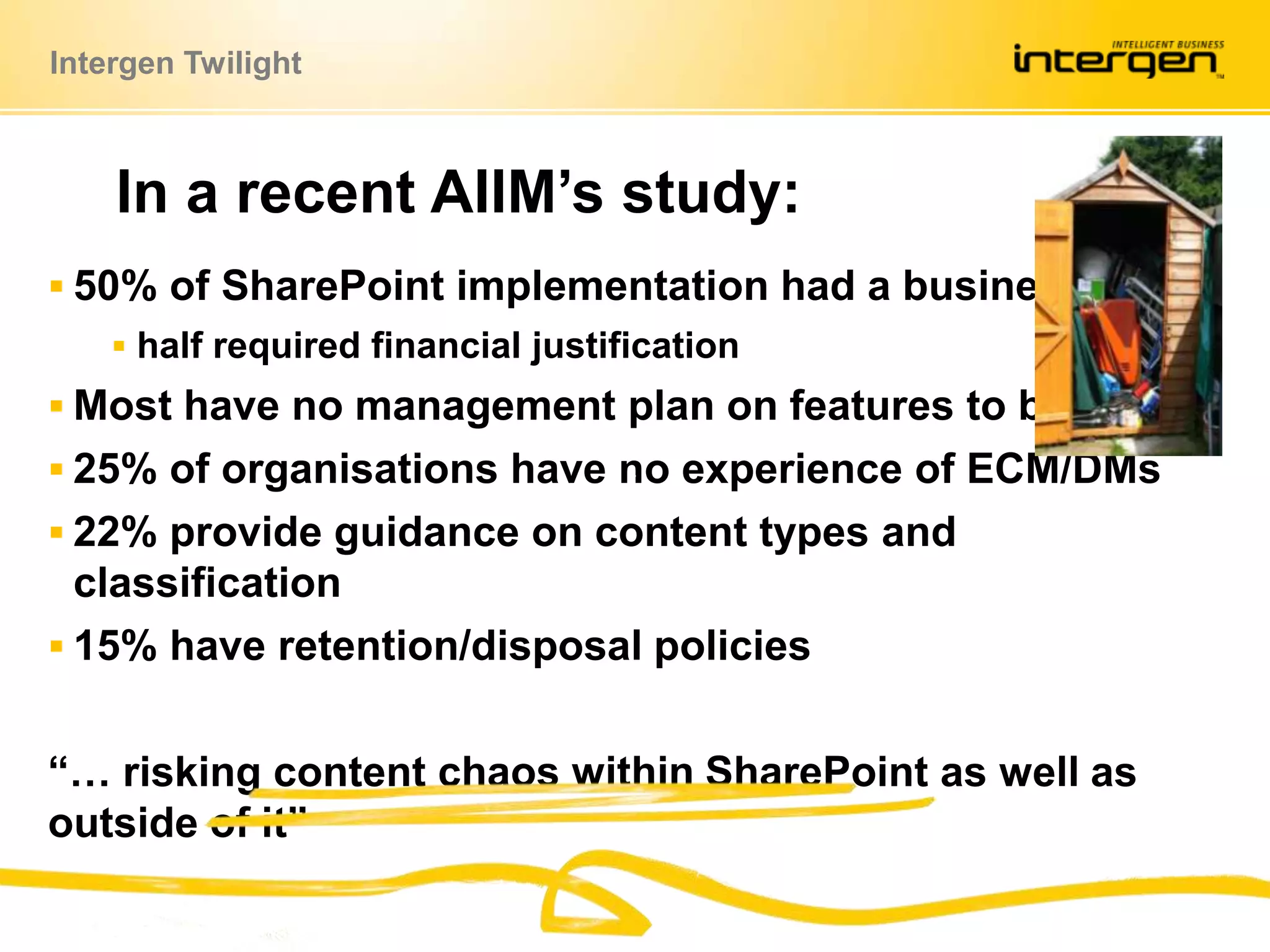
50% of SharePoint implementation had a business casehalf required financial justificationMost have no management plan on features to be used25% of organisations have no experience of ECM/DMs22% provide guidance on content types and classification15% have retention/disposal policies“… risking content chaos within SharePoint as well as outside of it”    In a recent AIIM’s study:
Governance in a SharePoint Context
The case for governanceThe correct balanceLevels of governanceGovernance structureGuiding PrinciplesGovernance FrameworkRoles and responsibilitiesQ&ATopics
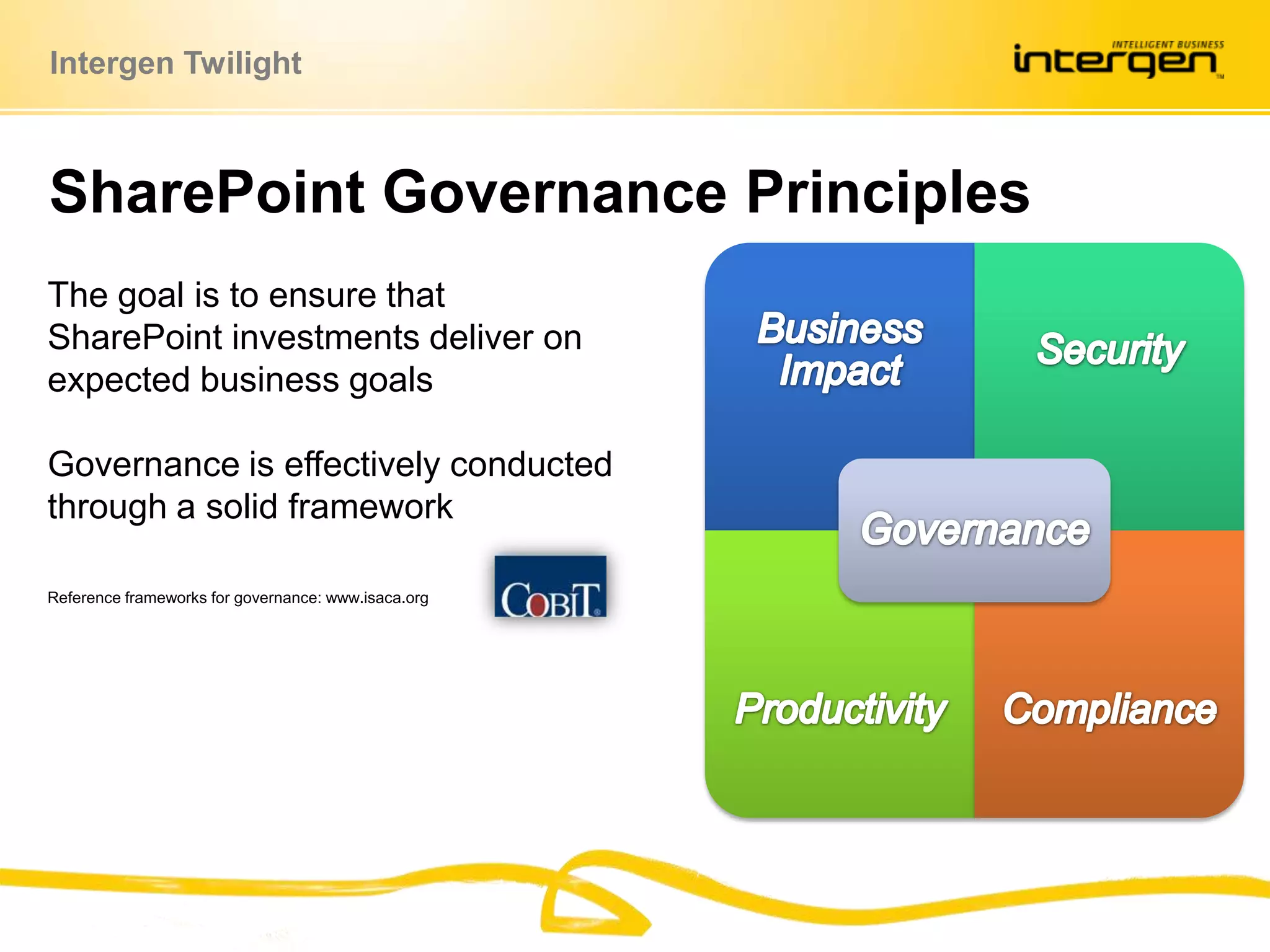
SharePoint Governance PrinciplesThe goal is to ensure that SharePoint investments deliver on expected business goalsGovernance is effectively conducted through a solid frameworkReference frameworks for governance: www.isaca.org
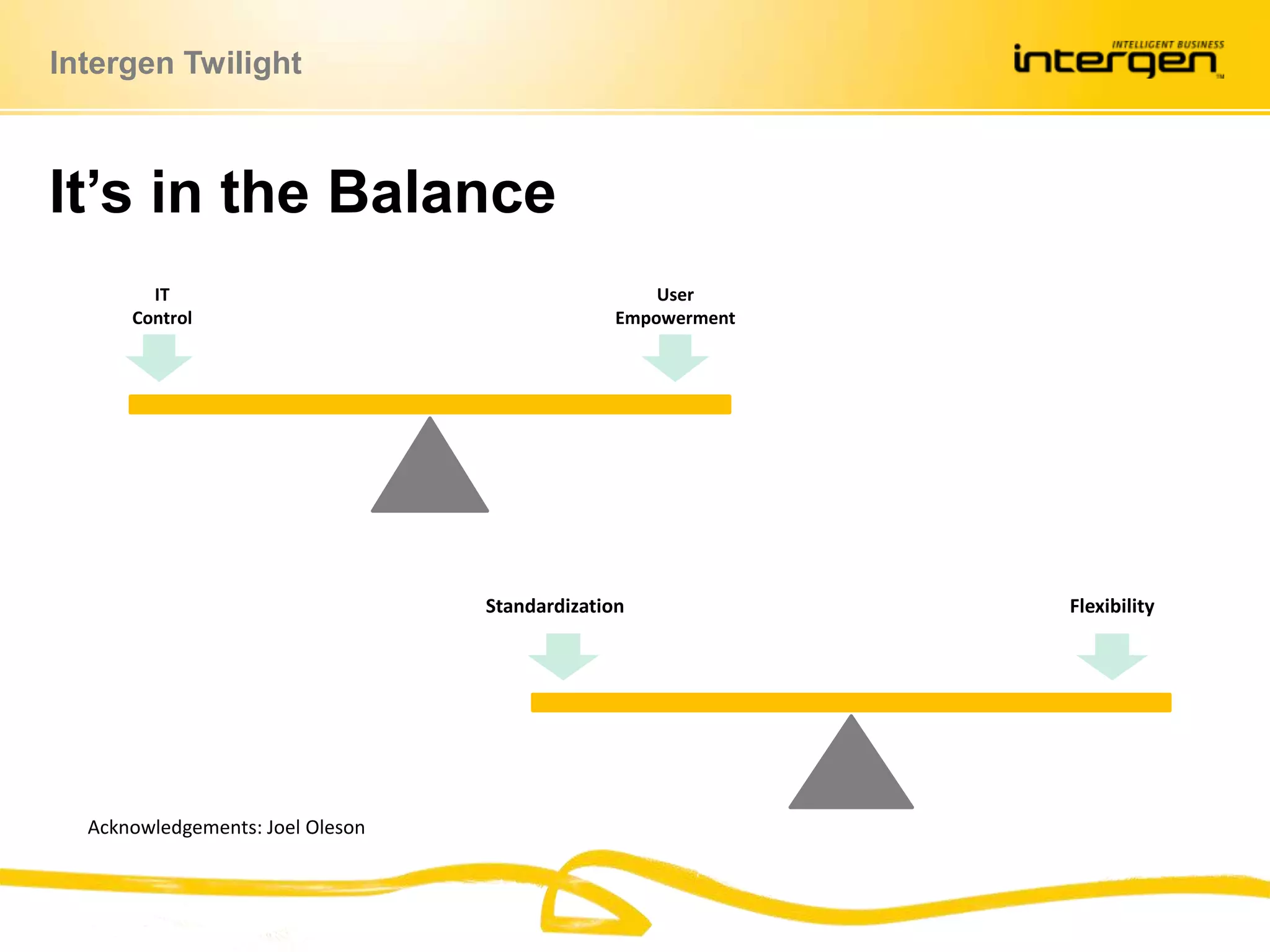
It’s in the BalanceUserEmpowermentITControlStandardizationFlexibilityAcknowledgements: Joel Oleson
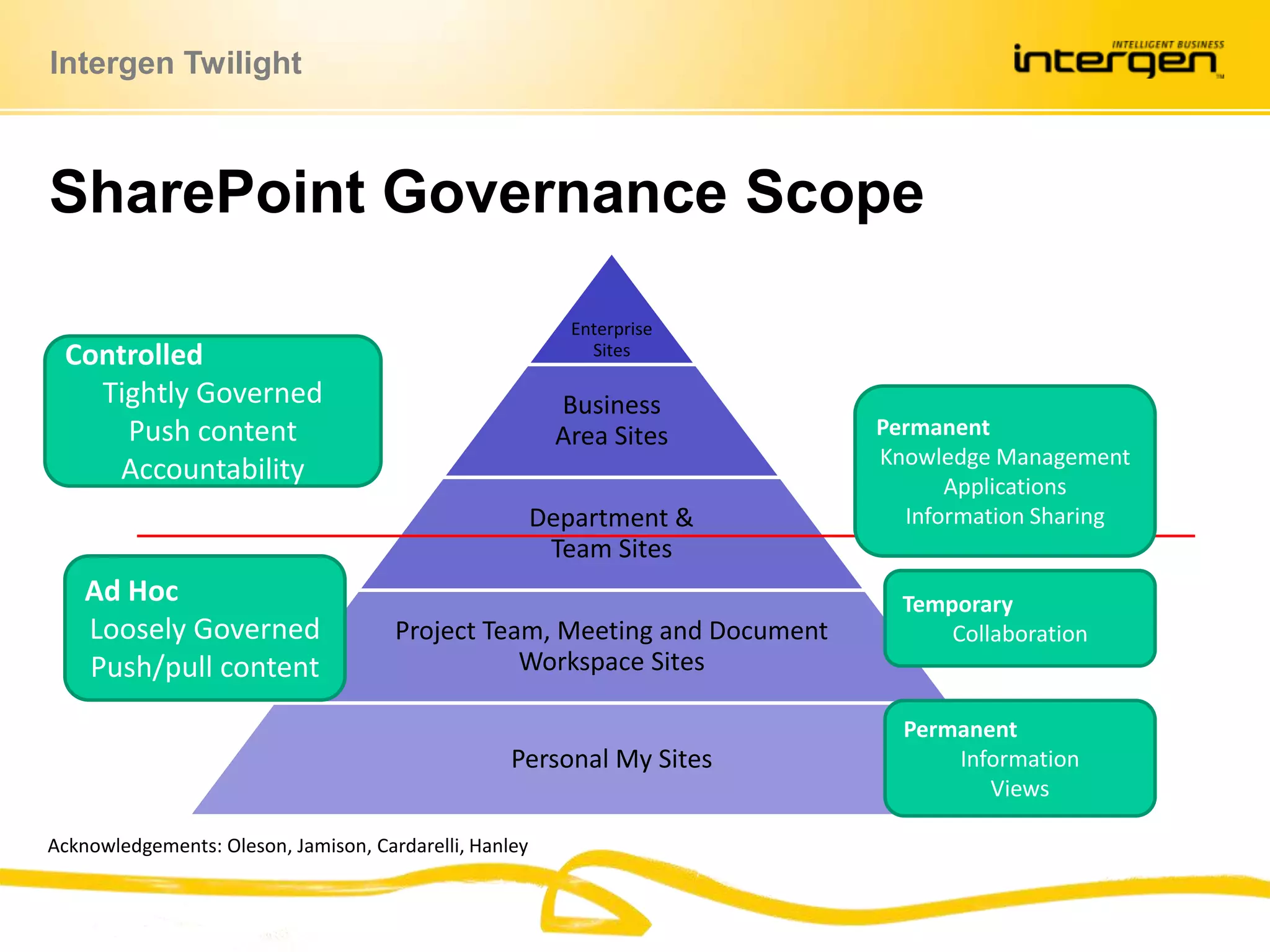
SharePoint Governance ScopeControlledTightly GovernedPush contentAccountabilityPermanentKnowledge ManagementApplicationsInformation SharingAd HocLoosely GovernedPush/pull contentTemporaryCollaborationPermanentInformationViewsAcknowledgements: Oleson, Jamison, Cardarelli, Hanley
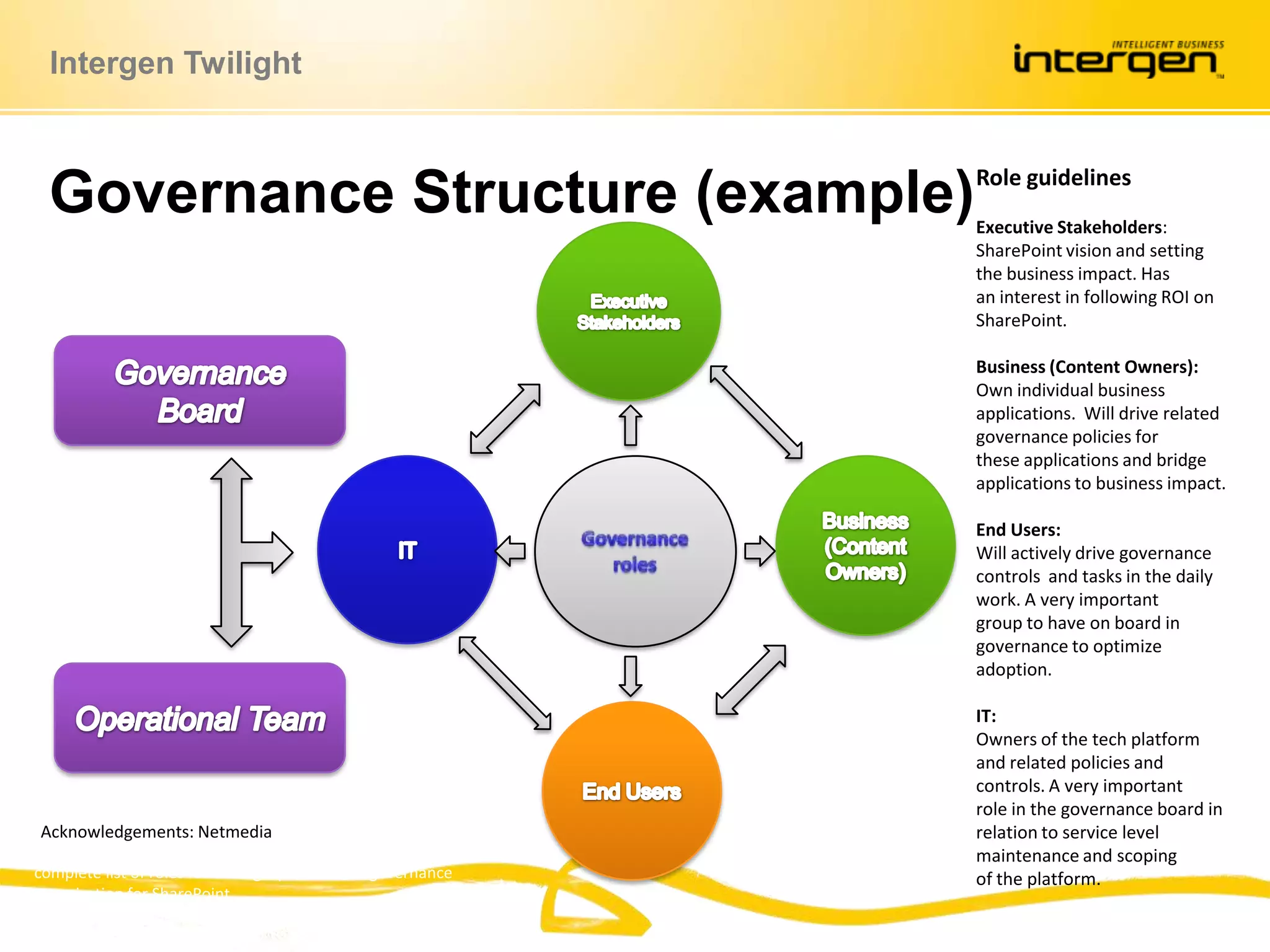
Role guidelinesExecutive Stakeholders:SharePoint vision and setting the business impact. Hasan interest in following ROI on SharePoint.Business (Content Owners):Own individual business applications.  Will drive related governance policies forthese applications and bridge applications to business impact.End Users:Will actively drive governance controls  and tasks in the daily work. A very importantgroup to have on board in governance to optimize adoption.IT:Owners of the tech platform and related policies and controls. A very importantrole in the governance board in relation to service level maintenance and scopingof the platform.Executive StakeholdersGovernance BoardITBusiness(Content Owners)GovernancerolesOperational TeamEnd UsersComplete Role GuideThe SharePoint Governance Framework includes a complete list of roles for driving a professional governance organization for SharePointGovernance Structure (example)Acknowledgements: Netmedia
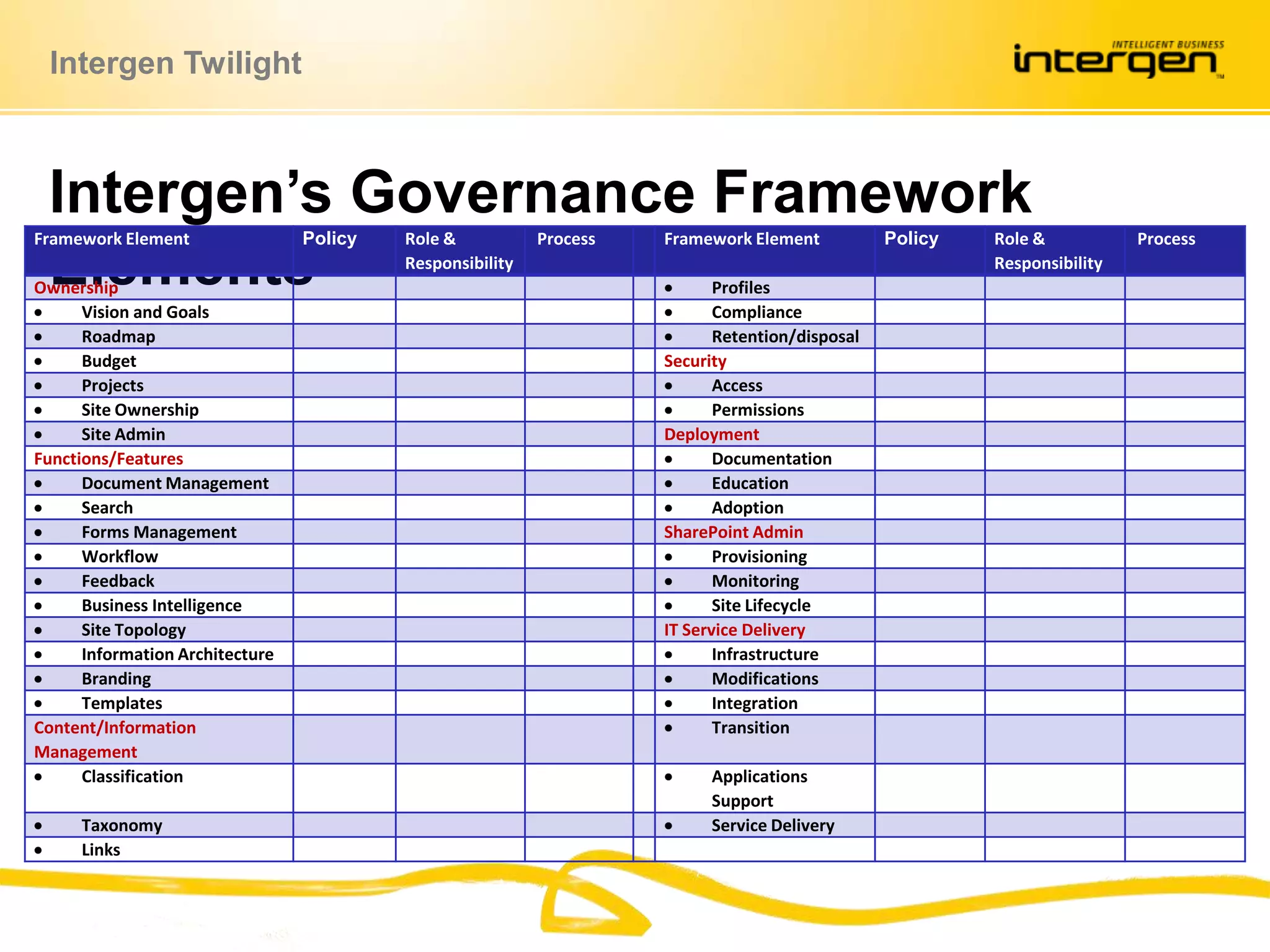
Intergen’s Governance Framework
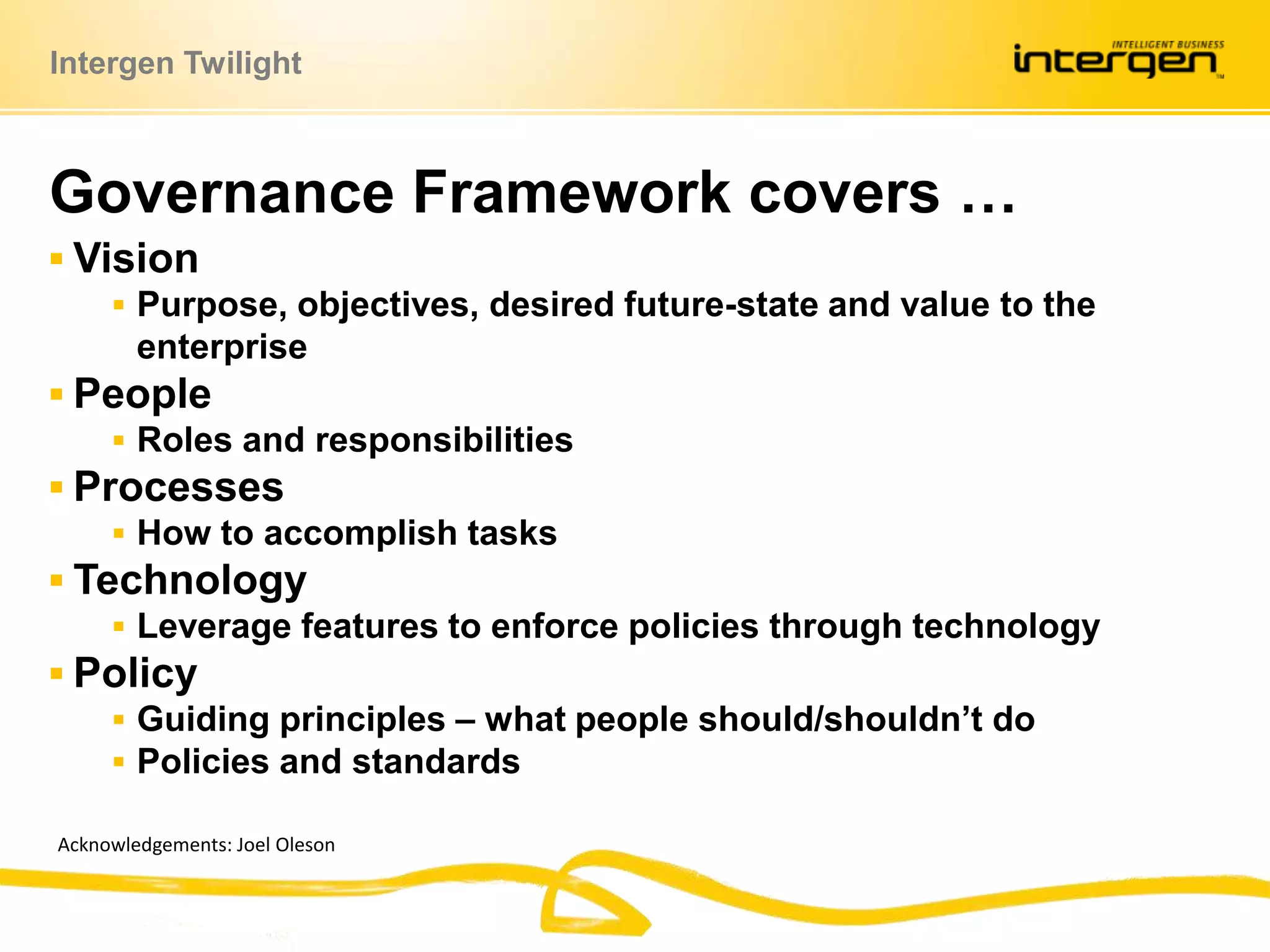
VisionPurpose, objectives, desired future-state and value to the enterprisePeopleRoles and responsibilitiesProcessesHow to accomplish tasksTechnologyLeverage features to enforce policies through technologyPolicyGuiding principles – what people should/shouldn’t doPolicies and standardsGovernance Framework covers …Acknowledgements: Joel Oleson
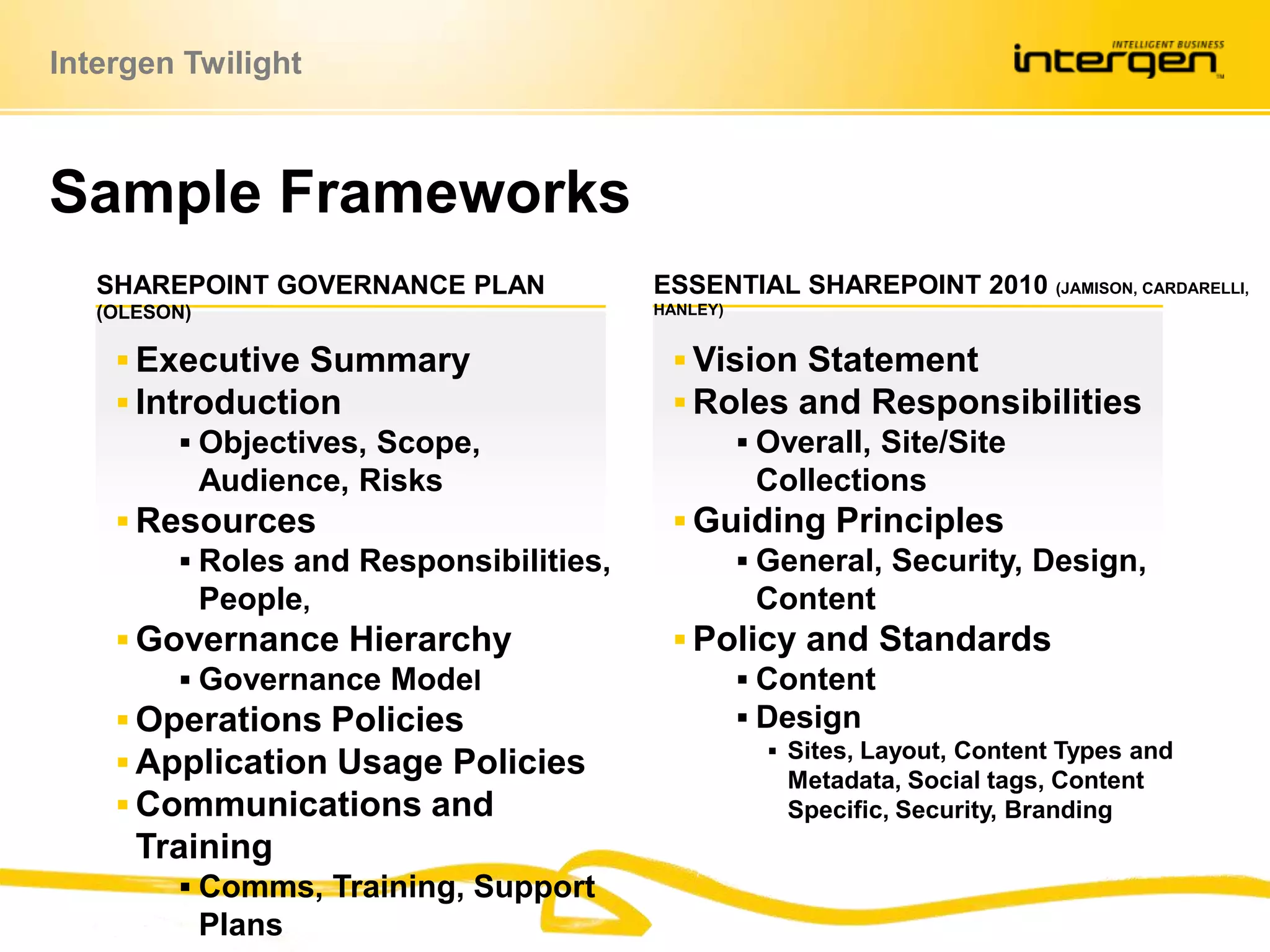
SharePoint Governance plan (Oleson)Sample FrameworksEssential SharePoint 2010 (Jamison, cardarelli, Hanley)Vision StatementRoles and ResponsibilitiesOverall, Site/Site CollectionsGuiding PrinciplesGeneral, Security, Design, ContentPolicy and StandardsContentDesignSites, Layout, Content Types and Metadata, Social tags, Content Specific, Security, BrandingExecutive SummaryIntroductionObjectives, Scope, Audience, RisksResourcesRoles and Responsibilities, People,Governance HierarchyGovernance ModelOperations PoliciesApplication Usage PoliciesCommunications and TrainingComms, Training, Support Plans
Intergen’s Governance Framework Elements
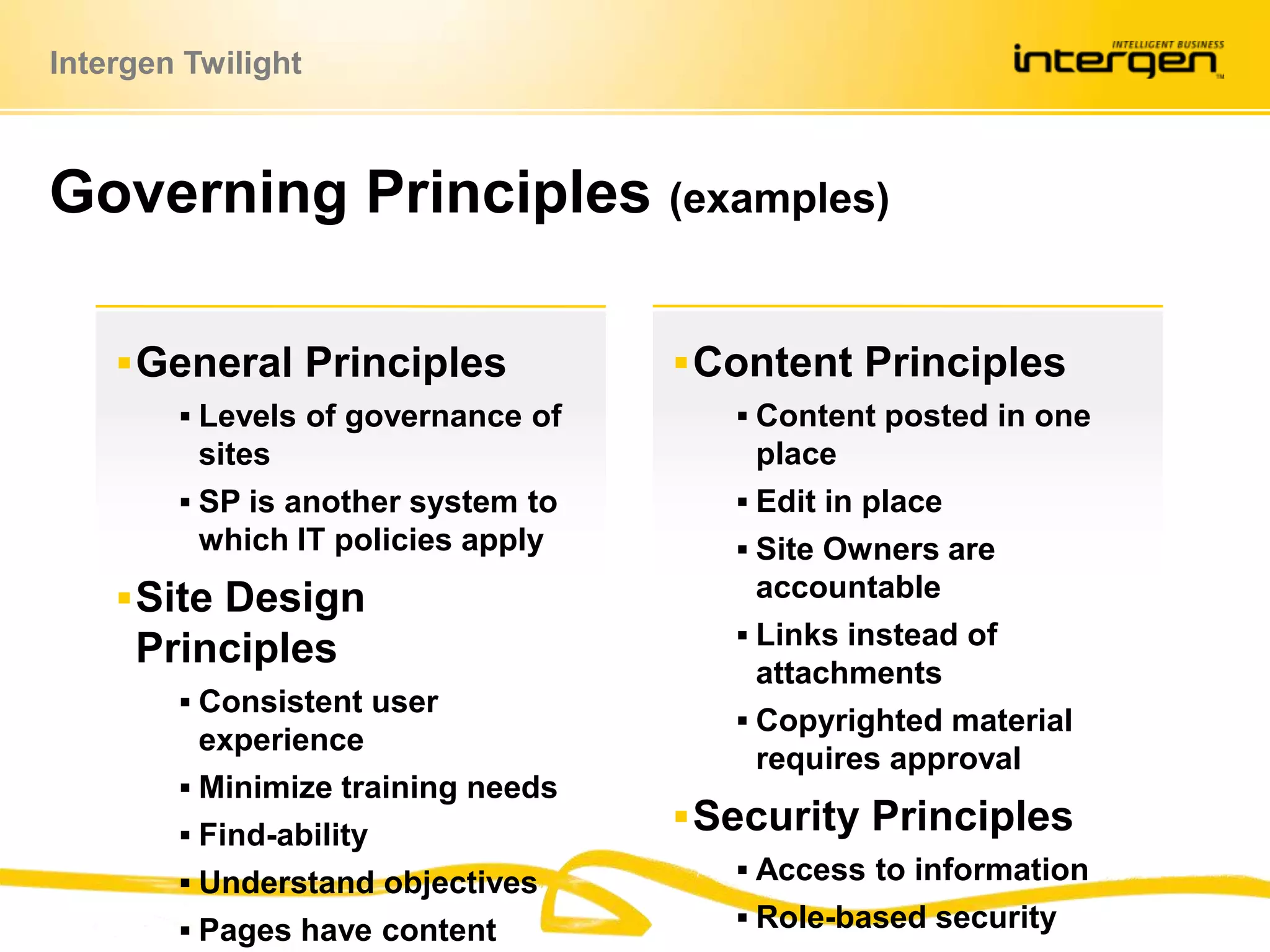
Governing Principles (examples)Content PrinciplesContent posted in one placeEdit in placeSite Owners are accountableLinks instead of attachmentsCopyrighted material requires approvalSecurity PrinciplesAccess to informationRole-based securityGeneral PrinciplesLevels of governance of sitesSP is another system to which IT policies applySite Design PrinciplesConsistent user experienceMinimize training needsFind-abilityUnderstand objectivesPages have content owners
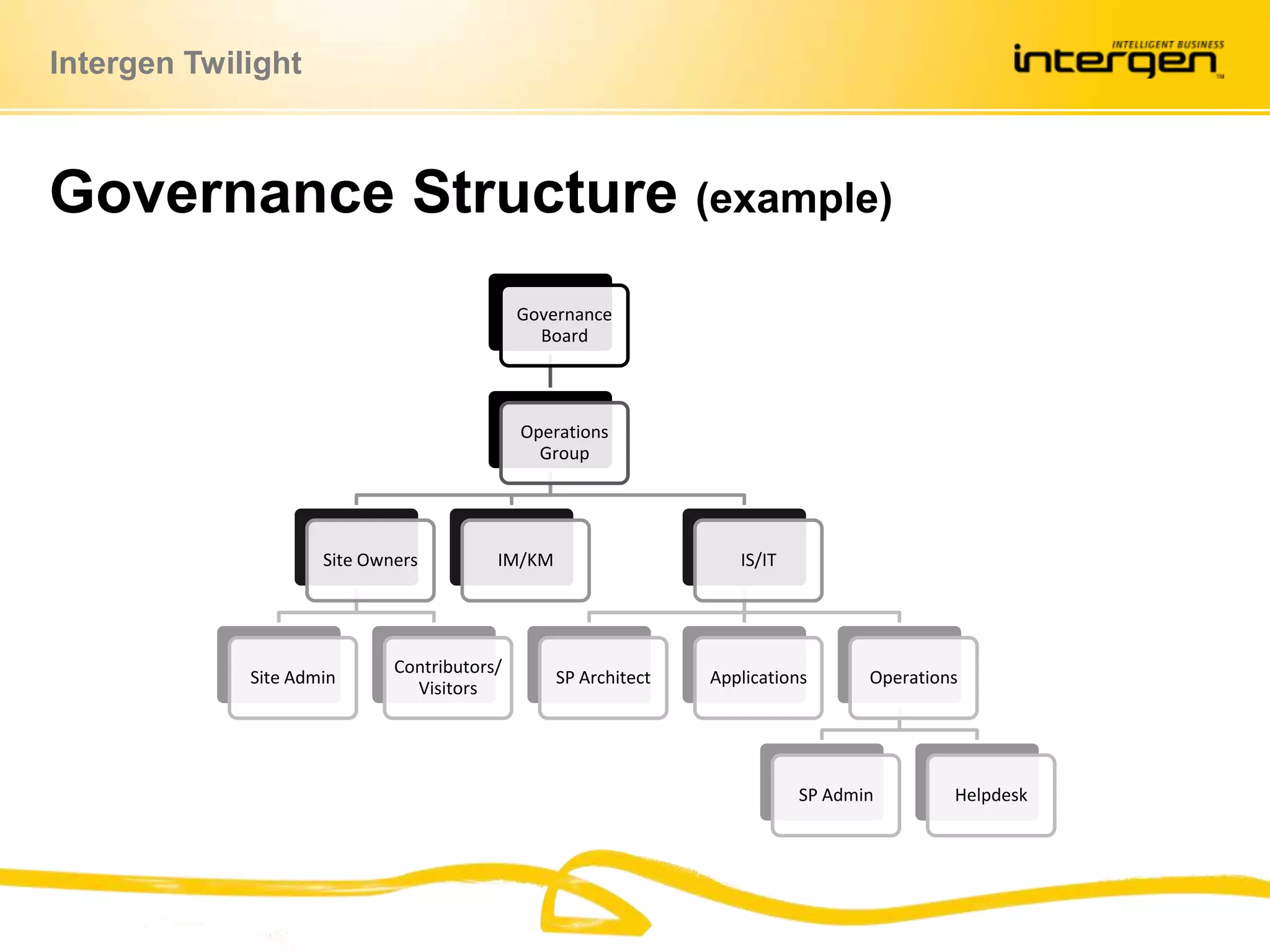
Governance Structure (example)
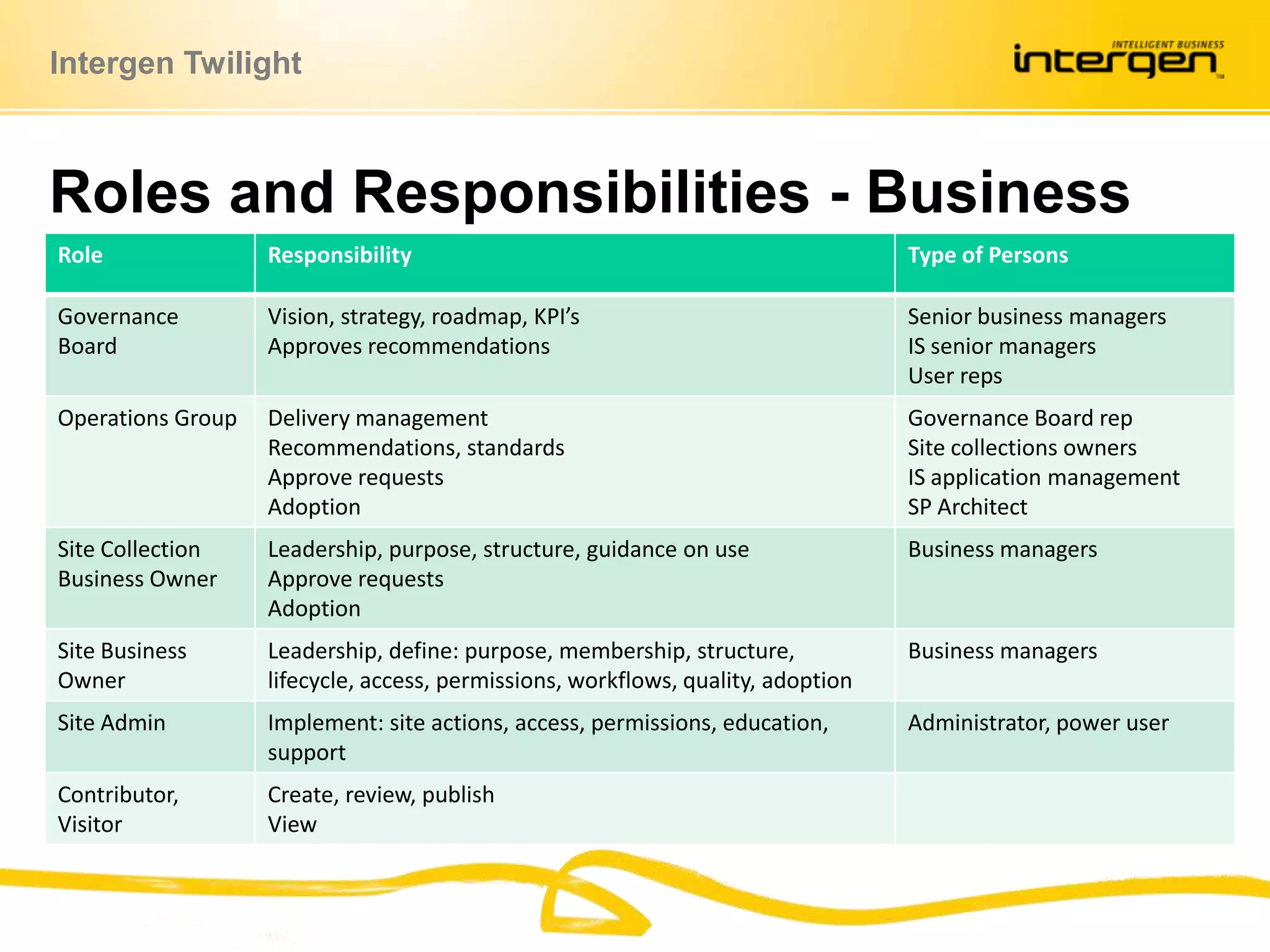
Roles and Responsibilities - Business
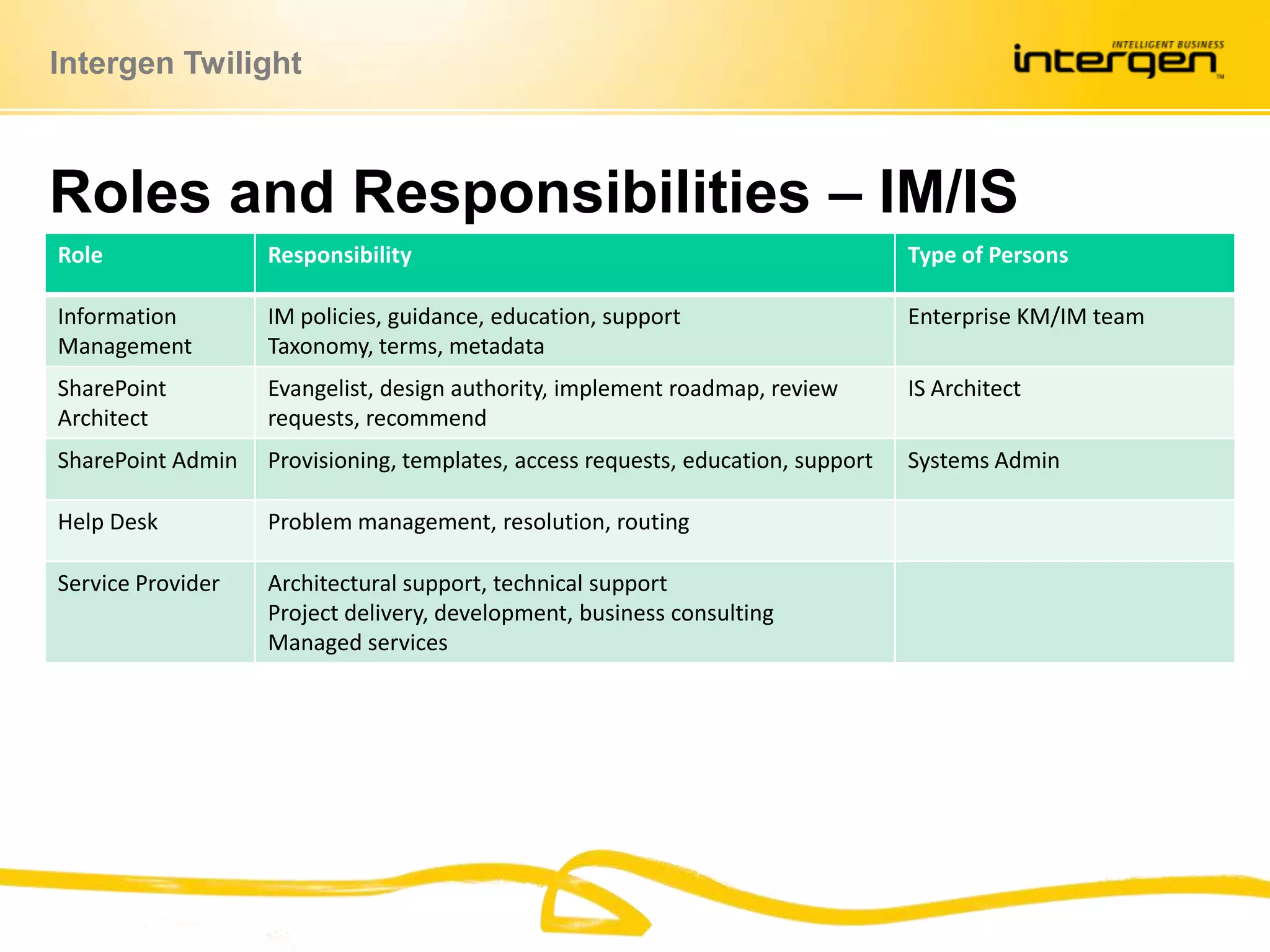
Roles and Responsibilities – IM/IS Services
This is a taste of what you may need …and we can help you get there
Questions and Answerssteve.lapwood@intergen.co.nz
Unlocking the Value of your Information

Unlocking the Value of your Information

  • 1.
    Unlocking the Valueof Information in SharePoint- in a Manageable Way Intergen Twilight 28 July 2010Steve LapwoodSenior Management Consultant
  • 2.
    SharePoint use –a QUIZ!What is your experience of finding information?How many sites are there? And how many in frequent use? How are sites set up? What happens when sites “fade”?Who decides and sets up libraries? Who decides and sets up content types?What is wrong with this picture?Who in the room uses SharePoint? What for?Who administers the sites? What guidelines are there for storing content in sites?How widespread is SharePoint in your organisation?
  • 3.
    50% of SharePointimplementation had a business casehalf required financial justificationMost have no management plan on features to be used25% of organisations have no experience of ECM/DMs22% provide guidance on content types and classification15% have retention/disposal policies“… risking content chaos within SharePoint as well as outside of it” In a recent AIIM’s study:
  • 4.
    Governance in aSharePoint Context
  • 5.
    The case forgovernanceThe correct balanceLevels of governanceGovernance structureGuiding PrinciplesGovernance FrameworkRoles and responsibilitiesQ&ATopics
  • 6.
    SharePoint Governance PrinciplesThegoal is to ensure that SharePoint investments deliver on expected business goalsGovernance is effectively conducted through a solid frameworkReference frameworks for governance: www.isaca.org
  • 7.
    It’s in theBalanceUserEmpowermentITControlStandardizationFlexibilityAcknowledgements: Joel Oleson
  • 8.
    SharePoint Governance ScopeControlledTightlyGovernedPush contentAccountabilityPermanentKnowledge ManagementApplicationsInformation SharingAd HocLoosely GovernedPush/pull contentTemporaryCollaborationPermanentInformationViewsAcknowledgements: Oleson, Jamison, Cardarelli, Hanley
  • 9.
    Role guidelinesExecutive Stakeholders:SharePointvision and setting the business impact. Hasan interest in following ROI on SharePoint.Business (Content Owners):Own individual business applications. Will drive related governance policies forthese applications and bridge applications to business impact.End Users:Will actively drive governance controls and tasks in the daily work. A very importantgroup to have on board in governance to optimize adoption.IT:Owners of the tech platform and related policies and controls. A very importantrole in the governance board in relation to service level maintenance and scopingof the platform.Executive StakeholdersGovernance BoardITBusiness(Content Owners)GovernancerolesOperational TeamEnd UsersComplete Role GuideThe SharePoint Governance Framework includes a complete list of roles for driving a professional governance organization for SharePointGovernance Structure (example)Acknowledgements: Netmedia
  • 10.
  • 11.
    VisionPurpose, objectives, desiredfuture-state and value to the enterprisePeopleRoles and responsibilitiesProcessesHow to accomplish tasksTechnologyLeverage features to enforce policies through technologyPolicyGuiding principles – what people should/shouldn’t doPolicies and standardsGovernance Framework covers …Acknowledgements: Joel Oleson
  • 12.
    SharePoint Governance plan(Oleson)Sample FrameworksEssential SharePoint 2010 (Jamison, cardarelli, Hanley)Vision StatementRoles and ResponsibilitiesOverall, Site/Site CollectionsGuiding PrinciplesGeneral, Security, Design, ContentPolicy and StandardsContentDesignSites, Layout, Content Types and Metadata, Social tags, Content Specific, Security, BrandingExecutive SummaryIntroductionObjectives, Scope, Audience, RisksResourcesRoles and Responsibilities, People,Governance HierarchyGovernance ModelOperations PoliciesApplication Usage PoliciesCommunications and TrainingComms, Training, Support Plans
  • 13.
  • 14.
    Governing Principles (examples)ContentPrinciplesContent posted in one placeEdit in placeSite Owners are accountableLinks instead of attachmentsCopyrighted material requires approvalSecurity PrinciplesAccess to informationRole-based securityGeneral PrinciplesLevels of governance of sitesSP is another system to which IT policies applySite Design PrinciplesConsistent user experienceMinimize training needsFind-abilityUnderstand objectivesPages have content owners
  • 15.
  • 16.
  • 17.
    Roles and Responsibilities– IM/IS Services
  • 18.
    This is ataste of what you may need …and we can help you get there
  • 19.