
Putting the “I” in CI: A Librarian’s Introduction to Competitive Intelligence Bianca Lipscomb
Methodology Barbara Ferry, Director of Business Research
Methodology Comparative Research: CI vs. LIS-CI
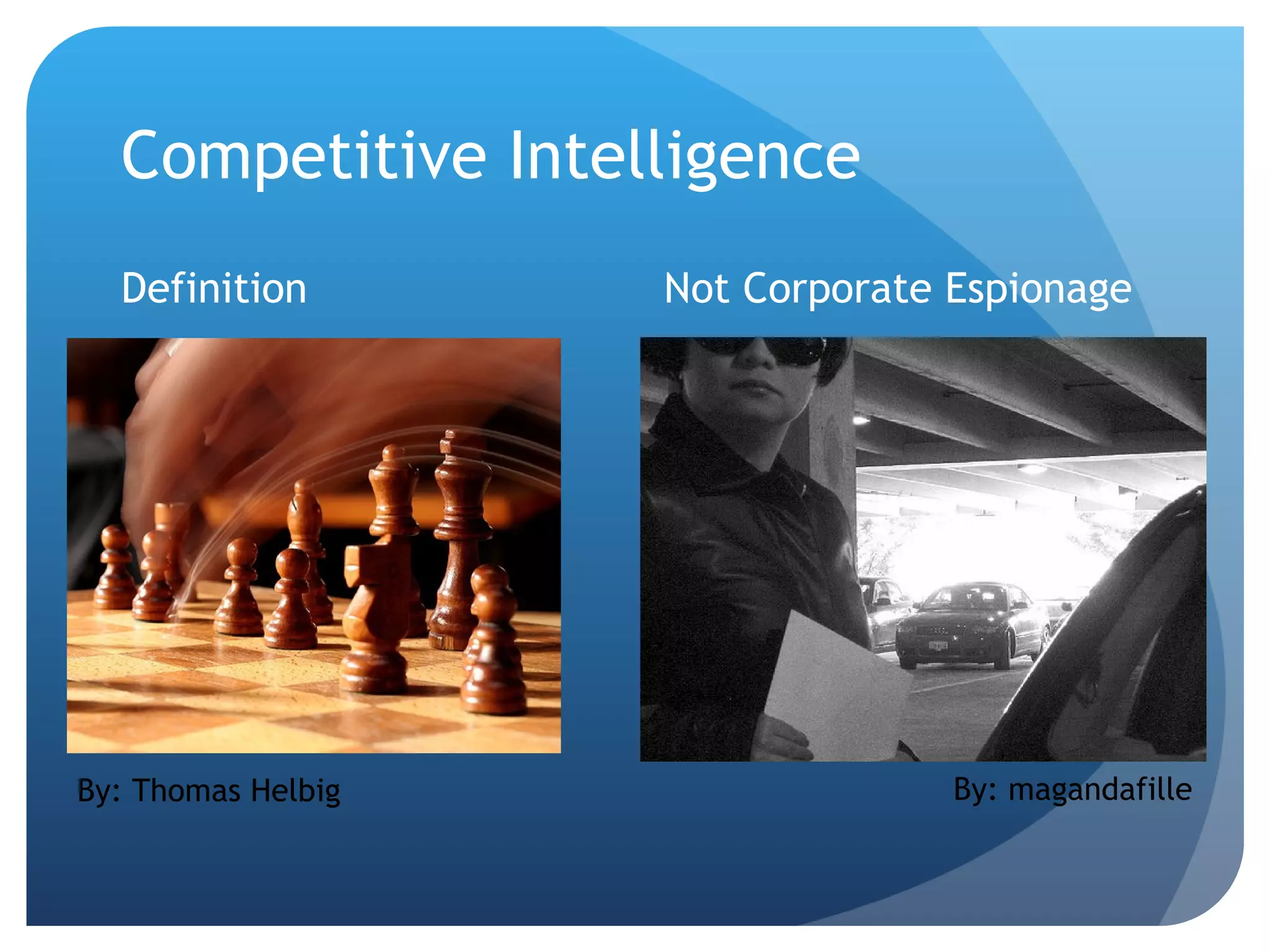
Competitive Intelligence Definition Not Corporate Espionage By: magandafille By: Thomas Helbig
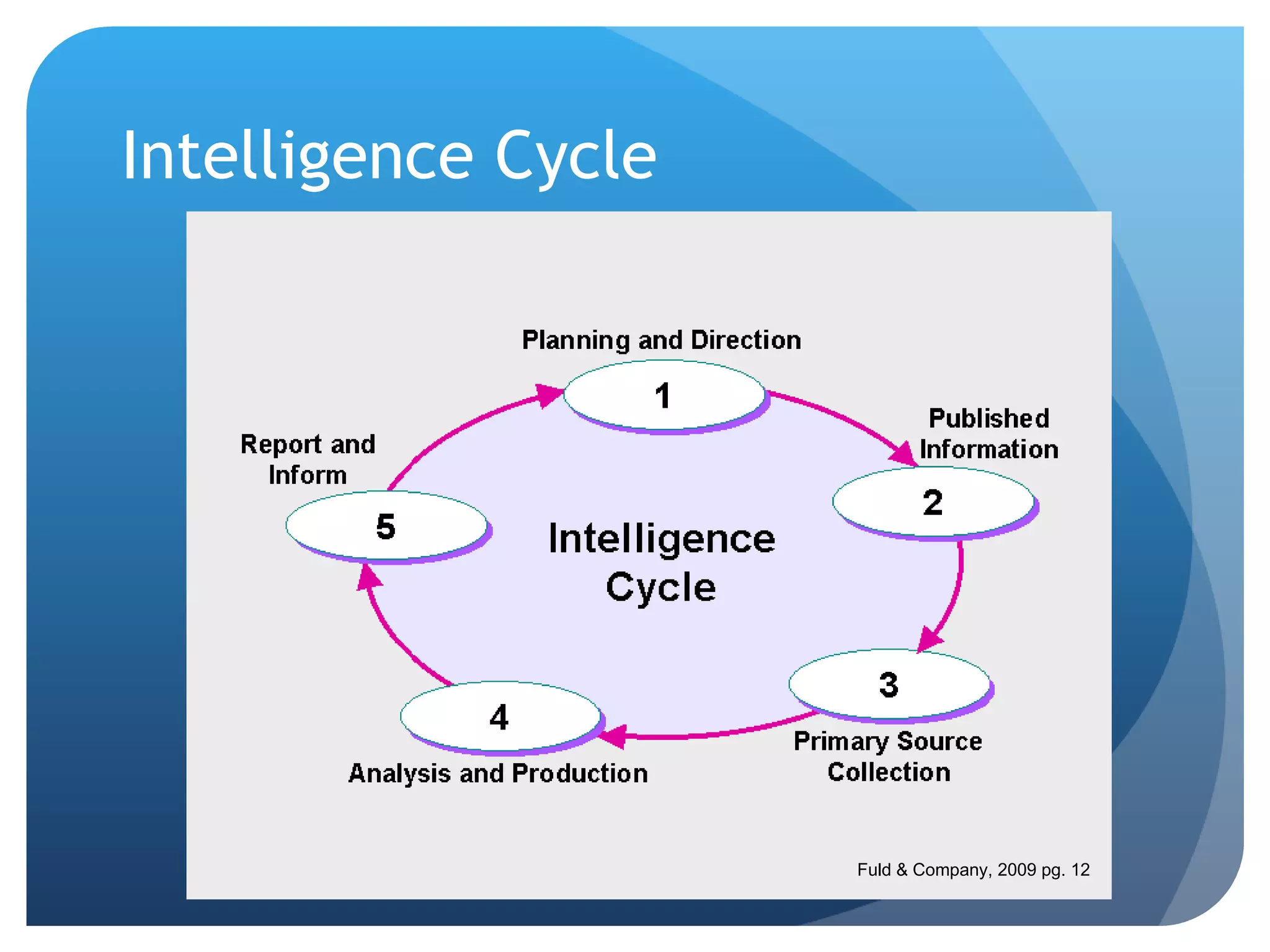
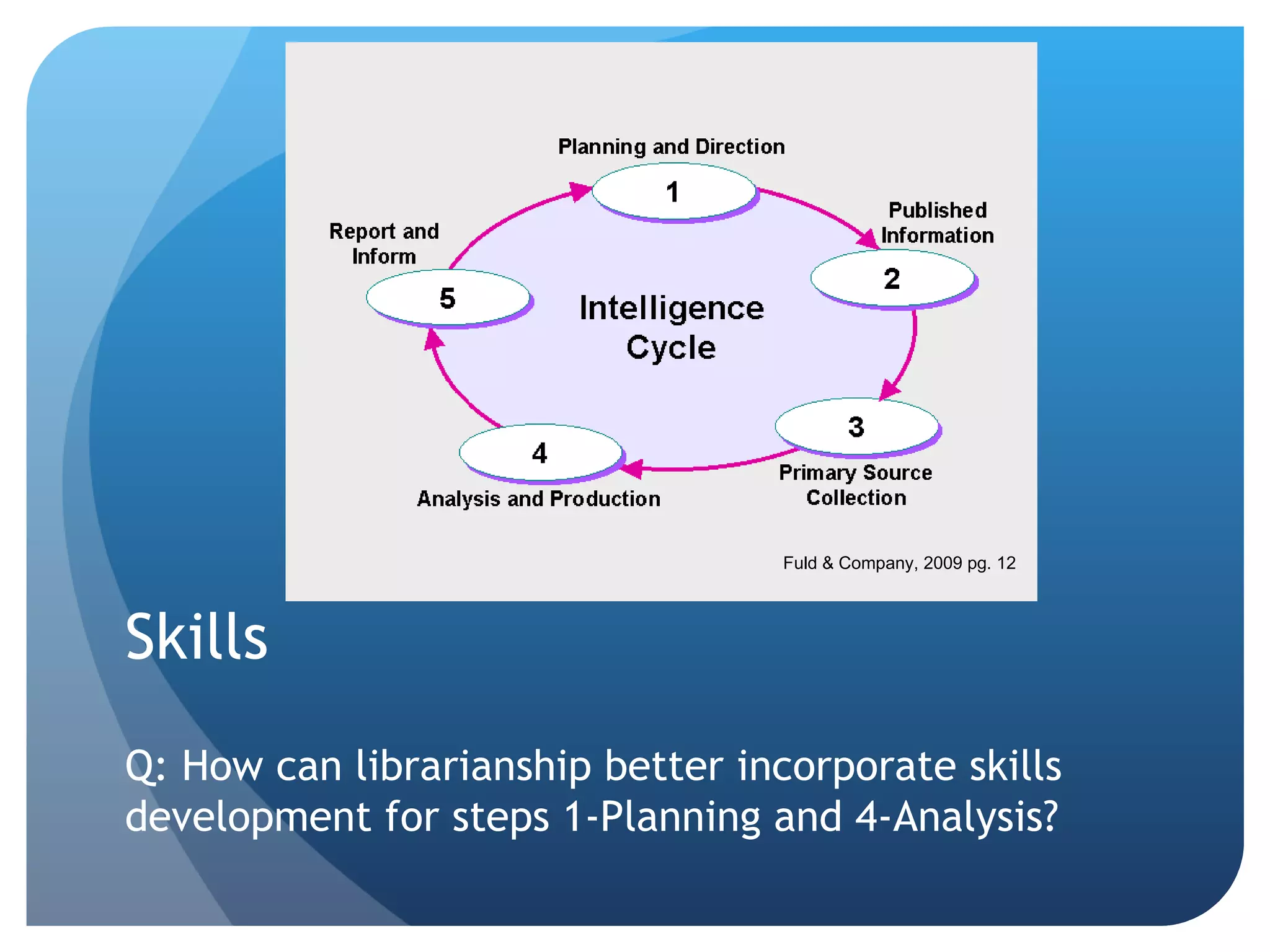
Intelligence Cycle Fuld & Company, 2009 pg. 12
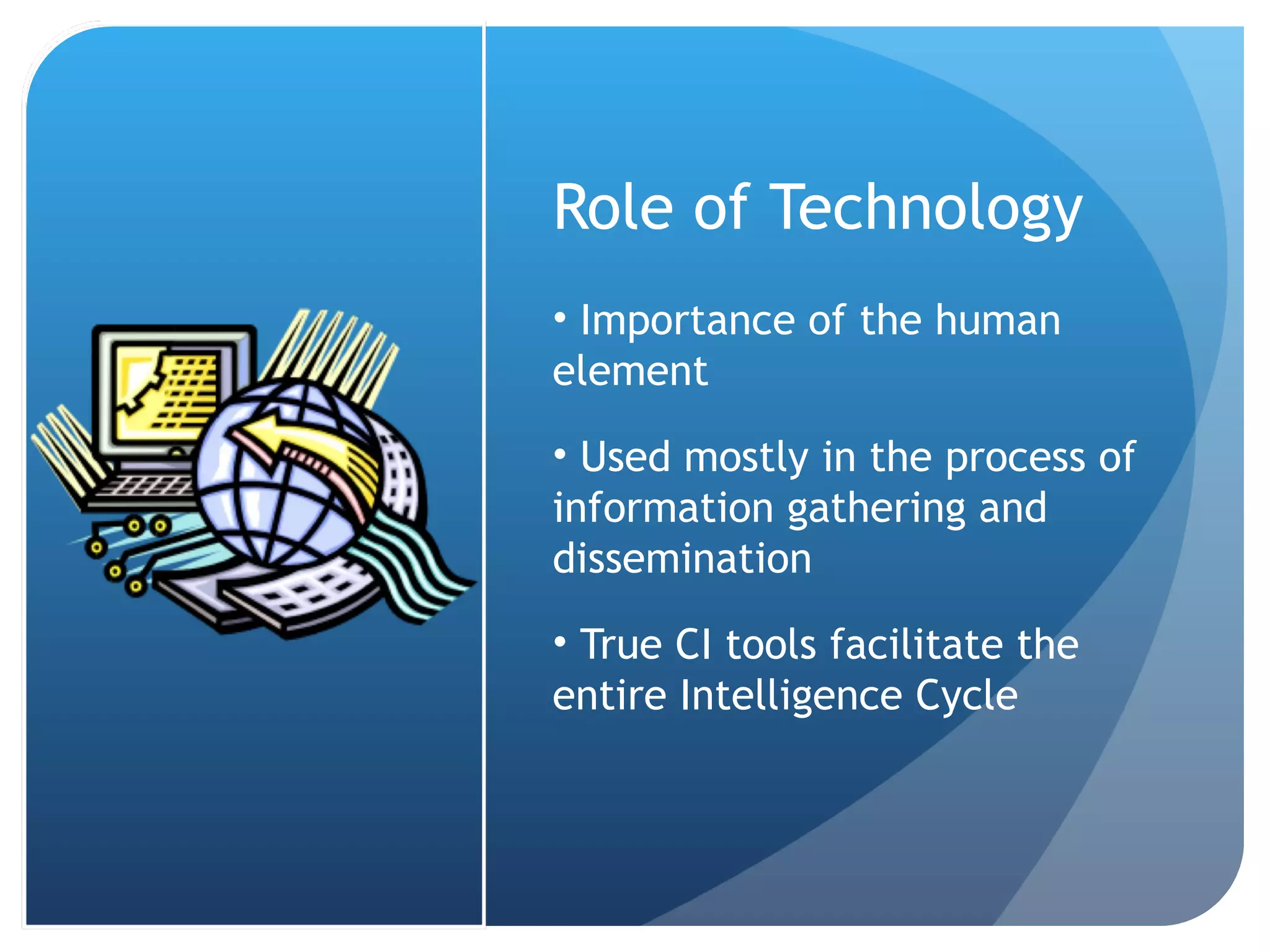
Role of Technology Importance of the human element Used mostly in the process of information gathering and dissemination True CI tools facilitate the entire Intelligence Cycle
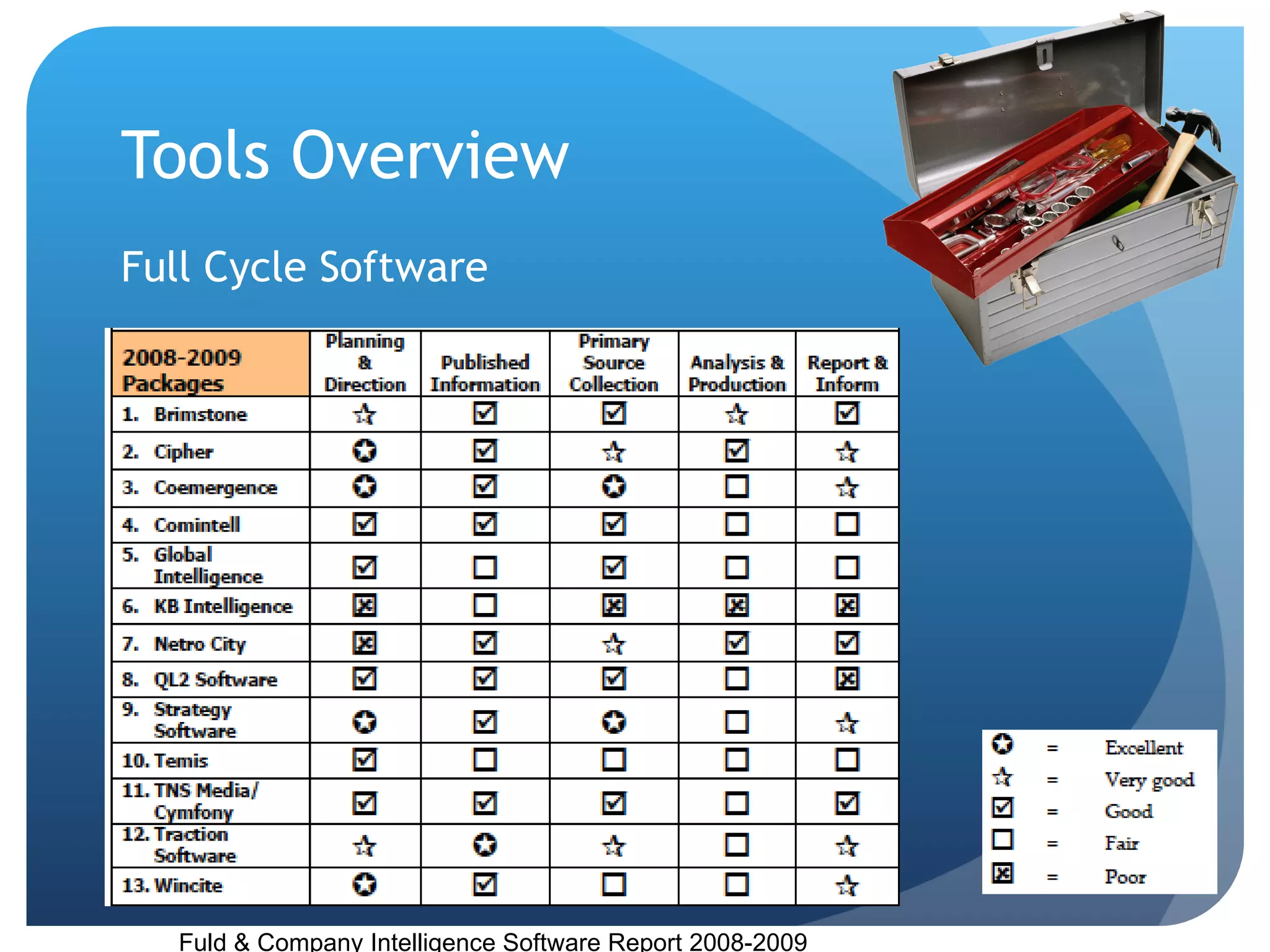
Tools Overview Full Cycle Software Fuld & Company Intelligence Software Report 2008-2009
From: http://www.wordle.net/
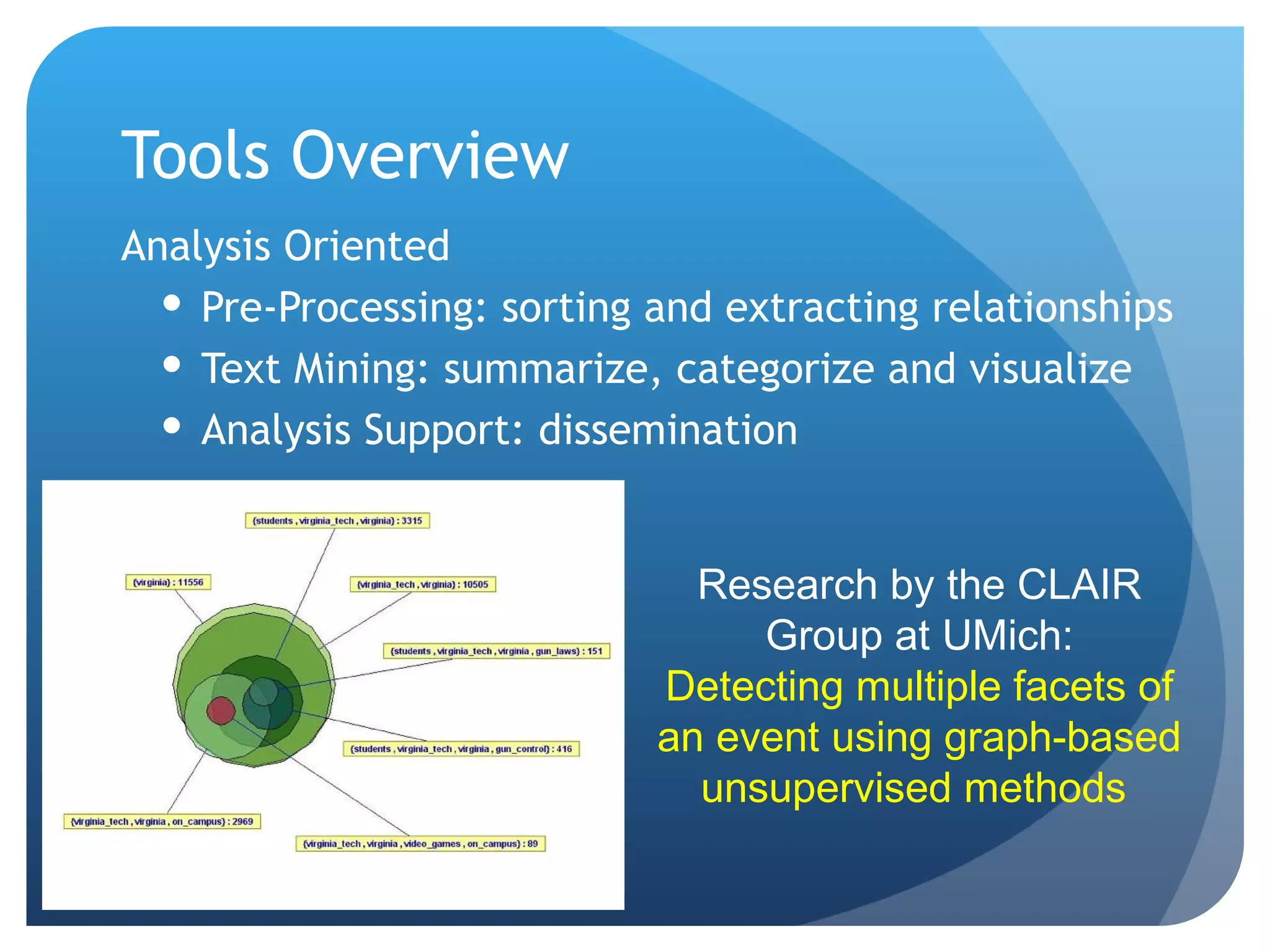
Tools Overview Analysis Oriented Pre-Processing: sorting and extracting relationships Text Mining: summarize, categorize and visualize Analysis Support: dissemination Research by the CLAIR Group at UMich: Detecting multiple facets of an event using graph-based unsupervised methods
Critique of LIS approach: Information gathering and dissemination are emphasized over planning and analysis In order for LIS professionals to be true CI operatives they must have training in or exposure to business administration
Knowledge Management Competitive Intelligence =  Business Intelligence
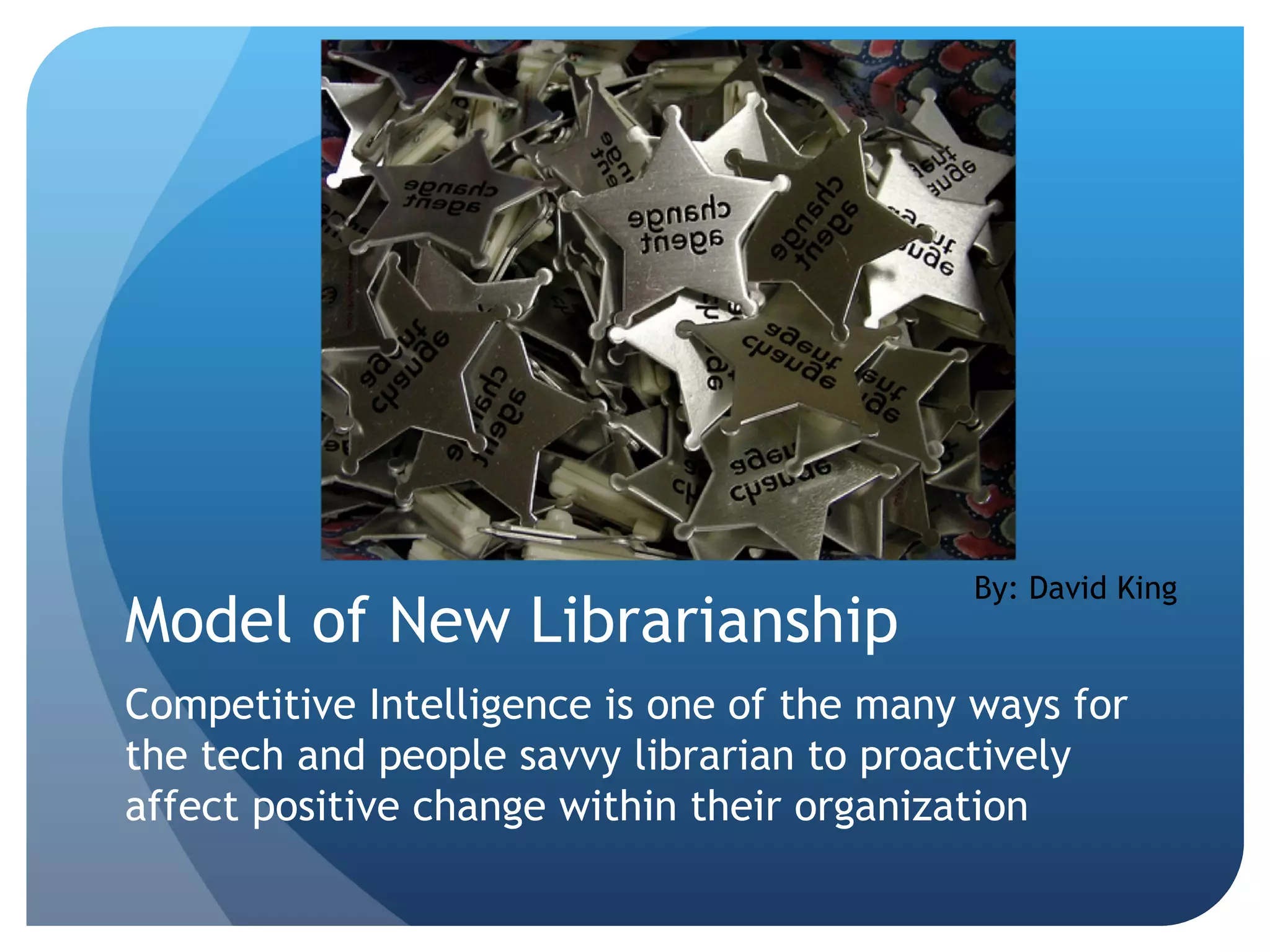
Model of New Librarianship Competitive Intelligence is one of the many ways for the tech and people savvy librarian to proactively affect positive change within their organization By: David King
Skills Knowledge of Information Sources and Research Methods Proficient with new technologies Disseminating Information Connecting People and Ideas
Skills Q: How can librarianship better incorporate skills development for steps 1-Planning and 4-Analysis?  Fuld & Company, 2009 pg. 12
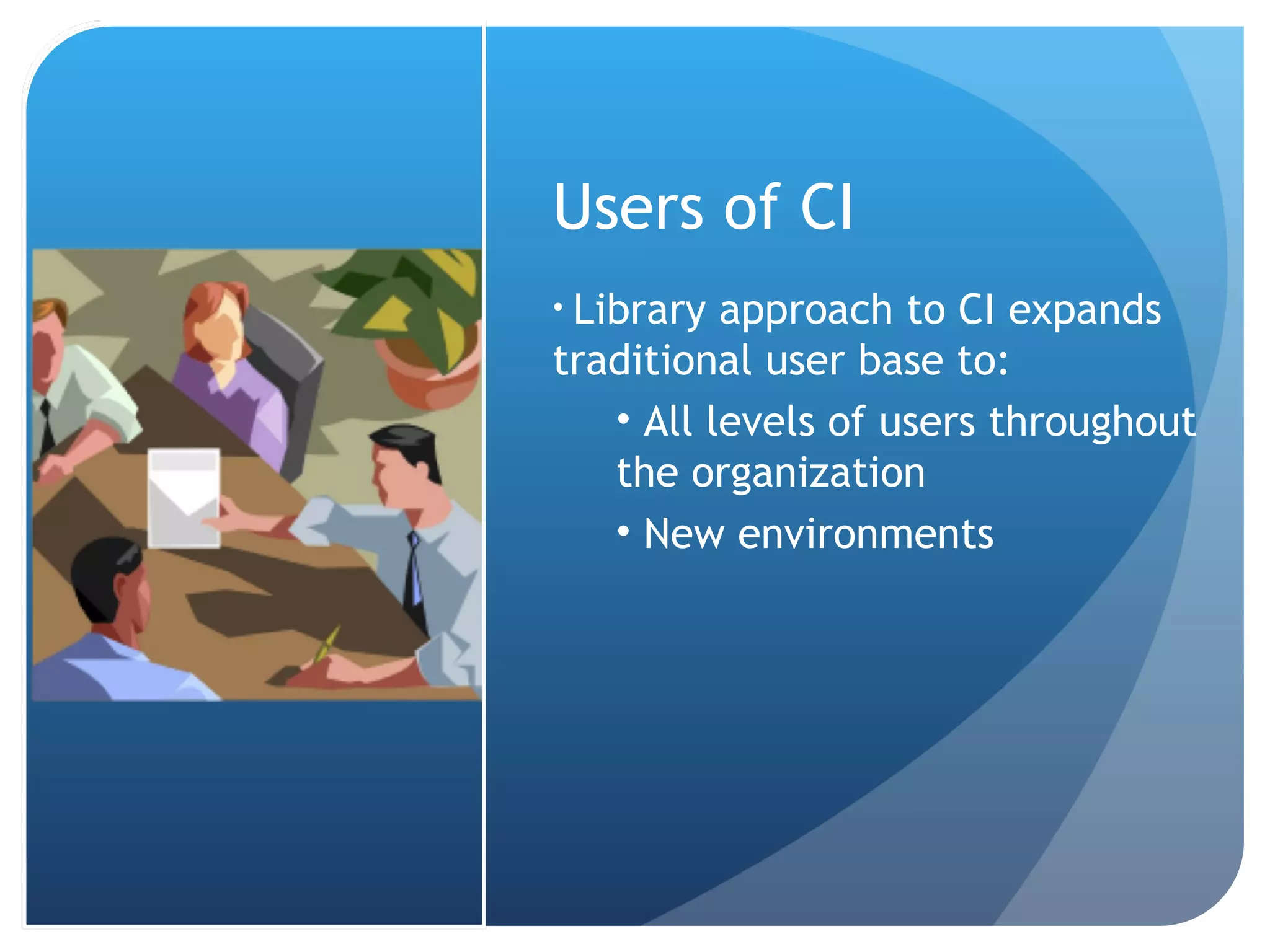
Users of CI Library approach to CI expands traditional user base to: All levels of users throughout the organization New environments
SLA CI Division Member Profiles Correia, Cynthia Cheng. (January 2008). Members Survey: General Profile [Electronic Version].  Intelligence Insights,  vol. 4:1, 4-12. Total of 134 Respondents 43% work in Information Centers 21% work in Business or Consulting Services 12% Pharmaceutical, Biomedical or Health Sciences 10% Law 8% Academic / Higher Education 35.2% spend less than ¼ of their time on CI
SLA CI Division Member Profiles  cont. 57.14% cite Published Research as main job function 19.84% cite Analysis 7.94% cite human research 26.2% have practiced CI for over 10 years 20.6% 1-3 years 21% support Organizational or Business Strategy with CI  74% started their training in the LIS field
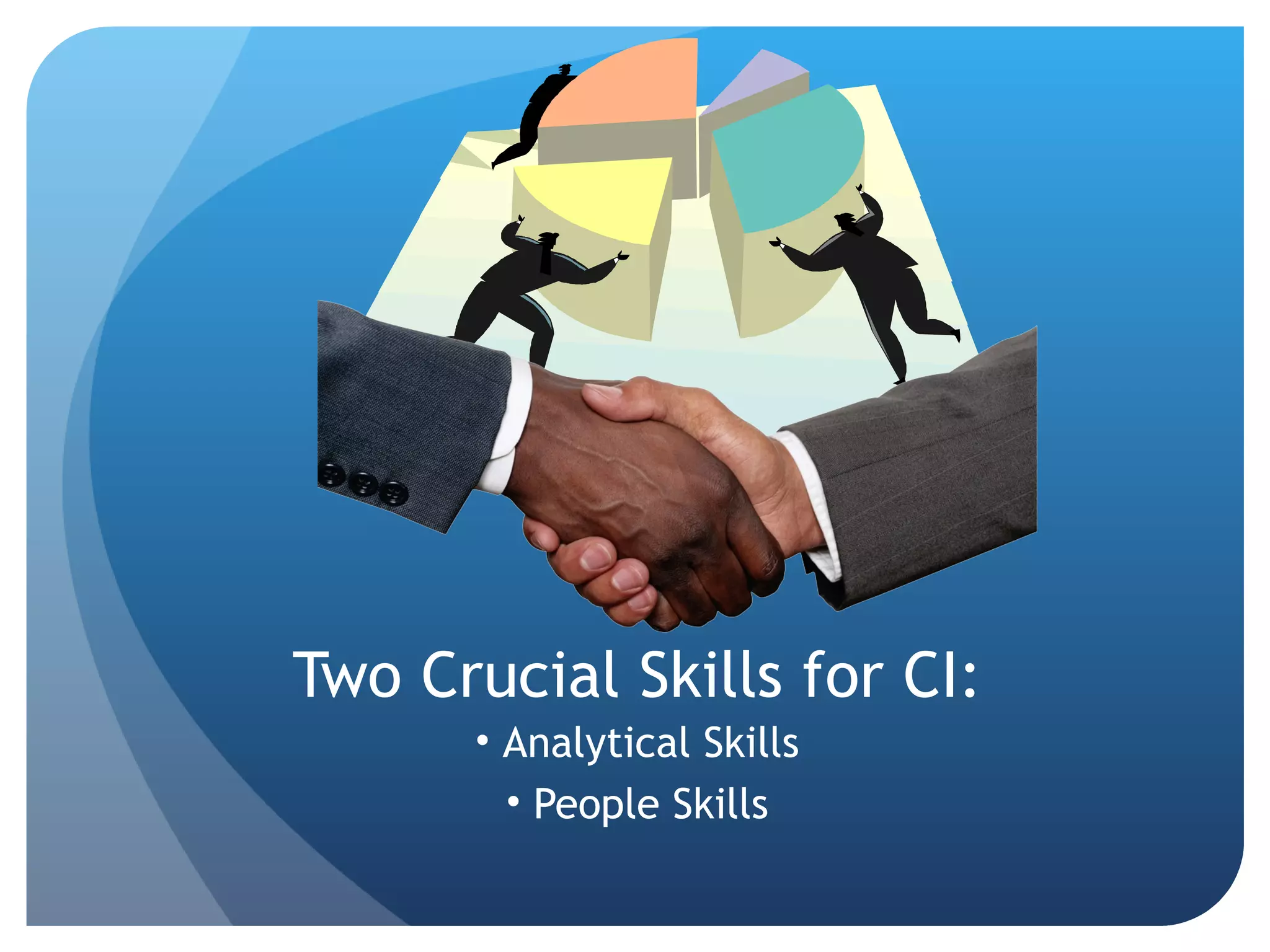
Two Crucial Skills for CI: Analytical Skills People Skills
In Summary: “ A good word processing program makes it easier to write and make revisions, and catch spelling mistakes: -It does not make you a better writer. -It doesn't affect the quality and content of the reports you write.”  -–B. Hohhof
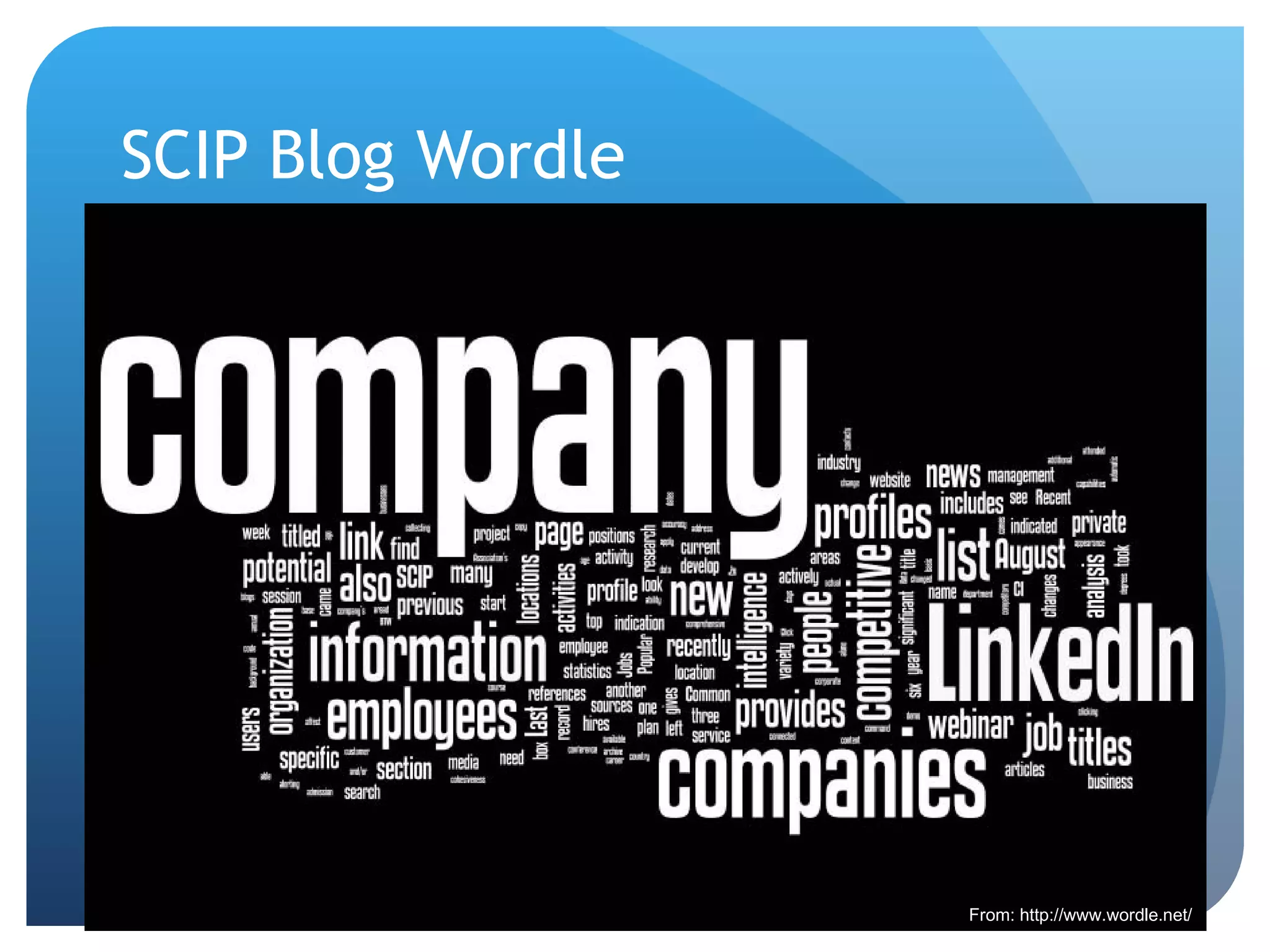
SCIP Blog Wordle From: http://www.wordle.net/

Lipscomb Project2 Ci

  • 1.
    Putting the “I”in CI: A Librarian’s Introduction to Competitive Intelligence Bianca Lipscomb
  • 2.
    Methodology Barbara Ferry,Director of Business Research
  • 3.
  • 4.
    Competitive Intelligence DefinitionNot Corporate Espionage By: magandafille By: Thomas Helbig
  • 5.
    Intelligence Cycle Fuld& Company, 2009 pg. 12
  • 6.
    Role of TechnologyImportance of the human element Used mostly in the process of information gathering and dissemination True CI tools facilitate the entire Intelligence Cycle
  • 7.
    Tools Overview FullCycle Software Fuld & Company Intelligence Software Report 2008-2009
  • 8.
  • 9.
    Tools Overview AnalysisOriented Pre-Processing: sorting and extracting relationships Text Mining: summarize, categorize and visualize Analysis Support: dissemination Research by the CLAIR Group at UMich: Detecting multiple facets of an event using graph-based unsupervised methods
  • 10.
    Critique of LISapproach: Information gathering and dissemination are emphasized over planning and analysis In order for LIS professionals to be true CI operatives they must have training in or exposure to business administration
  • 11.
    Knowledge Management CompetitiveIntelligence = Business Intelligence
  • 12.
    Model of NewLibrarianship Competitive Intelligence is one of the many ways for the tech and people savvy librarian to proactively affect positive change within their organization By: David King
  • 13.
    Skills Knowledge ofInformation Sources and Research Methods Proficient with new technologies Disseminating Information Connecting People and Ideas
  • 14.
    Skills Q: Howcan librarianship better incorporate skills development for steps 1-Planning and 4-Analysis? Fuld & Company, 2009 pg. 12
  • 15.
    Users of CILibrary approach to CI expands traditional user base to: All levels of users throughout the organization New environments
  • 16.
    SLA CI DivisionMember Profiles Correia, Cynthia Cheng. (January 2008). Members Survey: General Profile [Electronic Version]. Intelligence Insights, vol. 4:1, 4-12. Total of 134 Respondents 43% work in Information Centers 21% work in Business or Consulting Services 12% Pharmaceutical, Biomedical or Health Sciences 10% Law 8% Academic / Higher Education 35.2% spend less than ¼ of their time on CI
  • 17.
    SLA CI DivisionMember Profiles cont. 57.14% cite Published Research as main job function 19.84% cite Analysis 7.94% cite human research 26.2% have practiced CI for over 10 years 20.6% 1-3 years 21% support Organizational or Business Strategy with CI 74% started their training in the LIS field
  • 18.
    Two Crucial Skillsfor CI: Analytical Skills People Skills
  • 19.
    In Summary: “A good word processing program makes it easier to write and make revisions, and catch spelling mistakes: -It does not make you a better writer. -It doesn't affect the quality and content of the reports you write.” -–B. Hohhof
  • 20.
    SCIP Blog WordleFrom: http://www.wordle.net/

Editor's Notes

  • #2 The Scope of this presentation is to provide: -an overview of the Competitive Intelligence field and -explain the LIS approach to CI It is Not focused on recommending specific tools or proving the effectiveness of CI