Presenting by: Siri Chandana
AI Image Generation with
DALL-E
Content
1. What is Image Generation?
2. What is DALL-E?
3. Text to Image Process
4. Pros and Cons of DALL-E
5. Practical Knowledge
AIIMAGE
GENERATION
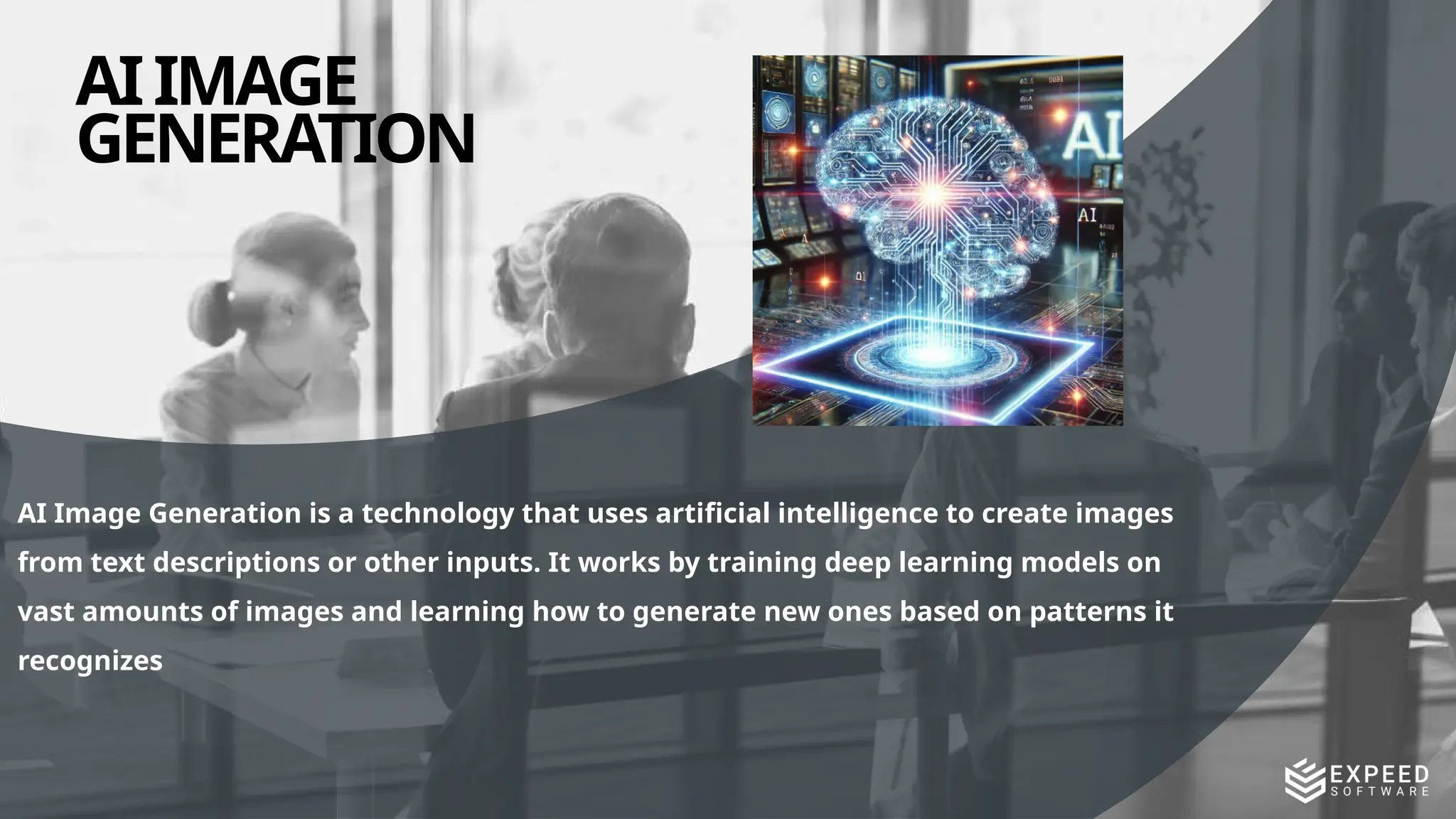
AI Image Generation is a technology that uses artificial intelligence to create images
from text descriptions or other inputs. It works by training deep learning models on
vast amounts of images and learning how to generate new ones based on patterns it
recognizes
WhatisDALL-E?
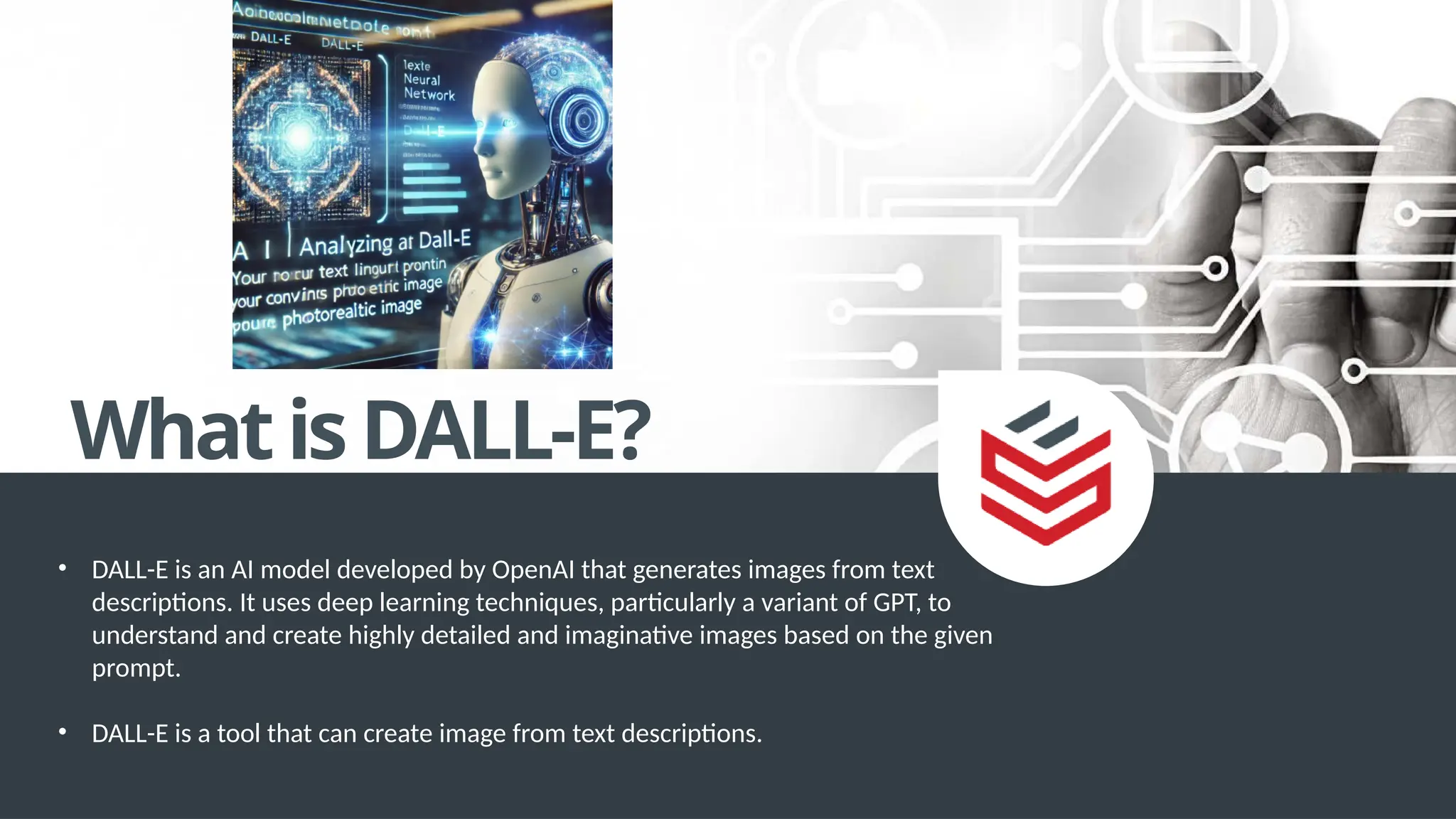
• DALL-E is an AI model developed by OpenAI that generates images from text
descriptions. It uses deep learning techniques, particularly a variant of GPT, to
understand and create highly detailed and imaginative images based on the given
prompt.
• DALL-E is a tool that can create image from text descriptions.
How DALL-E understands And converts text into images
1. Understanding the Text (Natural Language Processing – NLP)
DALL-E first reads and interprets the text prompt using an AI model like GPT (Generative Pre-trained
Transformer).
It breaks the text into key concepts, objects, styles, and relationships.
2. Converting Words into Visual Data (Latent Space Representation)
After understanding the text, DALL-E maps the words to visual features using a model trained on millions of text-
image pairs. It learns how objects look and interact with each other in different settings.
3. Generating the Image (Diffusion Model or Transformer-based Generation)
DALL-E starts with random noise and gradually refines it to form a meaningful image, similar to how an artist
sketches a rough outline and then adds details. It uses a process called “diffusion” to enhance details and improve
realism.
.
4. Refinement & Output
The AI selects the most relevant and visually accurate representation of the prompt. The final image is generated
and displayed.
Key Technologies Behind DALL-E:
1. Transformer Models (for text processing)
2. Diffusion Models (for image generation)
3. CLIP (Contrastive Language-Image Pretraining) – Helps DALL-E understand the relationship between
text and images
Pros and Cons of DALL-E
✅ Pros (Advantages)
1. Creative & Unique Image Generation
2. Time & Cost Efficiency
3. User-friendly
4. Customization & Variability
5. Useful for Many Industry
6. Supports Image Editing (Inpainting)
❌ Cons (Limitations & Challenges)
1. Lack of Human Creativity & Intent
2. Quality & Accuracy Issues
3. Bias & Ethical Concerns
4. Copyright & Legal Issues
5. Limited Control Over Details
6. High Computational Power Required
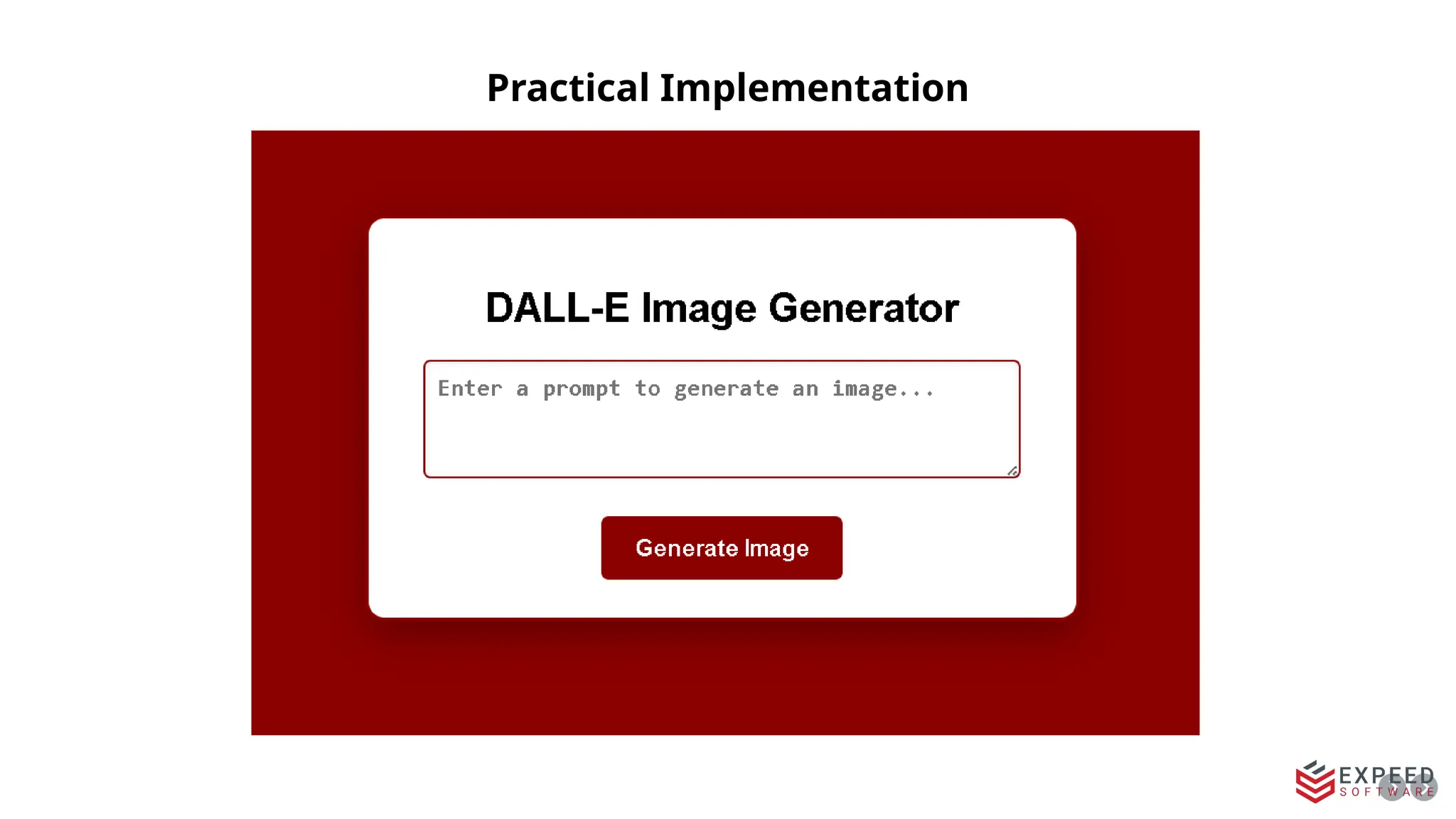
Practical Implementation
Let’s
Innovate
Together
www.expeed.com

Unlock AI Creativity: Image Generation with DALL·E

  • 1.
    Presenting by: SiriChandana AI Image Generation with DALL-E
  • 2.
    Content 1. What isImage Generation? 2. What is DALL-E? 3. Text to Image Process 4. Pros and Cons of DALL-E 5. Practical Knowledge
  • 3.
    AIIMAGE GENERATION AI Image Generationis a technology that uses artificial intelligence to create images from text descriptions or other inputs. It works by training deep learning models on vast amounts of images and learning how to generate new ones based on patterns it recognizes
  • 4.
    WhatisDALL-E? • DALL-E isan AI model developed by OpenAI that generates images from text descriptions. It uses deep learning techniques, particularly a variant of GPT, to understand and create highly detailed and imaginative images based on the given prompt. • DALL-E is a tool that can create image from text descriptions.
  • 5.
    How DALL-E understandsAnd converts text into images 1. Understanding the Text (Natural Language Processing – NLP) DALL-E first reads and interprets the text prompt using an AI model like GPT (Generative Pre-trained Transformer). It breaks the text into key concepts, objects, styles, and relationships. 2. Converting Words into Visual Data (Latent Space Representation) After understanding the text, DALL-E maps the words to visual features using a model trained on millions of text- image pairs. It learns how objects look and interact with each other in different settings. 3. Generating the Image (Diffusion Model or Transformer-based Generation) DALL-E starts with random noise and gradually refines it to form a meaningful image, similar to how an artist sketches a rough outline and then adds details. It uses a process called “diffusion” to enhance details and improve realism.
  • 6.
    . 4. Refinement &Output The AI selects the most relevant and visually accurate representation of the prompt. The final image is generated and displayed. Key Technologies Behind DALL-E: 1. Transformer Models (for text processing) 2. Diffusion Models (for image generation) 3. CLIP (Contrastive Language-Image Pretraining) – Helps DALL-E understand the relationship between text and images
  • 7.
    Pros and Consof DALL-E ✅ Pros (Advantages) 1. Creative & Unique Image Generation 2. Time & Cost Efficiency 3. User-friendly 4. Customization & Variability 5. Useful for Many Industry 6. Supports Image Editing (Inpainting) ❌ Cons (Limitations & Challenges) 1. Lack of Human Creativity & Intent 2. Quality & Accuracy Issues 3. Bias & Ethical Concerns 4. Copyright & Legal Issues 5. Limited Control Over Details 6. High Computational Power Required
  • 8.
  • 9.