Blockchain &Its
Applications
Introduction to Blockchain
 Blockchain is a decentralized digital ledger that records transactions securely and
transparently across multiple computers.
 It ensures immutability, security, and transparency using cryptographic techniques.
 Each transaction is grouped into a block, verified by the network, and linked to previous
blocks, forming a chain.
 This technology is widely used in cryptocurrencies, smart contracts, supply chain
management, and secure data storage.
3
Features of Blockchain
 Decentralized : Blockchain operates on a distributed network with no central authority.
Every participant has a copy of the ledger, reducing single-point failure risks.
This ensures transparency, security, and trust in transactions.
 Immutable : Once a block is added to the blockchain, it cannot be altered or deleted.
Each block is cryptographically linked to the previous one, preventing tampering.
This makes blockchain a secure and reliable system for data storage.
 Transparent : Transactions on a blockchain are visible to all authorized participants.
Anyone in the network can verify transactions, ensuring accountability.
This reduces fraud, corruption, and the need for third-party intermediaries.
4
Components of Blockchain
 Nodes : A user or computer that participates in the blockchain network by storing, verifying,
and sharing transaction data.
 Transaction : The smallest unit of operation in a blockchain, representing an exchange of
value, such as transferring cryptocurrency or executing a smart contract.
 Block : A collection of validated transactions bundled together and linked to the previous
block, forming a secure chain.
 Chain : A continuous sequence of blocks arranged in chronological order, ensuring
transparency and immutability.
5
Components of Blockchain
 Miners : Specialized nodes that solve complex mathematical problems to validate
transactions and add new blocks to the blockchain, ensuring network security.
 Consensus Mechanism : A set of rules that nodes follow to agree on the validity of
transactions, preventing fraud and ensuring trust (e.g., Proof of Work, Proof of Stake).
6
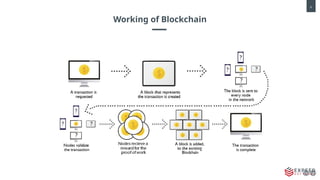
Working of Blockchain
7
Applications of Blockchain
Cryptocurrency
Blockchain is the backbone of digital currencies like Bitcoin, Ethereum, and Ripple. It enables
decentralized, peer-to-peer transactions without the need for a central authority, reducing fraud
and transaction costs while increasing security.
Smart Contracts
These are self-executing contracts with pre-defined rules stored on the blockchain. Once
conditions are met, the contract executes automatically, eliminating the need for middlemen like
lawyers or banks. This reduces costs and ensures trust and transparency in agreements.
Supply Chain Management
Blockchain improves transparency, traceability, and efficiency in supply chains. Companies can
track products from manufacturing to delivery, ensuring authenticity, preventing fraud, and
reducing delays. It is widely used in food safety, pharmaceuticals, and luxury goods.
8
Applications of Blockchain
Healthcare
Blockchain secures electronic health records (EHRs) by ensuring only authorized personnel can
access them. Patients have better control over their data, reducing data breaches, fraud, and
mismanagement of medical histories.
Banking & Finance
Traditional banking transactions can take days to process, especially cross-border payments.
Blockchain enables instant, low-cost transactions, reducing fraud and making banking more
accessible, especially for the unbanked population.
Voting Systems
Blockchain-based voting ensures tamper-proof, transparent, and secure elections. Each vote is
recorded on the blockchain, preventing fraud and making elections more trustworthy and
verifiable. Governments are exploring this technology for secure online voting.
9
Applications of Blockchain
Cybersecurity
Decentralized storage on the blockchain prevents hacks, data breaches, and cyber-attacks.
Since data is stored across multiple nodes rather than a single server, it is highly secure and
resistant to manipulation.
Intellectual Property & Royalties
Artists, musicians, and content creators can use blockchain to protect copyrights, manage
royalties, and ensure fair payments. Platforms like NFTs (Non-Fungible Tokens) use blockchain
to verify digital ownership and prevent piracy.
10
Conclusion
 Blockchain technology is revolutionizing industries by offering decentralization, transparency,
security, and efficiency. From cryptocurrency and finance to healthcare, supply chains, and
voting systems, it enhances trust, reduces fraud, and eliminates intermediaries.
 As adoption continues to grow, blockchain has the potential to reshape the digital world,
making transactions more secure, verifiable, and tamper-proof. While challenges like
scalability and regulatory concerns exist, ongoing innovations are paving the way for a more
efficient and decentralized future.
Let’s
Innovate
Together
www.expeed.com
Thank You

Blockchain & Its Real-World Applications: Transforming Industries

  • 1.
  • 2.
    Introduction to Blockchain Blockchain is a decentralized digital ledger that records transactions securely and transparently across multiple computers.  It ensures immutability, security, and transparency using cryptographic techniques.  Each transaction is grouped into a block, verified by the network, and linked to previous blocks, forming a chain.  This technology is widely used in cryptocurrencies, smart contracts, supply chain management, and secure data storage.
  • 3.
    3 Features of Blockchain Decentralized : Blockchain operates on a distributed network with no central authority. Every participant has a copy of the ledger, reducing single-point failure risks. This ensures transparency, security, and trust in transactions.  Immutable : Once a block is added to the blockchain, it cannot be altered or deleted. Each block is cryptographically linked to the previous one, preventing tampering. This makes blockchain a secure and reliable system for data storage.  Transparent : Transactions on a blockchain are visible to all authorized participants. Anyone in the network can verify transactions, ensuring accountability. This reduces fraud, corruption, and the need for third-party intermediaries.
  • 4.
    4 Components of Blockchain Nodes : A user or computer that participates in the blockchain network by storing, verifying, and sharing transaction data.  Transaction : The smallest unit of operation in a blockchain, representing an exchange of value, such as transferring cryptocurrency or executing a smart contract.  Block : A collection of validated transactions bundled together and linked to the previous block, forming a secure chain.  Chain : A continuous sequence of blocks arranged in chronological order, ensuring transparency and immutability.
  • 5.
    5 Components of Blockchain Miners : Specialized nodes that solve complex mathematical problems to validate transactions and add new blocks to the blockchain, ensuring network security.  Consensus Mechanism : A set of rules that nodes follow to agree on the validity of transactions, preventing fraud and ensuring trust (e.g., Proof of Work, Proof of Stake).
  • 6.
  • 7.
    7 Applications of Blockchain Cryptocurrency Blockchainis the backbone of digital currencies like Bitcoin, Ethereum, and Ripple. It enables decentralized, peer-to-peer transactions without the need for a central authority, reducing fraud and transaction costs while increasing security. Smart Contracts These are self-executing contracts with pre-defined rules stored on the blockchain. Once conditions are met, the contract executes automatically, eliminating the need for middlemen like lawyers or banks. This reduces costs and ensures trust and transparency in agreements. Supply Chain Management Blockchain improves transparency, traceability, and efficiency in supply chains. Companies can track products from manufacturing to delivery, ensuring authenticity, preventing fraud, and reducing delays. It is widely used in food safety, pharmaceuticals, and luxury goods.
  • 8.
    8 Applications of Blockchain Healthcare Blockchainsecures electronic health records (EHRs) by ensuring only authorized personnel can access them. Patients have better control over their data, reducing data breaches, fraud, and mismanagement of medical histories. Banking & Finance Traditional banking transactions can take days to process, especially cross-border payments. Blockchain enables instant, low-cost transactions, reducing fraud and making banking more accessible, especially for the unbanked population. Voting Systems Blockchain-based voting ensures tamper-proof, transparent, and secure elections. Each vote is recorded on the blockchain, preventing fraud and making elections more trustworthy and verifiable. Governments are exploring this technology for secure online voting.
  • 9.
    9 Applications of Blockchain Cybersecurity Decentralizedstorage on the blockchain prevents hacks, data breaches, and cyber-attacks. Since data is stored across multiple nodes rather than a single server, it is highly secure and resistant to manipulation. Intellectual Property & Royalties Artists, musicians, and content creators can use blockchain to protect copyrights, manage royalties, and ensure fair payments. Platforms like NFTs (Non-Fungible Tokens) use blockchain to verify digital ownership and prevent piracy.
  • 10.
    10 Conclusion  Blockchain technologyis revolutionizing industries by offering decentralization, transparency, security, and efficiency. From cryptocurrency and finance to healthcare, supply chains, and voting systems, it enhances trust, reduces fraud, and eliminates intermediaries.  As adoption continues to grow, blockchain has the potential to reshape the digital world, making transactions more secure, verifiable, and tamper-proof. While challenges like scalability and regulatory concerns exist, ongoing innovations are paving the way for a more efficient and decentralized future.
  • 11.