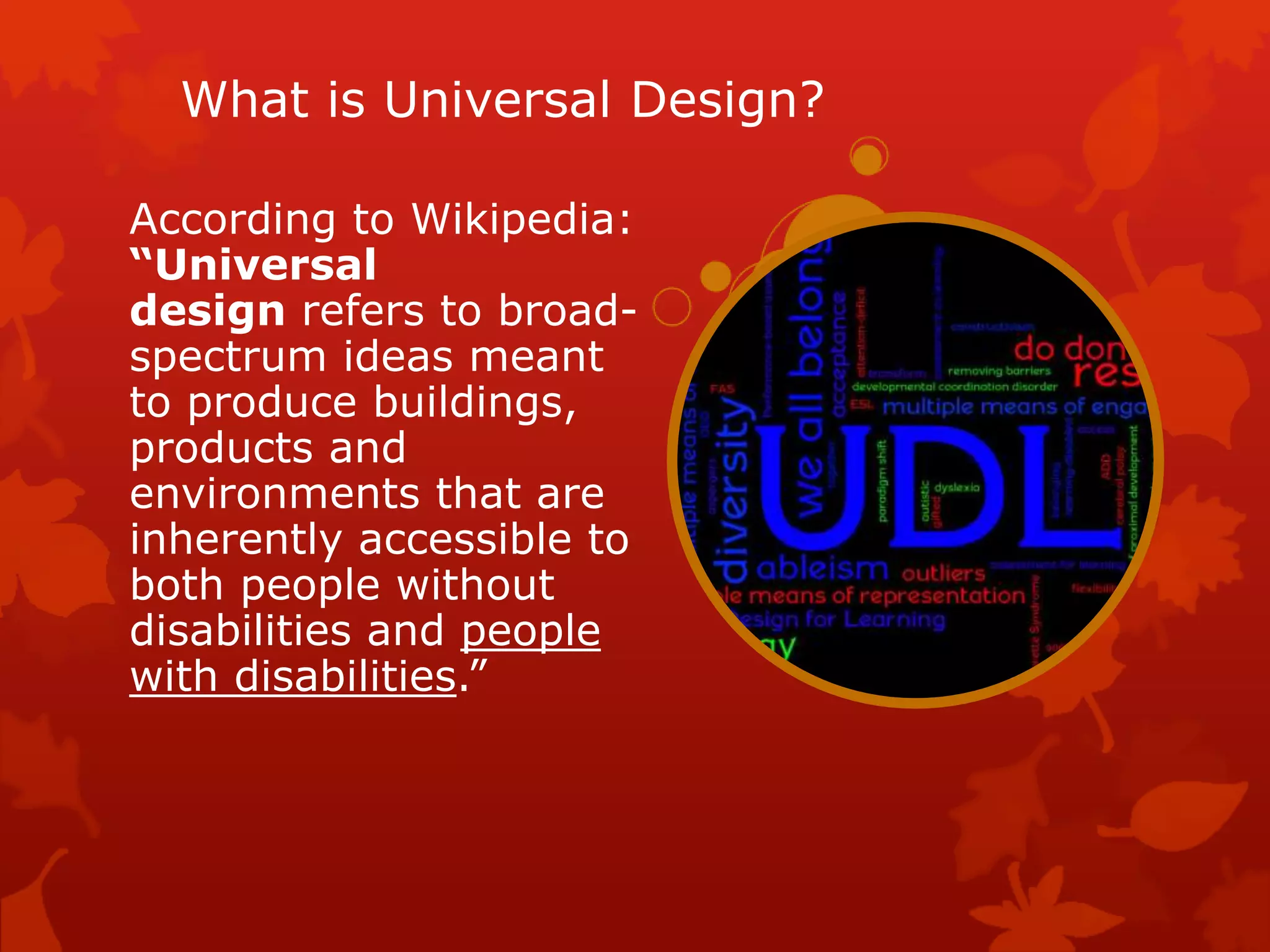
Universal Design (UD) refers to broad-spectrum ideas meant to produce buildings, products, and environments that are inherently accessible to both people with and without disabilities. The process of UD involves identifying the application, defining the diverse user population, involving consumers in all phases of development and evaluation, adopting inclusive guidelines and standards, applying those standards, planning for accommodations, providing training and support, and evaluating effectiveness. UD can be implemented in education by using hands-on activities instead of just reading to engage diverse learners and help them better understand course material.