Sustainable development in the Utility Sector Lancashire County Council Innovation and Investment Event 15 September 2010    Steve Whipp, Head of Innovation
Structure of presentation Background to United Utilities – energy usage Our Strategic Direction Statement Long term carbon target Our energy reduction strategy – what we know and what we need to know “ What are the opportunities this presents for the North West?”
What do we mean by carbon management? Manage risks Energy costs Compliance costs/penalties Brand/reputation  Competitive position Identify opportunities Energy efficiency Energy supply  Re-engineering and design  Emissions trading and carbon projects
Where are we now? In 2005/06 we used 1,109GWh of electricity – 1/3 of 1% of UK electricity supply “ At United Utilities our aim is to provide the best value  utility service to our customers in a way that is sustainable,  environmentally responsible and reflects our wider social  impact”   - Philip Green, Chief Executive Officer, United Utilities
Understanding carbon emissions at UU Carbon emissions result from: electricity consumption process emissions fuel use transport Examples: One household over a year  - 5.3 tCO 2 e A family car driving 10,000 miles – 3.5 tCO 2 e  One tonne of sludge digested (if methane emitted) – 3.3 tCO 2 e
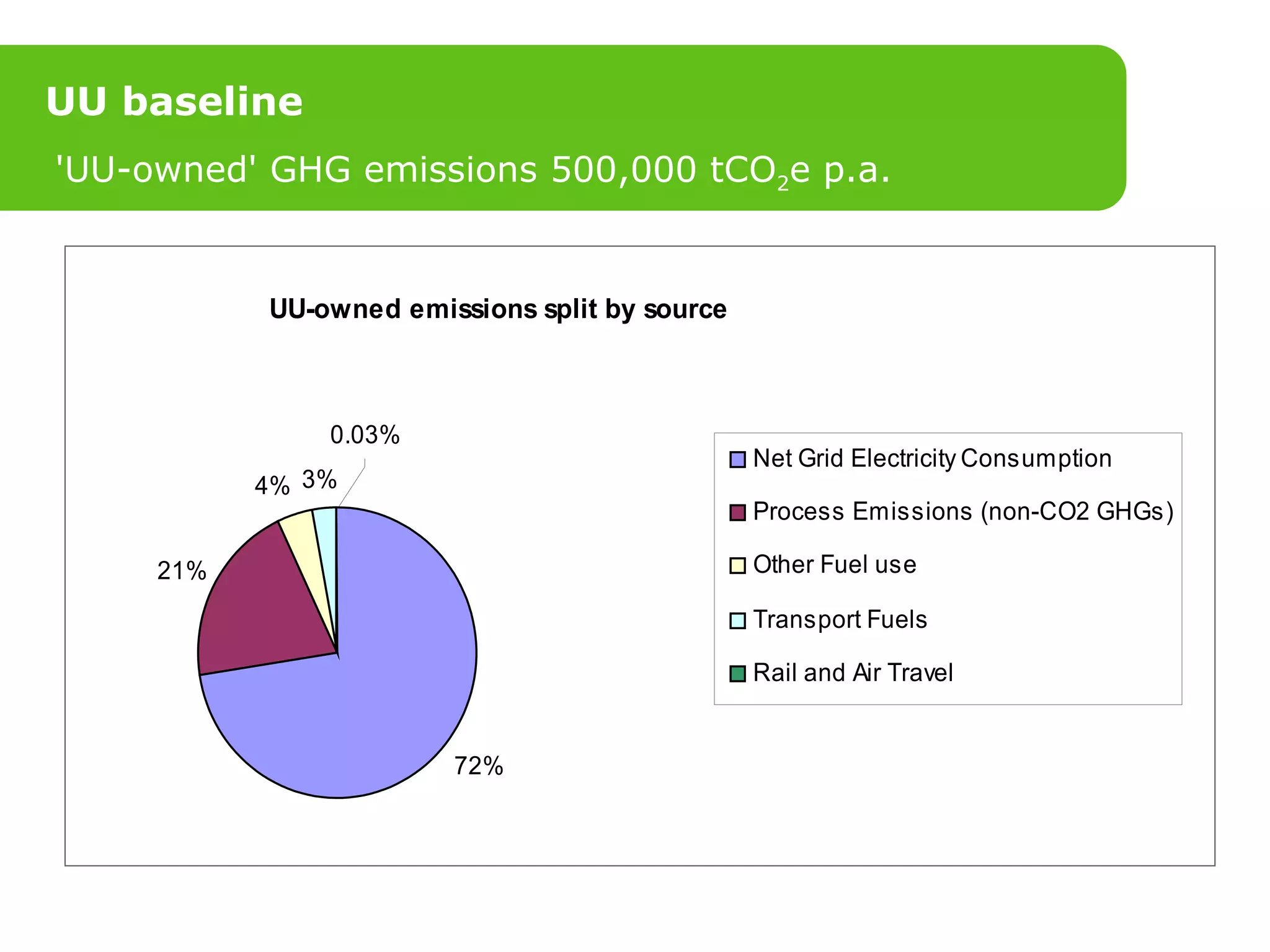
UU baseline   'UU-owned' GHG emissions 500,000 tCO 2 e p.a.
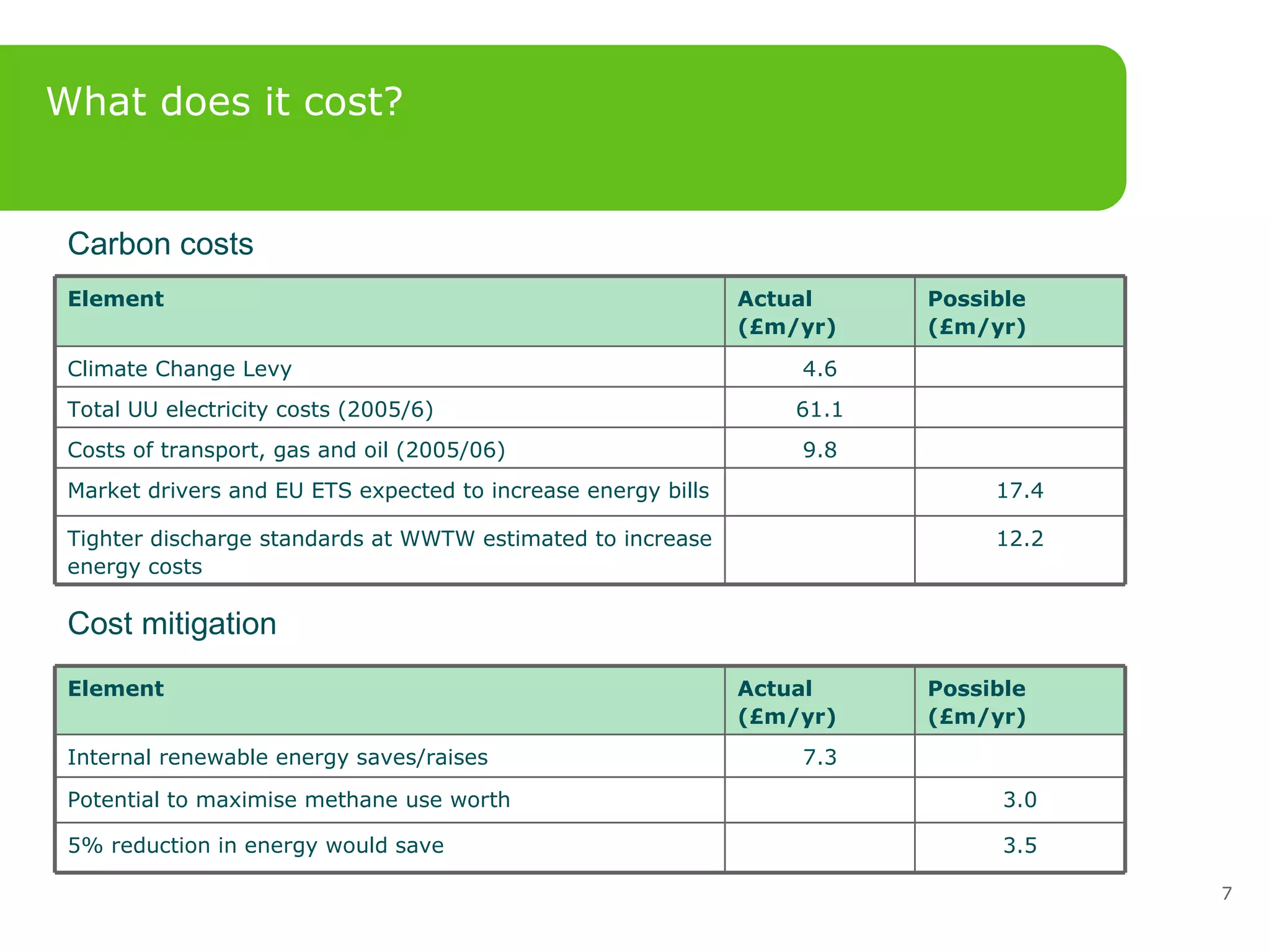
What does it cost? Carbon costs Cost mitigation 3.0 Potential to maximise methane use worth 7.3 Internal renewable energy saves/raises 3.5 5% reduction in energy would save Possible (£m/yr) Actual (£m/yr) Element 61.1 Total UU electricity costs (2005/6) 9.8 Costs of transport, gas and oil (2005/06) 12.2 Tighter discharge standards at WWTW estimated to increase energy costs 17.4 Market drivers and EU ETS expected to increase energy bills 4.6 Climate Change Levy Possible (£m/yr) Actual (£m/yr) Element
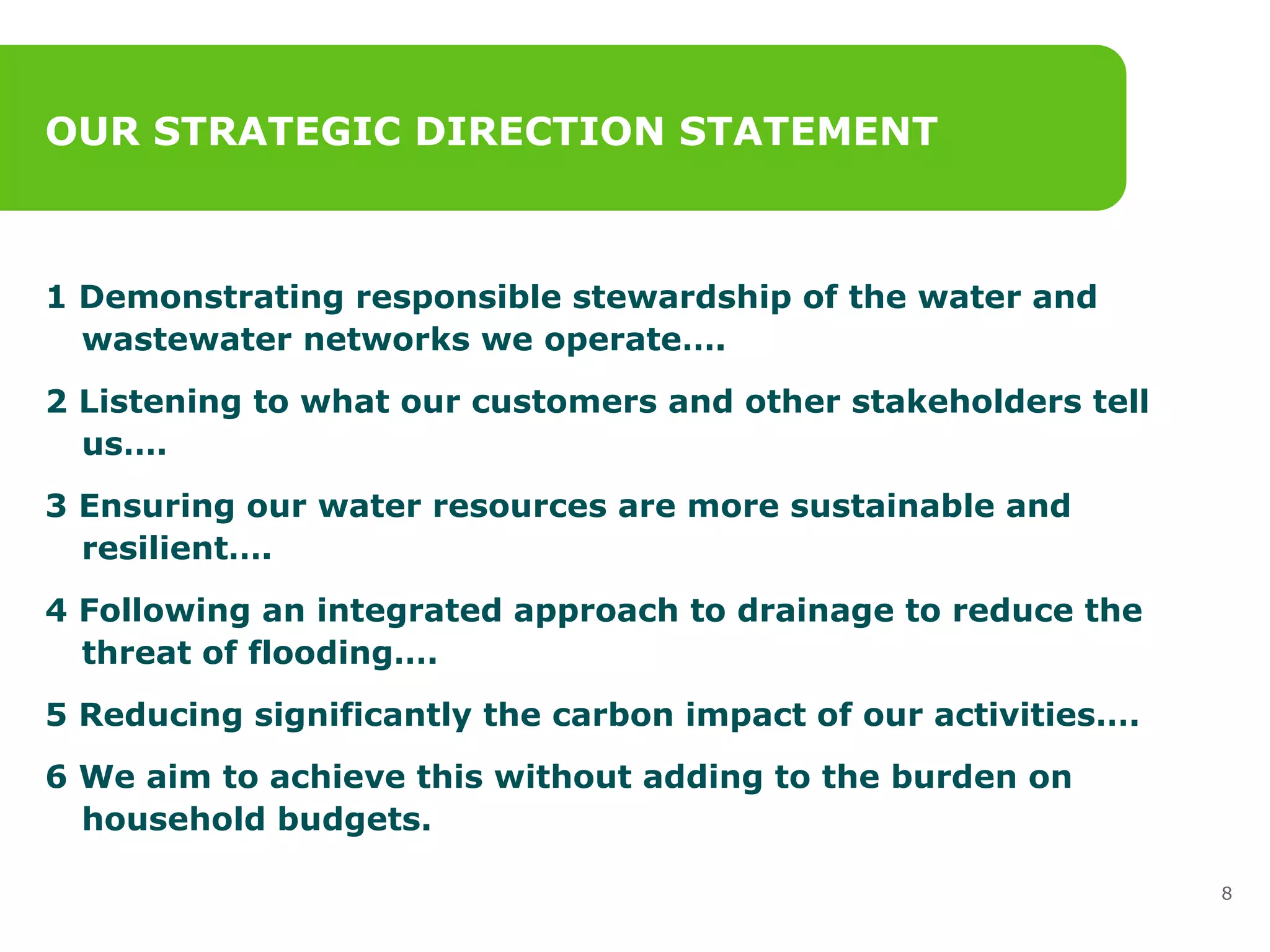
OUR STRATEGIC DIRECTION STATEMENT 1 Demonstrating responsible stewardship of the water and wastewater networks we operate…. 2 Listening to what our customers and other stakeholders tell us….  3 Ensuring our water resources are more sustainable and resilient….  4 Following an integrated approach to drainage to reduce the threat of flooding….  5 Reducing significantly the carbon impact of our activities….   6 We aim to achieve this without adding to the burden on household budgets.
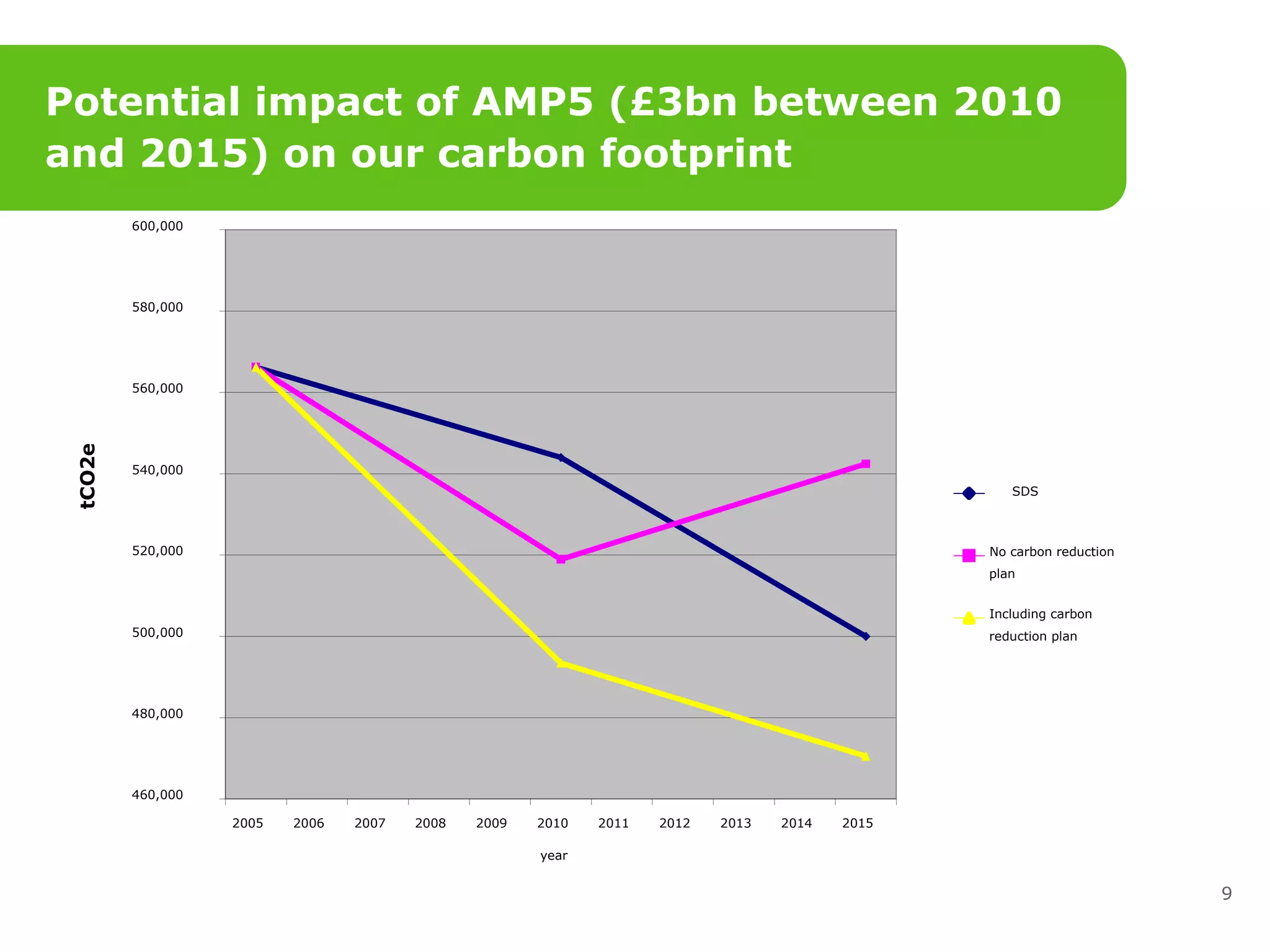
Potential impact of AMP5 (£3bn between 2010 and 2015) on our carbon footprint 460,000 480,000 500,000 520,000 540,000 560,000 580,000 600,000 2005 2006 2007 2008 2009 2010 2011 2012 2013 2014 2015 year tCO2e SDS No carbon reduction plan Including carbon reduction plan
AMP4 achievement The AMP4 programme to reduce our operational carbon has already delivered significant progress towards our 2012 target. The programme consisted of the following projects: CHP projects with an anticipated reduction of 34,000* tCO2e p.a. SCaMP with a 1,000* tCO2e reduction p.a. Pump efficiency programme with an estimated reduction of 4,000* tCO2e p.a. * Note:  Based on a 0.43 conversion factor.
Our AMP5 and beyond carbon strategy There are four parts to this programme: Use of  known  technology: CHP, hydro-electricity, pump efficiency  The development and demonstration of  novel  technologies Optimisation  measures using low carbon solutions, optimising energy use and carbon emissions such as our sludge balance asset programme  Research and development  intended to identify and inform us about how we can reach our long-term carbon reduction target of 50% by 2035 and 60% by 2050.
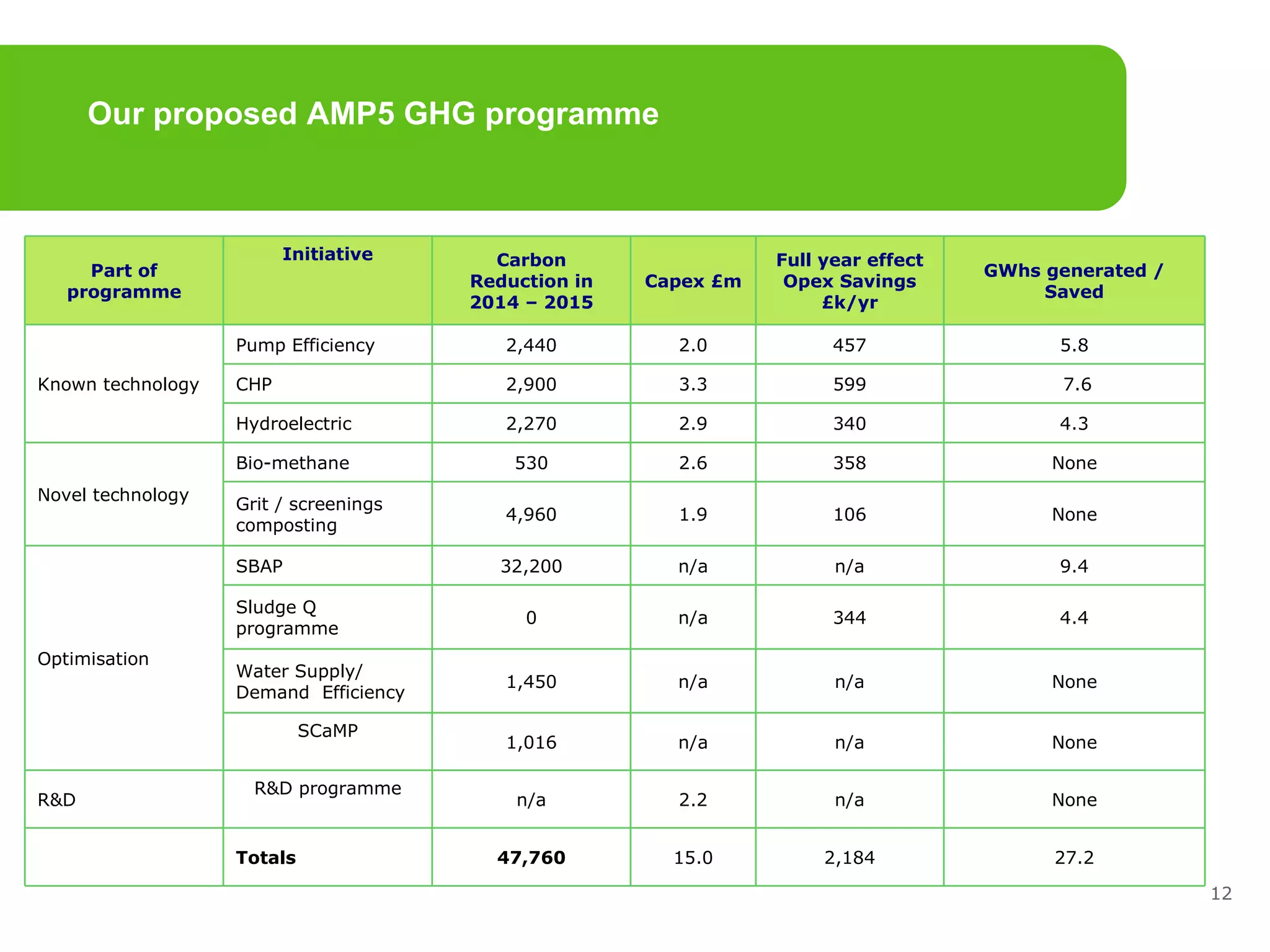
Our proposed AMP5 GHG programme 27.2 2,184 15.0 47,760 Totals None n/a 2.2 n/a R&D programme R&D None n/a n/a 1,016 SCaMP None n/a n/a 1,450 Water Supply/ Demand  Efficiency 4.4 344 n/a 0 Sludge Q programme 9.4 n/a n/a 32,200 SBAP Optimisation None 106 1.9 4,960 Grit / screenings composting None 358 2.6 530 Bio-methane Novel technology 4.3 340 2.9 2,270 Hydroelectric  7.6 599 3.3 2,900 CHP 5.8 457 2.0 2,440 Pump Efficiency Known technology GWhs generated / Saved Full year effect Opex Savings £k/yr Capex £m Carbon Reduction in 2014 – 2015 Initiative Part of programme
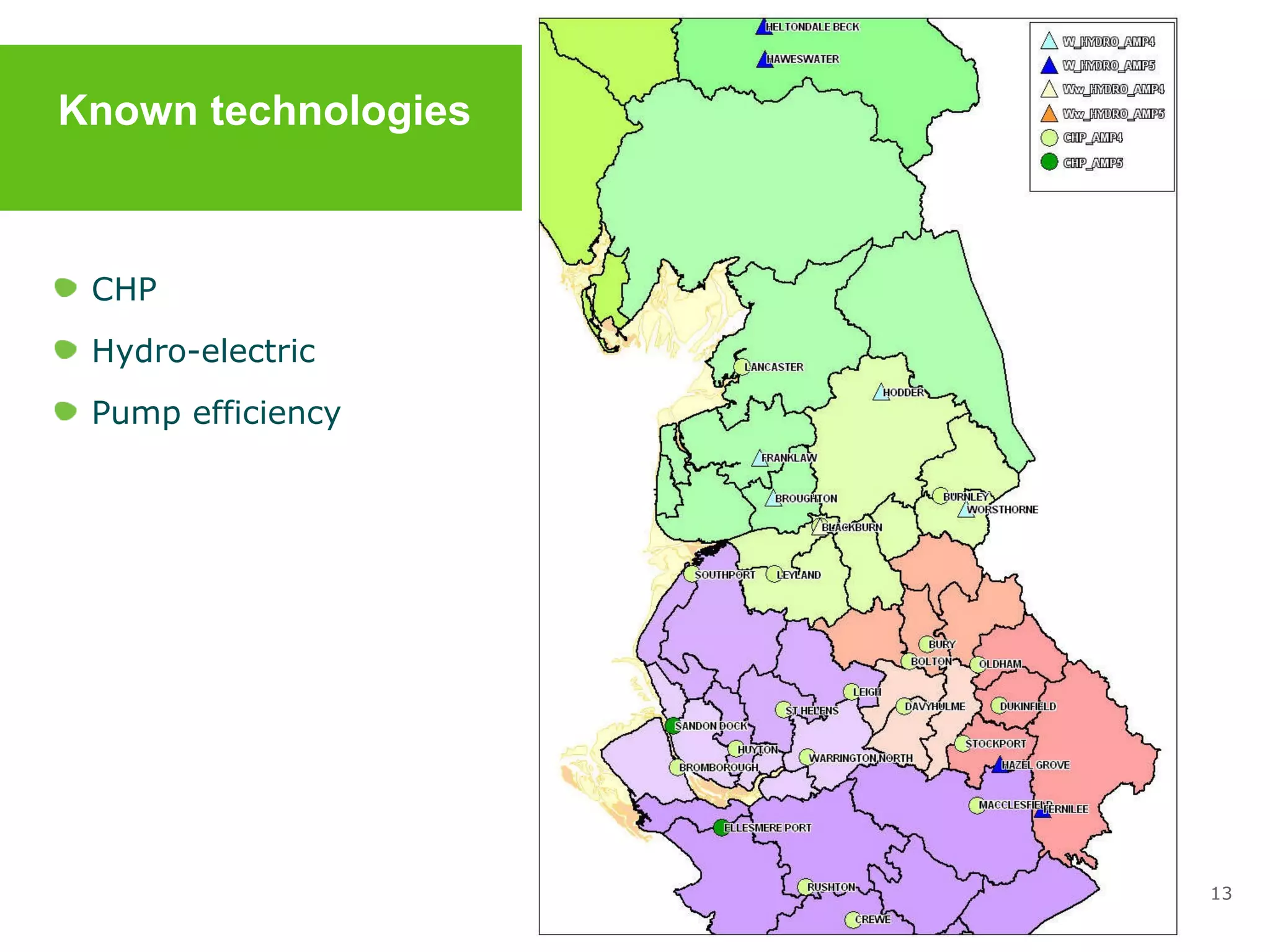
Known technologies CHP Hydro-electric  Pump efficiency
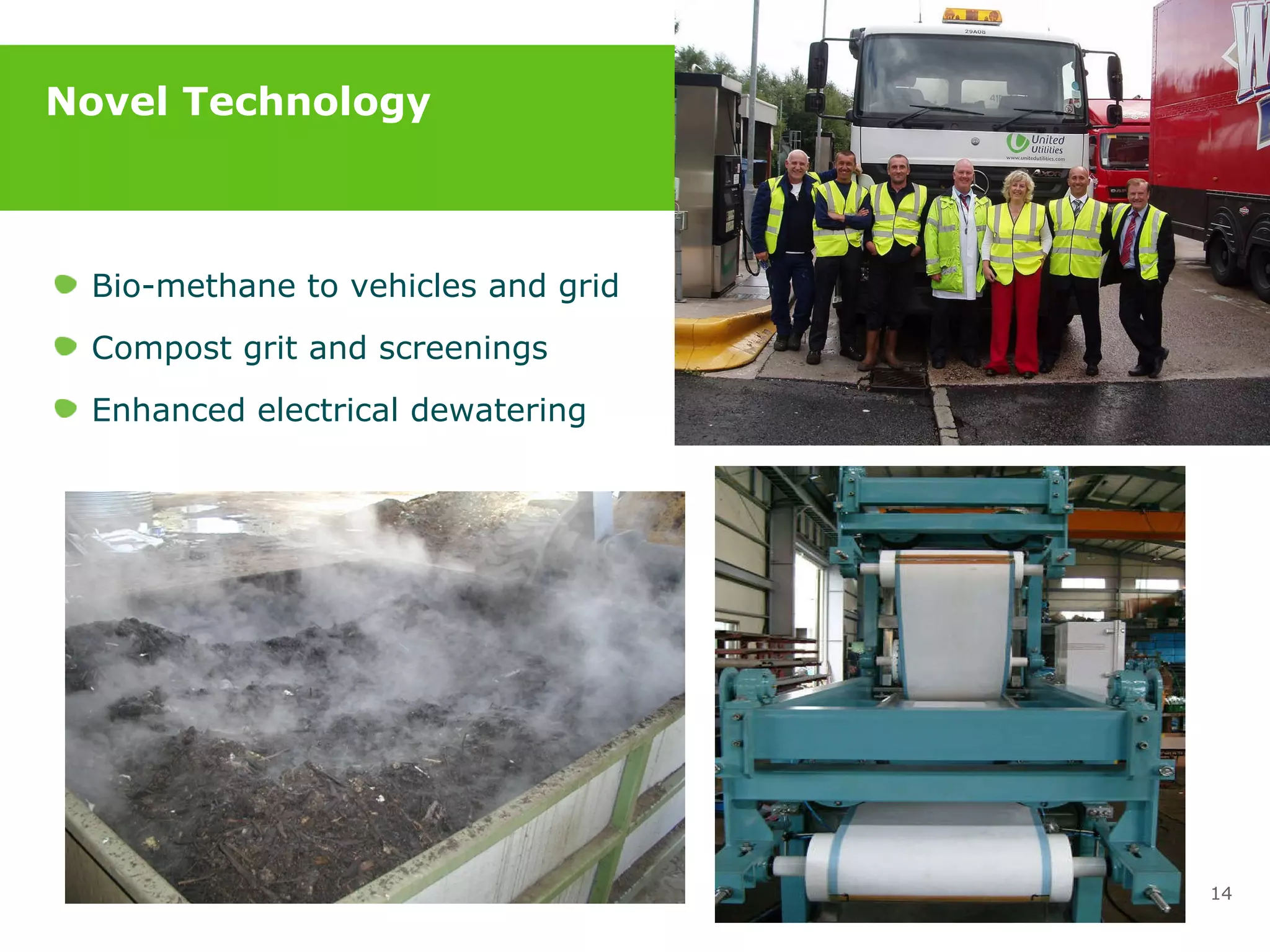
Novel Technology Bio-methane to vehicles and grid Compost grit and screenings Enhanced electrical dewatering
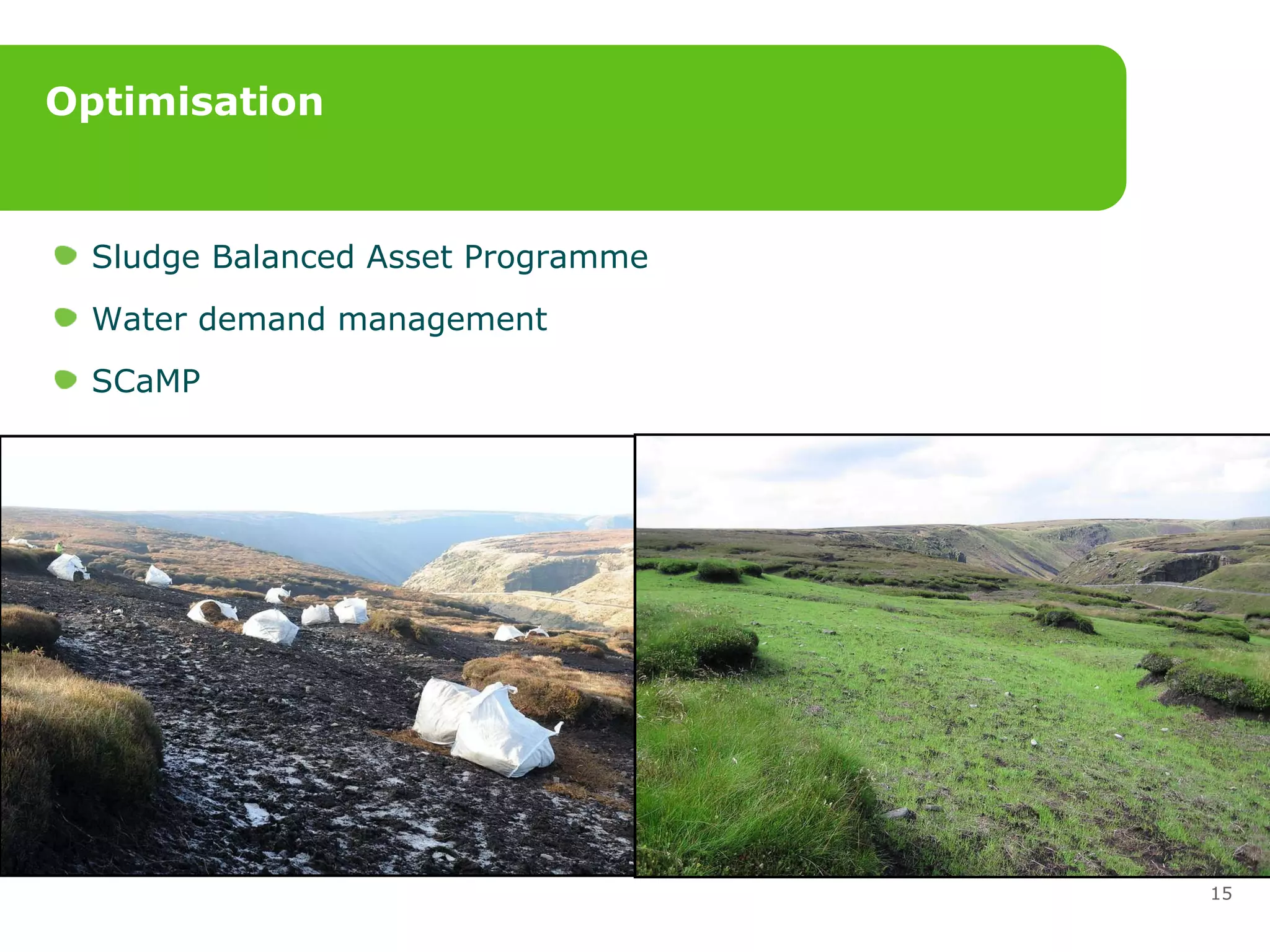
Optimisation Sludge Balanced Asset Programme Water demand management SCaMP
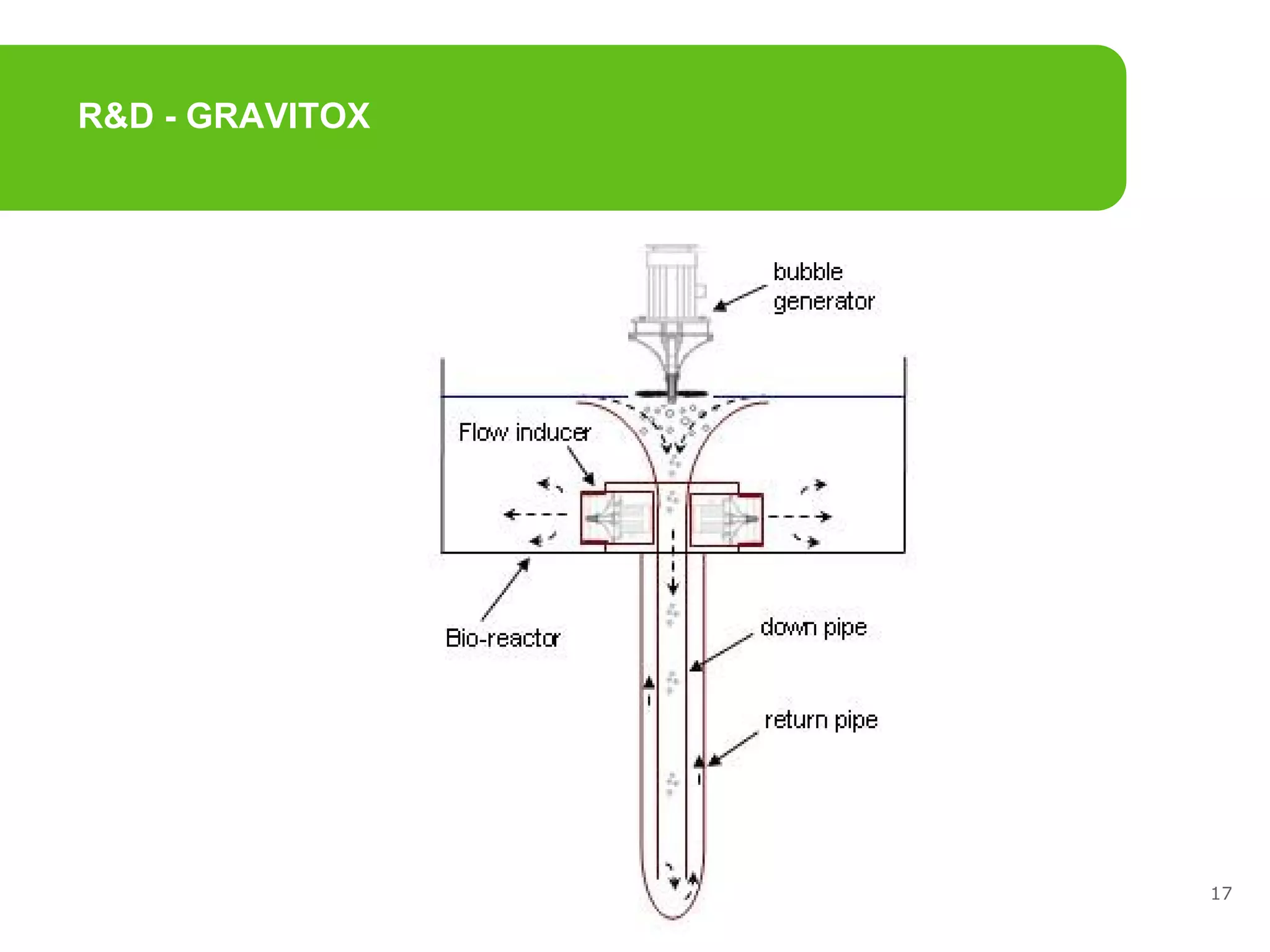
R&D Gravitox Inverted Phase Fermentation Enhanced Biological Phosphorous Removal Organo Mineral Fertiliser Sewage sludge digestion enhancement
R&D - GRAVITOX
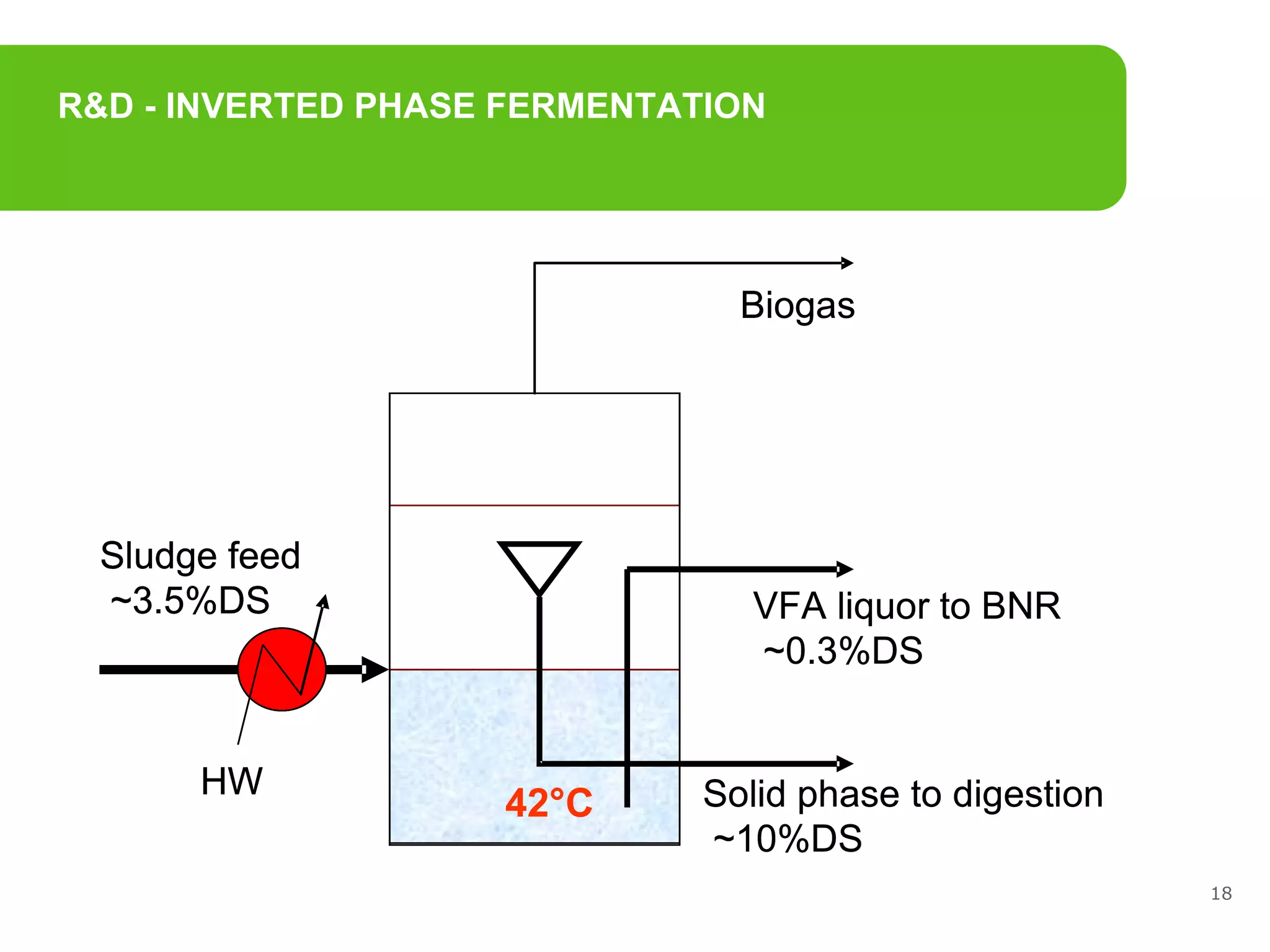
R&D - INVERTED PHASE FERMENTATION
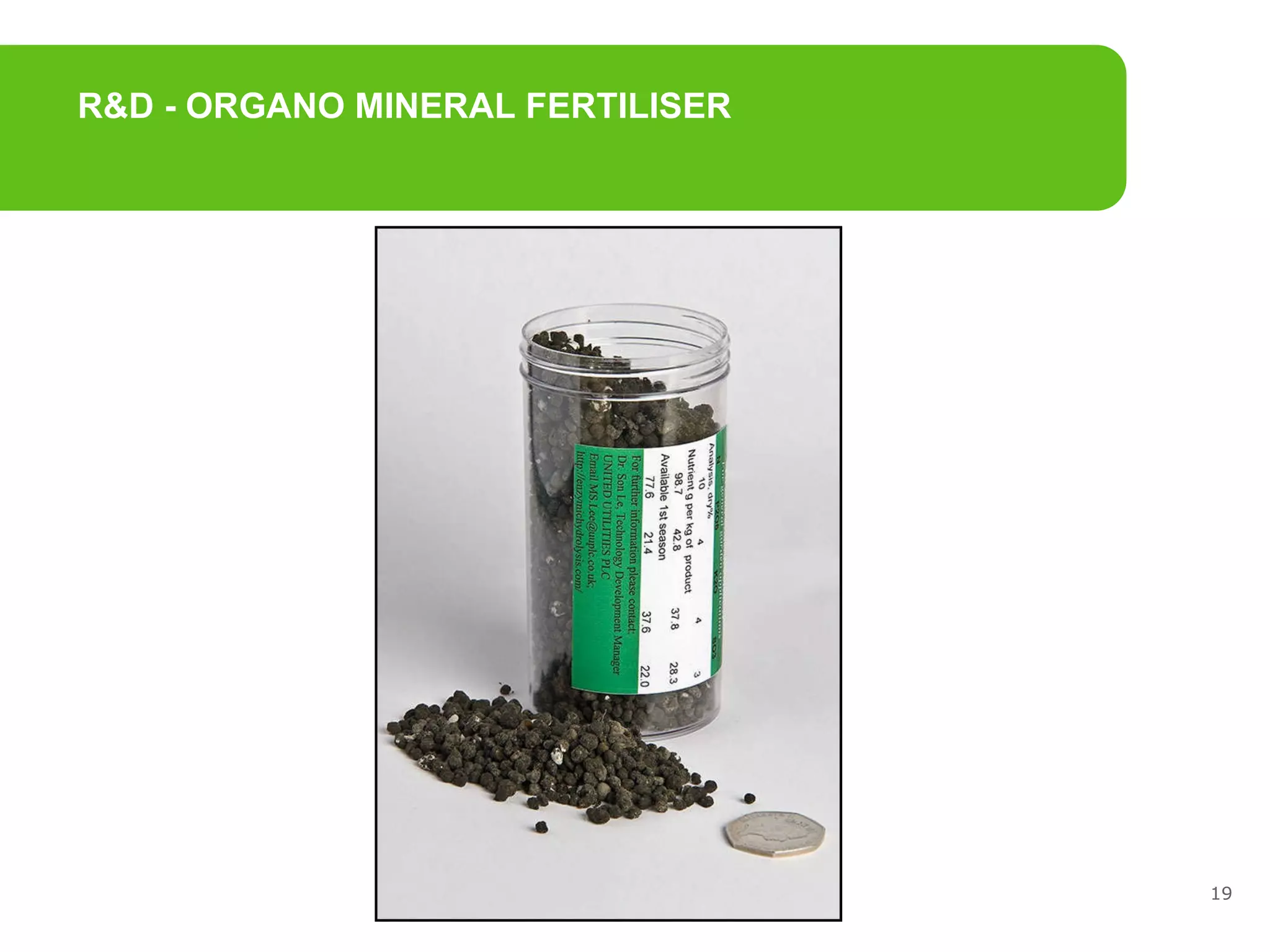
R&D - ORGANO MINERAL FERTILISER
Watching brief Ground source heat pumps Photo-voltaics Wind Further hydro
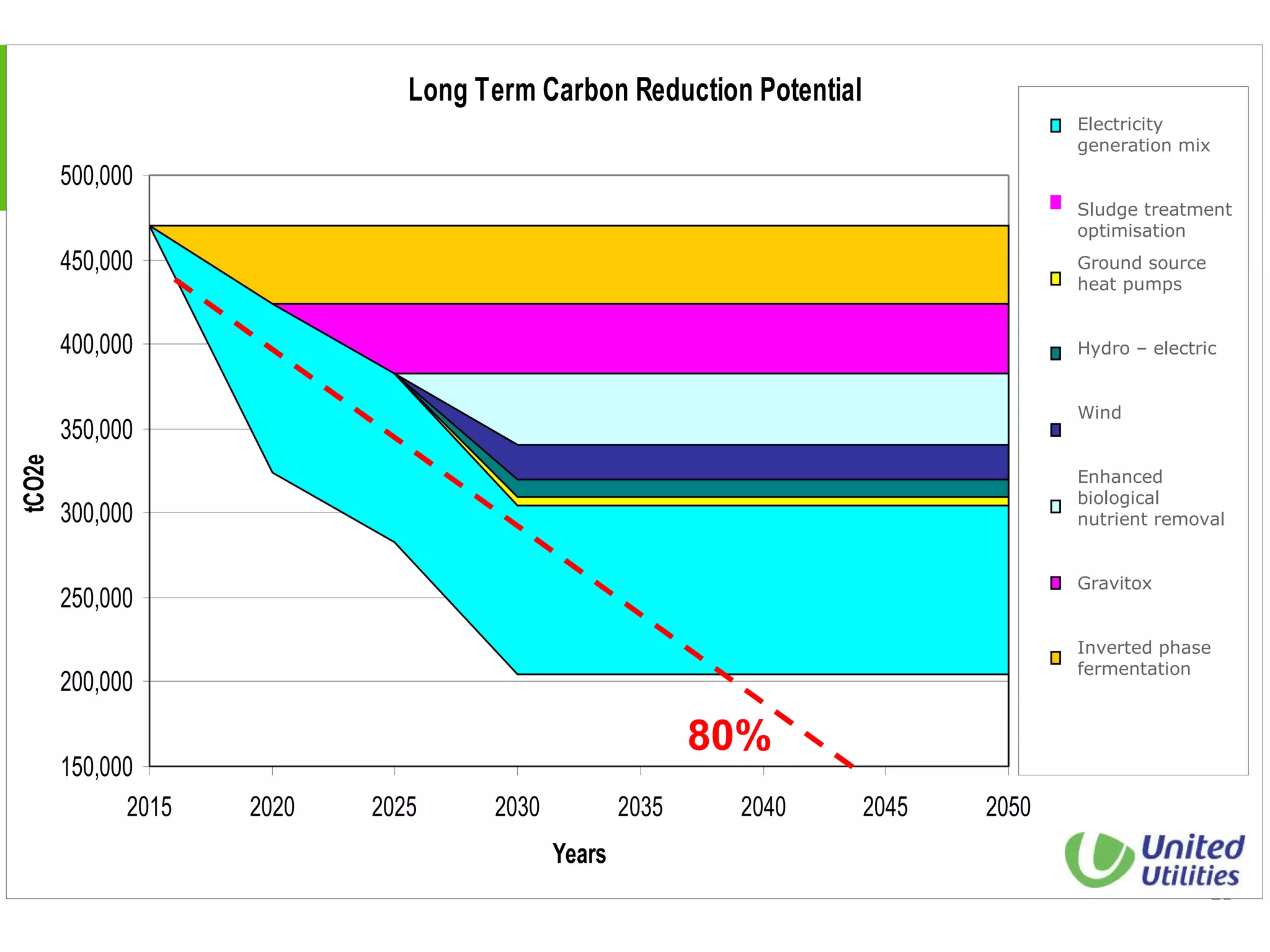
Electricity generation mix  Sludge treatment optimisation Ground source heat pumps Hydro – electric Wind Enhanced biological nutrient removal Gravitox Inverted phase fermentation 80%
Thank you [email_address]

Sustainable development in the Utility Sector

  • 1.
    Sustainable development inthe Utility Sector Lancashire County Council Innovation and Investment Event 15 September 2010  Steve Whipp, Head of Innovation
  • 2.
    Structure of presentationBackground to United Utilities – energy usage Our Strategic Direction Statement Long term carbon target Our energy reduction strategy – what we know and what we need to know “ What are the opportunities this presents for the North West?”
  • 3.
    What do wemean by carbon management? Manage risks Energy costs Compliance costs/penalties Brand/reputation Competitive position Identify opportunities Energy efficiency Energy supply Re-engineering and design Emissions trading and carbon projects
  • 4.
    Where are wenow? In 2005/06 we used 1,109GWh of electricity – 1/3 of 1% of UK electricity supply “ At United Utilities our aim is to provide the best value utility service to our customers in a way that is sustainable, environmentally responsible and reflects our wider social impact” - Philip Green, Chief Executive Officer, United Utilities
  • 5.
    Understanding carbon emissionsat UU Carbon emissions result from: electricity consumption process emissions fuel use transport Examples: One household over a year - 5.3 tCO 2 e A family car driving 10,000 miles – 3.5 tCO 2 e One tonne of sludge digested (if methane emitted) – 3.3 tCO 2 e
  • 6.
    UU baseline 'UU-owned' GHG emissions 500,000 tCO 2 e p.a.
  • 7.
    What does itcost? Carbon costs Cost mitigation 3.0 Potential to maximise methane use worth 7.3 Internal renewable energy saves/raises 3.5 5% reduction in energy would save Possible (£m/yr) Actual (£m/yr) Element 61.1 Total UU electricity costs (2005/6) 9.8 Costs of transport, gas and oil (2005/06) 12.2 Tighter discharge standards at WWTW estimated to increase energy costs 17.4 Market drivers and EU ETS expected to increase energy bills 4.6 Climate Change Levy Possible (£m/yr) Actual (£m/yr) Element
  • 8.
    OUR STRATEGIC DIRECTIONSTATEMENT 1 Demonstrating responsible stewardship of the water and wastewater networks we operate…. 2 Listening to what our customers and other stakeholders tell us…. 3 Ensuring our water resources are more sustainable and resilient…. 4 Following an integrated approach to drainage to reduce the threat of flooding…. 5 Reducing significantly the carbon impact of our activities…. 6 We aim to achieve this without adding to the burden on household budgets.
  • 9.
    Potential impact ofAMP5 (£3bn between 2010 and 2015) on our carbon footprint 460,000 480,000 500,000 520,000 540,000 560,000 580,000 600,000 2005 2006 2007 2008 2009 2010 2011 2012 2013 2014 2015 year tCO2e SDS No carbon reduction plan Including carbon reduction plan
  • 10.
    AMP4 achievement TheAMP4 programme to reduce our operational carbon has already delivered significant progress towards our 2012 target. The programme consisted of the following projects: CHP projects with an anticipated reduction of 34,000* tCO2e p.a. SCaMP with a 1,000* tCO2e reduction p.a. Pump efficiency programme with an estimated reduction of 4,000* tCO2e p.a. * Note: Based on a 0.43 conversion factor.
  • 11.
    Our AMP5 andbeyond carbon strategy There are four parts to this programme: Use of known technology: CHP, hydro-electricity, pump efficiency The development and demonstration of novel technologies Optimisation measures using low carbon solutions, optimising energy use and carbon emissions such as our sludge balance asset programme Research and development intended to identify and inform us about how we can reach our long-term carbon reduction target of 50% by 2035 and 60% by 2050.
  • 12.
    Our proposed AMP5GHG programme 27.2 2,184 15.0 47,760 Totals None n/a 2.2 n/a R&D programme R&D None n/a n/a 1,016 SCaMP None n/a n/a 1,450 Water Supply/ Demand Efficiency 4.4 344 n/a 0 Sludge Q programme 9.4 n/a n/a 32,200 SBAP Optimisation None 106 1.9 4,960 Grit / screenings composting None 358 2.6 530 Bio-methane Novel technology 4.3 340 2.9 2,270 Hydroelectric 7.6 599 3.3 2,900 CHP 5.8 457 2.0 2,440 Pump Efficiency Known technology GWhs generated / Saved Full year effect Opex Savings £k/yr Capex £m Carbon Reduction in 2014 – 2015 Initiative Part of programme
  • 13.
    Known technologies CHPHydro-electric Pump efficiency
  • 14.
    Novel Technology Bio-methaneto vehicles and grid Compost grit and screenings Enhanced electrical dewatering
  • 15.
    Optimisation Sludge BalancedAsset Programme Water demand management SCaMP
  • 16.
    R&D Gravitox InvertedPhase Fermentation Enhanced Biological Phosphorous Removal Organo Mineral Fertiliser Sewage sludge digestion enhancement
  • 17.
  • 18.
    R&D - INVERTEDPHASE FERMENTATION
  • 19.
    R&D - ORGANOMINERAL FERTILISER
  • 20.
    Watching brief Groundsource heat pumps Photo-voltaics Wind Further hydro
  • 21.
    Electricity generation mix Sludge treatment optimisation Ground source heat pumps Hydro – electric Wind Enhanced biological nutrient removal Gravitox Inverted phase fermentation 80%
  • 22.

Editor's Notes

  • #9 Demonstrating responsible stewardship of the water and wastewater networks we operate , protecting public health and the environment, maintaining those networks for the long-term, improving our understanding of their performance and investing in research and new technology and approaches where they provide clear efficiency and service benefits. 2 Listening to what our customers and other stakeholders tell us and ensuring our plans align with their needs and priorities. Our medium-term business plans will, in particular, be informed by a rigorous approach to researching our customers’ preferences. 3 Ensuring our water resources are more sustainable and resilient to meet the challenge of increasing drought risk arising from climate change. The main ingredients of our approach are to help our customers reduce their water demand, further address leakage from our network and work towards near-universal water metering by 2035. 4 Following an integrated approach to drainage to reduce the threat of flooding against a backdrop where climate change makes severe storm events more frequent. We will promote a more joined-up approach between the parties responsible for the various urban drainage systems and encourage demand-side solutions to flooding risk. 5 Reducing significantly the carbon impact of our activities , aiming to halve greenhouse gas emissions by 2035 from their current level. Our wastewater operations will need to become close to energy neutral if we are to achieve this aim. Reduced water demand and leakage will also play a significant part. 6 We aim to achieve this without adding to the burden on household budgets , such that bills on average over the period of this statement rise no faster than incomes. Improving the efficiency of our operations and adopting a sustainable financial structure will allow us to keep bills as low as reasonably possible. However, our current expectation is that bills may rise more sharply in the near term as we invest to meet the challenges of climate change and new water quality requirements. We envisage that towards the end of the period of this strategic direction statement bills would be broadly stable in real terms.