ENGLISH
GOVERNMENT
MEMBER OF GROUP
I WAYAN SUPARTA (1301305186)
I PUTU BAYU PERDANA PUTRA (1301305088)
PUTU DENNY MAHARDIKA
(1301305089)
I GDE PASEK KAMAJAYA (1301305101)
Overview of UK Government
 Parliamentary democracy
 Based on universal suffrage
 Also a constitutional monarchy
 Ministers of the Crown govern in the name
of the Sovereign, who is both Head of State
and Head of the Government
 No ‘written constitution’(rely on
statute law, common law and
conventions)
 The United Kingdom is a parliamentary
monarchy-that is the head of state is a
monarch with limited powers. Britain's
democratic government is based on a
constitution composed of various
historical documents, laws, and formal
customs adopted over the years.
Parliament, the legislature, consists of
the House of Lords, the House of
Commons, and the monarch, also called
the Crown.
The three main parts of
Parliament
House of Commons
All of the MPs elected
by UK citizens in the
general election.
Each represents their
own constituency.
House of Lords
All of the Peers. They
are unelected. They
are nominated
experts in their fields.
The Prime Minister
has a large say in
who becomes a Peer.
The Monarch
The King or Queen at
the time. They have
less power now but
still have the final
sign-off on laws and
on Peerages.
5
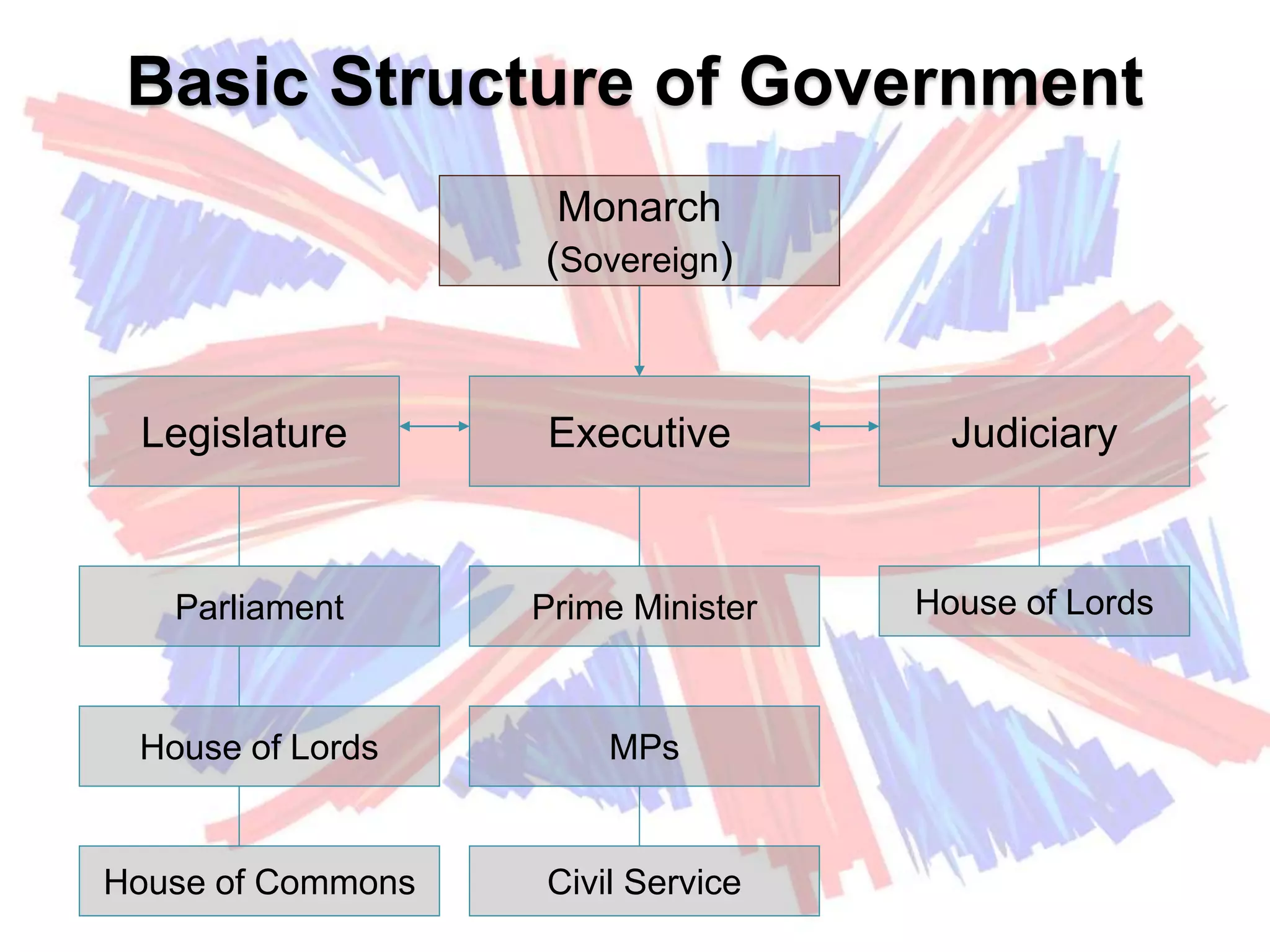
Basic Structure of Government
Monarch
(Sovereign)
Legislature Judiciary
Parliament
House of Lords
Executive
Prime Minister
MPs
Civil Service
House of Lords
House of Commons
Monarch
 The Sovereign: the constitutional head of State
 No longer exercises political power, but
performs symbolically: presiding over the State
Opening of Parliament, giving Royal
Assent of agreement to any new law etc.
 Keeping in touch with the Prime Minister by a
weekly meeting
 The monarch's title is "King" (male) or "Queen"
(female). The current monarch, Queen
Elizabeth II, ascended the throne on the death
of her father, King George VI, on 6 February
1952.
Legislature:
 Legislative body: Parliament of Britain
 Located in Westminster
 Parliament consists of the House of
Lords & the House of Commons
 Government’s policies can become
laws only if approved by both Houses.
Main Function of Parliament
 to pass laws
 to provide - by voting for taxation - the
means of carrying out the work of
government,
 to scrutinize Government policy and
administration, including proposals for
expenditure,
 to debate the major issues of the day.
House of Lords
Members
 Before the reform:
Composed of hereditary peers, senior
judges and church figures, and some
life peers appointed by the Queen.
 After the reform:
Members can no longer inherit their
titles. More members will be elected
through the society.
House of Lords
Function
 Legislative: taking part in the laws
making
 Judiciary: the highest court of UK,
playing important role in judicial part.
House of Commons
Members
 659 Members of Parliament (MPs),
elected by the people from the 659
constituencies
 Re-elected when a new government is
formed.
 The chief officer of the House of
Commons is the Speaker, elected by
MPs to preside over the House.
House of Commons
Power
 Most legislative power rests with it.
 The leader of the party which has the
most MPs becomes the Prime Minister
and selects his Cabinet among MPs.
House of Commons
Function
 Debating issues of national and
international importance.
 Supervising Government by
questioning.
 Controlling Government income and
spending
 Able to alter or oppose proposed new
laws.
Executive
 Executive body: the Sovereign, Prime
Minister & Cabinet
 Dealing with regular national and
international affairs
 Making decisions of new policies
 Supervising departments of the
government
Prime Minister
 PM: the leader of the political party which
wins the majority of seats in Parliament.
 Selecting the cabinet from their own party in
the House of Commons
 Responsible for the conduct of national
affairs directly
 His authority comes from support in the
House of Commons.
Cabinet
Members
 Consists of about 20 ministers chosen
by the Prime Minister Selected by the
Prime Minister
 Members of Commons
 Sit on the “front benches” in the
House of Commons
Cabinet
Function
 It balances ministers' individual duties with
their collective responsibility as members of
the Government and takes the final decisions
on all government policy.
 Cabinet Committees include those dealing
with defense and overseas policy, economic
policy, home and social affairs, the
environment, and local government.
Civil Service
 Servants of the Crown
 Non-political group
 Career officials who remain in office
despite changes in government
 Offering advice about the possible
consequences of policy
 Responsible for implementing the
policies of Government
Judiciary
 The House of Lords is the ultimate appeal
court in the UK
 The Secretary of State for Constitutional
Affairs and Lord Chancellor heads the
judiciary and sits on the judicial committee
of the House of Lords. He also presides
over the upper House in its law-making role
and, as a senior Cabinet minister, heads
the Department of Constitutional Affairs.
Courtesy by:
Thank You
Any Questions?

English Government

  • 1.
  • 2.
    MEMBER OF GROUP IWAYAN SUPARTA (1301305186) I PUTU BAYU PERDANA PUTRA (1301305088) PUTU DENNY MAHARDIKA (1301305089) I GDE PASEK KAMAJAYA (1301305101)
  • 3.
    Overview of UKGovernment  Parliamentary democracy  Based on universal suffrage  Also a constitutional monarchy  Ministers of the Crown govern in the name of the Sovereign, who is both Head of State and Head of the Government  No ‘written constitution’(rely on statute law, common law and conventions)
  • 4.
     The UnitedKingdom is a parliamentary monarchy-that is the head of state is a monarch with limited powers. Britain's democratic government is based on a constitution composed of various historical documents, laws, and formal customs adopted over the years. Parliament, the legislature, consists of the House of Lords, the House of Commons, and the monarch, also called the Crown.
  • 5.
    The three mainparts of Parliament House of Commons All of the MPs elected by UK citizens in the general election. Each represents their own constituency. House of Lords All of the Peers. They are unelected. They are nominated experts in their fields. The Prime Minister has a large say in who becomes a Peer. The Monarch The King or Queen at the time. They have less power now but still have the final sign-off on laws and on Peerages. 5
  • 6.
    Basic Structure ofGovernment Monarch (Sovereign) Legislature Judiciary Parliament House of Lords Executive Prime Minister MPs Civil Service House of Lords House of Commons
  • 8.
    Monarch  The Sovereign:the constitutional head of State  No longer exercises political power, but performs symbolically: presiding over the State Opening of Parliament, giving Royal Assent of agreement to any new law etc.  Keeping in touch with the Prime Minister by a weekly meeting  The monarch's title is "King" (male) or "Queen" (female). The current monarch, Queen Elizabeth II, ascended the throne on the death of her father, King George VI, on 6 February 1952.
  • 9.
    Legislature:  Legislative body:Parliament of Britain  Located in Westminster  Parliament consists of the House of Lords & the House of Commons  Government’s policies can become laws only if approved by both Houses.
  • 10.
    Main Function ofParliament  to pass laws  to provide - by voting for taxation - the means of carrying out the work of government,  to scrutinize Government policy and administration, including proposals for expenditure,  to debate the major issues of the day.
  • 11.
    House of Lords Members Before the reform: Composed of hereditary peers, senior judges and church figures, and some life peers appointed by the Queen.  After the reform: Members can no longer inherit their titles. More members will be elected through the society.
  • 12.
    House of Lords Function Legislative: taking part in the laws making  Judiciary: the highest court of UK, playing important role in judicial part.
  • 14.
    House of Commons Members 659 Members of Parliament (MPs), elected by the people from the 659 constituencies  Re-elected when a new government is formed.  The chief officer of the House of Commons is the Speaker, elected by MPs to preside over the House.
  • 15.
    House of Commons Power Most legislative power rests with it.  The leader of the party which has the most MPs becomes the Prime Minister and selects his Cabinet among MPs.
  • 16.
    House of Commons Function Debating issues of national and international importance.  Supervising Government by questioning.  Controlling Government income and spending  Able to alter or oppose proposed new laws.
  • 17.
    Executive  Executive body:the Sovereign, Prime Minister & Cabinet  Dealing with regular national and international affairs  Making decisions of new policies  Supervising departments of the government
  • 18.
    Prime Minister  PM:the leader of the political party which wins the majority of seats in Parliament.  Selecting the cabinet from their own party in the House of Commons  Responsible for the conduct of national affairs directly  His authority comes from support in the House of Commons.
  • 19.
    Cabinet Members  Consists ofabout 20 ministers chosen by the Prime Minister Selected by the Prime Minister  Members of Commons  Sit on the “front benches” in the House of Commons
  • 20.
    Cabinet Function  It balancesministers' individual duties with their collective responsibility as members of the Government and takes the final decisions on all government policy.  Cabinet Committees include those dealing with defense and overseas policy, economic policy, home and social affairs, the environment, and local government.
  • 21.
    Civil Service  Servantsof the Crown  Non-political group  Career officials who remain in office despite changes in government  Offering advice about the possible consequences of policy  Responsible for implementing the policies of Government
  • 22.
    Judiciary  The Houseof Lords is the ultimate appeal court in the UK  The Secretary of State for Constitutional Affairs and Lord Chancellor heads the judiciary and sits on the judicial committee of the House of Lords. He also presides over the upper House in its law-making role and, as a senior Cabinet minister, heads the Department of Constitutional Affairs.
  • 23.
  • 24.
  • 25.