British Government
Made by: Alice Mokretsova
Form: 11 "Б"
Teacher: G.A. Semenova
Alexandrov
11/11/2015
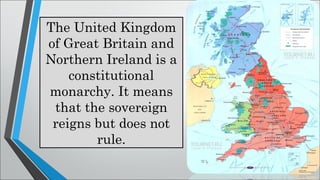
The United Kingdom
of Great Britain and
Northern Ireland is a
constitutional
monarchy. It means
that the sovereign
reigns but does not
rule.
• Britain does not have a written
constitution, but a set of laws.
• Parliament is the most important
authority in Britain.
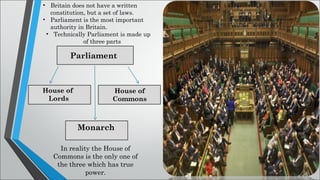
• Technically Parliament is made up
of three parts
Parliament
House of
Lords
House of
Commons
Monarch
In reality the House of
Commons is the only one of
the three which has true
power.
The monarch serves
formally as head of
state. But the
monarch is
expected to be
politically neutral
and should not
make political
decisions.
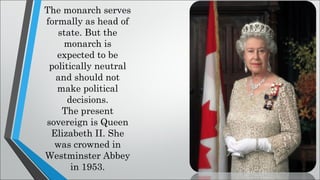
The present
sovereign is Queen
Elizabeth II. She
was crowned in
Westminster Abbey
in 1953.
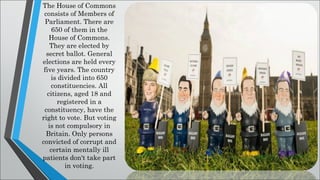
The House of Commons
consists of Members of
Parliament. There are
650 of them in the
House of Commons.
They are elected by
secret ballot. General
elections are held every
five years. The country
is divided into 650
constituencies. All
citizens, aged 18 and
registered in a
constituency, have the
right to vote. But voting
is not compulsory in
Britain. Only persons
convicted of corrupt and
certain mentally ill
patients don't take part
in voting.
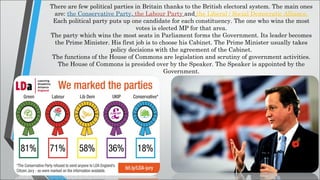
There are few political parties in Britain thanks to the British electoral system. The main ones
are: the Conservative Party, the Labour Party and the Liberal / Social Democratic Alliance.
Each political party puts up one candidate for each constituency. The one who wins the most
votes is elected MP for that area.
The party which wins the most seats in Parliament forms the Government. Its leader becomes
the Prime Minister. His first job is to choose his Cabinet. The Prime Minister usually takes
policy decisions with the agreement of the Cabinet.
The functions of the House of Commons are legislation and scrutiny of government activities.
The House of Commons is presided over by the Speaker. The Speaker is appointed by the
Government.
• The functions of the House of
Commons are legislation and
scrutiny of government activities.
• The House of Commons is presided
over by the Speaker.
• The Speaker is appointed by the
Government.
• It's in the House of Commons that
new bills are introduced and
debated.
• If the majority of the members are
in favour of a bill, it goes to the
House of Lords to be debated.
House of
Commons
House of
Lords
• The House of Lords comprises
about 1,200 peers.
• It is presided by the Lord
Chancellor.
• The House of Lords has no real
power.
• It acts rather as an advisory
council.
• The House of Lords has the right
to reject a new bill twice.
• But after two rejections they are
obliged to accept it.
And finally a bill goes to the monarch to be signed. Only then it becomes law.
Parliament is responsible for British national policy. Local governments are responsible
for organizing of education, police and many others.
Thanks for your
attention!

British Government

  • 1.
    British Government Made by:Alice Mokretsova Form: 11 "Б" Teacher: G.A. Semenova Alexandrov 11/11/2015
  • 2.
    The United Kingdom ofGreat Britain and Northern Ireland is a constitutional monarchy. It means that the sovereign reigns but does not rule.
  • 3.
    • Britain doesnot have a written constitution, but a set of laws. • Parliament is the most important authority in Britain. • Technically Parliament is made up of three parts Parliament House of Lords House of Commons Monarch In reality the House of Commons is the only one of the three which has true power.
  • 4.
    The monarch serves formallyas head of state. But the monarch is expected to be politically neutral and should not make political decisions. The present sovereign is Queen Elizabeth II. She was crowned in Westminster Abbey in 1953.
  • 5.
    The House ofCommons consists of Members of Parliament. There are 650 of them in the House of Commons. They are elected by secret ballot. General elections are held every five years. The country is divided into 650 constituencies. All citizens, aged 18 and registered in a constituency, have the right to vote. But voting is not compulsory in Britain. Only persons convicted of corrupt and certain mentally ill patients don't take part in voting.
  • 6.
    There are fewpolitical parties in Britain thanks to the British electoral system. The main ones are: the Conservative Party, the Labour Party and the Liberal / Social Democratic Alliance. Each political party puts up one candidate for each constituency. The one who wins the most votes is elected MP for that area. The party which wins the most seats in Parliament forms the Government. Its leader becomes the Prime Minister. His first job is to choose his Cabinet. The Prime Minister usually takes policy decisions with the agreement of the Cabinet. The functions of the House of Commons are legislation and scrutiny of government activities. The House of Commons is presided over by the Speaker. The Speaker is appointed by the Government.
  • 7.
    • The functionsof the House of Commons are legislation and scrutiny of government activities. • The House of Commons is presided over by the Speaker. • The Speaker is appointed by the Government. • It's in the House of Commons that new bills are introduced and debated. • If the majority of the members are in favour of a bill, it goes to the House of Lords to be debated. House of Commons House of Lords • The House of Lords comprises about 1,200 peers. • It is presided by the Lord Chancellor. • The House of Lords has no real power. • It acts rather as an advisory council. • The House of Lords has the right to reject a new bill twice. • But after two rejections they are obliged to accept it. And finally a bill goes to the monarch to be signed. Only then it becomes law. Parliament is responsible for British national policy. Local governments are responsible for organizing of education, police and many others.
  • 8.